The Smell of Molten Projects in the Morning

Ed Nisley's Blog: Shop notes, electronics, firmware, machinery, 3D printing, laser cuttery, and curiosities. Contents: 100% human thinking, 0% AI slop.

Category: Machine Shop

Mechanical widgetry

  • Park MTB-7 Rescue Tool Repair

    Too-short Stud
    Too-short Stud
    Goobered Screw Threads
    Goobered Screw Threads

    Once upon a time I deployed the 6 mm hex wrench on my trusty Park MTB-7 Rescue Tool, applied some torque to a handebar stem bolt, and crunch something broke inside the tool.

    [Update: Fixed a dead link; Park evidently reshuffled their website.]

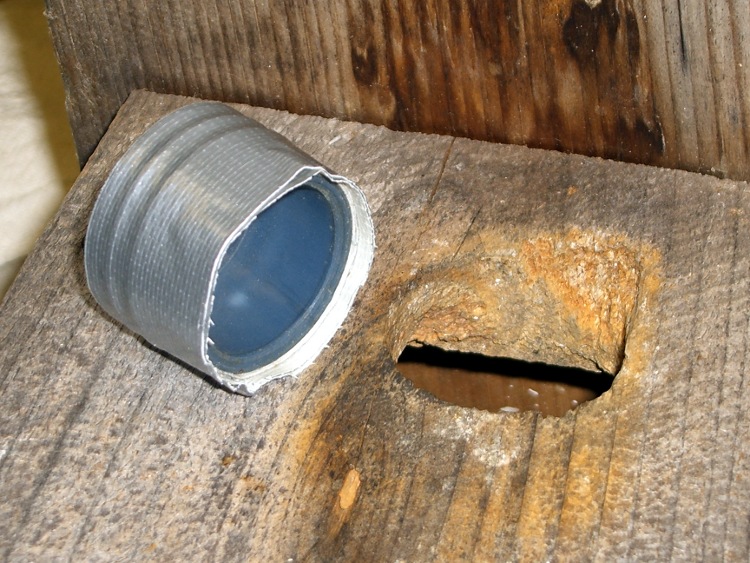
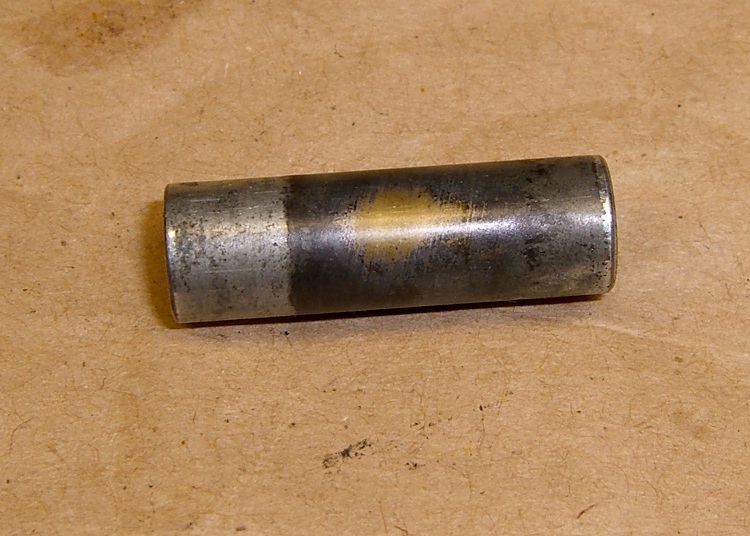
    The essential problem is that the studs holding the tools in place are too short: they don’t seat fully into the plastic housing at the far end, because they’re 2 mm too short. The photo showing the stud at an angle gives an idea of the situation I saw when I took the tool apart.

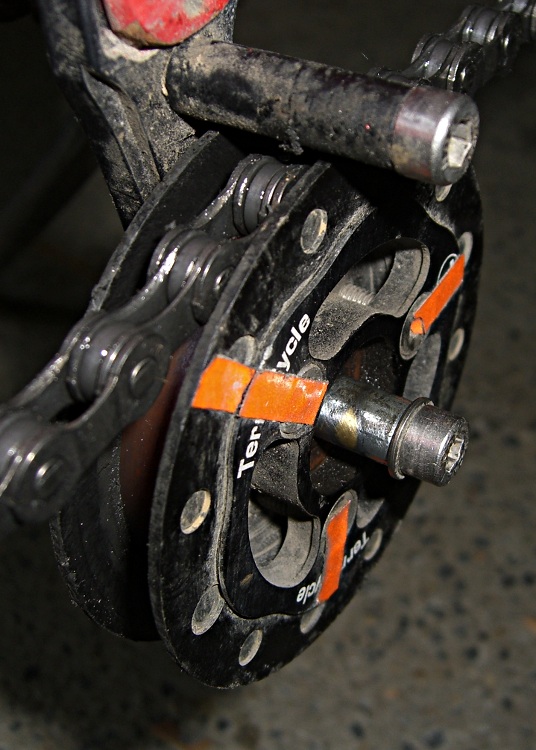
    The crunching sound I heard was the screw tearing out as the stud shifted in the housing. The studs seem to be swaged into shape in one operation, but without quite enough material: the threaded end isn’t flat and the internal threads are crap. The photo showing the studs and screws can’t really show how off-center and feeble the internal threads really are, but you can see the junk lodged in the external screw’s threads where it tore out. Note the poor fit between the other stud’s end and its screw: it’s firmly seated against the stud, so that’s how far off square the end is!

    Better Screw and Sleeve
    Better Screw and Sleeve

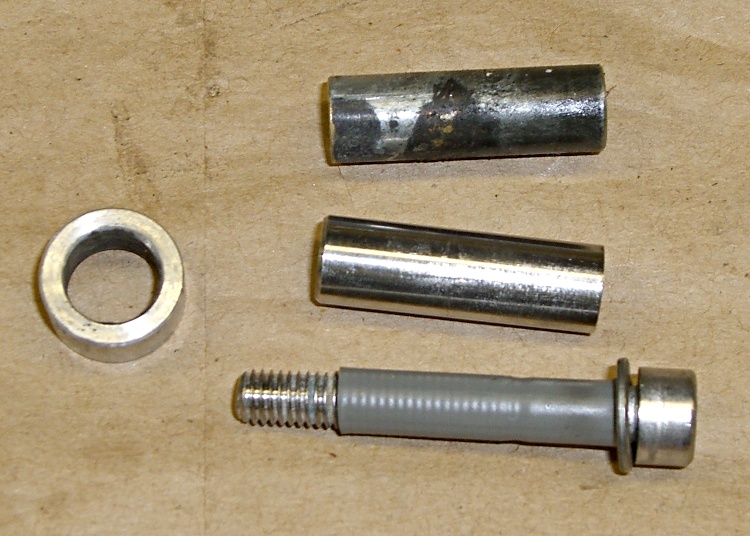
    The fix was easy enough. I cut some brass tubing to the proper length, trimmed stainless-steel 10-32 screws to fit, and put everything together with red Loctite. The photo showing the all the parts indicates how much longer my sleeves are than the original studs: basically, that’s the thickness of the plastic housing on one side.

    But, sheesh, you’d expect a Park tool to be better than that. I sent ’em a note with pictures and maybe they’ll smack the factor who shorted ’em on the Quality bullet item upside the head.

    I got to spend some time playing with my toys, so it wasn’t a dead loss.

  • Spoke Wrenching

    I recently rebuilt the back wheel on my bike, which had been breaking the odd spoke and getting more & more out of true.

    Spoke wrenches are so tedious when one’s fingers don’t fit in between the spokes like they should. I figured, hey, if the pros can use power drivers, so can I…

    Dug a goobered #2 Philips bit out of the ziplock baggie labeled “NFG Bits” and applied it to the bench grinder. The strip of tape on one flat makes turn-counting easy enough that I can actually get it right. It’s not hardened, so it probably won’t last for more than a few wheels, but this is the first scratch-built wheel I’ve done in decades and that baggie is nowhere near empty.

    Homebrew Spoke Wrench Bit
    Homebrew Spoke Wrench Bit

    I read through Jobst Brandt’s The Bicycle Wheel to get prepped for the job, removed the old spokes, laced up the new ones, lubed the threads & rim washers, and the wheel trued up almost perfectly just by counting turns.

    Did the spoke aligning & stress-relieving tricks, applied some final tweaking, and it’s perfect!

  • Database Troubles

    So I bought a batch of small carbide bits at Lowe’s: some Dremel burrs and a neat pointed RotoZip engraving bit. Got to the checkout and everything went swimmingly except the RotoZip, which triggered a management override.

    This caused the dreaded price check on Register 6, the only register open at the time. People are four deep behind me and the line is growing.

    Manager shows up, scans his magic power card, types in a small bit of life history, scans the package again. It calls for another management override.

    He re-scans his card, types in a (presumably different) slice of life history, re-scans the package, and the price pops up in bright green for all to see:

    89991 Point Cutting $10,000.00

    “This just isn’t going to happen” sez I. In round numbers, I think it costs 15 bux. Maybe 10, maybe 20.

    The line now extends to the paint counter. I turn to the woman behind me and observe that I don’t think I’ve ever charged a $10,000 item before and that I sure hope it comes with a free yacht.

    The manager laughs, re-scans his card, types in still more life history, re-scans the package, types in yet more life history, and a new price pops up:

    89991 Point Cutting $1.00

    I say “Thank you very much!” He sez “Have a nice day!” The cashier sez “Wow, great deal!” I say “I’m outta here!”

    Hopped on my bike and rode off into the haze.

    I strongly support the “If it doesn’t scan, it’s free” method of price determination, but this is just the second time it’s happened. The first was a clerk who made an on-the-spot decision. This one had management approval!

    I think the price in their database is $10k because of a data entry error, which triggered the first management override.

    Fairly obviously, the database didn’t get fixed today.

    But a good time was had by all!

  • STP: The Miracle Lubricant

    Every PC I’ve ever owned with a fan-cooled video card has had a fan failure. It used to take years, now it takes months. The obvious conclusion: cheapnified fans.

    The “business class” Dell I’d been using as a file server started groaning a year ago. I swapped out the video card fan for a similar (used) one from my heap, which failed after half a year. I just replaced the whole box with a newer one that has on-board graphics with no fan…

    A while ago I stuck a pair of nVidia cards in my always-on desktop box so I could get a portrait-mode page display. One of the cards had a bizarre cooler with a fan stuck inside a fingered aluminum cup clamped atop the video chip: definitely not a FRU, at least from my parts heap.

    Months later: groaning & whining. So I used the same trick as I did for the fan in the refrigerator: a drop of STP soaked into the sintered bronze sleeve bearing. Worked like a champ (the freezer fan is still silent) and the PC is now nearly silent once more.

    While I have the STP out, I’m going to blob some on the bathroom fan that’s starting to groan. Certainly cheaper than replacing the fan and, as I found out with the refrigerator, even a new fan can have crappy bearings.

    I now officially loathe fans…

    Yes, I’m perfectly aware that STP is not a real lubricant, but it’s close enough for these bearings. Mostly, it’s slippery and gooey and works perfectly to damp out shaft vibrations and wobbulations.

  • Camera Microscope Adapter

    Microscope Eyepiece Adapter Parts
    Microscope Eyepiece Adapter Parts
    Mount and Camera
    Mount and Camera
    Camera on Microscope Eyepiece
    Camera on Microscope Eyepiece

    This worked out surprisingly well…

    The project was to mount my pocket camera on the stereo zoom microscope, so I can take decent pix of small stuff.

    The entrance pupil of the camera is about the same size as that of a human eyeball: focus at infinity, tune for best picture, and you’re set. Best of all, no microscope mods other than a wrap of tape around the eyepiece to prevent scratching.

    My heap disgorged two tubes that were exactly the right diameter and length with finished ends (evidently stubs left over from a previous lathe project), so all I had to do was turn the adapter ring between them. The heap even had a slightly-too-long 1/4-20 thumbscrew with a boss below the thread. Ya gotta have stuff!

    I set the ‘scope up with the eyepiece exactly vertical, put the tubes on the eyepiece, screwed the T-bracket to the camera,  squooshed a J-B Weld epoxy putty turd between the T and the tube, then boresighted the camera to the ‘scope axis by centering the light on the LCD. Shazam: nearly perfect alignment with no fussy machining. I added two machine screws through the blob: I don’t trust the camera to an epoxy-PVC joint.

    The smallest field looks like 2 mm, so the resolution is about 2 mm/2400 = 800 nm, which I don’t believe for an instant. Maybe a micron or three, at best, limited far more by the camera than the ‘scope. Widest is >15 mm, a more reasonable and still unbelievable 6 microns. The lens just ain’t that good.

    The eggs are from our stick insect, with a millimeter scale.

    cimg0139-stick-insect-eggs
    Stick Insect Eggs – 1 mm scale

    [Update: This post seems to pop up in response to searches for stick insect eggs. One of my rather more interesting pictures is there.]

  • Ya Gotta Have Tools, Mobile Division

    Once upon a time we delivered a van full of composted leaves to Mary’s Vassar Farms garden plot in the evening.

    There’s a gate at the entrance that was half-closed, but Mary’s never seen it closed & locked, so we drove in and parked by the plot to toss bags. We were done in about 15 minutes, drove back to the gate, and found the Vassar security folks had locked it… with the van in plain sight.

    My guess is that they were busting our chops, but one should never ascribe to malice what can be explained by stupidity.

    We had a phone, but none of the bystanders knew what number to call. The ladies reported that the other gate was also locked. A chain-link fence surrounds the plots.

    What to do?

    The gate hinges were plain old 1″ bolts and nuts, so I figured I could just dismount a gate, drive out, then put the gate back in place. Non-destructive and easy to explain if The Man arrives while I’m at work. Plan B was to just cut the padlocked chain holding the gates together.

    The back of the van has a small “tool” compartment for the jack and suchlike. I long ago added a multi-bit screwdriver set, a medium adjustable wrench (not quite big enough for a 1″ bolt, alas), a Vise-Grip, and similar odds & ends.

    Fortunately, it turned out that the chain around the middle of the gates had two links held together with a 1/4-20 bolt and two nuts. I suspect this sort of thing has happened before, perhaps to someone else with a Vise-Grip.

    Five minutes later, we were outside, the gate was closed & locked, and the tools were back in place.

    Memo to self: add a bigger wrench.

  • Steel Preservation, The Good Old Days of

    Cadmium plated hangers
    Cadmium plated hangers

    Last year I geared up for scraping the soffits and figured I should put a piece of plywood across the windows so I couldn’t possibly have the ladder fall into a window. The storm windows are big, awkward inserts that hang from hooks atop the frames, so I planned to cut a plywood blank to match the opening.

    Gene left us a cigar box of “Storm Window Hdwr” containing this card of hooks-and-eyes that looked just like the ones on the windows. Alas, they’re not quite the same and don’t quite fit, a fact I discovered after mounting them and manhandling the sheet out the window. So much for “standard size”.

    But I’m sure the hardware on the side of the house looks as good as it does because it’s cadmium-plated, too! None of the hooks & eyes have a hint of rust, other than where the edges scrape together, after half a century.

    I heroically refrained from sucking my thumb afterward…