The Smell of Molten Projects in the Morning

Ed Nisley's Blog: Shop notes, electronics, firmware, machinery, 3D printing, laser cuttery, and curiosities. Contents: 100% human thinking, 0% AI slop.

Category: Electronics Workbench

Electrical & Electronic gadgets

  • Tour Easy Rear Running Light: First Light!

    Tour Easy Rear Running Light: First Light!

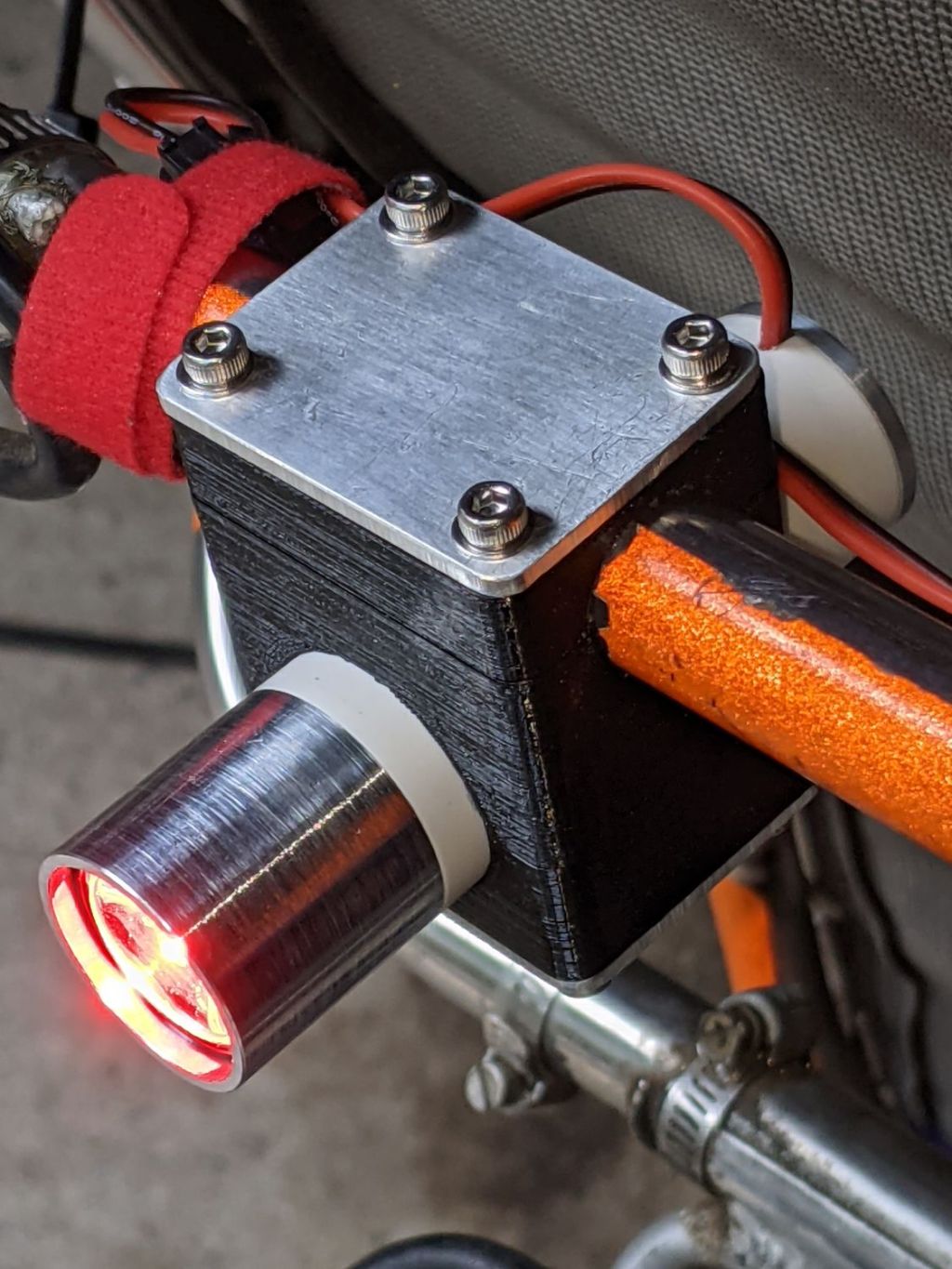
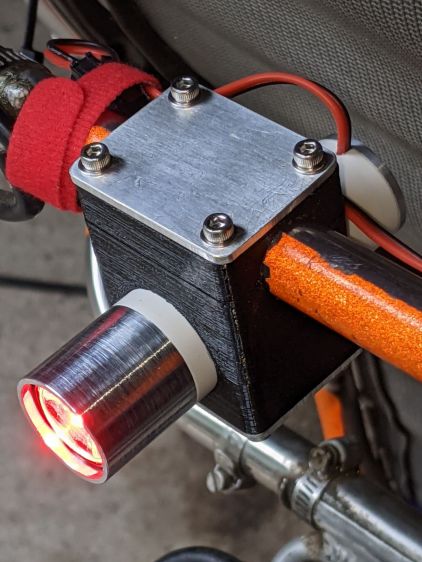
    The rear running light definitely has an industrial look:

    Tour Easy Rear Running Light - installed
    Tour Easy Rear Running Light – installed

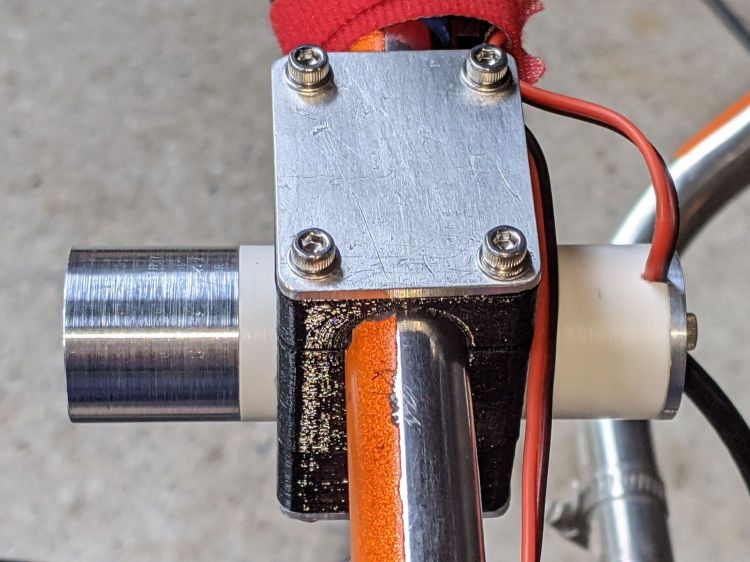
    The front of the light has plenty of clearance from the seat mesh:

    Tour Easy Rear Running Light - installed side view
    Tour Easy Rear Running Light – installed side view

    Out on the road, the 1 W LED appears about as bright as automotive running lights:

    Tour Easy Rear Running Light - tunnel
    Tour Easy Rear Running Light – tunnel

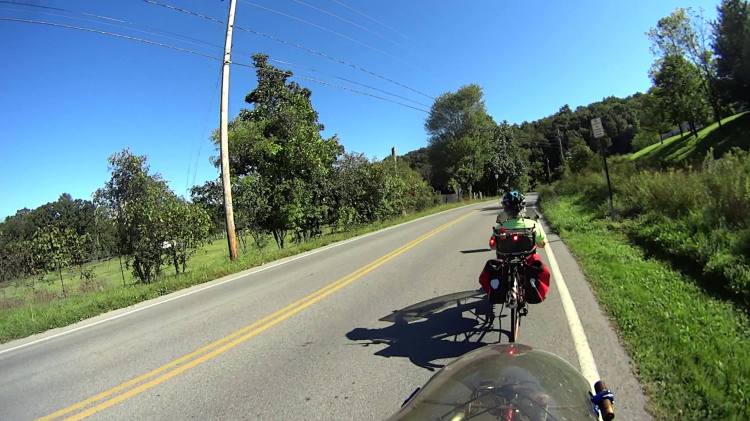
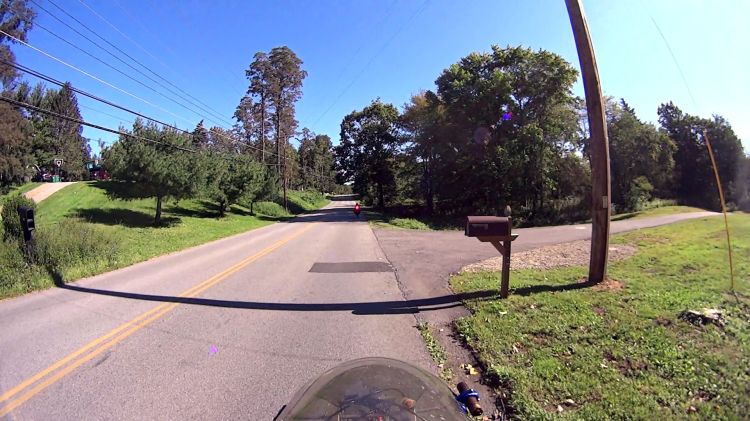
    The blink pattern makes it perfectly visible in sunlight, although I’d prefer somewhat larger optics:

    Tour Easy Rear Running Light - sunlight
    Tour Easy Rear Running Light – sunlight

    In shaded conditions, it’s downright conspicuous:

    Tour Easy Rear Running Light - shade
    Tour Easy Rear Running Light – shade

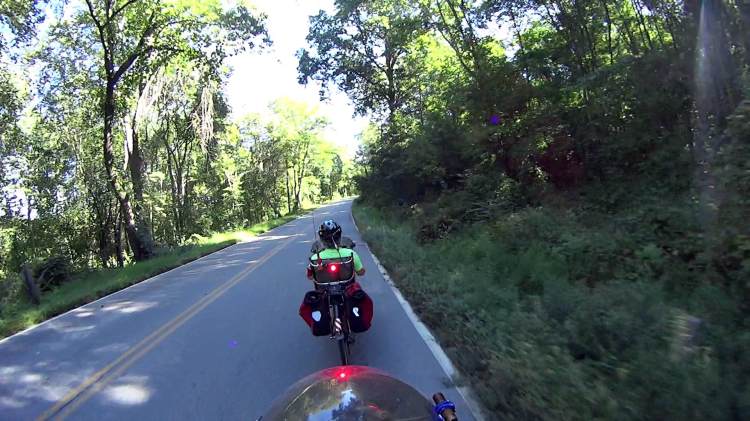
    At any reasonable distance, the 10° beam covers much of the road behind the bike:

    Tour Easy Rear Running Light - distant
    Tour Easy Rear Running Light – distant

    You may not know what the occulting red light represents, but something ahead is worthy of your attention.

    The Arduino source code producing the two dits:

    // Tour Easy Running Light
    // Ed Nisley - KE4ZNU
    // September 2021
    
    #include <morse.h>
    
    #define PIN_OUTPUT  13
    
    // second param: true = active low output
    LEDMorseSender Morser(PIN_OUTPUT,true,(float)10.0);
    
    void setup()
    {
        Morser.setup();
    
        Morser.setMessage(String("qst de ke4znu "));
        Morser.sendBlocking();
    
    //    Morser.setWPM((float)3.0);
        Morser.setSpeed(75);
        Morser.setMessage(String("i   "));
    }
    
    void loop()
    {
        if (!Morser.continueSending())
            Morser.startSending();
    
    }
    

    Looks good to me, anyhow.

  • Why LED Lamps Fail

    Why LED Lamps Fail

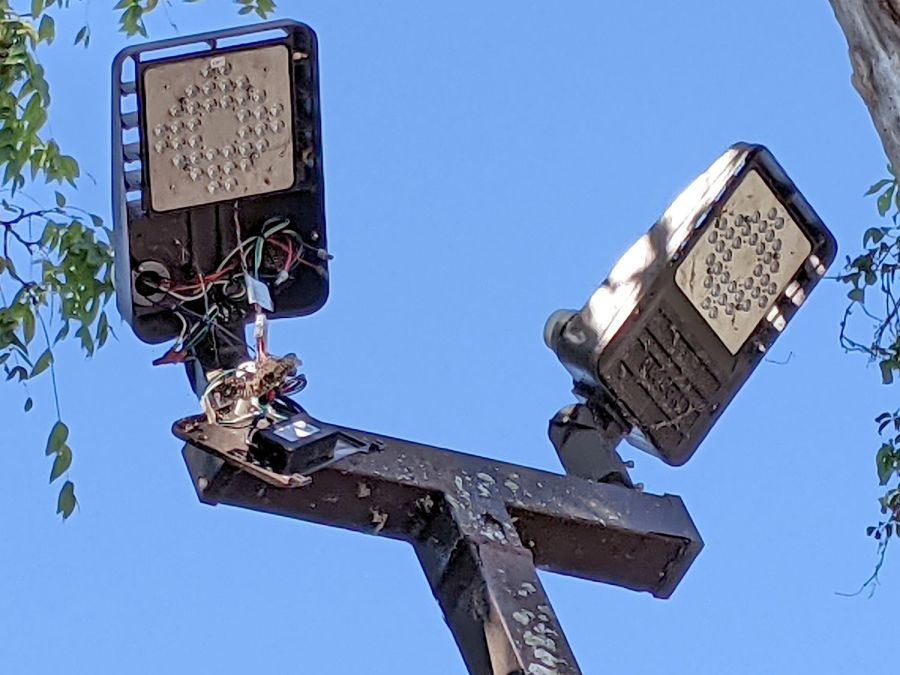
    Spotted over a fast food emporium’s parking lot:

    Disemboweled parking lot light
    Disemboweled parking lot light

    It’s hard to be sure, but I think there’s a paper wasp nest around the bundle of wires just above the transformer / ballast / whatever. Perhaps the repair tech departed with the job unfinished?

    As with traffic signals, flashlights, and automotive lighting, the LEDs surely work long after the driver circuitry has given up.

  • Tenergy 18650 Lithium Cells: Four Years of Running Lights

    Tenergy 18650 Lithium Cells: Four Years of Running Lights

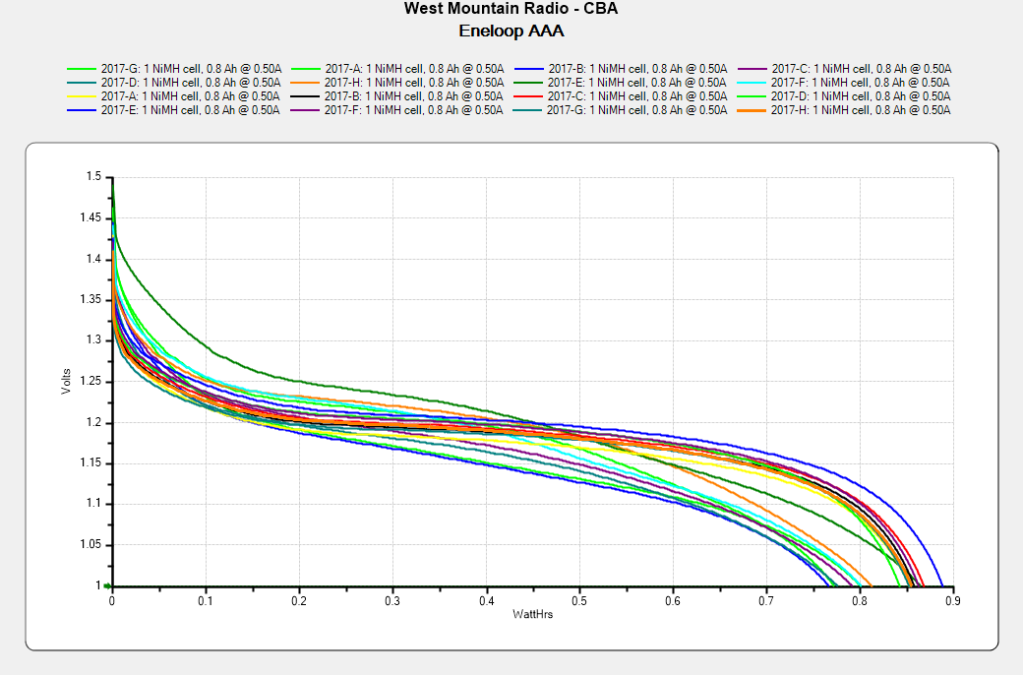
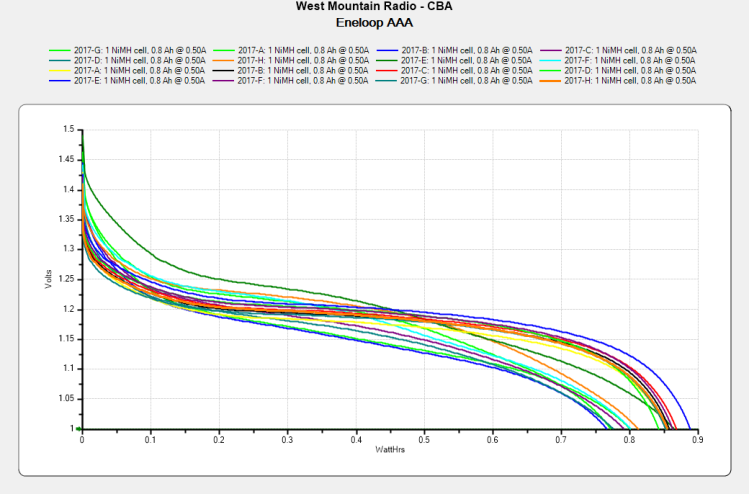
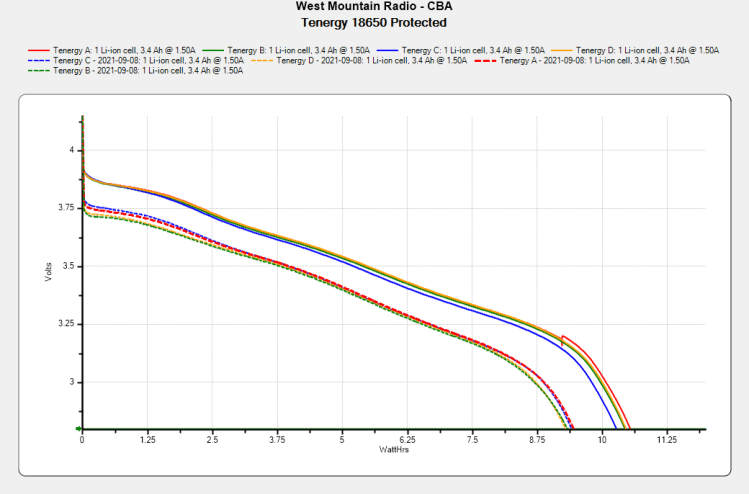
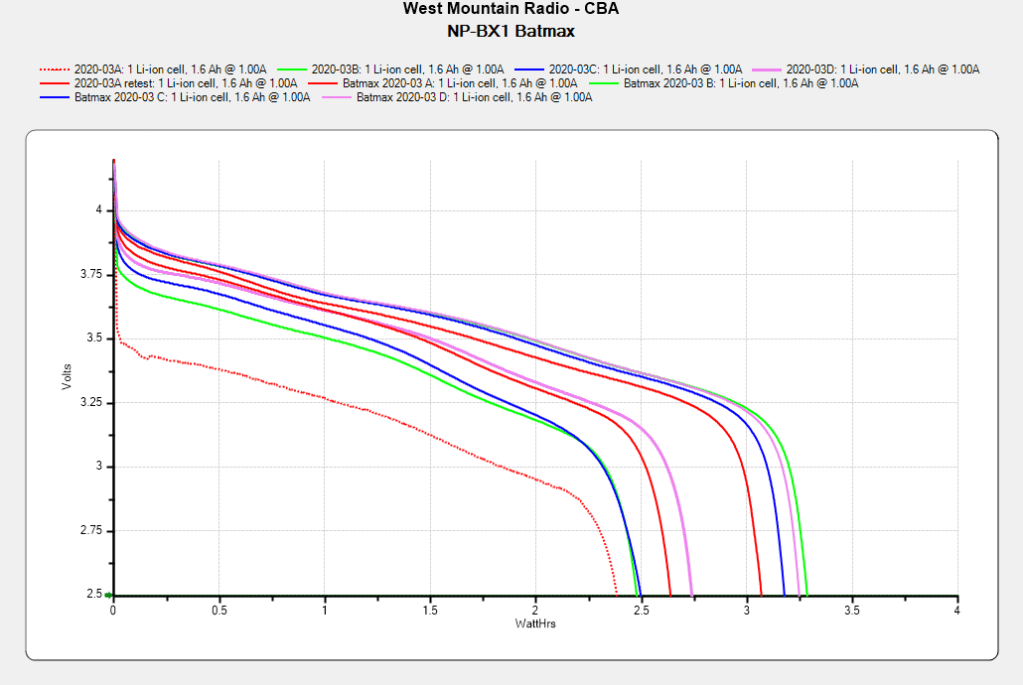
    With the amber daytime running light connected to the Bafang’s headlight output and the Anker flashlight on the other side of the fairing getting fewer power-on hours, it’s a good time to see how those four Tenergy lithium 18650 cells are doing:

    Tenergy 18650 Protected - 2021-09-09
    Tenergy 18650 Protected – 2021-09-09

    The overall capacity is down by 10%, with the voltage depressed by 120 mV over most of the curve.

    Although I don’t keep daily records, the back of the envelope reveals 150 to 200 hour-long rides per year during the last four years, so call it 700 charging cycles:

    Anker LC40 Flashlight - Anodizing fade
    Anker LC40 Flashlight – Anodizing fade

    High brightness draws 1.5 A and low is 50% duty cycle, so a typical ride requires 750 mA·h = 2.5 W·h. Each cell lives for three or four rides with the LED set to low brightness and the numbers work out close enough.

  • Tour Easy: Bafang BBS02 Lower Power

    Tour Easy: Bafang BBS02 Lower Power

    It turns out Mary rarely used assist level 6 and had no use for levels 7 and 8 of my derated BBS02 configuration:

    LC=15
    ALC0=0
    ALC1=5
    ALC2=7
    ALC3=16
    ALC4=25
    ALC5=37
    ALC6=51
    ALC7=67
    ALC8=85
    ALC9=100
    

    Level 9 must be 100% of the maximum motor current so the throttle can apply full power to get out of the way in a hurry.

    The new and even more derated configuration allows small-step assist level selection for our usual riding, at the cost of an unused huge step to level 9 for the throttle:

    [Basic]
    LBP=42
    LC=18
    ALC0=0
    ALC1=4
    ALC2=6
    ALC3=9
    ALC4=15
    ALC5=20
    ALC6=25
    ALC7=30
    ALC8=40
    ALC9=100
    ALBP0=0
    ALBP1=100
    ALBP2=100
    ALBP3=100
    ALBP4=100
    ALBP5=100
    ALBP6=100
    ALBP7=100
    ALBP8=100
    ALBP9=100
    WD=12
    SMM=0
    SMS=1
    [Pedal Assist]
    PT=3
    DA=0
    SL=0
    SSM=4
    WM=0
    SC=20
    SDN=4
    TS=15
    CD=8
    SD=5
    KC=100
    [Throttle Handle]
    SV=11
    EV=42
    MODE=1
    DA=10
    SL=0
    SC=5
    

    The LC=18 line limits the maximum motor current to 18 A, rather than the rated 24 A, which may improve controller MOSFET longevity; reliable evidence is hard to come by. Controller failures seem to happen more often to riders who value jackrabbit acceleration on harsh terrain, so it may make little difference for road cyclists.

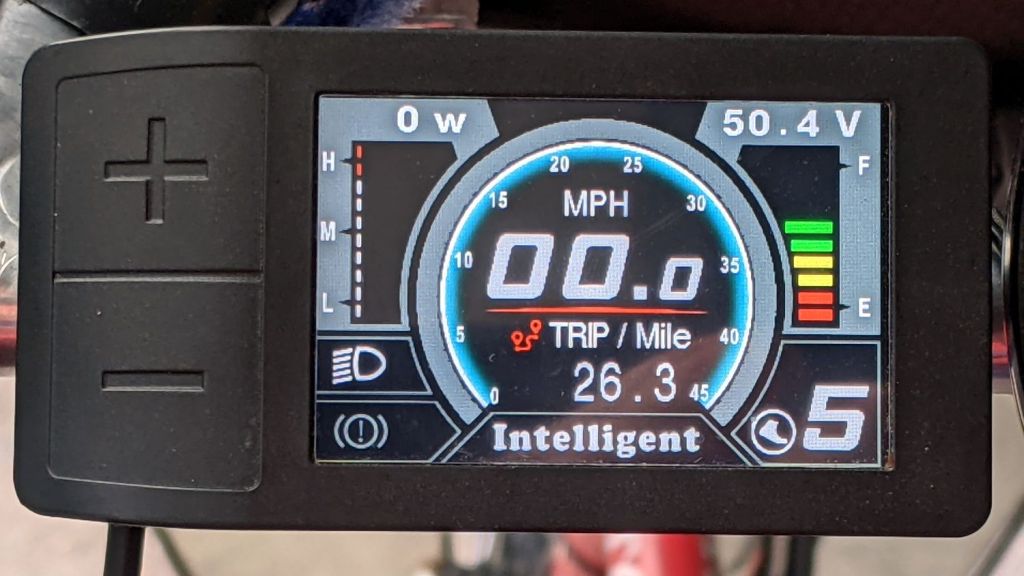
    So level 5 now selects 75% × 20% = 15% of the motor’s nominal 750 W:

    Tour Easy Bafang - display 26 mi
    Tour Easy Bafang – display 26 mi

    Call it 115 W: we’re both getting plenty of exercise!
  • 1-by-One Folding Bluetooth Keyboard: Flex Cable Fix

    1-by-One Folding Bluetooth Keyboard: Flex Cable Fix

    Four years ago I got a folding Bluetooth keyboard for my then-newish Pixel phone:

    Folding keyboard - front
    Folding keyboard – front

    A few days ago, the 2 W S X Win keys stopped working, suggesting a problem with the matrix scan of that column.

    The trim cover over the fold on the back of the keyboard disengages from the hinge with gentle prying at the obvious places, exposing a flex cable pressed against a disturbingly right-angled edge:

    Folding keyboard - acute cable fold edge
    Folding keyboard – acute cable fold edge

    Unfolding the keyboard makes the acute bend against the case obvious, even though it’s hidden under the cable:

    Folding keyboard - failed cable - borrom view
    Folding keyboard – failed cable – borrom view

    Some tedious poking around with a continuity meter revealed not only a broken trace, but a crack in the flex cable:

    Folding keyboard - cracked flex conductor
    Folding keyboard – cracked flex conductor

    Protip: when you have nothing to lose, poke a pin through the flex cable into the trace to localize the break. The point leaves little holes, but so what?

    I scraped off the black coating and the insulation over the traces with an Xacto knife under the microscope, which definitely reveals my need for a tiny Waldo manipulator.

    Coating the exposed copper with solder and bridging the crack with one strand of the finest wire in my collection produced a truly horrific scene:

    Folding keyboard - patched flex conductors
    Folding keyboard – patched flex conductors

    The glop on the left is flux applied before soldering. The rugged terrain on the right is the exceedingly gummy adhesive holding the cable to the keyboard, which turned out to be surprisingly heat-sensitive.

    Fairly obviously, those patches will not survive much more flexing, so wrap the cable with Kapton tape and apply a stiffening layer of thick plastic tape:

    Folding keyboard - reinforced cable section
    Folding keyboard – reinforced cable section

    Apply more reinforcing tape and button it up again:

    Folding keyboard - reinforced cable flex edge
    Folding keyboard – reinforced cable flex edge

    I stuck the flex cable down with the repaired joint about a millimeter under that sharp edge, with double-sided sticky tape underneath to help immobilize the bruised area.

    While I had the covers off, I also reinforced the same section of the cable on the other side of the keyboard, in the hopes of preventing a crack.

    I have little faith in the long-term survival of this repair. Similar keyboards routinely emerge from the quantum froth of randomly named Amazon sellers, most of which have negative reviews reporting the failure of entire key columns; there’s no indication of any design improvement.

    The alert reader will have noted the cable has eight traces, enough for a 3×5 matrix of 15 keys, but the folding wing has 16 keys: the second row has four keys. I have no idea how they made that work, other than perhaps resistive coding for some of the keys.

  • Tour Easy 1 W Amber Running Light: Holder and First Light

    Tour Easy 1 W Amber Running Light: Holder and First Light

    Wrapping a left-side ball mount around the PVC case produced a holder:

    Fairing 1 W LED Mount - Left side - show view
    Fairing 1 W LED Mount – Left side – show view

    Which looks like this in real life:

    1 W Amber Running Light - installed front
    1 W Amber Running Light – installed front

    The support structure under the arch required a bit more cleanup than it got, so the clamp didn’t quite close around the ball on the first full test:

    1 W Amber Running Light - installed side
    1 W Amber Running Light – installed side

    Both the phone camera and the eyeballometer report the 1 W amber LED isn’t quite as bright as the 400 lumen Anker flashlight on its low setting:

    1 W Amber Running Light - First Light
    1 W Amber Running Light – First Light

    Stir the unusual (for a bike) amber color together with some blinkiness, though, and it’s definitely attention-getting.

    The OpenSCAD source code as a GitHub Gist:

    // Tour Easy Fairing Flashlight Mount
    // Ed Nisley KE4ZNU – July 2017
    // August 2017 –
    // August 2020 – add reinforcing columns under mount cradle
    // August 2021 – 1 W Amber LED
    /* [Build Options] */
    FlashName = "1WLED"; // [AnkerLC40,AnkerLC90,J5TactV2,InnovaX5,Sidemarker,Clearance,Laser,1WLED]
    Component = "BallClamp"; // [Ball, BallClamp, Mount, Plates, Bracket, Complete]
    Layout = "Build"; // [Build, Show]
    Support = true;
    MountSupport = true;
    /* [Hidden] */
    ThreadThick = 0.25; // [0.20, 0.25]
    ThreadWidth = 0.40; // [0.40]
    function IntegerMultiple(Size,Unit) = Unit * ceil(Size / Unit);
    Protrusion = 0.01; // [0.01, 0.1]
    HoleWindage = 0.2;
    /* [Fairing Mount] */
    Side = "Right"; // [Right,Left]
    ToeIn = -10; // inward from ahead
    Tilt = 20; // upward from forward (M=20 E=10)
    Roll = 0; // outward from top
    //- Screws and inserts
    /* [Hidden] */
    ID = 0;
    OD = 1;
    LENGTH = 2;
    /* [Hidden] */
    ClampInsert = [3.0,4.2,8.0];
    ClampScrew = [3.0,5.9,35.0]; // thread dia, head OD, screw length
    ClampScrewWasher = [3.0,6.75,0.5];
    ClampScrewNut = [3.0,6.1,4.0]; // nyloc nut
    /* [Hidden] */
    F_NAME = 0;
    F_GRIPOD = 1;
    F_GRIPLEN = 2;
    LightBodies = [
    ["AnkerLC90",26.6,48.0],
    ["AnkerLC40",26.6,55.0],
    ["J5TactV2",25.0,30.0],
    ["InnovaX5",22.0,55.0],
    ["Sidemarker",15.0,20.0],
    ["Clearance",50.0,20.0],
    ["Laser",10.0,30.0],
    ["1WLED",25.4,40.0],
    ];
    //- Fairing Bracket
    // Magic numbers taken from the actual fairing mount
    /* [Hidden] */
    inch = 25.4;
    BracketHoleOD = 0.25 * inch; // 1/4-20 bolt holes
    BracketHoleOC = 1.0 * inch; // fairing hole spacing
    // usually 1 inch, but 15/16 on one fairing
    Bracket = [48.0,16.3,3.6 – 0.6]; // fairing bracket end plate overall size
    BracketHoleOffset = (3/8) * inch; // end to hole center
    BracketM = 3.0; // endcap arc height
    BracketR = (pow(BracketM,2) + pow(Bracket[1],2)/4) / (2*BracketM); // … radius
    //- Base plate dimensions
    Plate = [100.0,30.0,6*ThreadThick + Bracket[2]];
    PlateRad = Plate[1]/4;
    RoundEnds = true;
    echo(str("Base plate thick: ",Plate[2]));
    //- Select flashlight data from table
    echo(str("Flashlight: ",FlashName));
    FlashIndex = search([FlashName],LightBodies,1,0)[F_NAME];
    //- Set ball dimensions
    BallWall = 5.0; // max ball wall thickness
    echo(str("Ball wall: ",BallWall));
    BallOD = IntegerMultiple(LightBodies[FlashIndex][F_GRIPOD] + 2*BallWall,1.0);
    echo(str(" OD: ",BallOD));
    BallLength = IntegerMultiple(min(sqrt(pow(BallOD,2) – pow(LightBodies[FlashIndex][F_GRIPOD],2)) – 2*4*ThreadThick,
    LightBodies[FlashIndex][F_GRIPLEN]),1.0);
    echo(str(" length: ",BallLength));
    BallSides = 8*4;
    //- Set clamp ring dimensions
    //ClampOD = 50;
    ClampOD = BallOD + 2*5;
    echo(str("Clamp OD: ",ClampOD));
    ClampLength = min(20.0,0.75*BallLength);
    echo(str(" length: ",ClampLength));
    ClampScrewOC = IntegerMultiple((ClampOD + BallOD)/2,1);
    echo(str(" screw OC: ",ClampScrewOC));
    TiltMirror = (Side == "Right") ? [0,0,0] : [0,1,0];
    //- Adjust hole diameter to make the size come out right
    module PolyCyl(Dia,Height,ForceSides=0) { // based on nophead's polyholes
    Sides = (ForceSides != 0) ? ForceSides : (ceil(Dia) + 2);
    FixDia = Dia / cos(180/Sides);
    cylinder(r=(FixDia + HoleWindage)/2,h=Height,$fn=Sides);
    }
    //- Fairing Bracket
    // This part of the fairing mount supports the whole flashlight mount
    // Centered on screw hole
    module Bracket() {
    linear_extrude(height=Bracket[2],convexity=2)
    difference() {
    translate([(Bracket[0]/2 – BracketHoleOffset),0,0])
    offset(delta=ThreadWidth)
    intersection() {
    square([Bracket[0],Bracket[1]],center=true);
    union() {
    for (i=[-1,0,1]) // middle circle fills gap
    translate([i*(Bracket[0]/2 – BracketR),0])
    circle(r=BracketR);
    }
    }
    circle(d=BracketHoleOD/cos(180/8),$fn=8); // dead center at the origin
    }
    }
    //- General plate shape
    // Centered in the middle of the plate
    module PlateBlank() {
    difference() {
    intersection() {
    translate([0,0,Plate[2]/2]) // select upper half of spheres
    cube(Plate,center=true);
    hull()
    if (RoundEnds)
    for (i=[-1,1])
    translate([i*(Plate[0]/2 – PlateRad),0,0])
    resize([Plate[1]/2,Plate[1],2*Plate[2]])
    sphere(r=PlateRad); // nice round ends!
    else
    for (i=[-1,1], j=[-1,1])
    translate([i*(Plate[0]/2 – PlateRad),j*(Plate[1]/2 – PlateRad),0])
    resize([2*PlateRad,2*PlateRad,2*Plate[2]])
    sphere(r=PlateRad); // nice round corners!
    }
    translate([BracketHoleOC,0,-Protrusion]) // punch screw holes
    PolyCyl(BracketHoleOD,2*Plate[2],8);
    translate([-BracketHoleOC,0,-Protrusion])
    PolyCyl(BracketHoleOD,2*Plate[2],8);
    }
    }
    //- Inner plate
    module InnerPlate() {
    difference() {
    PlateBlank();
    translate([-BracketHoleOC,0,Plate[2] – Bracket[2] + Protrusion]) // punch fairing bracket
    Bracket();
    }
    }
    //- Outer plate
    // With optional legend for orientation and parameters
    module OuterPlate(Legend = true) {
    TextRotate = (Side == "Left") ? 0 : 180;
    difference() {
    PlateBlank();
    if (Legend)
    mirror([0,1,0])
    translate([0,0,-Protrusion])
    linear_extrude(height=3*ThreadThick + Protrusion) {
    translate([BracketHoleOC + 15,0,0])
    text(text=">>>",size=5,spacing=1.20,font="Arial",halign="center",valign="center");
    translate([-BracketHoleOC,8,0]) rotate(TextRotate)
    text(text=str("Toe ",ToeIn),size=5,spacing=1.20,font="Arial",halign="center",valign="center");
    translate([-BracketHoleOC,-8,0]) rotate(TextRotate)
    text(text=str("Tilt ",Tilt),size=5,spacing=1.20,font="Arial",halign="center",valign="center");
    translate([BracketHoleOC,-8,0]) rotate(TextRotate)
    text(text=Side,size=5,spacing=1.20,font="Arial",halign="center",valign="center");
    translate([BracketHoleOC,8,0]) rotate(TextRotate)
    text(text=str("Roll ",Roll),size=5,spacing=1.20,font="Arial",halign="center",valign="center");
    translate([0,0,0])
    rotate(90)
    text(text="KE4ZNU",size=4,spacing=1.20,font="Arial",halign="center",valign="center");
    }
    }
    }
    //- Slotted ball around flashlight
    // Print with brim to ensure adhesion!
    module SlotBall() {
    NumSlots = 8*2; // must be even, half cut from each end
    SlotWidth = 2*ThreadWidth;
    SlotBaseThick = 10*ThreadThick; // enough to hold finger ends together
    RibLength = (BallOD – LightBodies[FlashIndex][F_GRIPOD])/2;
    translate([0,0,(Layout == "Build") ? BallLength/2 : 0])
    rotate([0,(Layout == "Show") ? 90 : 0,0])
    difference() {
    intersection() {
    sphere(d=BallOD,$fn=2*BallSides); // basic ball
    cube([2*BallOD,2*BallOD,BallLength],center=true); // trim to length
    }
    translate([0,0,-LightBodies[FlashIndex][F_GRIPOD]])
    rotate(180/BallSides)
    PolyCyl(LightBodies[FlashIndex][F_GRIPOD],2*BallOD,BallSides); // remove flashlight body
    for (i=[0:NumSlots/2 – 1]) { // cut slots
    a=i*(2*360/NumSlots);
    SlotCutterLength = LightBodies[FlashIndex][F_GRIPOD];
    rotate(a)
    translate([SlotCutterLength/2,0,SlotBaseThick])
    cube([SlotCutterLength,SlotWidth,BallLength],center=true);
    rotate(a + 360/NumSlots)
    translate([SlotCutterLength/2,0,-SlotBaseThick])
    cube([SlotCutterLength,SlotWidth,BallLength],center=true);
    }
    }
    color("Yellow")
    if (Support && (Layout == "Build")) {
    for (i=[0:NumSlots-1]) {
    a = i*360/NumSlots;
    rotate(a + 180/NumSlots)
    translate([(LightBodies[FlashIndex][F_GRIPOD] + RibLength)/2 + ThreadWidth,0,BallLength/(2*4)])
    cube([RibLength,2*ThreadWidth,BallLength/4],center=true);
    }
    }
    }
    //- Clamp around flashlight ball
    BossLength = ClampScrew[LENGTH] – 1*ClampScrewWasher[LENGTH];
    BossOD = ClampInsert[OD] + 2*(6*ThreadWidth);
    module BallClamp(Section="All") {
    difference() {
    union() {
    intersection() {
    sphere(d=ClampOD,$fn=BallSides); // exterior ball clamp
    cube([ClampLength,2*ClampOD,2*ClampOD],center=true); // aiming allowance
    }
    hull()
    for (j=[-1,1])
    translate([0,j*ClampScrewOC/2,-BossLength/2])
    cylinder(d=BossOD,h=BossLength,$fn=6);
    }
    sphere(d=(BallOD + 1*ThreadThick),$fn=BallSides); // interior ball with minimal clearance
    for (j=[-1,1]) {
    translate([0,j*ClampScrewOC/2,-ClampOD]) // screw clearance
    PolyCyl(ClampScrew[ID],2*ClampOD,6);
    translate([0,j*ClampScrewOC/2, // insert clearance
    -0*(BossLength/2 – ClampInsert[LENGTH] – 3*ThreadThick) + Protrusion])
    rotate([0,180,0])
    PolyCyl(ClampInsert[OD],2*ClampOD,6);
    translate([0,j*ClampScrewOC/2, // insert transition
    -(BossLength/2 – ClampInsert[LENGTH] – 3*ThreadThick)])
    cylinder(d1=ClampInsert[OD]/cos(180/6),d2=ClampScrew[ID],h=6*ThreadThick,$fn=6);
    }
    if (Section == "Top")
    translate([0,0,-ClampOD/2])
    cube([2*ClampOD,2*ClampOD,ClampOD],center=true);
    else if (Section == "Bottom")
    translate([0,0,ClampOD/2])
    cube([2*ClampOD,2*ClampOD,ClampOD],center=true);
    }
    color("Yellow")
    if (Support) { // ad-hoc supports
    NumRibs = 6;
    RibLength = 0.5 * BallOD;
    RibWidth = 1.9*ThreadWidth;
    SupportOC = ClampLength / NumRibs;
    if (Section == "Top") // base plate for adhesion
    translate([0,0,ThreadThick])
    cube([ClampLength + 6*ThreadWidth,RibLength,2*ThreadThick],center=true);
    else if (Section == "Bottom")
    translate([0,0,-ThreadThick])
    cube([ClampLength + 6*ThreadWidth,RibLength,2*ThreadThick],center=true);
    render(convexity=2*NumRibs)
    intersection() {
    sphere(d=BallOD – 0*ThreadWidth); // cut at inner sphere OD
    cube([ClampLength + 2*ThreadWidth,RibLength,BallOD],center=true);
    if (Section == "Top") // select only desired section
    translate([0,0,ClampOD/2])
    cube([2*ClampOD,2*ClampOD,ClampOD],center=true);
    else if (Section == "Bottom")
    translate([0,0,-ClampOD/2])
    cube([2*ClampOD,2*ClampOD,ClampOD],center=true);
    union() { // ribs for E-Z build
    for (j=[-1,0,1])
    translate([0,j*SupportOC,0])
    cube([ClampLength,RibWidth,1.0*BallOD],center=true);
    for (i=[0:NumRibs]) // allow NumRibs + 1 to fill the far end
    translate([i*SupportOC – ClampLength/2,0,0])
    rotate([0,90,0])
    cylinder(d=BallOD – 2*ThreadThick,
    h=RibWidth,$fn=BallSides,center=true);
    }
    }
    }
    }
    //- Mount between fairing plate and flashlight ball
    // Build with support for bottom of clamp screws!
    module Mount() {
    MountShift = [ClampOD*sin(ToeIn/2),0,ClampOD/2];
    OuterPlate();
    mirror(TiltMirror) {
    intersection() {
    translate(MountShift)
    rotate([-Roll,ToeIn,Tilt])
    BallClamp("Bottom");
    translate([0,0,Plate.x/2 + 3*ThreadThick])
    cube(Plate.x,center=true);
    }
    if (MountSupport) // anchor outer corners at worst overhang
    color("Yellow") {
    RibWidth = 1.9*ThreadWidth;
    SupportOC = 0.1 * ClampLength;
    intersection() {
    difference() {
    rotate([0,0,Tilt])
    translate([(ClampOD – BallOD)*sin(ToeIn/2),0,3*ThreadThick]) // Z = avoid legends
    for (i=[-4.5,-2.5,0,2.0,4.5])
    translate([i*SupportOC – 0.0,0,(5 + Plate[2])/2])
    cube([RibWidth,0.7*ClampOD,(5 + Plate[2])],center=true);
    translate(MountShift)
    rotate([-Roll,ToeIn,Tilt])
    sphere(d=ClampOD – 2*ThreadWidth,$fn=BallSides);
    }
    translate([0,0,ClampOD/2])
    cube([Plate.x,Plate.y,ClampOD],center=true);
    }
    }
    }
    }
    //- Build things
    if (Component == "Bracket")
    Bracket();
    if (Component == "Ball")
    SlotBall();
    if (Component == "BallClamp")
    if (Layout == "Show")
    BallClamp("All");
    else if (Layout == "Build")
    BallClamp("Top");
    if (Component == "Mount")
    Mount();
    if (Component == "Plates") {
    translate([0,0.7*Plate[1],0])
    InnerPlate();
    translate([0,-0.7*Plate[1],0])
    OuterPlate(Legend = false);
    }
    if (Component == "Complete") {
    OuterPlate();
    mirror(TiltMirror) {
    translate([0,0,ClampOD/2 + BossOD*abs(sin(ToeIn))]) {
    rotate([-Roll,ToeIn,Tilt])
    SlotBall();
    rotate([-Roll,ToeIn,Tilt])
    BallClamp();
    }
    }
    }

  • Tour Easy 1 W Amber Running Light: Firmware

    Tour Easy 1 W Amber Running Light: Firmware

    Rather than conjure a domain specific language to blink an LED, it’s easier to use Morse code:

    Herewith, Arduino source code using Mark Fickett’s Morse library to blink an amber running light:

    // Tour Easy Running Light
    // Ed Nisley - KE4ZNU
    // September 2021
    
    #include <morse.h>
    
    #define PIN_OUTPUT	13
    
    LEDMorseSender Morser(PIN_OUTPUT,(float)10.0);
    
    void setup()
    {
    	Morser.setup();
    
        Morser.setMessage(String("qst de ke4znu "));
        Morser.sendBlocking();
    
    //    Morser.setWPM((float)3.0);
        Morser.setSpeed(50);
    	Morser.setMessage(String("s   "));
    }
    
    void loop()
    {
    	if (!Morser.continueSending())
    		Morser.startSending();
    
    }
    

    Bonus: a trivially easy ID string.

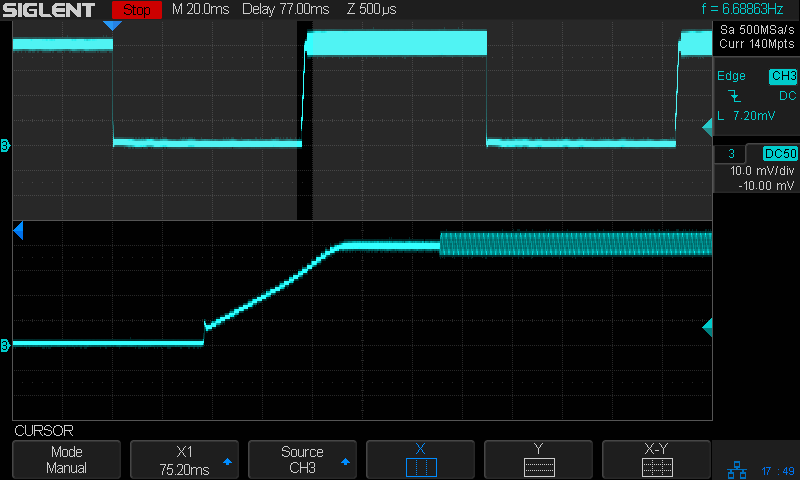
    A dit time of 50 ms produces a brief flash that’s probably about as fast as it can be, given that the regulator must ramp the LED current up from zero after its Enable input goes high. In round numbers, a 50ms dit corresponds to 24 WPM Morse.

    Each of the three blanks after the “s” produces a seven element word space to keep the blinks from running together.

    Sending “b ” (two blanks) with a 75 ms dit time may be more noticeable. You should tune for maximum conspicuity on your rides.

    1 W Amber Running Light - installed front
    1 W Amber Running Light – installed front

    On our first ride, Mary got a friendly wave from a motorcyclist, an approving toot from a driver, and several “you go first” gestures at intersections.

    Works for us …