The Smell of Molten Projects in the Morning

Ed Nisley's Blog: Shop notes, electronics, firmware, machinery, 3D printing, laser cuttery, and curiosities. Contents: 100% human thinking, 0% AI slop.

Category: Amateur Radio

Using and building radio gadgetry

  • APRS Turn Slope Units

    There’s a fundamental error in my writeup about setting the APRS Smart Beaconing parameters for the bike trackers: I blundered the units of Turn Slope.

    Rich Painter recently explained how that works:

    I ran across your blog on Smart Beaconing and saw something that needed correction.

    You state the Turn Slope is in units Degrees / MPH

    This is incorrect. Although the term Turn Slope is not a real slope (such as rise/run classically) that is what the originators used albeit incorrectly. They do however correctly attribute the units to MPH * Degrees (a product and hence not really a slope).

    In their formula they calculate a turn threshold as:
    turn_threshold = min_turn_angle + turn_slope / speed

    Looking at the units we see:
    = Degrees + (MPH * Degrees) / MPH

    which yields
    = Degrees + Degrees

    Which makes sense. It is too bad that the originators used the wrong term of Turn Slope which confuses most people. A better term would have been Turn Product.

    In looking back over that post, I have no idea where or how I got the wrong units, other than by the plain reading of the “variable name”.

    As he explained in a followup note:

    As for units… I was introduced to making unit balance way back in 1967-1968 science class in HS by a really fine science teacher. It has served me all my life and I’m thankful for that training.

    I have ever since told that teacher so!

    A while back, our Larval Engineer rammed an engineering physics class head-on and sent me a meme image, observing that I’d trained her well: if the units don’t work out, then you’re doing it wrong.

    Yes, yes, I do care about the units:

    Give a shit about the units
    Give a shit about the units
  • Sony HDR-AS30V Audio vs. Wind Noise

    With the Sony HDR-AS30V in its skeleton frame atop my bike helmet, the audio track for all my rides consists entirely of horrendous wind noise. You can get an idea of the baseline quality from the sound track of a recent Walkway Over The Hudson crossing.

    The camera has two mics, although I’m not sure 15 mm of separation really produces meaningful stereo sound:

    Sony HDR-AS30V - front view
    Sony HDR-AS30V – front view

    Note that two of the five pores on each side are closed flat-bottom pits. As with earbud vents , it must be a stylin’ thing.

    I added a rounded pad of the same acoustic foam that forms an effective wind noise buffer for the boom mic:

    Sony HDR-AS30V - foam mic cover
    Sony HDR-AS30V – foam mic cover

    That reduced the overall noise load by buffering direct wind impact, but non-radio conversations remained unintelligible; there’s just too much low-frequency energy.

    Surprisingly, closing the mic pores with ordinary adhesive tape didn’t impair the audio in a quiet room:

    Sony HDR-AS30V - closed mic pores
    Sony HDR-AS30V – closed mic pores

    Out on the road that’s even better than foam over open mic pores; I think it reduces the peak volume enough that the internal compression can regain control. Sticking the foam pad over the tape slightly reduced the noise during high-speed (for me, anyhow) parts of the ride, but didn’t make much difference overall.

    The wind noise remains too high for comfort, even if I can now hear cleats clicking into pedals, shifters snapping, and even the horrible background music when I’m stopped next to the Mobil gas station on the corner.

    Next step: raid the cloth scrap box for a flap of faux fur to make a mic mop. This might be an opportunity to recycle some roadkill

  • If You Can Get To BNC, You Can Get To Anything

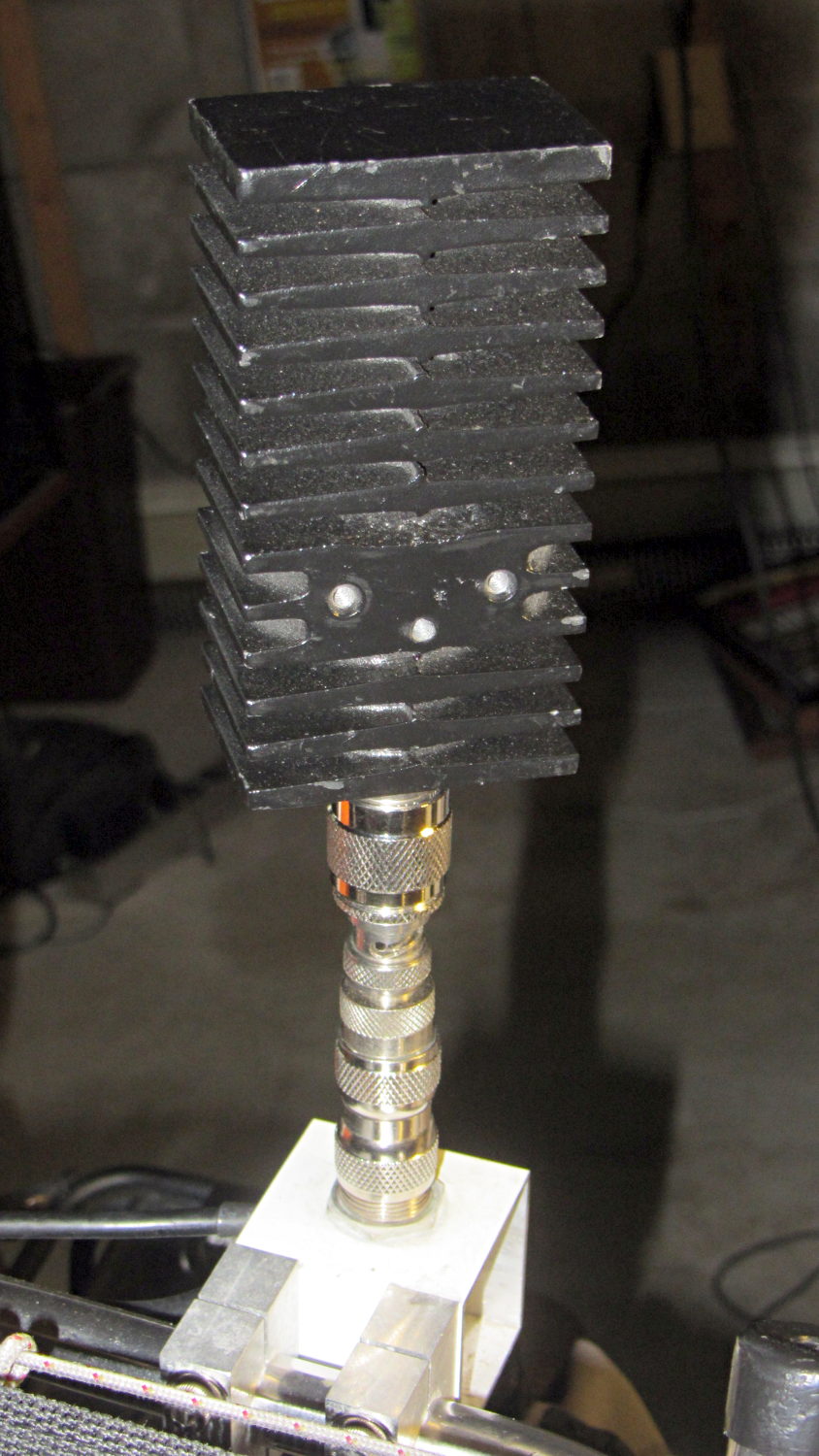
    That’s what Mad Phil taught me, back in the day, and it’s still true:

    15 W Dummy Load - Stacked Adapters
    15 W Dummy Load – Stacked Adapters

    From the top:

    • 15 W dummy load with N female
    • N male to BNC female
    • BNC male to UHF female
    • UHF male to UHF male
    • UHF female on homebrew antenna mount

    Obviously, I don’t have enough adapters: I need one with N male to UHF male.

    I actually spent money to get from the reverse-polarity SMA connector on the Wouxun radios directly to UHF female, matching the cable to the antenna mount in one step.

    Sometimes an unsteady ziggurat of adapters isn’t appropriate.

  • Tour Easy: Arkel RT-40 Underseat Packs vs. HT Mount

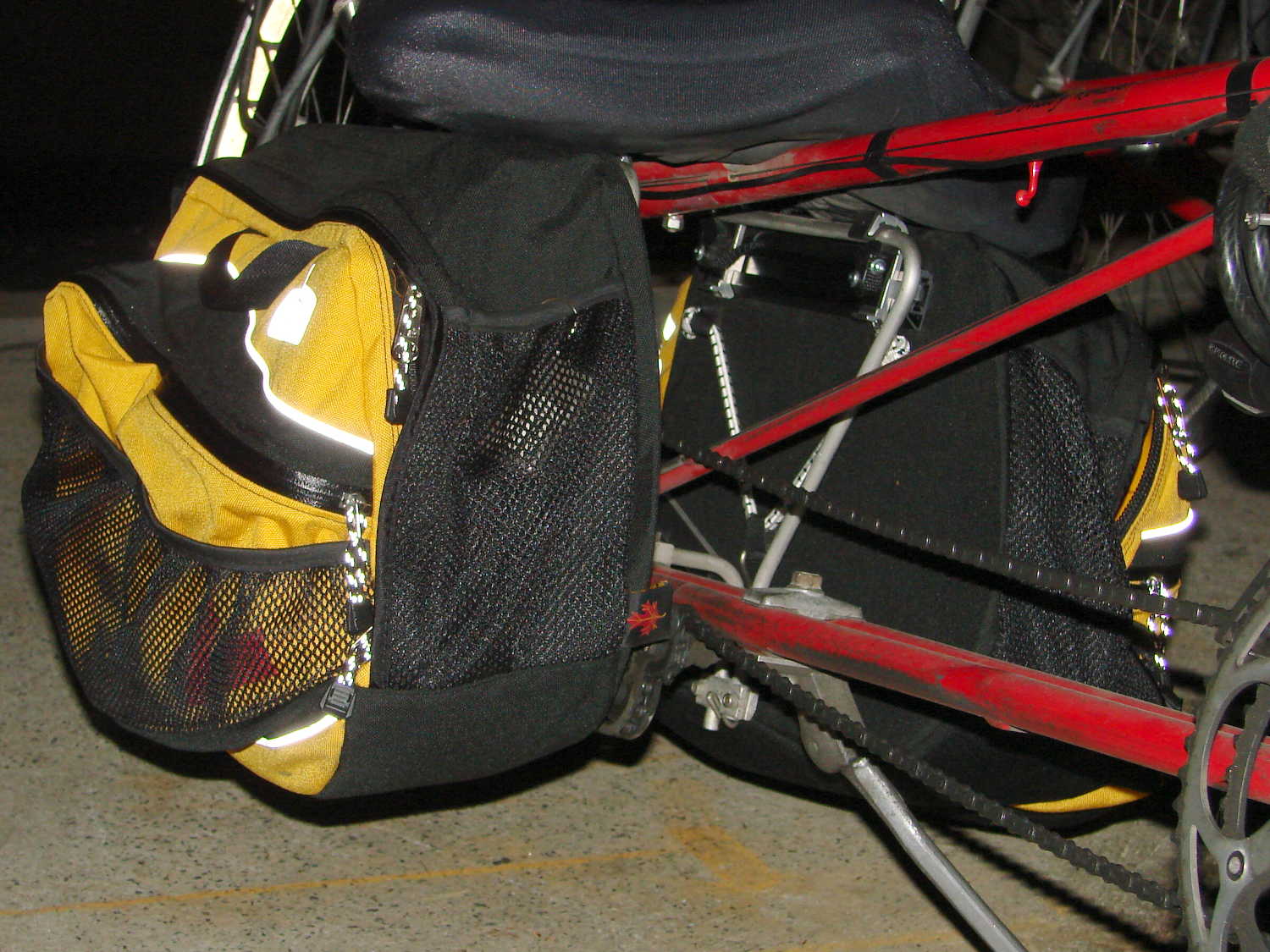
    I just replaced the rather old and tattered Easy Reacher underseat packs on my Tour Easy ‘bent with shiny new Arkel RT-40 packs:

    Arkel RT-40 bag on Tour Easy - front view
    Arkel RT-40 bag on Tour Easy – front view

    The retina-burn white reflective tag under the black hand strap is actually a foreshortened view of the Arkel logo.

    They’re longer and taller than the old packs, which isn’t entirely a Good Thing: the inside bag gently kisses the pavement during steeply banked high speed turns. The main compartment is slightly narrower, so I bent the license plates (which used to fit neatly on the bottom) to form a hard floor with a low lip on the inside edge. That, in combination with tightening the pack’s internal strap, prevents the foam-core bottom panel from drooping; maybe the edge won’t hit the pavement quite so often.

    They also ride much higher on the racks. To install the packs, I had to unbolt the seat to raise it upward, slide the packs underneath, twiddle the clamps onto the rack rods, then reinstall the seat. Those puppies are not getting loose without tools and a struggle!

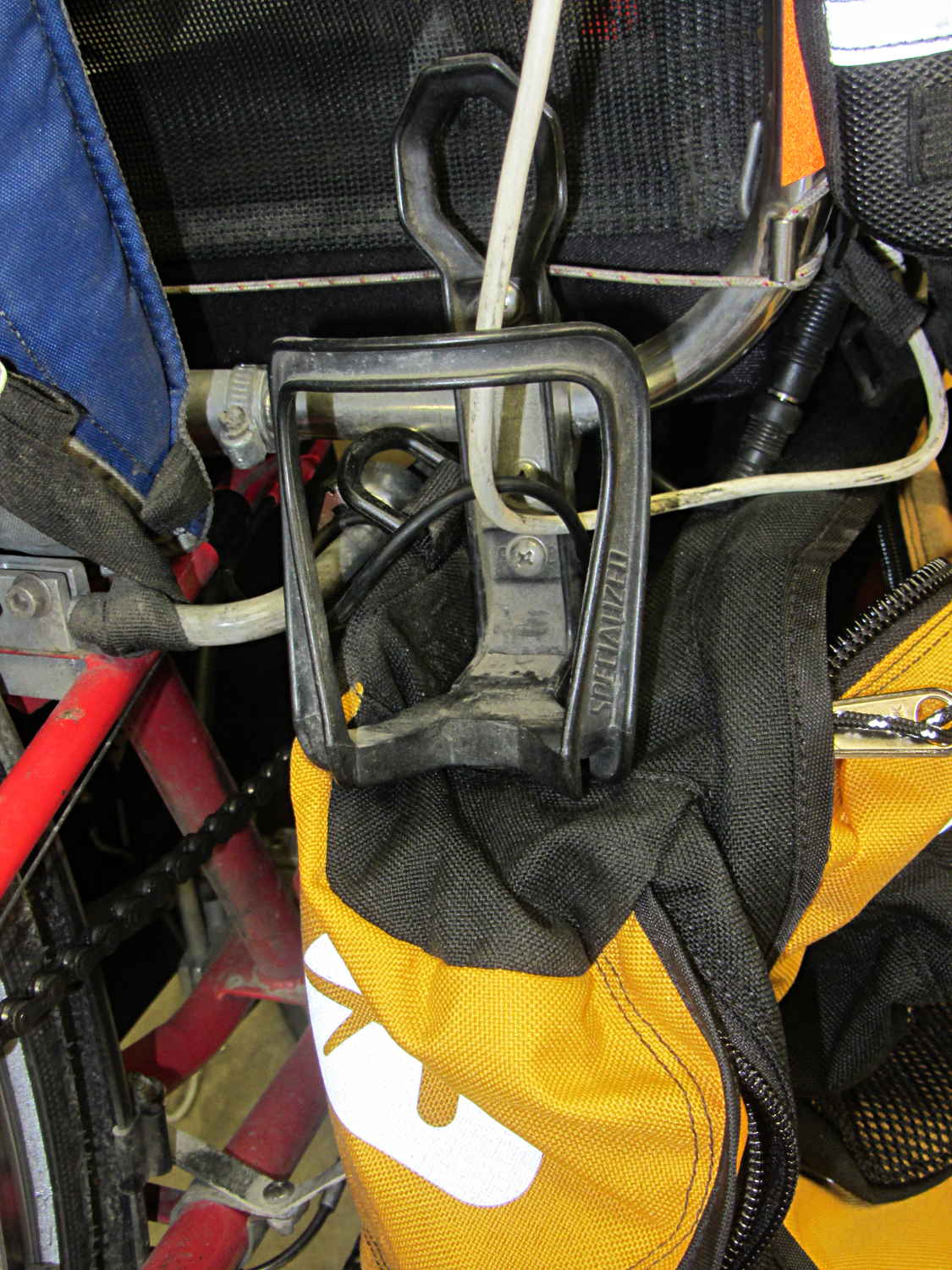
    Because they’re longer, the right pack collided with the HT mount behind the seat:

    Arkel RT-40 bag vs HT holder
    Arkel RT-40 bag vs HT holder

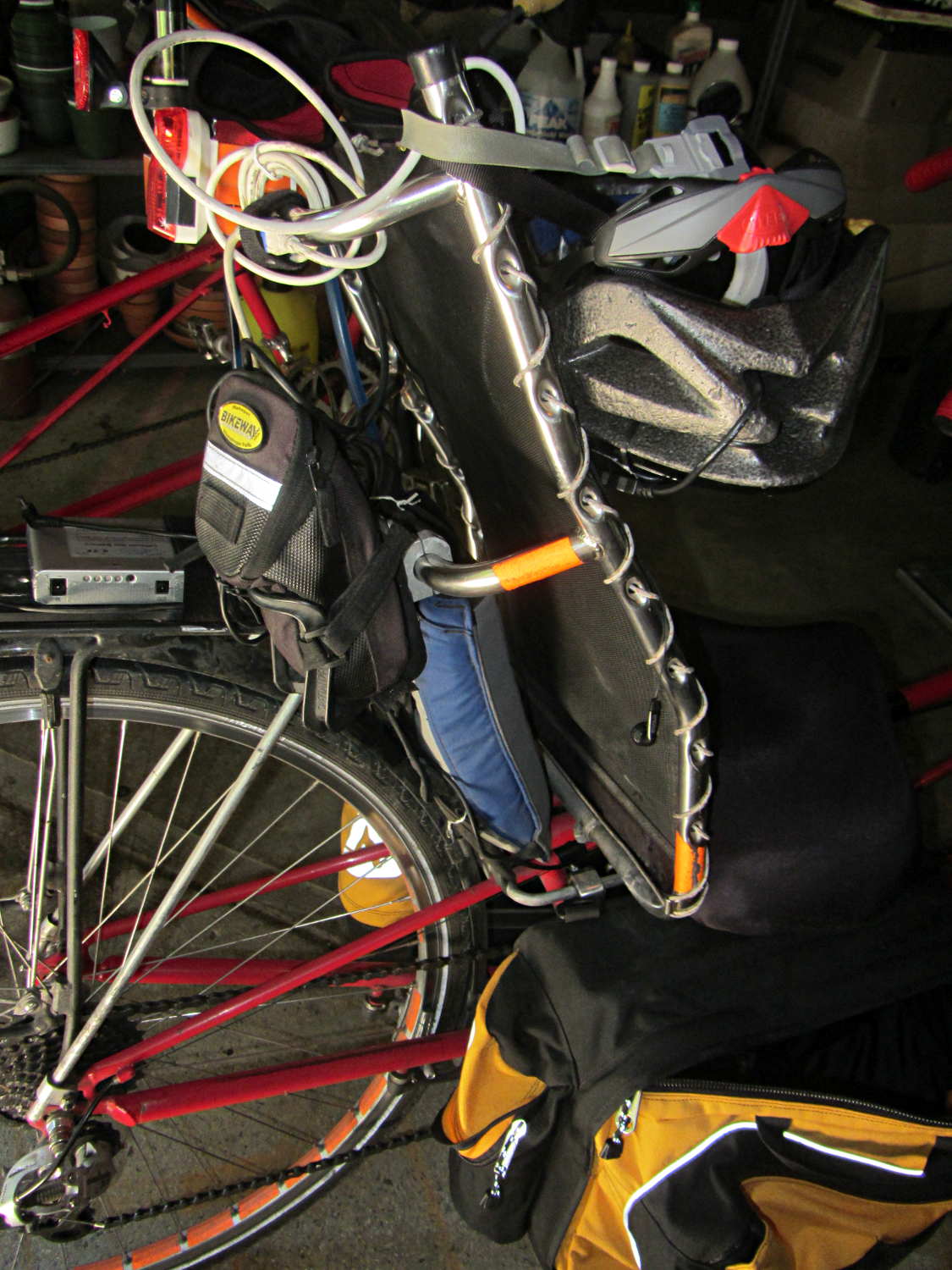
    So I moved the mount up to the middle crossbar:

    Arkel RT-40 bag - relocated HT holder
    Arkel RT-40 bag – relocated HT holder

    I’m not entirely happy with that arrangement, as the holder sits snug against the rear packs. So far, I rarely need those in addition to the RT-40s, as each underseat bag can swallow an upright gallon milk jug or two Butternut squashes in addition to all the other stuff I normally carry.

    The array of reflective patches and piping and pull tabs probably makes me look (more) like a low-flying UFO at night, but that’s fine with me: the more it resembles a UFO, the less hassle I get.


  • Invisible Asterisk: Except Cops

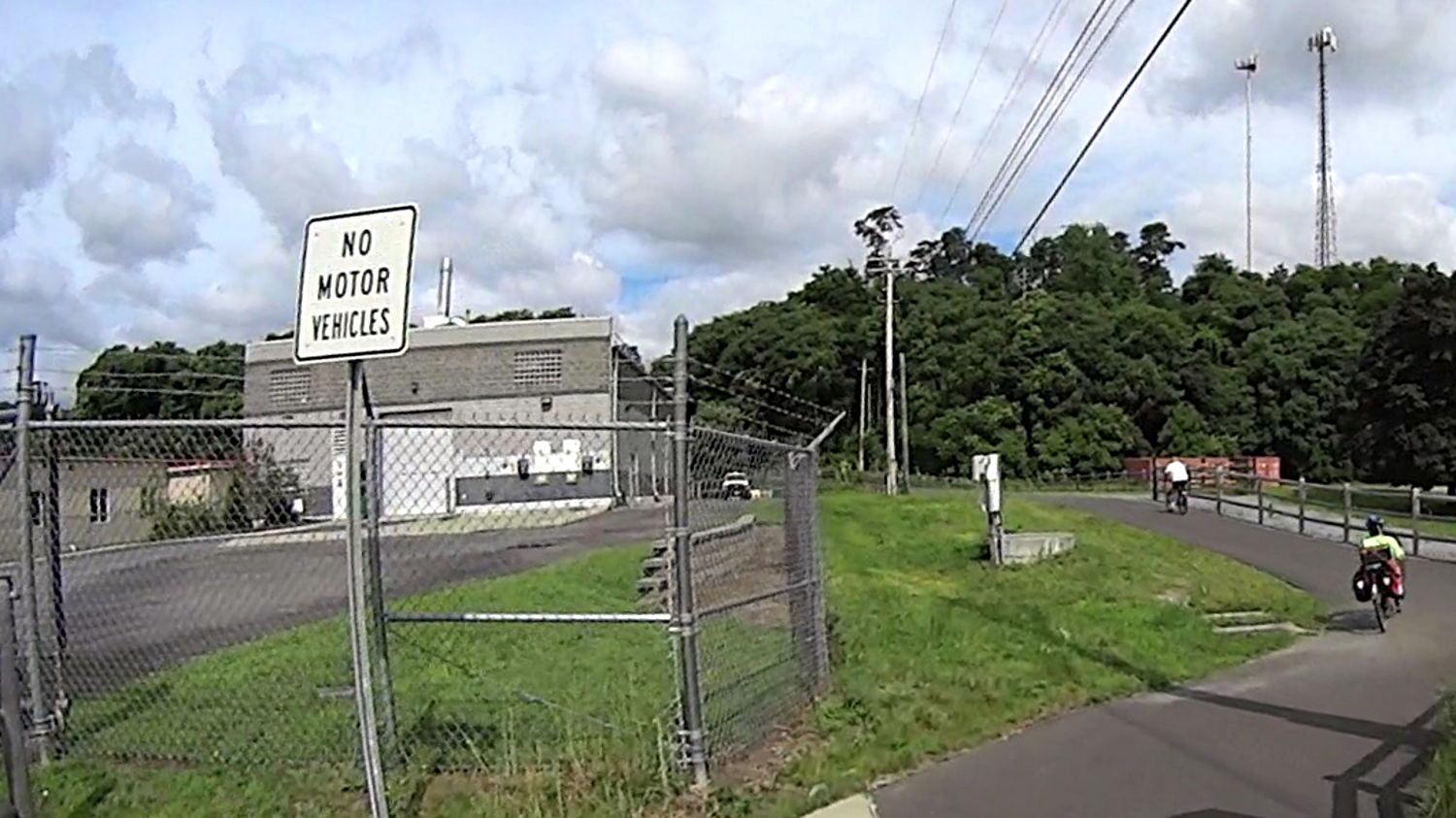
    The signs at every Dutchess Rail Trail grade crossing and access point seem unambiguous:

    DCRT - No Motor Vehicles
    DCRT – No Motor Vehicles

    More specific signs appear at random intervals along the trail:

    DCRT - All Terrain Vehicles Prohibited
    DCRT – All Terrain Vehicles Prohibited

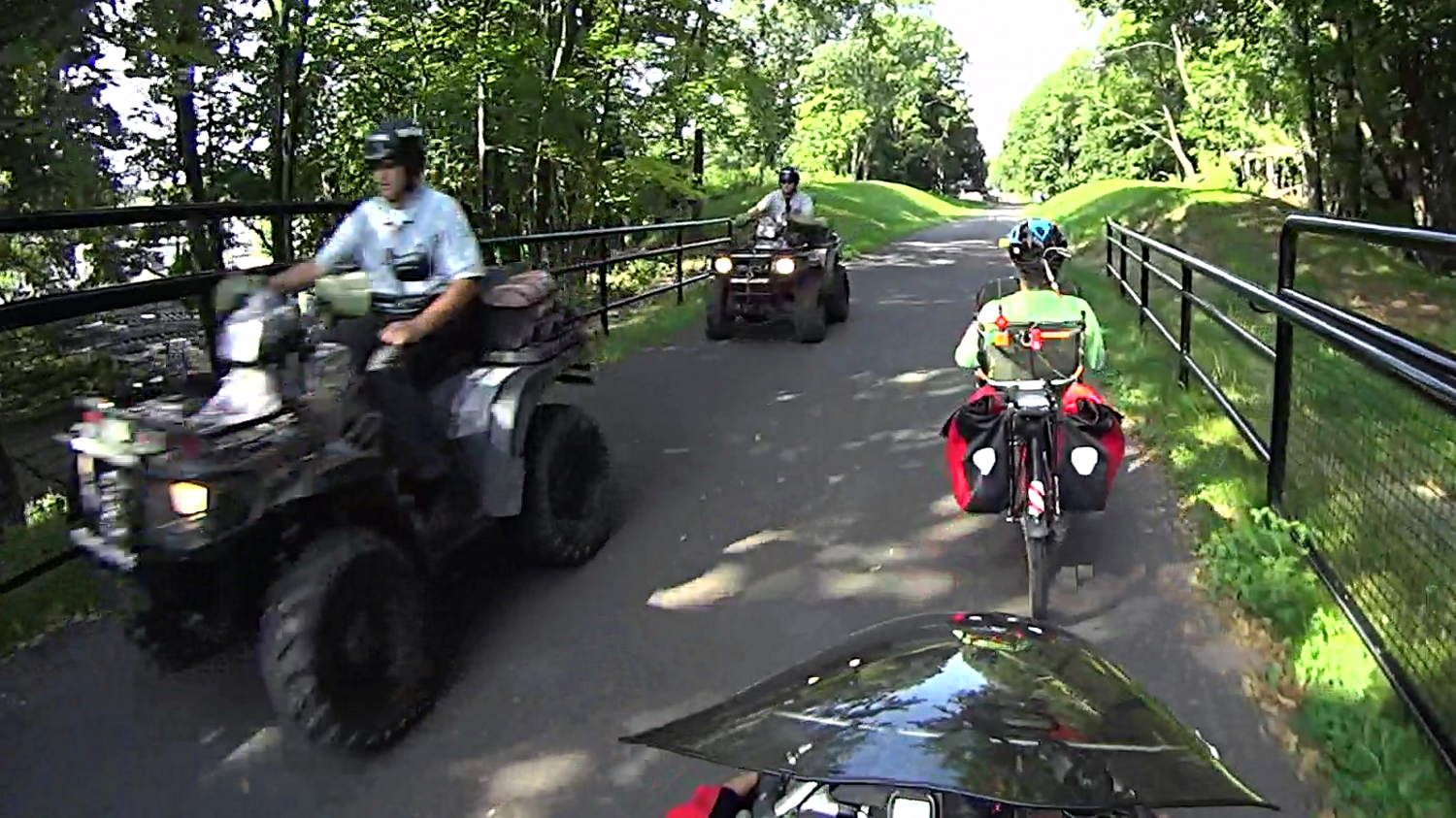
    You can’t see it, but every sign includes an invisible asterisk introducing the invisible clause “Except Cops”:

    DCRT - Sheriff ATV Convoy
    DCRT – Sheriff ATV Convoy

    Back when the Dutchess County deputy sheriffs rode huge ATVs that occupied nearly the entire paved trail and bulldozed everybody out of their way, I had the temerity to ask why they weren’t riding bikes. The deputy sheriff told me, rather condescendingly, that they had to be prepared for anything and that there had already been incidents.

    These little ATVs aren’t quite so imposing and, more likely, also fit on the new bridges and between the bollards, which may explain everything.

    I’ve seen what might be their best use case, although ambulances can attract your attention without an ATV escort:

    DCRT - Sheriff ATV Leading Ambulance
    DCRT – Sheriff ATV Leading Ambulance

    Straight up, I have no objection to police patrols on the rail trail.

    do object to the official mindset that simply adds an invisible exception to any inconvenient rule.

    As I see it, the root cause of the militarized police and extralegal government activities we’ve seen across the country in recent years boils down to “That law / regulation / rule does not apply to us, because we are the government.”

    I can ride the length of the DCRT and back in about two hours, averaging 12 mph, without getting particularly sweaty in the process; the track in that link shows a three hour ride that includes the HVRT and a Walkway scrum, plus the ride from and to home. A police ATV can’t go much faster than that on the trail, even with lights and sirens, because oblivious pedestrians keep getting in the way.

    If an officer on a bike can’t keep up with me, then something has gone badly wrong with the job requirements for becoming a deputy sheriff.

    As far as “being prepared for anything” goes, the cargo capacity of those little ATVs rules out a bunch of hardware that fit in the big ones: anything seems an elastic concept. A bike can carry enough equipment for many incidents; my tool kit weighs more than some bike frames, the packs have plenty of room to spare, and there’s always the trailer option. I doubt genuine Mil-Spec assault rifles would come in handy on the rail trail.

    It’s also not clear why an officer on a bike can’t call for the same backup as an officer on an ATV: those buggies lack fancy VHF antennas, so they’re using a hand-held radio or phone. The 5 W amateur radio on my bike, through a mobile VHF antenna on a crappy ground system, can easily reach local amateur radio repeaters and APRS nodes. Many pedestrians seem absorbed with their phones, so getting microwaves into and out of the trail doesn’t pose much of a problem.

    Cops-on-bikes present a much less aggressive aspect than cops-on-ATVs who ignore the rules that apply to the rest of us.

    They could do it differently, as the department has both bikes and ATVs.

  • Eroded PTT Cable

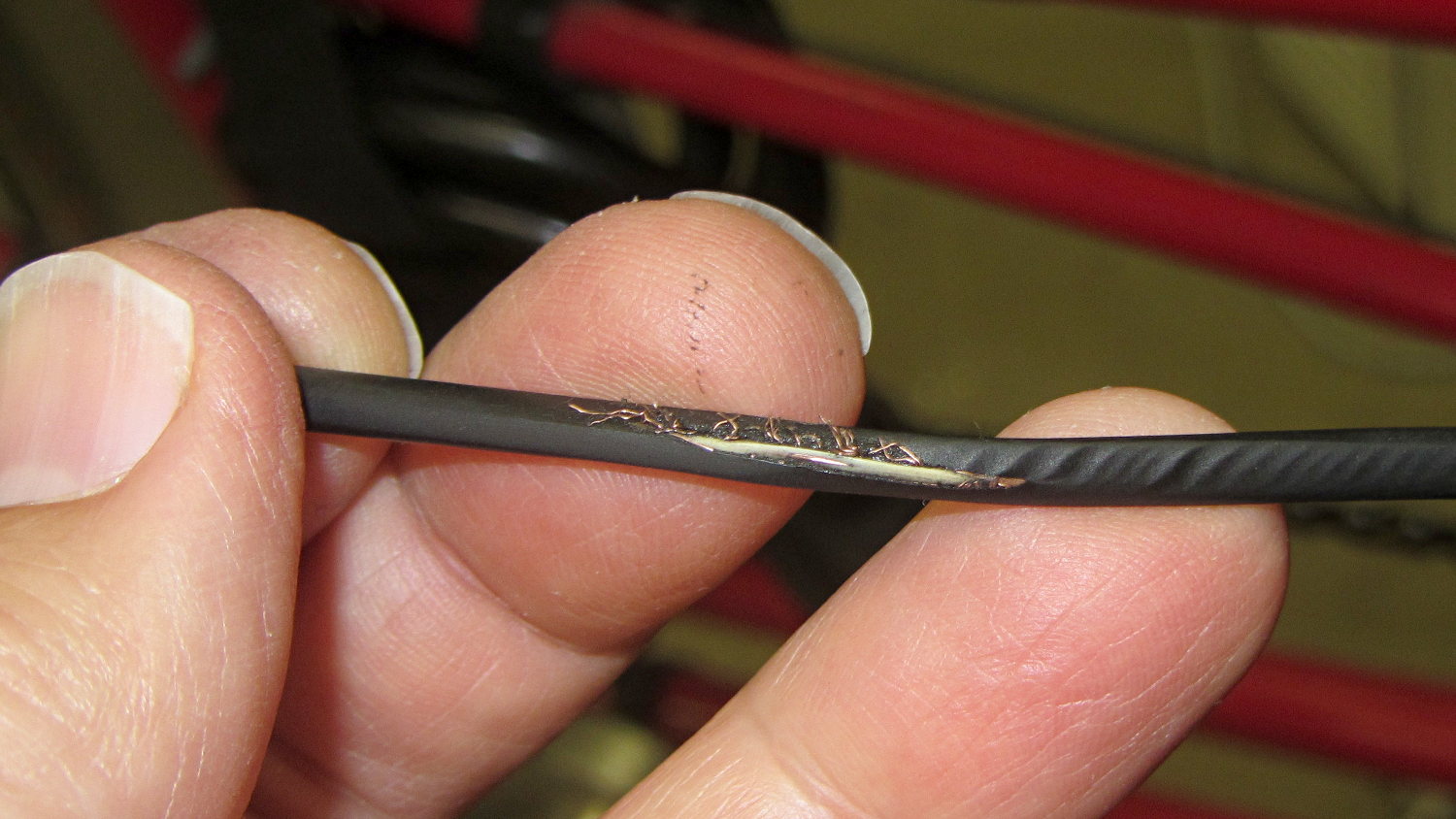
    While installing new underseat packs (about which, more later) on my Tour Easy, I discovered a bight of PTT cable had been touching the top of the chain:

    Eroded PTT cable - Tour Easy
    Eroded PTT cable – Tour Easy

    The gentle ripples to the right of the worn-through section seem particularly nice; you couldn’t do that deliberately if you had to.

    This section of cable should have been taped to the upper frame bars. It’s hidden under the seat, just in front of the rear fender, and between the under-seat packs, so it’s basically invisible from any angle.

    Soooo, that probably explains a bit of the intermittent trouble I’d been having with the PTT switch, although most of it came from the corroded switch contacts.

    Rather than replace the whole cable, I cut out the eroded section, spliced the conductors, and taped it firmly back on the tubes.

  • Tour Easy: Push-to-Talk Switch Rework

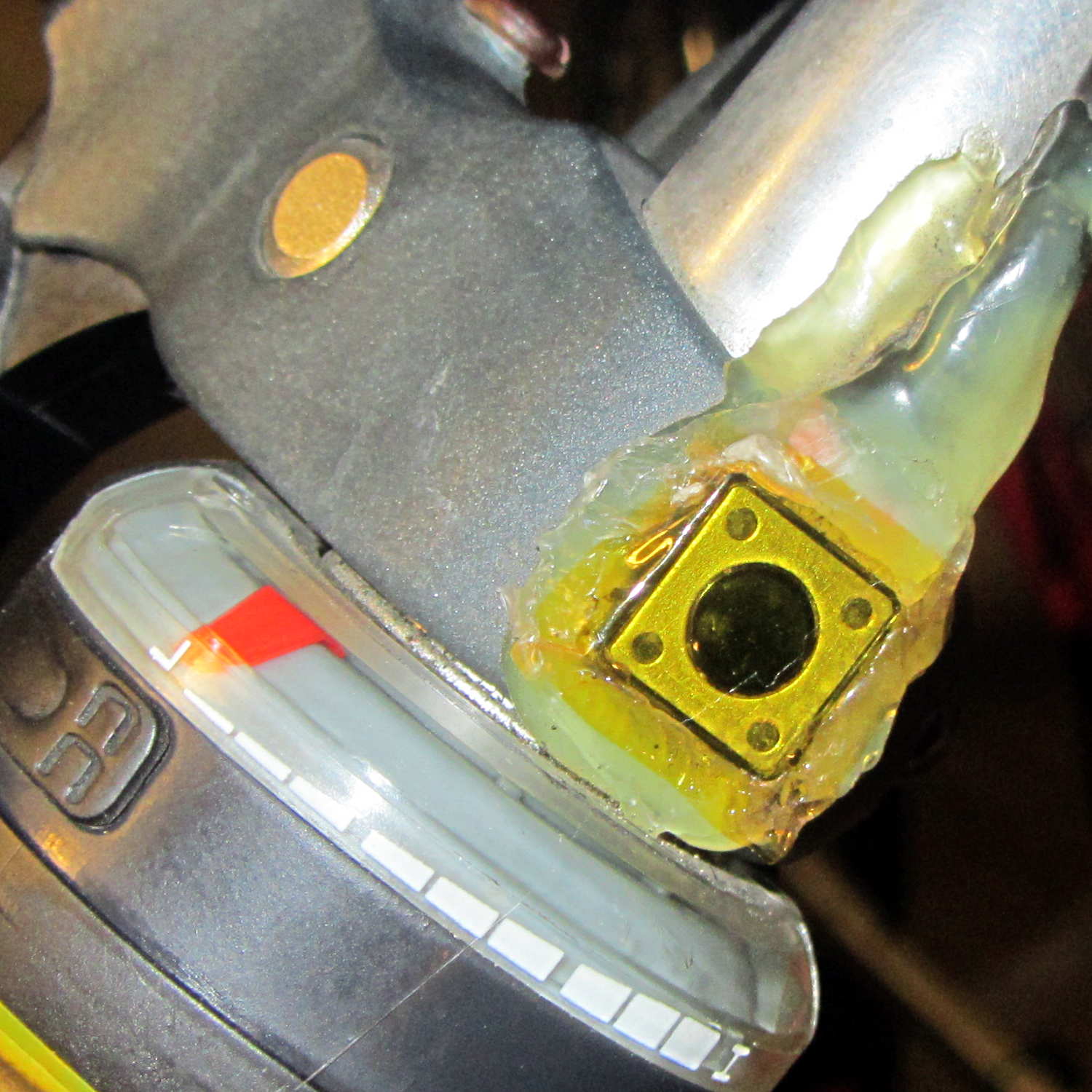
    The handlebar-mounted PTT button for the amateur radio on my bike once again went toes-up, most like due to the accumlation of road dust and rainwater over the years. Rather than replace the switch, which would require peeling off a massive glob of hot melt glue and resoldering the wires, I just carved the tops off the rivets holding the cover in place, pried off the cover, and removed the button to reveal the top of the switch dome:

    Handlebar PTT switch - corroded dome
    Handlebar PTT switch – corroded dome

    Blech!

    The dome flexes outward to contact the (rather crusty) terminals on either side, so all the action happens under the dome.

    A lineup of the plastic button, the inverted dome, and the cover plate:

    Handlebar PTT switch - components
    Handlebar PTT switch – components

    The top and bottom of the dome show some grit: that’s where it contacted the switch terminals.

    Wiping the crud out of the switch body, scrubulating everything with contact cleaner, and putting it all back together restored the switch to working order. There’s (once again) a snippet of Kapton tape over the cover holding it in place, but I don’t expect this to last very long:

    Handlebar PTT switch - kapton cover
    Handlebar PTT switch – kapton cover

    But it works well enough for now …