The Smell of Molten Projects in the Morning

Ed Nisley's Blog: Shop notes, electronics, firmware, machinery, 3D printing, laser cuttery, and curiosities. Contents: 100% human thinking, 0% AI slop.

Category: Amateur Radio

Using and building radio gadgetry

  • Tour Easy: PTT Button Replacement

    Tour Easy: PTT Button Replacement

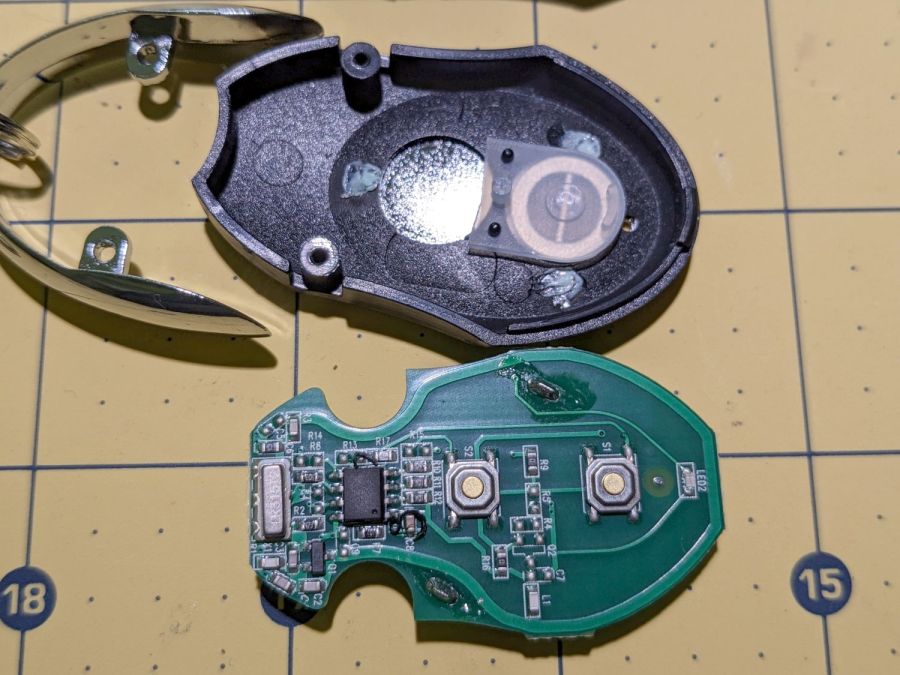
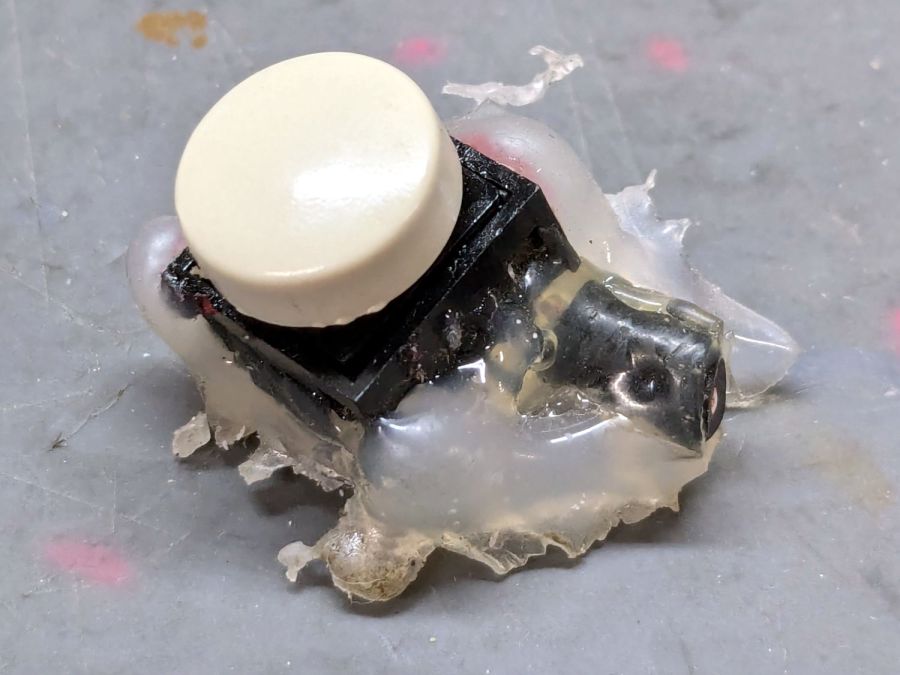
    After five years and one cleaning, the PTT button on Mary’s Tour Easy became increasingly intermittent, both failing to activate solidly and sticking closed (there being nothing quite like a hot mic during a good hill climb), so it’s time for an autopsy:
    Failed PTT Switch - as extracted
    Failed PTT Switch – as extracted

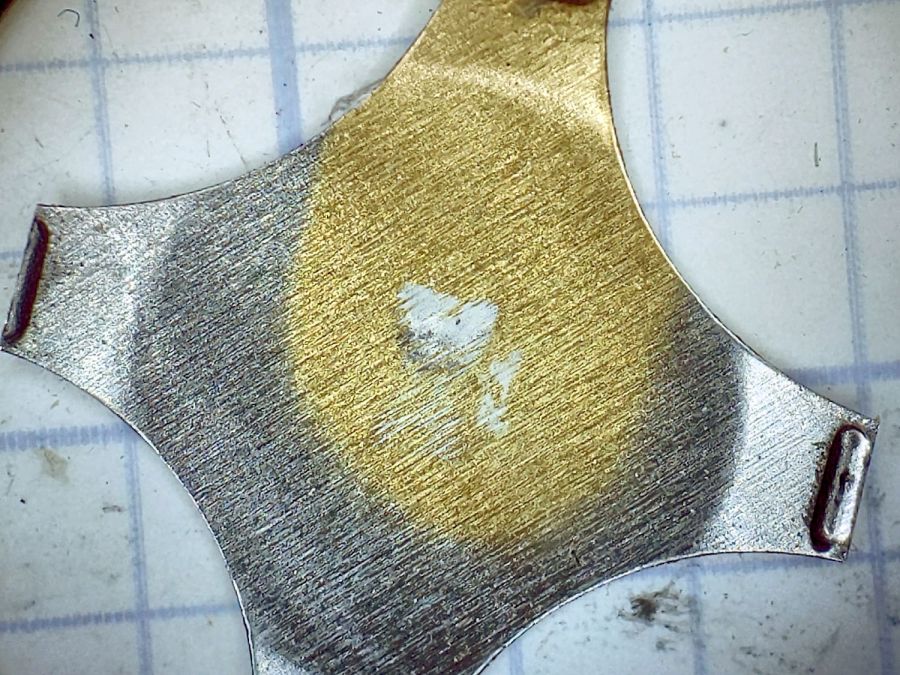
    The snap dome is much more scarred at the central contact:
    Failed PTT Switch - snap plate
    Failed PTT Switch – snap plate

    That might be a gold flash coating, but it’s pretty well worn away where it hits the central contact:
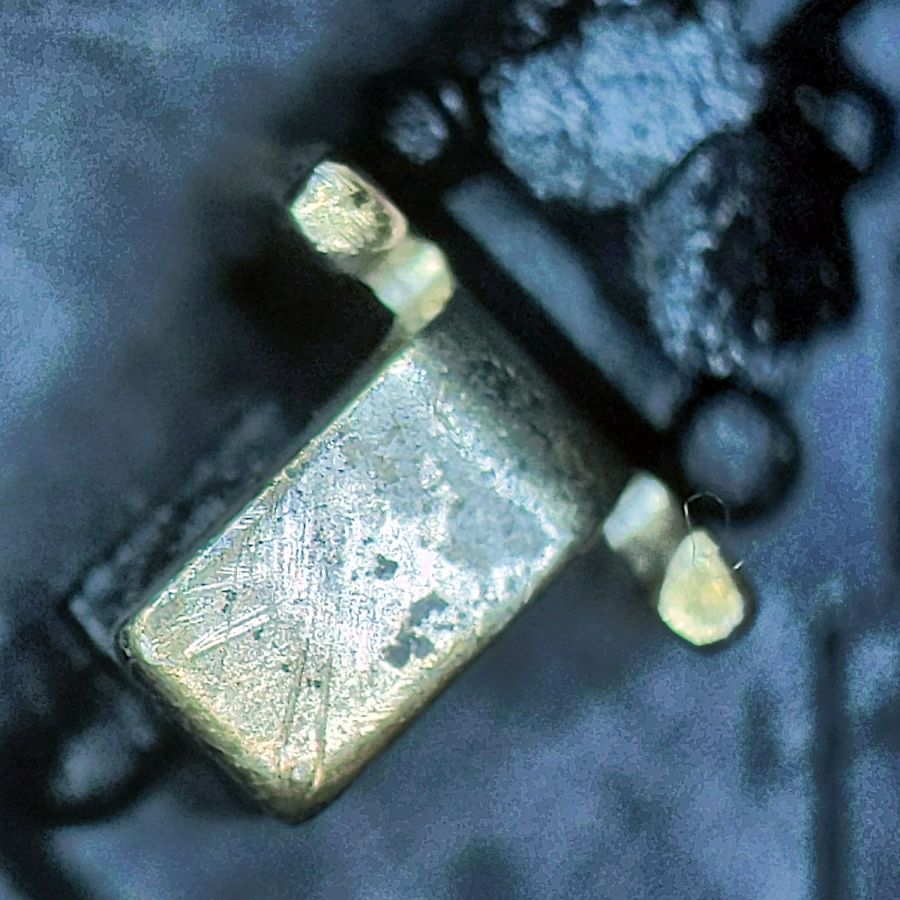
    Failed PTT Switch - center contact
    Failed PTT Switch – center contact

    Those scratches surely happened during the previous cleaning pass, as I don’t see any way for the dome to create them.

    The corner contact also shows some scuffs, along with a scar where the dome corner pivots:
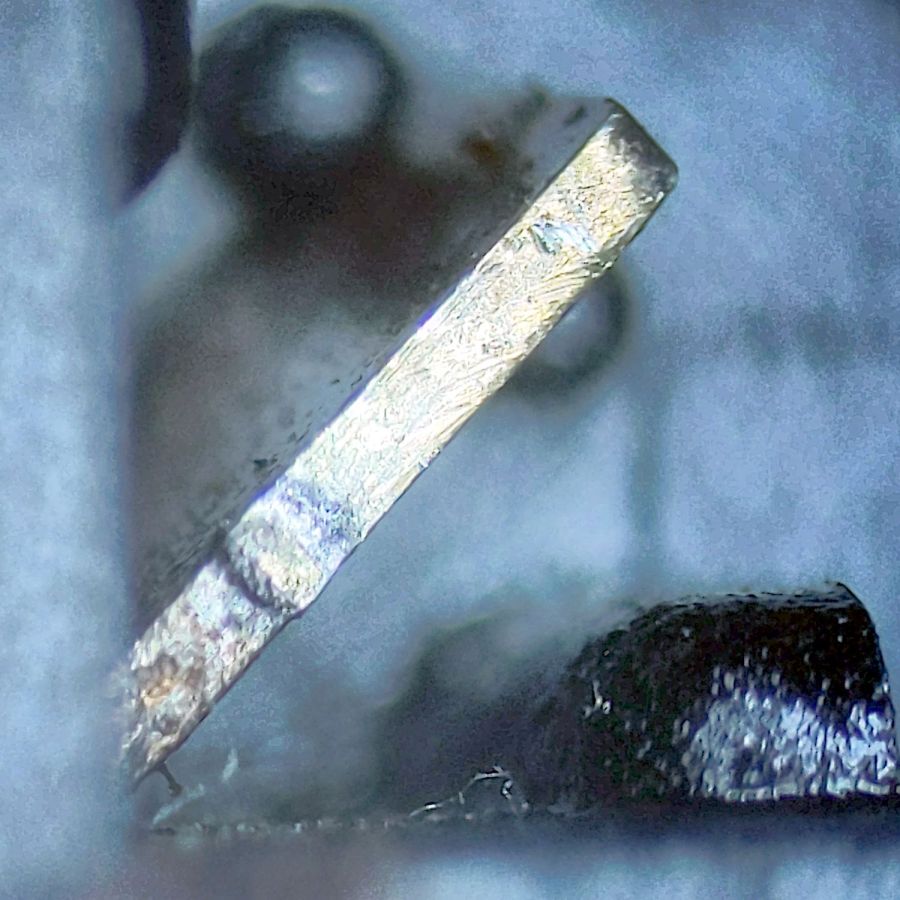
    Failed PTT Switch - edge contact
    Failed PTT Switch – edge contact

    All in all, though, it worked quite well.

    The replacement switch, also intended for indoor use on a keypad or some such device, pivots around the front edge and may be easier for her fingertip to activate:
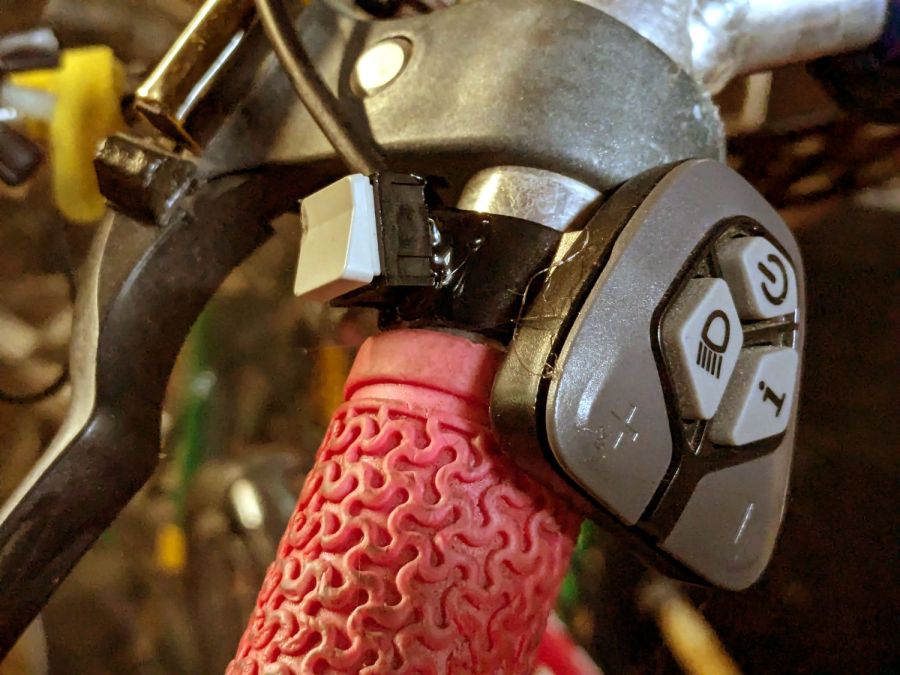
    New PTT Switch - installed
    New PTT Switch – installed

    Hot melt glue seems vastly underrated for how wonderful a structural material it is.

    If this one lasts five years, I’ll be perfectly happy.
  • Baofeng UV-5 Wiring Plate Globbery

    Baofeng UV-5 Wiring Plate Globbery

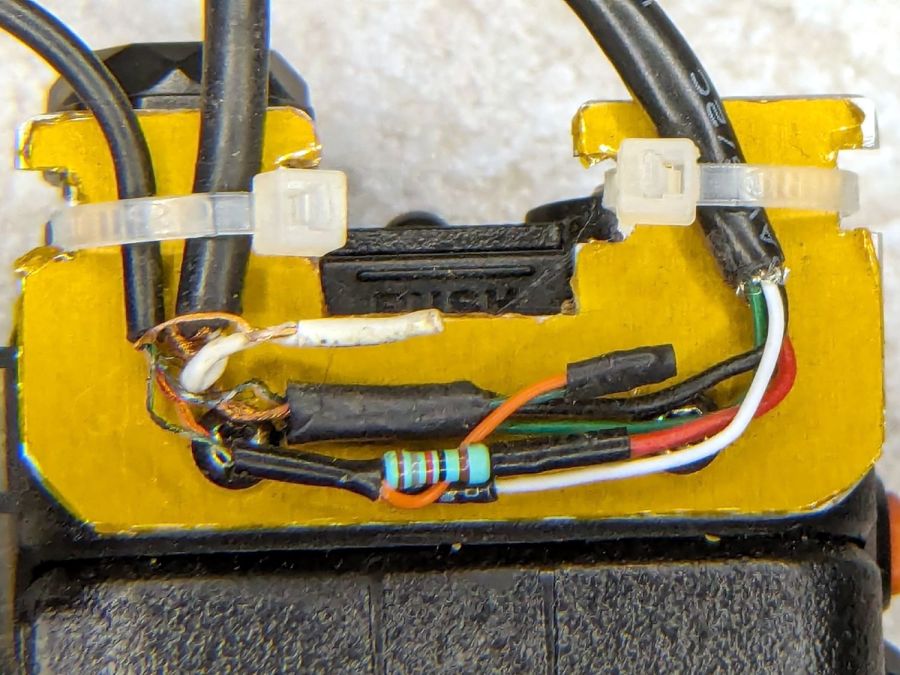
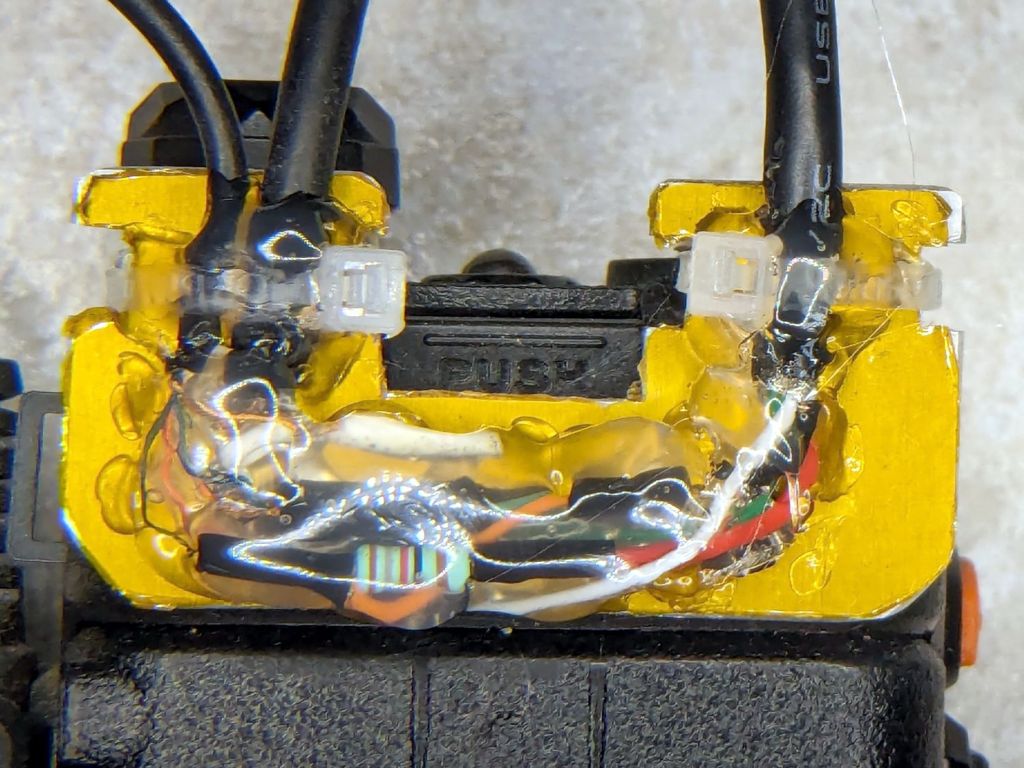
    The weekly battery swap revealed the dismal state of the headset wires on Mary’s radio:

    Baofeng wiring plate - loose wires
    Baofeng wiring plate – loose wires

    That’s after sorting & disentangling loose ends, ramming cables under their ties, and generally tidying things up.

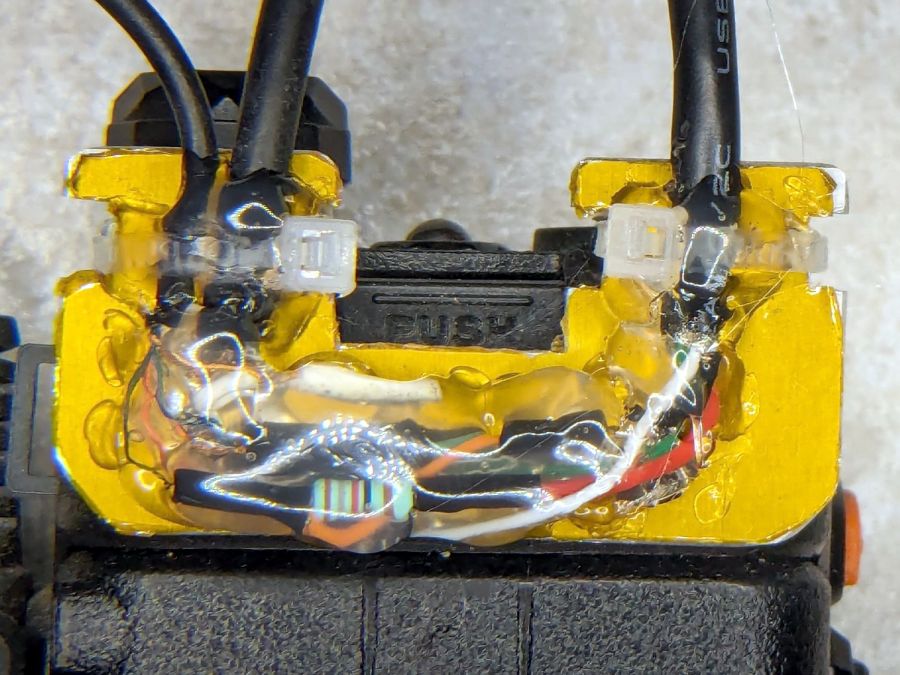
    Which suggested an improvement I should have done long ago:

    Baofeng wiring plate - globbed
    Baofeng wiring plate – globbed

    Verily, it is written: the bigger the blob, the better the job.

    Gotta glob my bike the next time around.

    Update: It’s hot melt glue!

  • Garage Opener Antenna Director

    Garage Opener Antenna Director

    By a quirk of fate, the Chamberlain garage door opener in our new house has the same “purple learn button” as the Sears opener in our old house, so I introduced it to our remotes and they work just fine.

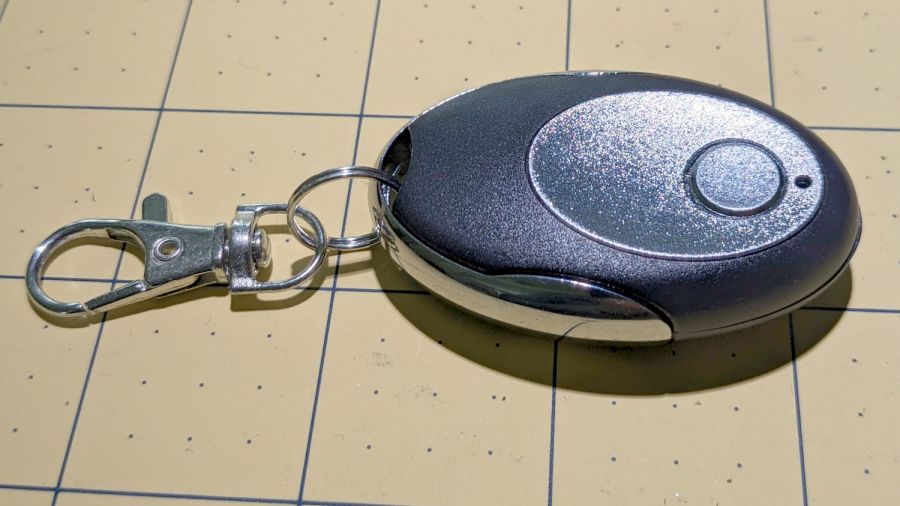
    I then replaced the four-button remote in my bike pack with a new single-button remote to reduce the dexterity required to hit the button:

    Garage Opener - one button
    Garage Opener – one button

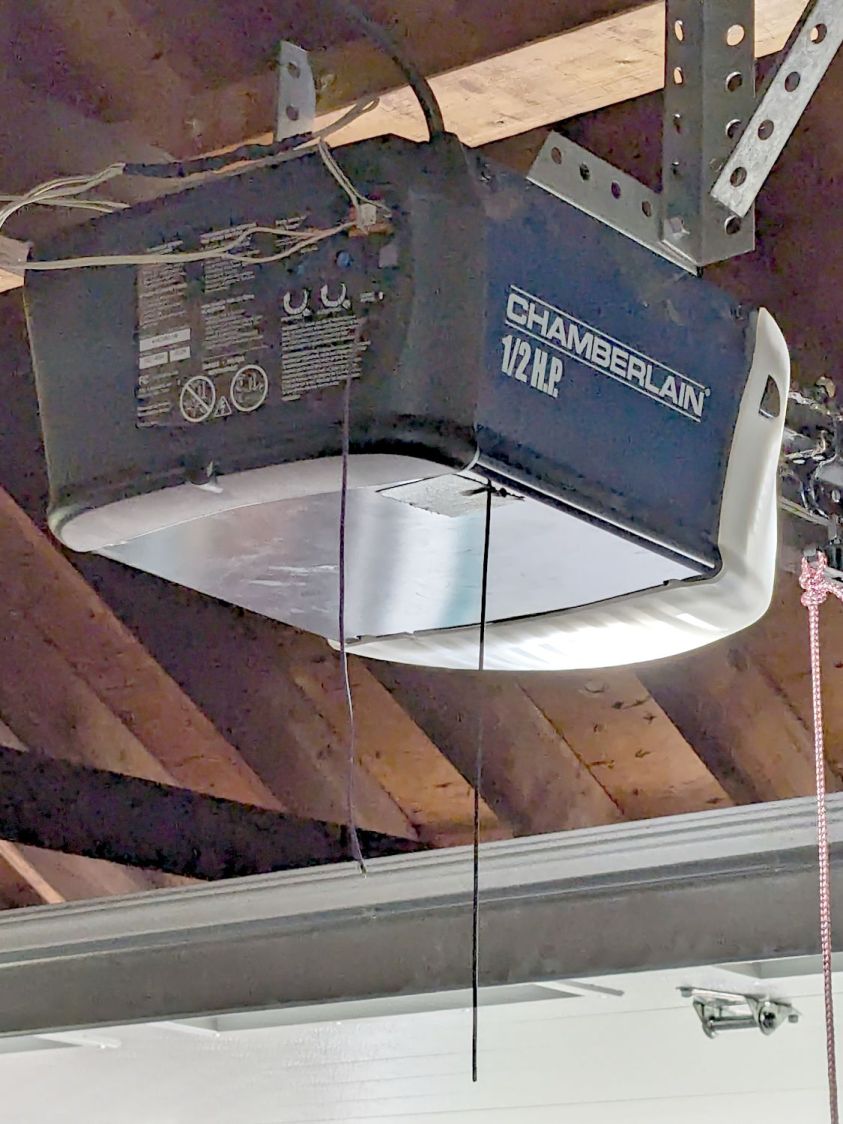
    Alas, the opener only responded when the remote was immediately outside the aluminum garage door. Checking the battery (because sometimes “new” does not mean what you think it means) reminded me we live in an age when hardware is free compared with bookkeeping:

    Garage Opener - interior
    Garage Opener – interior

    Maybe the second button doesn’t work and this is how they monetize their QC reject pile?

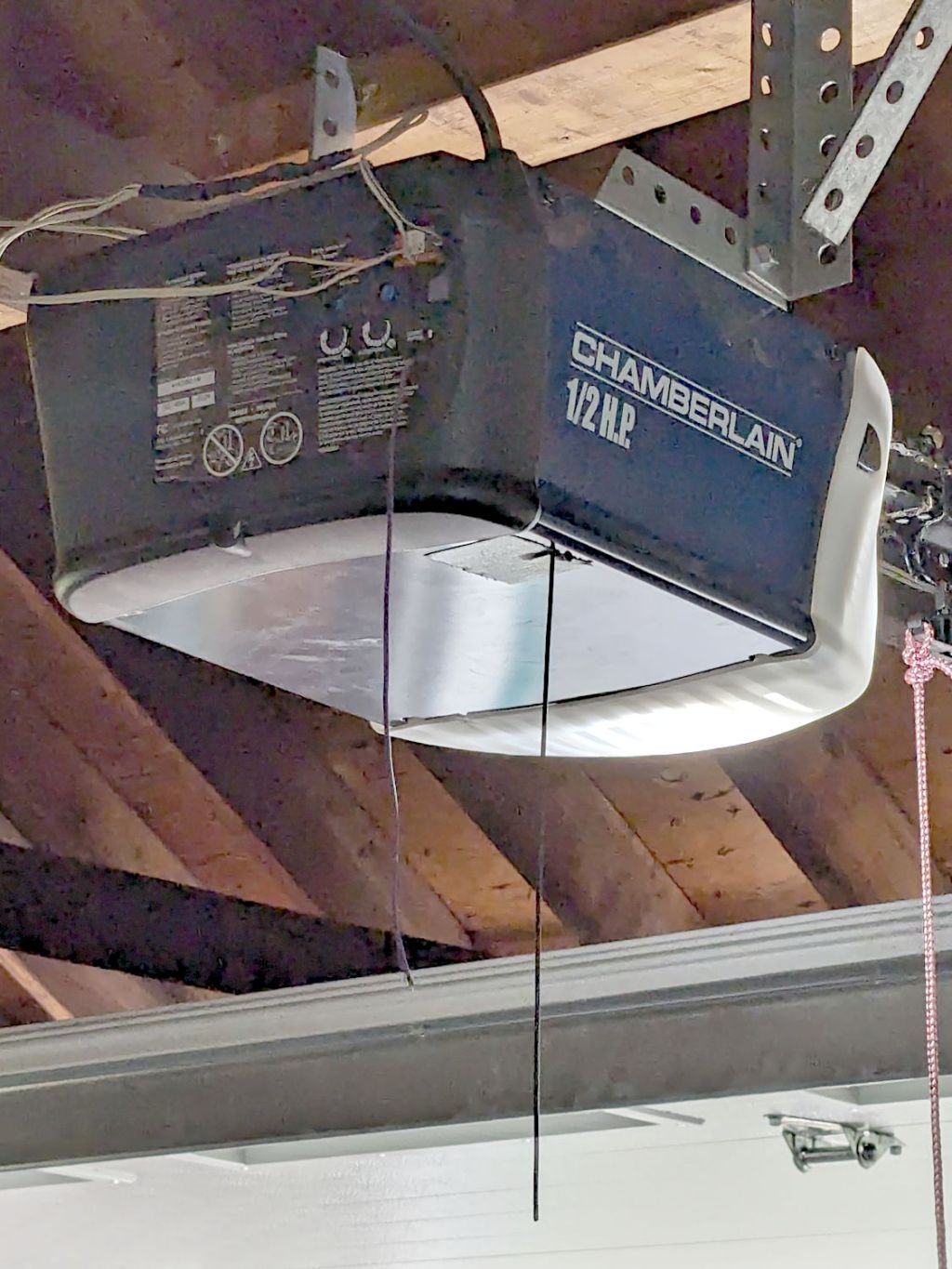
    I want the door to start moving when I’m at the end of the driveway, giving it enough time to get all the way up so I can bike right in. You can actually buy remote / extension antennas, although for fancier openers with SMA antenna connectors, but sometimes a little RF black magic will suffice:

    Garage Opener - crude antenna director
    Garage Opener – crude antenna director

    The wavy wire hanging down from the opener’s rear panel is the original antenna, which might be kinda-sorta omnidirectional. The opener operates around 433 MHz= 69 cm, so a quarter-wave antenna will be 17 cm = 7 inch long; the (unbent) wire is maybe 10 inches long from the hole in the panel.

    So I taped 11 inches of wire to the opener to form a very very crude Yagi-Uda antenna. It’s too long to be a director element, it’s about right (albeit in the wrong place) to be a reflector element, it might be neither.

    What it does do is warp the antenna’s pattern just enough to let the remote reliably trigger the opener as I approach the end of the driveway.

    Do not even begin to think about polarization mismatch from what looks like the tiny loop antenna on the remote’s PCB.

  • Tour Easy: DPC-18 Display Controls

    Tour Easy: DPC-18 Display Controls

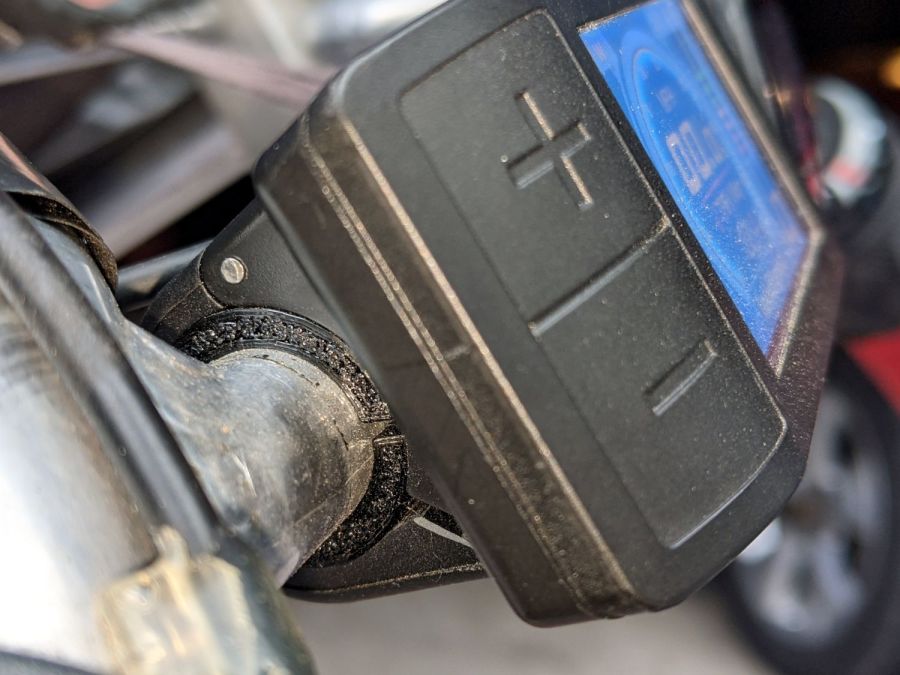
    The Bafang 500C display I installed on Mary’s Tour Easy recumbent has assist level buttons along its left edge:

    Bafang display - clamp bushing
    Bafang display – clamp bushing

    This required her to take her left hand off the handlebar to fiddle with the assist level and, as it turned out, used her thumb in position causing some distress. Given that changing the assist level happens a lot as we ride, it was time for a change.

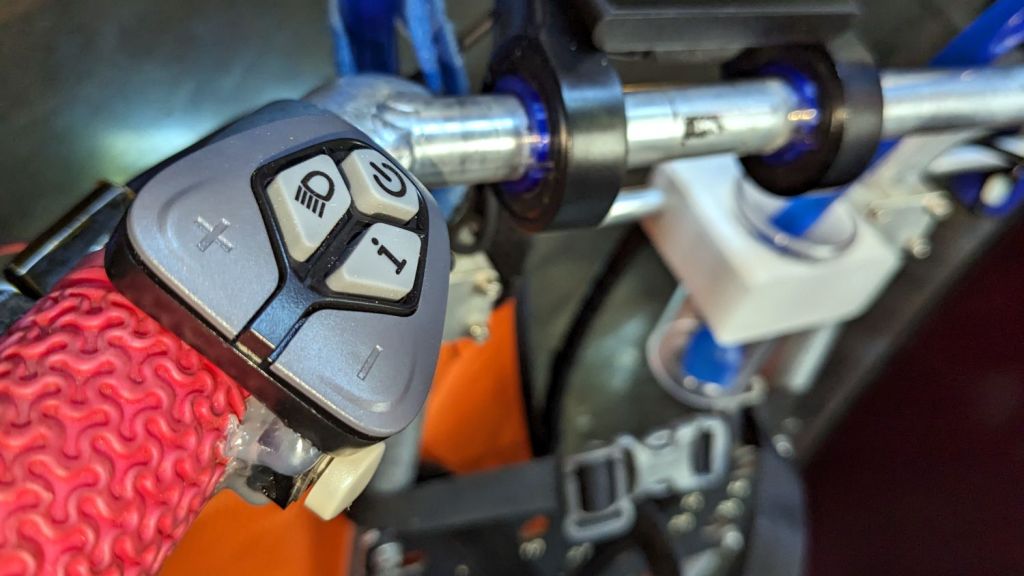
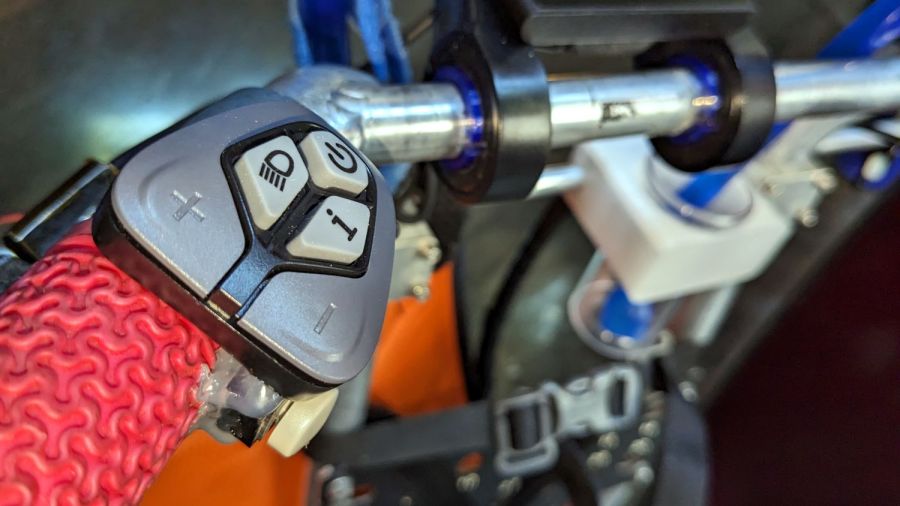
    So I replaced the 500C with a DPC-18 display like the one on my bike, with the key advantage of putting the buttons on the handgrip:

    Tour Easy Bafang Controls - DPC-18 buttons
    Tour Easy Bafang Controls – DPC-18 buttons

    She preferred a higher position for the buttons than I do, with the PTT button for the Baofeng amateur radio below the housing.

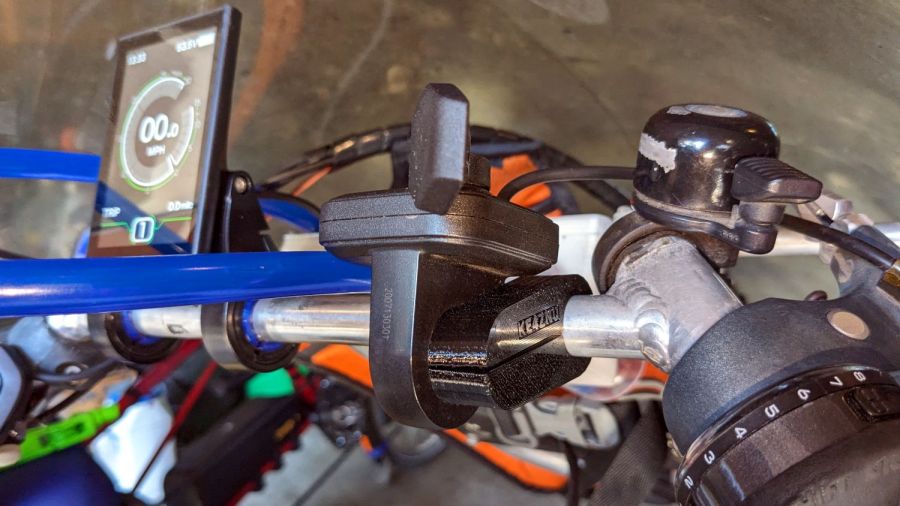
    After a few iterations, the throttle moved from the right handgrip to the right end of the handlebar crosspiece on a lengthened version of the mount I conjured for Tee’s Terry Symmetry upright bike:

    Tour Easy Bafang DPC-18 - throttle mount
    Tour Easy Bafang DPC-18 – throttle mount

    That location requires a bit of dexterity, but let us move the twist-grip shifter upward on the handgrip where it is more comfortable. She rarely uses the throttle, so we’ll try this for a while.

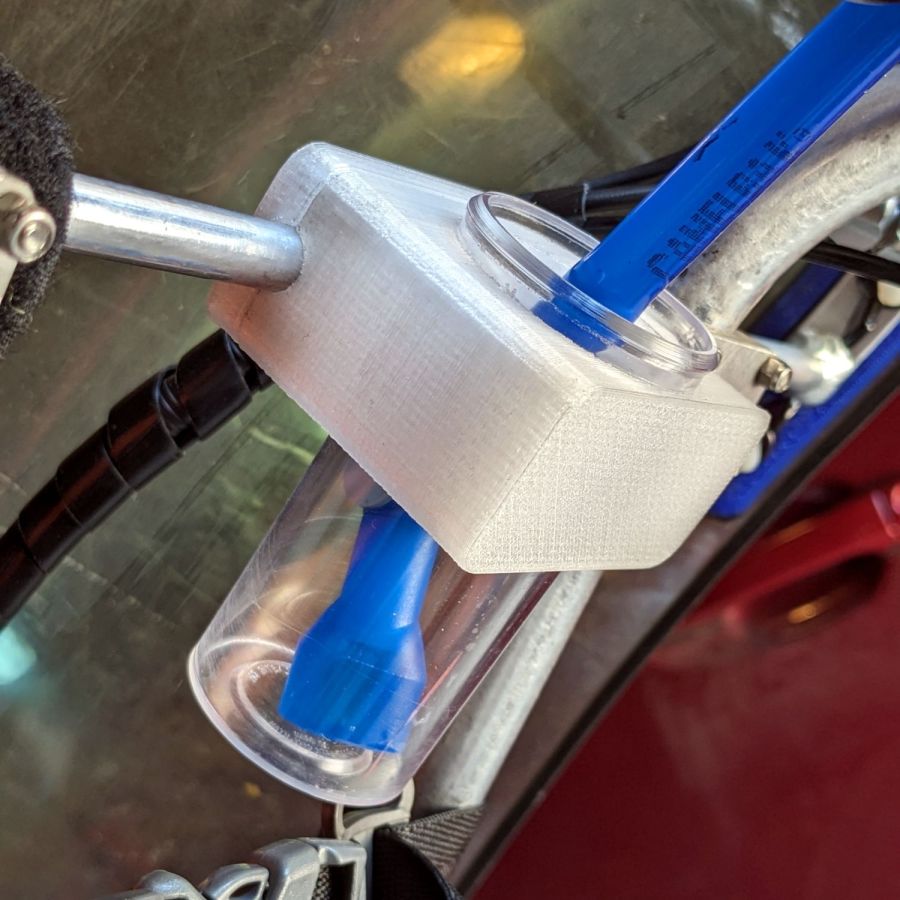
    The DPC-18 has an awkward portrait-mode display with an incredible amount of wasted space, with the side detriment of displacing the blue Camelbak hose. After a few iterations, we settled on a receptacle to catch the mouthpiece without requiring any fancy snaps / clips / fasteners:

    Tour Easy Bafang Controls - Camelbak nozzle catcher
    Tour Easy Bafang Controls – Camelbak nozzle catcher

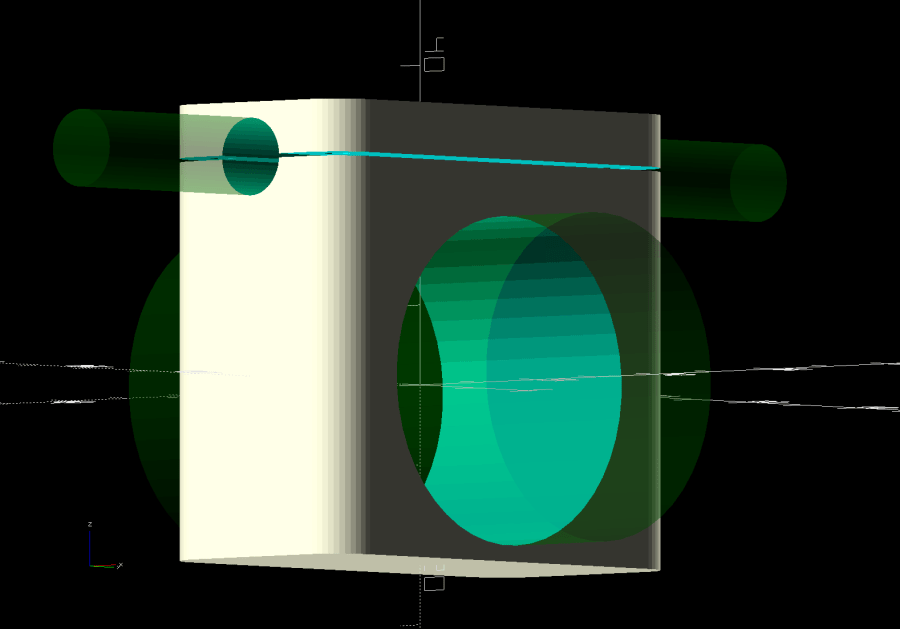
    The solid model descends from the Zzipper fairing mounts on that same aluminum bar, with the bottle simply jammed into the big hole:

    Zzipper Fairing - Camelbak nozzle catcher - show layout
    Zzipper Fairing – Camelbak nozzle catcher – show layout

    There being no real forces on the holder, I omitted the aluminum load-spreading plate across the top and just epoxied four threaded brass inserts into the bottom part.

    Early reports suggest a happier thumb and no problems stashing the hose, so it’s all good.

  • Christmas Bonus

    Christmas Bonus

    An email arrived yesterday:

    Subject: [redacted] review blog invitation about bluetooth programmer

    Message: Hi dear,

    Thanks for taking time to read this email.

    I am Colleen from [redacted] brand, we sell two way radio on Amazon. I learned that you have wrote two way radio review blog before and I think your blog was written well.

    Now we have a product named bluetooth programmer that need to be reviewed. […] We would like to invite you to write a review blog about it.

    Your can earn $2 from each product sold! We promise it. Just put the link we provided you in your blog and the Amazon backstage will count the data. And we will pay you $2 for per product sold by your link through PayPal on the 30th of every month. (Please provide your PayPal account)

    If you are willing to help us write a blog, please tell us if you have a radio and your address we will send you the product for free to review.

    You can view more detailed information through this link:

    [redacted]

    Perhaps this “review” caught their eye:

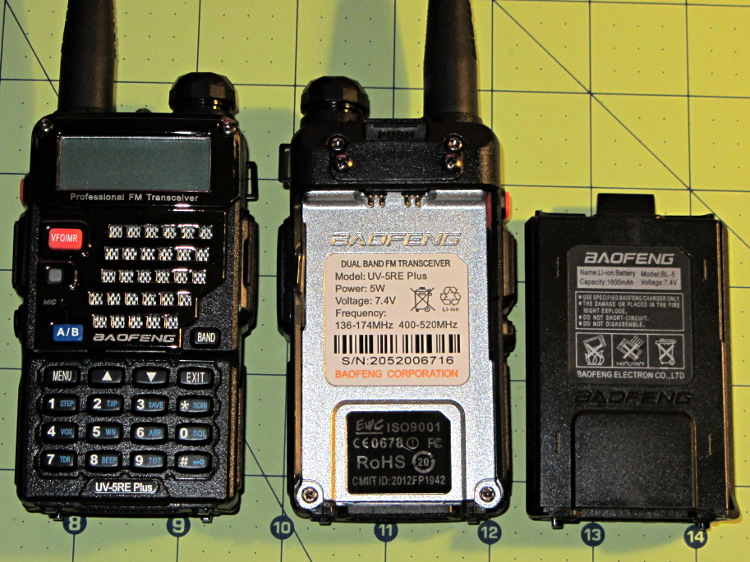
    Baofeng UV-5RE radio - overview
    Baofeng UV-5RE radio – overview

    Or maybe it was my opinion of the Baofeng intermod problem?

    Most likely, it’s just the result of an ordinary web search.

    You might think everybody would know about Amazon’s crackdown on out-of-band review kickback scams, but either word hasn’t gotten around or the rewards still exceed the penalties. I think the latter applies, particularly when the offender (or its parent company) can spin up another randomly named Amazon seller with no loss of continuity.

    “Earning” two bucks on a few purchases during the course of a year won’t move my Quality of Life needle, so I reported them to Amazon and that might be that.

    For future reference, the chat with Amazon’s Customer Support rep produced a deep-ish link to their otherwise un-discoverable “Report Something Suspicious” page; the randomly named nodeld is a nice touch.

    Speaking of randomly named sellers, it’s highly likely any Brand Name you remember from the Good Old Days has been disconnected from the tool / hardware / service you remember. Perusing a snapshot of the who-owns-who tool landscape as of a few years ago may be edifying: I didn’t know Fluke and Tektronix now have the same corporate parent.

    Enjoy unwrapping your presents and playing with your toys …

  • Bafang Headlight Circuit Current Limit

    Bafang Headlight Circuit Current Limit

    Having just replaced Rev 1 of the amber running light with Rev 3 (about which, more later) on Mary’s Tour Easy, both the front and rear lights began blinking erratically. Given that they have completely independent circuitry, this strongly suggests a power problem.

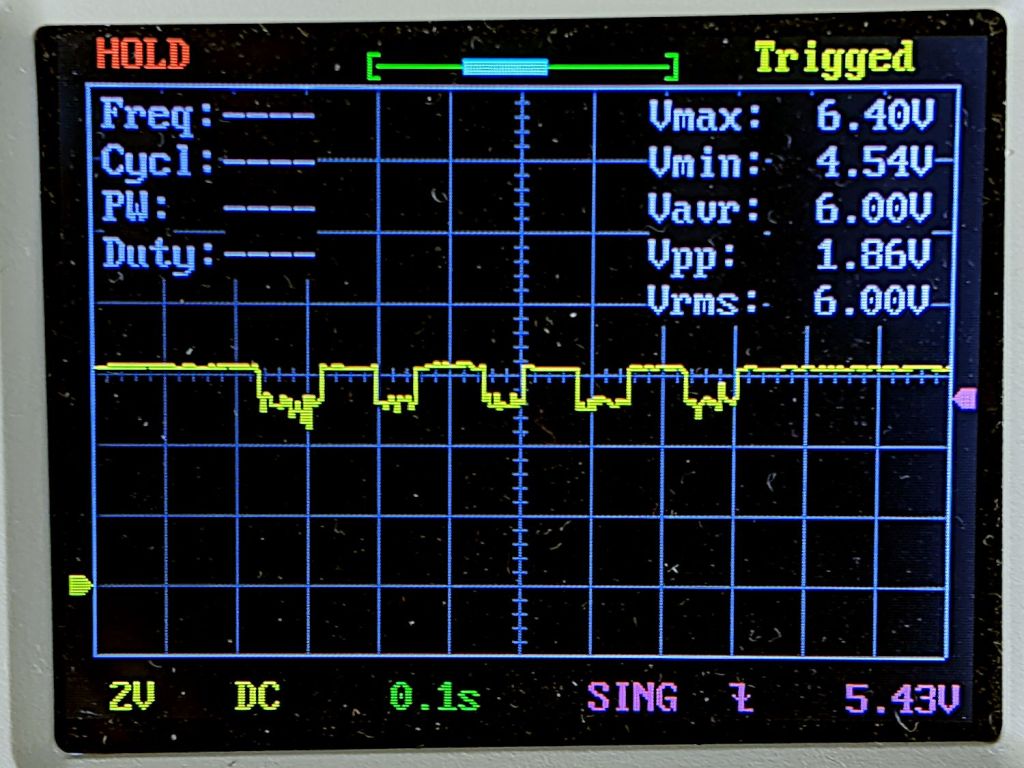
    Herewith, the headlight circuit voltage:

    Bafang headlight voltage - two 1 W running lights
    Bafang headlight voltage – two 1 W running lights

    The voltage should be a constant 6 or 6.3 V, depending on which description you most recently read. That is the case with only one light attached, so the problem occurs only when running both lights.

    The four pulses come from the amber LED’s Morse code “b” (dah-dit-dit-dit) with a 85 ms dits; the first dah pulse should be three times longer than the dits and definitely isn’t. The rear light’s red LED stays on continuously, except for two dark dits, so it draws a constant current and does not produce any changes in this trace.

    Both lights have 2.0 Ω sense resistors setting the LED current to 400 mA, which corresponds to 250 mA each from the Bafang controller’s 6.3 V headlight circuit. The headlight circuit’s total of 500 mA should work fine, although the “spec” seems to be basically whatever the OEM headlight requires.

    The Rev 1 amber light ran the LED at 360 mA with a supply current around 450 mA. That light and the rear light on the back ran fine, so the supply seems to have a hard maximum current limit at (a bit less than?) 500 mA.

    The least-awful solution seems to be backing off both LED currents to 360 mA to keep the total supply current well under 500 mA.

  • Tour Easy 1 W Amber Running Light: Firmware

    Tour Easy 1 W Amber Running Light: Firmware

    Rather than conjure a domain specific language to blink an LED, it’s easier to use Morse code:

    Herewith, Arduino source code using Mark Fickett’s Morse library to blink an amber running light:

    // Tour Easy Running Light
    // Ed Nisley - KE4ZNU
    // September 2021
    
    #include <morse.h>
    
    #define PIN_OUTPUT	13
    
    LEDMorseSender Morser(PIN_OUTPUT,(float)10.0);
    
    void setup()
    {
    	Morser.setup();
    
        Morser.setMessage(String("qst de ke4znu "));
        Morser.sendBlocking();
    
    //    Morser.setWPM((float)3.0);
        Morser.setSpeed(50);
    	Morser.setMessage(String("s   "));
    }
    
    void loop()
    {
    	if (!Morser.continueSending())
    		Morser.startSending();
    
    }
    

    Bonus: a trivially easy ID string.

    A dit time of 50 ms produces a brief flash that’s probably about as fast as it can be, given that the regulator must ramp the LED current up from zero after its Enable input goes high. In round numbers, a 50ms dit corresponds to 24 WPM Morse.

    Each of the three blanks after the “s” produces a seven element word space to keep the blinks from running together.

    Sending “b ” (two blanks) with a 75 ms dit time may be more noticeable. You should tune for maximum conspicuity on your rides.

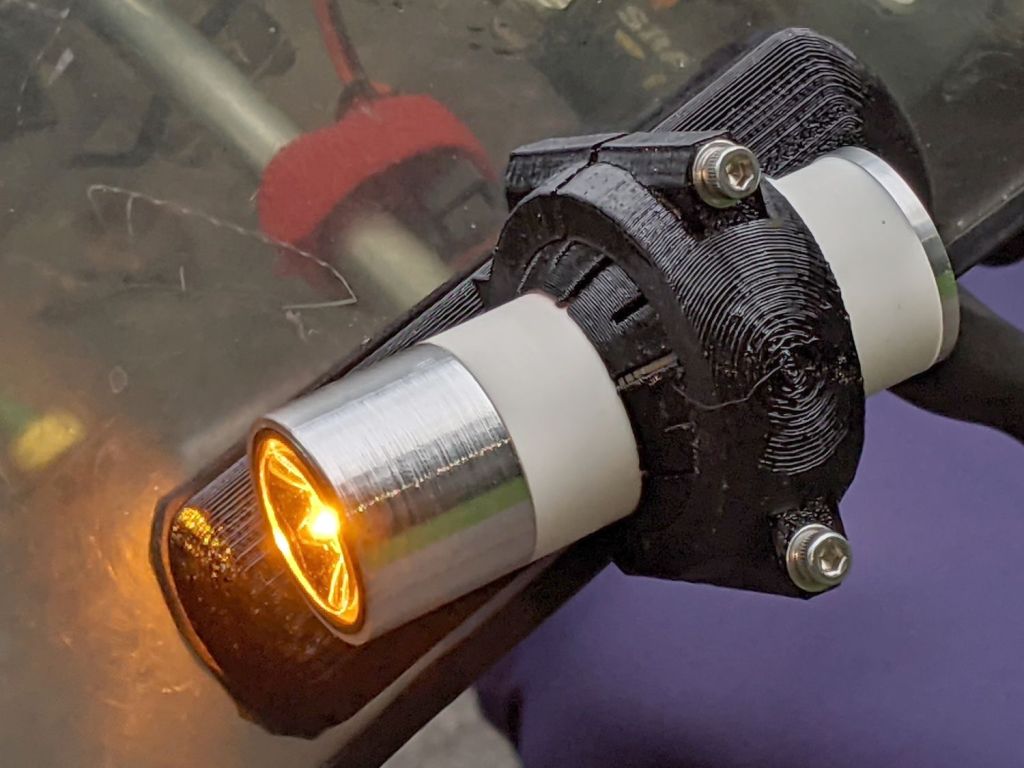
    1 W Amber Running Light - installed front
    1 W Amber Running Light – installed front

    On our first ride, Mary got a friendly wave from a motorcyclist, an approving toot from a driver, and several “you go first” gestures at intersections.

    Works for us …