The Smell of Molten Projects in the Morning

Ed Nisley's Blog: Shop notes, electronics, firmware, machinery, 3D printing, laser cuttery, and curiosities. Contents: 100% human thinking, 0% AI slop.

Author: Ed

  • Weller EC1201A Soldering Handle Failure

    For the last few days, my trust Weller EC1000 soldering iron (well, station) has been misbehaving: shortly after cleaning the tip, it would become covered in charred residue and slag. Today, the LED I’d hacked across the heater terminals inside the base stayed dark, even though the tip was hot, and then became sensitive to the handle position. Obviously there’s a loose wire inside, right?

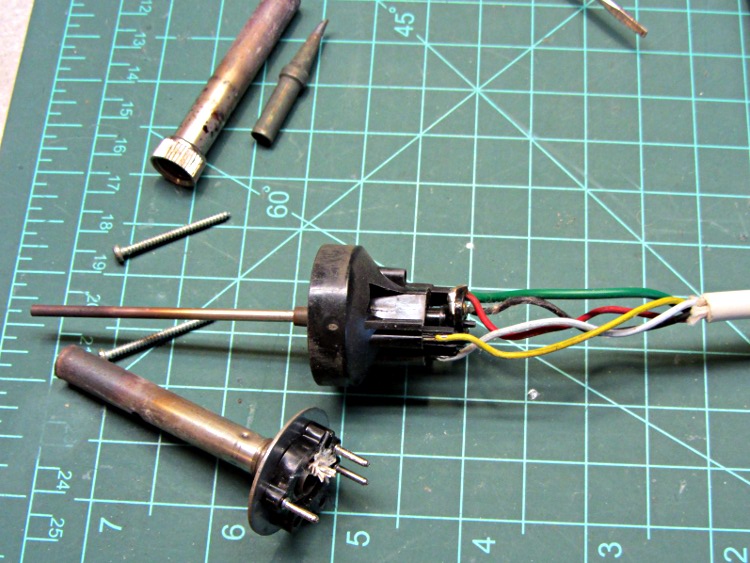
    So I took the handle apart by removing the two screws on the front plate:
    Weller EC1201A soldering handle innards
    Weller EC1201A soldering handle innards

    The trick to getting the guts out is to push down on the tab inside the handle that locks the cord strain relief block into the handle. After that, everything comes apart with very little force at all.

    Contrary to what I thought, the heater is in the tube surrounding the temperature sensor probe. Looking at the connector on the front of the base unit, the key is on the left side and the wires going clockwise from above the key are:

    • Yellow: heater
    • White: heater
    • Black: sensor
    • Red: sensor
    • Green: shield

    I would have sworn the red & black were the heater, as they have special-looking brass/bronze/copper colored pins & sockets. Wrong again.

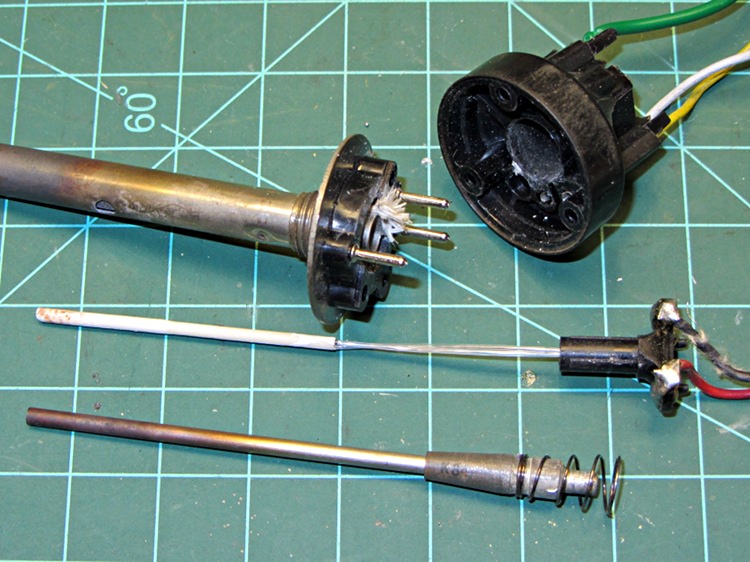
    The temperature probe comes apart thusly:
    Weller EC1201A temperature probe disassembly
    Weller EC1201A temperature probe disassembly

    Basically, slide the connector and ceramic-coated sensor out of the back of the black shell, then pull the spring-loaded sheath out the front.

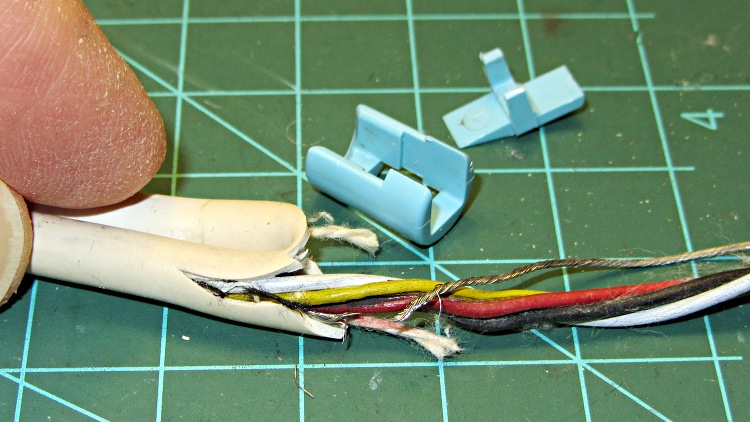
    I hoped for a laying-on-of-hands fix, but it was not to be: the tip heats while the LED (which I wired there early in the iron’s life) across the heater power remains off. But the LED blinked on intermittently with slight pressure on the iron’s tip; a bit more poking and prodding isolated an intermittent open-circuit to the ground wire just outboard of the strain relief at the handle:
    Soldering iron cable failure
    Soldering iron cable failure

    A bit more poking & tugging isolated an intermittent high-resistance short (a few hundred ohms, more or less) to a section of cable half a foot from the base connector at the bottom of the cable’s natural loop when the iron’s in the holder.

    Unfortunately, fixing all that didn’t restore the iron to life. It seems that the temperature sensor (a thermocouple?) has failed, allowing the tip to heat well beyond any rational temperature. Now that I’m looking, a cleaned solder layer turns blue with oxidation in a matter of seconds and rosin chars instantly. The temperature control knob has no effect whatsoever.

    The date codes inside the box show it’s been with me since late 1982, so on a dollars-per-year basis the thing has been a bargain. A new sensor is $60, a new handle is twice that, and I think it’s time for a new iron… at less than the price of the sensor alone, I think that’s OK.
  • RCA Alarm Clock Dimming

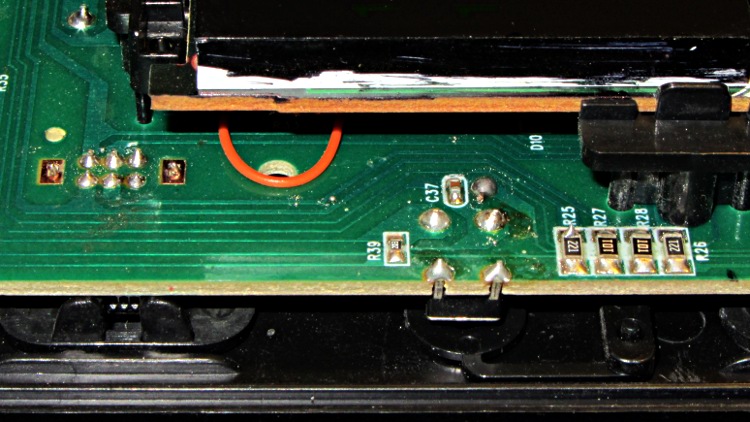
    Mary prefers dim digits on the bedroom alarm clock, far below what the usual DIM switch setting provides. I’d slipped a two-stop neutral density filter in front of our old clock’s VFD tube, but the new one has nice green LED digits that ought to have a tweakable current-setting resistor behind the switch. Indeed, a bit of surgery revealed the switch & resistors:

    RCA clock - DIM switch and resistors
    RCA clock – DIM switch and resistors

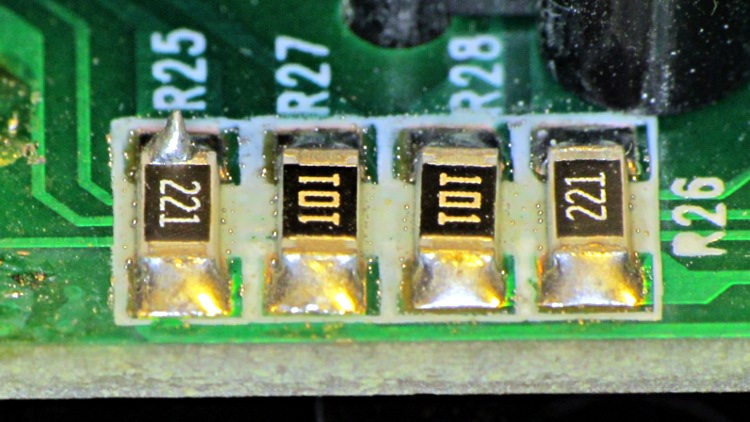
    It turns out that the 220 Ω resistors set the DIM current, with the 100 Ω resistors in parallel to set the BRIGHT current. Weirdly, the display operates in two halves: one resistor for the lower and middle segments, the other for the top segments. The resistor numbers give a hint of what the schematic might look like:

    RCA clock - LED current-set resistors
    RCA clock – LED current-set resistors

    The current control isn’t all that good, because the brightness varies with the number of active segments. With 470 Ω resistors (yes, from that assortment) in place, the variation became much more obvious; the LEDs are operating far down on their exponential I-vs-V curve. We defined the result to be Good Enough for the purpose.

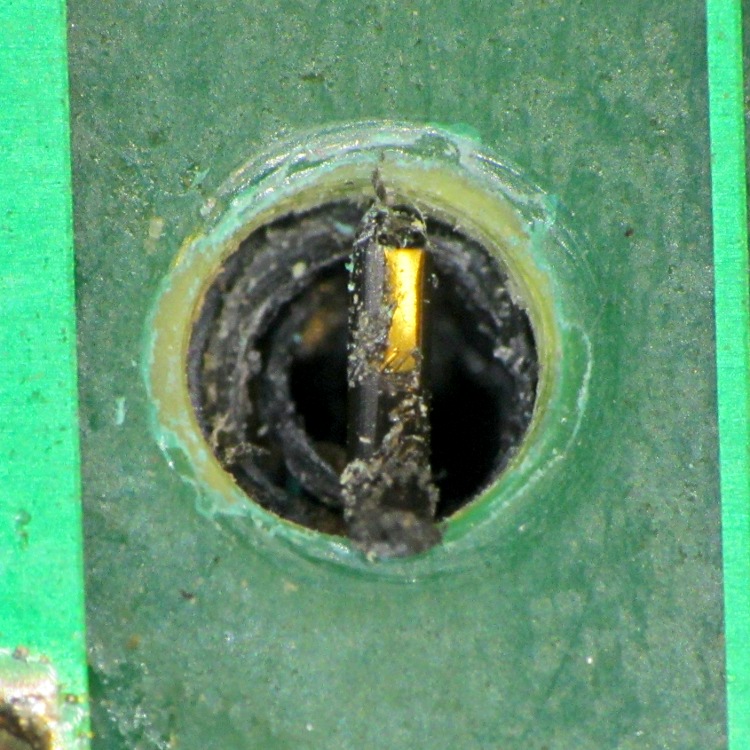
    Four short screws hold the circuit board in place, but one of them arrived loosely held in a pre-stripped hole. I cut eight lengths of black Skirt filament, anointed them with solvent adhesive, dropped two apiece into each screw hole, and ran the screws back in place. I likely won’t be back in there, so it should be a lifetime fix:

    RCA clock - ABS filament in screw hole
    RCA clock – ABS filament in screw hole

    Done!

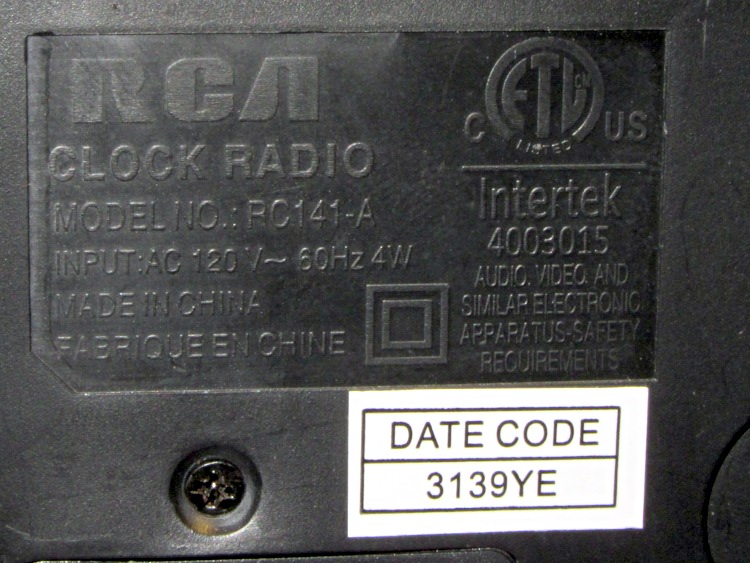
    As with all the trade names you remember from back in the Old Days, the present incarnation of “RCA” has nothing whatosever to do with the original Radio Corporation of America:

    RCA clock - data plate
    RCA clock – data plate
  • Christmas Cactus Time Lapse: Drat!

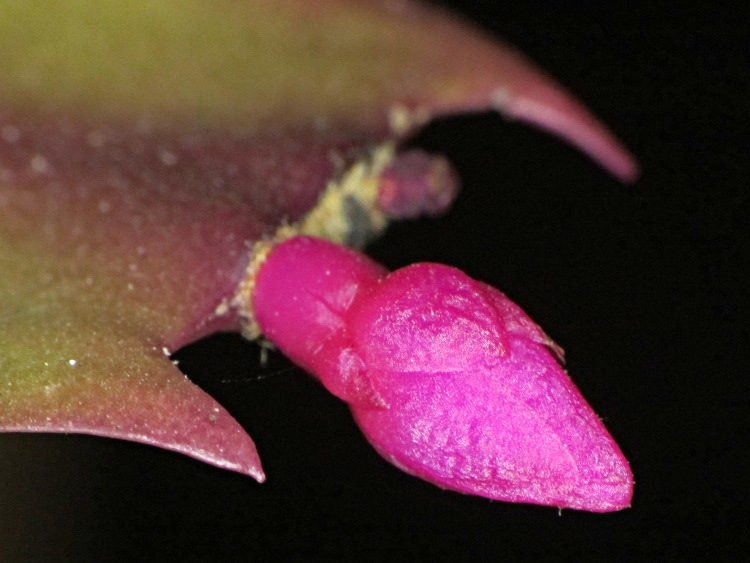
    With macro lens adapter in hand, I started taking a picture a day with the intent of making a time-lapse movie:

    Christmas Cactus flower bud
    Christmas Cactus flower bud

    Of course, that particular flower bud fell off after three days.

    We returned the plant to a cool location for the Christmas season. Evidently the kitchen was far too warm for best performance…

  • Brita Pitcher Lid Hinge

    This pitiful excuse for a hinge actually lasted far longer than I expected:

    Brita pitcher lid hinge pins
    Brita pitcher lid hinge pins

    Also much to my surprise, the plastic solvent-bonded to itself, although I doubt either of those pins will survive another four years.

    The yellow discoloration seems to be most prominent on the inside of the lid, which suggests the water is nastier than they’d have you believe. The disinfection additive has switched from chlorine to chloramine and back to chlorine over the last few years, which may have something to do with it.

  • Mindless Entertainment

    Sometimes I need a task that doesn’t require a lot of thinking, like reducing the entropy of a bag of mixed SMD resistors…

    Sorting SMD Resistors
    Sorting SMD Resistors

    I’ve heard tell of  a TV-thing that serves the same purpose. Dunno when you’d have time to sort your resistors, though.

    Resistors being marked, I didn’t need those SMD tweezers.

    (Yes, this makes no sense. It’s mindless. Sometimes, ya just gotta do this stuff. OK?)

  • Digital Voltmeter Fuse Gotcha

    Measuring some low-value resistances with  one of my DVMs produced weird results: dead shorts around 10 Ω.

    Differential diagnosis:

    • Test lead tips clean
    • Wires firmly mounted in probes
    • Banana plugs OK
    • Short banana jumper across jacks reads 10+ Ω

    Took the meter apart and what do we see? An ABC ceramic fuse in good old PCB clips:

    DVM fuse holder
    DVM fuse holder

    Spinning the fuse dropped the resistance by a few ohms. Adding a minute drop of DeoxIT to each end, rotating the fuse to scrub it in, and wiping off the excess put the total resistance back around 0.2 Ω where it should be.

  • SMD Measurement Tweezers

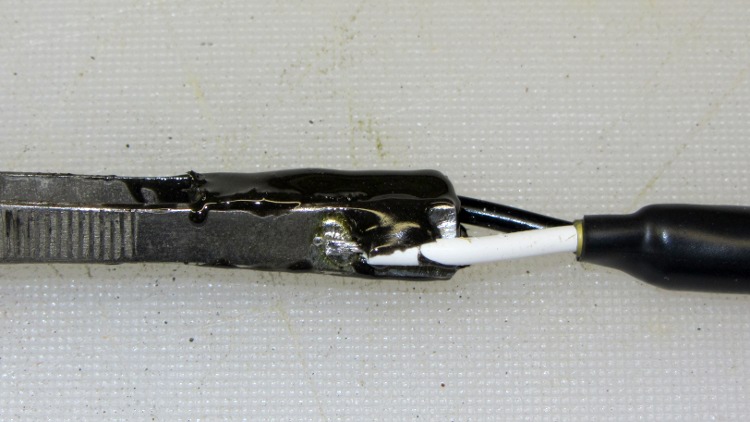
    While fiddling around with those SMD capacitors, it occurred to me that I really needed some SMD tweezers: small forceps with isolated jaws, connected to the capacitance meter’s terminals. In the nature of a proof-of-concept, I sacrificed a (surplus) Tektronix banana plug cable and an old plain-steel tweezer (stamped Made in Japan back in the day when that had the same quality connotations as does Made in Pakistan right about now) and lashed them together:

    SMD tweezers - overview
    SMD tweezers – overview

    I chopped off the tweezer joint with a bolt cutter, scuffed up the steel with a file, soldered the cable wires, cut a small wood block to fit, and epoxied the whole mess together:

    SMD tweezers - epoxy joint
    SMD tweezers – epoxy joint

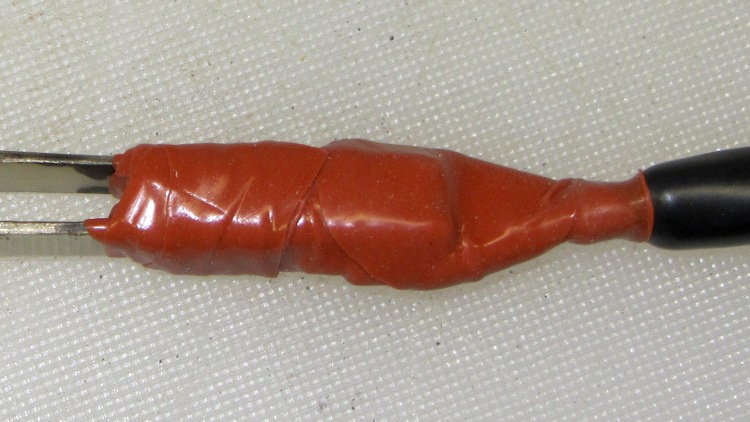
    When the epoxy cured, a generous wrap of silicone tape hid most of the hackage. Two lengths of clear heatstink tubing insulate the handles from my sweaty fingers:

    SMD tweezers - joint detail
    SMD tweezers – joint detail

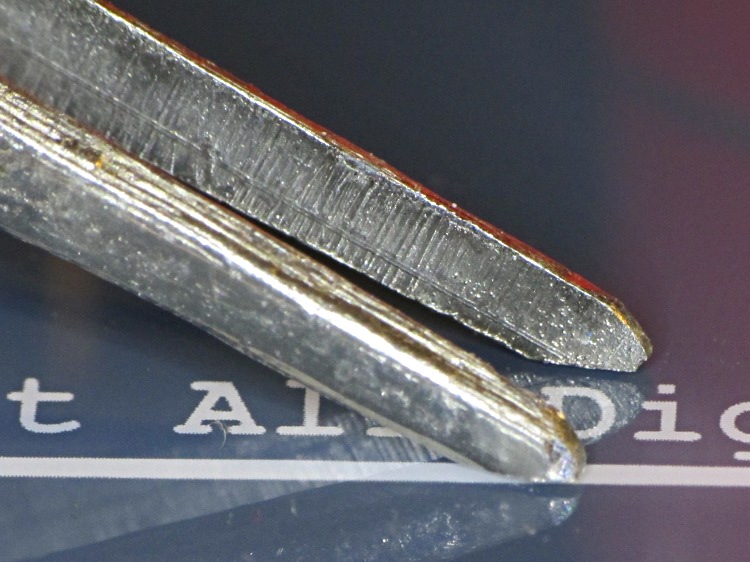
    Part of the reason for picking this victim was its cheap-and-bendy steel: more easily soldered than stainless, no regrets about filing the jaws to suit. They’re flattened on the bottom and filed to grip SMD chips along their length:

    SMD tweezers - tip shape
    SMD tweezers – tip shape

    That’s on the top panel of my indispensable AADE LC meter. The stray capacitance of that cable is around 50 pF, but the meter can null it to a fraction of a pF. At least as long as I don’t change my grip, that is, which isn’t too severe a restriction. [Update: got the link right this time.]

    That gorgeous Tek cable turned out to be entirely too stiff and the natural curve doesn’t lie in the correct direction. The next version will probably use a length of RG-174 mini coax and a dual banana plug. I think I’d like angled jaws, too, so as to attack the chips from the top down.

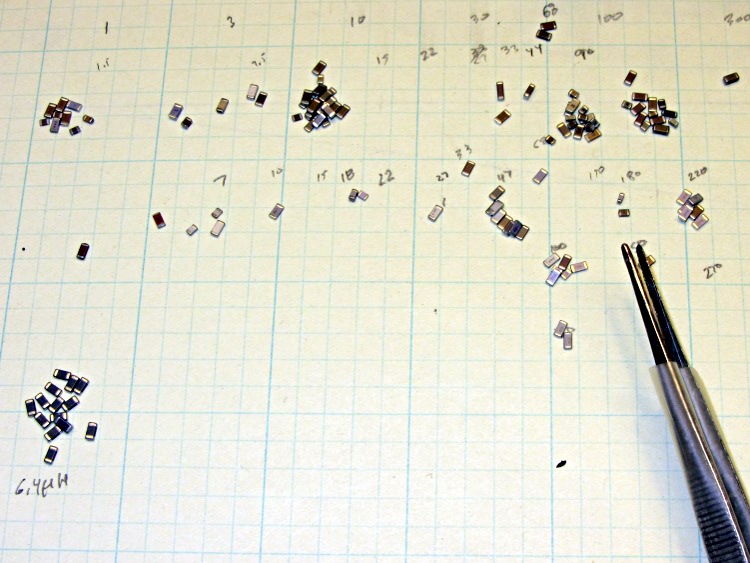
    But even this version works wonderfully well, as I sorted out a few hundred random SMD caps in two half-hour sessions that I’d been putting off for far too long. This is the last batch; I’ve learned the hard way that it pays to transfer batches of chips to their storage bins long before I think I should:

    Sorting SMD caps
    Sorting SMD caps

    Yeah, it’s false economy, but it keeps me off the streets at night. OK?