Ed Nisley's Blog: Shop notes, electronics, firmware, machinery, 3D printing, laser cuttery, and curiosities. Contents: 100% human thinking, 0% AI slop.
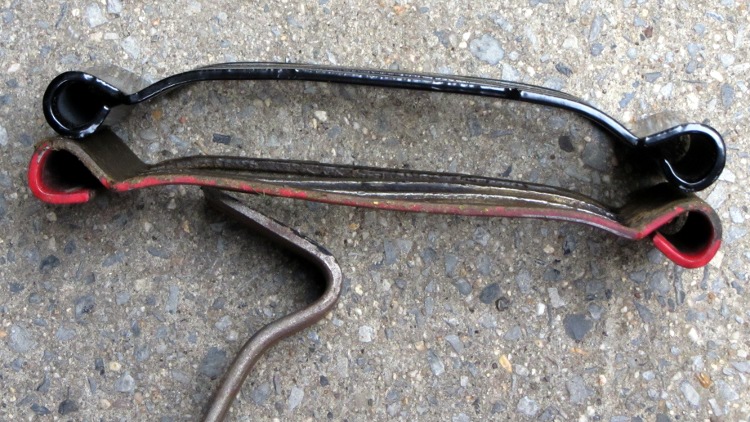
It’s leaf-shredding season again and our MTD Chipper-Shredder began shredding not nearly as well as it had in years gone by. Last season I laid in a stock of replacement parts, so I swapped in a new Shredder Screen (781-0457):
MTD Chipper-Shredder screen
The flail blades (719-0329) on the massive rotating impeller assembly protrude through the parallel openings in the screen, which is where most of the shredding action happens. The old red screen bent outward enough so that the blades pushed the leaves against the screen, rather than through it, producing frequent clogs.
Now it works fine again… although I’ve had just about as much fun shredding leaves as any one person should experience in one month.
The Vassar Farm Garden requires fairly heavy watering, because it’s in full sun all day long, so we lay in a set of drip lines connected through Y valves to a main feeder line running down one end of the plot. Plastic valves tend to be overly fragile, so this year I tried a few much larger full-flow ball valves with a metallic housing:
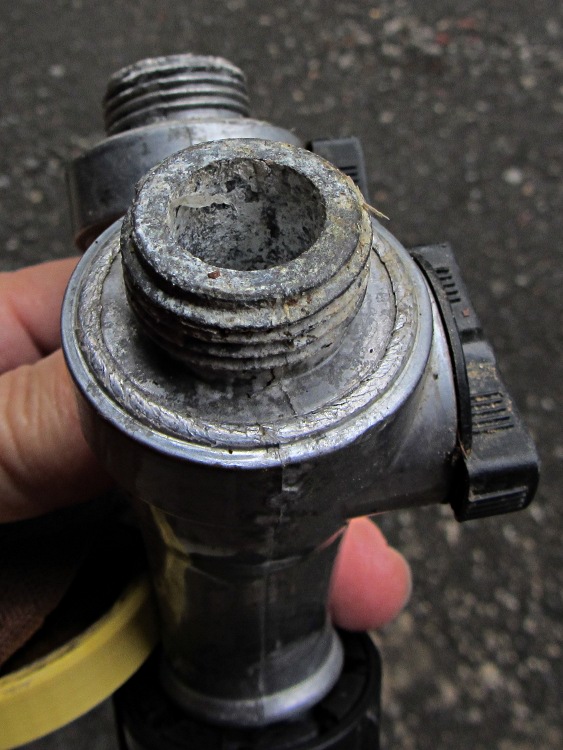
Corroded Garden Y Valve
This valve lay on the ground (as they all do) just inside the gate and served as an occasional supply for a short hose with the hand sprinkler head. I don’t know what’s driving this corrosion, but it’s eating the external threads as well as the valve bore.
Those failures came from two separate cable snags that stalled the X and Y stepper motors for about 1 mm of travel. Fortunately, I wasn’t paying attention and, by the time I figured this out, the thing was nearly built, so I let it run to completion. The thick base plate accounts for most of the plastic, anyway.
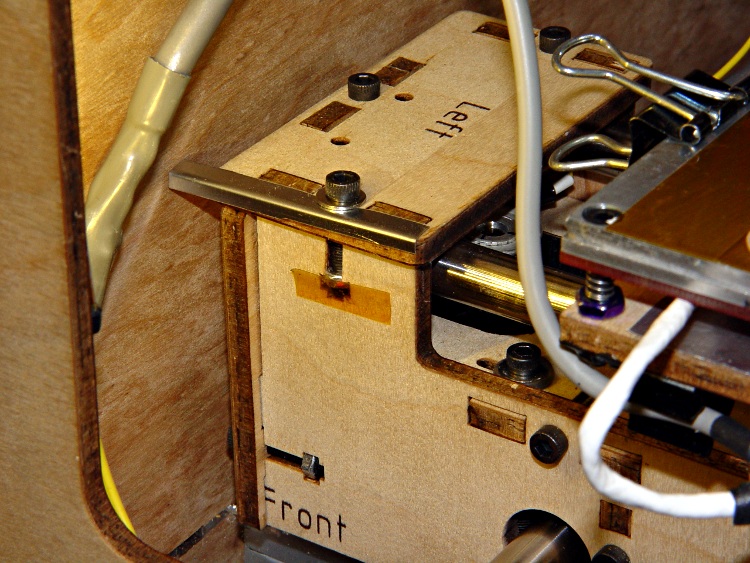
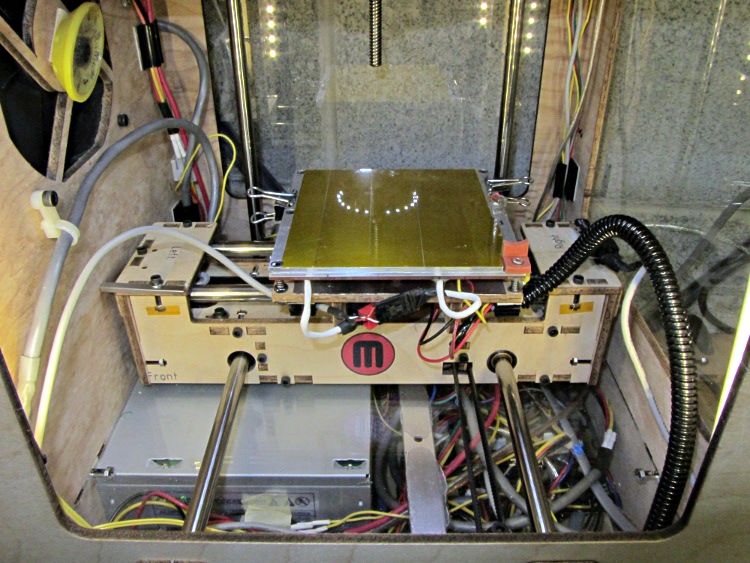
First, the cable bundle on the right snagged on the socket-head cap screw just in front of the X axis limit switch (hidden behind the bundle here). This picture, taken after the +12 V pin in the HBP connector burned through, shows the typical snarl of wires inside a Thing-O-Matic:
Thing-O-Matic – HBP cable routing
The rewired thermistor cable snagged on the bulldog clip holding the top aluminum plate. This picture, taken after the thermistor pads fell off the HBP, shows the filler plate I put in place to prevent the cable (entering from the top and passing below the white cable on the HBP) from jamming in the gap between the Y axis stage and the case, but you can see how the bulldog clip handle could snag it when the platform moves rearward from the front left corner (+X +Y):
HBP Thermistor cable – snag shield and bulldog clamp
The fat gray cable flat against the case in that picture carries the X axis stepper drive signals up-and-over the Y axis. The thinner gray thermistor cable emerges from the electronics bay inside the case corner, then arches in from thetop.
My buddy Aitch recently gave me a few meters of corrugated wire loom, so I moved the bulldog clip rearward and bundled all those loose HBP wires in one tidy snood:
Thing-O-Matic – X axis cable loom
I’m sure something else will go wrong, but the machinery looks marginally less haphazard and the cables don’t snag while I’m watching…
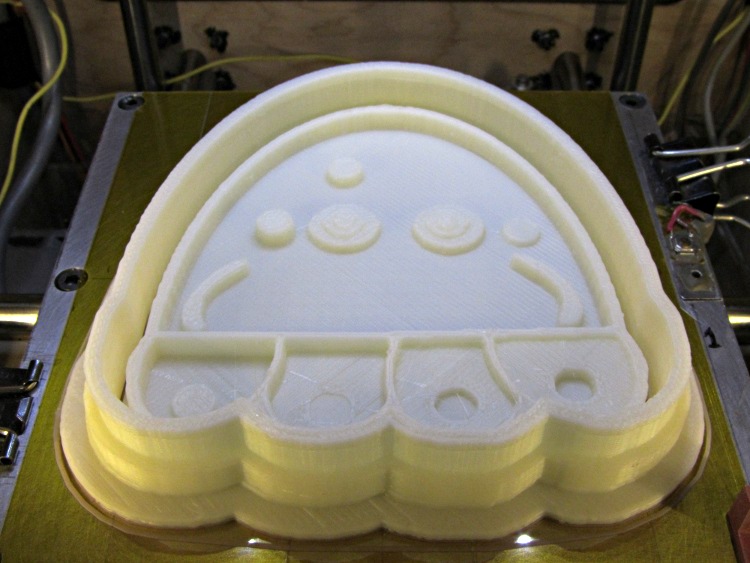
They’re a bit more impressive on the build platform, where the skirt thread around the perimeter extends slightly beyond the usual 100 mm width limit into the no-go zone behind the nozzle wiper. The bizarre lighting from the warm-white front LEDs and the cool-white overhead LED ring emphasizes the 3D features:
Jellyfish Cookie Cutter – on build platform
Somewhat to my surprise, the gritty nature of the bitmap source image didn’t cause a problem. The perimeters consist of many tiny segments, but most of the time goes to filling the interior (20% density, square pattern) and covering the flat surfaces, so the whole thing chugs along at a pretty good pace. Overall, it took something over an hour.
So, given a height-map grayscale image:
Manually tweaked jellyfish-high.png
I (and you!) can automatically create the solid model of a matched cookie cutter and press:
jellyfish-high – Cutter and Press – top view
And then we can produce as many chunks of plastic as needed for our baking session!
Printing that huge block of plastic did, however, uncover two longstanding mechanical problems. More tomorrow…
As expected, my crude bearing repairs on our Whirlpool refrigerator’s freezer fan didn’t last forever; the freezer dog crept back inside over the course of a few months. I recently ordered another replacement fan (yes, sixty bucks for an open-frame fan!), installed it, and have some interesting data points.
The OEM fan in the Whirlpool refrigerator was made by FSP and has no country of origin. The date code on the winding insulation reports 1993 and it lasted for the better part of a dozen years.
The replacement fan, which never sounded quite right and failed in short order, was made by Exact Replacement Parts and has no country of origin. I scrawled 2006 on it, although the bearing noise caused me to remove it almost immediately and re-fix the OEM fan bearings.
The new fan is once again made by FSP, comes with Whirlpool logos on the screw-and-bushing kit bag, and sports Made In Mexico on the winding insulation. So far, it’s sounded OK, although the normal fan whir seems a bit louder & growlier than before. No howls, though, and that counts for a lot.
I infer that the ERP fans weren’t entirely satisfactory, but that’s just a guess.
Our Larval Engineer, evidently planning to serve some genuine home-style pizza to her compadres, asked for the Official Recipe.
It goes a little something like this…
T minus 2.5 hours
Blend (manually!) in mixer bowl:
1 Tbsp yeast (that’s two packets = crazy spendy → buy in bulk)
1 Tbsp brown sugar (or whatever sweet you have)
1-1/2 C warm water (1 minute in our microwave)
Add on top of liquid:
3 C whole wheat flour
1 C white flour
1 tsp salt
The original recipe called for:
4 Tbsp olive oil (or safflower, not vegetable / canola)
1/2 C additional flour only if you add oil
Don’t stir, just pause 5 minutes until the yeast gets up & running.
Run mixer until dough becomes rubbery and cleans the bowl.
No mixer? Stir, stir, stir, then knead, knead, knead.
Ed & Karen kneading bread dough – Raleigh 1995-ish
(As you can see, she has experience kneading bread…)
Cleave in twain, about 1 lb per lump.
Oil mixer bowl & one lump, let rise.
Flatten other lump in plastic bag & freeze for next week.
Put 1 unit homebrew pizza sauce on counter to thaw.
T minus 45 minutes
Roll crust to fit pan, generously flour bottom, let rise on countertop.
Grate cheese:
2 oz Sharp Provolone
2 oz Mozzarella
3 oz Monterey Jack
Cube meat:
2 oz Ham
4 oz Turkey / pork / what have you
Chop veggies:
handful Broccoli tips (save stalks for tomorrow’s stir fry)
1/2 Sweet pepper (Green / red)
3 Bunching onions (or small scallions, whatever)
1 big Mushroom (or 4 tiddly buttons)
T minus 15 minutes
Fire the Oven! to 500 F
Flour bottom of crust, flop on pan
Spread pizza sauce generously over crust, counter, walls, self
Distribute meat / veggies
Top with cheese
Slide onto middle shelf of oven
Set timer to 10 minutes if preheated, 12 minutes if not quite hot yet
Clean utensils / counter / walls / self
T minus zero
Remove from oven (top should be brown & bubbling)
Pause for coagulation
Cut
Distribute
Nom on!
The original recipe was about the same, plus foo-foo steps like putting oil in the dough, spreading cornmeal on the pan, oiling the crust before applying the sauce, and suchlike. You’ll need the book for all the details:
I’m sure something different has come along in the last third of a century, but you’ll never hear it from me. Mostly, build a few, tweak the ingredients to suit your style / what’s on hand, and it’ll be all good.






 The Smell of Molten Projects in the Morning