The Smell of Molten Projects in the Morning

Ed Nisley's Blog: Shop notes, electronics, firmware, machinery, 3D printing, laser cuttery, and curiosities. Contents: 100% human thinking, 0% AI slop.

Author: Ed

  • Family Energy Cold Call: The Key Number

    A cold call from Family Energy, completely in violation of our presence on the FTC Do Not Call registry, produced an offer: “lock in” a rate of 8.9 ¢/kWh for two years. My experience has been that anybody cold calling me does not have my best interest in mind and a few minutes of search-fu showed that, while Family Energy may not be a scam, they certainly employ unique marketing methods for an “energy supply company”.

    For reference, the last two years of Central Hudson supply charges:

    Central Hudson Gas & Electric  
    Dollars per kWh  
    Date MFC Supply Ch Market Price Market Pr Adj Net Supply Ch
    2012-03-08 0.00190 0.05982 0.00635 0.06807
    2012-05-09 0.00190 0.05665 0.00524 0.06379
    2012-07-12 0.00191 0.06396 0.00532 0.07119
    2012-09-10 0.00196 0.07805 0.00260 0.08261
    2012-11-08 0.00196 0.05206 -0.00100 0.05302
    2013-01-12 0.00196 0.05027 0.00322 0.05545
    2013-03-12 0.00196 0.08340 0.00241 0.08777
    2013-05-09 0.00196 0.07359 0.00116 0.07671
    2013-07-10 0.00197 0.05458 0.00397 0.06052
    2013-09-09 0.00203 0.08143 0.00420 0.08766
    2013-11-05 0.00203 0.06634 -0.00368 0.06469
    2014-01-08 0.00203 0.05816 0.00061 0.06080
    2014-03-12 0.00203 0.14779 -0.00534 0.14448
     
    Average 0.07514

    That’s the only part of the bill Family Energy (and other suppliers) can replace; the remainder pays for delivering the energy to our meter.

    Family Energy’s marketing obviously plays off the staggering price spike in the most recent bill, but the CHG&E rate is lower than their “locked in” offer. In fact, if you exclude the last line, the CHG&E average is 6.9 ¢/kWh. The price spike came from the 2014 midwinter natural gas shortage and, assuming no simultaneous equipment failures, prices should return to the normal pattern.

    We may be building / upgrading pipelines, but expect the usual stalling, because environment.

    Family Energy does offer a $25 cash-back if your annual bill exceeds the CHG&E rate, up to a maximum of $75, but that’s chump change compared to the size of our bills…

    All I know is what I read on the Intertubes, but it seems the Family Energy door-to-door sales droids have even less interest in overall customer satisfaction.

  • Silica Gel Regeneration

    The humidity in the basement safe has been on the rise for the last few months:

    Basement Safe Humidity
    Basement Safe Humidity

    So I dumped all three bags of spent silica gel onto cookie sheets and baked them at 250 °F for a bit less than 12 hours overnight. As the (gas) oven temperature isn’t all that well regulated, I set it to 230 °F and hoped for the best. I have no way of knowing what the actual temperature was during the night.

    The silica gel inside the bag from the safe weighed 583 g and the two bags that had been sitting in the basement air weighed 663 g. After baking, all three trays of beads weighed 496 g, slightly less than the 500 g direct from the factory-sealed cans.

    The beads looked undamaged from their ordeal.

    Two dozen scattered beads collected from the countertop and floor weighed 0.4 g, for an average weight of 0.017 g each. I definitely didn’t lose 12 g of beads during this adventure!

    The translucent white beads vanish against an off-white laminate kitchen floor under ordinary lighting. They’re retroreflective enough that peering along the side of an LED flashlight lights them up; I’m pretty sure I got most of ’em.

    Memo to Self: Next time, try 6 hours starting in the morning.

  • Subaru Forester Manual: Oddities

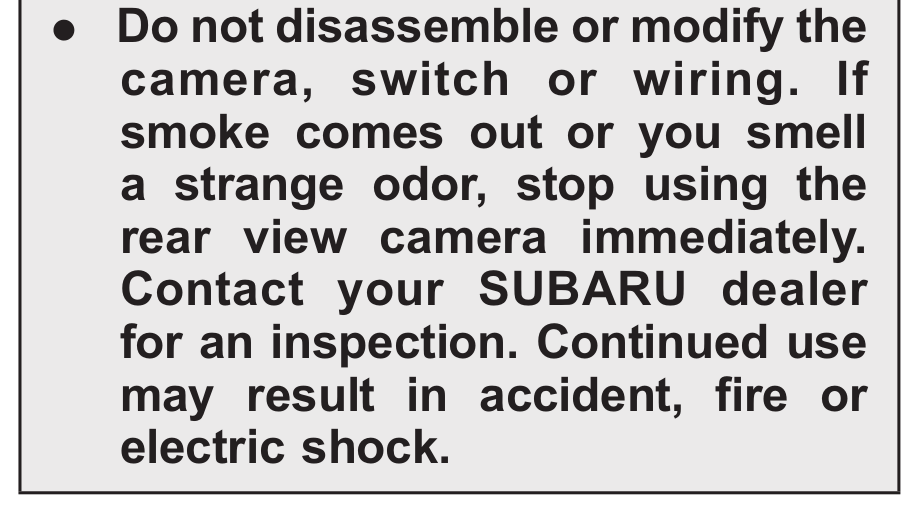
    Our shiny new Subaru Forester came with a 540 page user manual and, being that type of guy, I’ve been reading through it. I suspect warnings like this come from a lawsuit in the not-too-far-distant past:

    Camera Disassembly Warning
    Camera Disassembly Warning

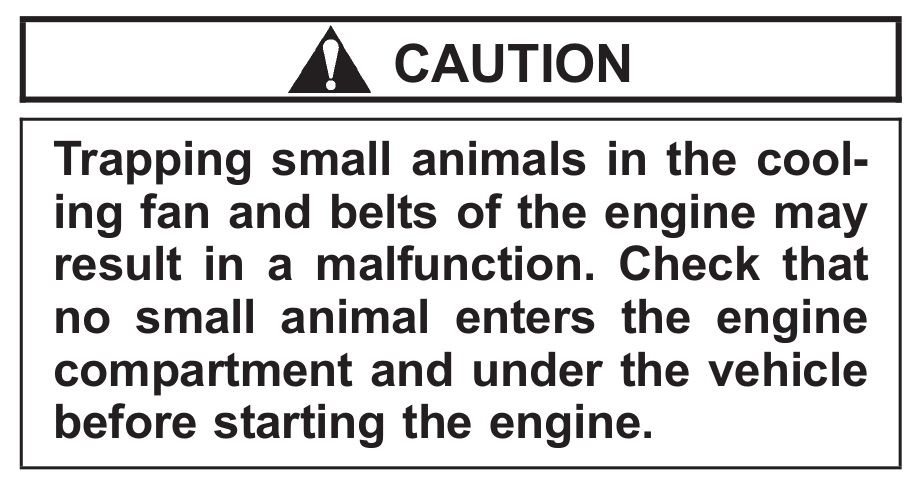
    They seem to be very, very worried about small animals:

    Check for Small Animals
    Check for Small Animals

    In this situation, I’d hope the engine would fare better than, say, a squirrel:

    Trapping Small Animals
    Trapping Small Animals

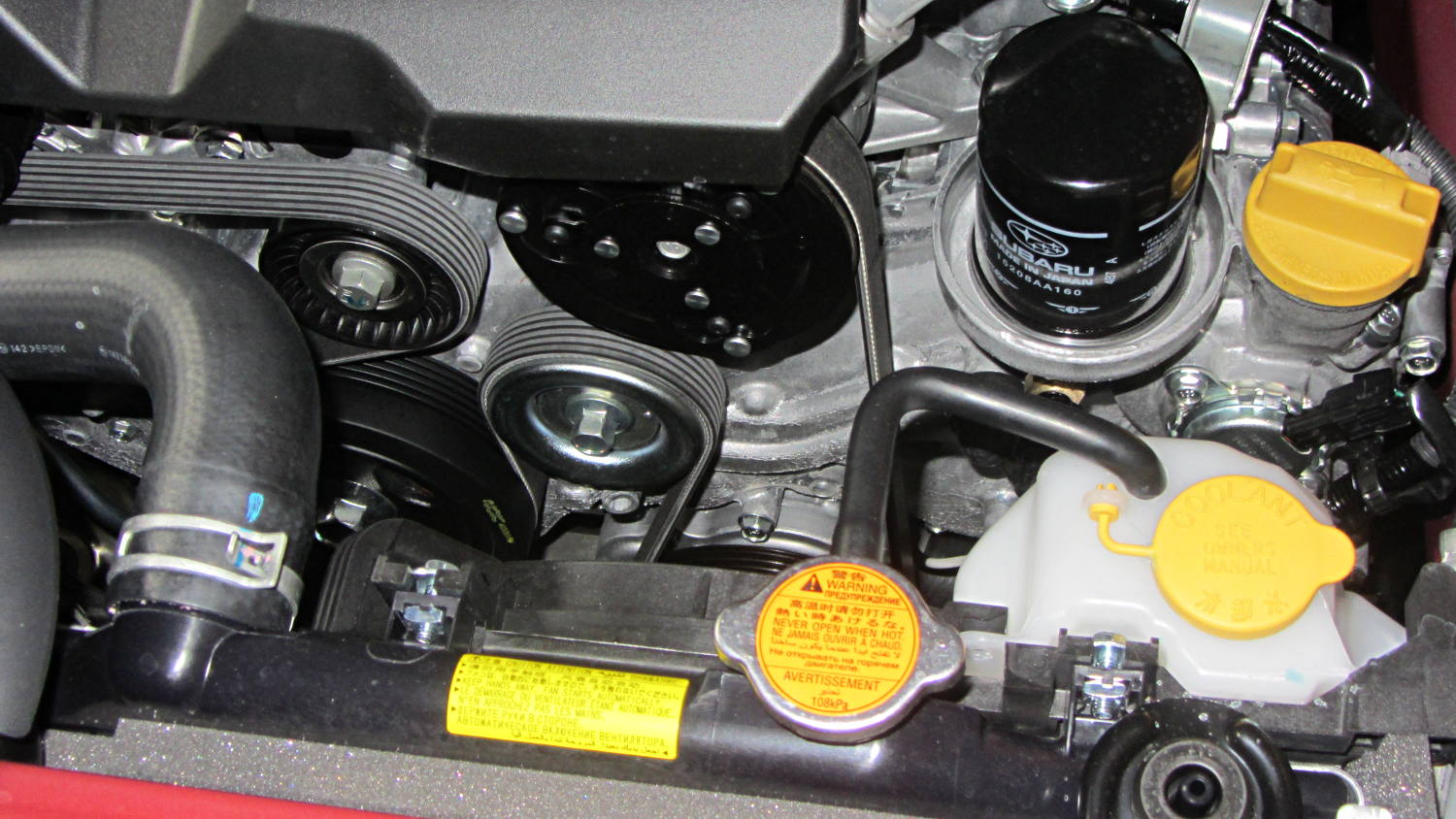
    Unlike the Toyota Sienna’s enclosed belt, I could actually replace this one, so I suppose a squirrel could take up residence somewhere in there:

    Subaru Forester - belt and oil filter
    Subaru Forester – belt and oil filter

    And look at that oil filter: right up top, inside a bowl! The never-sufficiently-to-be-damned Toyota engineers mounted the Sienna’s filter horizontally, halfway up the side of the transverse V6 engine, where it slobbers oil down the block and over the front exhaust manifold.

    So far, so good…

  • Monthly Image: Walkway Maintenance, with Airplane

    We planned to ride west on the Walkway and return east on the Mid-Hudson bridge, but encountered an obstruction in mid-span:

    Maintenance Crane on Walkway Over the Hudson
    Maintenance Crane on Walkway Over the Hudson

    Pedestrians and cyclists on diamond-frame (a.k.a., “wedgie”) bikes could sneak past the outrigger legs on the south (left) side of the crane, although that’s surely a Bad Idea for worksite safety. Our big ‘bents wouldn’t fit through, so we just turned around and enjoyed the ride home; a good time was had by all.

    While tweaking that picture, I noticed a speck of dirt on the monitor that, upon closer investigation, turned out to be a hidden object:

    Maintenance Crane on Walkway Over the Hudson - airplane
    Maintenance Crane on Walkway Over the Hudson – airplane

    Obligatory XKCD

  • Princess House Nouveau Ceramic Pan Handle Locking Button

    We bought a replacement for the CorningWare casserole (that a raccoon broke when I put the rice out on the deck to cool) at a tag sale:

    Nouveau Ceramic Pan - assembled
    Nouveau Ceramic Pan – assembled

    According to the information on the bottom, it’s “Nouveau A Princess House Exclusive” that’s no longer in their listing. Evidently, they’ve gone to metal stovetop cookware these days. Anyhow, it has a separate handle that latches onto a cleverly shaped tab molded into the pan:

    Nouveau Ceramic Pan - handle released
    Nouveau Ceramic Pan – handle released

    Latching the handle in place is simple: put the end of the handle over the tab and squeeze the lever until it snaps into the handle. Well, I managed to latch it quite easily, after which nobody could figure out how to release it. That slotted button cries out to be pushed, but it wasn’t push-able.

    That’s a condition I call “being outwitted by inanimate objects”…

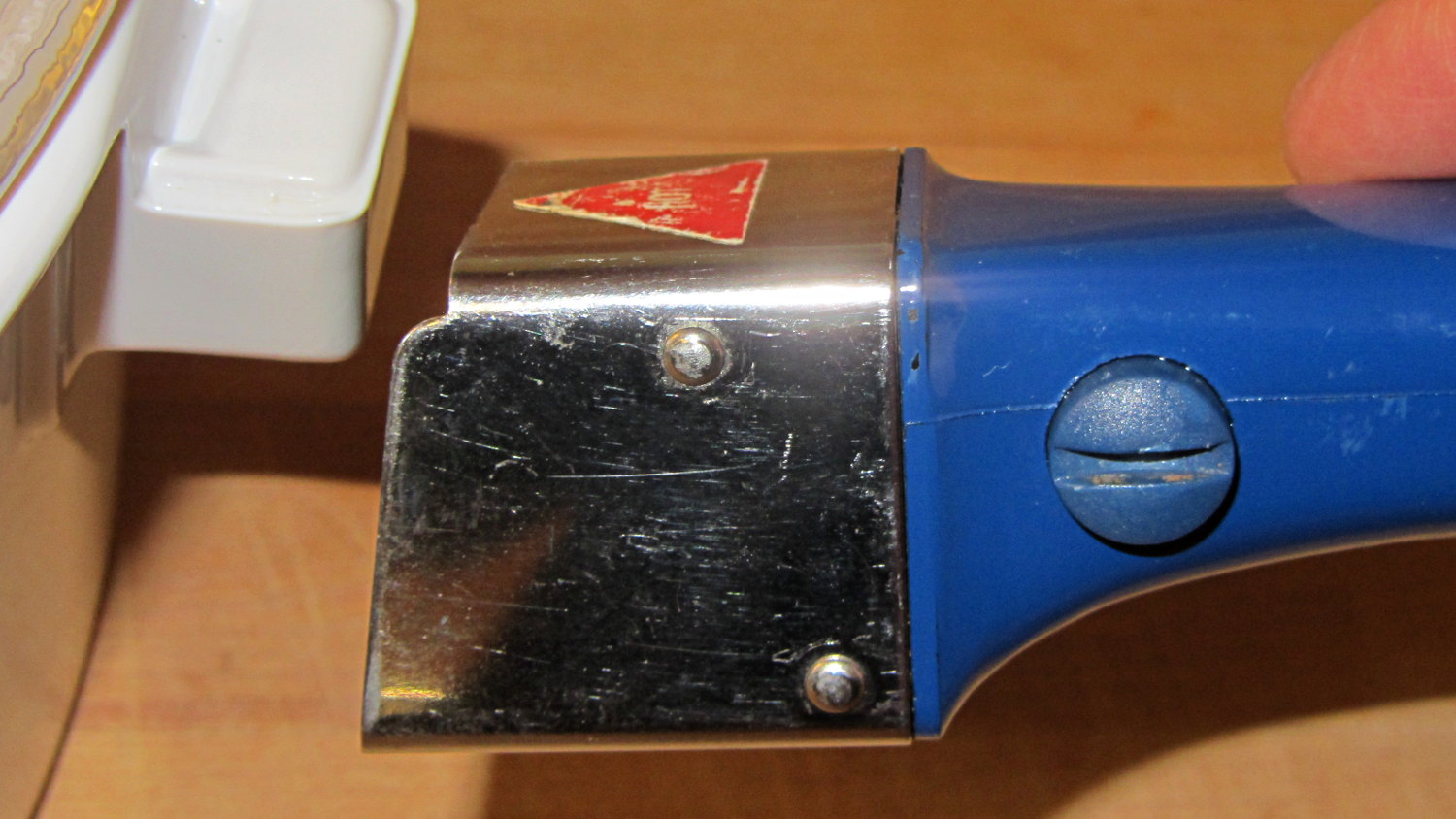
    After bringing it home, I discovered the secret: the slot must be exactly vertical (equivalently, maximally counter-clockwise) before you can press the button to release the latching handle. Turning the button so the slot is horizontal (maximally clockwise) locks the button out, so that you cannot press it and release the handle:

    Nouveau Ceramic Pan - handle locked
    Nouveau Ceramic Pan – handle locked

    The button locks out when the slot is almost imperceptibly clockwise from vertical; if you don’t know what to look for, you’d never notice the difference.

    Which makes perfect sense to me. You want the handle to latch securely and require a deliberate action to release, lest the pan fall and release hot stuff all over your front. Any errors should leave the handle securely latched in place.

    FWIW, World Kitchen, the current owners of the CorningWare brand, no longer make stovetop-rated ceramic cookware; it’s evidently easier and cheaper to make microwave-only ceramics. World Kitchen also owns the Pyrex kitchenware brand and, true to form, replaced the original borosilicate glass with cheaper tempered soda lime glass. Sic transit gloria mundi and all that…

  • Extracting Frames From A Video File

    Using avconv (formerly ffmpeg):

    avconv -ss 00:07:05 -i MAH00016.MP4 -t 2 -f image2 -q 1 Image-%03d.jpeg
    

    The options:

    • -ss starting time in hh:mm:ss (or seconds)
    • -i input file
    • -t duration in seconds (or hh:mm:ss)
    • -f mux/demux for still images
    • -q quality (1 = best)

    Use a video player to find the interesting section, then bracket it with the starting time and duration. Putting the -ss starting time before the -i input file lets the decoder skip through the file, rather than grinding through everything preceding the specified frames.

    The -q 1 setting wrings the best quality out of the input video file. That’s why the camera captures 1920×1080 video @ 60 fps; I wish I could dial its compression back a bit, but that’s not an option.

    So.

    Do you think he didn’t quite kill me between bites or is that a K-Mart bag and he was yakking on a phone like everybody else?

    Near Miss - Jackson Drive - 2014-05-03 - car interior
    Near Miss – Jackson Drive – 2014-05-03 – car interior

    Clicky for more dots. I compressed the image from the avconv output file, but it’s good enough.

  • New Subaru Forester: Tire Pressure Check

    For reasons having to do with our Larval Engineer needing transportation, we just bought a Subaru Forester for us. While chewing through the 540 page Owners Manual, I discovered that, although the tire pressure monitoring system knows all five pressures, it can’t / won’t display them on the dashboard’s fancy LCD panel.

    All four road tires had about the same pressure:

    Subaru Forester - as-delivered tire pressure
    Subaru Forester – as-delivered tire pressure

    Yes, I cross-checked two other gauges, Just To Make Sure.

    That’s 7 or 8 psi over the spec found on the door frame placard: 30 psi front, 29 psi rear. The tire sidewalls implore you to never inflate them over 40 psi while seating the beads, although the absolute max rating of 51 psi at max load says they’re not really overstuffed.

    The doughnut spare tire should have 60 psi and carried 64 psi:

    Subaru Forester - as-delivered spare tire pressure
    Subaru Forester – as-delivered spare tire pressure

    Now, I’ve never had a cold tire gain pressure between checks (other than when the weather heats up), so I tend to run ’em on the high side of the recommended range. In this case, I left the spare alone and vented the road tires to 30 psi to see how it rides. If all goes well, then maybe I’ll puff ’em up a bit.

    It’s time to check the fluid levels to see what could possibly go wrong under the hood…