Ed Nisley's Blog: Shop notes, electronics, firmware, machinery, 3D printing, laser cuttery, and curiosities. Contents: 100% human thinking, 0% AI slop.
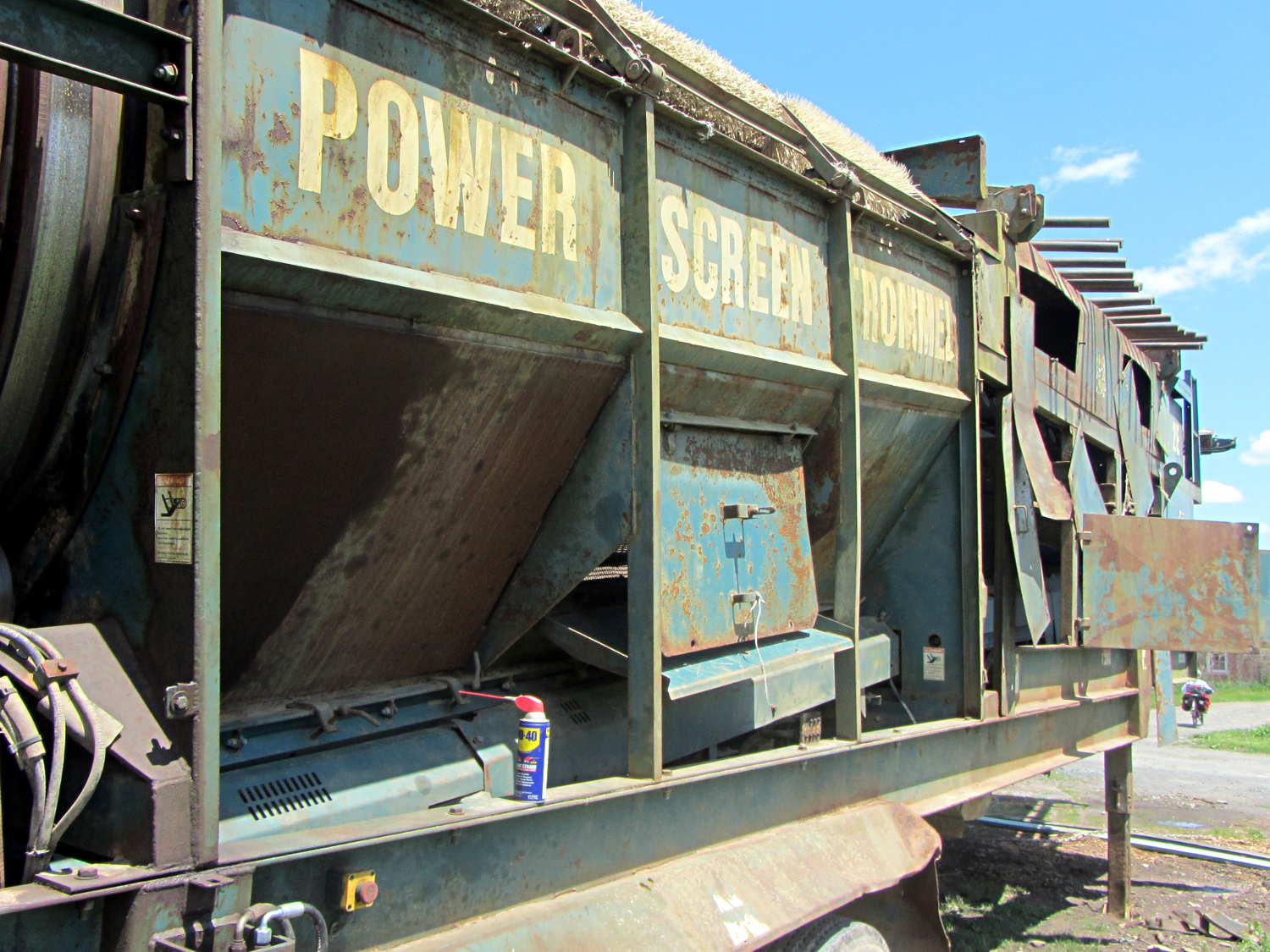
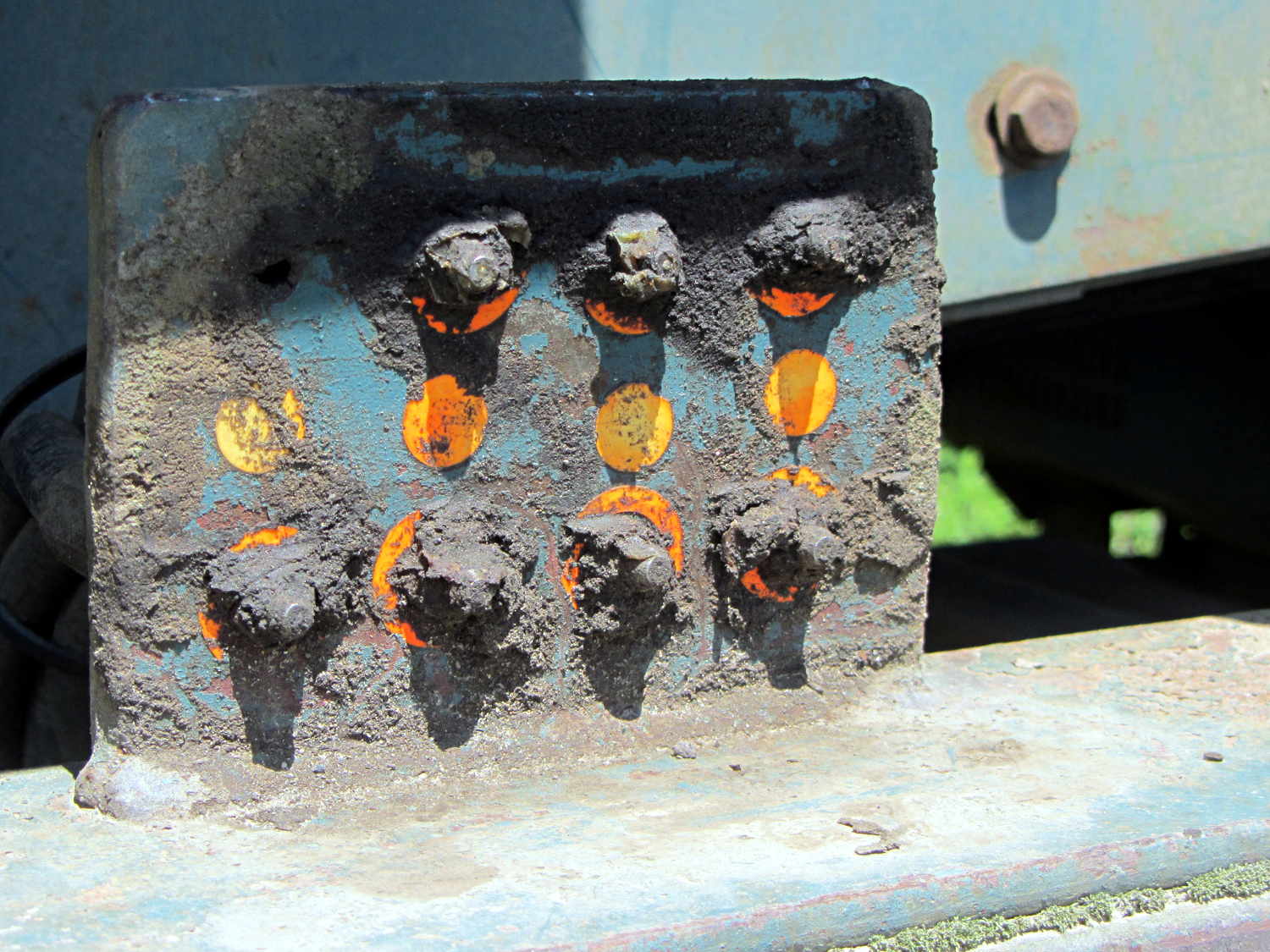
Apparently suffering a breakdown, it spent the next two weeks idle with all its covers open. The can of WD-40 makes a nice touch, but the condition of the central lubrication panel suggested the last grease went through those Zerk fittings quite a while ago:
Power Screen Trommel – lube panel
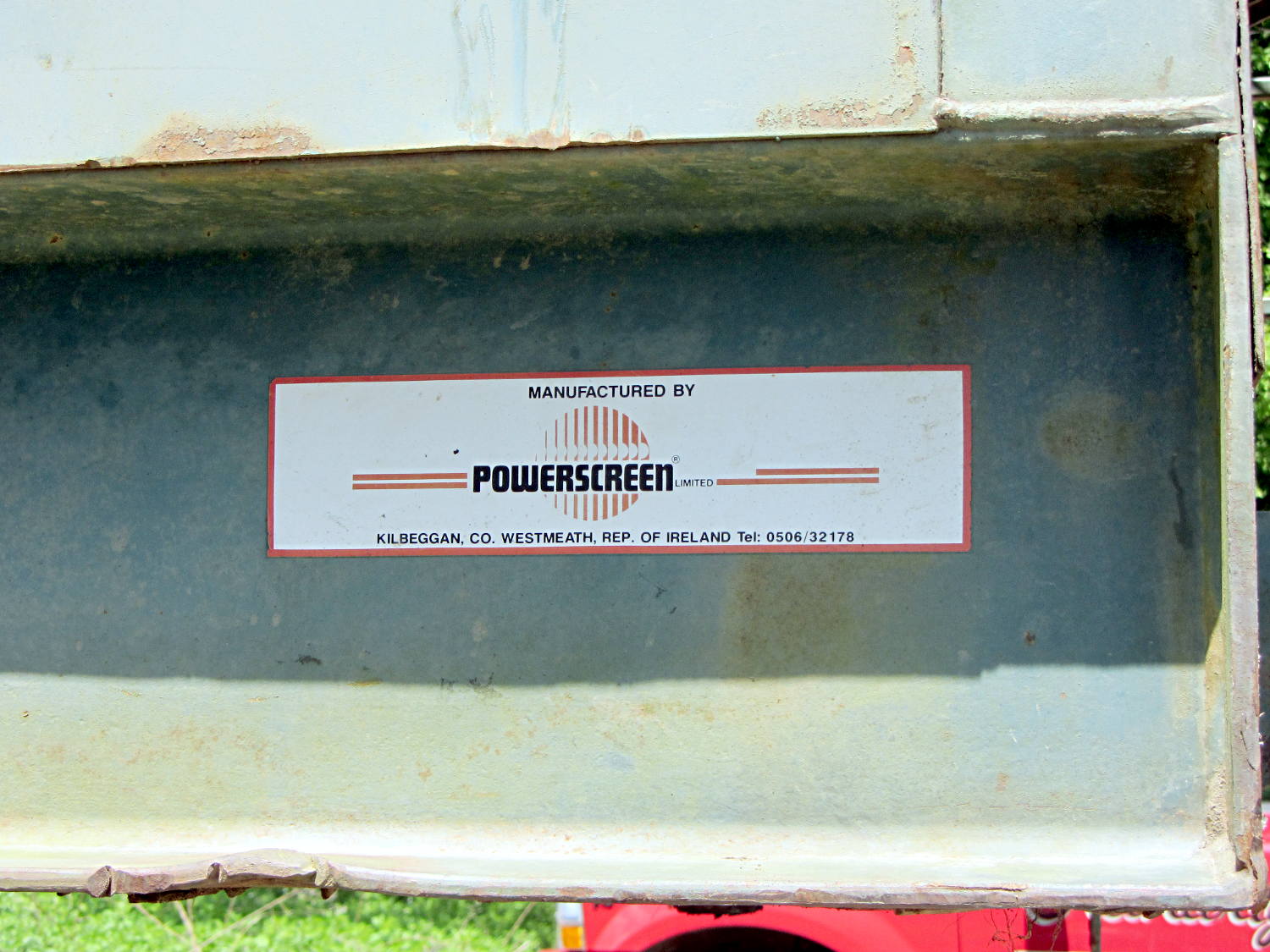
The manufacturer’s information label, tucked in a protected position, remains pristine:
Power Screen Trommel – mfg plate
Scrawled notes near the control panel noted that someone installed new oil and fuel filters in late 2004, with 4103 hours on the running time meter:
Power Screen Trommel – controls
Then, one day, it vanished, perhaps back into the mysterious universe from whence it came …
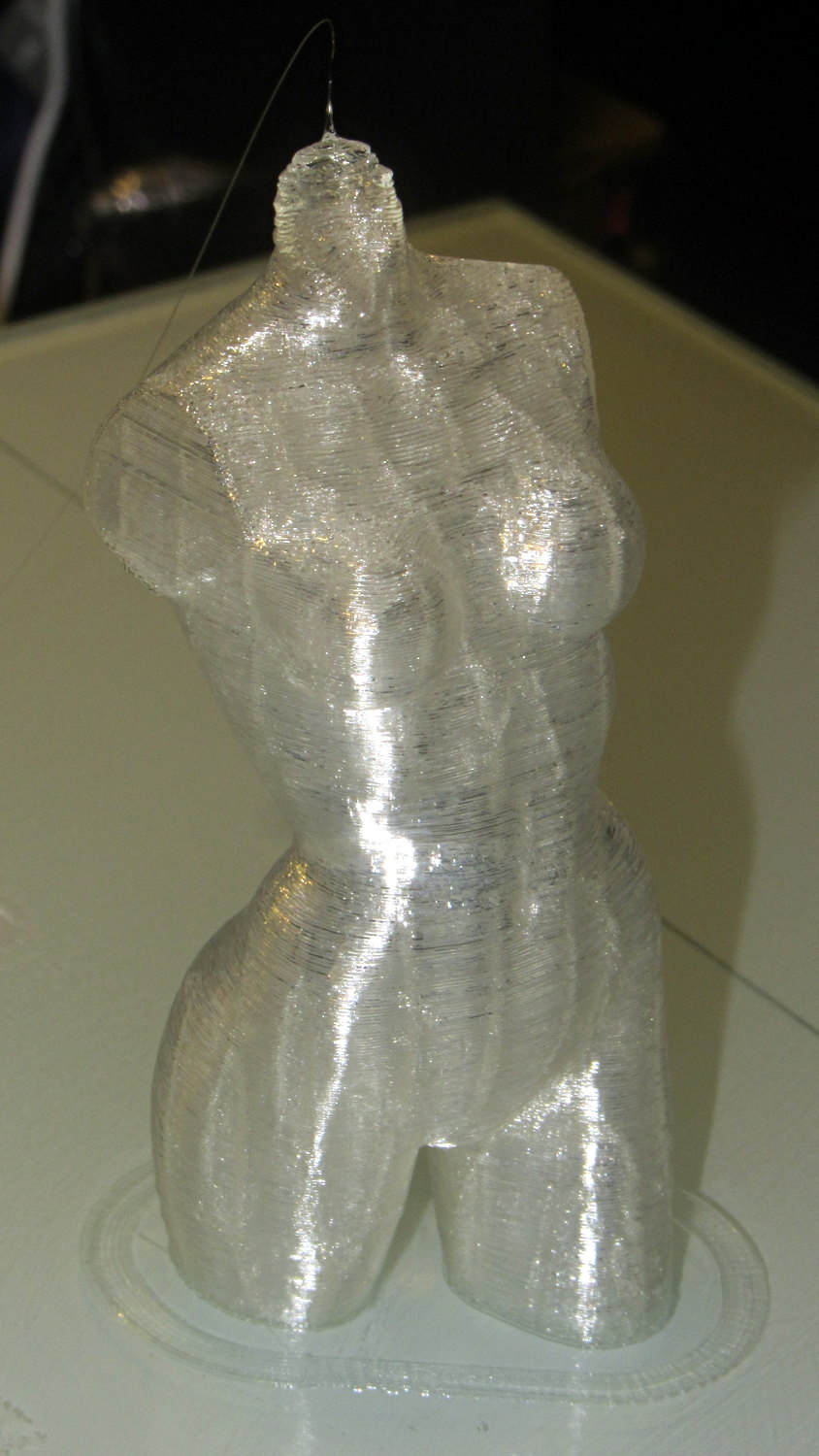
Done in natural PLA, as it seems the previous version also walked off:
Pink Panther Woman – natural PLA
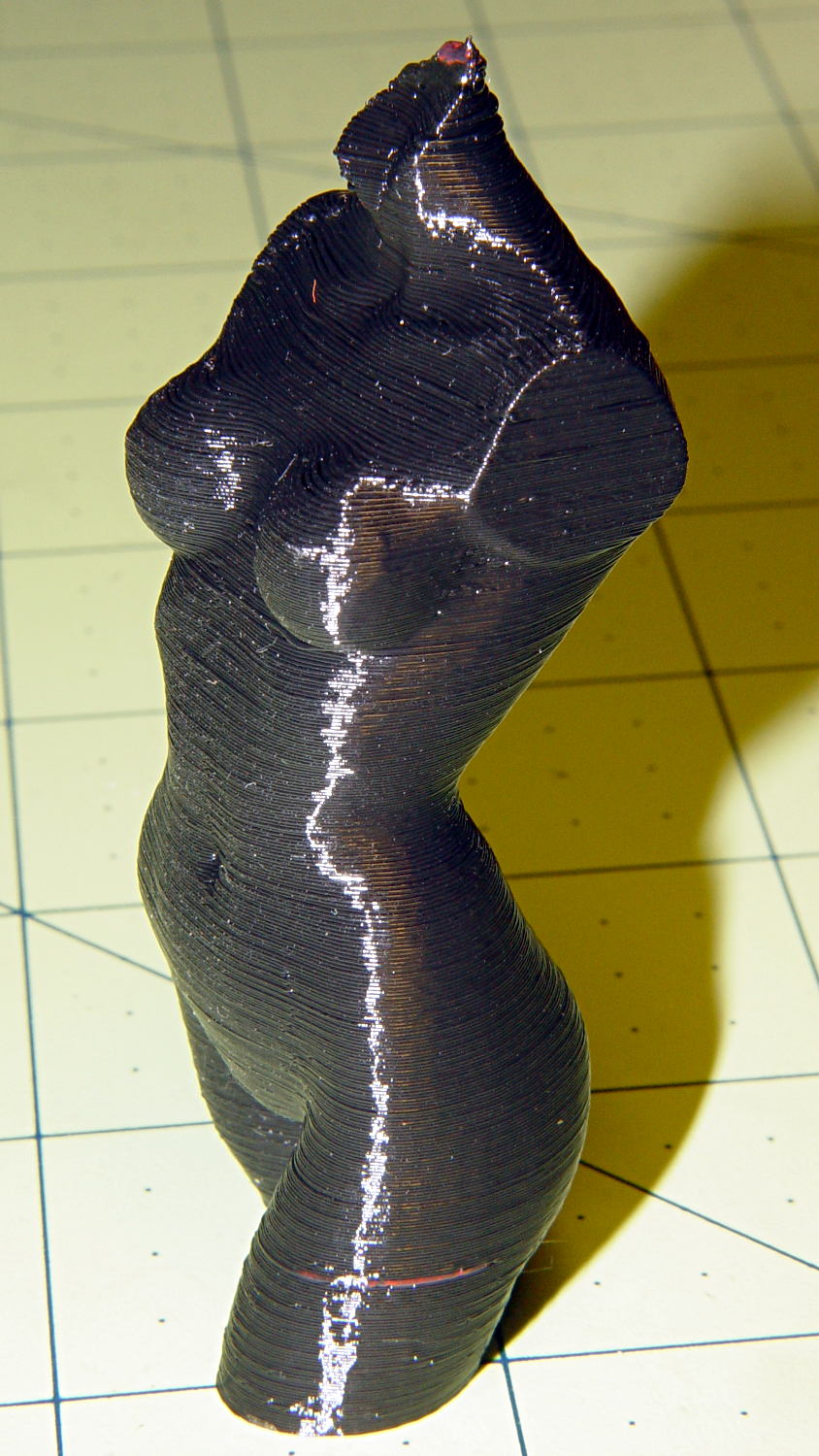
The attentive reader will note an odd red stripe on the left leg of the black PLA version. Here’s a closer look:
Pink Panther Woman – black with red contamination – detailPink Panther Woman – black with red contamination – detail
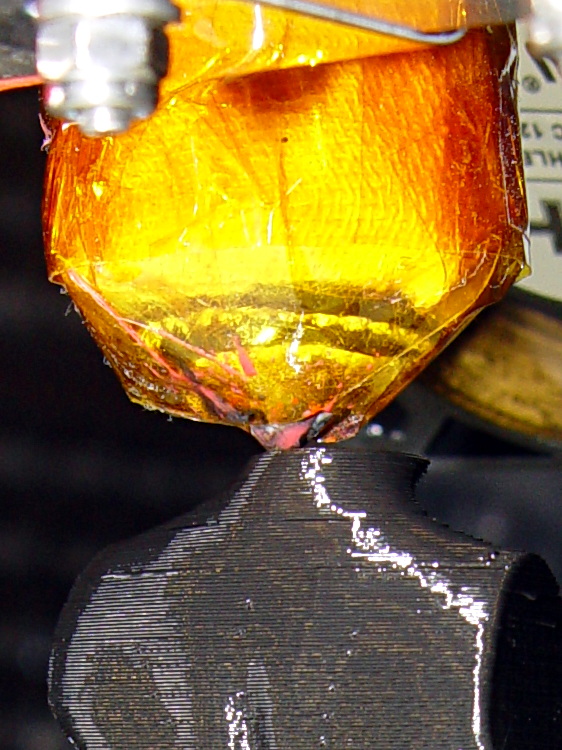
I had recently changed from red to black PLA and, as usual, purged the extruder with a few hundred millimeters of black filament, until it emerged pure black. Alas, I forgot to wipe the outside of the nozzle:
Pink Panther Woman – black – contaminated nozzle
That red blob produced the red tab on the neck, as you can see if you look carefully at the first picture.
There are very few visible imperfections in either object: the state of DIY 3D printing is pretty good.
(*) Does anyone know of similar male figures suitable for this purpose? That torso seems to be about the extent of Thingiverse’s offerings.
The improved platform was designed for a 30 V supply that would run it at about 150 W, which took slightly less than forever to reach operating temperature.
With the 36 V supply set to 38.6 V, the platform drew 6.2 A at room temperature, which worked out to 6.2 Ω and 240 W. It was a tad pokey getting up to temperature
At 40 V, the platform starts at 6.3 A / 6.3 Ω / 250 W from a bit over room temperature and drops to 5.8 A / 6.9 Ω / 232 W at 70 °C.
At about 250 W, the platform takes about three times longer to reach operating temperature than the extruder, but it doesn’t require calling down to the engine room for more coal before maneuvering. I must run some numbers on it, now that I have a power supply with a useful range.
There’s obviously an upper limit to the peak power the PCB traces under the glass can handle, but it runs at the same average power (to produce the same average temperature) and, at least so far, hasn’t shown any signs of distress. The few additional watts at 40 V won’t make any difference.
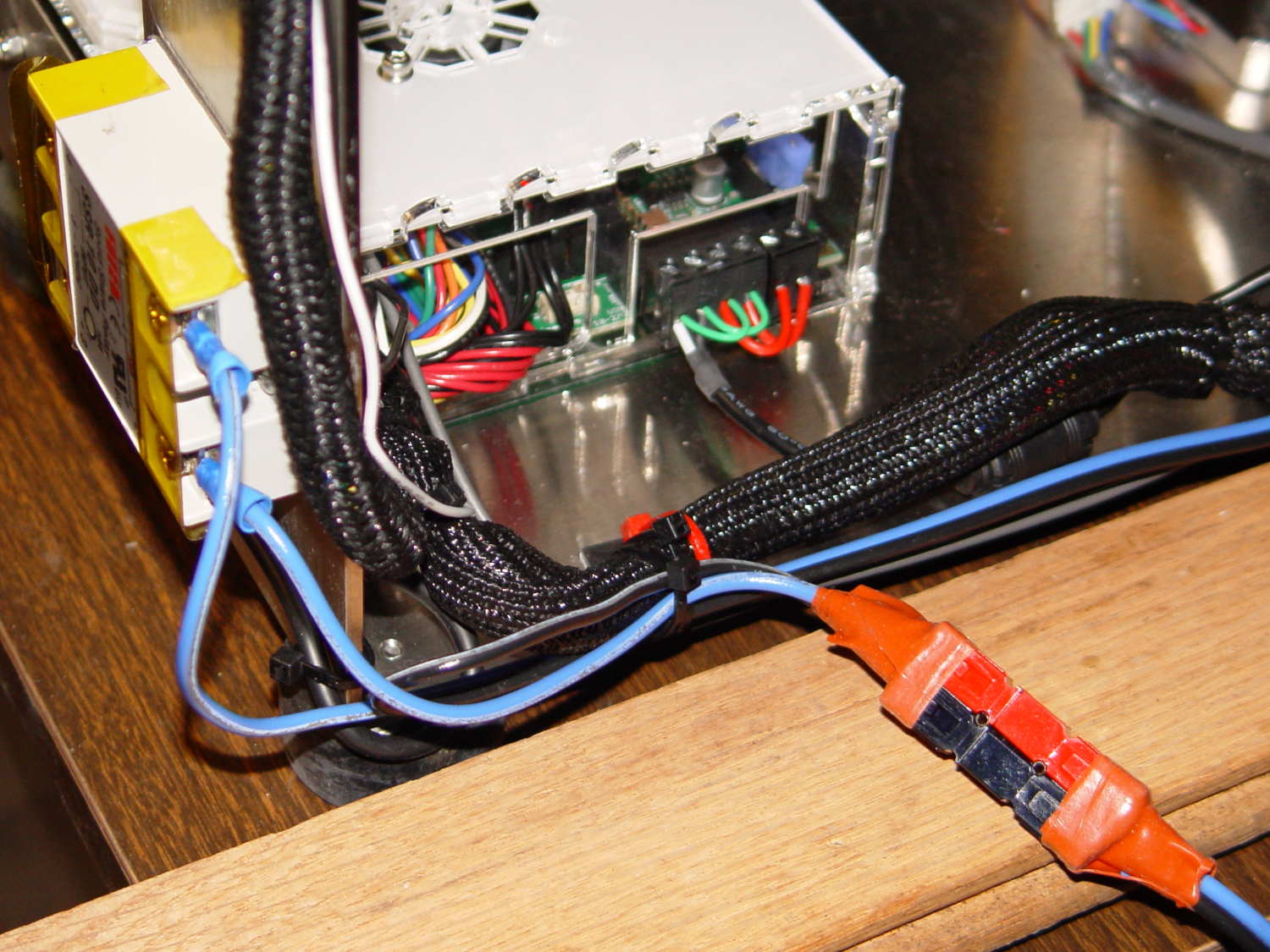
Note that you must use an external DC-to-DC solid state relay, because the Rambo controller board can’t handle anything over 24 VDC and high current loads tend to melt its Phoenix-style connectors. When you add the SSR, replace the HBP connectors with Anderson Powerpoles, use fat wires, and be done with it.
M2 HBP SSR Wiring
The M2’s Marlin firmware uses bang-bang control and tends to overshoot the setpoint; I’m not sure a few degrees makes all that much difference, particularly because it’s not measuring the temperature at the top of the glass plate.
mkdir /tmp/Video
cd /tmp/Video
sn=1 ; for f in /mnt/backup/Video/2014-05-29/* ; do printf -v dn 'dsc%05d.jpg' "$(( sn++ ))" ; cp -a $f $dn ; done
avconv -r 30 -i dsc%05d.jpg -q 5 Pok-Saratoga-Rochester.mp4
I tossed out a few images you didn’t need to see, then renumbered the remainder:
sn=1 ; for f in * ; do printf -v dn 'dsc%05d.jpg' "$(( sn++ ))" ; mv $f $dn ; done
The point of this exercise was to find out how Youtube treats “HD” movies. The original 1920×1080 MP4 file weighed in at nearly 500 MB with very good quality (due to the -q 5), but the Youtube “HD” result exhibits terrible compression artifacts; the black cloth crawls with huge checkerboard squares. Because the relatively slow-moving sequences at traffic signals and rest stops have excellent quality, I’d say Youtube’s video bit rate just doesn’t support images that change completely from frame to frame. Makes sense; nobody could watch such a thing, so why allocate that many bits?
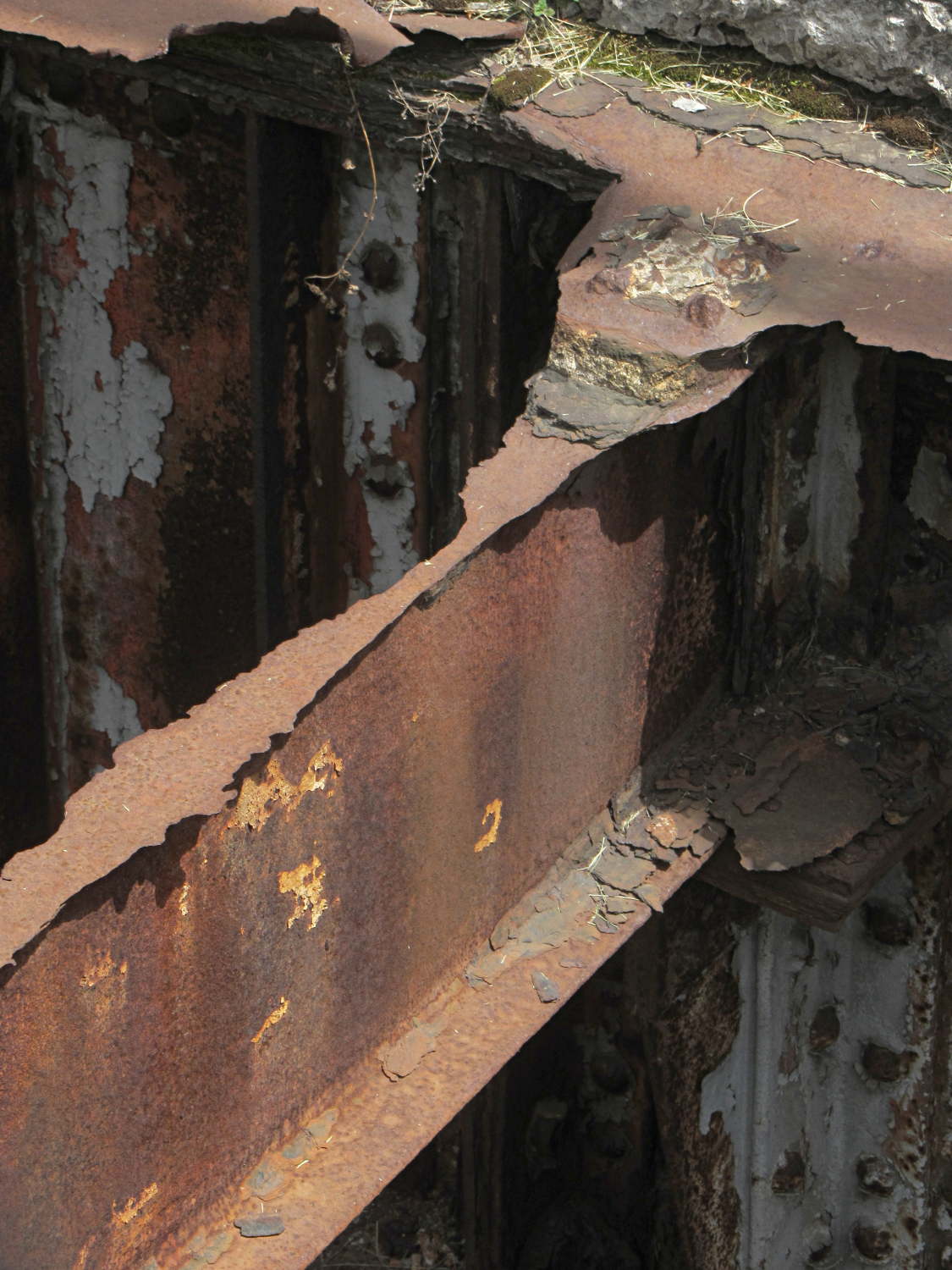
The longitudinal I beams have more iron and haven’t corroded through:
Rusted beams – Rochester RR station
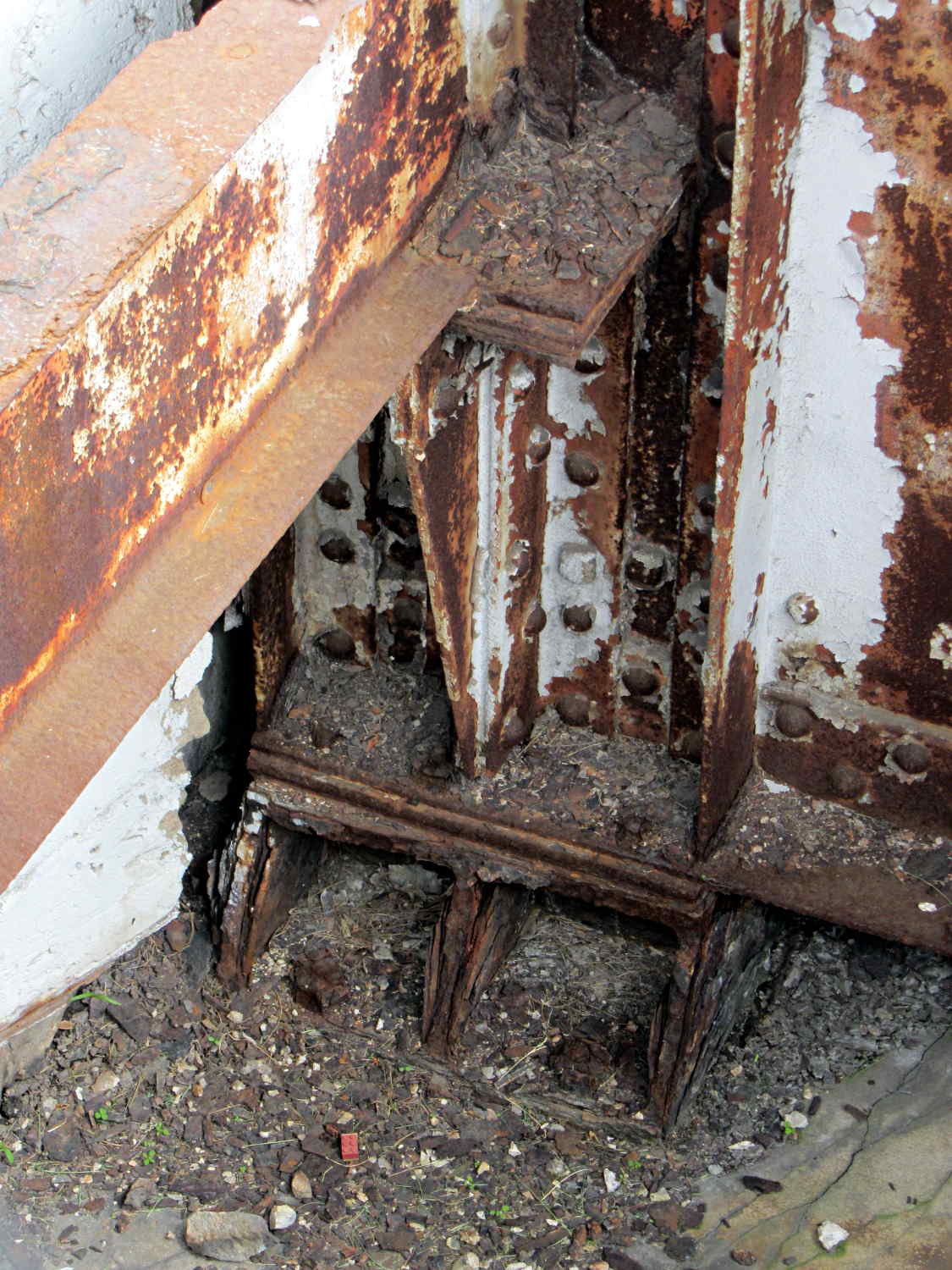
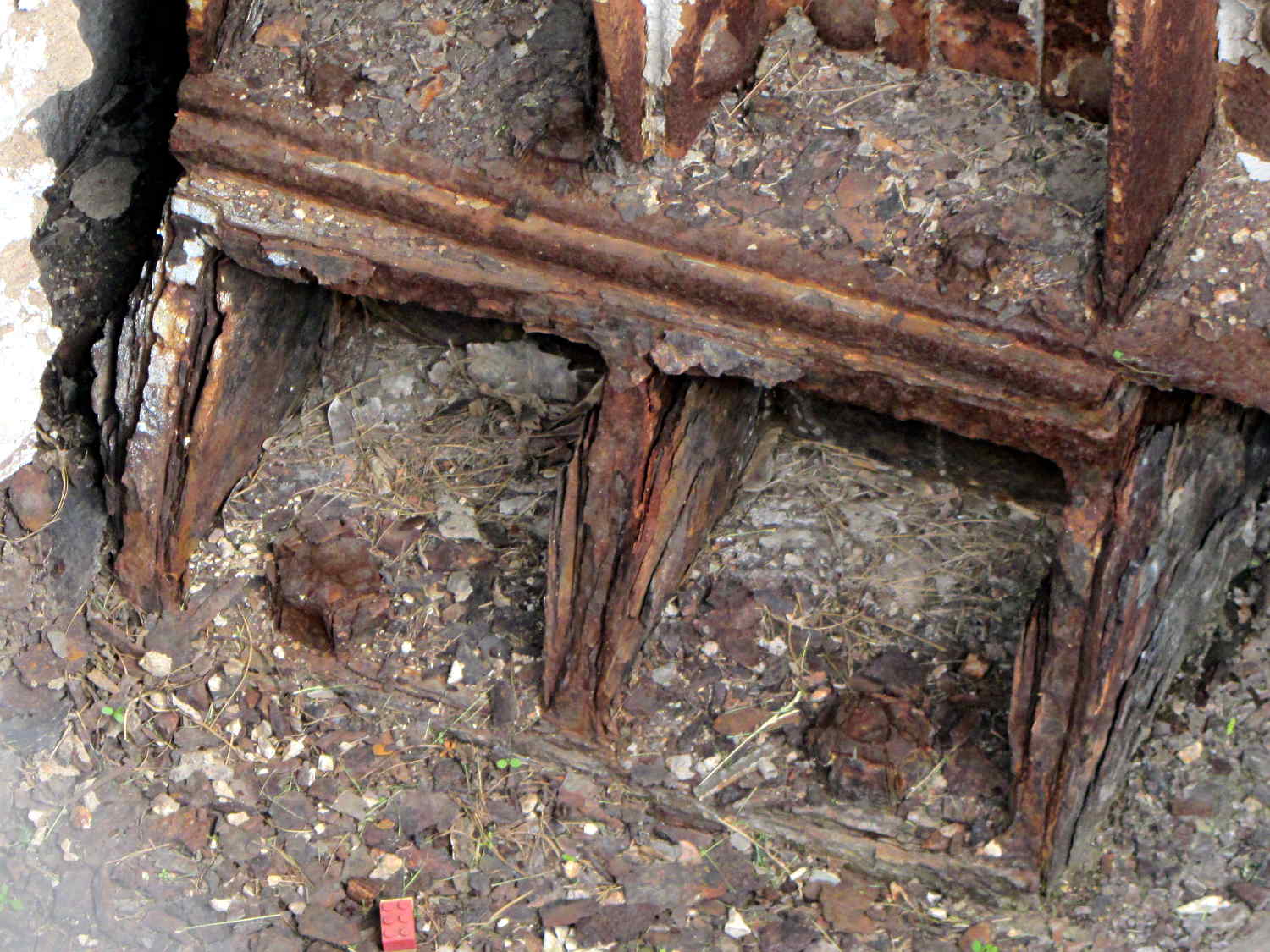
But the footing under that beam doesn’t look very good at all:
Rusted beam base – Rochester RR station
I think that Lego brick is a nice touch …
We drove the van along I-90 to Rochester and passed many bridge repair operations. The NY Thruway isn’t all that old and the rebar has been corroding out of the concrete pylons for years.
Nowadays, we use exactly enough material to carry the anticipated loads and not one gram more; fast forward a century and our structures won’t be around.
Those pictures were taken from the platform just west of the covered section.






 The Smell of Molten Projects in the Morning