The Smell of Molten Projects in the Morning

Ed Nisley's Blog: Shop notes, electronics, firmware, machinery, 3D printing, laser cuttery, and curiosities. Contents: 100% human thinking, 0% AI slop.

Author: Ed

  • Victoreen 710-104 Ionization Chamber: Mounting Dimensions

    Mounting a circuit board atop the Victoreen 710-104 ionization chamber requires figuring out the location of those 6-32 studs:

    Victoreen 710-104 Ionization Chamber - oblique
    Victoreen 710-104 Ionization Chamber – oblique

    Given that it dates back to the early Cold War days, the bolt circle dimensions are all hard inch:

    Victoreen 710-104 Ionization Chamber - mounting dimensions
    Victoreen 710-104 Ionization Chamber – mounting dimensions

    I embossed the studs into a pad of Geek Scratch Paper, eyeballed the stud-to-stud spacing from a cheap ruler, back-calculated the BCD, rounded it from 2.742 to the obvious 2.75, then fed that into the first BCD calculator that appeared in the obvious search.

    The can is just over 3.5 inch OD and stands 1.5 inch tall.

    The can will run at +24 V in relation to the rest of the circuitry, so the studs must be insulated from the PCB’s copper pours. That, most likely, will require some 3D printed doodads.

    The circuitry must live inside a grounded metallic can that excludes random electric fields. Somewhere in the pile, I have a few sheets of Mu-metal that, while grossly overqualified for the task (even without heat treatment), should solder up nicely…

  • Relic of the Empire: Telephone Room

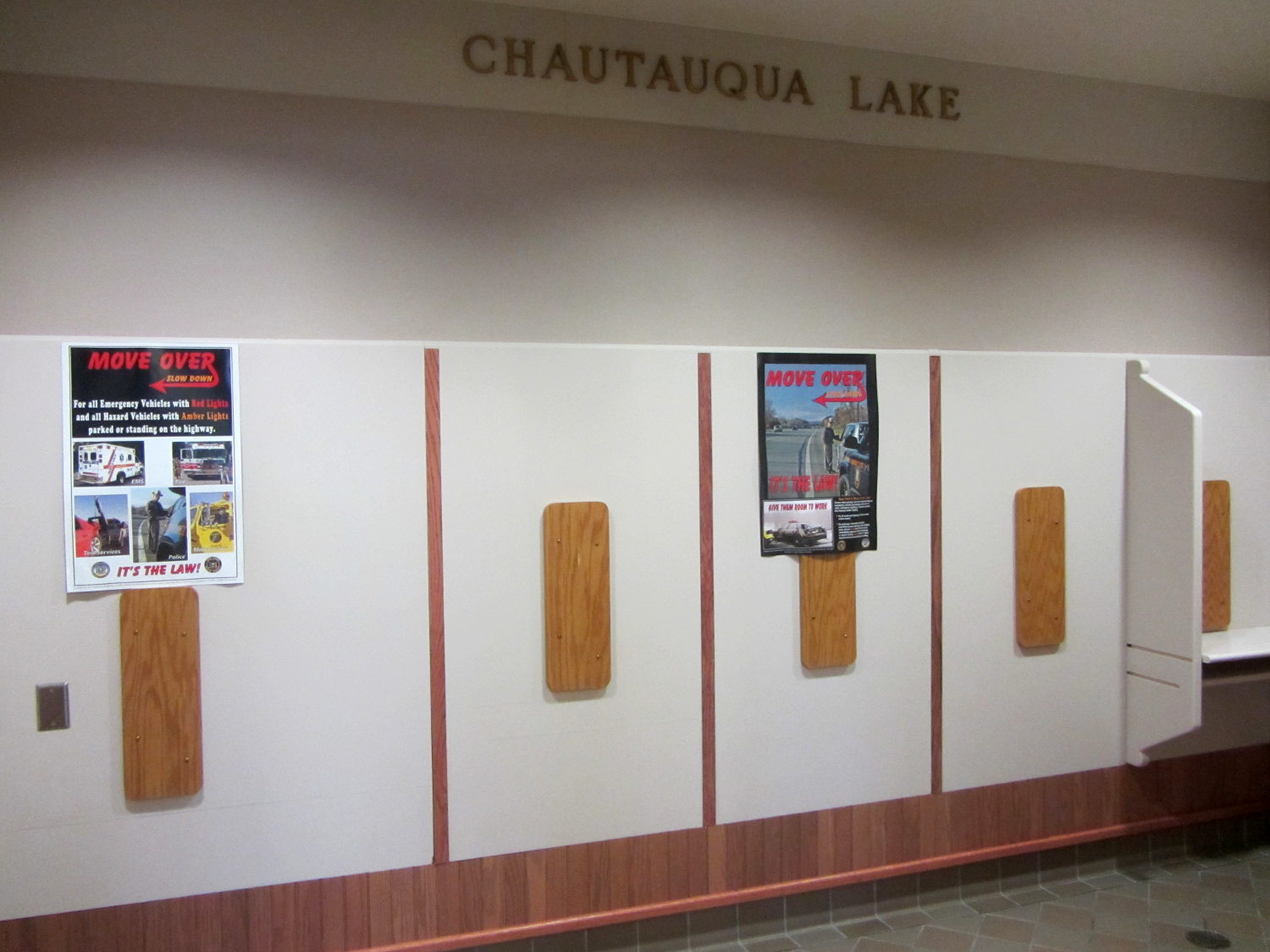
    Within the memory of those yet living, these rooms had a purpose:

    Chautauqua Lake Rest Stop - Phone Room
    Chautauqua Lake Rest Stop – Phone Room

    That’s at the fancy Chautauqua Lake rest area on eastbound I-86.

    The majority of NY Interstate rest areas are, suffice it to say, far less ornate. Their walls now sport bare phone mounting plates and cut-off cables.

    They don’t have any phone books these days, either…

  • Geek Scratch Paper: Historic Edition

    An embossed sheet of my Geek Scratch Paper carried the valve knob sizes home from the garden, which prompted a comment from Mike about The Good Old Days in sunny California. Because I’ve disabled comments on old posts due to the spam load, here it is:

    Ed has made references to his “geek scratch paper”… which brought back memories.

    Gullivers Restaurant in Orange county, CA has been around since at least 1974. Back then they catered to the moderately expensive out-for-dinner crowd in the evenings and on the weekends, but during lunchtime they had a businessmans luncheon special in the main dining room that was oriented towards a decent meal and in-and-out-in-an-hour. The side rooms were for those that were doing longer lunches or business deals over lunch.

    The key was that Gullivers was smack dab in the middle of Orange County’s tech region and right across the street from the large airport (now called John Wayne Airport). It’s also very close to Interstate 5, Interstate 405, and state highway 55… all 4-lane-each-direction major freeways.

    During those lunch hours it was not unusual to see ID badges from over 20 companies in the main dining room. Several new products and at least one new company were formed over those lunches.

    But the topic was “geek scratch paper”… well… Gullivers lunchtime paper placemats back in the 1970s were printed with graph paper on the back side!!!

    Imagine: Geek scratch paper at every table provided by a thoughtful restaurant!!! And this was forty years ago!!!

    I worked at one of the design houses in the area for over two years. I personally know of at least four new circuit designs, a half dozen new sheet metal designs, a number of circuit board re-designs, several new or modified software routines and at least six Product Change Notices and Engineering Change Orders that were started on the back of a Gullivers place mat (or three, or four…).

    For a long time my resume had a bullet point that read “Able to convert lunchtime scratch paper engineering sketches into formal documentation and engineering change orders”.

    I’ve not been inside Gullivers since 1981 – in over thirty years I’ve not been in that area except to drive on Interstate 5 on the way from Los Angeles to San Diego. The restaurant may be gone or remade itself into something else. But the next time I’m in that part of southern California I’ll make a special stop and check, and if their placemats still have graph paper on the back side, I’ll email you a photo or three.

    On a different but similar topic… At one time the local ham radio club members used to choose which restaurant to migrate to after the monthly meetings by which ones had a blank back side on the place mats…. especially for the planning sessions prior to major events.

    Mike WA6ILQ

  • Cycliq Fly6: Rain-shedding Performance

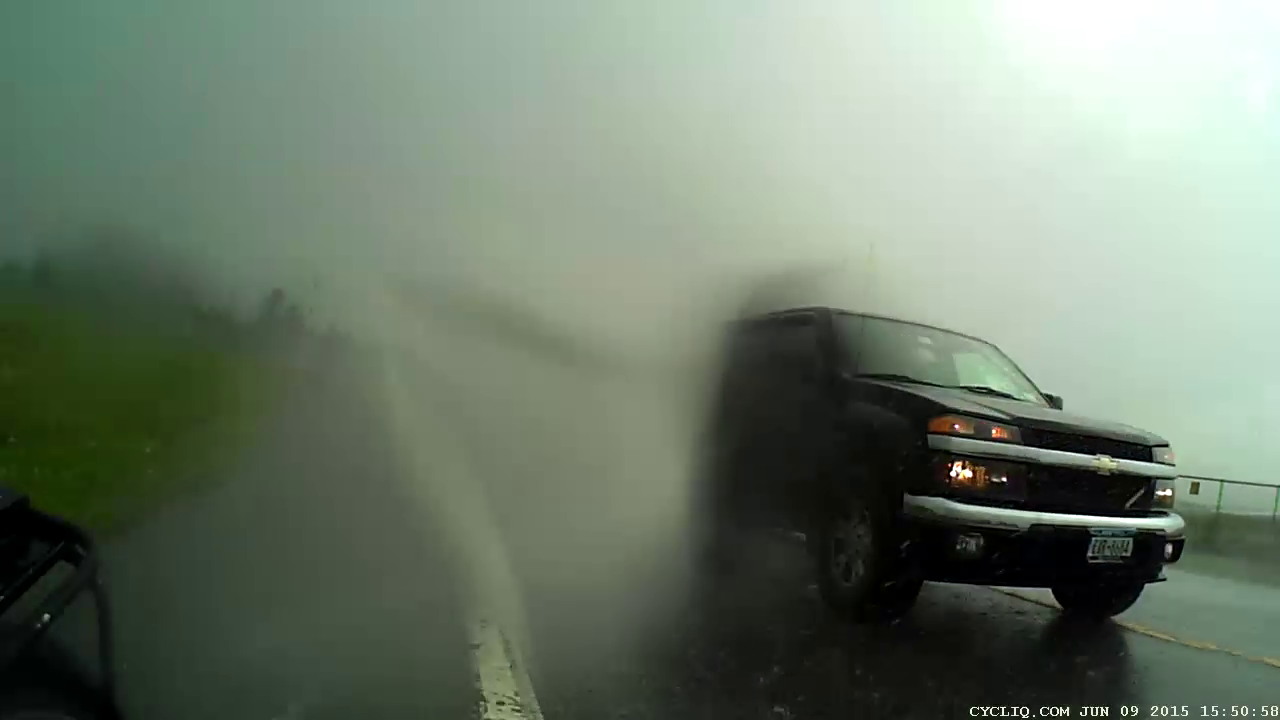
    Cycliq says “Using the latest nanotechnology, Fly6 is safeguarded against any wet weather nature can throw at you.” That’s not quite the same as saying it’s waterproof, but the plastic lens cover sheds water surprisingly well.

    We were caught in a brief downpour on a recent ride and, not unexpectedly, water covered the rear-facing lens:

    Fly6 - Rain 1
    Fly6 – Rain 1

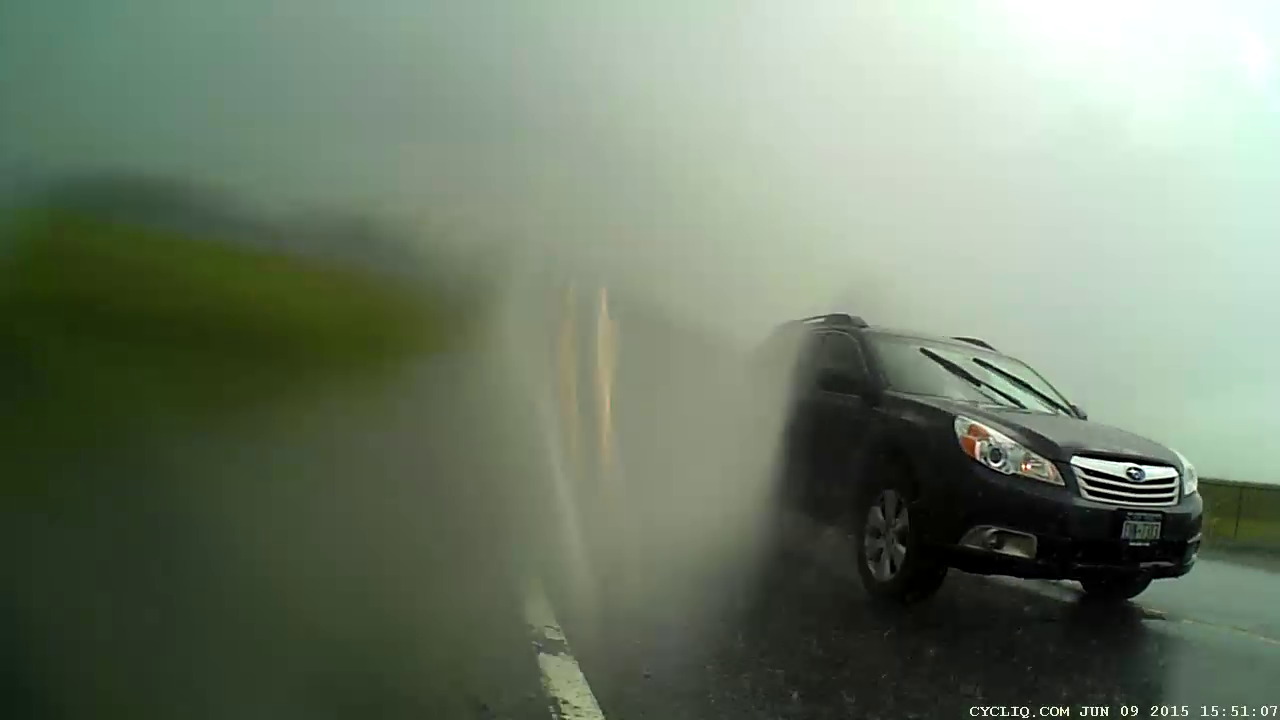
    A larger drop ran down the left side, merged with the previous drop, and blurred two thirds of the image:

    Fly6 - Rain 2
    Fly6 – Rain 2

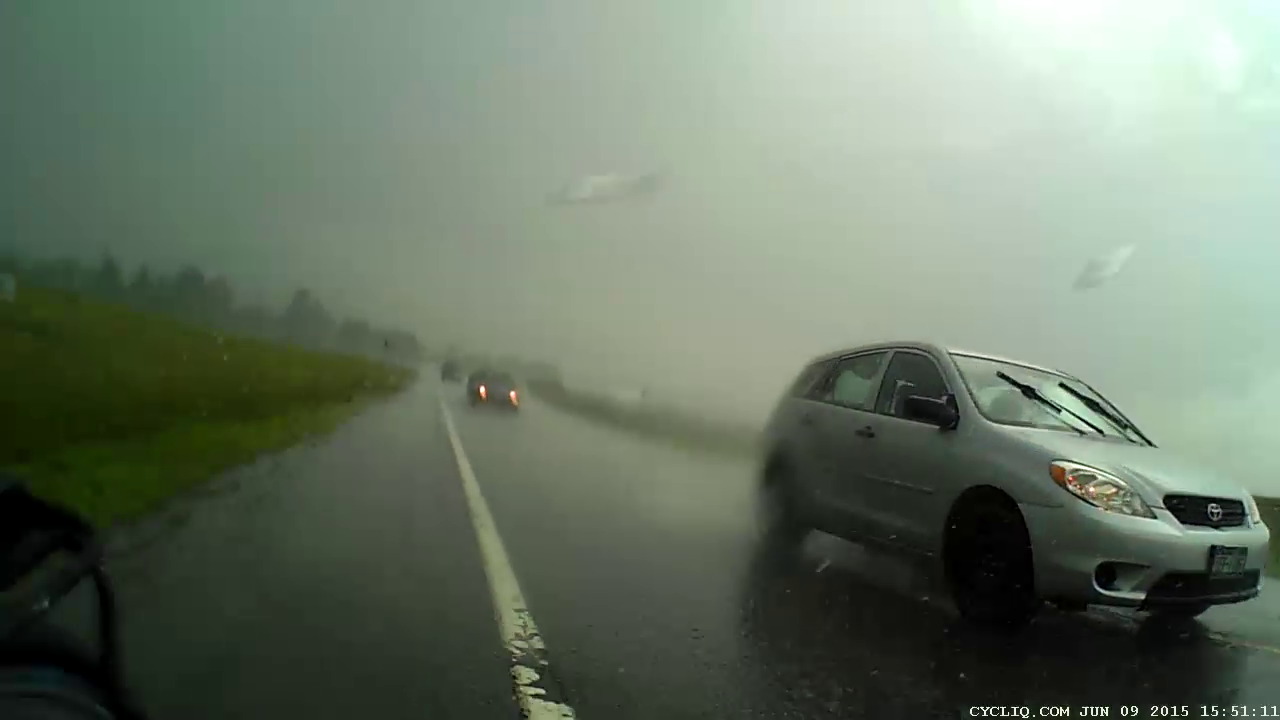
    Three seconds and a few major jolts later, the lens was mostly clear:

    Fly6 - Rain 3
    Fly6 – Rain 3

    Half a minute later, it’s looking even better:

    Fly6 - Rain 4
    Fly6 – Rain 4

    The jolts come from the deteriorated paving and poor patches along Rt 376, but at least they shake the water off the lens:

    Fly6 - Rain 5
    Fly6 – Rain 5

    Ten minutes after the first image, both the lens and the sky were almost completely clear:

    Fly6 - Rain 6
    Fly6 – Rain 6

    A pleasant surprise!

    That transverse crack just behind me? Charlie Brown’s First Principle of Puddles applies: you cannot tell how deep a puddle is from the top. That sucker goes down through at least three layers of paving:

    Crack - Red Oaks Mill
    Crack – Red Oaks Mill

    I forgot to put the Sony HDR-AS30V helmet camera in its waterproof housing before we left, so I put it in the (not exactly waterproof, either) underseat pack when the first drops fell. Sony makes no pretense that the bare camera can survive a rainstorm, but the packs are good for our simple needs.

    Ed’s First Principle of Rain Riding: After the first five minutes, you don’t get any wetter.

  • Cycliq Fly6 Camera: Copying the Most Recent Files

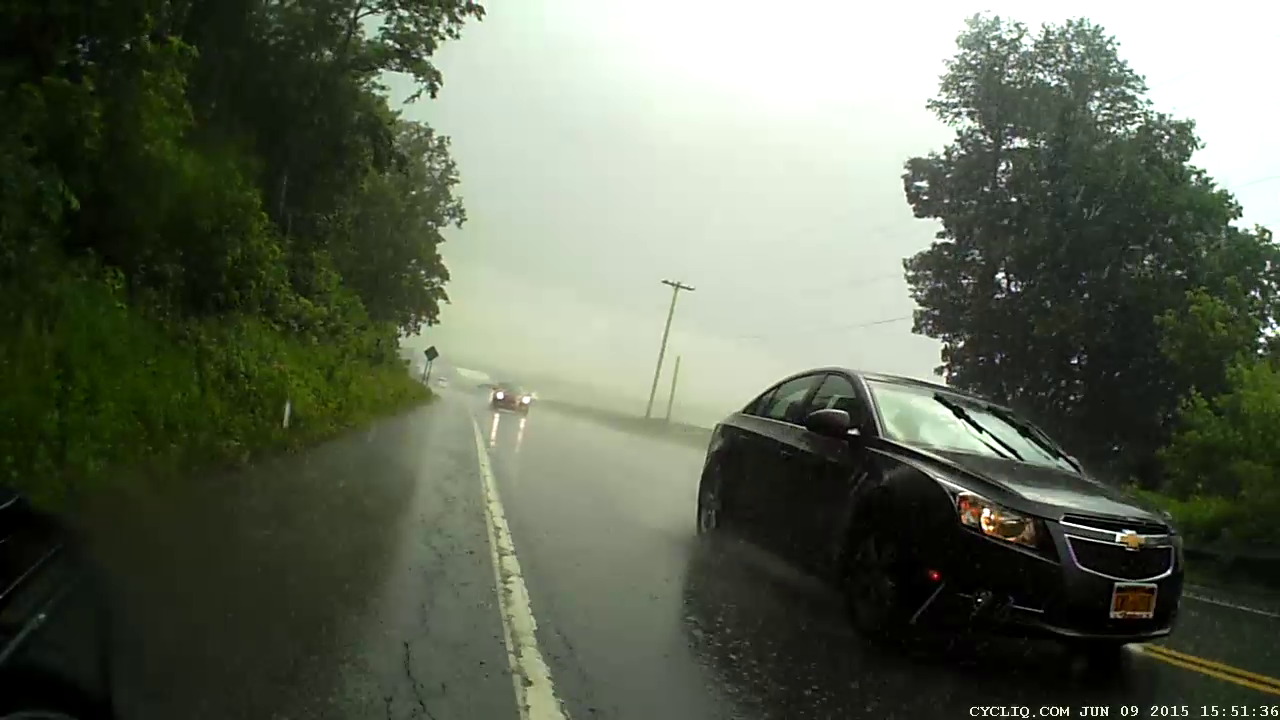
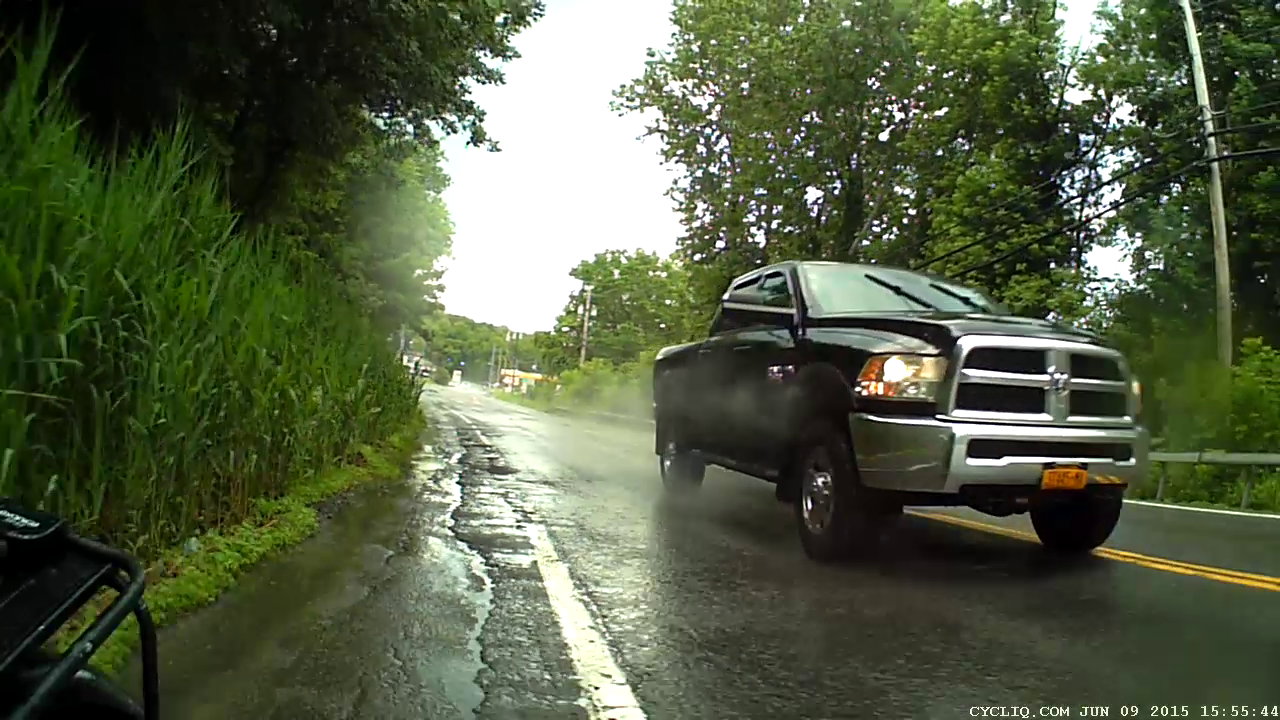
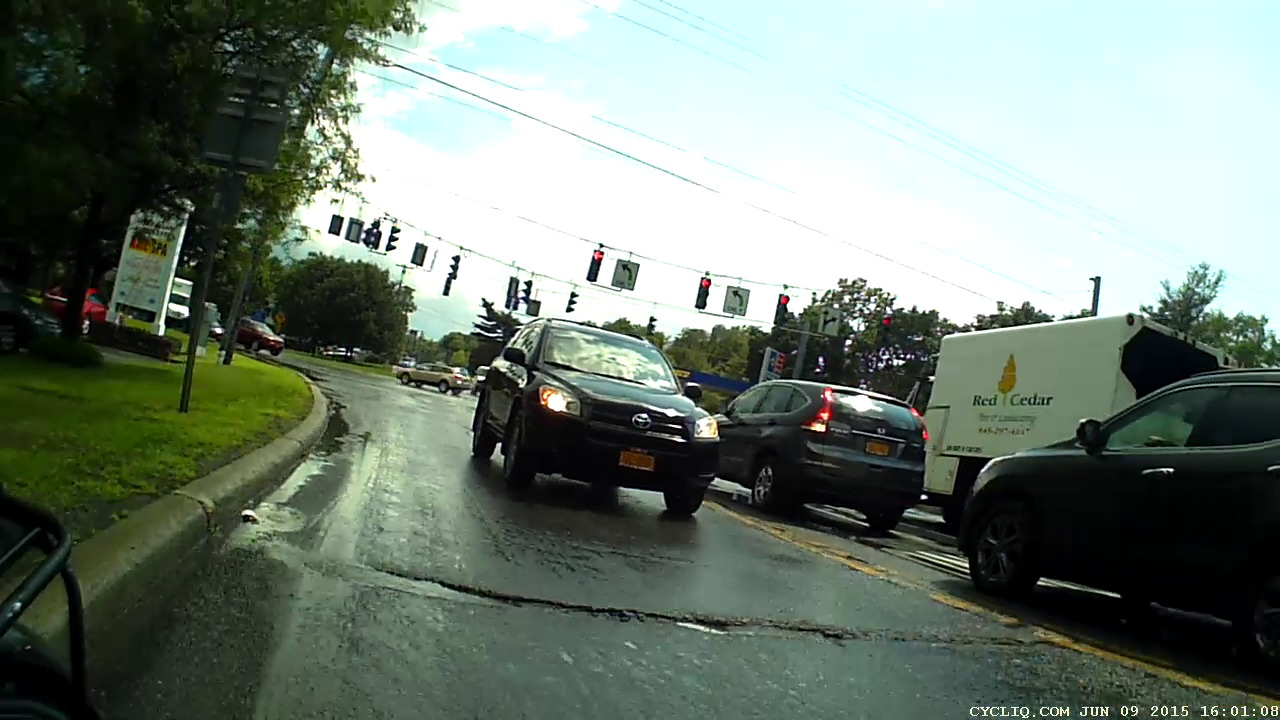
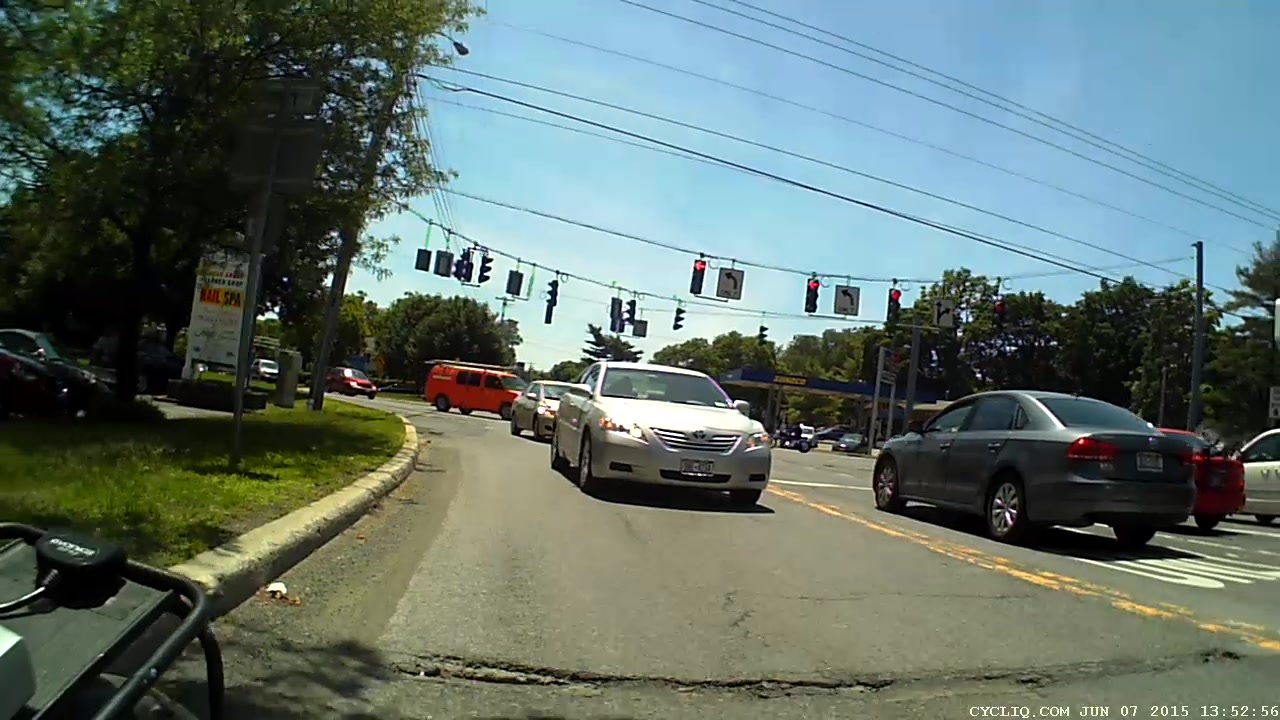
    Given Cycliq’s tech support recommendation to never, ever delete files from the camera’s MicroSD card, I’m now copying the files to the 500 GB network drive thusly:

    rsync -au --progress /media/ed/Fly6 /mnt/video/
    

    The Fly6 saws off a 400-800 MB file every 10.000 minutes, so a typical ride produces 4 GB of data.

    The Sony HDR-AS30V emits a 4.2 GB file every 22:43 minutes: call it 12 GB per ride.

    Somewhat to my surprise, both copy operations can proceed concurrently at 4 MB/s apiece. For unknown reasons, the drive doesn’t record the creation times for any data files:

    ll /mnt/video/Fly6/DCIM/10450608/
    total 4.2G
    -rwxr-xr-x 1 ed root 476M 2057-09-06 19:40 14350001.AVI
    -rwxr-xr-x 1 ed root 559M 2057-09-06 19:40 14450002.AVI
    -rwxr-xr-x 1 ed root 568M 2057-09-06 19:40 14550003.AVI
    -rwxr-xr-x 1 ed root 559M 2057-09-06 19:40 15040004.AVI
    -rwxr-xr-x 1 ed root 277M 2057-09-06 19:40 15140005.AVI
    -rwxr-xr-x 1 ed root 476M 2057-09-06 19:40 15240006.AVI
    -rwxr-xr-x 1 ed root 476M 2057-09-06 19:40 15340007.AVI
    -rwxr-xr-x 1 ed root 476M 2057-09-06 19:40 15440008.AVI
    -rwxr-xr-x 1 ed root 424M 2057-09-06 19:40 15540009.AVI
    

    The directories generally have the right dates, though, so maybe I’ve screwed up an obscure Samba / CIFS settings. The diratime option should be turned on by default.

  • Bicycle vs. Flying Objects

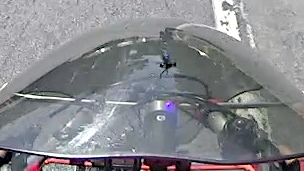
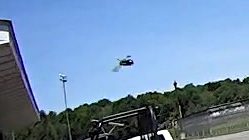
    A few minutes after we started riding, an insect collided with my helmet. About 3/60 second before impact:

    HDR-AS30V 1280x720-60 - Insect - crop
    HDR-AS30V 1280×720-60 – Insect – crop

    We paused in a park at the far end of the ride, rolled out, and another insect buzzed past:

    HDR-AS30V 1280x720-60 - Insect 2 - crop
    HDR-AS30V 1280×720-60 – Insect 2 – crop

    Both of those flew within a few inches of the lens, far inside the camera’s fixed-focus near point, and it’s a wonder they look as good as they do. Looking at successive frames reveals wingbeats, although they’re surely flapping much faster than frame rate and therefore heavily aliased.

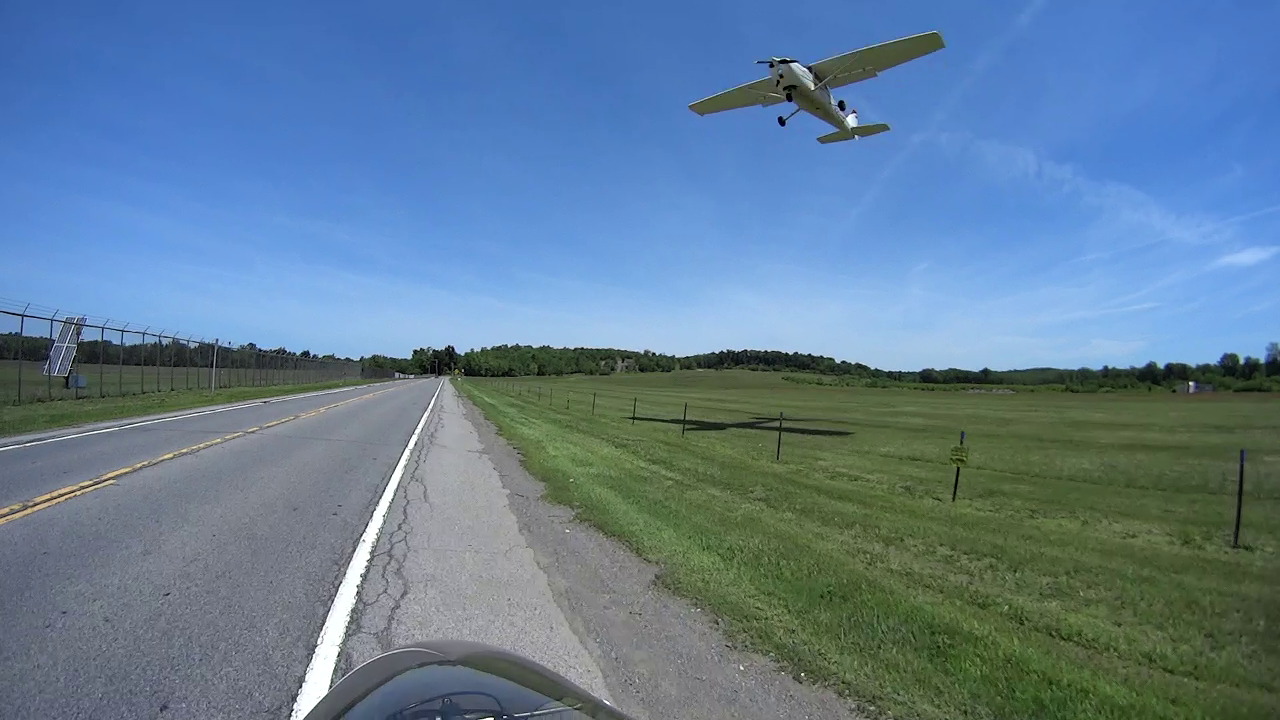
    Fortunately, a Gas Hawk didn’t come that close:

    Rt 376 - Dutchess Airport - landing
    Rt 376 – Dutchess Airport – landing

    All from the Sony HDR-AS30V in 1280×720 at 60 frame/s. The bug images were ruthlessly cropped to show the full-size dot-for-dot camera image, then stored with minimal compression.

    This isn’t the first time I’ve been buzzed on the bike, but it’s a record for one ride.

  • Action Camera vs. License Plates: Sony HDR-AS30V at 1280×720

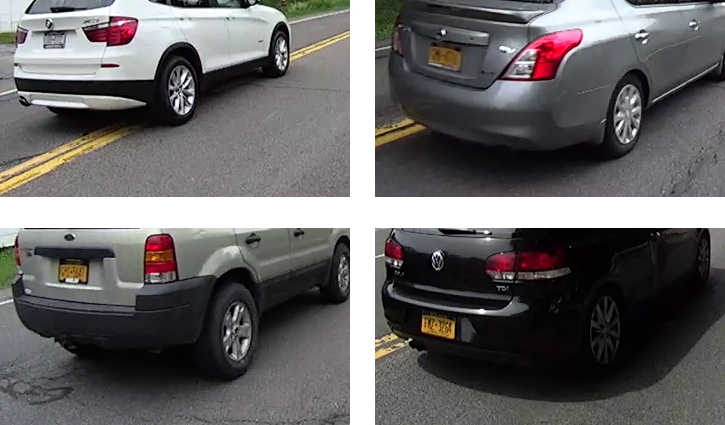
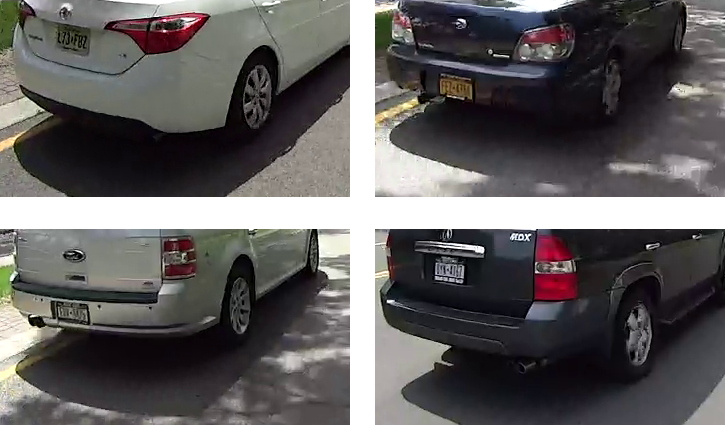
    With the Sony HDR-AS30V on my helmet set to 1280×720 at 120 frame/sec, the plates on passing cars remain barely readable (clicky for more dots):

    HDR-AS30V - license plates - 1280x720-120
    HDR-AS30V – license plates – 1280×720-120

    Throttling the camera back to 60 f/s produces slightly better results:

    HDR-AS30V - license plates - 1280x720-60
    HDR-AS30V – license plates – 1280×720-60

    The differences seem due more to changing lighting conditions than frame rate: the camera definitely produces better results in bright, direct sunlight.

    These are about as good as it gets and, if you look carefully at the images, you can see plenty of compression artifacts that wipe out small details.

    Equal-size dot-for-dot crops from the original 1280×720 images, matted together, and very lightly compressed because there’s not much detail to compress…