The Smell of Molten Projects in the Morning

Ed Nisley's Blog: Shop notes, electronics, firmware, machinery, 3D printing, laser cuttery, and curiosities. Contents: 100% human thinking, 0% AI slop.

Author: Ed

  • Amazon Basics AA Cells: Capacity

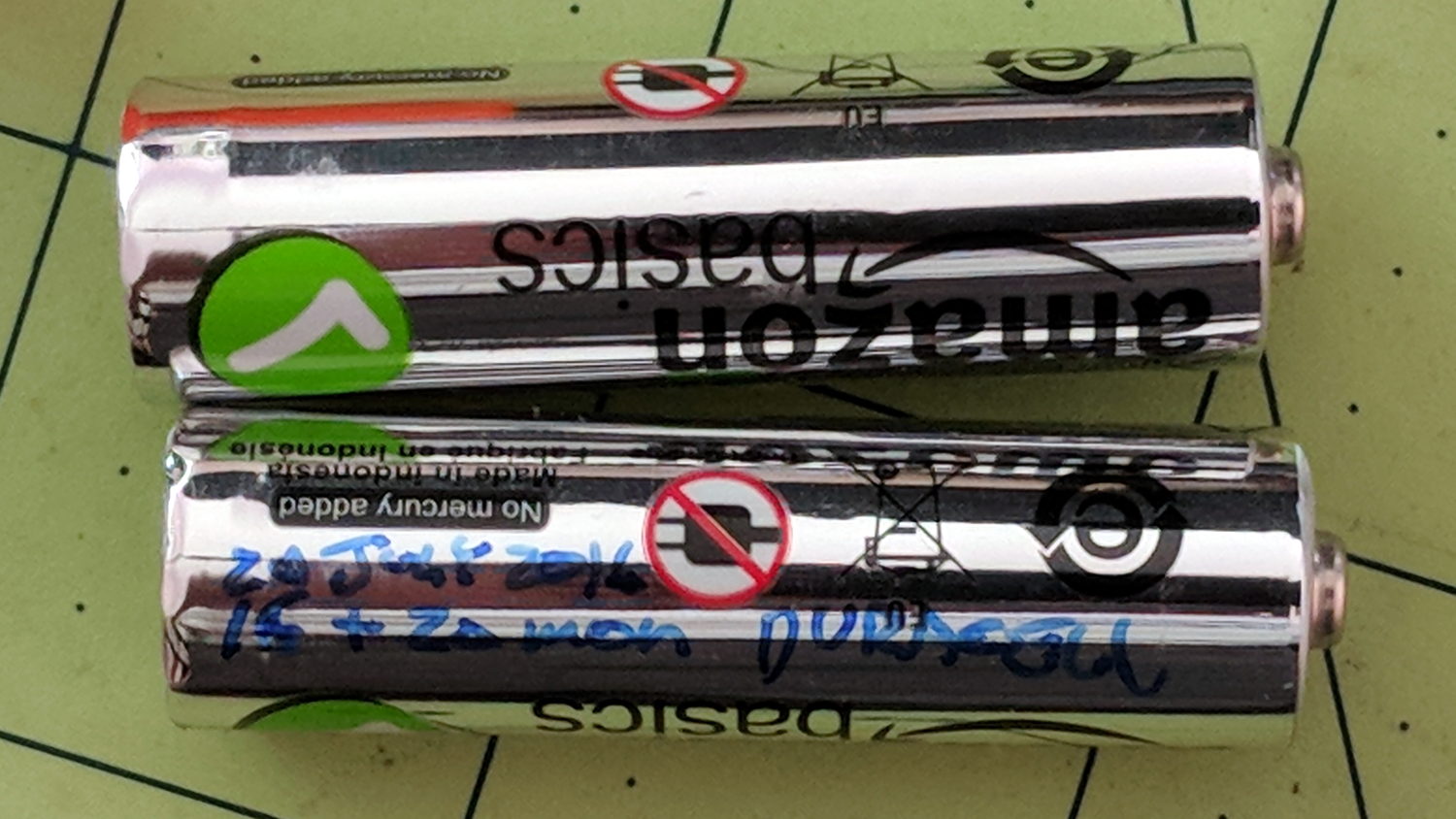
    Being that sort of bear, I (sometimes) note the date on cells when I change them, as with this notation on the AA alkaline cells in the Logitech trackball:

    Amazon Basics AA cell - mouse runtime
    Amazon Basics AA cell – mouse runtime

    These Amazon Basics AA cells lasted almost exactly two years, compared with 15 and 20 months from the previous two pairs of Duracell AAs. A few months one way or the other probably don’t mean much, but the Amazon cells aren’t complete duds.

    The new Amazon Basics cells have a gray paint job, so they’ve either changed suppliers or branding.

  • Rubber Soaker Hose Repair

    A soaker hose leaped under a descending garden fork and accumulated a nasty gash:

    Soaker Hose Splice - gashed
    Soaker Hose Splice – gashed

    Mary deployed a spare and continued the mission, while I pondered how to fix such an odd shape.

    For lack of anything smarter, I decided to put a form-fitting clamp around the hose, with silicone caulk buttered around the gash to (ideally) slow down any leakage:

    Soaker Hose Splice - Solid Model - Assembled
    Soaker Hose Splice – Solid Model – Assembled

    As usual, some doodling got the solid model started:

    Soaker Hose Splice - Dimension doodle 1
    Soaker Hose Splice – Dimension doodle 1

    A hose formed from chopped rubber doesn’t really have consistent dimensions, so I set up the model to spit out small test pieces:

    Soaker Hose Splice - Test Fit - Slic3r
    Soaker Hose Splice – Test Fit – Slic3r

    Lots and lots of test pieces:

    Soaker Hose Splice - test pieces
    Soaker Hose Splice – test pieces

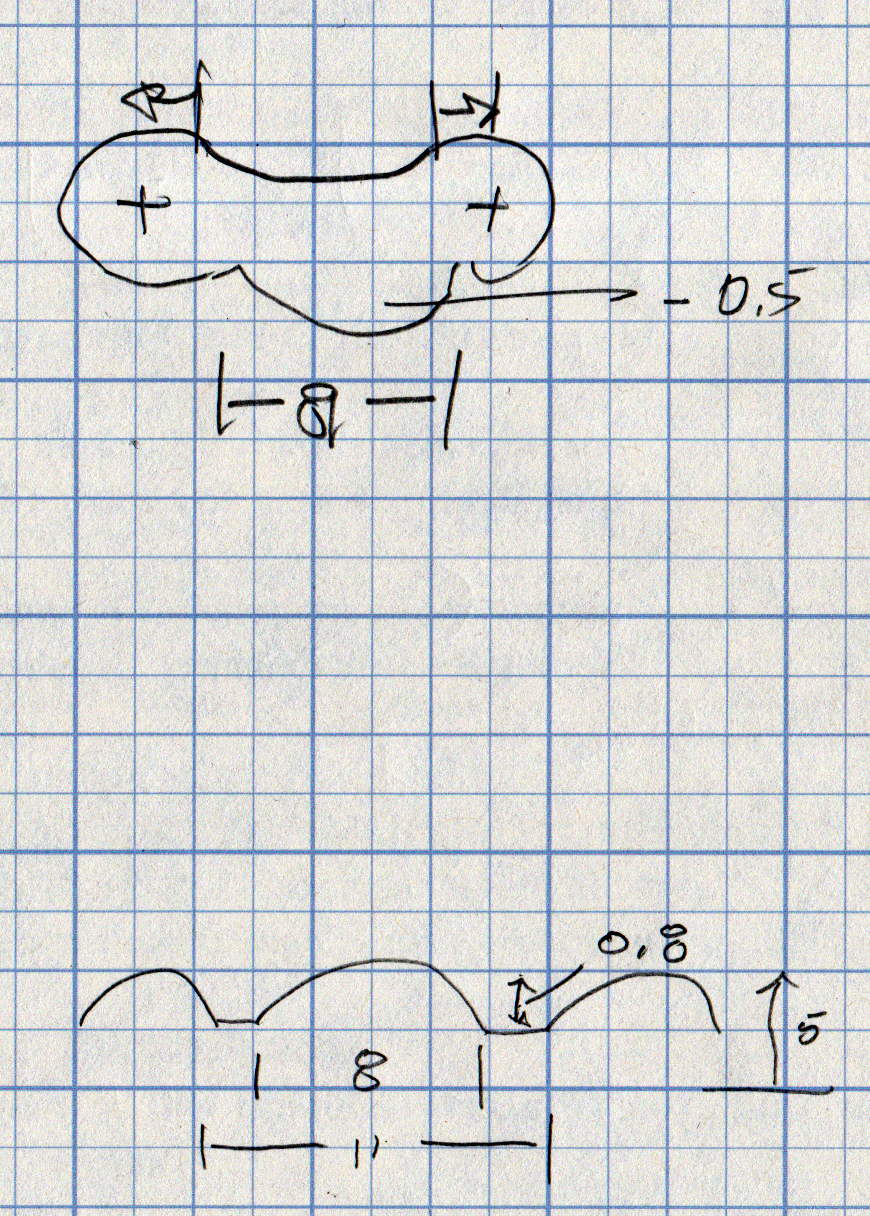
    Each iteration produced a better fit, although the dimensions never really converged:

    Soaker Hose Splice - Dimension doodle 2
    Soaker Hose Splice – Dimension doodle 2

    The overall model looks about like you’d expect:

    Soaker Hose Splice - Complete - Slic3r
    Soaker Hose Splice – Complete – Slic3r

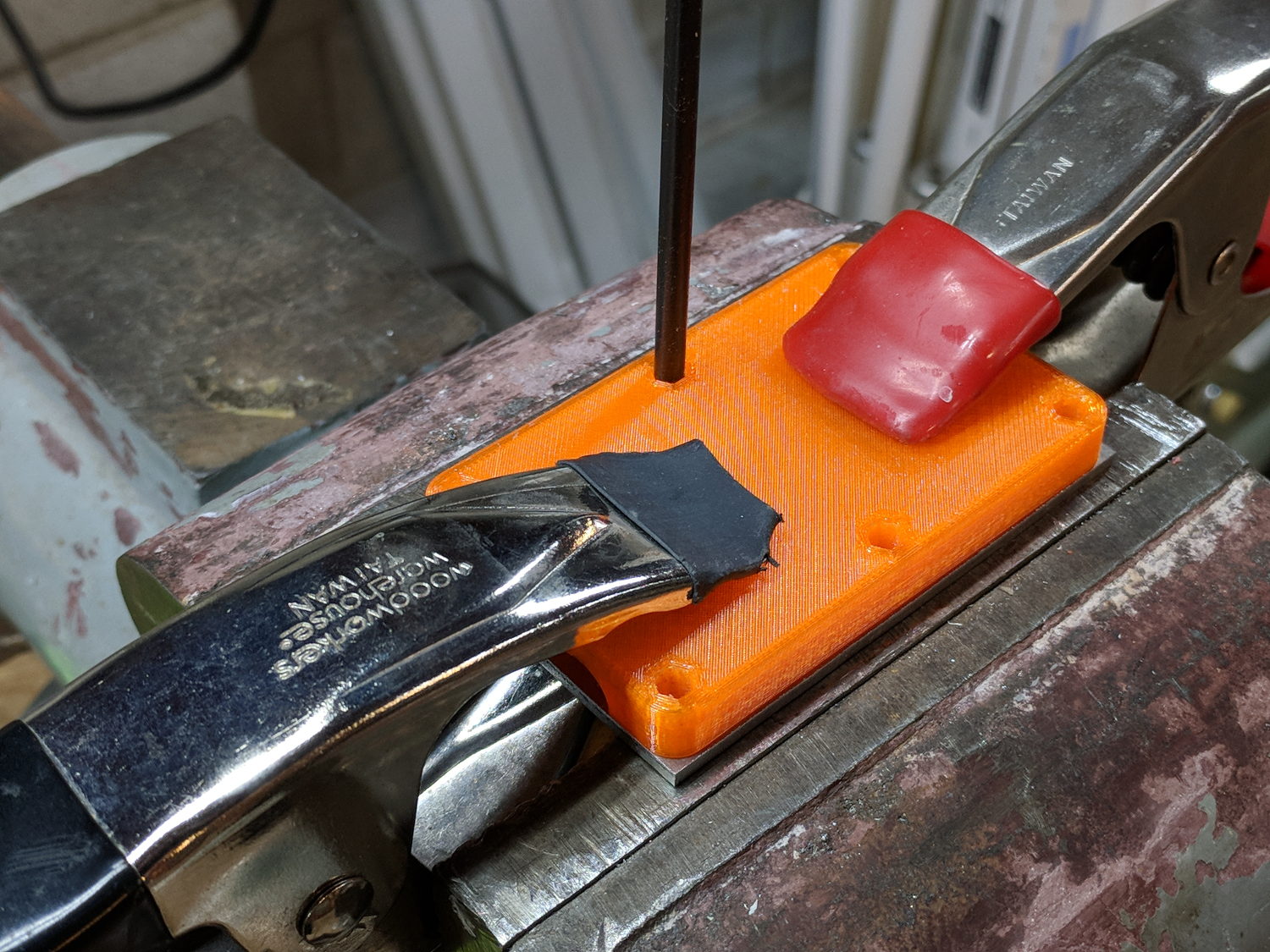
    The clamp must hold its shape around a hose carrying 100 psi (for real!) water, so I put 100 mil aluminum backing plates on either side. Were you doing this for real, you’d shape the plates with a CNC mill, but I just bandsawed them to about the right size and transfer-punched the hole positions:

    Soaker Hose Splice - plate transfer punch
    Soaker Hose Splice – plate transfer punch

    Some drill press action with a slightly oversize drill compensated for any misalignment and Mr Disk Sander rounded the corners to match the plastic block:

    Soaker Hose Splice - plate corner rounding
    Soaker Hose Splice – plate corner rounding

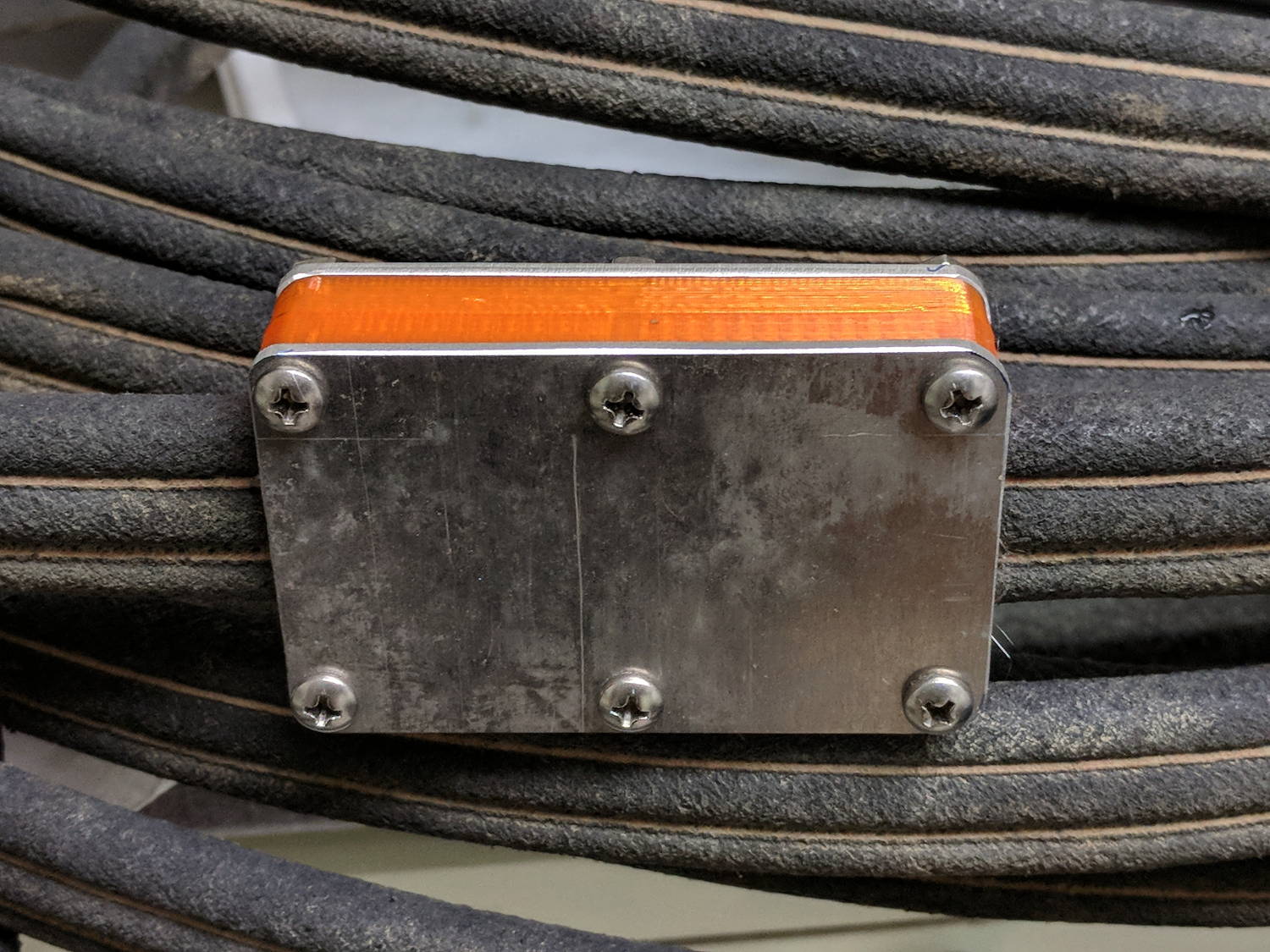
    A handful of stainless steel 8-32 screws holds the whole mess together:

    Soaker Hose Splice - installed
    Soaker Hose Splice – installed

    These hoses spend their lives at rest under a layer of mulch, so I’m ignoring the entire problem of stress relief at those sharp block edges. We’ll see how this plays out in real life, probably next year.

    I haven’t tested it under pressure, but it sure looks capable!

    The OpenSCAD source code as a GitHub Gist:

    // Rubber Soaker Hose Splice
    // Ed Nisley KE4ZNU July 2018
    Layout = "Build"; // Hose Block Show Build
    TestFit = false; // true to build test fit slice from center
    //- Extrusion parameters must match reality!
    ThreadThick = 0.25;
    ThreadWidth = 0.40;
    HoleWindage = 0.2;
    Protrusion = 0.1; // make holes end cleanly
    inch = 25.4;
    function IntegerMultiple(Size,Unit) = Unit * ceil(Size / Unit);
    //———-
    // Dimensions
    // Hose lies along X axis
    Hose = [200,27.0,12.0]; // X = longer than anything else
    Block = [80.0,50.0,4.0 + Hose.z]; // overall splice block size
    echo(str("Block: ",Block));
    Kerf = 0.1; // cut through middle to apply compression
    ID = 0;
    OD = 1;
    LENGTH = 2;
    // 8-32 stainless screws
    Screw = [4.1,8.0,3.0]; // OD = head LENGTH = head thickness
    Washer = [4.4,9.5,1.0];
    Nut = [4.1,9.7,6.0];
    CornerRadius = Washer[OD]/2;
    NumScrews = 3; // screws along each side of cable
    ScrewOC = [(Block.x – 2*CornerRadius) / (NumScrews – 1),
    Block.y – 2*CornerRadius,
    2*Block.z // ensure complete holes
    ];
    echo(str("Screw OC: x=",ScrewOC.x," y=",ScrewOC.y));
    //———————-
    // Useful routines
    module PolyCyl(Dia,Height,ForceSides=0) { // based on nophead's polyholes
    Sides = (ForceSides != 0) ? ForceSides : (ceil(Dia) + 2);
    FixDia = Dia / cos(180/Sides);
    cylinder(d=(FixDia + HoleWindage),h=Height,$fn=Sides);
    }
    // Hose shape
    // This includes magic numbers measured from reality
    module HoseProfile() {
    RimThick = 10.0; // outer sections
    RimOD = RimThick;
    RimFlatRecess = -0.7; // recess to front flat surface
    OuterOC = Hose.y – RimOD; // outer tube centers
    RecessM = 1.5; // back recess chord
    RecessC = OuterOC;
    RecessR = (pow(RecessM,2) + pow(RecessC,2)/4) / (2*RecessM);
    RidgeM = 1.0; // front ridge chord
    RidgeC = 8.0;
    RidgeR = (pow(RidgeM,2) + pow(RidgeC,2)/4) / (2*RidgeM);
    NumSides = 12*4;
    rotate([0,-90,0])
    translate([0,0,-Hose.x/2])
    linear_extrude(height=Hose.x,convexity=4)
    difference() {
    union() {
    for (j=[-1,1]) // outer channels
    translate([0,j*OuterOC/2])
    circle(d=RimOD,$fn=NumSides);
    translate([-RimOD/4,0]) // rear flat fill
    square([RimOD/2,OuterOC],center=true);
    translate([(RimOD/4 + RimFlatRecess),0]) // front flat fill
    square([RimOD/2,OuterOC],center=true);
    intersection() {
    translate([Hose.z/2,0])
    square([Hose.z,OuterOC],center=true);
    translate([-RidgeR + RimOD/2 + RimFlatRecess + RidgeM,0])
    circle(r=RidgeR,$fn=NumSides);
    }
    }
    translate([-(RecessR + RimOD/2 – RecessM),0])
    circle(r=RecessR,$fn=2*NumSides);
    }
    }
    // Outside shape of splice Block
    // Z centered on hose rim circles, not overall thickness through center ridge
    module SpliceBlock() {
    difference() {
    hull()
    for (i=[-1,1], j=[-1,1]) // rounded block
    translate([i*(Block.x/2 – CornerRadius),j*(Block.y/2 – CornerRadius),-Block.z/2])
    cylinder(r=CornerRadius,h=Block.z,$fn=4*8);
    for (i = [0:NumScrews – 1], j=[-1,1]) // screw holes
    translate([-(Block.x/2 – CornerRadius) + i*ScrewOC.x,
    j*ScrewOC.y/2,
    -(Block.z/2 + Protrusion)])
    PolyCyl(Screw[ID],Block.z + 2*Protrusion,6);
    cube([2*Block.x,2*Block.y,Kerf],center=true); // slice through center
    }
    }
    // Splice block less hose
    module ShapedBlock() {
    difference() {
    SpliceBlock();
    HoseProfile();
    }
    }
    //———-
    // Build them
    if (Layout == "Hose")
    HoseProfile();
    if (Layout == "Block")
    SpliceBlock();
    if (Layout == "Bottom")
    BottomPlate();
    if (Layout == "Top")
    TopPlate();
    if (Layout == "Show") {
    difference() {
    SpliceBlock();
    HoseProfile();
    }
    color("Green",0.25)
    HoseProfile();
    }
    if (Layout == "Build") {
    SliceOffset = TestFit && !NumScrews%2 ? ScrewOC.x/2 : 0;
    intersection() {
    translate([SliceOffset,0,Block.z/4])
    if (TestFit)
    cube([ScrewOC.x/2,4*Block.y,Block.z/2],center=true);
    else
    cube([4*Block.x,4*Block.y,Block.z/2],center=true);
    union() {
    translate([0,0.6*Block.y,Block.z/2])
    ShapedBlock();
    translate([0,-0.6*Block.y,Block.z/2])
    rotate([0,180,0])
    ShapedBlock();
    }
    }
    }
  • Tour Easy Front Fender Clip: Longer and Stronger

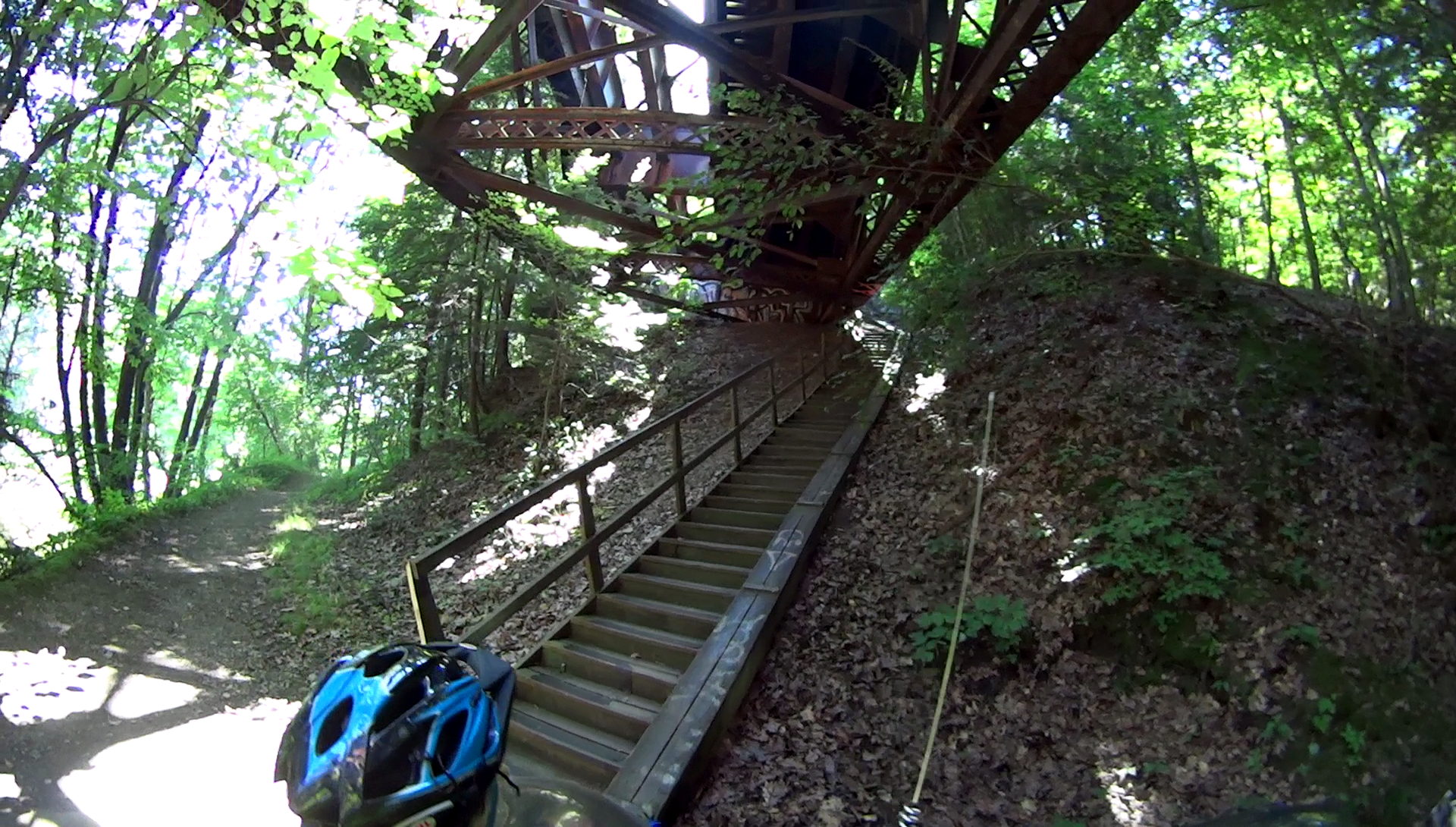
    We negotiated the Belmar Bridge connection stairway from the Allegheny River Trail to the Sandy Creek trail:

    Belmar Bridge Stairs - Overview
    Belmar Bridge Stairs – Overview

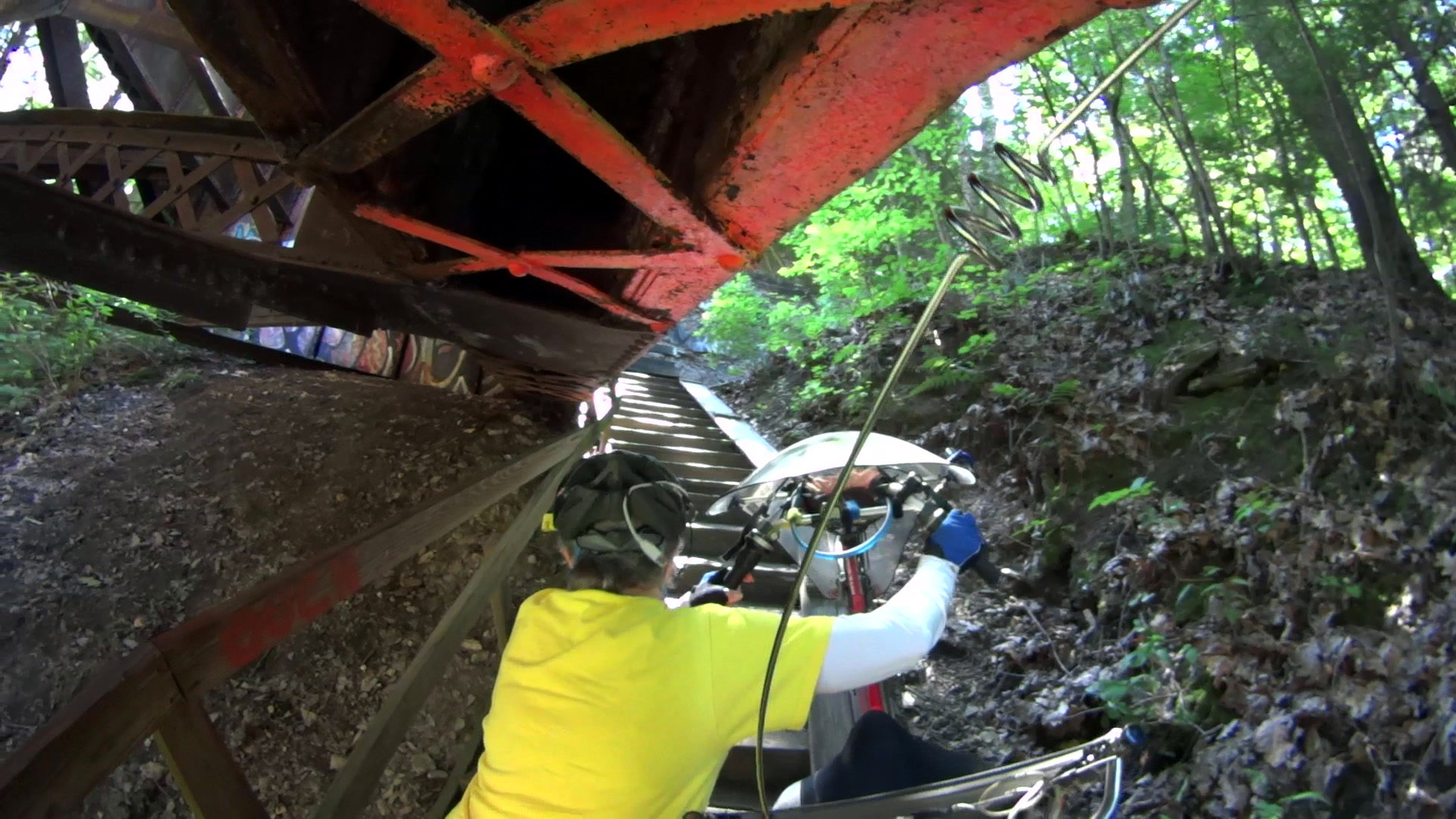
    We’re maneuvering Mary’s bike, but you get the general idea. Our bikes aren’t built for stairways, particularly ones with low overheads:

    Belmar Bridge Stairs - Low Overhead
    Belmar Bridge Stairs – Low Overhead

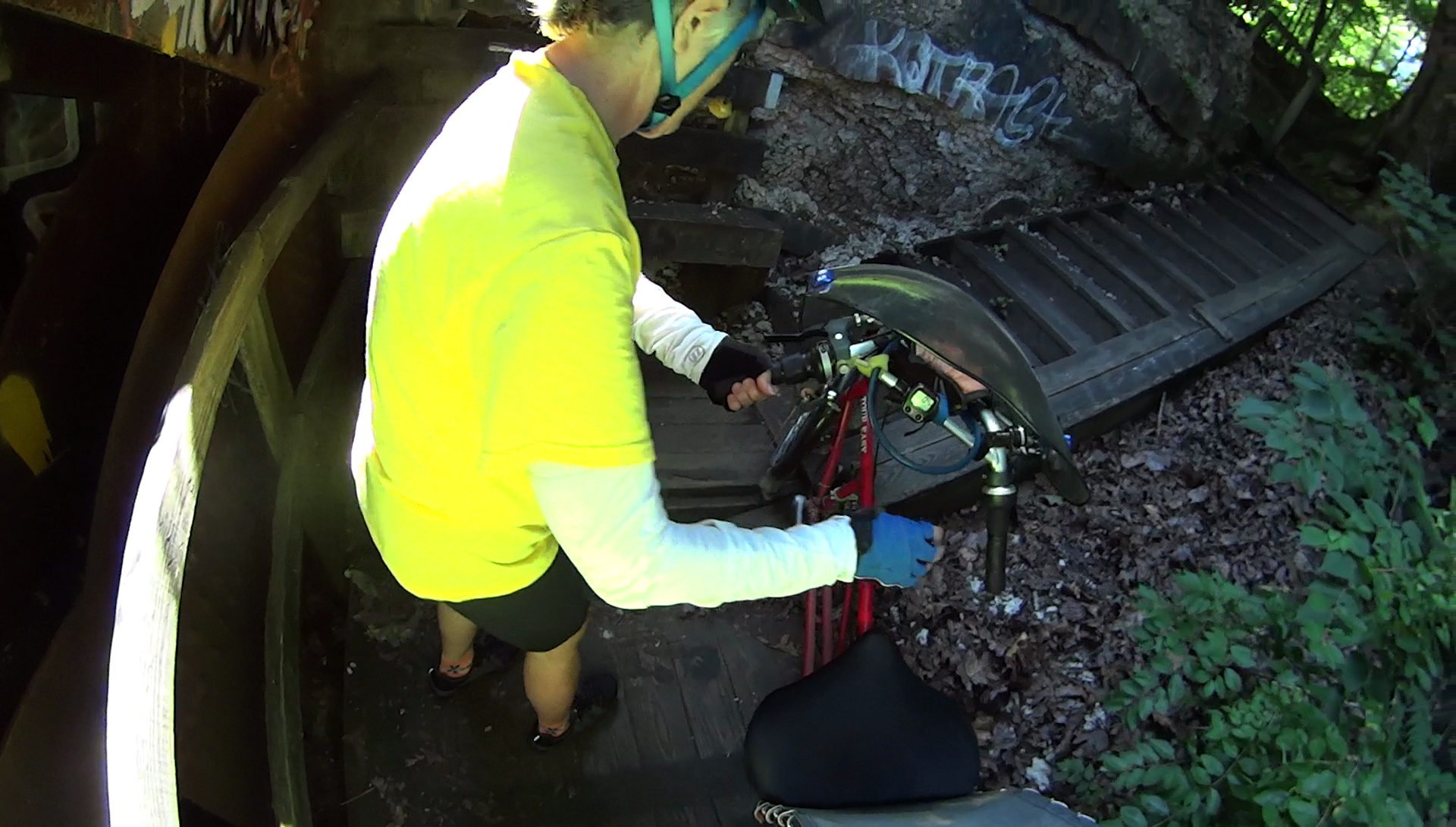
    The front fender clip on my Tour Easy snapped (at the expected spots) when the mudflap snagged on one of the angles:

    Belmar Bridge Stairs - First Turn
    Belmar Bridge Stairs – First Turn

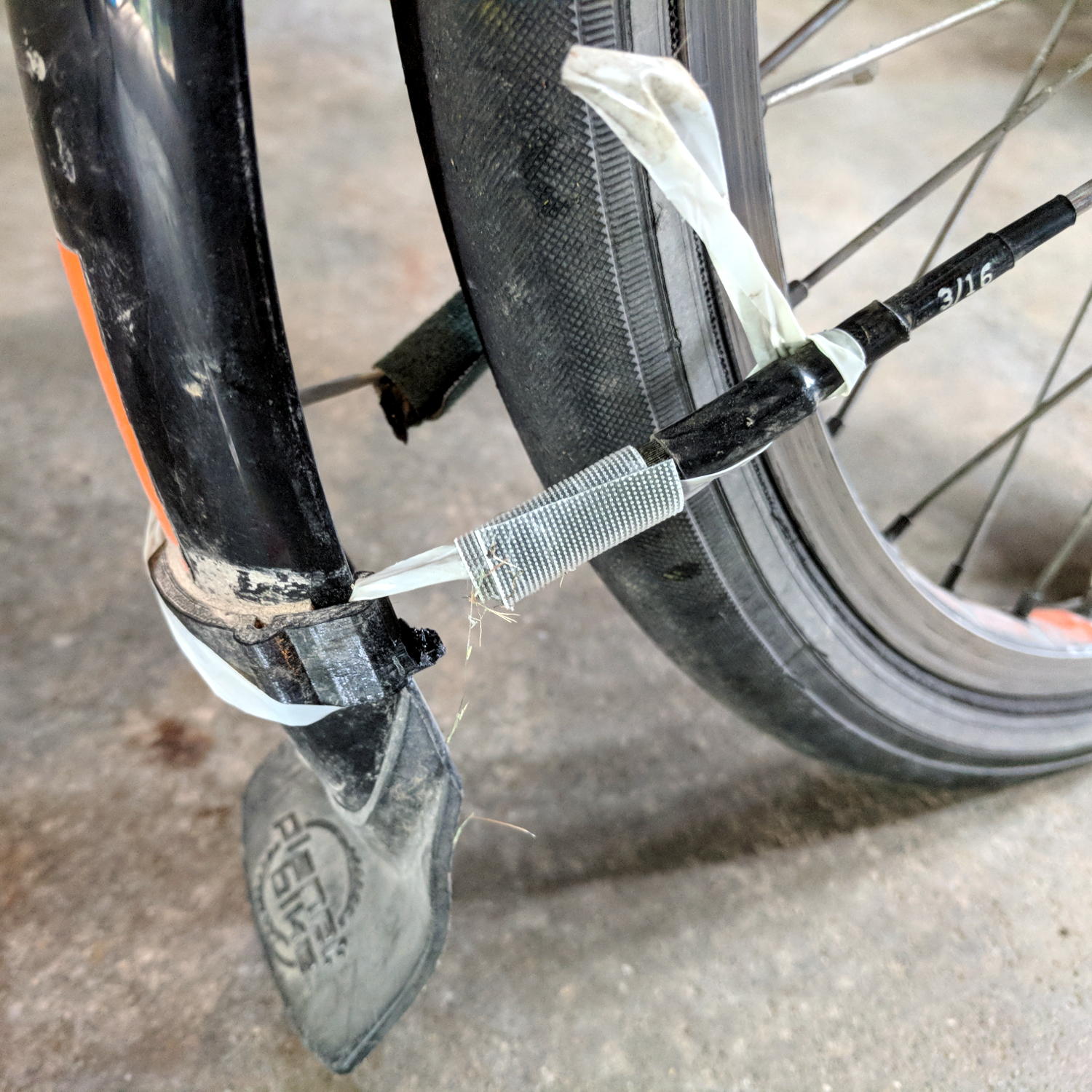
    For some inexplicable reason, I didn’t have a roll of duct tape in my packs, so the temporary repair required a strip of tape from a battery pack, two snippets of hook-and-loop tape, and considerable muttering:

    Tour Easy front fender clip - expedient repair
    Tour Easy front fender clip – expedient repair

    It was good for two dozen more miles to the end of our vacation, so I’d say that was Good Enough.

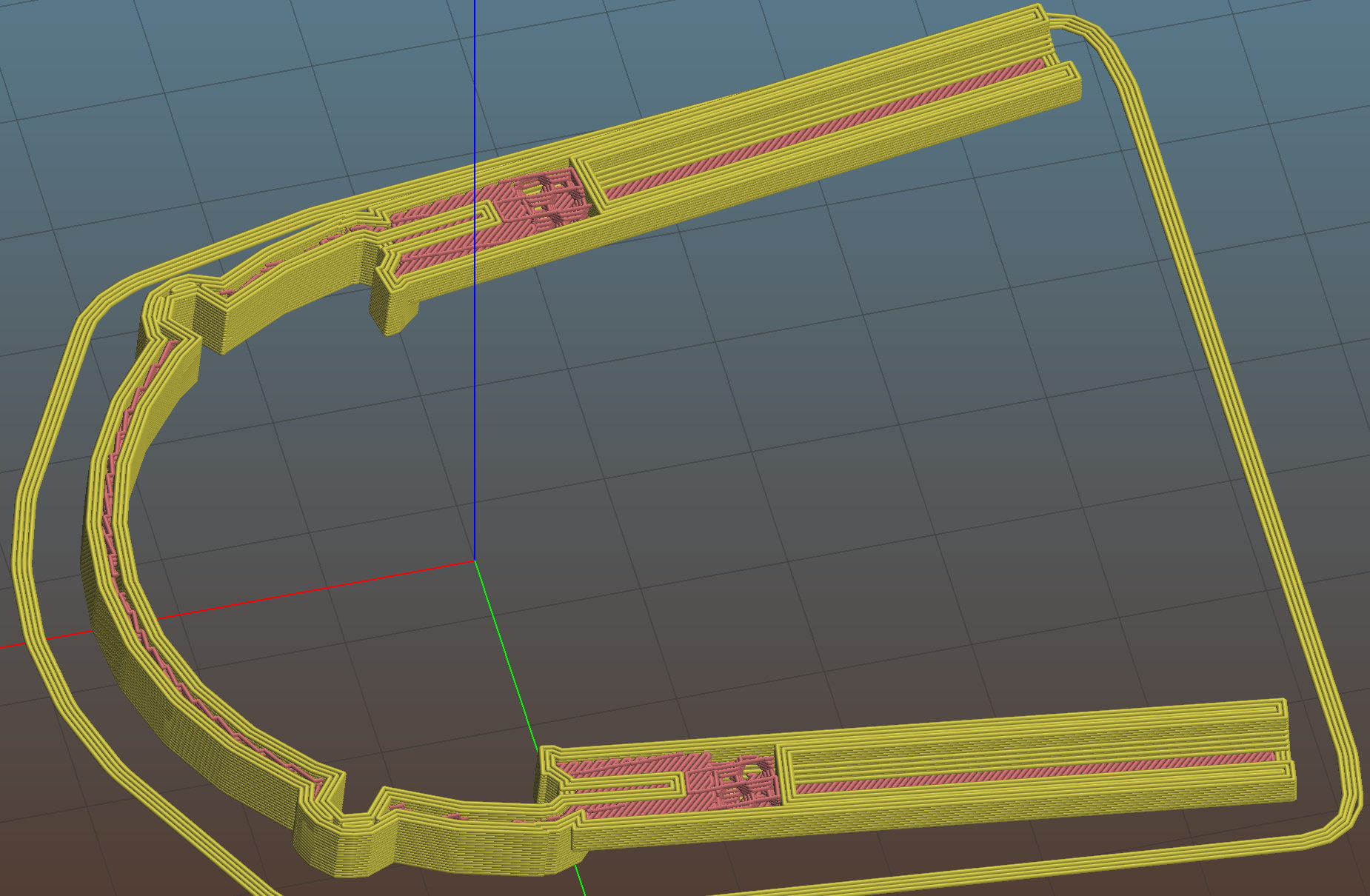
    The new version has holes in the ferrules ten stay diameters deep, instead of six, which might eliminate the need for heatstink tubing. I added a small hole at the joint between the curved hooks and the ferrules to force more plastic into those spots:

    Front Fender Clip - Slic3r
    Front Fender Clip – Slic3r

    I also bent the hanger extension to put the fender’s neutral position closer to the wheel.

    We’ll see how long this one lasts. By now, I now have black double-sticky foam tape!

    The OpenSCAD source code as a GitHub Gist:

    // Tour Easy front fender clip
    // Ed Nisley KE4ZNU July 2017
    Layout = "Build"; // Build Profile Ferrule Clip
    //- Extrusion parameters must match reality!
    ThreadThick = 0.25;
    ThreadWidth = 0.40;
    HoleWindage = 0.2;
    Protrusion = 0.1; // make holes end cleanly
    inch = 25.4;
    function IntegerMultiple(Size,Unit) = Unit * ceil(Size / Unit);
    //———————-
    // Dimensions
    // special case: fender is exactly half a circle!
    FenderC = 51.0; // fender outside width = chord
    FenderM = 21.0; // height of chord
    FenderR = (pow(FenderM,2) + pow(FenderC,2)/4) / (2 * FenderM); // radius
    echo(str("Fender radius: ", FenderR));
    FenderD = 2*FenderR;
    FenderA = 2 * asin(FenderC / (2*FenderR));
    echo(str(" … Arc: ",FenderA," deg"));
    FenderThick = 2.5; // fender thickness, assume dia of edge
    ClipHeight = 15.0; // top to bottom, ignoring rakish tilt
    ClipThick = IntegerMultiple(2.5,ThreadWidth); // thickness of clip around fender
    ClipD = FenderD; // ID of clip against fender
    ClipSides = 4 * 8; // polygon sides around clip circle
    BendReliefD = 2.5; // bend arch diameter
    BendReliefA = 2/3 * FenderA/2; // … angle from dead ahead
    BendReliefCut = 1.5; // factor to thin outside of bend
    ID = 0;
    OD = 1;
    LENGTH = 2;
    StayDia = 3.3; // fender stay rod diameter
    StayOffset = 15.0; // stay-to-fender distance
    StayPitch = -5; // angle from stay to fender arch
    DropoutSpace = 120; // stay spacing at wheel hub
    StayLength = 235; // stay length: hub to fender
    StaySplay = asin((DropoutSpace – FenderC)/(2*StayLength)); // outward angle to hub
    echo(str(" … Pitch: ",StayPitch," deg"));
    echo(str(" … Splay: ",StaySplay," deg"));
    FerruleSides = 2*4;
    Ferrule = [StayDia,3*FenderThick/cos(180/FerruleSides),10*StayDia + StayOffset]; // ID = stay rod OD
    FerruleHoleD = 0.1; // small hole to create solid plastic at ferrule joint
    //———————-
    // Useful routines
    module PolyCyl(Dia,Height,ForceSides=0) { // based on nophead's polyholes
    Sides = (ForceSides != 0) ? ForceSides : (ceil(Dia) + 2);
    FixDia = Dia / cos(180/Sides);
    cylinder(r=(FixDia + HoleWindage)/2,
    h=Height,
    $fn=Sides);
    }
    //———————-
    // Clip profile around fender
    // Centered on fender arc
    module Profile(HeightScale = 1) {
    linear_extrude(height=HeightScale*ClipHeight,convexity=5) {
    difference() {
    offset(r=ClipThick) // outside of clip
    union() {
    circle(d=ClipD,$fn=ClipSides);
    for (i=[-1,1])
    rotate(i*BendReliefA) {
    translate([ClipD/2 + BendReliefD/2,0,0])
    circle(d=BendReliefD,$fn=6);
    }
    }
    union() { // inside of clip
    circle(d=ClipD,$fn=ClipSides);
    for (i=[-1,1])
    rotate(i*BendReliefA) {
    translate([ClipD/2 + BendReliefCut*BendReliefD/2,0,0])
    circle(d=BendReliefD/cos(180/6),$fn=6);
    translate([ClipD/2,0,0])
    square([BendReliefCut*BendReliefD,BendReliefD],center=true);
    }
    }
    translate([(FenderR – FenderM – FenderD/2),0]) // trim ends
    square([FenderD,2*FenderD],center=true);
    }
    for (a=[-1,1]) // hooks around fender
    rotate(a*(FenderA/2))
    translate([FenderR – FenderThick/2,0]) {
    difference() {
    rotate(1*180/12)
    circle(d=FenderThick + 2*ClipThick,$fn=12);
    rotate(1*180/8)
    circle(d=FenderThick,$fn=8);
    rotate(a * -90)
    translate([0,-2*FenderThick,0])
    square(4*FenderThick,center=false);
    }
    }
    }
    }
    //———————-
    // Ferrule body
    module FerruleBody() {
    translate([0,0,Ferrule[OD]/2 * cos(180/FerruleSides)])
    rotate([0,-90,0]) rotate(180/FerruleSides)
    difference() {
    cylinder(d=Ferrule[OD],h=Ferrule[LENGTH],$fn=FerruleSides,center=false);
    translate([0,0,StayOffset + Protrusion])
    PolyCyl(Ferrule[ID],Ferrule[LENGTH] – StayOffset + Protrusion,FerruleSides);
    }
    }
    //———————-
    // Generate entire clip at mounting angle
    module FenderClip() {
    difference() {
    union() {
    translate([FenderR,0,0])
    difference() { // angle and trim clip
    rotate([0,StayPitch,0])
    translate([-(FenderR + ClipThick),0,0])
    Profile(2); // scale upward for trimming
    translate([0,0,-ClipHeight]) // trim bottom
    cube(2*[FenderD,FenderD,ClipHeight],center=true);
    translate([0,0,ClipHeight*cos(StayPitch)+ClipHeight]) // trim top
    cube(2*[FenderD,FenderD,ClipHeight],center=true);
    }
    for (j = [-1,1]) // place ferrules
    translate([Ferrule[OD]*sin(StayPitch) + (Ferrule[OD]/2)*sin(StaySplay),j*(FenderR – FenderThick/2),0])
    rotate(-j*StaySplay)
    FerruleBody();
    }
    for (i=[-1,1]) // punch stiffening holes
    translate([FenderThick/2,-i*(FenderR – FenderThick/2),Ferrule[OD]/2])
    rotate([0,-90,i*StaySplay])
    PolyCyl(FerruleHoleD,Ferrule[OD],FerruleSides);
    }
    }
    //———————-
    // Build it
    if (Layout == "Profile") {
    Profile();
    }
    if (Layout == "Ferrule") {
    FerruleBody();
    }
    if (Layout == "Clip") {
    FenderClip();
    }
    if (Layout == "Build") {
    FenderClip();
    }

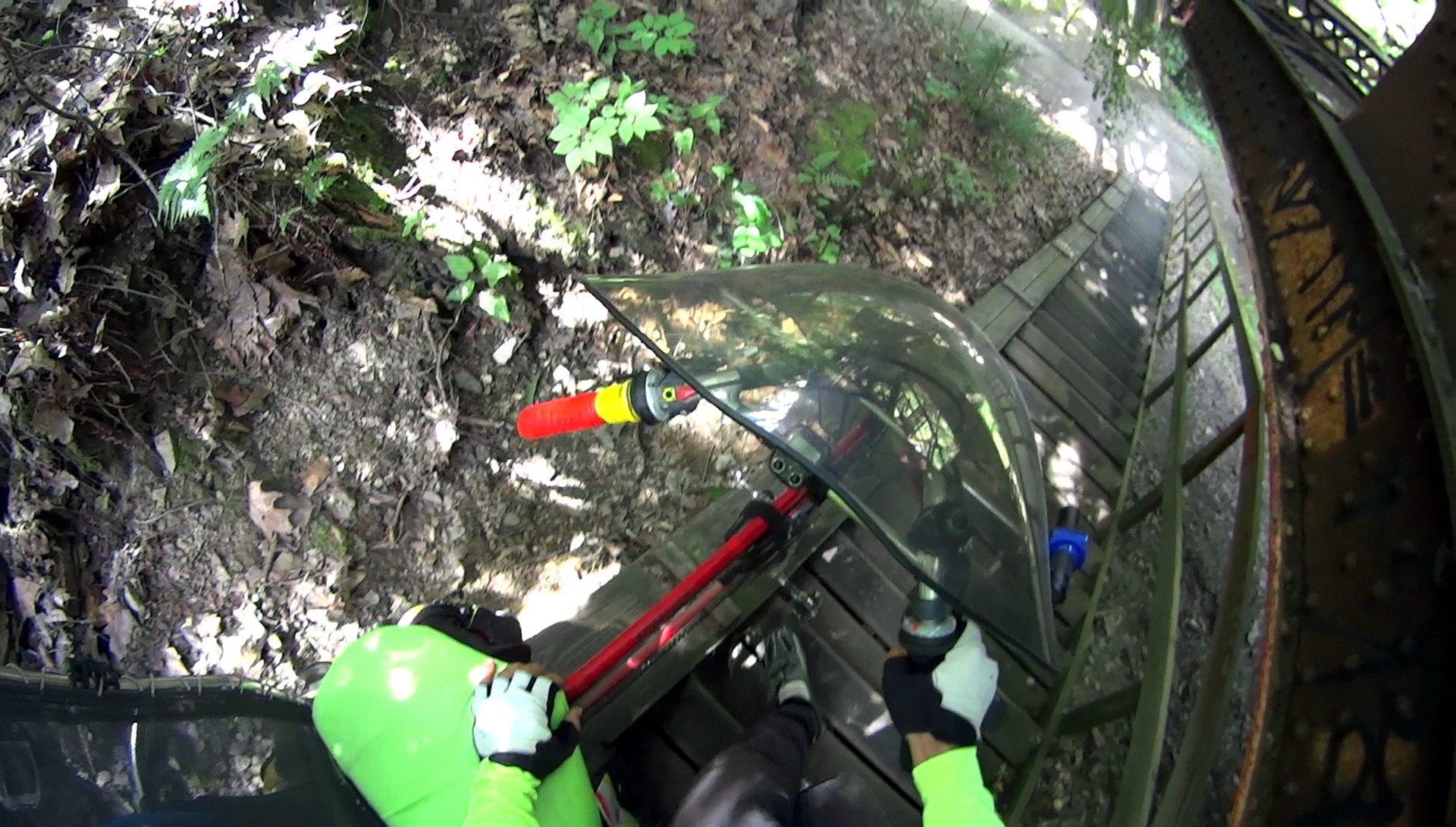
    As a bonus for paging all the way to the end, here’s the descent on the same stairway:

    Belmar Bridge Stairs - Descent
    Belmar Bridge Stairs – Descent

    No, I wasn’t even tempted …

  • Tek A6302 Current Probe Derating

    Most currents around here come in tens-of-milliamps, maybe a few hundred, tops, but it’s worth noting some curves from the Tektronix AM503 current amplifier manual for A6302 Hall effect probes:

    Tek A6302 Calibration Setup
    Tek A6302 Calibration Setup

    The maximum current drops from 20 A for frequencies above 20 kHz:

    Tek A6302 Current Probe - Max Current Frequency Derating
    Tek A6302 Current Probe – Max Current Frequency Derating

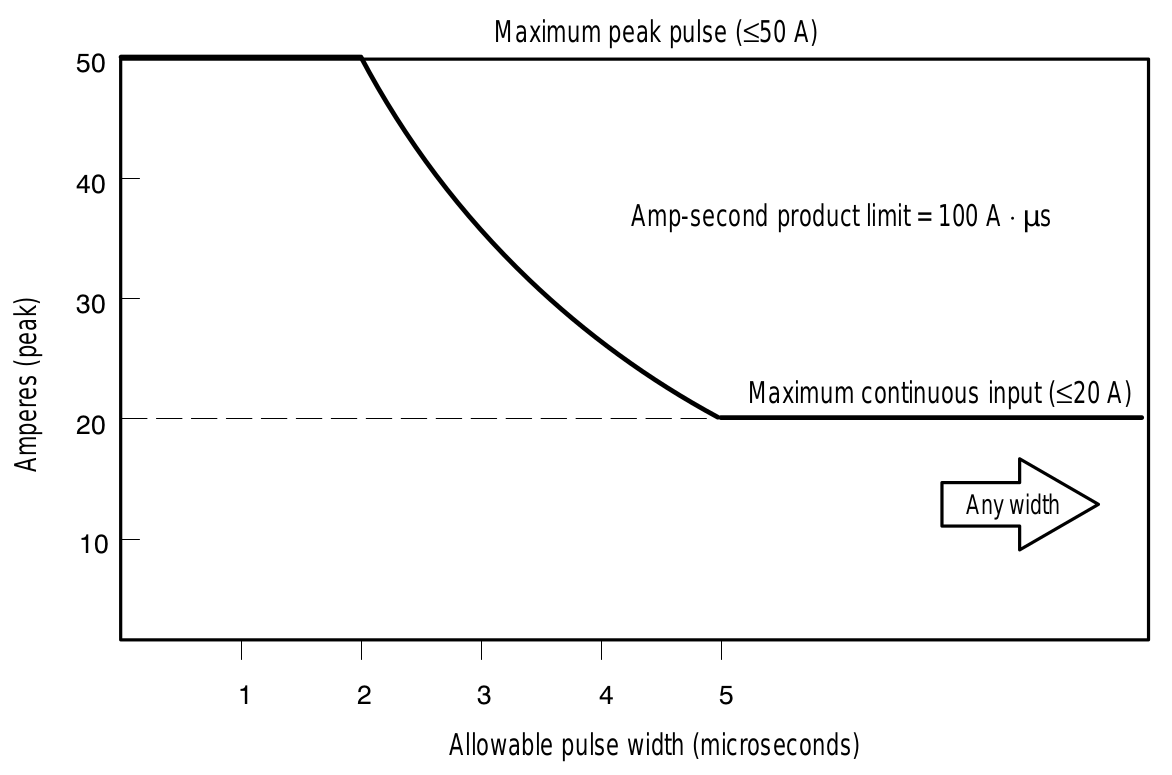
    There’s a 100 A·μs pulse charge limit:

    Tek A6302 Current Probe - Specified Operating Area
    Tek A6302 Current Probe – Specified Operating Area

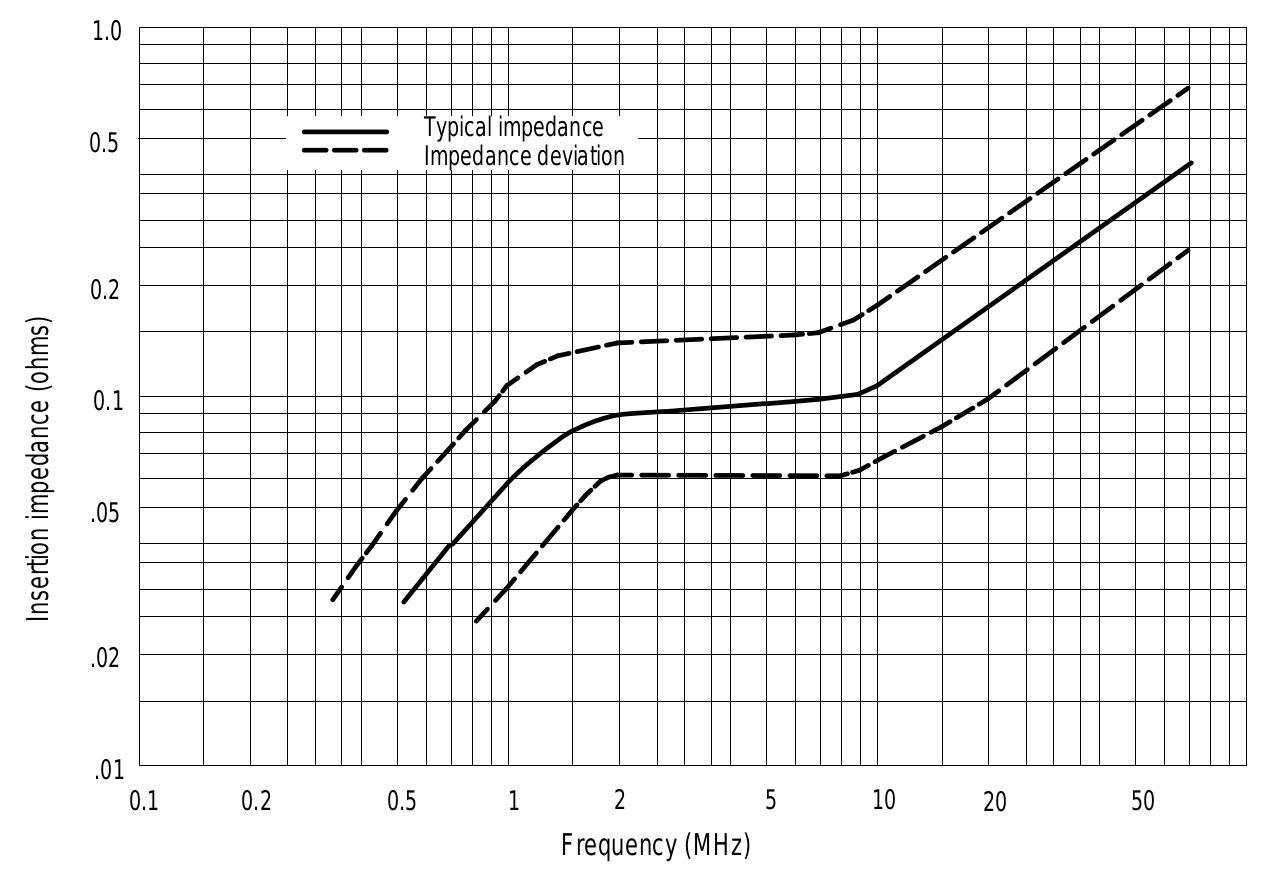
    Because the probe is actually a pulse transformer, its internal termination imposes a (small) load on the input circuit:

    Tek A6302 Current Probe - Insertion Impedance
    Tek A6302 Current Probe – Insertion Impedance

    The specs are 100 mΩ at 1 MHz and 500 mΩ at 50 MHz, which means the load is essentially zilch for the circuits and signals I deal with.

    The Tektronix Probes for Current Measurement Systems has some useful descriptions.

    Memo to Self: Should any of those limits matter, rethink what you’re doing.

    An interesting story about the AM503 design from someone who lived through it.

  • Anker LC40 Flashlight: Anodizing Fade

    The top surface of the Anker LC40 flashlight serving as the daytime running light on Mary’s bike sees plenty of sunlight, particularly when it’s sitting beside her garden plots, and the black anodized finish on the screw-in battery cap has begun fading:

    Anker LC40 Flashlight - Anodizing fade
    Anker LC40 Flashlight – Anodizing fade

    The bottom side of the cap is in fine shape, as is the main case, so the two parts came from different metal finishing lines.

    The light on my bike, a marginally newer and essentially identical Bolder LC40, remains all black. I have no idea what “Bolder” means in this context.

    Obviously, I must get out more …

  • Mint Extract: Results

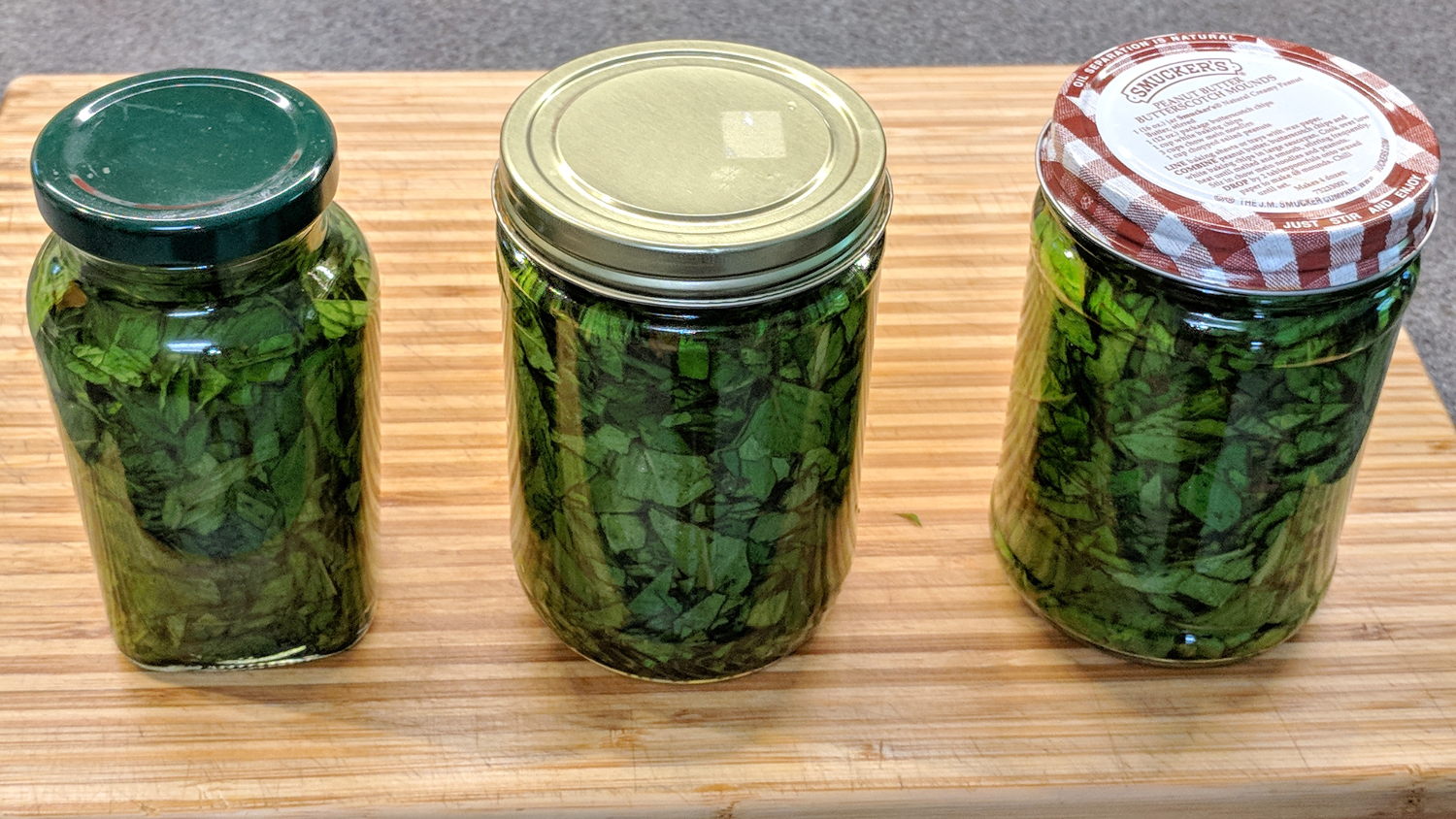
    Six weeks later, the mint seemed about as extracted as it was going to get and I now have nearly a liter of decidedly green mint extract:

    Mint Extract - liquid color
    Mint Extract – liquid color

    Correspondingly, the leaves turned from bright green to dull brown:

    Mint Extract - spent leaf colors
    Mint Extract – spent leaf colors

    The smaller and darker pile in the rightmost bowl came from the smaller jar (on the left) with a higher alcohol-to-leaf ratio:

    Mint Extract - start - 2018-05-29
    Mint Extract – start – 2018-05-29

    Perhaps packing the jars before pouring in the alcohol doesn’t extract as efficiently. Or maybe, as in so many things, it doesn’t really matter.

    A liter of mint extract may not be a lifetime supply, but it’ll suffice for quite a while!

  • Tek A6302 Current Probe: Reason for Being

    The question occasionally comes up as to why one would want a Tektronix A6302 Hall effect current probe and AM503 amplifier. The answer is simple: non-contact, essentially non-invasive current monitoring.

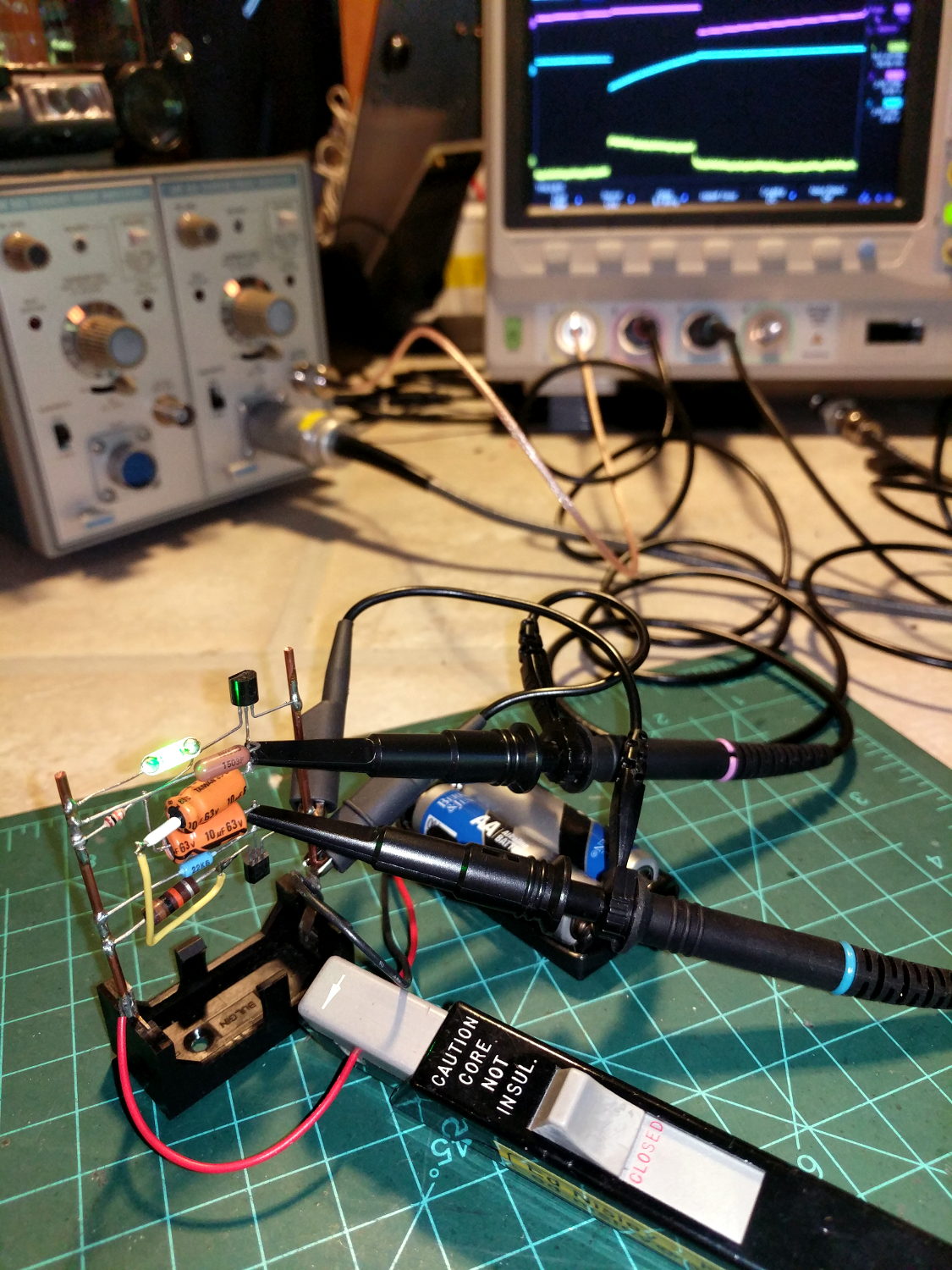
    I used the venerable dead-battery Astable Multivibrator to check out the rebalanced A6302 probe:

    Tek A6302 Current Probe vs Astable Multivibrator
    Tek A6302 Current Probe vs Astable Multivibrator

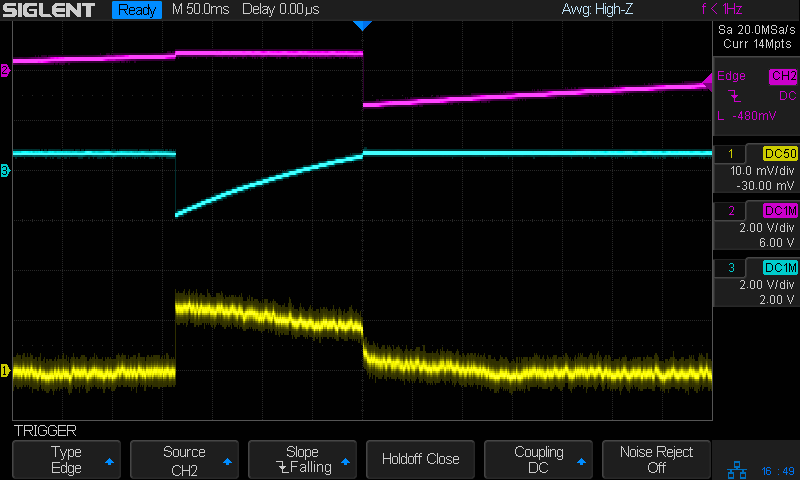
    The scope screen in the background shows the two base voltages at the top, plus the overall battery current along the bottom:

    Tek A6302 - Astable multivibrator - LED current 1 mA-div
    Tek A6302 – Astable multivibrator – LED current 1 mA-div

    The current at 1 mA/div shows plenty of noise, but the 200 ms LED pulse is barely 1 mA tall. The two AA alkaline cells have faded to 2.5 V, so the “wearable” white-LED-with-dyed-overcoat runs far under its nominal 3.6-ish V spec.

    There’s basically no other way to get that result, because inserting a current-sense resistor into the circuit will alter the results, plus be intractably difficult to measure, particularly if you need the current in a non-ground-referenced branch of the circuit.

    The AM503 has terrible thermal drift, by contemporary standards, but after the first half-hour or so it’s manageable for short durations. I’m thinking of epoxying a small knob to the screwdriver-adjustable twiddlepot to simplify the baseline adjustment.

    Alas, even non-working probes and amps have become eBay collectables. You could, of course, buy new.