Ed Nisley's Blog: Shop notes, electronics, firmware, machinery, 3D printing, laser cuttery, and curiosities. Contents: 100% human thinking, 0% AI slop.
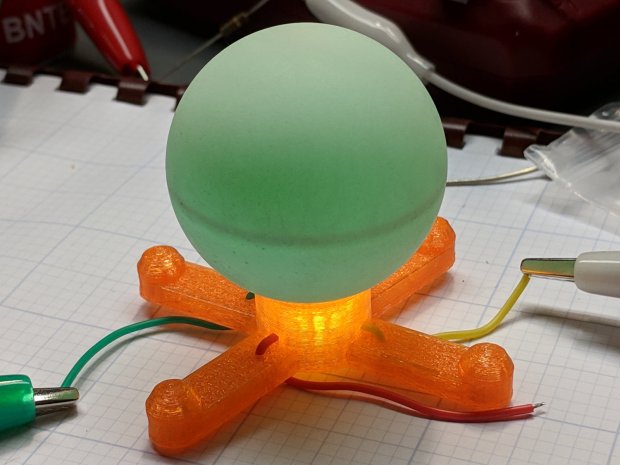
Because I planned to take my collection along to HV Open’s Mad Science Fair, I finally used a Round Tuit for some adhesive action.
The general plan was to punch a ring from double-sided tape, thusly:
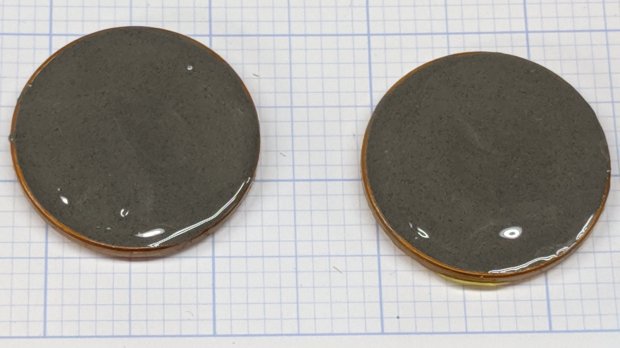
Astable – Radome adhesive – poor surface
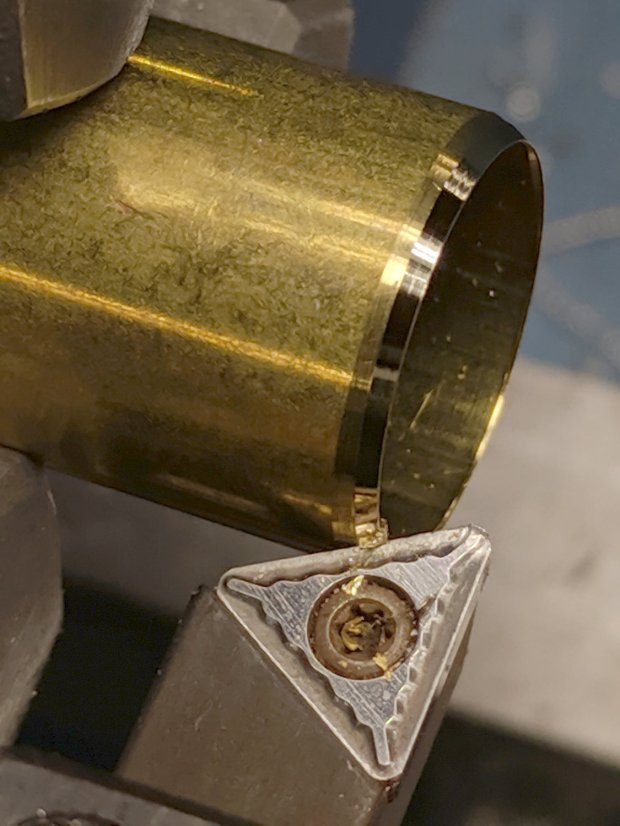
The OD required touching up the edge of a brass tube punch I’d made a while ago:
Astable – Radome adhesive – punch sharpening
It worked exactly as expected:
Astable – Radome adhesive – punching
Unfortunately, the 3D printed spider’s “spherical” socket has such a rough surface that the adhesive had too few contact points to hold the ball in place.
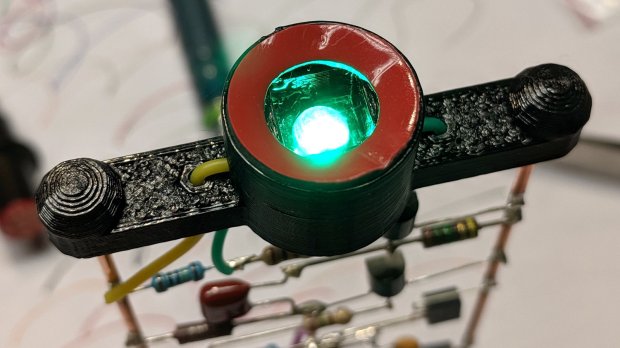
My fallback has become 3M outdoor-rated double-stick foam tape, so:
Astable – Radome adhesive – 3M foam tape
This leaves a small black ring visible between ball and socket. Recessing the foam tape by half its thickness should improve its ahem optics, although it’s probably not worth the effort with black PETG.
After five years, I figured it’d be a Good Idea™ to replace the Forester’s wiper blades. Being in the Walmart at the time, I tried to use their helpful Wiper Selector gadget:
Walmart Wiper Selector
You’d think whoever is responsible for updating / replacing such things would have done so several times during the last eight years.
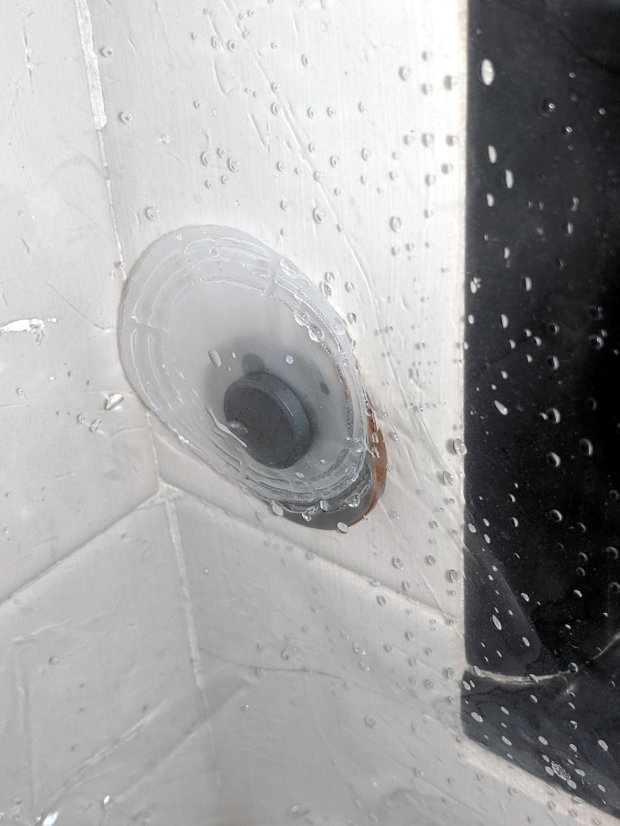
Back in the day, bathtubs had a porcelain coating over a cast-iron carcass, so embedding little magnets in shower curtains worked perfectly to keep the loose ends from billowing out of the tub. Surprisingly, even here in the future, with plastic bathtubs ruling the land, some shower curtains still have magnets. The mud-job tile walls of shower stall in the Black Bathroom have nary a trace of iron, but we though I could add ferrous targets for a new shower curtain, thusly:
Shower Curtain Anchor – installed
The magnet lives inside a heat-sealed disk, so it’s (more-or-less) isolated from the water. As you’d expect, it’s a cheap ceramic magnet, not a high-performance neodymium super magnet, with no more strength than absolutely necessary to work under the most ideal of conditions.
My anchors must also be waterproof, firmly attached, non-marking, easily removable, and no more ugly than absolutely necessary. The general idea is to slice the bottom from a pill bottle, entomb a thin steel disk in epoxy, and attach to the tile with a patch of outdoor-rated foam tape.
So, we begin …
Cutting a narrow ring from a pill bottle requires a collet around the whole circumference, which started life as some sort of stout aluminum pole:
Shower Curtain Anchor – cutting tube stock
Bore out the inside, with a small step to locate the bottle:
Shower Curtain Anchor – boring fixture
Clean up the outside, just for pretty:
Shower Curtain Anchor – turning fixture OD
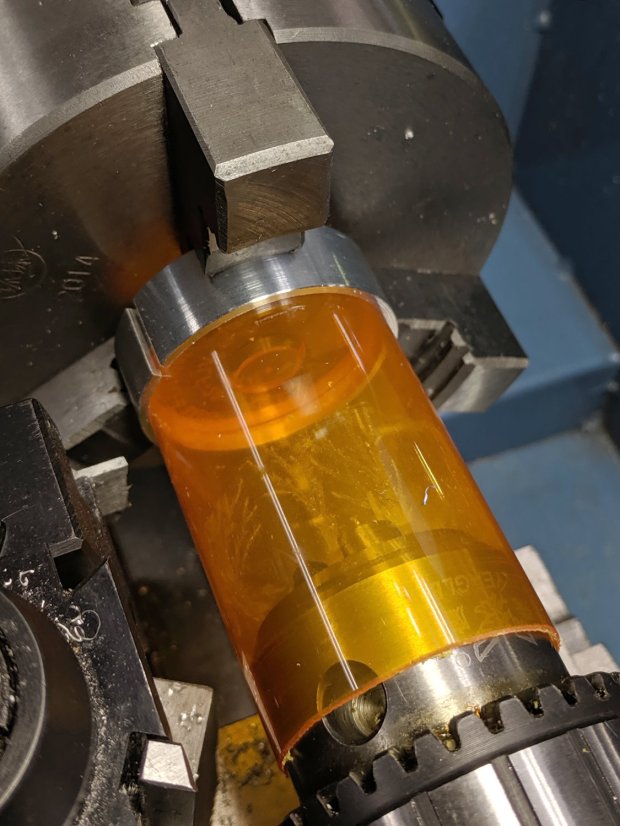
Slit the fixture to let it collapse around the bottle, then chuck up the first victim with support from a conveniently sized drill chuck in the tailstock:
Shower Curtain Anchor – cutting bottle
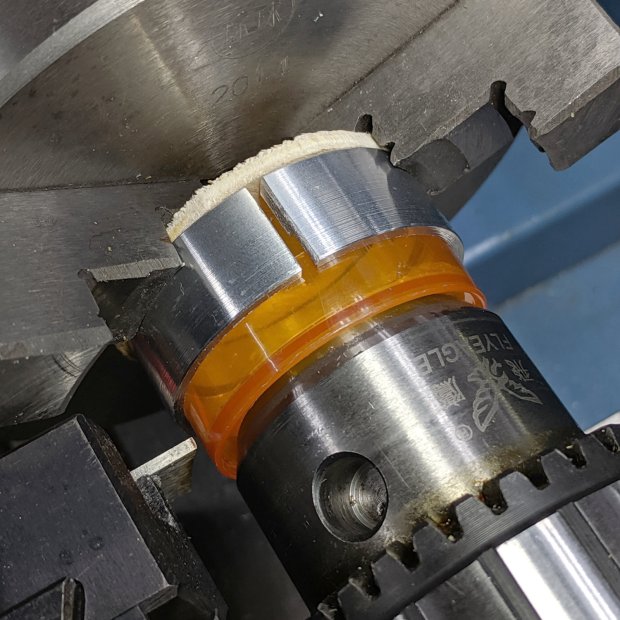
I did a better job of cutting the second bottle to the proper length:
Shower Curtain Anchor – parting base
Nibble disks from sheet metal, half-fill the bottle bottoms with steel-filled (and, thus, magnetic!) JB Weld epoxy, insert disks, add sufficient epoxy to cover the evidence:
Shower Curtain Anchor – epoxy curing
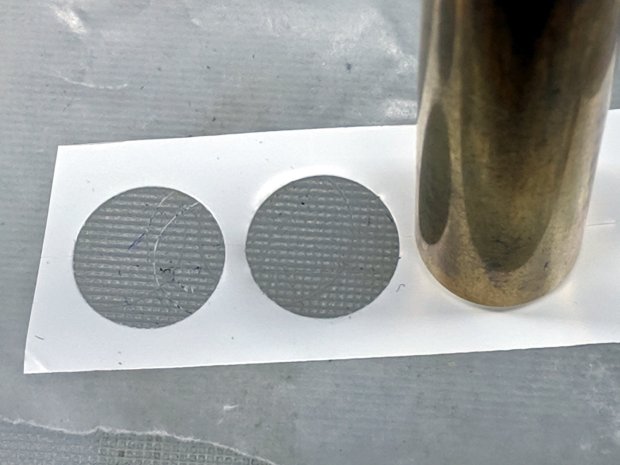
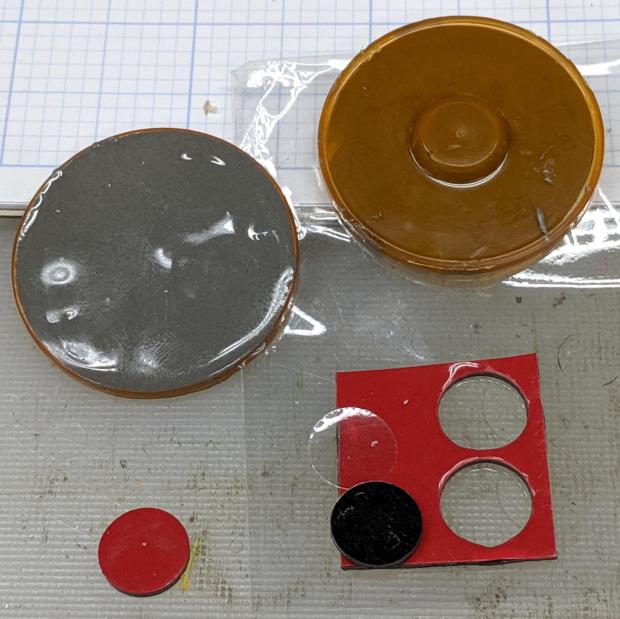
Fast-forward to the next day, punch out two disks of double-sided foam tape:
Shower Curtain Anchor – adhesive foam
Affix, install, and it’s all good.
Actually, it’s not. The ceramic magnets are so weak they don’t hold the curtain nearly well enough to satisfy me. The next anchor iteration should have embedded neodymium magnets to attract the curtain’s crappy ceramic magnets, but this is Good Enough™ for now.
Well, all I can say is it seemed like a good idea at the time.
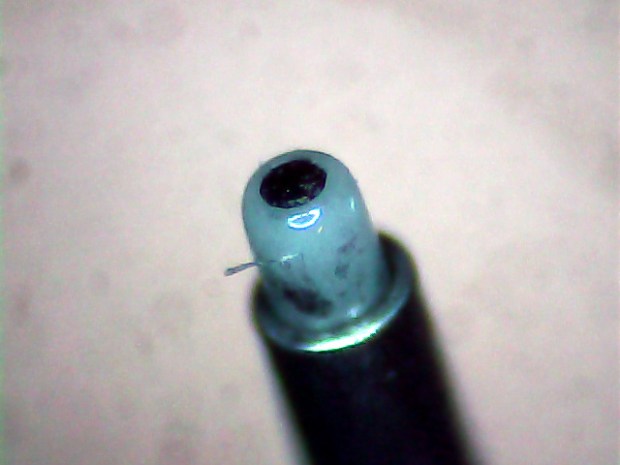
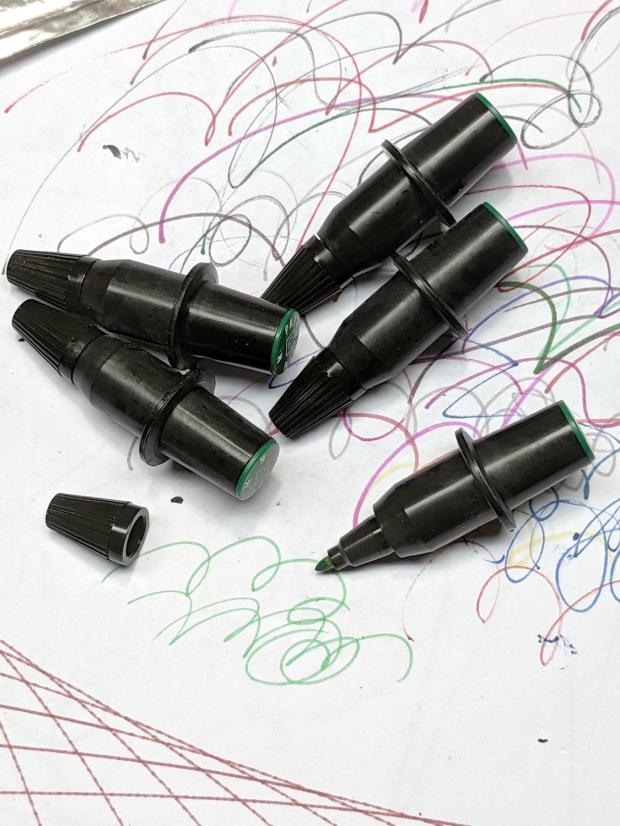
Alas, even the newly exposed fiber didn’t make much of a mark on the paper and, as you’d expect, the ragged ceramic tip dragged painfully across the paper. I assume the fiber had filled with fossilized dry ink.
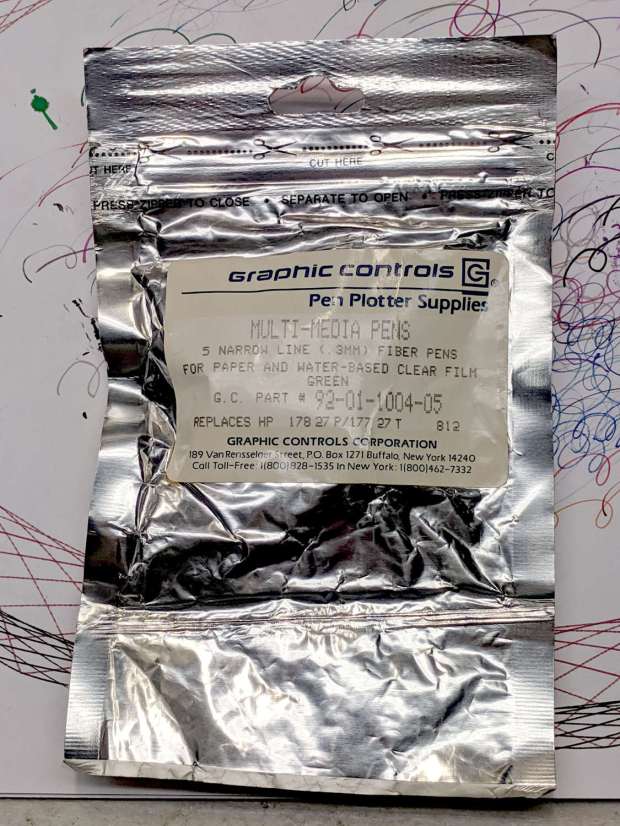
A New Old Stock bag of fiber-tip pens emerged from the Big Box o’ Pens while I was flailing around:
HP 7475A Plotter – NOS Green pen package
I think the “812” in the lower right corner is a date code, most likely early in 1988, so the pens started their lifetime countdown at least three decades ago. They still work, though:
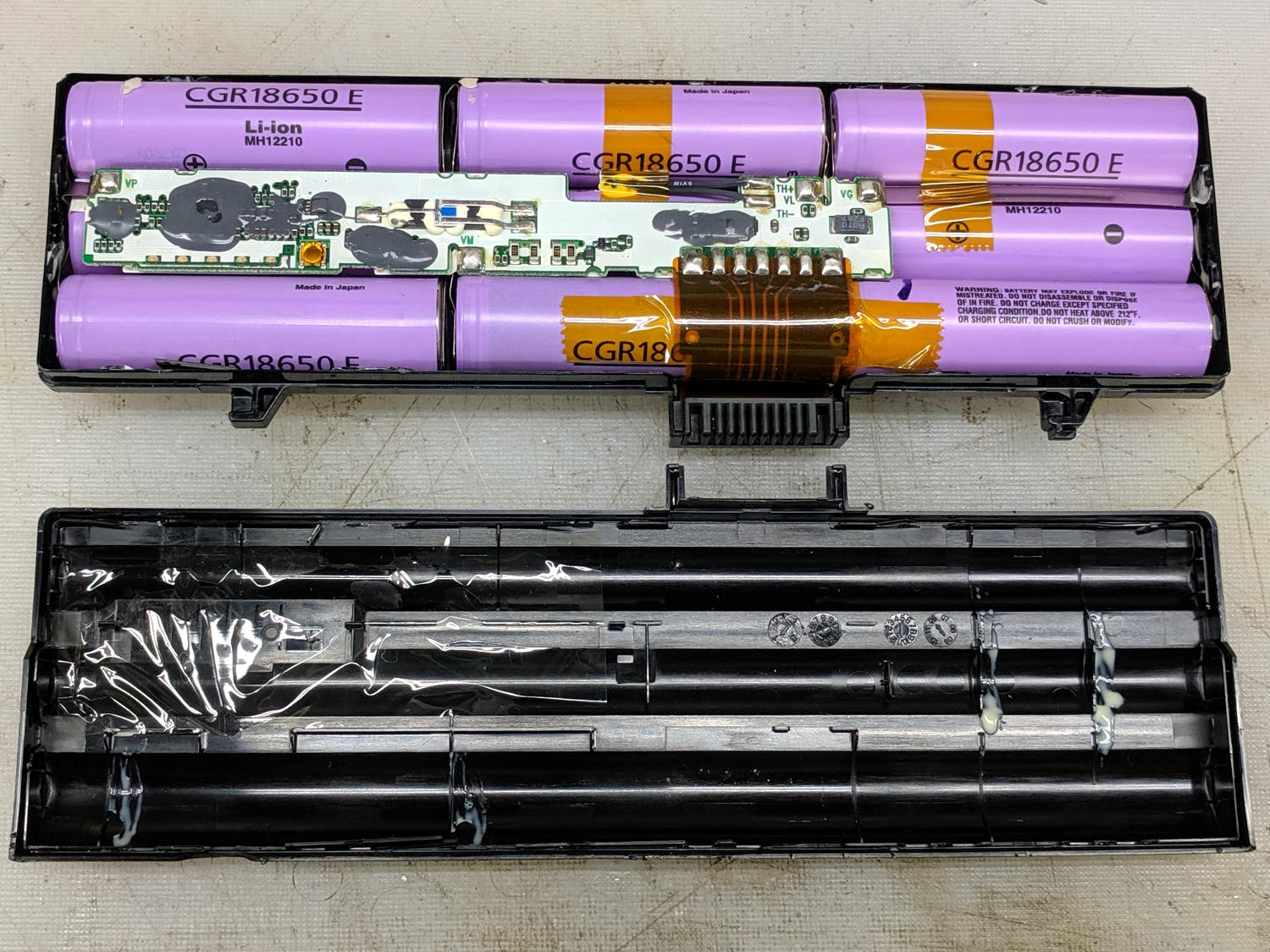
The battery pack on my ancient Dell E1405 laptop finally died, so I tore it apart to see what horrors might lurk within:
Dell UG679 Lithium Battery – teardown
The case snaps apart without too much effort, although the delicate single-use latches won’t survive the operation. These certainly didn’t, which didn’t bother me at all, as I already had a replacement battery on order.
One of the cells (in the front) seems to have leaked ever so slightly inside its wrapper:
Dell UG679 Lithium Battery – leaky cell
The three cells in that 3P section seem to have failed open: they pass no current at all.
The other pair of 3P slices, charged at 4.2 V with a 700 mA current limit until the current dropped under 10 mA, still have some life:
Dell UG679 3P sections
Perhaps recycling individual cells into LED glowies would be nice, as they have enough capacity remaining to run an Arduino for quite a while, and a 1S USB charger would make for a self-contained package.









 The Smell of Molten Projects in the Morning