Ed Nisley's Blog: Shop notes, electronics, firmware, machinery, 3D printing, laser cuttery, and curiosities. Contents: 100% human thinking, 0% AI slop.
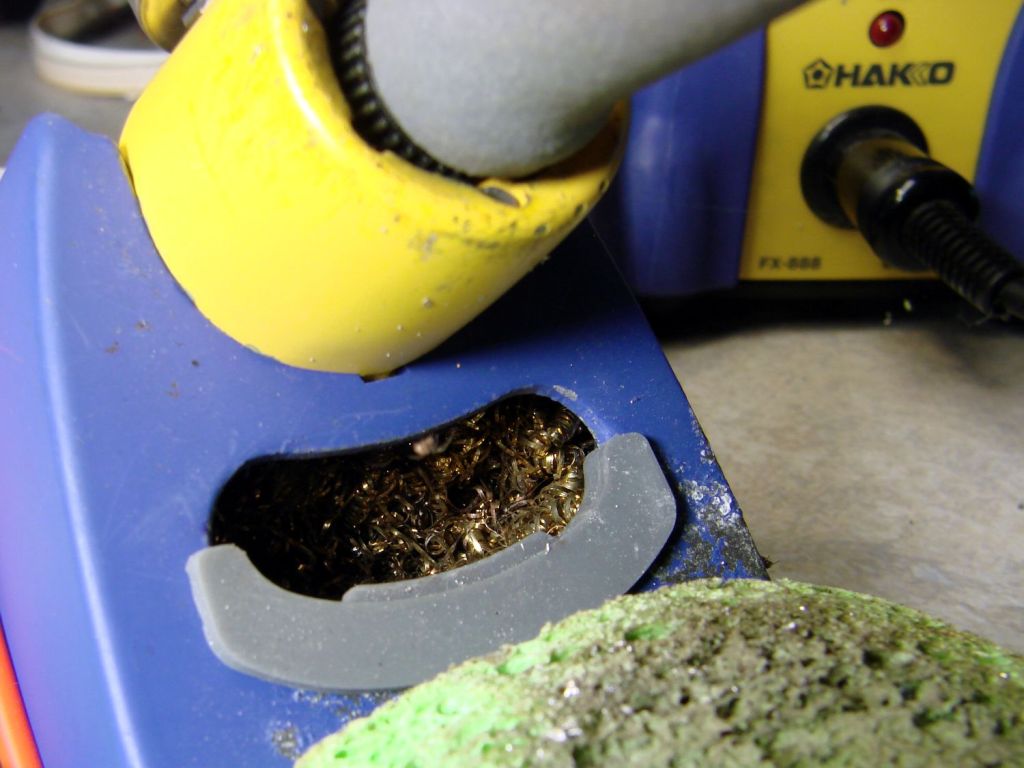
I noticed something out of place when I fired up the soldering iron:
Soldering Iron Spider
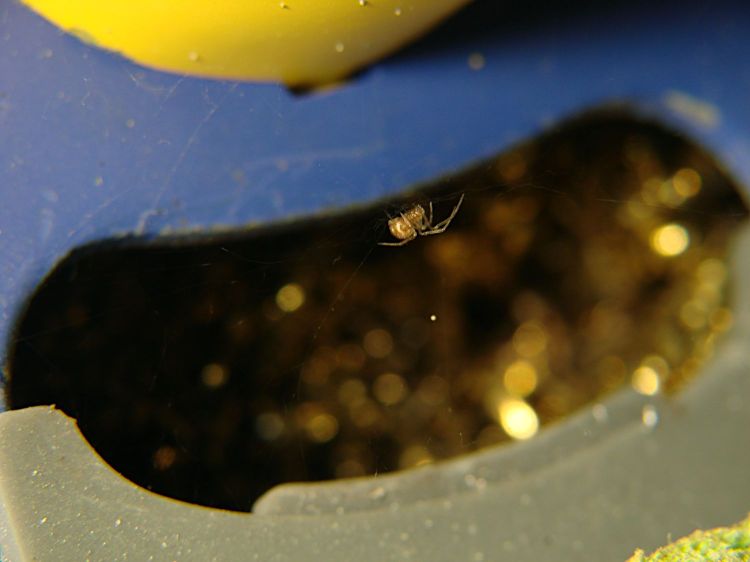
It’s not obvious in a flat photo without depth perception, but here’s a closer look:
Soldering Iron Spider – detail
A tiny spider had set up shop just over the tip cleaning port, with a delicate web linking the sponge to the iron holder.
I tried to deport her outdoors, as is our custom with helpful critters, but she jumped off the web and scurried to an unknown spot on the bench. She’ll surely rebuild in an equally productive spot.
Obviously, I’m not soldering enough electronic gadgetry …
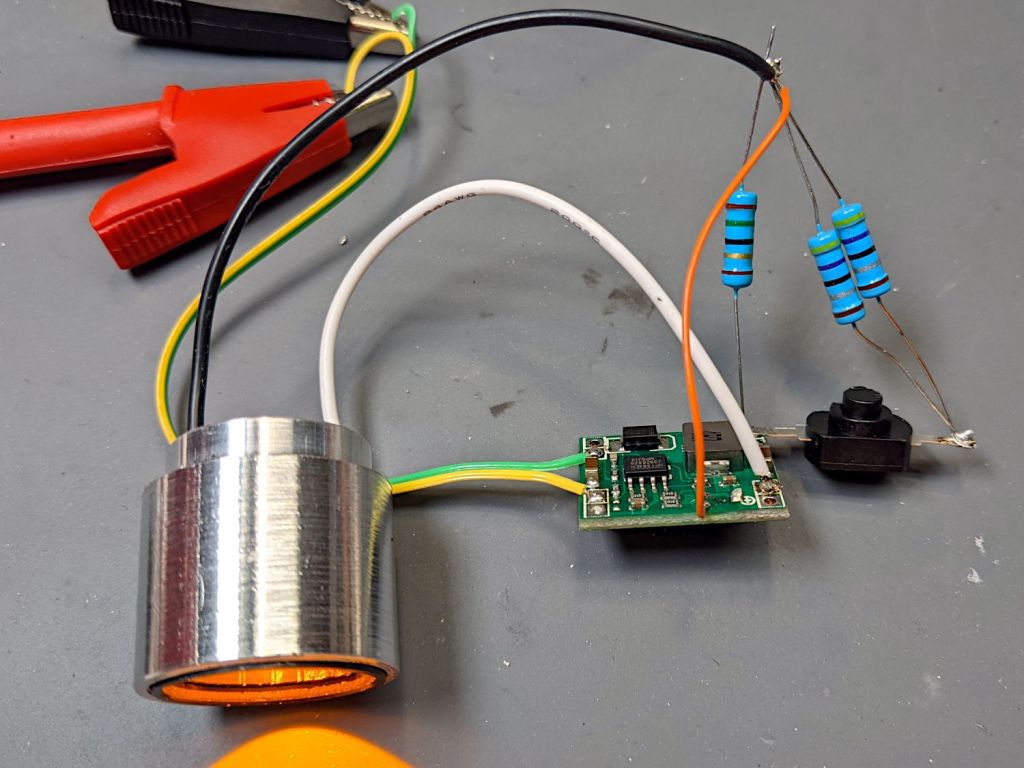
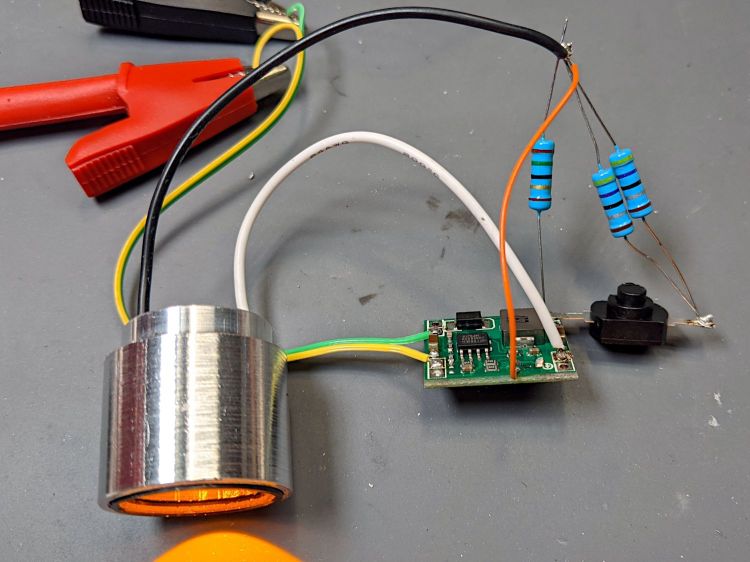
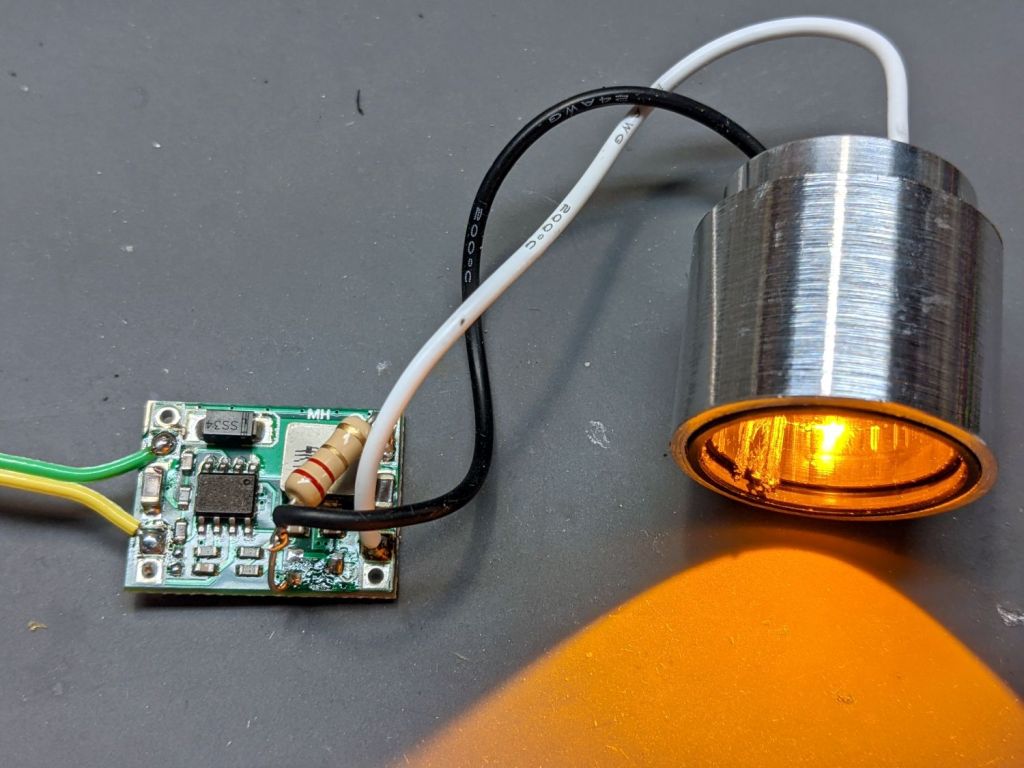
The 15 Ω unswitched resistor sets the LED current at 53 mA = 0.8 V / 15 Ω, with the LED dissipating about 100 mW. The resistor dissipates 43 mW.
Closing the switch puts the two parallel 4.7 Ω resistors in parallel with the 15 Ω resistor to produce 2.0 Ω, which sets the LED current to 390 mA and runs it at 950 mW. Each of the 4.7 Ω resistors dissipates 140 mW.
That much power raises the aluminum body to 50 °C = 120 °F: definitely uncomfortable but probably survivable for the LED inside.
Eyeballometrically, a decimal order of magnitude difference in the LED current produces an obvious brightness difference. My first try ran the LED at 500 mW (a binary order of magnitude less than 1 W) and wasn’t visually different. Given that the LED will run from the Bafang’s headlight output, saving power isn’t all that important.
If this is the first time you’ve encountered parallel resistors, this is why your calculator has a reciprocal button: the total resistance is the reciprocal of the sum of the reciprocals of all the resistances:
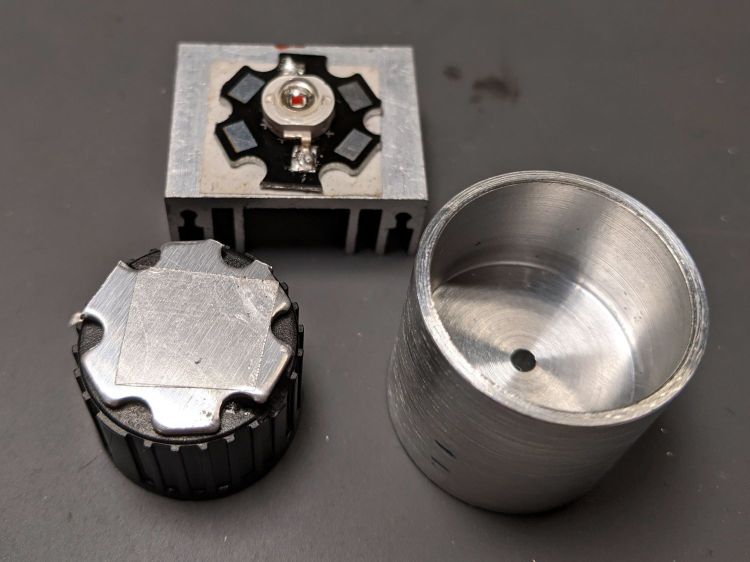
A pleasant evening at a virtual Squidwrench meeting produced the raw shape of the front end from a 1 inch aluminum rod:
1 W LED Running Light – heatsink raw
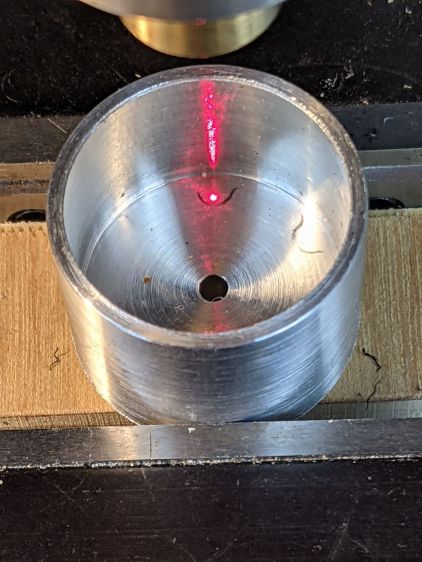
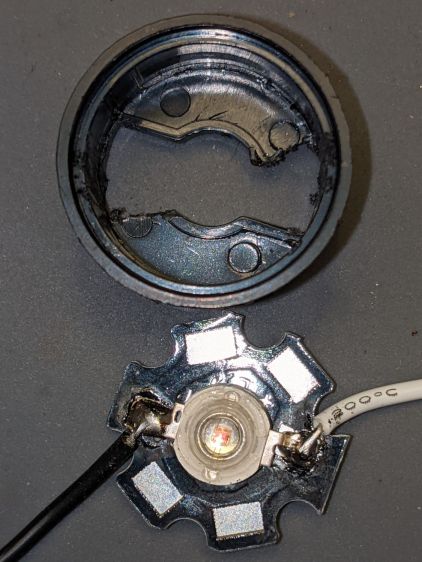
Trace the outline of the LED’s PCB inside the cylinder just for comfort, align to the center, and drill two holes with a little bit of clearance:
1 W LED Running Light – heatsink drilling
For the 24 AWG silicone wire I used, a pair of 2 mm holes 8.75 mm out from the center suffice:
1 W LED Running Light – heatsink fit
Gnaw some wire clearance in the lens holder:
1 W LED Running Light – wiring
Tap the central hole for an M3×0.5 screw, which may come in handy to pull the entire affair together.
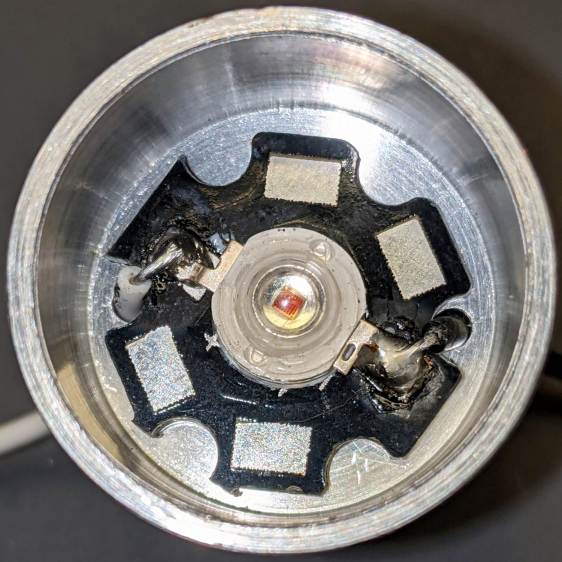
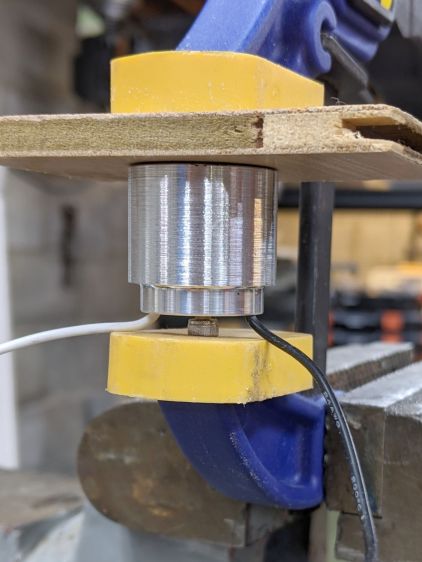
Epoxy the PCB onto the heatsink with the lens holder keeping it aligned in the middle:
1 W LED Running Light – heatsink clamp
Then see how hot it gets dissipating 900 mW with 360 mA of current from a 2.2 Ω resistor:
1 W LED Running Light – heatsink test
As you might expect, it gets uncomfortably warm sitting on the bench, so it lacks surface area. The first pass will use a PVC cylinder for easy machining, but a full aluminum shell would eventually be a nice touch.
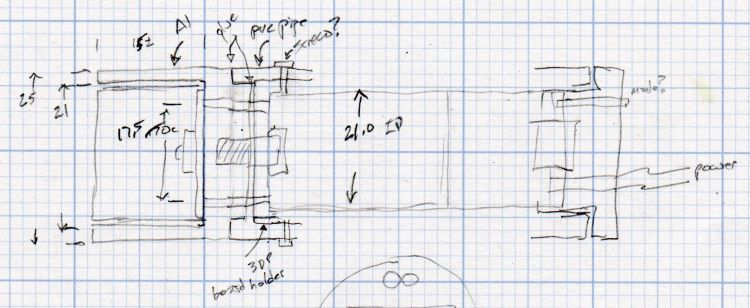
A doodle with some dimensions and aspirational features:
Running Light – 1 W LED case doodle
Even without a lens and blinkiness, it’s attention-getting!
Being that type of guy, I turn my phone off during the night while it’s charging, turn it on for the next day’s adventures, and check the Google Play App Store to see which apps will get updates.
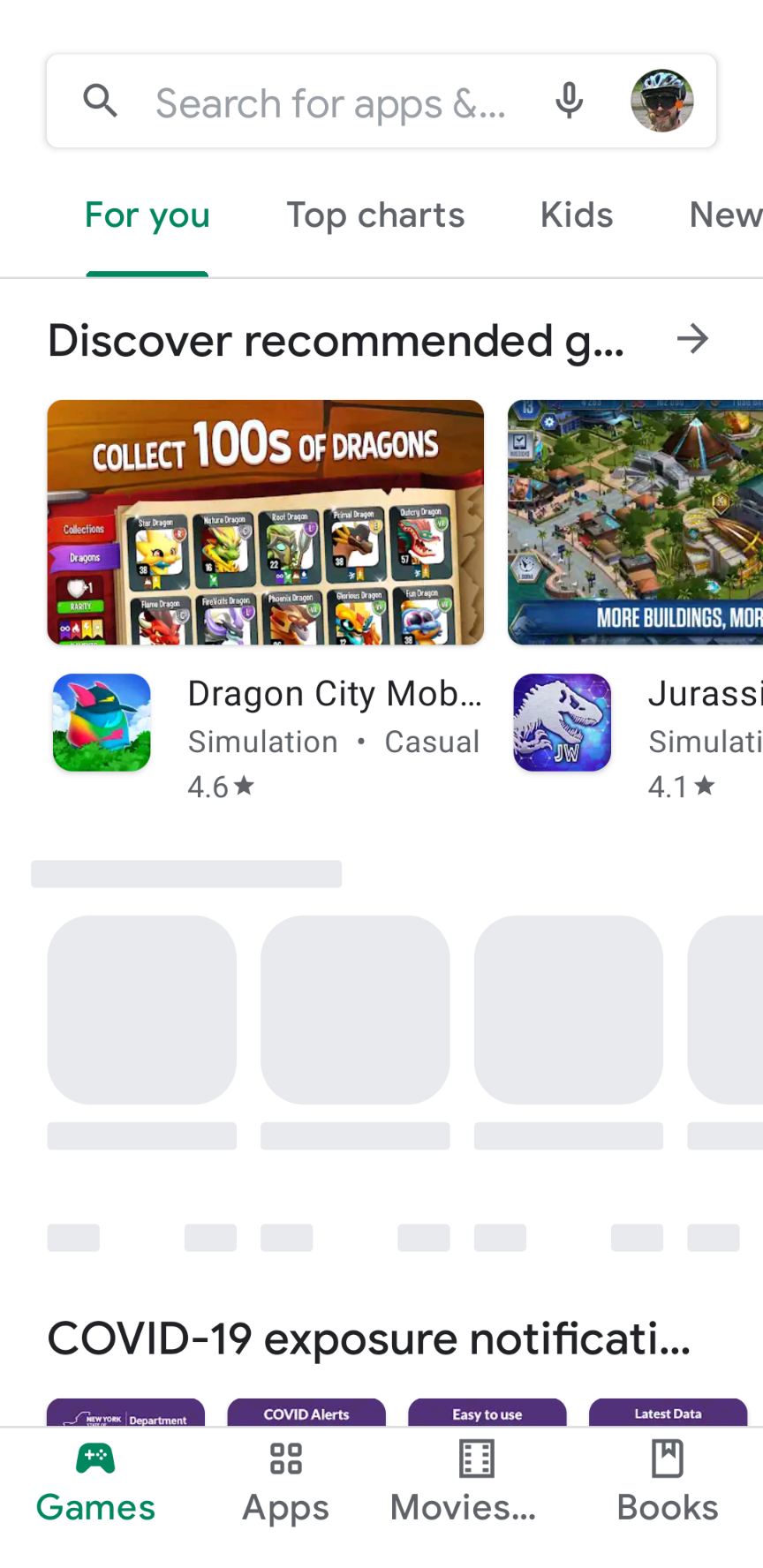
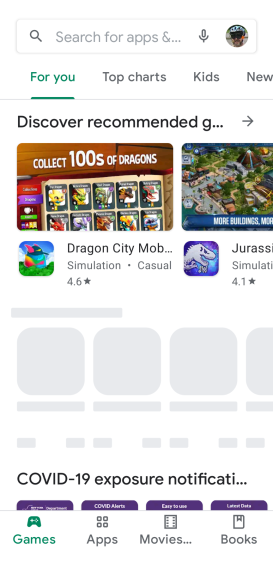
The vast machine learning / AI / whatever analyzing my every move still hasn’t figured out my morning ritual, so it desperately tries to sell me crap:
Google Play Store – app ad delay
My guess: those blank spots are placeholders for app ads, but, while the phone is busy scanning for malicious apps, the ad bidding process doesn’t complete fast enough to update the display before I see it.
FWIW, I had the Genuine NYS Covid-19 app installed for a while, but I very rarely go anywhere or see anybody, so it seemed to offer no net benefit.
In late May we deployed six sticky traps in and around the onion bed, attempting to reduce the number of Onion Fly maggots. By mid-June the sheets were covered with the shredded leaves Mary uses to mulch the onions, but half a dozen flies were out of action:
Sticky trap – 2021-06
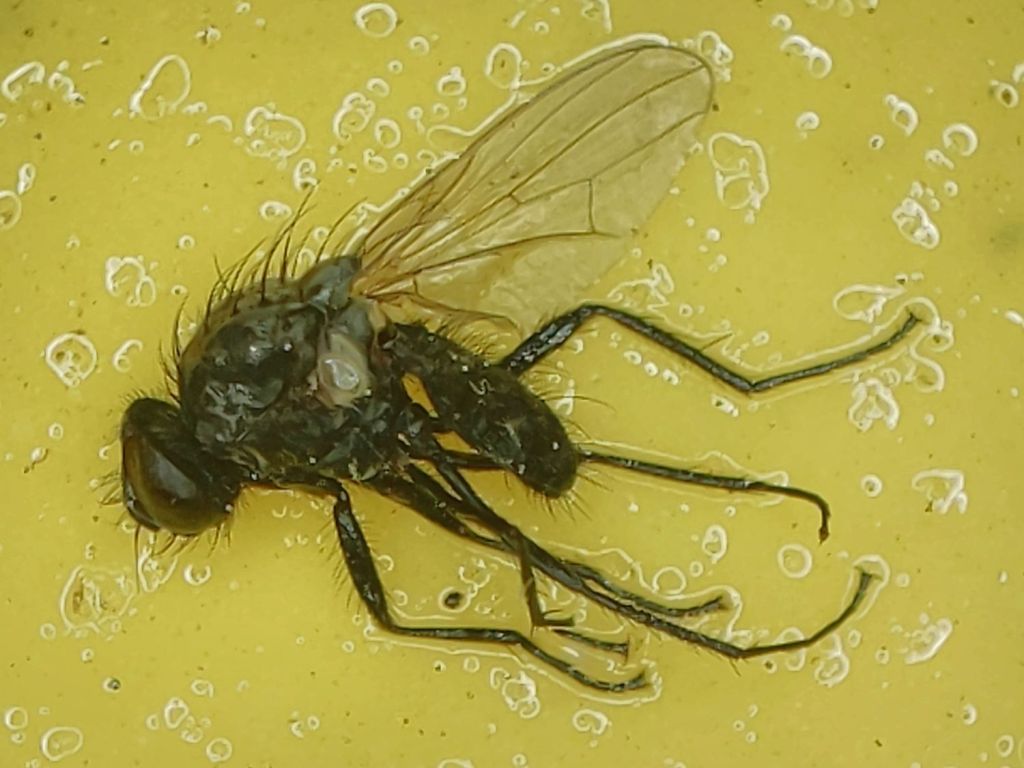
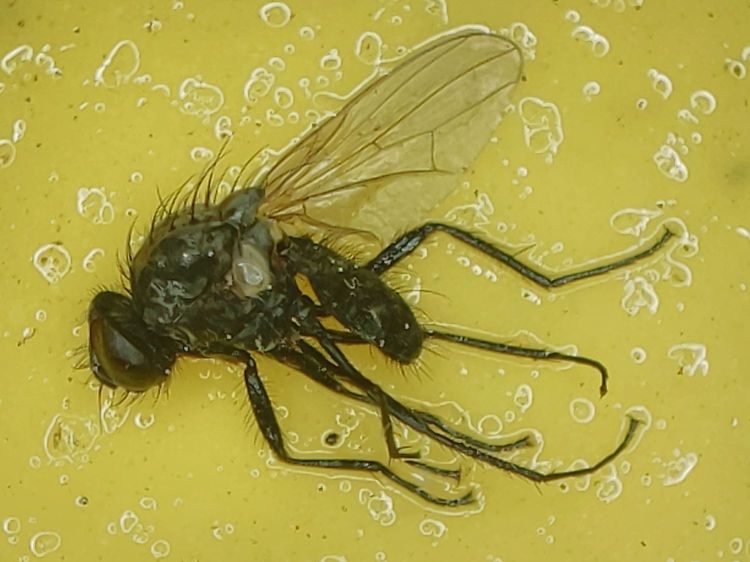
We’re pretty sure that’s what these things are:
Sticky trap – Onion Fly – 2021-06
They’re supposed to have red eyes, but being affixed to a sheet of snot for a few weeks doesn’t do the least bit of good for your eyes.
We replaced the sheets and left them in place until the end of July:
Sticky trap – 2021-07
The sheets took another half-dozen flies out of circulation, Mary began harvesting the onions, and observed it was the healthiest onion harvest she’s ever had.
We declared victory, removed the traps, and the remaining onions suffered considerable maggot damage over the next few weeks.
Anecdotally, it seems reducing the Onion Fly population by (what seems to be) a small amount and maintaining pressure on the population dramatically reduces the number of maggots available to damage the onion crop. At least for a single bed in a non-commercial setting.
The plural of anecdote is not anecdata, but we’ll try it again next year, leave the traps in place while the onions are in the ground, and see what happens.
Mostly because I wanted to verify that it really worked:
MP1584 current – red LED – Arduino blinkiness
The Arduino Nano runs the default Blink program that all the knockoff manufacturers use as their final QC test.
The MP1584 specs say the Enable input can accept a logic signal up to 6 V, the Nano runs at 5 V regulated down from the 6.3 V from the bench supply, and the 1 W red LED now flashes 1 s ON / 1 s OFF.
The current feedback works as it did before, too, which is comforting.
The Nano adds 20 mA to the bench supply, so the whole affair runs at 220 mA = 1.4 W. Of course, it’s now at a 50% duty cycle, so that helps.
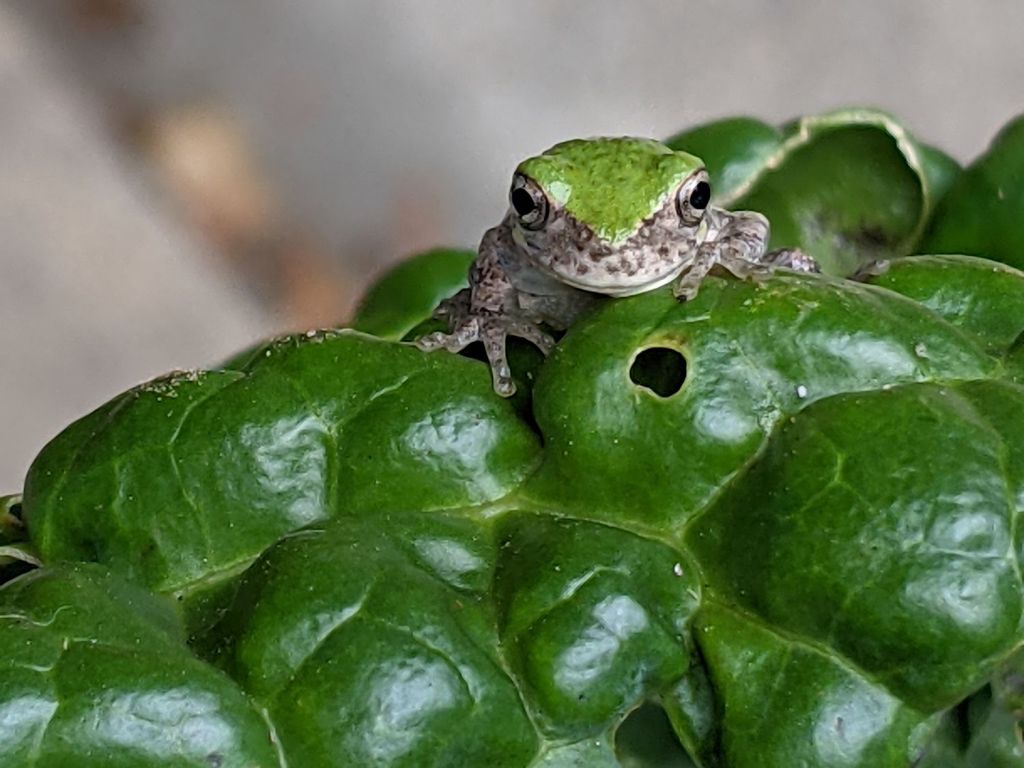
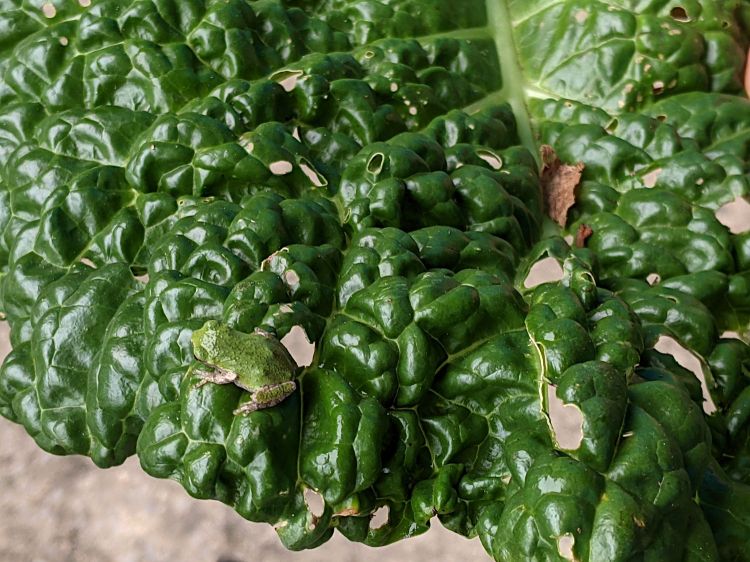
Mary found another tree frog while picking Savoy lettuce for breakfast:
Tree frog on Savoy cabbage
They’re much better camouflaged in their (more or less) natural surroundings, so I didn’t spot it at first, either.
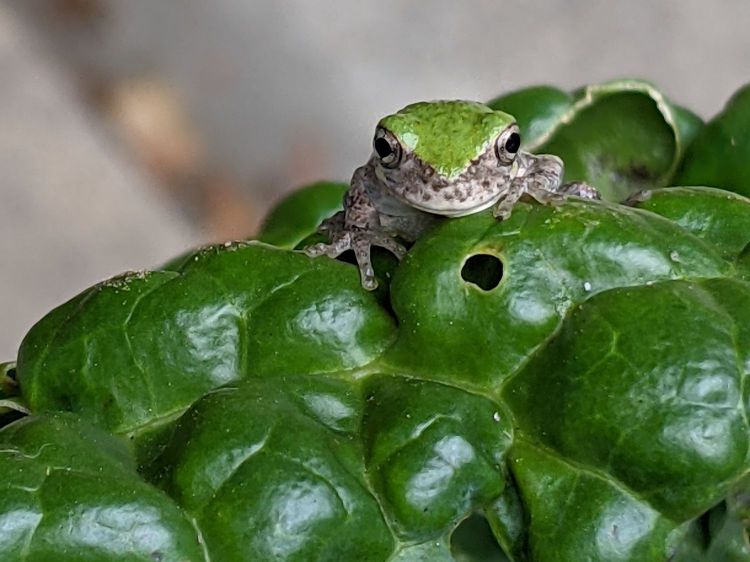
They really are cute little gadgets:
Tree frog on Savoy cabbage – detail
This is only the fourth tree frog she’s seen in the last two decades, but the second one in a month. It may be the same frog as before, although the garden now has a rather husky resident snake who seems to be eating well.





 The Smell of Molten Projects in the Morning