The Smell of Molten Projects in the Morning

Ed Nisley's Blog: Shop notes, electronics, firmware, machinery, 3D printing, laser cuttery, and curiosities. Contents: 100% human thinking, 0% AI slop.

Author: Ed

  • Bafang BBS02: Drop-bar Display Adapter

    Bafang BBS02: Drop-bar Display Adapter

    All of the Bafang BBS02 displays have a compression clamp intended for more-or-less standard 22.2 mm handlebars, as found on typical upright BMX-ish bikes suitable for conversion to e-bikes and, oddly, our Tour Easy recumbents. My friend’s bike has drop-bar handlebars with a 25.4 mm (yes, exactly 1 inch) center section that just isn’t going to fit through that hole.

    The least awful solution involved summoning an adapter from the vasty digital deep:
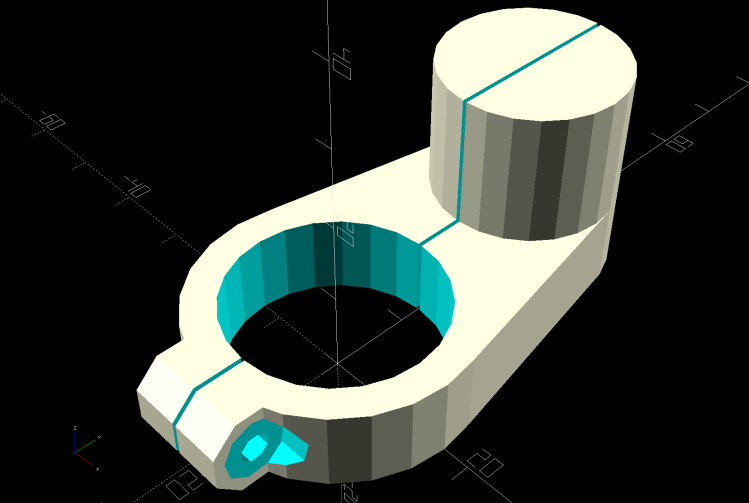
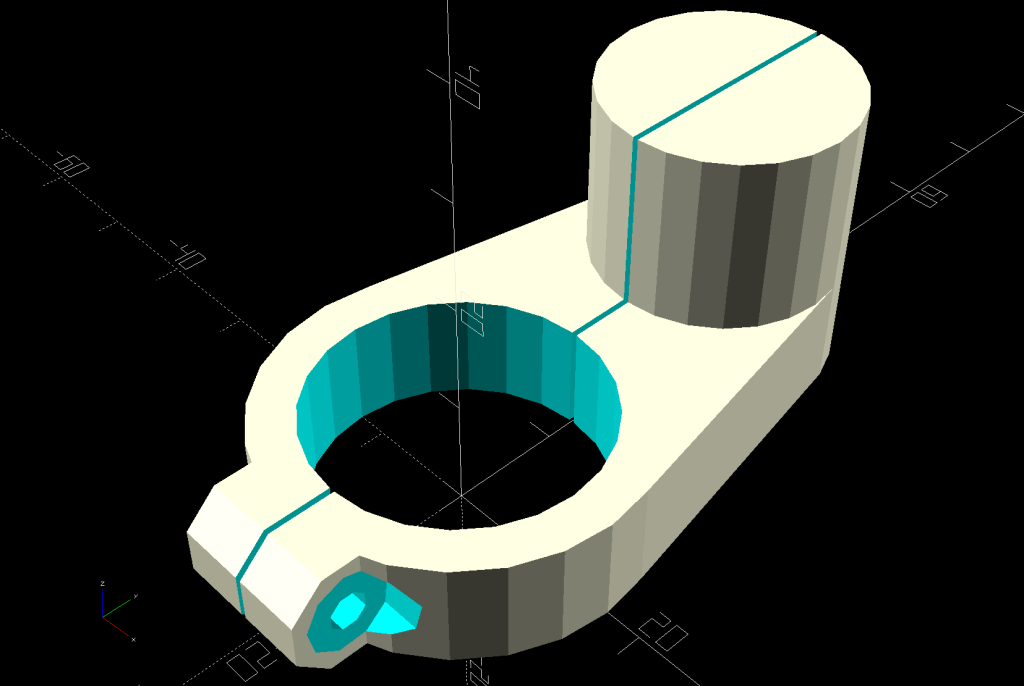
    Display adapter mount - solid model
    Display adapter mount – solid model

    The hole clamps around the handlebar with an M3 SHCS pulling it snug and the display clamps around the peg to hold everything together:
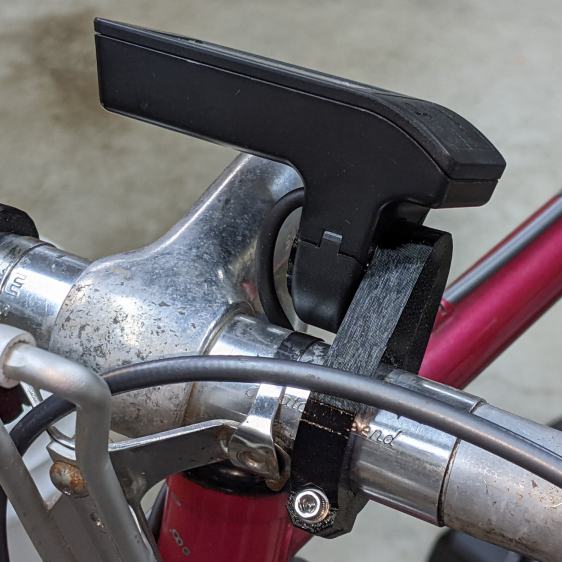
    Bafang Display adapter - front view
    Bafang Display adapter – front view

    There’s not much to see from the side:
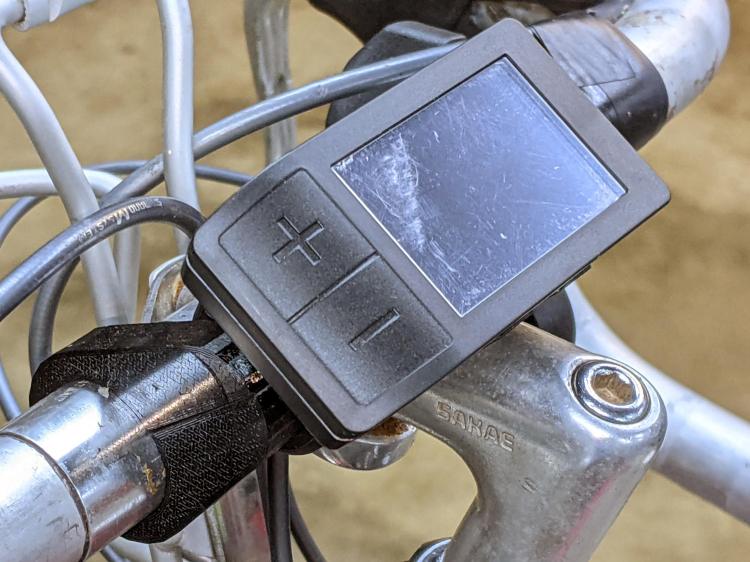
    Bafang Display adapter - left view
    Bafang Display adapter – left view

    Those scuffs arrived on the protective plastic film!

    The OpenSCAD source code includes some cruft from an idea that didn’t work out quite right:

    HandlebarMax = 1*inch;                      // middle handlebar diameter
    HandlebarMin = 24.0;                        //  .. tape section
    
    BafangClampID = 22.3;                       // new handlebar diameter
    
    
    … snippage …
    
    // Handlebar mount for controller
    
    module DispMount() {
    
    ClampRing = [HandlebarMax,HandlebarMax + 2*WallThick,10.0];
    ClampOffset = (HandlebarMax + BafangClampID)/2 + 6.0;
    
    DispStudLenth = 16.5;
    
    NumSides = 24;
    
    Tilt = 0*atan2((ClampRing[OD] - BafangClampID)/2,ClampOffset);
    echo(str("Tilt: ",Tilt));
    
        difference() {
            union() {
                hull() {
                    cylinder(d=ClampRing[OD],h=ClampRing[LENGTH],$fn=NumSides);
                    translate([0,ClampOffset,0])
                        cylinder(d=BafangClampID,h=ClampRing[LENGTH],$fn=NumSides);
                }
                translate([0,ClampOffset,0])
                    cylinder(d=BafangClampID,h=ClampRing[LENGTH] + DispStudLenth,$fn=NumSides);
                translate([-ClampRing[ID]/4,-(ClampRing[OD]/2),ClampRing[LENGTH]/2])
                    rotate([0,90,0]) rotate(180/8)
                        cylinder(d=ClampRing[LENGTH]/cos(180/8),h=ClampRing[ID]/2,$fn=8);
            }
            cube([Kerf,4*ClampOffset,4*DispStudLenth],center=true);
            translate([0,0,-Protrusion])
                cylinder(d=ClampRing[ID],h=ClampRing[LENGTH] + 2*Protrusion,$fn=NumSides);
            translate([-ClampRing[ID]/2,-(ClampRing[OD]/2),ClampRing[LENGTH]/2])
                rotate([0,90,0]) rotate(180/8)
                    PolyCyl(Screw3[ID],ClampRing[ID],8);
            for (i=[-1,1])
                translate([i*ClampRing[ID]/4,-(ClampRing[OD]/2),ClampRing[LENGTH]/2])
                    rotate([0,i*90,0]) rotate(180/8)
                        PolyCyl(Washer3[OD],ClampRing[ID],$fn=8);
    
            translate([-5,25,EmbossDepth/2 - Protrusion/2])
                rotate(Tilt)
                    cube([4.5,21.5,EmbossDepth + Protrusion],center=true);
    
        }
    
        translate([-5,25,0])
            linear_extrude(height=EmbossDepth)
                rotate(90 + Tilt) mirror([0,1,0])
                  text(text="KE4ZNU",size=3.3,spacing=1.05,font="Bitstream Vera Sans:style=Bold",
                       halign="center",valign="center");
    
    }
    

    It’s rock-solid stable: pushing the buttons doesn’t budge it in the least.
  • Stylus Tip Restaking

    Stylus Tip Restaking

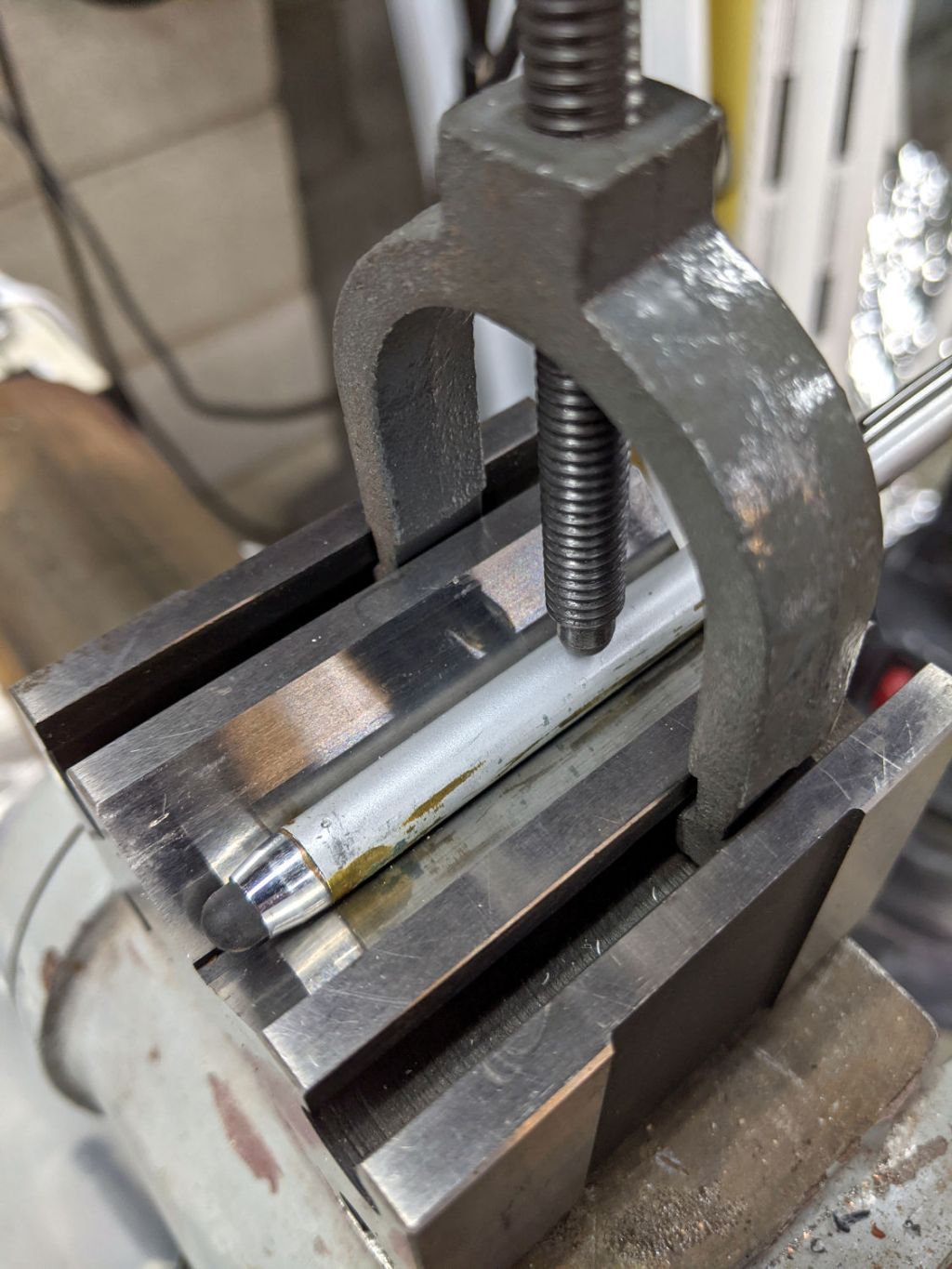
    The tip of the much-battered stylus useful for websites presenting tiny phone-hostile buttons appeared in the laundry basket, narrowly avoiding a trip through the washer. The shell’s original all-around swaging had evidently loosened enough to release the tip, so I applied a hammer and punch:

    Screen stylus tip restaking
    Screen stylus tip restaking

    The punch mark (with another on the opposite side) is barely visible, but holds the tip securely in place. Next time I may need more hammer.

  • Bafang BBS02 Programming Adapter: CP2102 Version

    Bafang BBS02 Programming Adapter: CP2102 Version

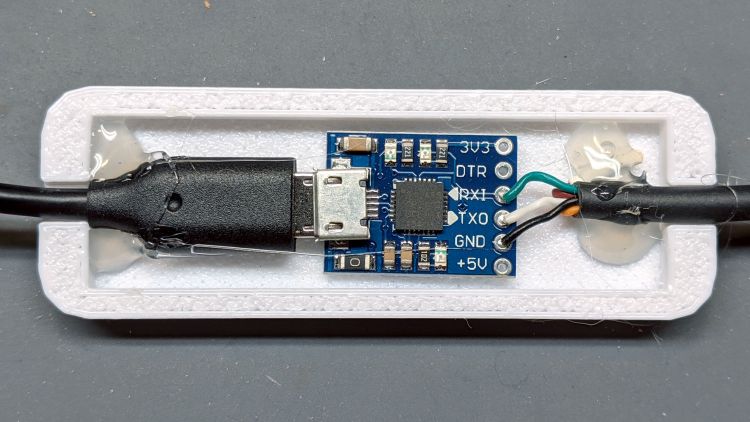
    The last view before sticking the lid in place with hot melt glue:

    Bafang BBS02 - CP2102 Programming Adapter
    Bafang BBS02 – CP2102 Programming Adapter

    The cable on the right goes to the motor controller through the display pigtail cable, sporting colors from a parallel universe.

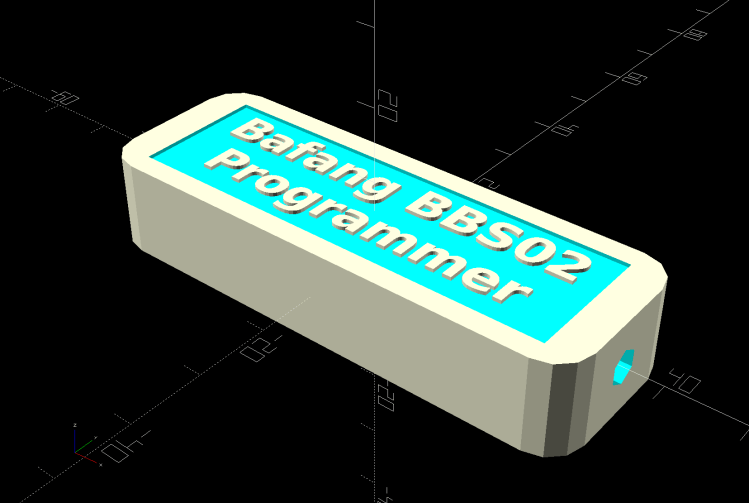
    A (possibly not counterfeit) CP2102 USB-to-serial adapter allows a slightly smaller case than one with the known-fake FTDI adapter and added some identification:

    Bafang BBS02 - CP2102 Programming Adapter - case solid model
    Bafang BBS02 – CP2102 Programming Adapter – case solid model

    It splits along the midline for printing, of course.

    The OpenSCAD source code replaces the previous version:

    // Programming cable case
    
    ProgCavity = [60.0,18.0,7.0];
    ProgBlock = [70.0,24.0,13.0];
    ProgCableOD = 4.0;
    
    module ProgrammerCase() {
    
        difference() {
            hull() {
                for (i=[-1,1], j=[-1,1])
                    translate([i*(ProgBlock.x/2 - CornerRadius),j*i*(ProgBlock.y/2 - CornerRadius),-ProgBlock.z/2])
                        cylinder(r=CornerRadius,h=ProgBlock.z,$fn=12);
                }
            translate([-ProgBlock.x,0,0])
                rotate([0,90,0])
                    PolyCyl(ProgCableOD,3*ProgBlock.x,6);
            cube(ProgCavity,center=true);
    
            translate([0,0,ProgBlock.z/2 + ProgCavity.z/2 - EmbossDepth])
                cube(ProgCavity,center=true);
            translate([0,0,-(ProgBlock.z/2 + ProgCavity.z/2 - EmbossDepth)])
                cube(ProgCavity,center=true);
    
        }
    
        translate([0,4,ProgBlock.z/2 - EmbossDepth])
            linear_extrude(height=EmbossDepth)
                text(text="Bafang BBS02",
                     size=5,spacing=1.00,font="Bitstream Vera Sans:style=Bold",
                     halign="center",valign="center");
    
        translate([0,-4,ProgBlock.z/2 - EmbossDepth])
            linear_extrude(height=EmbossDepth)
                text(text="Programmer",
                     size=5,spacing=1.00,font="Bitstream Vera Sans:style=Bold",
                     halign="center",valign="center");
    
        translate([0,4,-ProgBlock.z/2])
            linear_extrude(height=EmbossDepth)
                mirror([1,0])
                    text(text="Ed Nisley",
                        size=5,spacing=1.00,font="Bitstream Vera Sans:style=Bold",
                        halign="center",valign="center");
        translate([0,-4,-ProgBlock.z/2])
            linear_extrude(height=EmbossDepth)
                mirror([1,0])
                    text(text="softsolder.com",
                        size=5,spacing=1.00,font="Bitstream Vera Sans:style=Bold",
                        halign="center",valign="center");
    
    }
    
    // Half case sections for printing
    
    module HalfCase(Section = "Upper") {
    
        intersection() {
           translate([0,0,ProgBlock.z/4])
                cube([2*ProgBlock.x,2*ProgBlock.y,ProgBlock.z/2],center=true);
            if (Section == "Upper")
                ProgrammerCase();
            else
                translate([0,0,ProgBlock.z/2])
                    ProgrammerCase();
        }
    }
    
    // .. snippage ..
    
            translate([0,2*Block.x/2 * gap,0]) {
    
                translate([gap*ProgBlock.x/2,0,ProgBlock.z/2])
                    rotate([180,0,0])
                        HalfCase("Upper");
                translate([-gap*ProgBlock.x/2,0,0])
                    HalfCase("Lower");
            }
    

    My friend rides about the same way we do, except from a much higher perch, so I’ll start her off with a configuration similar to the one we settled on for Mary’s Tour Easy.

  • Garden Sprayer Pivot Repair

    Garden Sprayer Pivot Repair

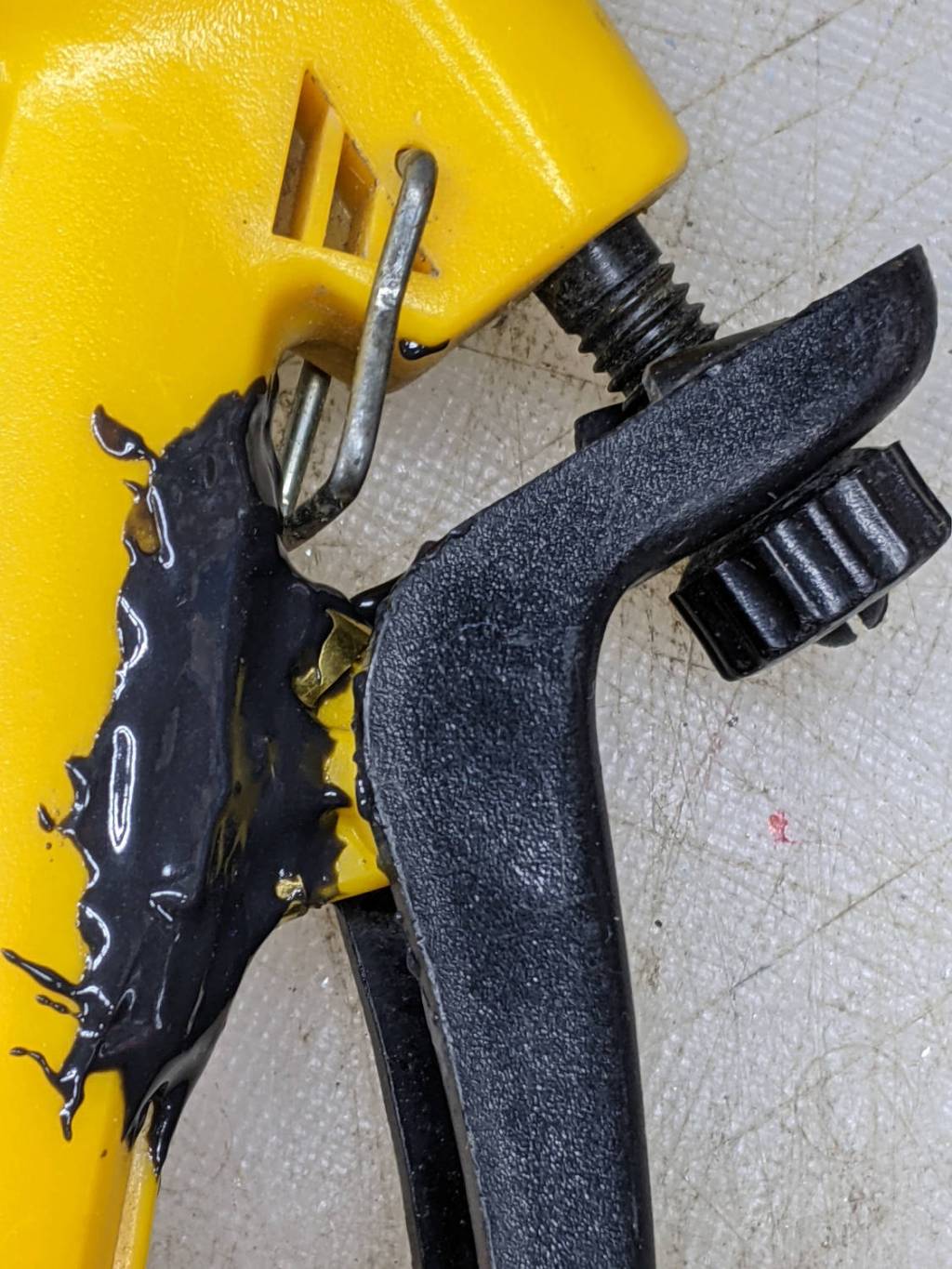
    A winning entry in the “The Bigger the Blob, the Better the Job” category:

    Garden Sprayer - pivot repair
    Garden Sprayer – pivot repair

    Buried under the epoxy is the flimsy tab with the pivot around which the handle moves. Any sideways force will did snap the tab off flush with the body. I had previously repaired it with solvent adhesive, so something more substantial seemed appropriate.

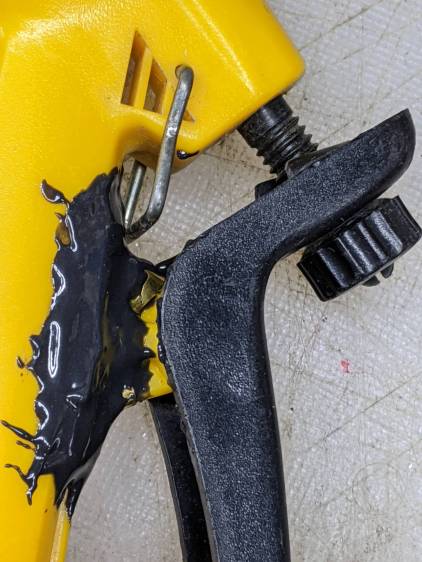
    A closer look shows the edges of the brass flange I formed around the tab to absorb the stress:

    Garden Sprayer - pivot repair - detail
    Garden Sprayer – pivot repair – detail

    It’s pretty much fully depreciated, but if I don’t use the epoxy it will go bad on the shelf, so …

  • Bafang BBS02: Speed Sensor Nut Reshaping

    Bafang BBS02: Speed Sensor Nut Reshaping

    A Bafang BBS02 (for a friend’s upright bike) arrived with a deformed speed sensor nut:

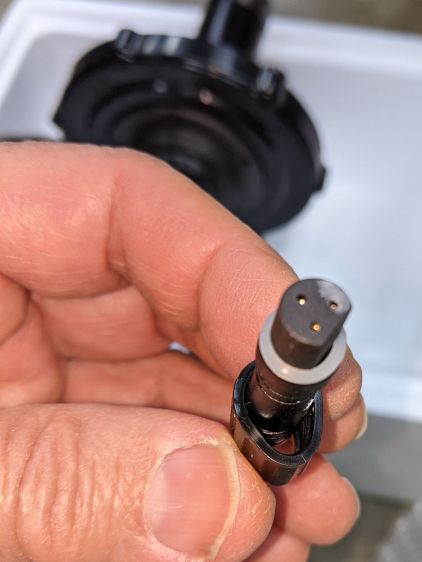
    Bafang BBS02 - Deformed speed sensor nut - end view
    Bafang BBS02 – Deformed speed sensor nut – end view

    It traveled halfway around the planet while trapped underneath the motor and, if it rode in the top layer or two of containers, the combination of pressure and heat would be irresistible.

    The plastic was stiff and I couldn’t force the nut over the connector using as much force as seemed reasonable:

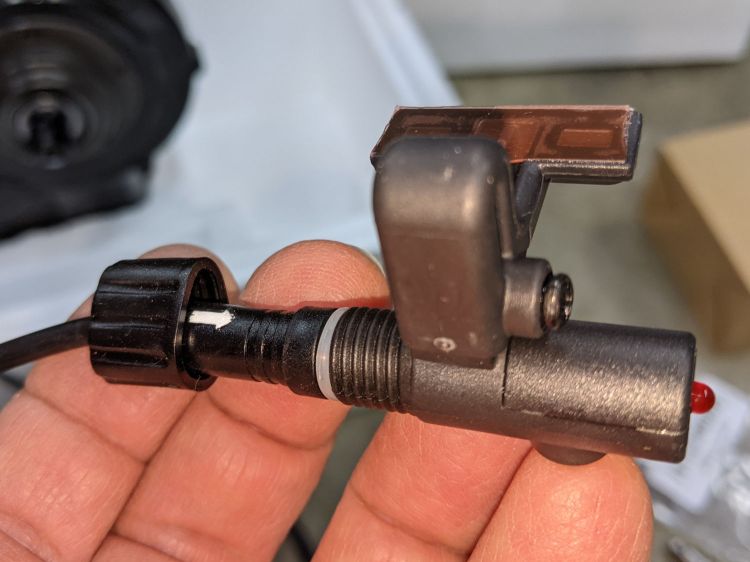
    Bafang BBS02 - Deformed speed sensor nut - test assembly
    Bafang BBS02 – Deformed speed sensor nut – test assembly

    On the upside, the nut just compresses the silicone washer between the connector and the sensor to make a waterproof joint, so it need not have perfect threads or a uniform shape. Once the nut is in place, it will likely never be removed and should never bother anyone else.

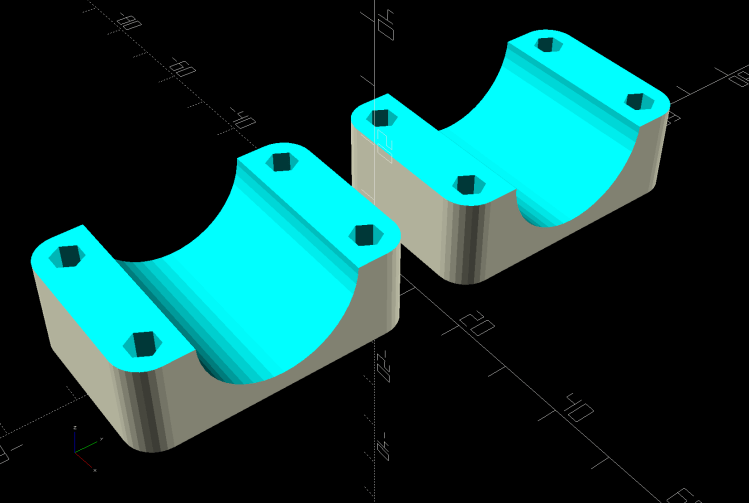
    Being unwilling to apply a hot-air gun near the cable, I decided to try slowly cold-forming the nut inside a mold:

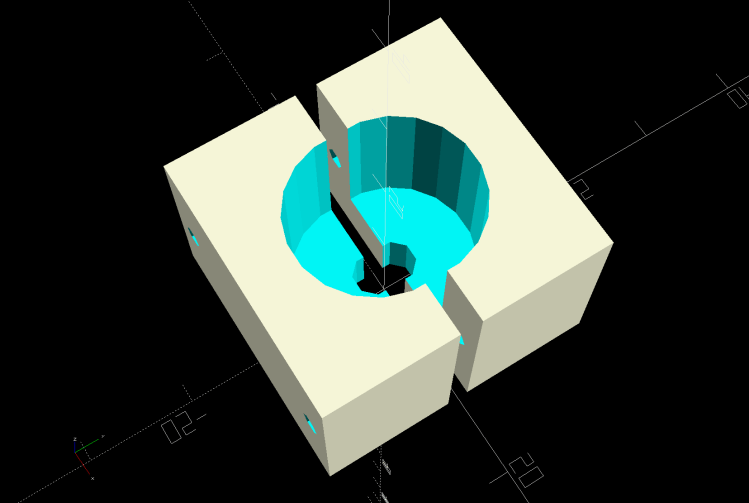
    Sensor Nut mold - solid model
    Sensor Nut mold – solid model

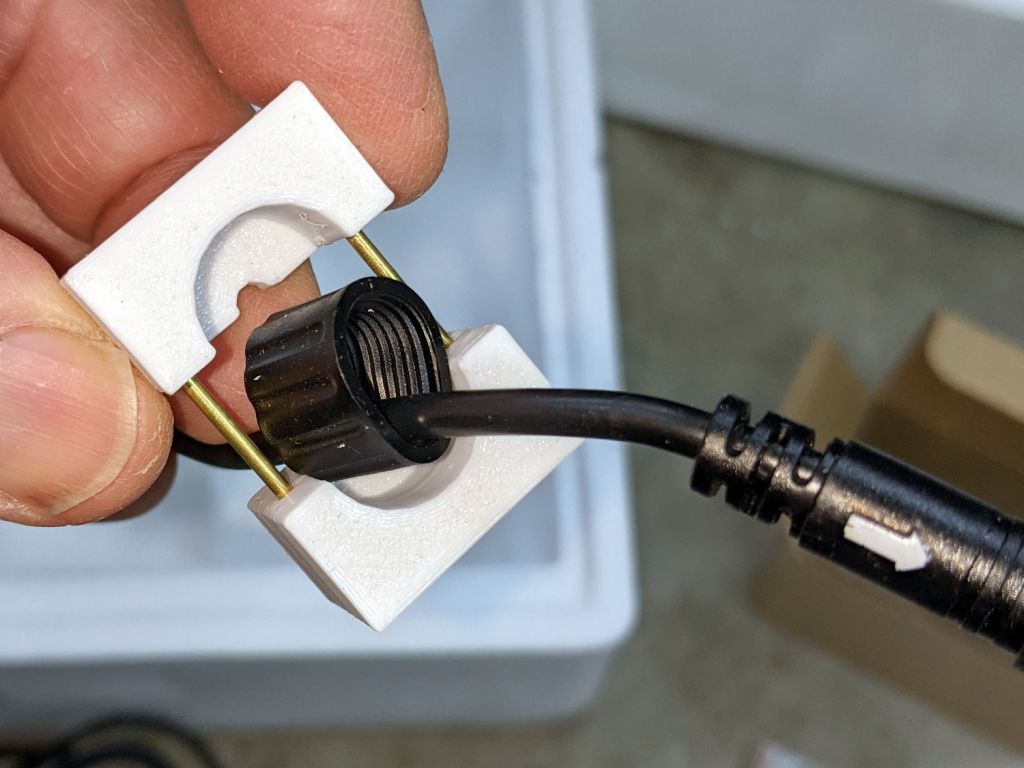
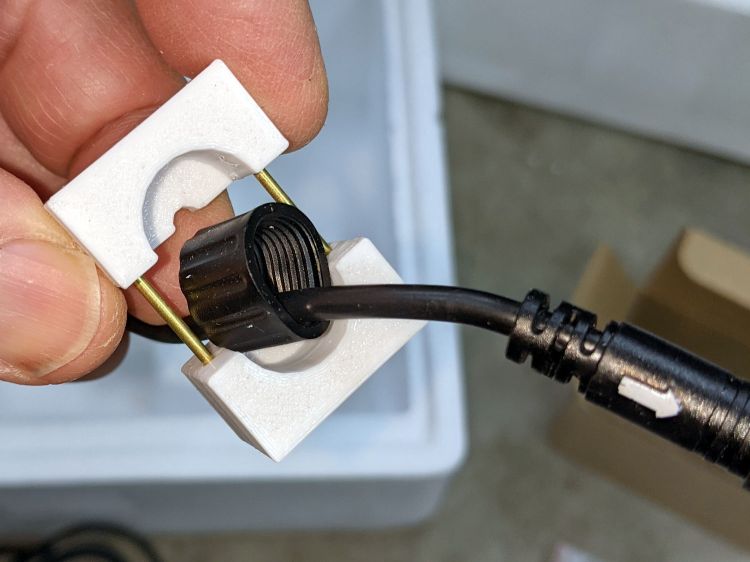
    The gap isn’t a kerf: the two halves meet to form a cylindrical pocket. The smaller holes fit a pair of brass tubes keeping the halves lined up while I arrange things:

    Bafang BBS02 - Deformed speed sensor nut - clamp detail
    Bafang BBS02 – Deformed speed sensor nut – clamp detail

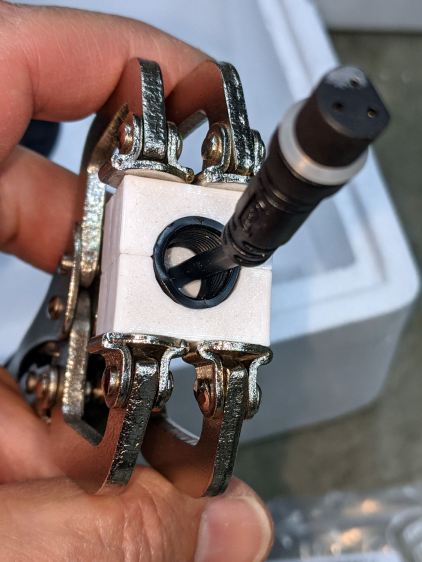
    A pair of swivel-pad clamps apply the pressure:

    Bafang BBS02 - Deformed speed sensor nut - compression clamp
    Bafang BBS02 – Deformed speed sensor nut – compression clamp

    A few days of squashing made it round-er, whereupon I applied the clamp directly against the remaining high point with the other side cradled in the mold. It still doesn’t slide over the connector body, but I’m not in a rush.

    Bafang tech support generously sent a speed sensor extension cable from which I can extract a good nut, which will require cutting and splicing the cable from the motor.

    I’m still hoping gentle suasion will prevail.

    The OpenSCAD source code tucks into the overall file producing various useful bits:

    // Mold to reshape speed sensor nut
    
    SensorNut = [0,14.4,13.0];
    SensorMold = [SensorNut[OD] + 2*WallThick,SensorNut[OD] + 2*WallThick,SensorNut[LENGTH] + WallThick];
    MoldSides = 20;
    RodOD = 1.6;
    
    module NutMoldBlock() {
    
        difference() {
    
            translate([0,0,SensorMold.z/2])
                cube(SensorMold,center=true);
    
            translate([0,0,WallThick])
                rotate(180/MoldSides)
                    PolyCyl(SensorNut[OD],2*SensorNut[LENGTH],MoldSides);
            translate([0,0,-Protrusion])
                rotate(180/8)
                    PolyCyl(SpeedOD,2*SensorMold.z,8);
    
            for (i=[-1,1])
                translate([i*(SensorMold.x/2 - WallThick/2),SensorMold.y,SensorMold.z/2])
                    rotate([90,0,0])
                        PolyCyl(RodOD,2*SensorMold.y,6);
        }
    }
    
    module NutMold() {
        gap = 1.0;
    
        for (j=[-1,1])
            translate([0,j*gap,0])
                intersection() {
                    translate([0,j*SensorMold.y,0])
                        cube(2*SensorMold,center=true);
                    NutMoldBlock();
                }
    }
    
    … snippage …
    
    if (Layout == "NutMold")
        NutMold();


    I haven’t worked on a safety bike in years!

  • Dripworks Mainline Pipe Clamp

    Dripworks Mainline Pipe Clamp

    This is laid in against a need I hope never occurs:

    Dripworks 0.75 inch pipe clamp
    Dripworks 0.75 inch pipe clamp

    It’s intended to clamp around one of the Dripworks mainline pipes carrying water from the pressure regulator to the driplines in the raised beds, should an errant shovel or fork find the pipe.

    It descends from a long line of soaker hose clamps, with a 25 mm ID allowing for a silicone tape wrap as a water barrier.

    The solid model has no surprises:

    Dripworks Mainline Clamp - build view
    Dripworks Mainline Clamp – build view

    The OpenSCAD source code as a GitHub Gist:

    // Dripworks 3/4 inch mainline clamp
    // Ed Nisley KE4ZNU 2021-06
    Layout = "Build"; // [Hose,Block,Show,Build]
    HoseOD = 25.0;
    TestFit = false; // true to build test fit slice from center
    //- Extrusion parameters must match reality!
    /* [Hidden] */
    ThreadThick = 0.25;
    ThreadWidth = 0.40;
    HoleWindage = 0.2;
    Protrusion = 0.1; // make holes end cleanly
    inch = 25.4;
    function IntegerMultiple(Size,Unit) = Unit * ceil(Size / Unit);
    ID = 0;
    OD = 1;
    LENGTH = 2;
    //———-
    // Dimensions
    // Hose lies along X axis
    Hose = [200,HoseOD,HoseOD]; // X = longer than anything else
    NumScrews = 2; // screws along each side of cable
    WallThick = 3.0; // Thinnest printed wall
    PlateThick = 1.5; // Stiffening plate thickness
    // 8-32 stainless screws
    Screw = [4.1,8.0,50.0]; // OD = head LENGTH = thread length
    Washer = [4.4,9.5,1.0];
    Nut = [4.1,9.7,3.3];
    Block = [30.0,Hose.y + 2*Washer[OD],HoseOD + 2*WallThick]; // overall splice block size
    echo(str("Block: ",Block));
    ScrewMinLength = Block.z + 2*PlateThick + 2*Washer.z + Nut.z; // minimum screw length
    echo(str("Screw min length: ",ScrewMinLength));
    Kerf = 1.0; // cut through middle to apply compression
    CornerRadius = Washer[OD]/2;
    ScrewOC = [(Block.x – 2*CornerRadius) / (NumScrews – 1),
    Block.y – 2*CornerRadius,
    2*Block.z // ensure complete holes
    ];
    echo(str("Screw OC: x=",ScrewOC.x," y=",ScrewOC.y));
    //———————-
    // Useful routines
    module PolyCyl(Dia,Height,ForceSides=0) { // based on nophead's polyholes
    Sides = (ForceSides != 0) ? ForceSides : (ceil(Dia) + 2);
    FixDia = Dia / cos(180/Sides);
    cylinder(d=(FixDia + HoleWindage),h=Height,$fn=Sides);
    }
    // Hose shape
    // This includes magic numbers measured from reality
    module HoseProfile() {
    NumSides = 12*4;
    rotate([0,-90,0])
    translate([0,0,-Hose.x/2])
    resize([Hose.z,Hose.y,0])
    cylinder(d=Hose.z,h=Hose.x,$fn=NumSides);
    }
    // Outside shape of splice Block
    // Z centered on hose rim circles, not overall thickness through center ridge
    module SpliceBlock() {
    difference() {
    hull()
    for (i=[-1,1], j=[-1,1]) // rounded block
    translate([i*(Block.x/2 – CornerRadius),j*(Block.y/2 – CornerRadius),-Block.z/2])
    cylinder(r=CornerRadius,h=Block.z,$fn=4*8);
    for (i = [0:NumScrews – 1], j=[-1,1]) // screw holes
    translate([-(Block.x/2 – CornerRadius) + i*ScrewOC.x,
    j*ScrewOC.y/2,
    -(Block.z/2 + Protrusion)])
    PolyCyl(Screw[ID],Block.z + 2*Protrusion,6);
    cube([2*Block.x,2*Block.y,Kerf],center=true); // slice through center
    }
    }
    // Splice block less hose
    module ShapedBlock() {
    difference() {
    SpliceBlock();
    HoseProfile();
    }
    }
    //———-
    // Build them
    if (Layout == "Hose")
    HoseProfile();
    if (Layout == "Block")
    SpliceBlock();
    if (Layout == "Show") {
    difference() {
    SpliceBlock();
    HoseProfile();
    }
    color("Green",0.25)
    HoseProfile();
    }
    if (Layout == "Build") {
    SliceOffset = TestFit && !(NumScrews % 2) ? ScrewOC.x/2 : 0;
    intersection() {
    translate([SliceOffset,0,Block.z/4])
    if (TestFit)
    cube([ScrewOC.x/2,4*Block.y,Block.z/2],center=true);
    else
    cube([4*Block.x,4*Block.y,Block.z/2],center=true);
    union() {
    translate([0,0.6*Block.y,Block.z/2])
    ShapedBlock();
    translate([0,-0.6*Block.y,Block.z/2])
    rotate([0,180,0])
    ShapedBlock();
    }
    }
    }

  • Microscope Stage Positioner: Rigid MakerBeam Edition

    Microscope Stage Positioner: Rigid MakerBeam Edition

    Rebuilding the XYZ stage positioner with MakerBeam aluminum struts, but without the steel brackets, produce a much more rigid result:

    Microscope Stage Positioner - rigid Makerbeam
    Microscope Stage Positioner – rigid Makerbeam

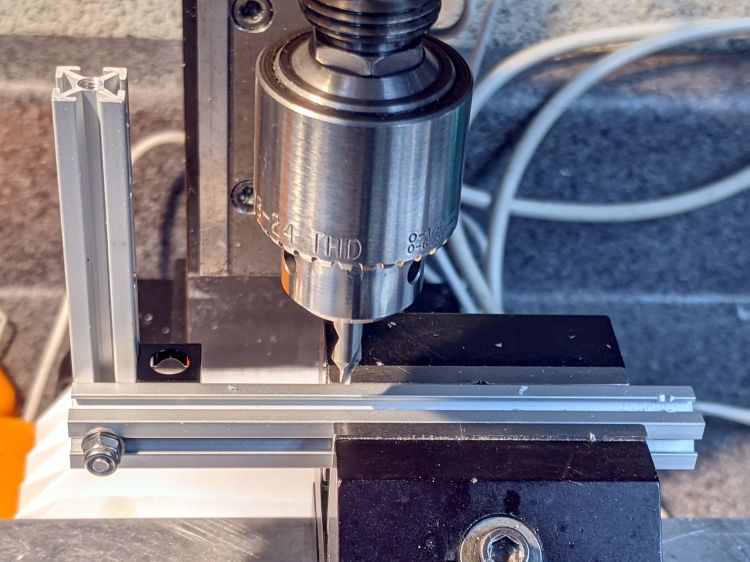
    This requires drilling holes through the extrusions:

    Microscope Stage Positioner - Makerbeam drilling
    Microscope Stage Positioner – Makerbeam drilling

    Running the center drill down until it just nicks the sides produces enough of a pilot hole through the center section to capture the 3 mm drill. If I had to drill enough holes to make a fixture worthwhile, I could probably eliminate the divots.

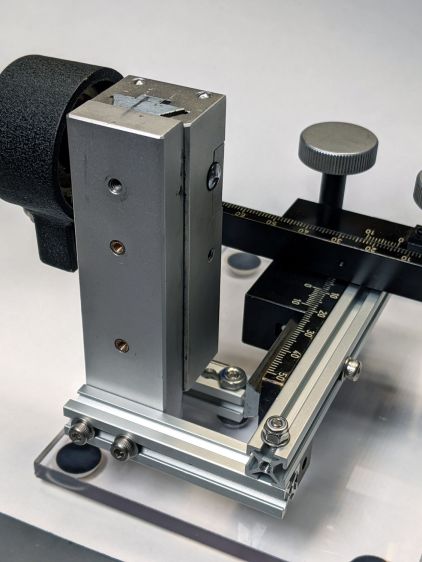
    Two more holes + epoxied M3 brass inserts attached the 60 mm beam directly to the Z Axis stage, thereby eliminating the vertical beam and a steel bracket:

    Microscope Stage Positioner - Makerbeam joints
    Microscope Stage Positioner – Makerbeam joints

    The M3 SHCS attaching the 100 mm beam goes through both beams. I think you could get the same result with a Tee Nut or a 12 mm Square Head bolt, should you have those lying around and don’t want to drill another hole. The Corner Cube screwed into both beams prevents rotation and helps ensure perpendicularity.

    The Y stage now attaches directly to the beam, rather than through a pair of Corner Cubes, because I realized I wasn’t ever going to adjust its position.

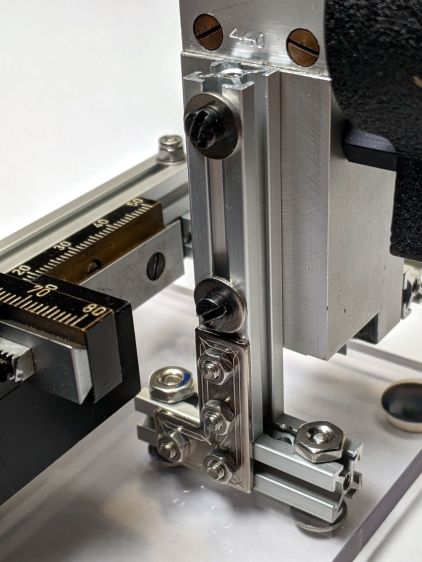
    The Z Axis stage stands on the plastic plate through a hellish mixture of metric and USA-ian screws. Basically, the 6-40 screws into the stage were long enough, the 6-32 screws through the plate fit the existing holes, and M3 screws are for MakerBeam:

    Microscope Stage Positioner - Z Axis base
    Microscope Stage Positioner – Z Axis base

    To my utter astonishment, the threads in the end of the vertical beam had the proper alignment to let a Square Head bolt snug the beam against the 40 mm beam on the plate. As a result, the L Bracket just prevents the vertical beam from turning on the screw and the combination is as rigid as you (well, I) could want.

    The 40 mm beam has two spurious holes, because I thought I could avoid drilling another hole in the baseplate. Nobody will ever notice.

    After squaring and tightening everything, the 100 mm beam along the Y Axis is now horizontal within 0.2 mm and the X Axis is horizontal to better than I can measure.

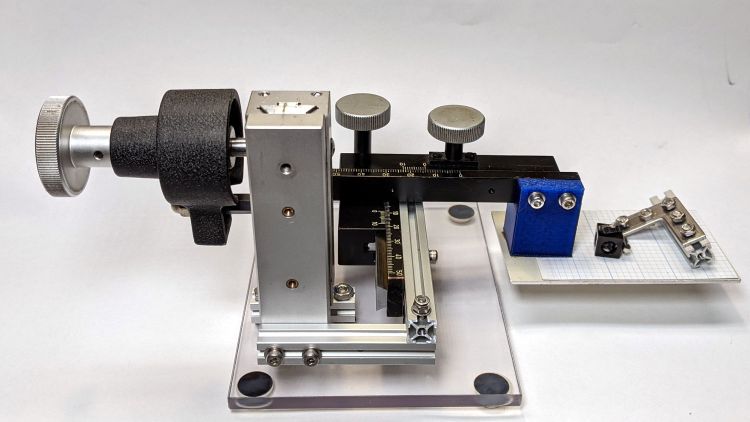
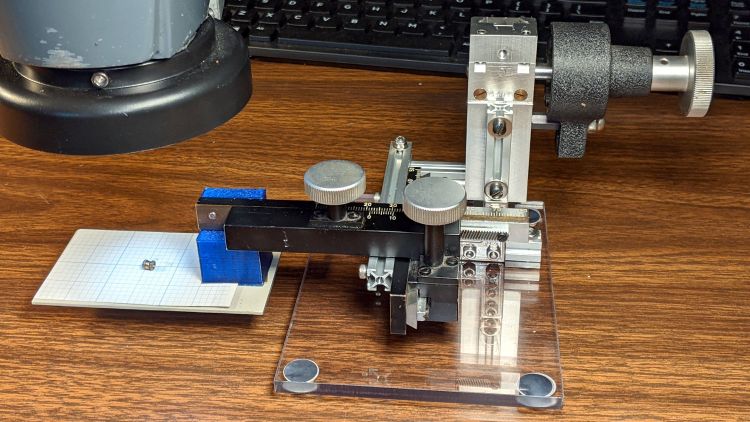
    It’s definitely Good Enough™ for me:

    Microscope Stage Positioner - in use
    Microscope Stage Positioner – in use

    Remember, nothing exceeds like excess …