My Fitbit Charge 5 exercise tracker estimates my VO2Max as somewhere between 51 and 55. That seems absurd for a guy of my age, where “Excellent” is a bit under 40. I am most certainly not a highly trained athlete at the top of my form, so I wondered what the real value might be.
Fitbit calculates VO2Max from the ratio of my maximum to resting pulse rates, probably according to the Uth formula using a coefficient applicable to a much younger man.
It also computes my maximum heart rate from my age as 220 – 72 = 148, much lower than the values I routinely see while biking around the area. Reviewing a few months of data suggests an actual value around 170, although I did see 185 on one occasion.
Forcing a maximum heart rate of 170 changed the VO2Max estimate to 50-54, which still seemed absurdly high. At least that change made the Fitbit’s “heart rate zones” a little more reasonable, as ordinary bike rides no longer have me in the Peak zone nearly as often.
The Rockport walking test calculates VO2Max from a timed walk over a one mile “track” course, so I laid out a half-mile out-and-back route on Zack’s Way, which is a quarter mile from home.
Maintaining a brisk pace covered the mile in 15:49 and left me with a 110 pulse; it’s obvious I’m not a trained athete. Feeding those numbers and a few other vital details into the Rockport formula gives me a much more realistic VO2Max of 28.5, putting me somewhere between the 50th and 75th percentile.
Which is good, but not extraordinary.
Bottom line: don’t believe the hype.
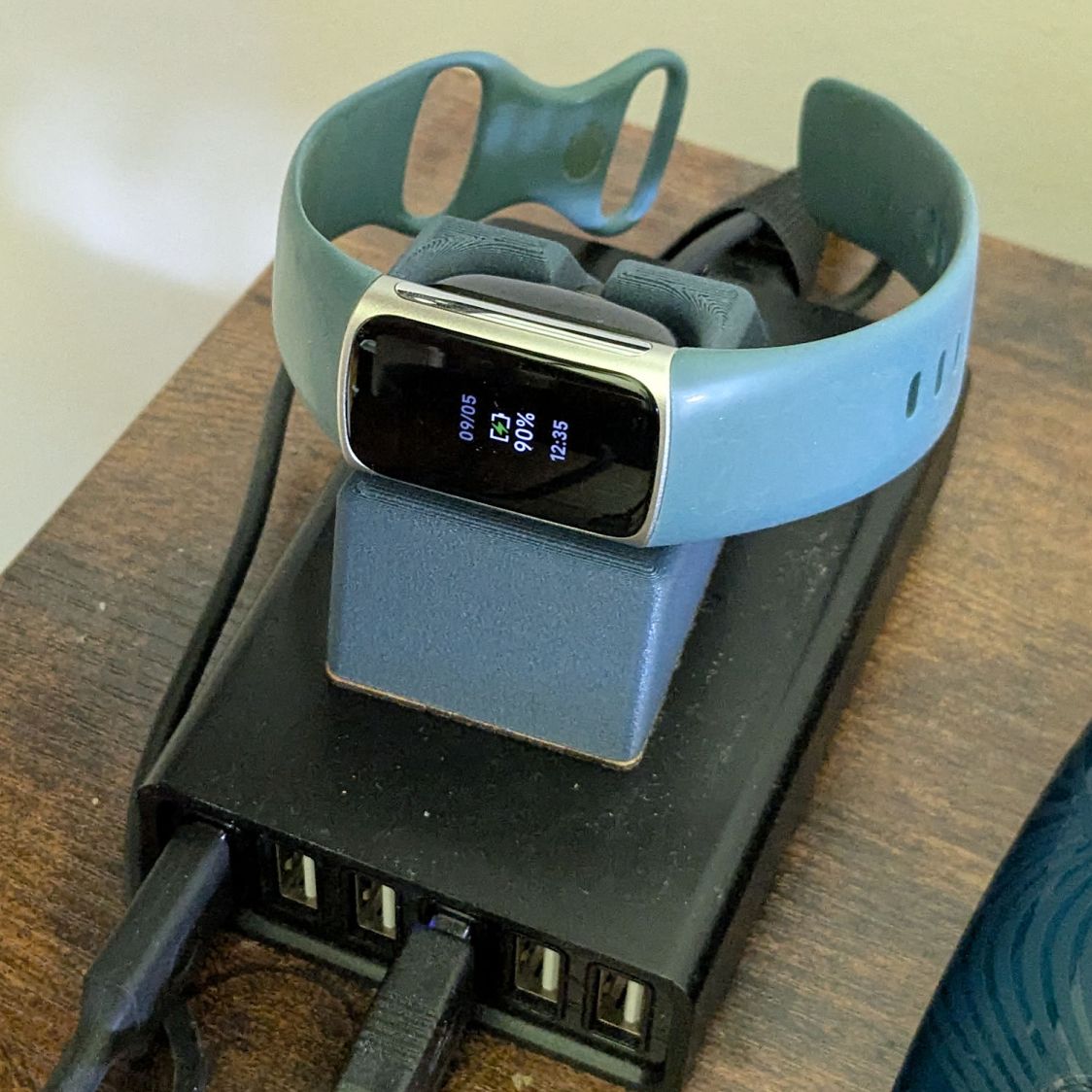
An obligatory picture and link for enhanced SEO:
 The Smell of Molten Projects in the Morning
Comments
One response to “Fitbit VO2Max Estimation”
“the Uth formula using a coefficient applicable to a much younger man.”
A typical Zoomer is a zombie…
“One in five young men exempt from military service due to health concerns” — Yle News (15.11.2024)
YouTube(“Huge Changes to Navy Boot Camp in 2025”, Jamesons Travels)