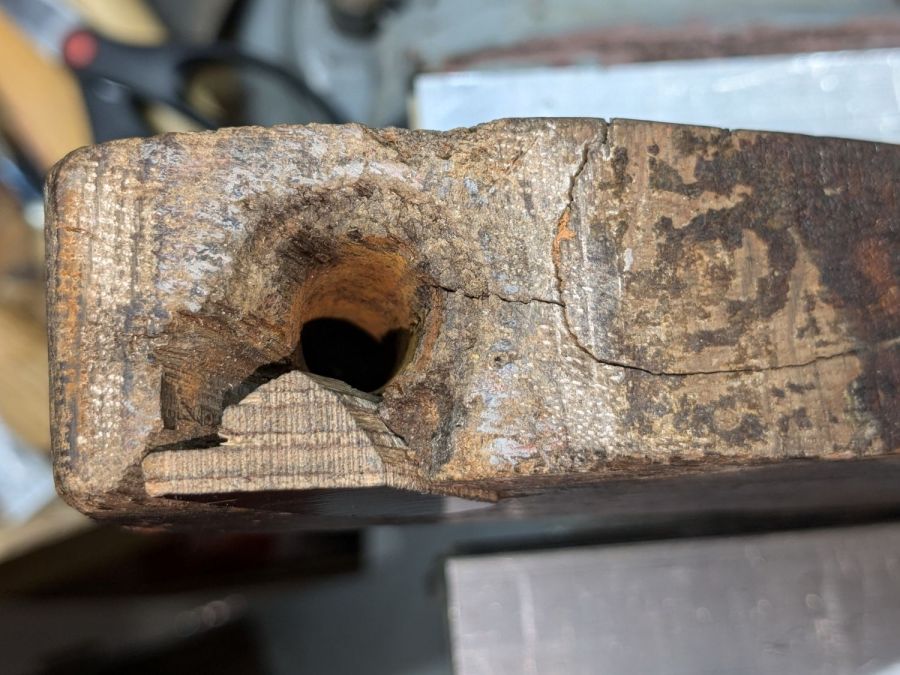
With the seat glued and the old caster sockets yanked, I carved a piece of plywood to fit the gap in one leg:
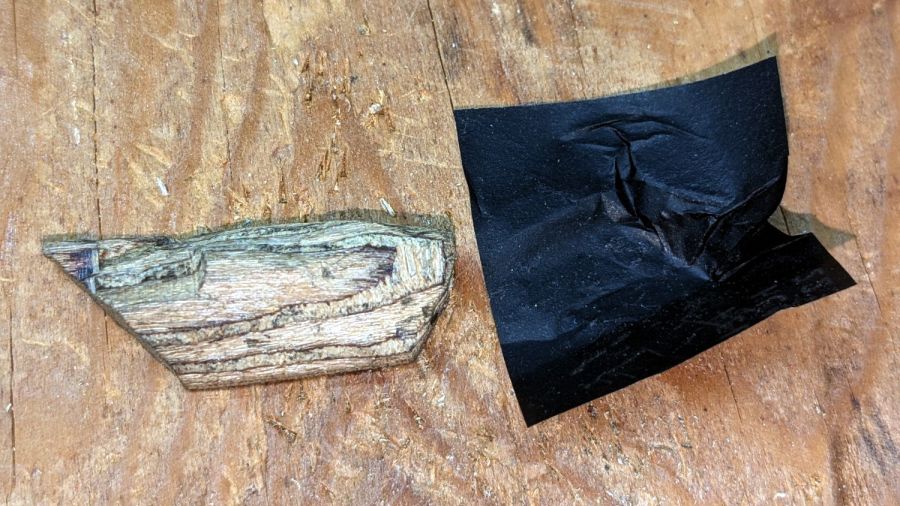
After whittling the wood to kinda-sorta go in there, I pressed it against snippets of carbon paper (remember carbon paper?) to mark the contact points and carve them off:
This occupied most of a SquidWrench remote meeting, but eventually sank it flush with the leg:
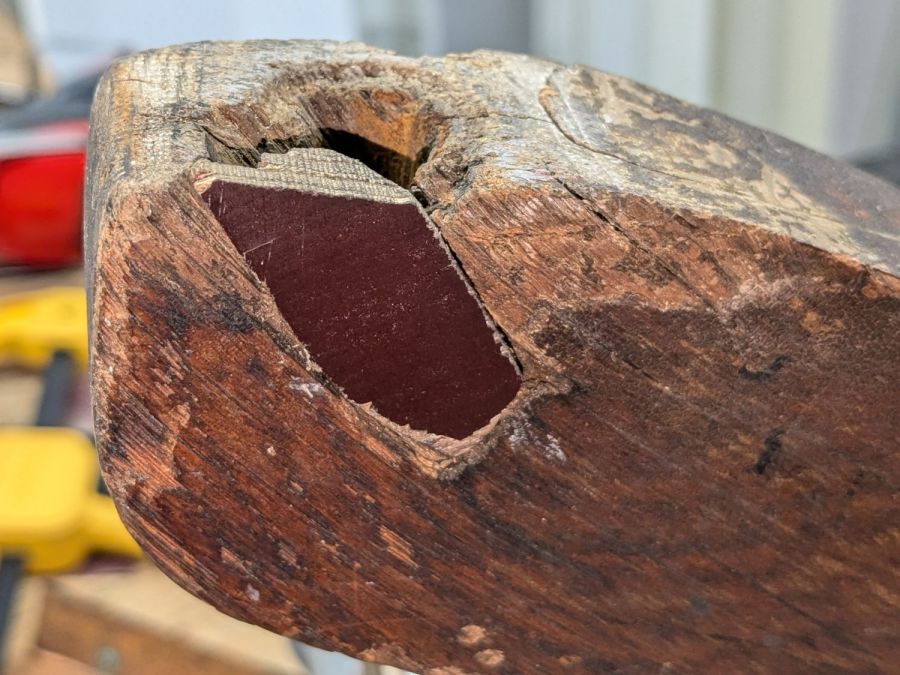
Now, that’s not the prettiest job you’ve ever seen, but it gets worse:
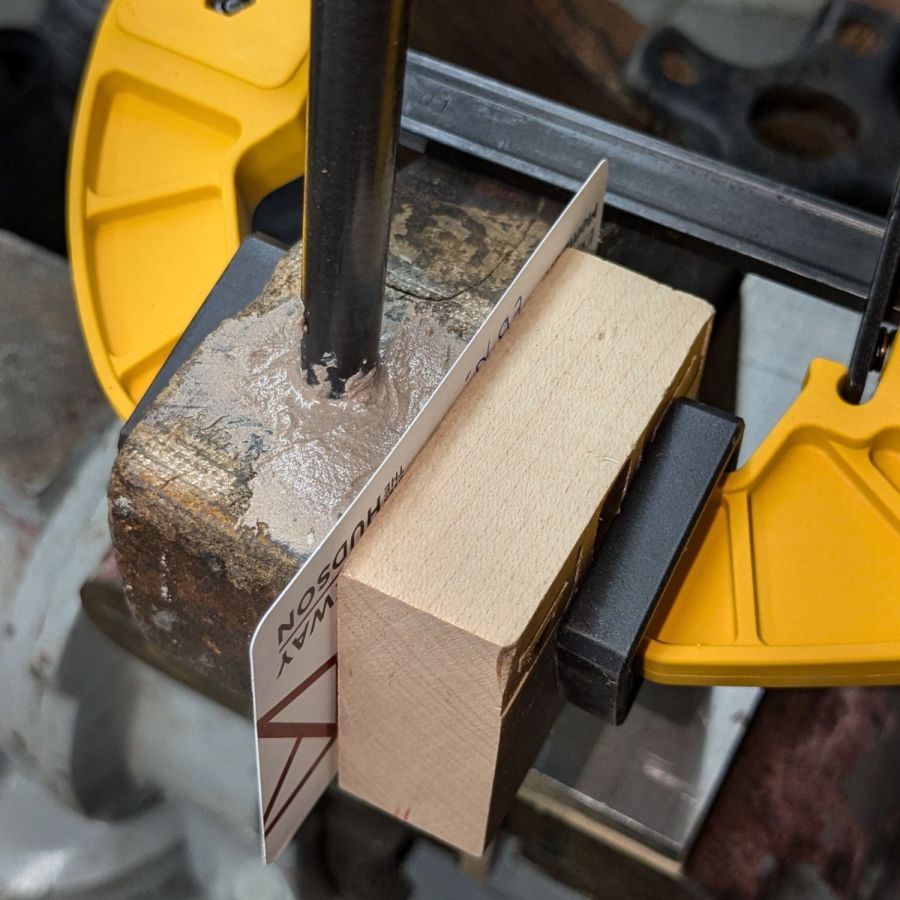
This time around, I tinted the epoxy with brown and black dye, which knocked the color back to something tolerable and increased the curing time well beyond the usual couple of hours. Fortunately, I wasn’t in a hurry and it was pretty much done by the next afternoon.
Whereupon I mixed up another bodacious batch of epoxy:
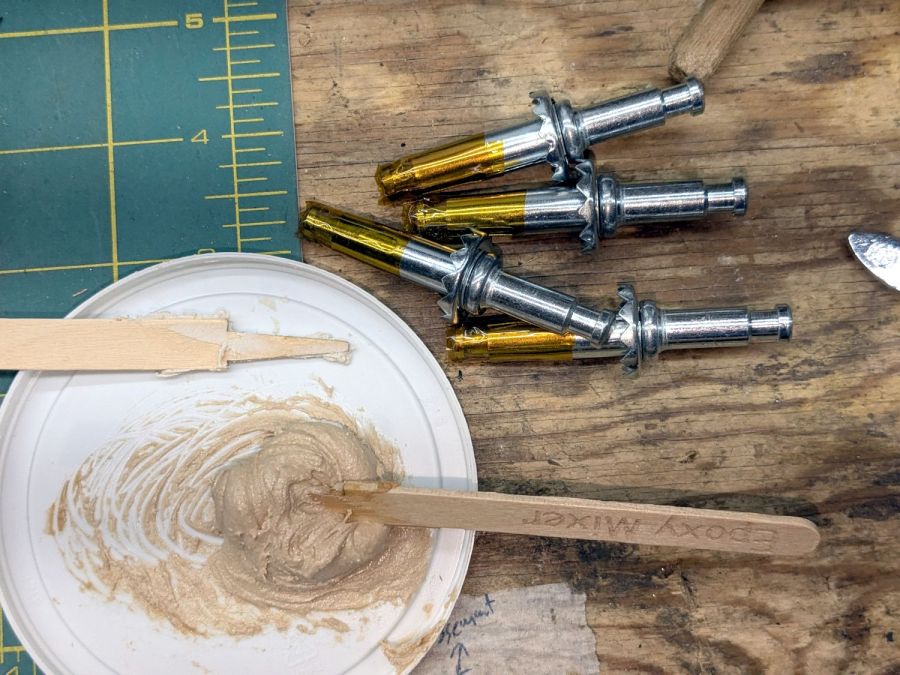
The Kapton tape wrap kept (most of) the epoxy out of the end of the sockets. I buttered up the sockets just below their serrated heads and tapped them into the legs:
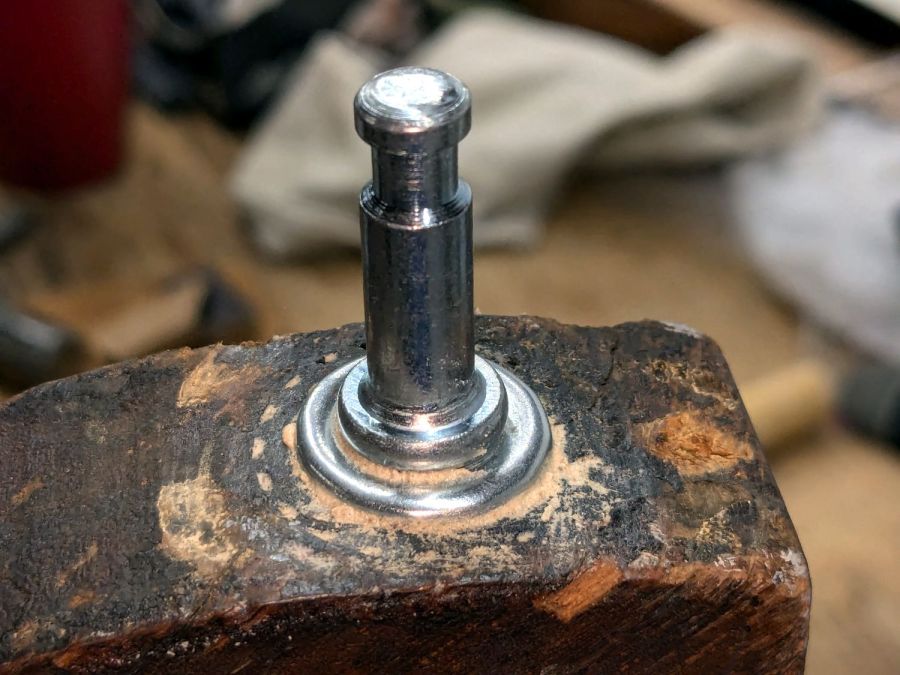
Yeah, I wiped that down a little better before another overnight cure left the four pins firmly secured in their legs; the pins still rotate (albeit stiffly) in the sockets, although the casters really swivel on their pins.
A cast iron fitting of the kind they just don’t make any more holds the legs in place:
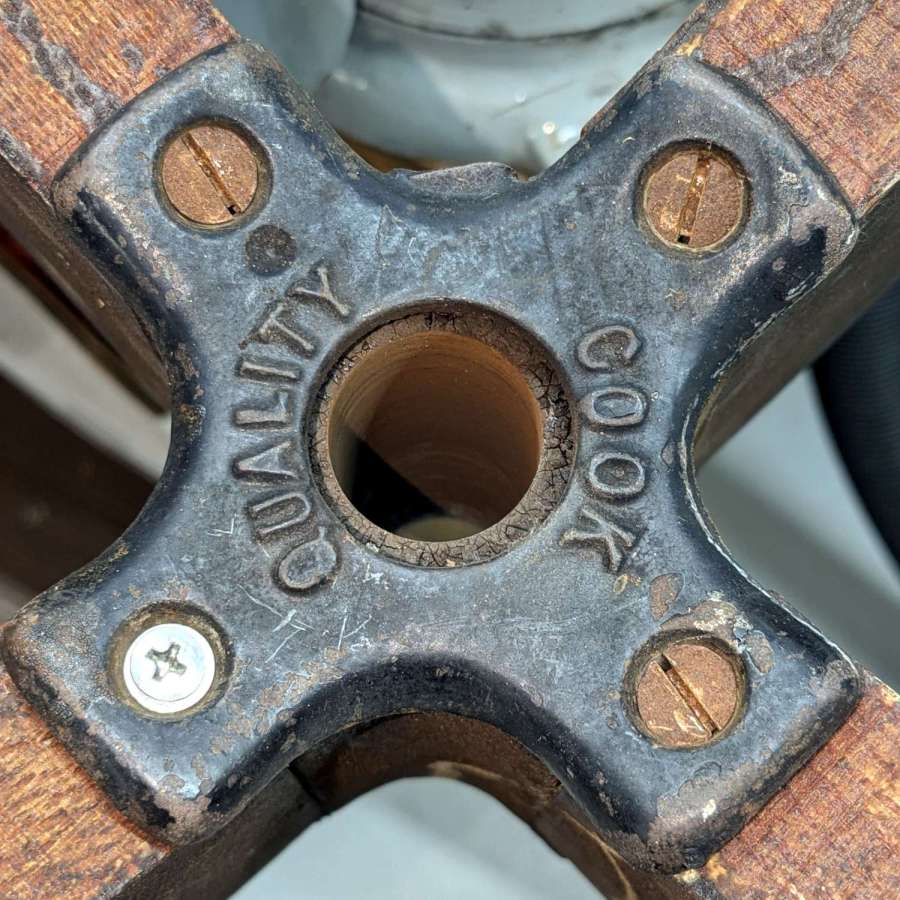
My screw collection lacks chonky wood screws, but I doubt anybody will ever notice that shiny crosspoint screw.
In any event, the plate holds the legs in tapered slots along the cast iron base that also guides the height adjusting leadscrew under the seat:
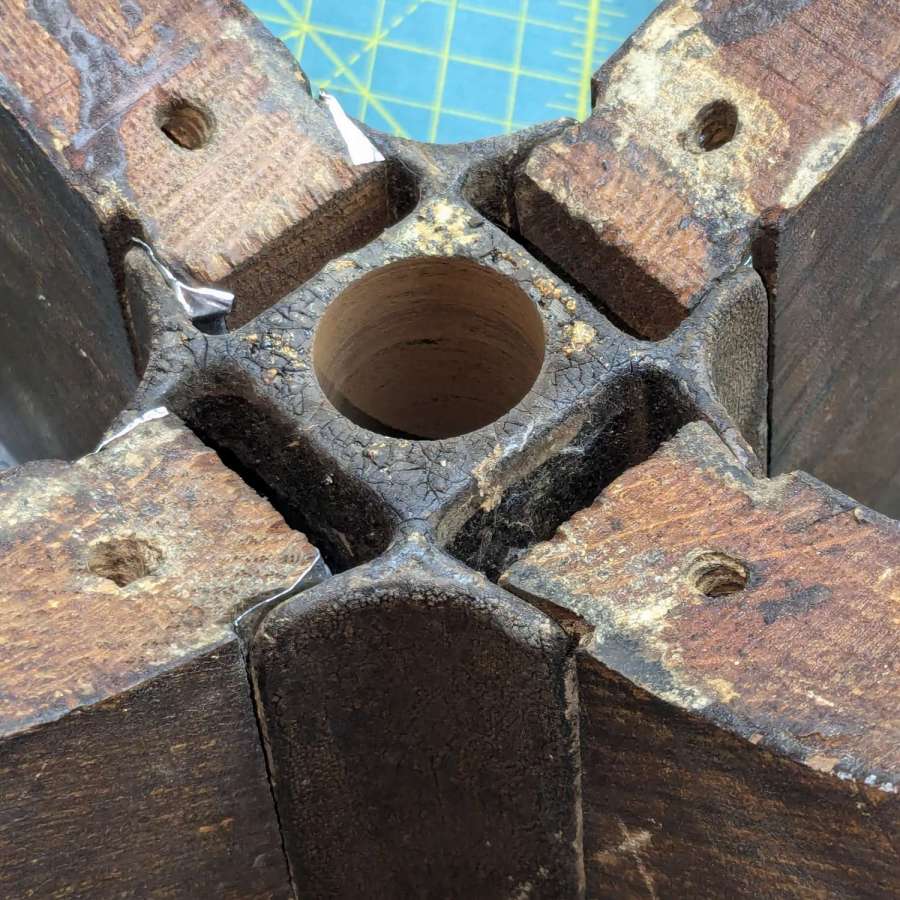
The wood dovetails in the legs were a bit worn / shrunken, so I shimmed them with two strips of 3.5 mil = 0.09 mm stainless steel tape on each side and tapped the legs into place with a plastic mallet. The steel is completely invisible from outside and the legs are magically solid, just like they should be.
As expected, the new casters clash horribly with the chair’s classic style:
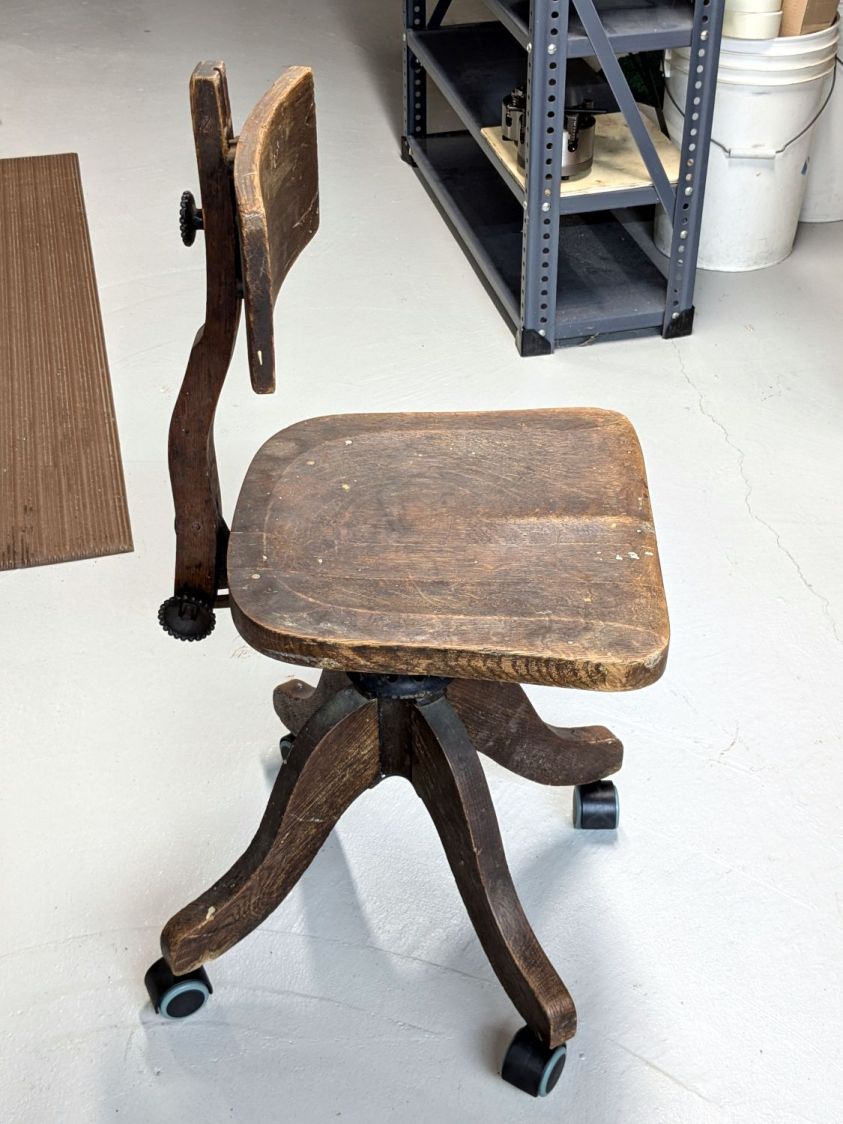
Somewhat to my surprise, it’s now undergoing a field test at Mary’s desk, where it replaces a chair she never liked. The seat adjusts down enough to let her feet reach the floor (which most modern chairs do not) and the edge doesn’t press on the back of her legs. We fiddled with the backrest height / angle / tension and it feels surprisingly good.
You gotta admire something with that kind of durability and repairability.
A good refinishing job would definitely improve its appearance, but that’s well beyond my abilities.
 The Smell of Molten Projects in the Morning
Comments
One response to “Antique Desk Chair: Leg Rebuild”
I love this, great job!