In anticipation of upcoming disassembly & reassembly tasks, I finally replaced the long-dead NiCd battery in an old Skil cordless driver with an 18650 lithium cell from the Basement Warehouse Wing:
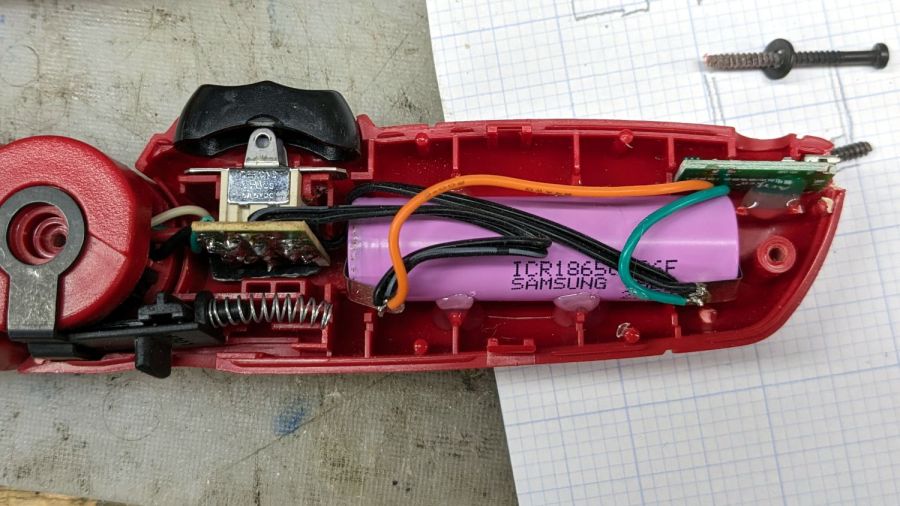
A USB charge controller sits in a slot carved into the plastic formerly supporting the NiCd battery’s charging jack:

Hot-melt glue holds everything in place.
The motor draws about 2 A under full load, which is a bit more than the charge controller wants to supply. I simply wired the motor (through its reversing switch) directly to the 18650 cell terminals, which is certainly not good practice, but seems reasonable given the intended use case.
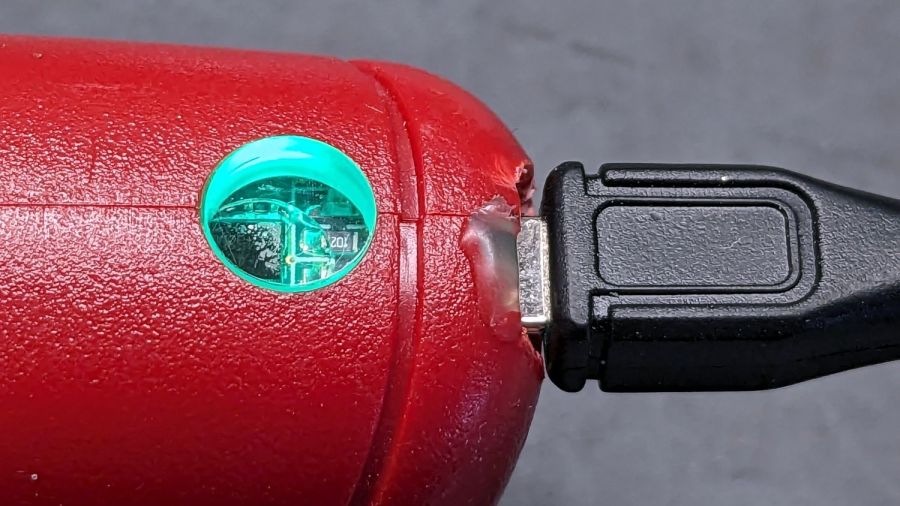
A red LED shows the charger stuffing energy into the cell:

You can see the blob of glue holding one of the acrylic cylinders left over from the gelatin capsule filler; only 99 more to go! I had to turn it down by about a millimeter, an operation best left to your imagination.
After an hour, a green glow shows the cell is fully charged:
The original label proudly touted the NiCd battery’s 2.4 V, so I figured truth in packaging required a new label:
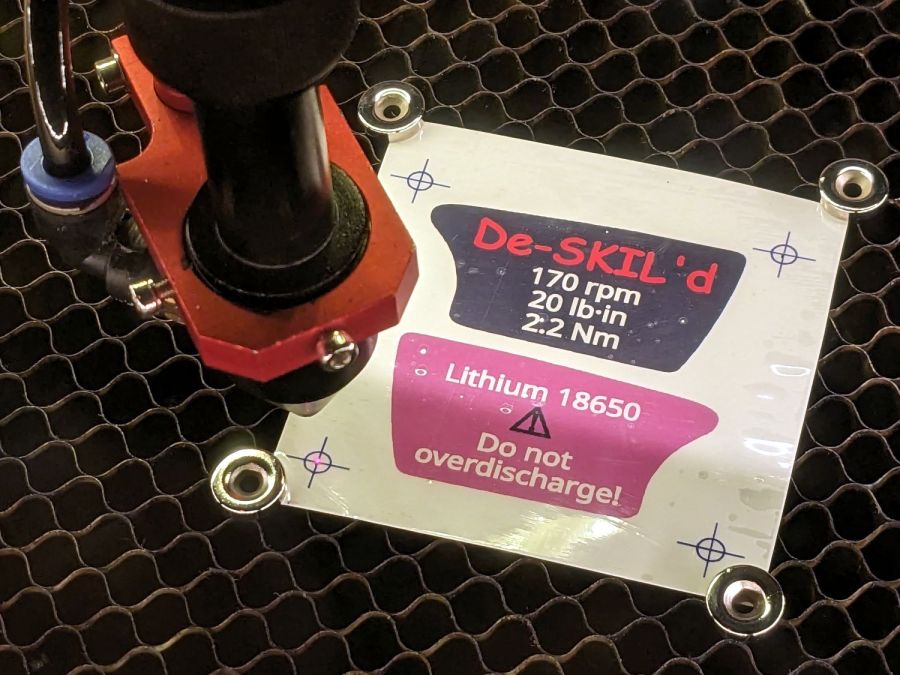
The process:
- Scan the original labels
- Blow out the contrast to make binary masks
- Trace into vectors with LightBurn, simplify & clean up
- Add targets for Print-and-Cut
- Save as SVG, import into GIMP, lay out text, print
- Cut the outlines
The labels have laminating film on the top and craft adhesive on the bottom, both of which cut neatly and look pretty good:
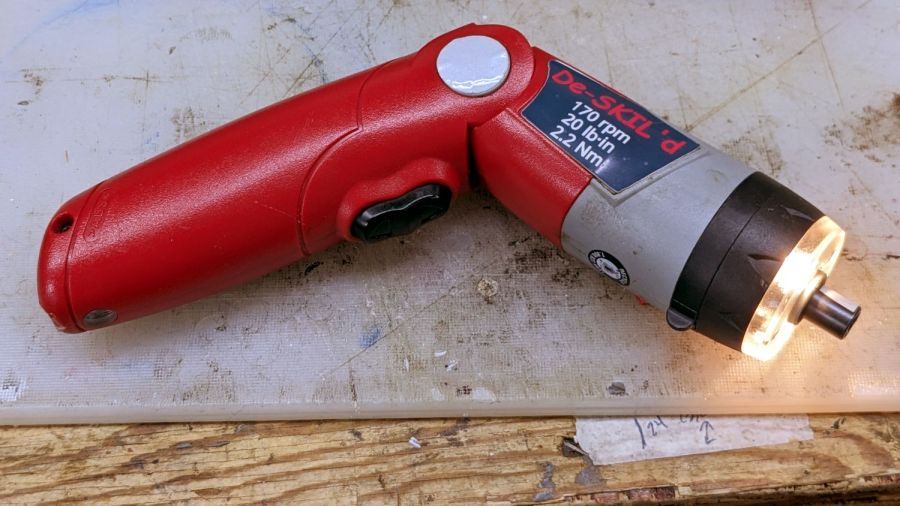
The alert reader will note the 4+ V from a fully charged lithium cell exceeds the 2.4+ V from fully charged NiCd cells, which accounts for the very bright incandescent headlamps. I figure 4 is roughly equal to 2.4, for large values of 2.4: the driver ticks along at 170 RPM instead 140 RPM.
I measured the torque using a double-ended hex bit in a torque screwdriver, with the torque setting cranked up until the driver just barely clicked it over.
I took the liberty of filing the raised “2.4 V” off the hinge covers and adding tidy retroreflective disks:
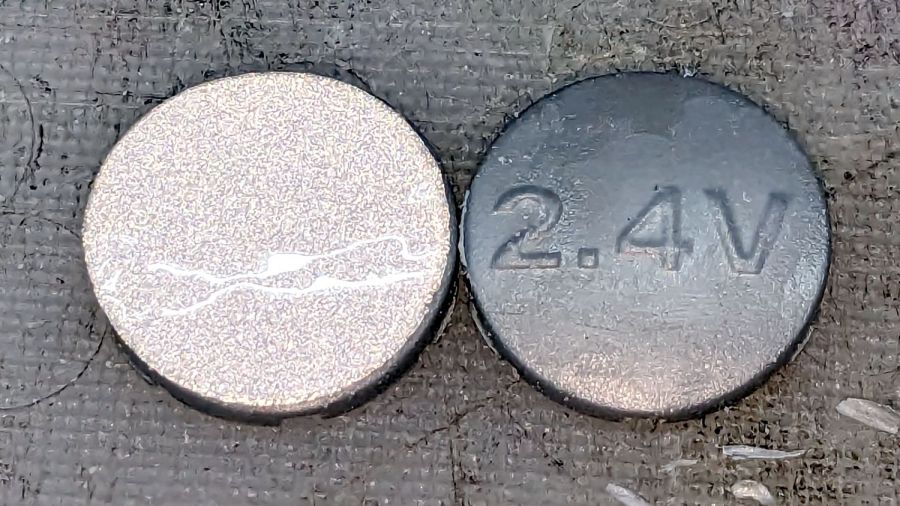
I briefly considered adding “3.7 V” (because “4.2 V MAX” wouldn’t fit) in laser-cut PSA vinyl, but it was getting late.
Now I can screw things up in style …
 The Smell of Molten Projects in the Morning