The Smell of Molten Projects in the Morning

Ed Nisley's Blog: Shop notes, electronics, firmware, machinery, 3D printing, laser cuttery, and curiosities. Contents: 100% human thinking, 0% AI slop.

Month: September 2021

  • Tour Easy 1 W Amber Running Light: Circuitry

    Tour Easy 1 W Amber Running Light: Circuitry

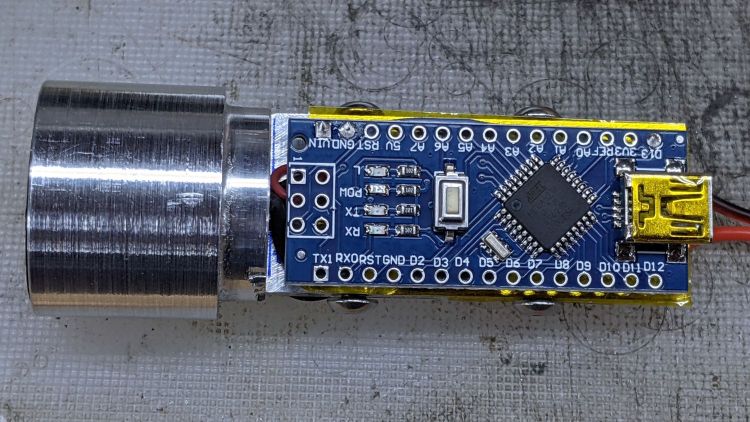
    With the internal slab attached to the 1 W LED heatsink, some double-sided foam tape affixes an Arduino Nano to one side of the slab:

    1 W LED Running Light - Arduino side
    1 W LED Running Light – Arduino side

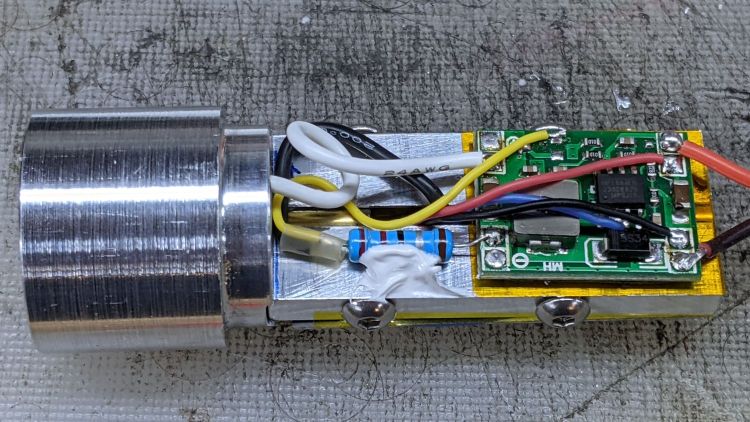
    The MP1584 regulator and its 2.2 Ω current-sensing resistor (tacked down with acrylic adhesive) go on the other side:

    1 W LED Running Light - Regulator side
    1 W LED Running Light – Regulator side

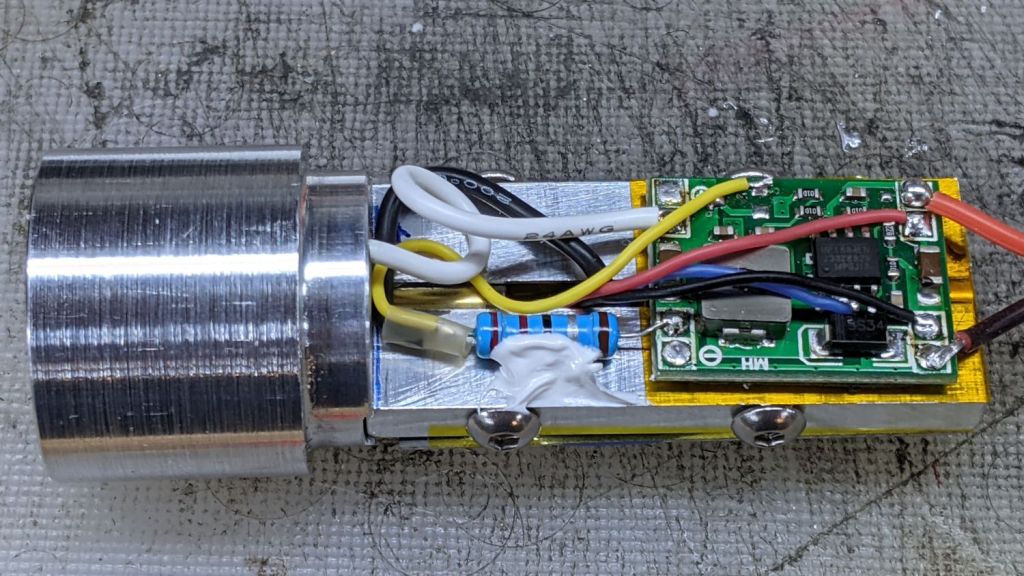
    The Arduino and regulator draw power from the Bafang motor controller’s 6.3 V headlight circuit. The 2.2 Ω resistor sets the LED current to 360 mA = 900 mW. The blue wire connects the Arduino’s default LED output pin (D13) to the regulator’s Enable input (pin 2) to allow programmatic blinkiness.

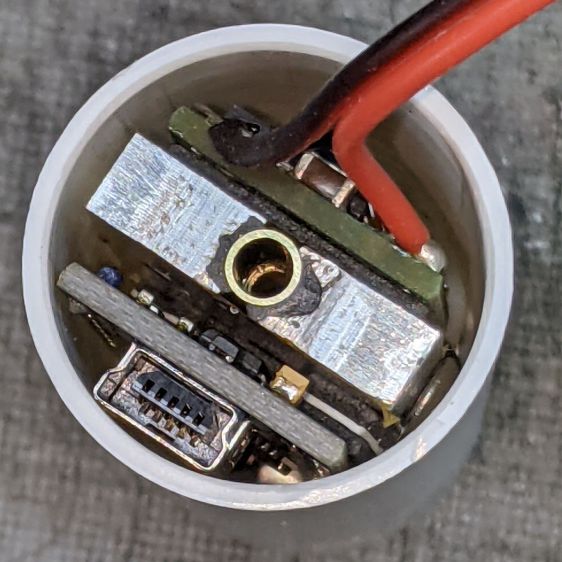
    The end view shows everything Barely Fits™:

    1 W LED Running Light - internal assembly
    1 W LED Running Light – internal assembly

    All it needs is a rear cover of some sort …

  • Tour Easy 1 W Amber Running Light: Internal Plate

    Tour Easy 1 W Amber Running Light: Internal Plate

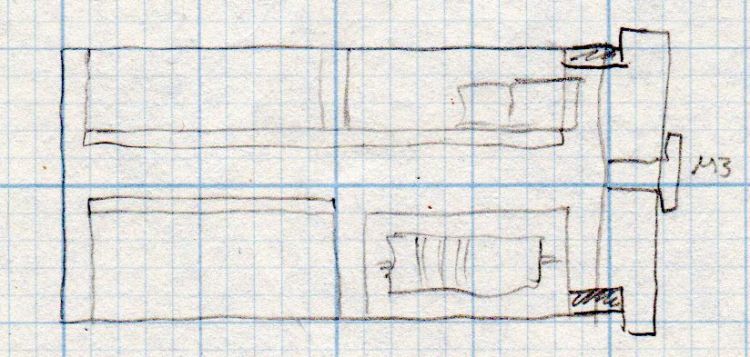
    A semi-scaled doodle laying out an Arduino Nano and the MP1584 regulator board suggested they might fit behind the heatsink with the 1 W LED:

    Amber running light - board layout doodle - side
    Amber running light – board layout doodle – side

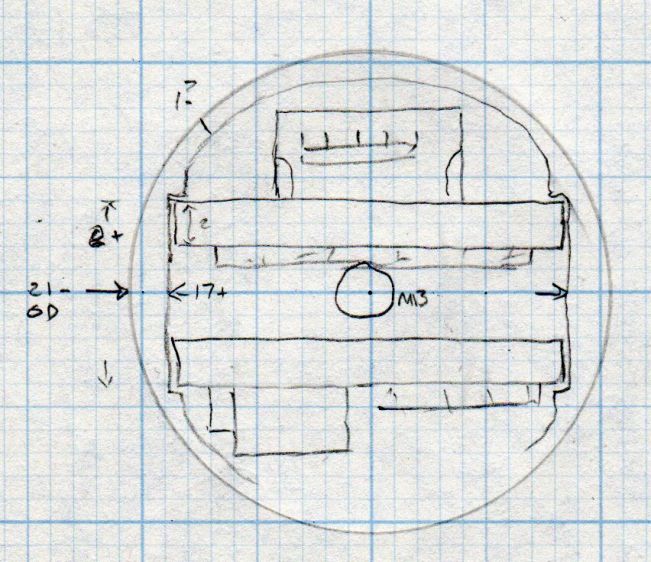
    A somewhat more detailed doodle of the end view prompted me to bore the PVC pipe out to 23 mm:

    Amber running light - board layout doodle - end
    Amber running light – board layout doodle – end

    The prospect of designing a 3D printed holder for the boards suggested Quality Shop Time combined with double-stick foam tape would ensure a better outcome.

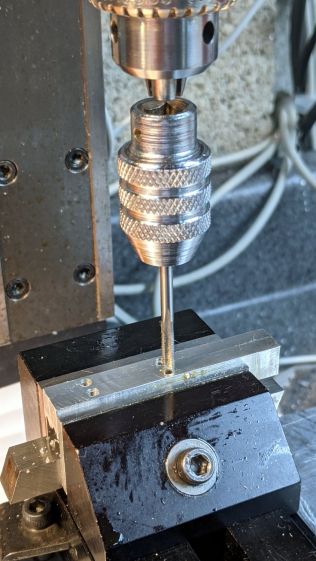
    So I bandsawed the remains of a chunky angle bracket into a pair of rectangles, flycut All The Sides to square them up, and tapped a pair of M3 holes along one edge of each:

    1 W LED Running Light - baseplate tapping
    1 W LED Running Light – baseplate tapping

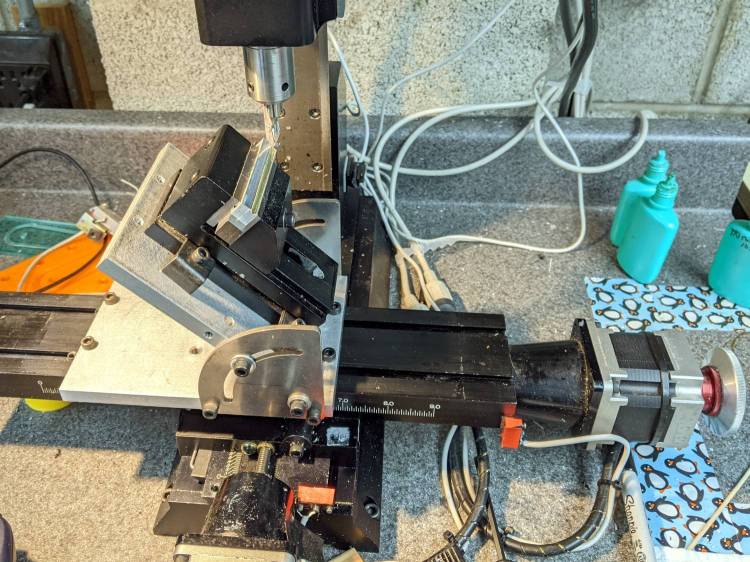
    The other long edges got the V groove that killed the Sherline’s Y axis nut:

    Sherline Y-Axis Nut Mishap - setup
    Sherline Y-Axis Nut Mishap – setup

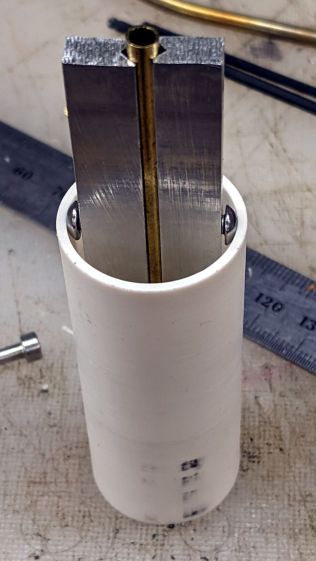
    The groove holds a length of 4 mm OD (actually 5/32 inch, but don’t tell anybody) brass tubing:

    1 W LED Running Light - baseplate trial fit
    1 W LED Running Light – baseplate trial fit

    The M3 button head screws are an admission of defeat, as I could see no way of controlling the width + thickness of the aluminum slabs to get a firm push fit in the PVC tube. The screws let me tune for best picture after everything else settled out.

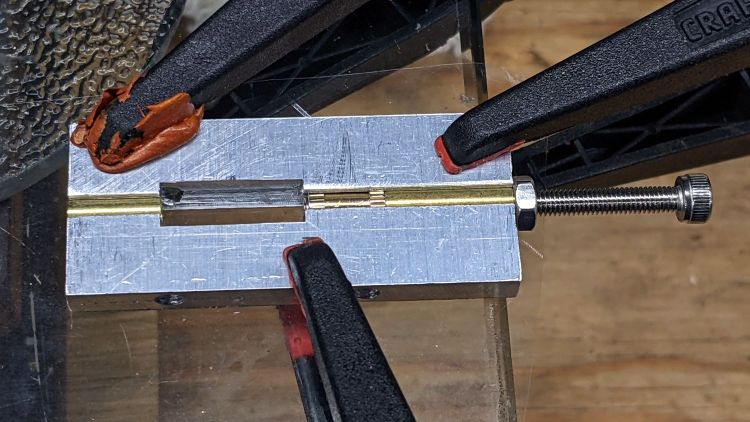
    A little more machining opened up the top of the groove:

    1 W LED Running Light - baseplate dry assembly
    1 W LED Running Light – baseplate dry assembly

    A short M3 button head screw (with its head turned down to 4 mm) drops into the slot and holds the slab to the threaded hole in the LED heatsink. The long screw is holding the threaded insert in place for this dry fit.

    I doodled a single long screw through the whole thing, but having it fall off the heatsink when taking the rear cover off seemed like a Bad Idea™. An M3 button head screw uses a 2 mm hex key that fits neatly through the threaded insert, thereby making it work.

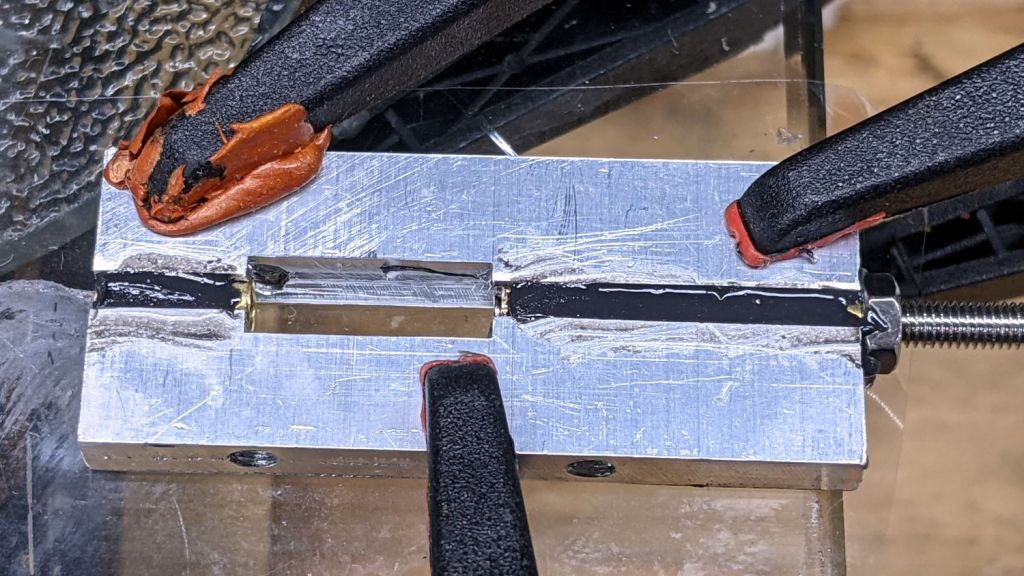
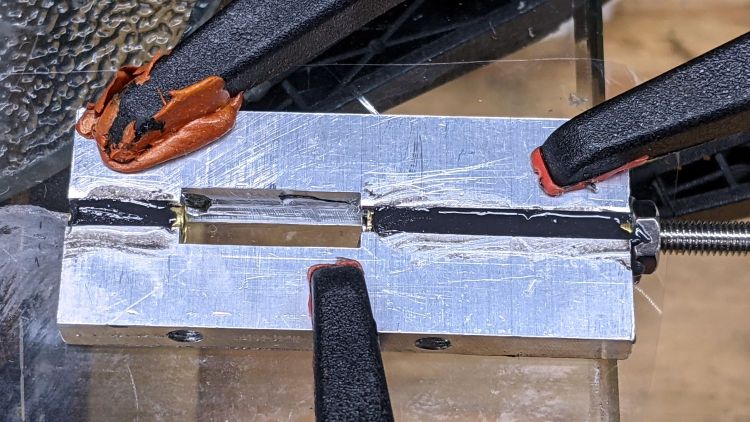
    Butter it up with epoxy, scrape off the excess, and let things cure:
    1 W LED Running Light - baseplate curing
    1 W LED Running Light – baseplate curing

    This was obviously made up as I went along …