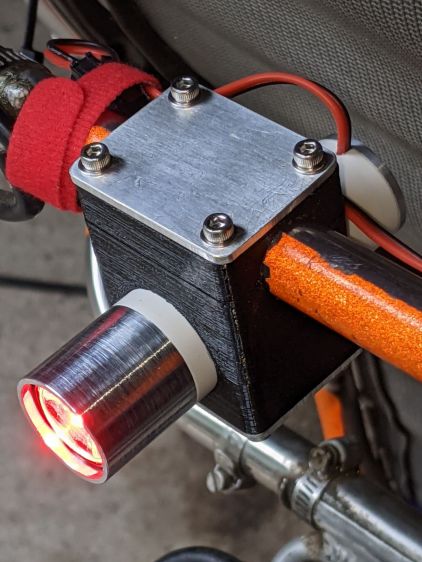
The rear running light definitely has an industrial look:
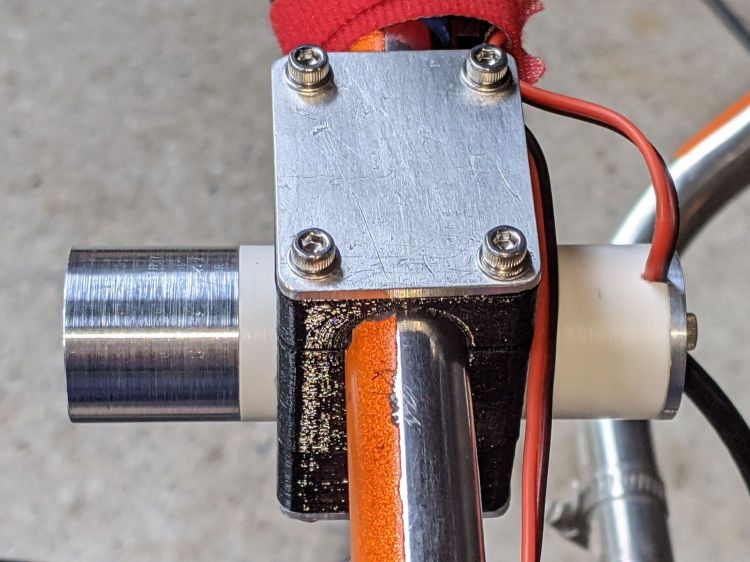
The front of the light has plenty of clearance from the seat mesh:
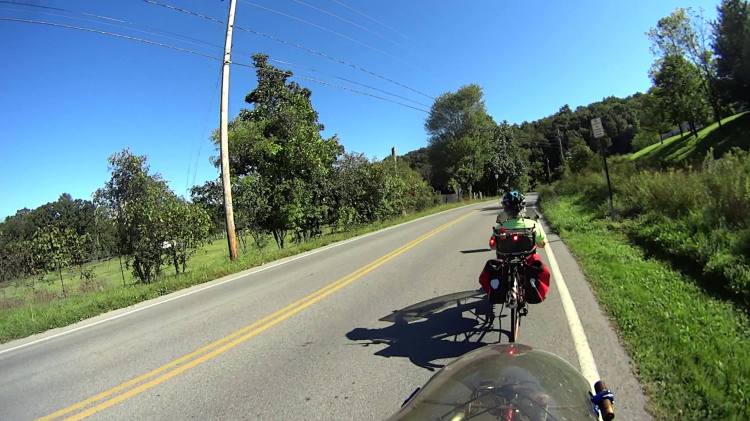
Out on the road, the 1 W LED appears about as bright as automotive running lights:

The blink pattern makes it perfectly visible in sunlight, although I’d prefer somewhat larger optics:
In shaded conditions, it’s downright conspicuous:
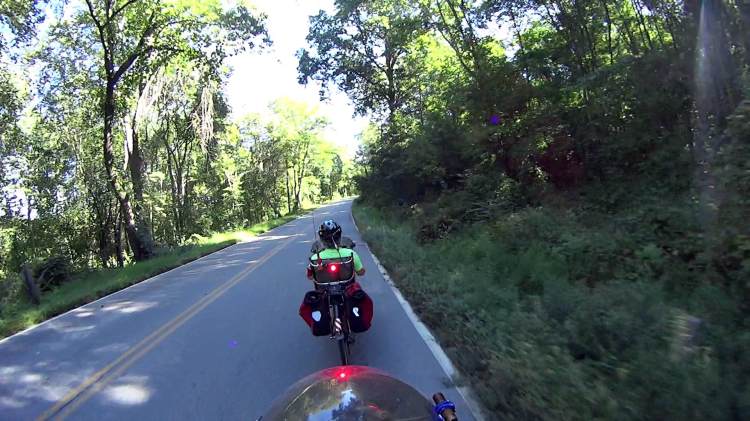
At any reasonable distance, the 10° beam covers much of the road behind the bike:
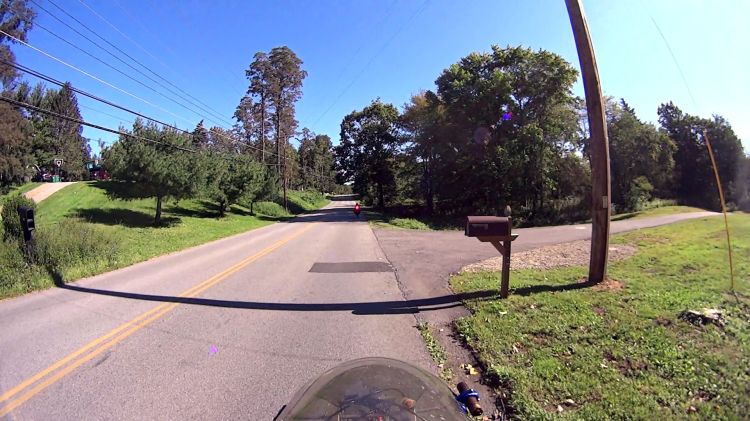
You may not know what the occulting red light represents, but something ahead is worthy of your attention.
The Arduino source code producing the two dits:
// Tour Easy Running Light
// Ed Nisley - KE4ZNU
// September 2021

#include <morse.h>

#define PIN_OUTPUT  13

// second param: true = active low output
LEDMorseSender Morser(PIN_OUTPUT,true,(float)10.0);

void setup()
{
    Morser.setup();

    Morser.setMessage(String("qst de ke4znu "));
    Morser.sendBlocking();

//    Morser.setWPM((float)3.0);
    Morser.setSpeed(75);
    Morser.setMessage(String("i   "));
}

void loop()
{
    if (!Morser.continueSending())
        Morser.startSending();

}
Looks good to me, anyhow.
 The Smell of Molten Projects in the Morning
Comments
2 responses to “Tour Easy Rear Running Light: First Light!”
[…] replaced the Planet Bike Superflash on Mary’s Tour Easy with a 1 W red LED, testing the eight Panasonic Eneloop AAA cells that have been powering it (and the one on my bike) […]
[…] running light with Rev 3 (about which, more later) on Mary’s Tour Easy, both the front and rear lights began blinking erratically. Given that they have completely independent circuitry, this strongly […]