The recesses in cheap 1/4-inch shank nut drivers aren’t much deeper than the nuts, which means a screw sticking out of the nut by more than a few threads defeats the entire purpose.
Well, I can fix that:
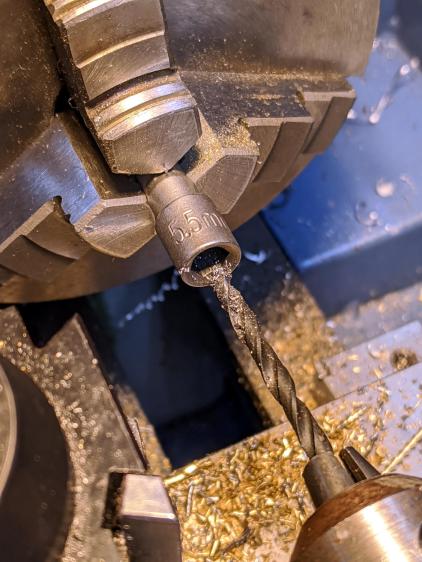
That’s a 5.5 mm socket for M3×0.5 machine screw nuts, getting a screw clearance hole drilled into it with a #28 drill (0.1405 inch = 3.5 mm). The sockets are allegedly “forged and hardened”, but an ordinary HSS drill bit cuts like they’re butter, so I’m thinking somebody skipped the hardening step.
Turns out I had a lot of nuts to remove from black oxide M3 socket head cap screws, making a brief pause in the action totally worthwhile.
 The Smell of Molten Projects in the Morning
Comments
4 responses to “Nut Socket Wrench Improvement”
Marketing speak often stretches the truth, but to skip a process and still sell the product “as advertised” is another matter. But sometimes you can let it go if it doesn’t affect the performance too much. But still can be frustrating knowing you didn’t get what was paid for. Or did we?
For all I know, their butter-soft steel was hardened from its original state. On the upside, I didn’t wreck a perfectly good drill while discovering they did a good job.
I just looked inside the other sockets and they lack the usual six leaves folded down toward the middle, so they really were forged around a mandrel, not broached after forming.
I’ve run into a few tools that seemed to have been case hardened. On rare occasions, it was actually helpful.
Mmm, buttery-soft chinesium.