The Smell of Molten Projects in the Morning

Ed Nisley's Blog: Shop notes, electronics, firmware, machinery, 3D printing, laser cuttery, and curiosities. Contents: 100% human thinking, 0% AI slop.

Month: January 2016

  • Roof Nail Frost

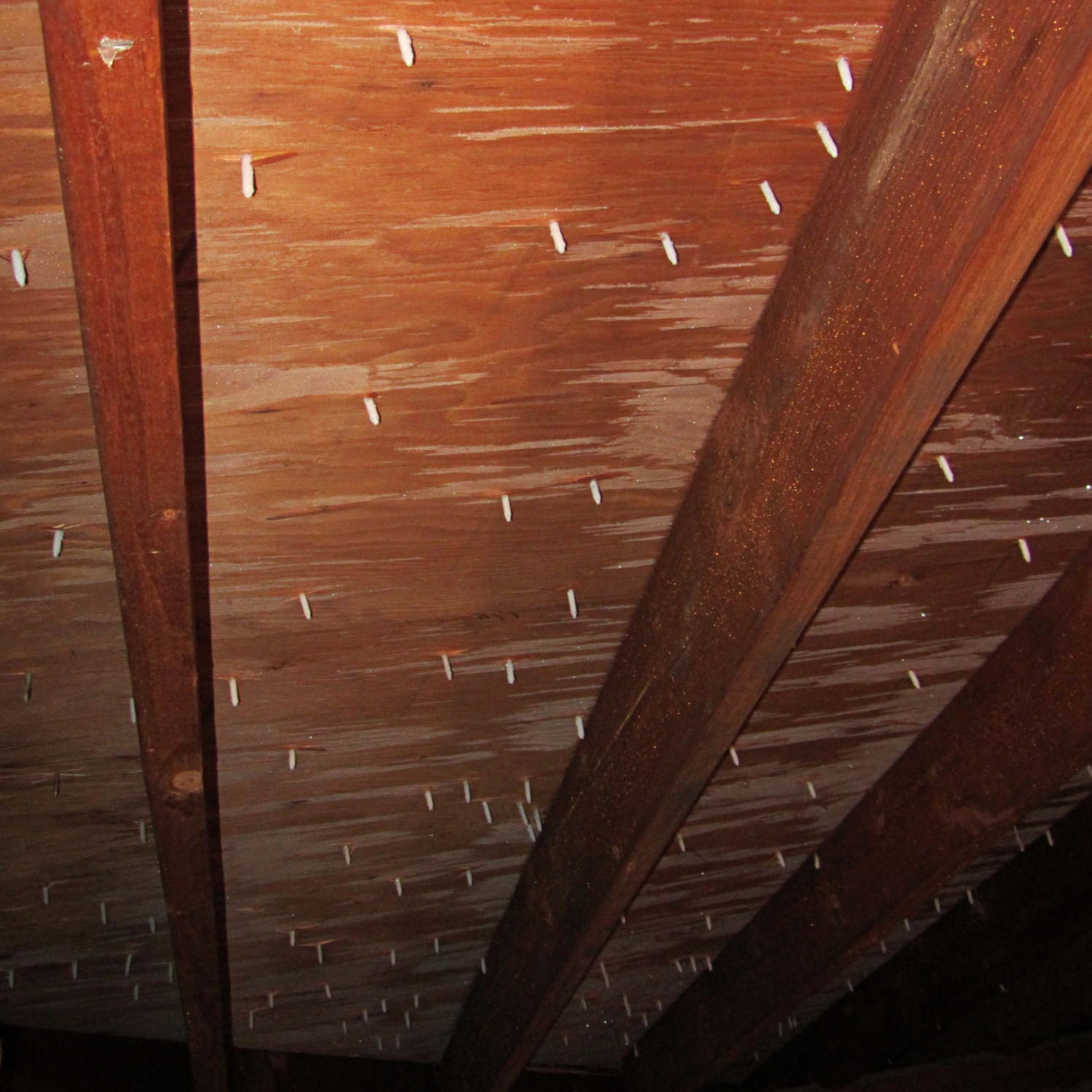
    A cold snap in early January caught plenty of humidity inside the house and, in fact, the attic temperature dropped so abruptly that the nails protruding through the roof iced over:

    Roof Nail Frost - overview
    Roof Nail Frost – overview

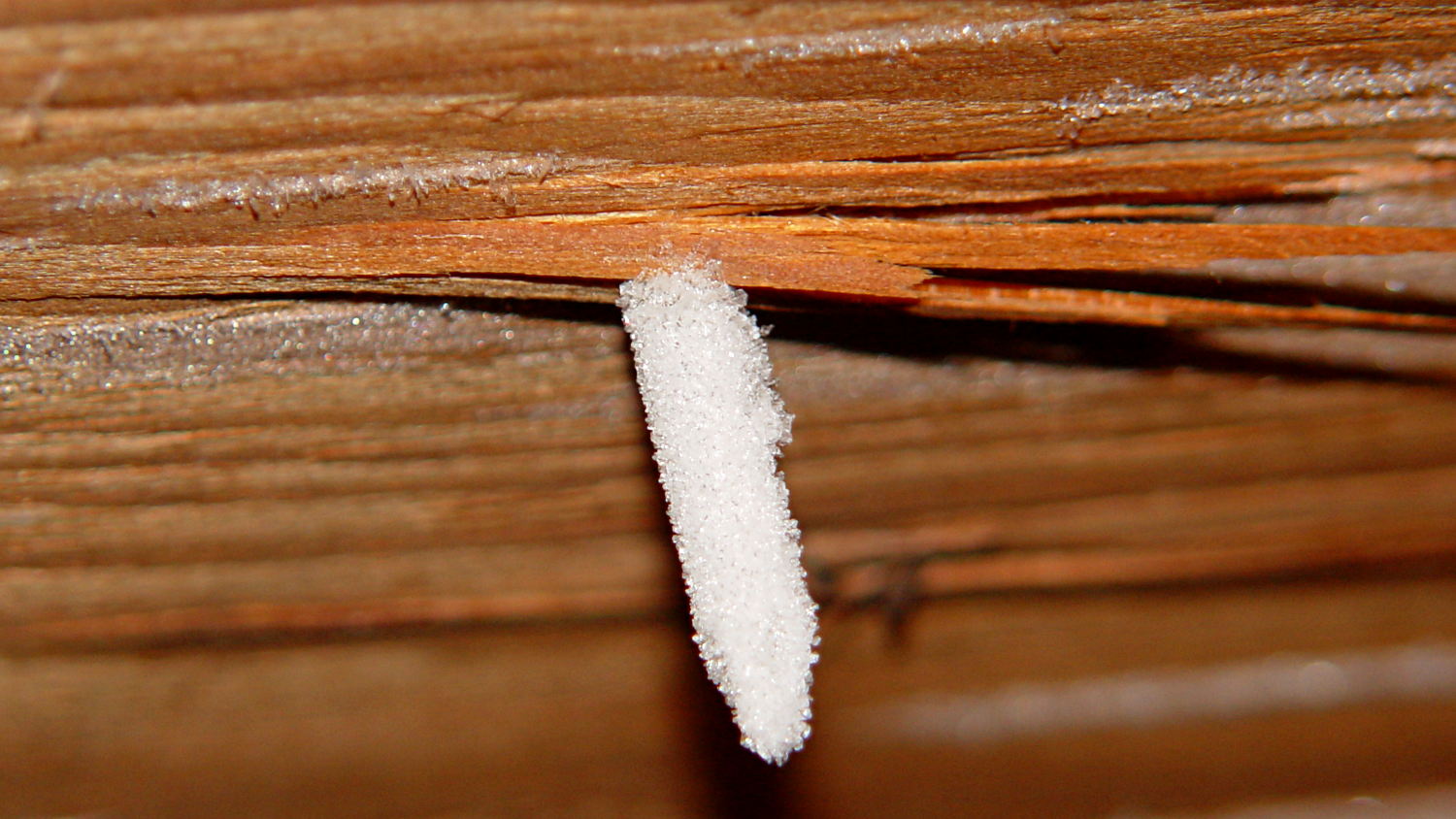
    You’d think they were coated with plastic:

    Roof Nail Frost - detail flash
    Roof Nail Frost – detail flash

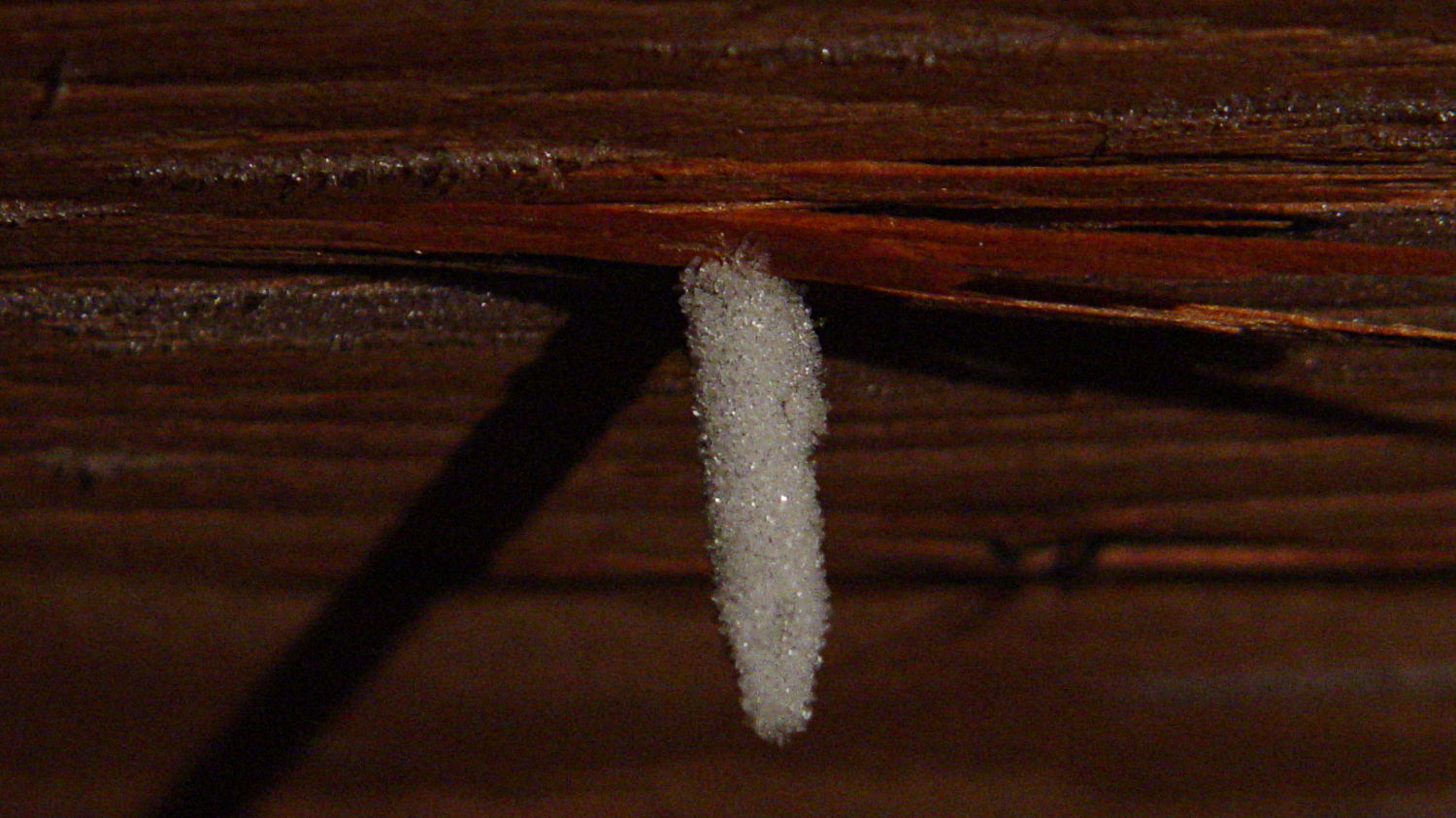
    The incandescent bulb lighting the attic highlights the crystal planes:

    Roof Nail Frost - detail ambient
    Roof Nail Frost – detail ambient

    As nearly as I can tell, the ice sublimes or melts-and-evaporates, because the plywood floor under the nails doesn’t have the drip marks you’d expect.

  • Fashion Decoration Accessories: U.FL RF Connectors

    Just like all those EULAs we click through without reading, nobody pays any attention to the Customs declarations on packages:

    U.FL Connectors - Customs declaration
    U.FL Connectors – Customs declaration

    The pick-and-place strip across the top contains ten U.FL connectors, a few of which might make their way onto the Ham It Up board. They cost a grand total of $2.09 (not the $12.00 shown on the label) delivered halfway around the planet in a bit over two weeks.

    I confess: I just couldn’t pass up some new fashion accessories…

  • Ham It Up v1.3 60 kHz Response

    The SMA-to-N cables arrived unexpectedly early, so I fired up the spectrum analyzer to see how the Ham It Up Upconverter behaved at 60 kHz (think WWVB), a smidge below its 100 kHz minimum input frequency spec. It’s worth noting that you can’t do a frequency sweep of the 100 kHz to 50 MHz upconverter response using the tracking generator, because the output sits 125 MHz above the input; yes, it took me a while to dope that out…

    Anyhow, the 60 kHz sine wave from the (sub-audio-frequency up to 2 MHz, 600 Ω -ish output) signal generator, passed through a 5X attenuator, and terminated in 50 Ω:

    Ham-It-Up - 60 kHz input
    Ham-It-Up – 60 kHz input

    It emerges from the H-I-U in Passthrough mode 3.6 dB lower:

    Ham-It-Up - 60 kHz passthru
    Ham-It-Up – 60 kHz passthru

    In Upconvert mode, the output sits 14 dB below the Passthrough output and 17.6 below the input:

    Ham-It-Up - 60 kHz upconvert
    Ham-It-Up – 60 kHz upconvert

    At that span setting, I don’t trust the frequency resolution of that 125.0605 MHz marker readout.

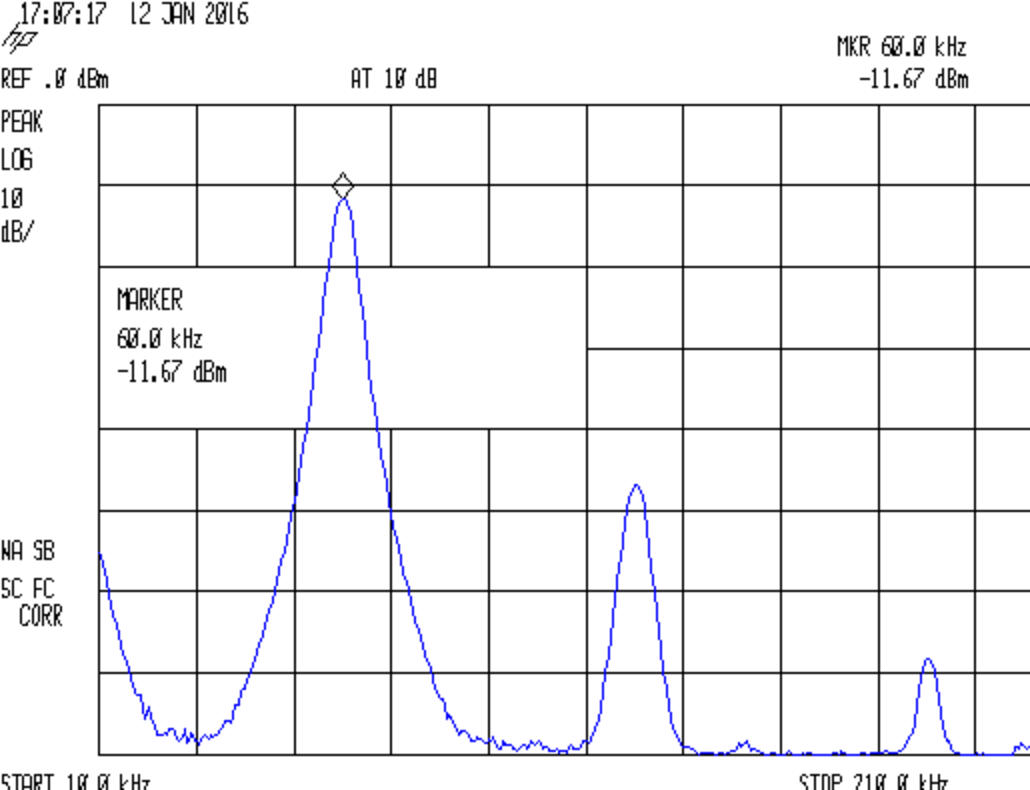
    Cranking the signal generator to produce -10 dBm at the H-I-U output in Passthrough mode brings up a bunch of harmonics:

    Ham-It-Up - 60 kHz harmonics passthru
    Ham-It-Up – 60 kHz harmonics passthru

    In Upconvert, they’re down 13.9 dB from the Passthrough output:

    Ham-It-Up - 60 kHz harmonics upconvert
    Ham-It-Up – 60 kHz harmonics upconvert13.9

    The H-I-U should have about 10 dB conversion loss at 100 kHz, so losing another 4 dB beyond the thing’s rated low end isn’t entirely surprising.

    All in all, it works fine…

  • Ham It Up v1.3 Noise Source Spectrum

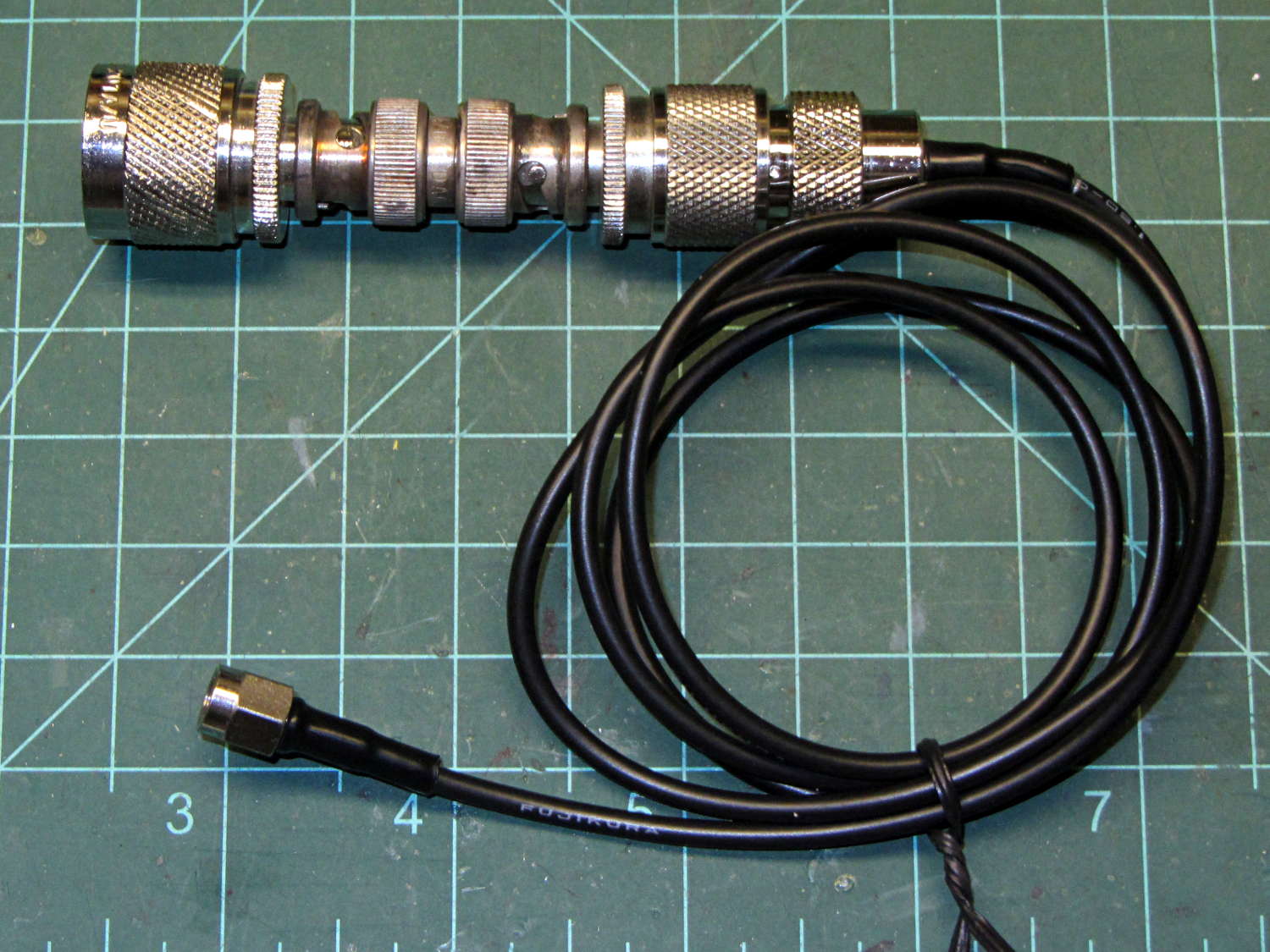
    The adapter stack to attach the spectrum analyzer to the Ham It Up noise source turned out to be:

    • N male to BNC female
    • BNC double-male gender bender
    • BNC female to UHF male
    • UHF female to SMA male cable

    Which puts a serious lever arm on the spectrum analyzer end of the chain:

    SMA to N adapter stack
    SMA to N adapter stack

    Ya gotta have stuff, but a pair of cables going directly from the Ham It Up’s SMA female to the analyzer’s N female are on their way around the curve of the planet even as I type.

    That peak at 300 MHz is about +10 dBm, but averaging 25 peak values at each frequency trims off 5 dB and makes it easier to see:

    Noise source spectrum - pk det 25 avg
    Noise source spectrum – pk det 25 avg

    The reference level at the top of the graticule is +30 dBm, not the usual +10 dBm, so the left end of the trace doesn’t obliterate the marker readout.

    So the noise seems good for VHF to UHF projects, which seems reasonable. The noise at the low end falls dramatically with narrower bandwidths, as you’d expect; it’s reasonably flat around -30 dBm below 100 MHz.

    You’d want a bandpass filter in front of whatever you were doing, so as to keep that 300 MHz hash out of everything else.


  • Ham It Up Noise Source Enable Switch

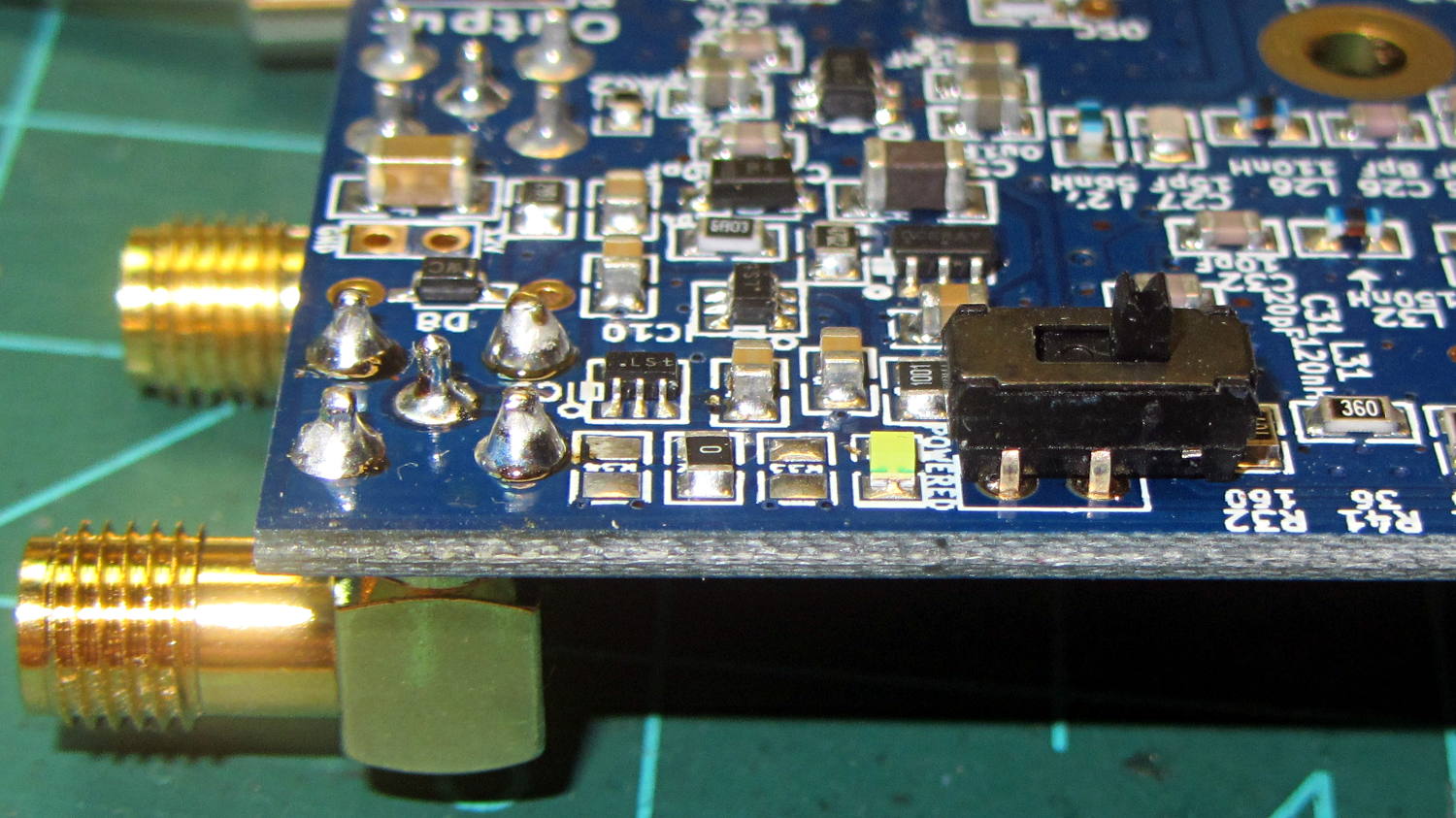
    Some rummaging produced a tiny DPDT switch that actually fit the holes intended for a pin header on the recently arrived Ham It Up board, at least after I amputated 2/3 of the poor thing’s legs:

    Ham-It-Up - noise source switch - B
    Ham-It-Up – noise source switch – B

    The new SMA noise output jack sits in the front left, with the white “noise on” LED just left of the switch:

    Ham-It-Up - noise source switch - A
    Ham-It-Up – noise source switch – A

    There’s no way to measure these things accurately, at least as far as I can tell, but the holes came out pretty close to where they should be. The new SMA connector lined up horizontally with the existing IF output jack and vertically with the measured / rounded-to-the-nearest-millimeter on-center distance:

    Ham It Up - noise SMA drilling
    Ham It Up – noise SMA drilling

    The Enable switch doesn’t quite line up with the LED, so the holes will always look like I screwed up:

    Ham-It-Up - noise source switch - case holes
    Ham-It-Up – noise source switch – case holes

    That’s OK, nobody will ever notice.

    Now, to stack up enough adapters to get from the SMA on the Ham It Up board to the N connector on the spectrum analyzer …


  • Lithium Battery Pack Teardown

    For reasons not relevant here, I tore down a battery pack containing three 18650 lithium cells. After a major struggle that involved drilling access holes into the side of the case and hammering the cells free of their silicone potting restraint, I was confronted with this:

    Li-ion cell - unwrapped
    Li-ion cell – unwrapped

    Battery may explode or fire if mistreated. Yeah, that could happen.

    Having pretty well ignored all the warnings, the damaged cells spent two days in the cold on the patio:

    Li-ion cells - safety layout
    Li-ion cells – safety layout

    They seem unchanged, so I’ll dispose of them at the next electronics recycling event.

    As it turns out, the gadget containing the pack subsequently died of a whoopise while trying to figure out how the pack’s boost regulator worked, so it joined the cells on the outgoing pile.

    So it goes …

  • Microscope Stage Positioner

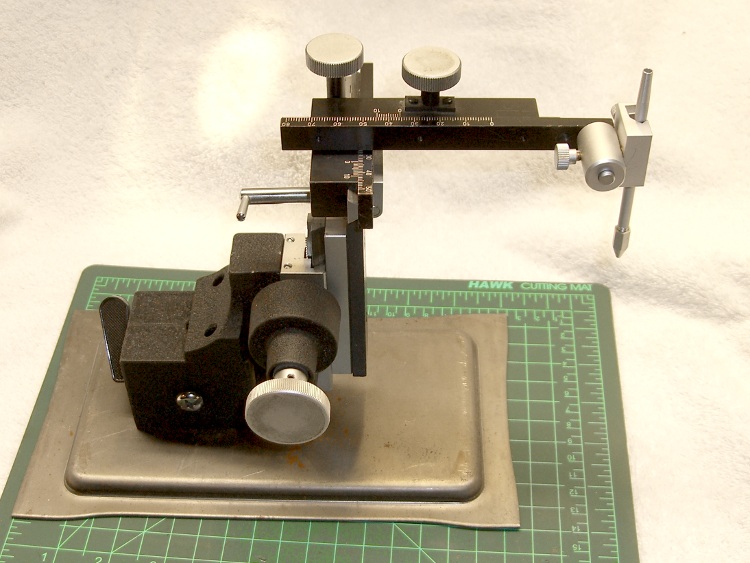
    Given the vanishingly small depth of field provided by a cheap USB camera peering through the stereo zoom microscope, I’ve always wanted a better way of moving objects by small increments. The rehabilitated micropositioner didn’t have the right orientation or end effector:

    Micropositioner
    Micropositioner

    So I rearranged the axis slides and added a small table:

    Microscope Stage Positioner
    Microscope Stage Positioner

    That frees up the magnetic base and husky angle bracket, plus a few odds & ends, for future adventures.

    The clear base is a random chunk of acrylic, bandsawed to the proper length, then tediously squared and drilled on the Sherline:

    Microscope Stage Positioner - base squaring
    Microscope Stage Positioner – base squaring

    I briefly thought of printing the base, but came to my senses: there are better ways to make big flat surfaces.

    The little aluminum table has a nubbly spray coating that came straight from the heap and looks surprisingly good after squaring & drilling. The X axis block puts it below the platform and one screw head above the desk when the Y axis arm sits flat on the acrylic base.

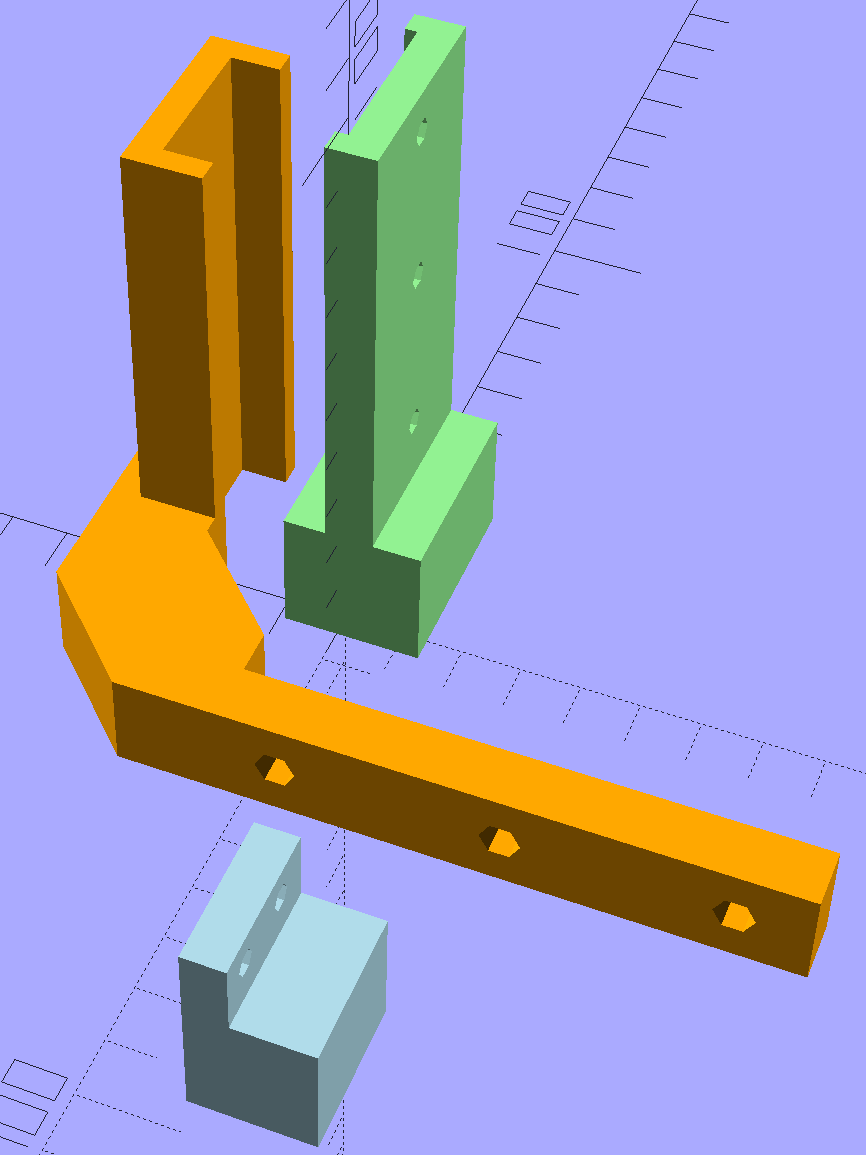
    One solid model view arranges things in more-or-less the proper layout to check the alignment:

    Microscope Stage Positioner - solid model - Show layout
    Microscope Stage Positioner – solid model – Show layout

    The build layout reduces the platform space:

    Microscope Stage Positioner - Slic3r preview
    Microscope Stage Positioner – Slic3r preview

    You’re looking at four hours of PETG print time at 0.2 mm layer thickness with 15% infill and Hilbert Curve surfaces.

    All of the screws have UNF fine-pitch threads (4-48, 6-40, 8-36, stuff like that), so the solid model includes the spacing required to reuse the original screws: those big holes in the Y axis arm end in little clearance holes for the tiny screws. Some of the screws bottom out with barely two millimeters of thread engagement in the slides, while others could jam against the racks. I didn’t want to cut that many screws from my Brownell’s gun screw assortment unless I absolutely had to. So far, so good.

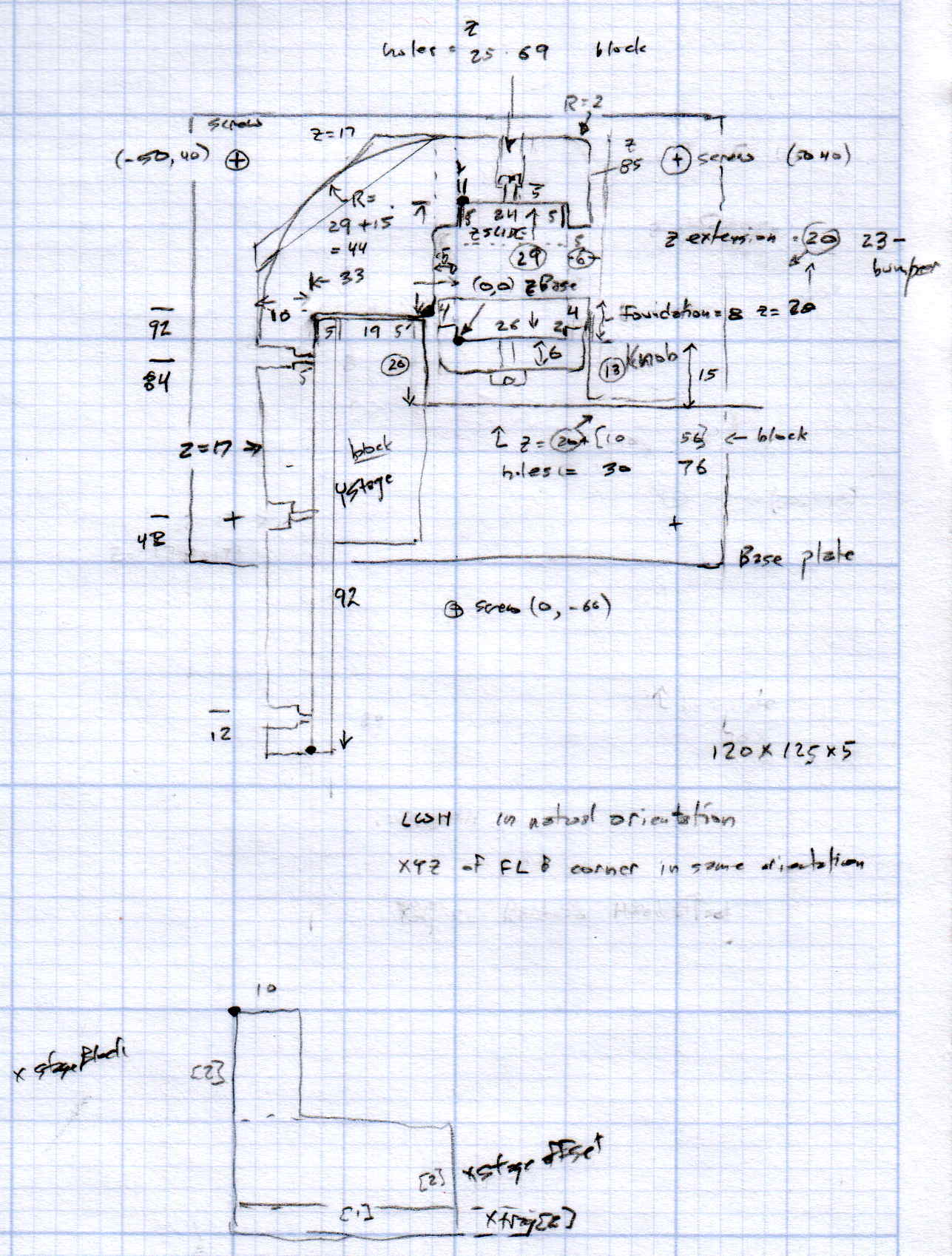
    I spent quite a while doodling the layout to convince myself that it would actually work:

    Microscope Stage Positioner - layout doodle
    Microscope Stage Positioner – layout doodle

    Memo to self: Next time, use a larger scale!

    Although the whole lashup works as intended, those metal hunks are way too heavy for the plastic block that fits between the Z axis drive pillar and the X axis slide: that long Y axis arm drooped toward the front by about 5 mm. A small shim raised the front of the Z axis footprint enough to level the arm, but I think the right answer is a metal upright with a bigger footprint that spreads the load.

    All that mass hanging out in mid-air turns the plastic pieces into springs: you can’t keep your fingers on the knobs. Fortunately, everything returns to the same position after you release the knob, so it’s easy to move in precise increments if you close your eyes until the view settles down.

    There’s a reason optical equipment uses cast iron, steel, and brass… but I’ll settle for plastic.

    The OpenSCAD source code as a GitHub gist:

    // Microscope Stage Positioner
    // Ed Nisley KE4ZNU January 2016
    Layout = "Build"; // Show Build
    // Base ZStand YMount XMount
    Gap = 0.0;
    //- Extrusion parameters must match reality!
    ThreadThick = 0.25;
    ThreadWidth = 0.40;
    HoleWindage = 0.2;
    Protrusion = 0.1; // make holes end cleanly
    inch = 25.4;
    function IntegerMultiple(Size,Unit) = Unit * ceil(Size / Unit);
    //———————-
    // Dimensions
    SlipFit = 0.1;
    ZDrive = [26.0,19.6,75.0]; // stationary part of Z drive
    ZDriveOffset =[0,0,22.0]; // left front corner of stationary Z base
    ZWall = 4.0; // thickness of edge wrapped around Z columns
    YStageBlock = [25.0,61.0,17.0]; // Y stage mount + slide
    YStageOffset = [-6.0,4.0,0.0]; // offset to inner corner of Y stage holder
    YArm = [10.0,93.0,17.0]; // mount to stationary part of Y stage
    ZStage = [24.0,9.7,85.0]; // moving part of Z drive
    ZYArm = [(2*ZWall + ZStage[0]),10.0,YArm[2]]; // attaches to ZStage, same thickness as YArm
    XStageBlock = [25.0,20.0,12.0]; // X stage mount + slide
    XStageOffset = [-95.0,-15.0,-26]; // offset to rear left bottom corner of X stage slide
    XTray = [25,25,5]; // X tray attached to bottom of X mount
    //———————-
    // Useful routines
    module PolyCyl(Dia,Height,ForceSides=0) { // based on nophead's polyholes
    Sides = (ForceSides != 0) ? ForceSides : (ceil(Dia) + 2);
    FixDia = Dia / cos(180/Sides);
    cylinder(r=(FixDia + HoleWindage)/2,
    h=Height,
    $fn=Sides);
    }
    //– Z Stand
    module ZStand() {
    Holes = [12.0,41.5,68.0];
    HoleOD = 3.5;
    HolesOC = 15.0;
    echo(str("Z Stand holes OC: ",HolesOC));
    ZPlate = 6.0; // thickness of Z plate = max screw grab distance
    ZStandWrap = 2.0; // length of edge wrapped around Z column
    MaxY = 9.0;
    MinY = -14.0;
    difference() {
    union() {
    linear_extrude(height=ZDriveOffset[2])
    polygon(points=[
    [-ZWall,MaxY], // limited by Z slide rack
    [ZDrive[0] + ZWall,MaxY],
    [ZDrive[0] + ZWall,MinY], // limited by X slide rack
    [-ZWall,MinY]
    ]);
    linear_extrude(height=(ZDrive[2] + ZDriveOffset[2]),convexity=4)
    polygon(points=[
    [-SlipFit,0],
    [ZDrive[0] + SlipFit,0.0],
    [ZDrive[0] + SlipFit,ZStandWrap],
    [ZDrive[0] + ZWall,ZStandWrap],
    [ZDrive[0] + ZWall,-ZPlate],
    [-ZWall,-ZPlate],
    [-ZWall,ZStandWrap],
    [-SlipFit,ZStandWrap]
    ]);
    }
    for (i = [0:len(Holes) – 1]) // holes along Z stand
    translate([ZDrive[0]/2,ZDrive[1]/2,(Holes[i] + ZDriveOffset[2])])
    rotate([90,0,0])
    PolyCyl(HoleOD,ZDrive[1]);
    for (i = [-1,1]) // mounting screw holes
    translate([i*HolesOC/2 + ZDrive[0]/2, // center the holes from side to side
    (MaxY + MinY)/2, // moby hack to put holes on midline
    -Protrusion])
    PolyCyl(3.5,0.75*ZDriveOffset[2],6);
    }
    }
    //– Y Mounting arm
    // Polygon origin at inner corner nearest the Z stand column
    module YMount() {
    YHoles = [12.0,48.0,84.0]; // mounting holes along Y stage arm, from outside in
    YScrewLength = 4.0; // screw head to Y stage mount
    ZStageBase = [(ZDrive[0] – ZStage[0])/2,(ZDrive[1] + ZStage[1]),0.0] – YStageOffset; // local coordinates of Z slide left rear corner
    ZHoles = [26.5,55.0,71.0];
    ZStageWrap = 8.0; // length of edge wrapped around Z stage
    Trim = ZStageBase[1] – ZStageWrap;
    union() {
    difference() {
    linear_extrude(height=YArm[2],convexity=5)
    polygon(points=[
    [-Trim,0.0],
    [-YStageBlock[0],0.0],
    [-YStageBlock[0],-(YArm[1] + SlipFit)],
    [-(YStageBlock[0] + YArm[0]),-(YArm[1] + SlipFit)],
    [-(YStageBlock[0] + YArm[0]),Trim],
    [-Trim,(ZStageBase[1] + ZYArm[1])],
    [(ZStageBase[0] + ZStage[0]/2),(ZStageBase[1] + ZYArm[1])],
    [(ZStageBase[0] + ZStage[0] + ZWall),(ZStageBase[1] + 0*ZYArm[1])],
    [(ZStageBase[0] + ZStage[0] + ZWall),(ZStageBase[1] – ZStageWrap)],
    [(ZStageBase[0] + ZStage[0] + SlipFit),(ZStageBase[1] – ZStageWrap)],
    [(ZStageBase[0] + ZStage[0] + SlipFit),ZStageBase[1]],
    [(ZStageBase[0] – SlipFit),ZStageBase[1]],
    [(ZStageBase[0] – SlipFit),(ZStageBase[1] – ZStageWrap)],
    [0.0,(ZStageBase[1] – ZStageWrap)],
    [0.0,Trim]
    ]);
    for (j=[0:len(YHoles) – 1]) { // Y stage mounting screws
    translate([-(YStageBlock[0] + YScrewLength),
    (-YArm[1] + YHoles[j] – 2*SlipFit),
    YArm[2]/2])
    rotate([0,-90,0]) rotate(180/6)
    PolyCyl(5.5,YArm[0],6);
    translate([-(YStageBlock[0] – Protrusion),
    (-YArm[1] + YHoles[j] – 2*SlipFit),
    YArm[2]/2])
    rotate([0,-90,0]) rotate(180/6)
    PolyCyl(2.5,2*YArm[0],6);
    }
    }
    if (true)
    difference() {
    linear_extrude(height=ZStage[2],convexity=5)
    polygon(points=[
    [(ZStageBase[0] – ZWall),(ZStageBase[1] + 5.0)],
    [(ZStageBase[0] + ZStage[0] + ZWall),(ZStageBase[1] + 5.0)],
    [(ZStageBase[0] + ZStage[0] + ZWall),(ZStageBase[1] – ZStageWrap)],
    [(ZStageBase[0] + ZStage[0] + SlipFit),(ZStageBase[1] – ZStageWrap)],
    [(ZStageBase[0] + ZStage[0] + SlipFit),ZStageBase[1]],
    [(ZStageBase[0] – SlipFit),ZStageBase[1]],
    [(ZStageBase[0] – SlipFit),(ZStageBase[1] – ZStageWrap)],
    [(ZStageBase[0] – ZWall),(ZStageBase[1] – ZStageWrap)],
    ]);
    for (k=[0:len(ZHoles) – 1])
    translate([(ZStageBase[0] + ZStage[0]/2),0.0,ZHoles[k]])
    rotate([-90,0,0])
    PolyCyl(3.5,2*ZStageBase[1],6);
    }
    }
    }
    //– X Slide attachment
    // Origin at left rear bottom of mount
    module XMount() {
    XHoles = [6.0,18.0]; // from end of X slide
    XHolesOffset = 7.0; // from bottom of X slide
    TrayHolesOC = 10.0;
    echo(str("Tray holes OC: ",TrayHolesOC));
    BlockOAH = XStageBlock[2] – XStageOffset[2] – XTray[2]; // overall height of mount
    difference() {
    translate([XStageBlock[0],0,BlockOAH])
    rotate([0,90,180])
    linear_extrude(height=XStageBlock[0],convexity=2)
    polygon(points=[
    [0,0],
    [0.0,7.0],
    [(XStageBlock[2] + SlipFit),7.0],
    [(XStageBlock[2] + SlipFit),XStageBlock[1]],
    [BlockOAH,XStageBlock[1]],
    [BlockOAH,0.0],
    ]);
    for (i=[0:len(XHoles) – 1]) // holes for X stage screws
    translate([XHoles[i],Protrusion,BlockOAH – XStageBlock[2] + XHolesOffset])
    rotate([90,0,0])
    PolyCyl(3.5,2*7.0,6);
    for (i=[-1,1]) // holes for tray mount
    translate([i*TrayHolesOC/2 + XStageBlock[0]/2,-XStageBlock[1]/2,-Protrusion])
    PolyCyl(2.5,0.75*(BlockOAH – XStageBlock[2]),6);
    }
    }
    //———————-
    // Build it
    if (Layout == "ZStand")
    ZStand();
    if (Layout == "YMount")
    YMount();
    if (Layout == "XMount")
    XMount();
    if (Layout == "Show") {
    color("lightgreen")
    ZStand();
    color("orange")
    translate(YStageOffset)
    YMount();
    color("lightblue")
    translate(XStageOffset + [0,0,-XStageOffset[2]])
    XMount();
    }
    if (Layout == "Build") {
    translate([20,0,0])
    ZStand();
    translate([YStageBlock[0]/2,0,0])
    YMount();
    translate([20,-30,0])
    XMount();
    }