
It seems I applied a bit too much pressure to one of the contacts on a metal AA cell holder: the outer rim of the rivet holding the solder tab in place departed for the distant reaches of the Basement Laboratory.
No big deal, I thought: pop another rivet in place and get back in operation…
You really want the rivet to go in with the flat head inside the cell holder where the original flat head was. Unfortunately, the rivet yanker’s head won’t fit into the holder; I’m pretty sure the manufacturer has a Special Machine to make that happen.
So I put the reinforcing washer and lumpy end inside. That meant switching the insulating washers to keep the overall distance from the negative cell contact about the same.

The outside looks much better…
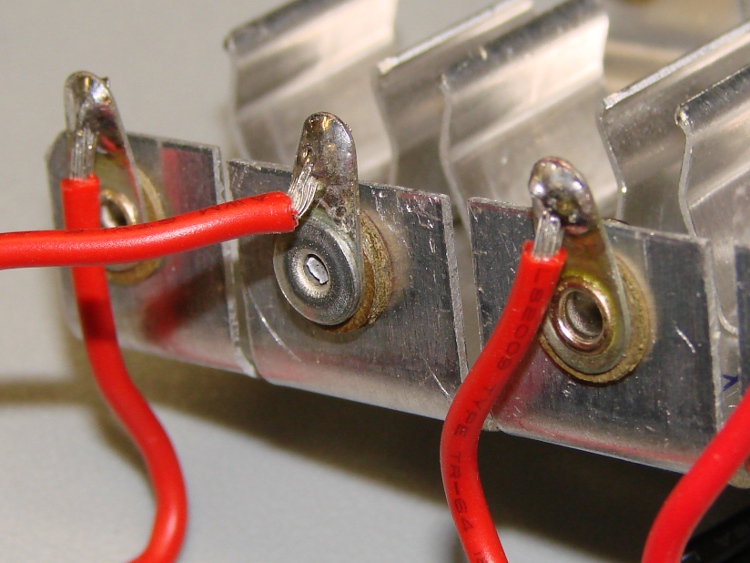
For what it’s worth, these pix came from the Sony DSC-H5 with the flash turned down 1 EV. Much better results than the Casio EX-Z850, even with its flash set to Soft (whatever that is). The H5 has much better macro capability… and with the new Eneloop cells, it lasts long enough to make it usable in the shop.
 The Smell of Molten Projects in the Morning
Comments
2 responses to “AA Cell Holder: Fragile Contacts”
The Sony H series does a great job. My H9 got me a “picture of the week” from Newsweek! This was for a close up shot of a water lily. I use it for the rare work bench picture and an occasional shot off the analyzer screen. The only con is sometimes it is very slow in getting ready for a shot at night!
Excellent!
Nearly all of my subjects won’t run away, so startup time (and even shutter lag) isn’t a problem… but I agree my H5 doesn’t haul itself to its feet with any great enthusiasm.
The only night photos that turned out OK were those from the Marching Band competition, where the awful color noise didn’t really matter. I’m hoping the recent developments in high-ISO sensors will eventually trickle down to my price level, because they’ll greatly simplify my usual artificial-light setups.