Ed Nisley's Blog: Shop notes, electronics, firmware, machinery, 3D printing, laser cuttery, and curiosities. Contents: 100% human thinking, 0% AI slop.
Tag: Thing-O-Matic
Using and tweaking a Makerbot Thing-O-Matic 3D printer
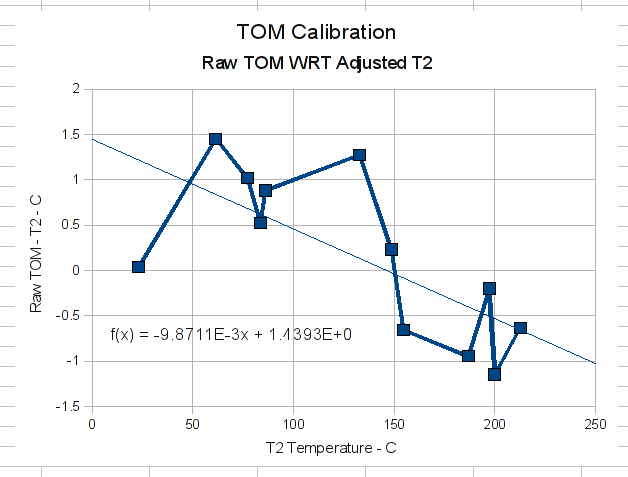
This graph compares the raw MK5 thermocouple temperature against the adjusted reading from the Fluke 52 T2 thermocouple.
MK5 Thermocouple Variation
The regression line says the slope matches to within 0.01 °C and the offset is less than half a degree. While the line is a bit bumpy, that has more to do with the hasty data-taking than anything else: the points corresponding to the last reading at each power level are very close to the line.
Given that the adjustments to the T2 readings make them match the average of five thermocouples, not including the MK5 unit, I’d say the MK5 is spot on.
This doesn’t affect any of the conclusions I’ve come to over the last few days; I always put the MK5 thermocouple bead in a non-critical location.
Based on the earlier measurements, the Thermal Core seems like a reasonably isothermal setup. That means the reading displayed in the ReplicatorG control panel accurately reflects the Core temperature.
Based on the thermal coefficients found there, it looks like the MK5 Extruder head can reach operating temperature with only 15-ish watts of power, rather than the usual 60 W. While a factor-of-four more power certainly reduces the delay from power-on to building parts, the stress it puts on the resistors causes early failures.
What I’m trying to find here is the minimum power required to heat the head to 225 °C, in order to guide some future tweaks. The resistors will be operating outside their specification at anything more than 1 W each, but reducing the maximum power dissipation can’t possibly be a Bad Thing.
With that in mind, I wrapped the ceramic cloth insulation around the Thermal Core. Because the Core-to-ambient thermal coefficient was 12 °C/W without insulation and 16 °C/W with cotton cloth insulation, I didn’t do a thorough job of taping the gaps. Any insulation is better than none, but I knew I was going to dismantle the poor thing several times over the next few days.
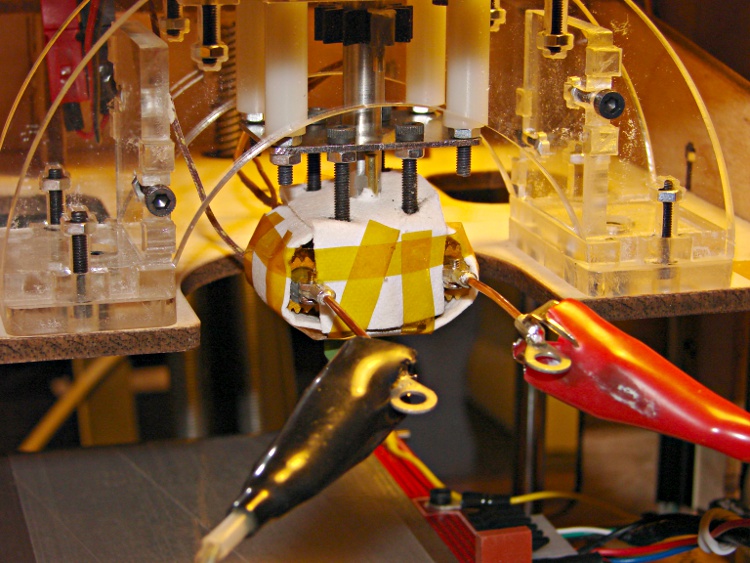
Insulated MK5 head in place
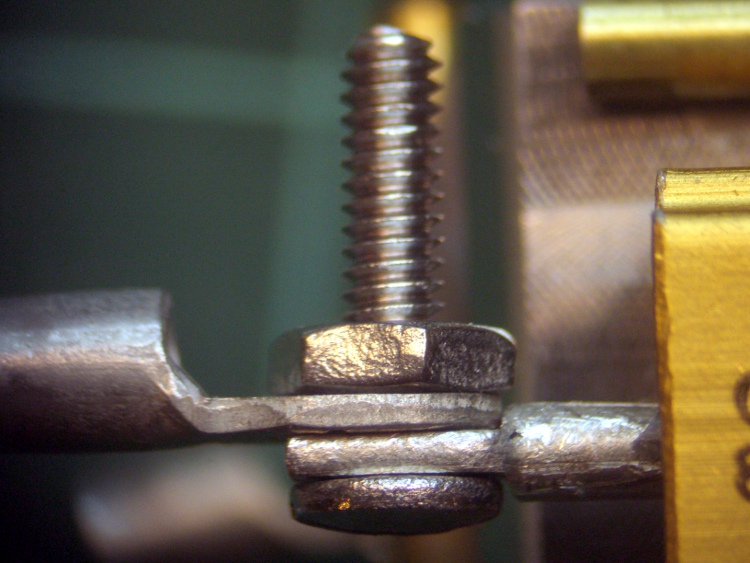
The MK5 thermocouple is now in its intended position, clamped under the washer at the rear of the Thermal Core. I added a pocket of Kapton tape to electrically insulate it from the Core to prevent a resistor failure from shorting +12 V to the MAX6675 thermocouple interface chip, but that didn’t actually work: the bead punched through the tape. I think a small epoxy blob is in order.
I used just the Fluke 52 dual-thermocouple meter, in addition to the MK5 thermocouple:
Name
Meter
Location
TOM
MK5 t-couple
Standard location, Kapton wrap
T1
Fluke 52
Resistor
T2
Fluke 52
Core edge adjacent to resistor
CA
Craftsman A
not used
CB
Craftsman B
not used
MPJA
MPJA meter
not used
For the previous test, I read the temperature as the head warmed up at a specific power level. In this test, I picked the power level, read the temperatures until they sort of stabilized, then increased the power. As a result, the numbers aren’t quite comparable to what you’ve seen before: the head is not at a stable temperature.
The adjusted temperature readings, taken every 10 minutes:
Power
TOM
T1
T2
Time
Current
0
22.6
22.5
23.0
0
0.00
6
64.8
65.1
61.5
15
0.77
6
80.6
80.7
77.0
20
0.77
6
86.9
87.1
83.5
30
0.77
6
90.0
89.8
86.1
40
0.77
14
139.6
139.5
132.7
52
1.18
14
155.4
155.5
148.8
62
1.18
14
160.6
161.2
154.7
72
1.18
20
194.3
195.2
186.9
83
1.41
20
205.9
205.4
197.2
93
1.41
20
208.0
208.2
200.1
103
1.41
25
221.7
222.2
212.6
110
1.58
The Core was still heating with 25 W applied, but I couldn’t resist sticking an ABS filament into the Extruder, at which point my data-taking went downhill. Suffice it to say that 25 W heats the core well beyond 225 °C; I found a power level of 22 W (a current of 1.5 A) maintained the Core temperature at 225 °C.
One thing popped right out: the adjusted values for the MK5 thermocouple seem completely out of line, which isn’t surprising given what I saw in the isothermal block during calibration. I’ll have more to say about that in a bit, but the calculations you’ll see here use the raw MK5 thermocouple reading.
The last two lines show that the MK5 head, even with my crappy insulation job, can reach operating temperature with a total power under 25 W. That’s far less than the 58 W; it looks like running at about half power will be feasible.
The temperature differences:
Power
R – Edge
Edge – TOM
R – Ambient
Edge – Amb
TOM – Amb
0
-0.4
0.0
0.0
0.0
0.0
6
3.5
-1.5
42.6
38.6
40.0
6
3.7
-1.0
58.1
54.0
55.0
6
3.7
-0.5
64.6
60.5
61.0
6
3.6
-0.9
67.2
63.2
64.0
14
6.8
-1.3
117.0
109.8
111.0
14
6.7
-0.2
133.0
125.8
126.0
14
6.5
0.7
138.6
131.7
131.0
20
8.3
0.9
172.7
164.0
163.0
20
8.2
0.2
182.9
174.2
174.0
20
8.0
1.1
185.7
177.2
176.0
25
9.6
0.6
199.7
189.7
189.0
And, from those, the thermal coefficients for the boldified lines (which are as stable as you’re going to get for this dataset):
R – Edge
Edge – TOM
R – Ambient
Edge – Amb
TOM – Amb
6 W
0.6
-0.1
11.2
10.5
10.7
14 W
0.5
0.0
9.9
9.4
9.4
20 W
0.4
0.1
9.3
8.9
8.8
25 W
0.4
0.0
8.0
7.6
7.6
You can’t compare the Resistor-to-Edge coefficient to the previous numbers, as the Core is getting heated from both resistors. Indeed, I think that column is totally bogus; using half the power gives a number comparable to the previous measurements, but I’m not certain that’s valid.
The rate of heat loss increases with higher temperatures: the Core-to-Ambient thermal coefficient is half of its previous value. The crappy insulation wrapper contributes to that, but the decline tracks the temperature for both types of insulation.
In round numbers:
Heating the core to 225 °C requires maybe 25 W
The resistors run 10 °C higher, with thermal grease
The DC motor used on the MK5 Extruder head seems unusually prone to sudden death, either by mechanical failure or something electrical. A stalled or shorted DC motor becomes a low resistance that destroys the A3977 H-bridge driver chip on the Extruder Controller board.
The power resistor reduces the voltage available to the motor, which draw something like 40 mA when unloaded and up to maybe 250 mA at full load. I don’t know what load the extruder puts on it, but at 100 mA the resistor drops 1 V, which seems excessive.
The relays seem like a nice solution, but they go clickety-clack and require actually building something, of which I’ve had quite enough lately, thank you very much.
While I was mooching those lugs, my buddy Eks suggested simply putting a low-wattage 12 V incandescent lamp in series with the motor. The cold filament has a very low resistance, but limits the current when if the motor shorts out.
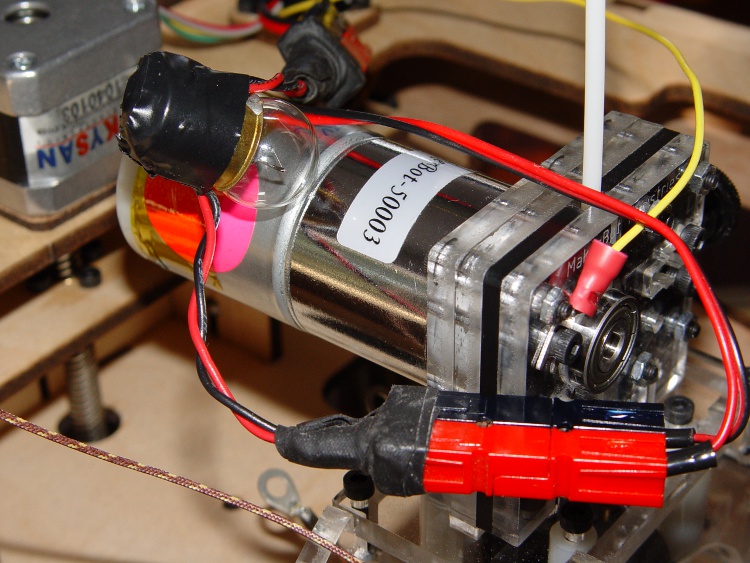
Extruder motor with series #89 bulb
A bit of rummaging in the Lamp Box produced an old automotive #89 lamp that allows 560 mA into a dead short, which works out to 7 W.
If the motor draws 100 mA, it drop only 100 mV: good enough!
Not finding a suitable socket in the heap, I wired it in by soldering the wires directly to the brass shell and central solder tip and taping up the mess. Next time I get near the local AutoZone I’ll pick up a socket.
The Anderson Powerpoles may look like overkill, but they make life a lot easier when you’re fiddling with the machinery all the time.
Now, the lamp won’t prevent inductive transients from blowing away those puny signal-level Zener diodes that should protect the A3977 chip, but it’s exactly what you need for long-term overload prevention.
Having collected useful thermal numbers at low power levels, it’s time to fire that mother up and see what happens at temperatures around 200 °C. That, however, requires powering both resistors, rather than attacking one with clip leads as I’ve been doing. Given that I expect to change the resistors several times in the course of this adventure, soldering to the lugs seemed like a lot of effort.
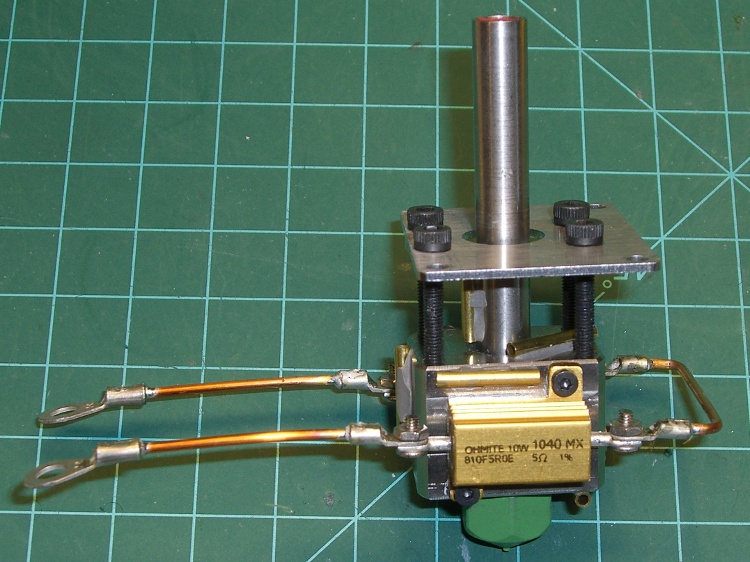
I mooched some solderless lugs suited for 2-56 screw terminals from Eks, pulled off the plastic insulating sleeves, lightly crimped them on 14 AWG solid copper wire, and silver-soldered the joints. The crimp handles most of the current, while the solder keeps the interior from accumulating oxidation products at high temperatures: a gas-tight joint is a happy joint.
Crimped and soldered lug
The resistor leads have holes just slightly too small for 2-56 screws, but a pass with a #41 drill does the deed; I think it’s an accumulation of solder rather than an under-sized hole.
The leads are stamped to shape and two of them didn’t have quite enough room for the lug. You don’t want the joint to look like this:
Misaligned lug
The briefest touch of a riffler file made them right, so as to look like this:
Properly aligned lug
Then it was ready for insulation:
Extruder Head with lugs
Note that the resistors are in series, not parallel (as per the Makerbot instructions), because I want a resistor failure to produce an unambiguous symptom: no heat. In addition, I expect to operate the heaters at much lower power, making higher resistances easier to drive from the +12 V.
In truth, those screw-and-nut connections aren’t the most durable or reliable joints, particularly without lockwashers under the nuts to soak up the differential thermal expansion. But they’re good enough for what’s coming next.
This test determines the effect of thermal compound between the resistor and the Thermal Core on the MK5 Extruder head. The setup is essentially the same as before, with cotton fabric insulation wrapped around the Core.
I applied a thin layer of Thermalloy Thermalcote II from a small bottle that I’ve had since the days when you could actually use trichloroethylene as a solvent. It’s rated to 200 °C, so it won’t last long at full throttle, but it’s not nearly as permanent as epoxy.
That’s the thin blue line around the base of the resistor. You can actually have too much of the stuff, so I applied this by rubbing a dab from a scrap of paper onto the resistor’s base and squooshing it in place.
Resistor with thermal compound
The instrumentation is the same as the last time around:
Name
Meter
Location
TOM
MK5 t-couple
Top of core
T1
Fluke 52
Resistor
T2
Fluke 52
Core edge adjacent to resistor
CA
Craftsman A
Bottom of core
CB
Craftsman B
not used
MPJA
MPJA meter
not used
After once again wrapping the core up in cotton cloth, I skipped directly to the higher power levels and sampled the data at 20-minute intervals.
Notice that the T2 reading on the block starts out a bit higher than the T1 reading on the resistor; I didn’t wait quite long enough for the heat of my hands to settle out inside that insulating blanket.
The corresponding temperature differences:
Power
R – Edge
Top – Bot
Edge – Top
Edge – Bot
R – Amb
Edge – Amb
0
-1.3
-0.1
0.1
0.0
0.0
0.0
4
3.1
2.9
1.0
3.9
51.6
47.2
4
3.1
4.3
-0.2
4.1
66.2
61.8
4
3.1
4.6
-0.6
4.0
71.1
66.7
4
3.0
4.5
-0.3
4.2
72.3
68.0
6
4.6
6.0
0.1
6.1
97.5
91.6
6
4.6
6.2
-0.3
6.0
103.4
97.6
6
4.5
6.7
-0.5
6.1
105.2
99.4
And now for the long-awaited and much anticipated thermal coefficients of the insulated and greased Thermal Core:
R – Edge
Top – Bot
Edge – Top
Edge – Bot
R – Amb
Edge – Amb
4 W
0.8
1.1
-0.1
1.0
18.1
17.0
6W
0.8
1.1
-0.1
1.0
17.5
16.6
The grease reduces the thermal coefficient by about 20%, although I admit the numbers going into that calculation are getting pretty close to the limits of my instrumentation. Assuming the value remains the same at 30 W, the resistors will rise about 24 °C above the Thermal Core temperature to 250 °C, their maximum rated temperature. At that temperature, remember, their maximum rated dissipation is 10% of their 25 °C value: a whopping 1 W.
The R – Ambient and Edge – Ambient coefficients show that the insulation has about the same effect as before, which is comforting.
Having found the thermal coefficient between the MK5 Extruder’s resistor and Thermal Core without any insulation wrapped around them, the next step is to do the same thing with insulation. In an ideal situation, the coefficient wouldn’t change: the same power flowing through the same area should produce the same effect. In actual practice, it decreases because the Core receives heat from the resistor that doesn’t pass through the interface.
I used the left-side resistor for this test, as the clip lead dislodged the brass tube atop the other one during the previous test.
Thermocouples locations – insulated
I used cotton fabric (harvested from an old sheet in the Rag Box) rather than the delicate ceramic cloth tape normally used with the MK5 head; I figured that plenty of cloth would be at least as good, as long as I didn’t run the temperature up all the way.
Cloth insulation – first wrap
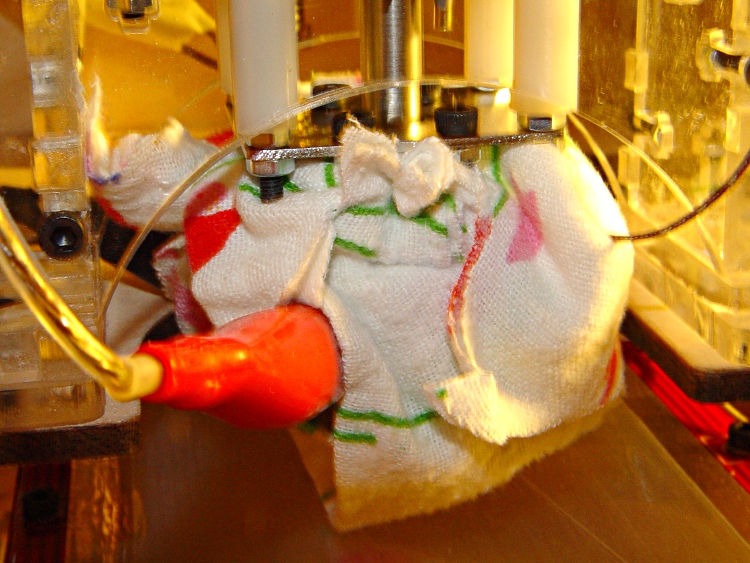
A second wrap around the outside pretty much mummified the Thermal Core. Apart from a few small gaps & cracks, the only paths for heat to get out are the Thermal Tube and the four screws. There’s no ABS filament in the extruder head and the cloth covers the nozzle on the bottom.
Cloth insulation – final wrap
I didn’t instrument the Core quite so thoroughly, having already established that the metal Core block is pretty much isothermal.
The temperature differences between interesting points is:
Power
R – Edge
Top – Bot
Edge – Top
Edge – Bot
R – Amb
Edge – Amb
0
-0.3
-0.5
0.3
-0.3
0.0
0.0
1
1.5
-0.4
0.9
0.5
9.8
8.0
1
0.3
-0.6
1.3
0.7
13.2
12.6
1
1.0
0.8
-0.1
0.7
16.8
15.4
1
0.9
0.2
0.7
0.9
18.5
17.3
1
1.0
0.2
0.7
0.9
19.7
18.4
2
2.5
-1.9
1.4
-0.5
29.2
26.4
2
2.3
1.7
0.3
2.0
33.2
30.6
2
2.2
1.0
0.6
1.6
35.5
33.0
2
2.0
1.0
1.2
2.2
36.9
34.6
4
4.9
1.9
1.8
3.6
55.2
50.0
4
4.5
2.5
1.0
3.6
62.5
57.7
4
4.4
2.8
0.9
3.7
66.4
61.7
4
4.1
3.8
0.3
4.1
68.7
64.3
4
4.0
3.2
0.8
4.0
70.3
65.9
4
3.9
3.1
0.9
4.0
71.3
67.0
6
6.8
4.5
1.1
5.6
90.2
83.1
6
6.5
5.2
0.8
6.0
96.9
90.1
6
6.4
4.5
1.5
5.9
100.6
93.9
6
6.2
4.9
1.3
6.2
102.3
95.9
6
6.1
4.9
1.3
6.1
103.3
96.9
And the corresponding thermal coefficients…
R – Edge
Top – Bot
Edge – Top
Edge – Bot
R – Amb
Edge – Amb
1 W
1.0
0.2
0.7
0.9
19.7
18.4
2 W
1.0
0.5
0.6
1.1
18.5
17.3
4 W
1.0
0.8
0.2
1.0
17.8
16.8
6 W
1.0
0.8
0.2
1.0
17.2
16.1
The R-to-Edge coefficient is down to 1 °C/W, but that still means the resistor temperature is far too high at 30 W dissipation.
The R-to-Ambient and Edge-to-Ambient coefficients are up much less than I expected: the insulation helps, but not a great deal. I think there’s plenty of energy going out the Thermal Tube toward the Filament Drive and Extruder Motor; as the Core insulation gets better, conduction along the Tube becomes a larger fraction of the loss.
One last test looms: what’s the improvement with thermal compound between the resistor and the Core?
The objective here is to determine the thermal coefficient between the resistors and the Thermal Core, with no thermal compound to fill the air gap, so we know how high the resistor temperature will get.
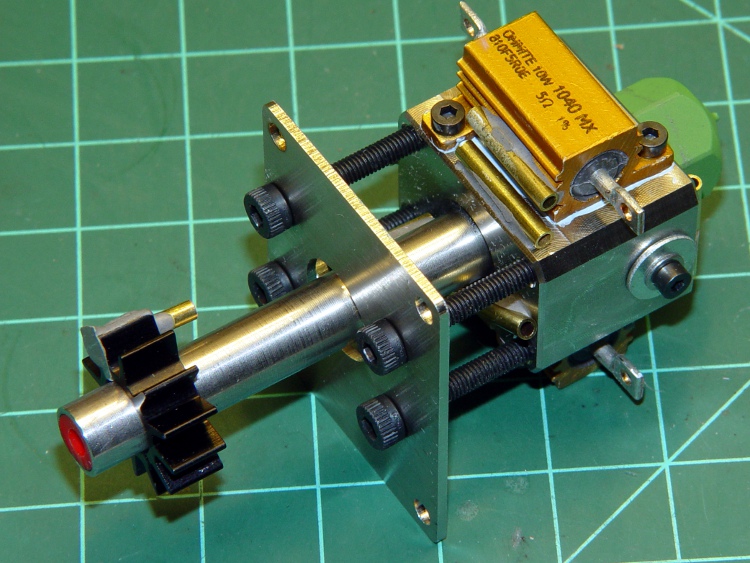
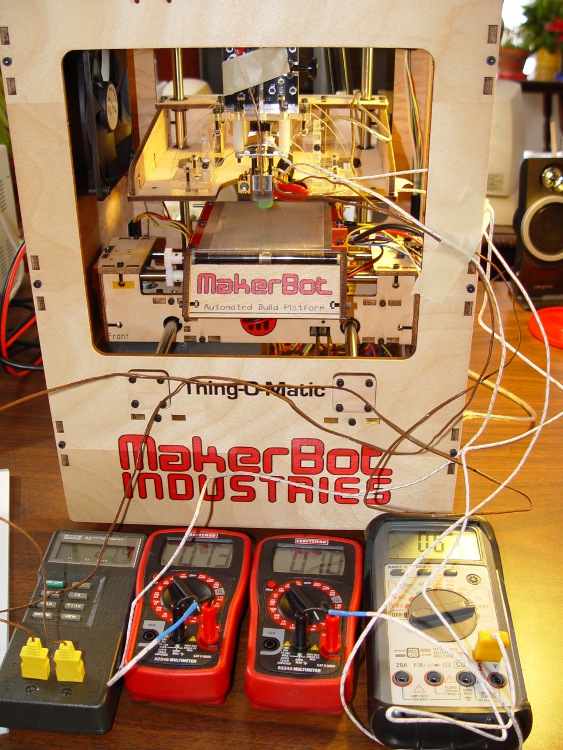
The Thermal Core sprouted many thermocouples:
Name
Meter
Location
TOM
MK5 t-couple
Front of core
T1
Fluke 52
Resistor
T2
Fluke 52
Core edge adjacent to resistor
CA
Craftsman A
Top of core
CB
Craftsman B
Bottom of core
MPJA
MPJA meter
Heatsink on thermal tube
TOM with meters
They’re positioned as shown here, with the Bottom thermocouple to the rear out of view. The ribbed black heatsink at the very top of the picture is a few millimeters below the acrylic base of the Extruder Filament Drive block.
Thermal test setup
Applying power from a bench supply produced these results, adjusted to the average value using the regression coefficients determined there. The measurements occur every ten minutes: the Core’s time constant is, mmm, languid.
Adjusted Data
Power
TOM
T1
T2
CA
CB
MPJA
0
20.5
20.9
21.3
21.1
22.3
21.0
1
27.9
30.4
28.8
28.9
29.0
22.7
1
32.1
33.7
32.2
32.2
32.3
24.8
1
33.2
35.6
34.1
33.9
34.0
26.5
1
34.2
36.3
34.8
34.4
34.5
27.0
2
41.6
45.4
42.3
41.6
41.2
29.7
2
44.7
48.2
45.1
44.4
44.5
31.4
2
45.8
49.1
46.0
45.5
45.0
31.9
2
46.8
50.5
47.5
46.6
46.1
33.0
4
59.5
67.2
60.8
59.4
58.3
36.8
4
65.8
72.1
66.1
64.4
63.3
40.6
4
67.9
74.3
68.6
66.6
65.5
43.3
4
67.9
75.0
69.2
67.7
66.1
44.4
8
81.6
92.0
83.5
81.6
79.4
49.3
8
86.9
(*)
88.9
86.6
83.8
52.5
The asterisk marks the spot where a clip lead shifted and dislodged the brass tube epoxied to the resistor. Of course, that’s one of the two absolutely vital temperature measurements, but so it goes. I was planning to stop at 8 W, anyway, because that’s about as much power as I wanted to apply to the resistor, as it exceeds the rated power for that temperature.
The boldified lines mark the measurements where the Core temperature has stabilized, where I defined “stabilized” to mean “hasn’t changed all that much since the last measurement”.
Some temperature differences between interesting locations on the Thermal Core, bearing in mind that the linear regression equations aren’t good for much below 1 °C, at best, so the tiny differences are mostly noise.
Temperature Differences
Power
R – Edge
Core T-B
Edge-Bot
Top-Heatsink
R – Amb
Edge – Amb
0
-0.4
-1.2
-1.0
0.1
0.0
0.0
1
1.7
-0.1
-0.2
6.2
9.5
7.4
1
1.5
-0.1
-0.1
7.4
12.8
10.9
1
1.4
-0.1
0.2
7.4
14.7
12.8
1
1.4
-0.1
0.3
7.4
15.4
13.5
2
3.1
0.5
1.1
11.9
24.5
20.9
2
3.1
-0.1
0.6
13.1
27.3
23.8
2
3.1
0.5
1.0
13.6
28.2
24.7
2
3.0
0.5
1.4
13.6
29.6
26.2
4
6.4
1.1
2.5
22.6
46.3
39.5
4
5.9
1.1
2.8
23.8
51.2
44.8
4
5.7
1.1
3.0
23.3
53.4
47.2
4
5.8
1.6
3.1
23.3
54.1
47.8
8
8.5
2.2
4.1
32.3
71.1
62.1
8
2.8
5.1
34.0
67.5
The Top – Heatsink column says there’s really not much temperature difference between the Core and the cute little heatsink on the Thermal Tube at the top. This is without any Core insulation, but it’s also at a a much lower Core temperature.
And now for the heart of the matter: the thermal coefficients, which are the temperature differences divided by the applied power. These are for the boldified lines above, where the temperatures have stabilized.
These are not, strictly speaking, correct, because the only interface where we know the applied power lies between the resistor and the Thermal Core. But we’ll do the best we can with what we have…
Thermal coefficients
R – Edge
Core T-B
Edge-Bot
Top-Heatsink
R – Amb
Edge – Amb
1 W
1.4
-0.1
0.3
7.4
15.4
13.5
2 W
1.5
0.2
0.7
6.8
14.8
13.1
4 W
1.5
0.4
0.8
5.8
13.5
12.0
The R – Edge column shows that the resistor-to-Core thermal coefficient hovers around 1.5 °C/W, which means dissipating 30 W in the resistor raises its temperature 45 °C above the Core. With the Core stabilized at 225 °C, the resistors run at 270 °C, far beyond their absolute maximum rating of 250 °C where the rated power drops to 1 W.
That’s why MK5 Extruder resistors fail at such a disturbing rate.
The next two columns show the relatively small temperature differences across the the Thermal Core iself: that steel block is pretty much isothermal, even with only a single resistor providing power to one side. That’s good news, of a sort: clamping the MK5 thermocouple anywhere on the Core will provide consistent results.
The Top – Heatsink coefficient declines as the power level rises, probably because of the hot air rising from the uninsulated Core.
The R – Amb and Edge – Amb columns shows that air is a pretty good insulator all by itself. If you apply 30 W to the resistor and extrapolate a 10 °C/W thermal coefficient, the resistor would reach something like 300 °C above ambient, even without insulation. Obviously, that wouldn’t work for long, but those are the numbers.





 The Smell of Molten Projects in the Morning