Ed Nisley's Blog: Shop notes, electronics, firmware, machinery, 3D printing, laser cuttery, and curiosities. Contents: 100% human thinking, 0% AI slop.
Three weeks, more or less, from my exposure to clearing the hurdle. Mary, being tougher than I, got it done in two.
For the better part of the first two weeks I was in bed ten hours every night, plus an hour or two of afternoon nap (no milk & cookies, drat), plus dragging around the house getting nothing done.
No major health problems, good blood oxygen levels throughout, no loss of smell apart from what you’d expect during three days of complete nasal blockage, and we’re both feeling OK-ish now.
However, we are making more than the usual number of stupid mistakes, which is one way we know we’re not really OK yet.
Back to the Basement Shop, with considerable caution …
Memo to Self: That was the first time in four years you didn’t wear a mask in close quarters. Don’t ever do that again.
According to the manual, which I have hitherto had no reason to doubt, our non-turbo 2015 Subaru Forester has a 15.9 gallon fuel tank:
Subaru Forester – Fuel Capacity Chart
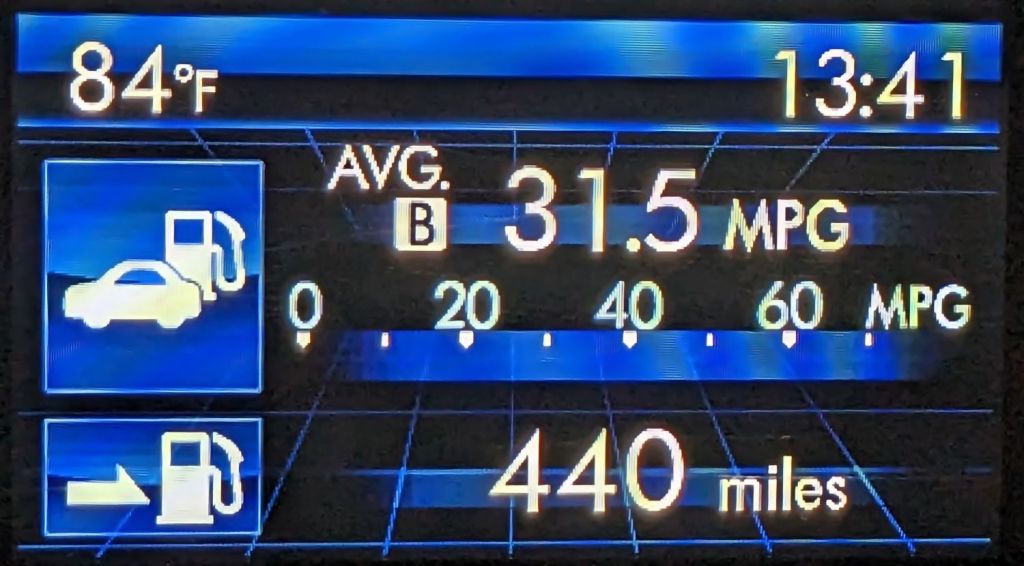
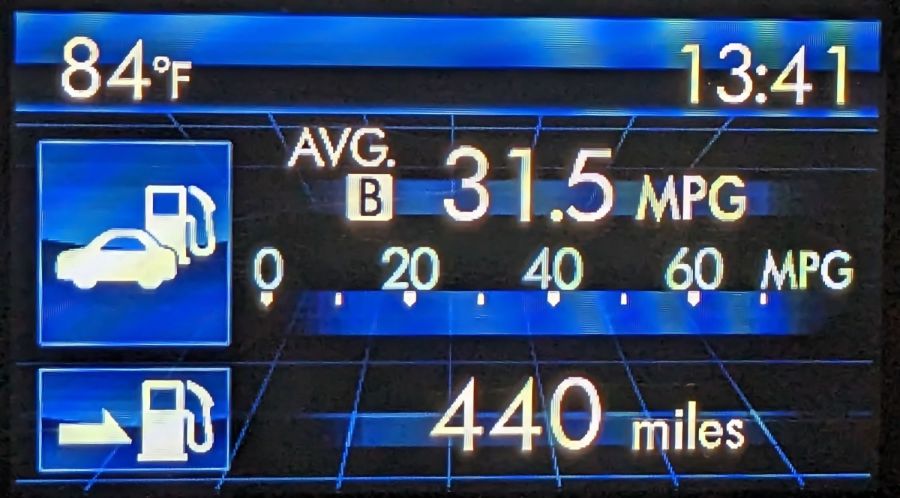
One screen shown on the dashboard’s Multi-Function Display gives the current mileage and estimated range:
Forester – MPG Range
Dividing those two numbers gives you 13.97 gallons, the current fuel level. As you’d expect, should the average miles per gallon change, the range will change accordingly.
The trip odometer says we have driven 72.8 miles since I filled the tank. Dividing that by the average mpg gives 2.3 gallons, so the tank could possibly hold 16.2 gallons, which, given all the averages involved, is reasonably close to the 15.9 gallons shown in the manual.
Being that type of guy, I have a spreadsheet tallying each fillup since the car was new:
8.1 gal average
7.5 gal median
13.9 gal maximum
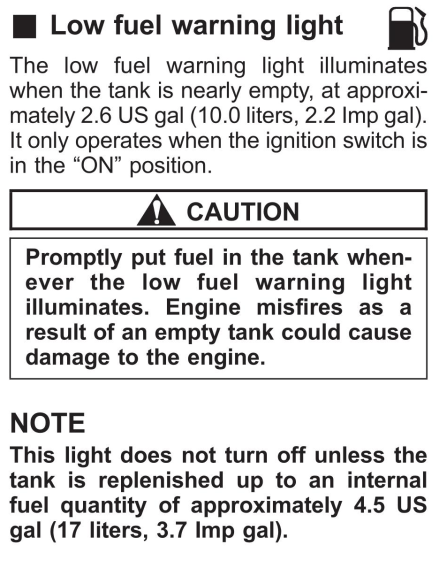
Long ago, my father taught me to fill the tank when the needle got halfway down and I’ve been doing so ever since. As a result, we have only rarely seen the Low Fuel Warning Light:
Subaru Forester – Low Fuel Warning Light info
A concatenation of unavoidable events put us southbound on I-87 when that light went on. Given the estimated range of 70-ish miles, I planned to refuel at the New Baltimore Service Area, about a dozen miles ahead.
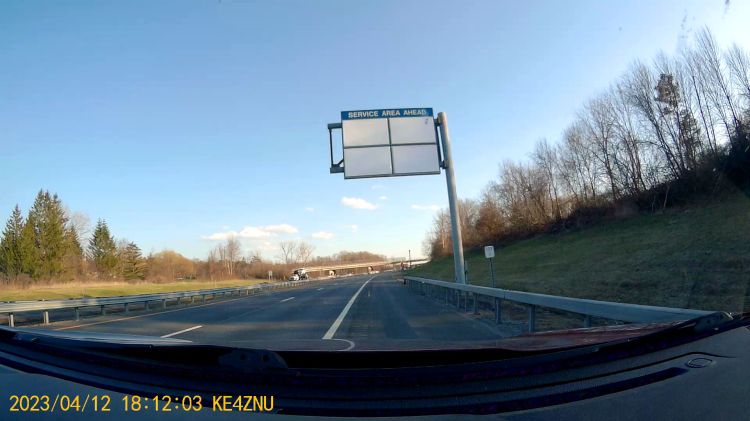
The engine shut down and all the dashboard warning lights lit up with the Service Area Ahead sign in view:
Out of Gas – Service Area Ahead
All the “facilities” are blank because they’re rebuilding the whole place, with the gas station remaining open.
So I slapped the shifter into neutral and we drifted slowly along the shoulder, under the bridge visible ahead, and eventually came to a halt at the beginning of the exit lane.
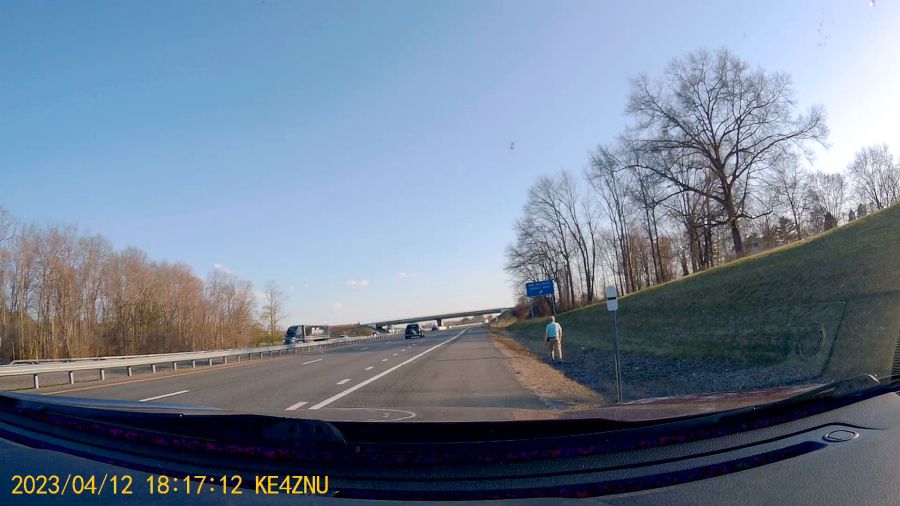
There was only one thing to do:
Out of Gas – Walking On
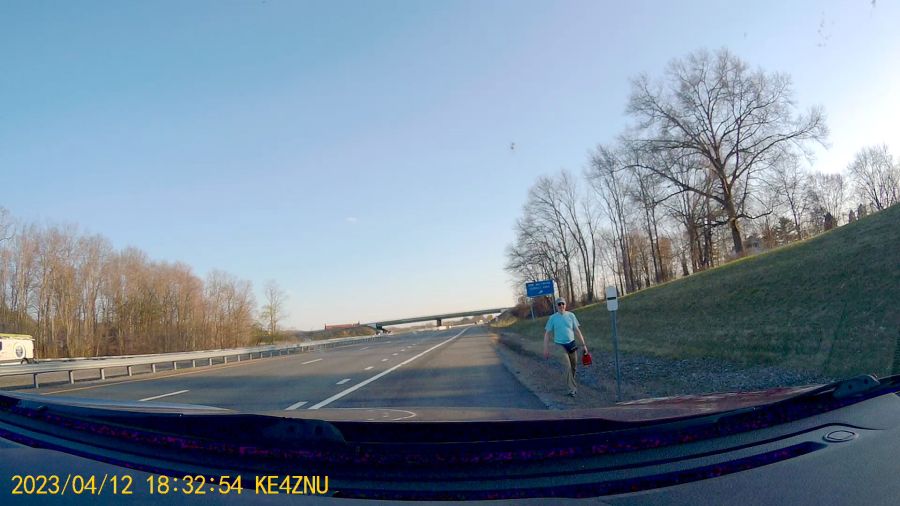
Some storytelling later:
Out of Gas – Walking Back
Just because I could:
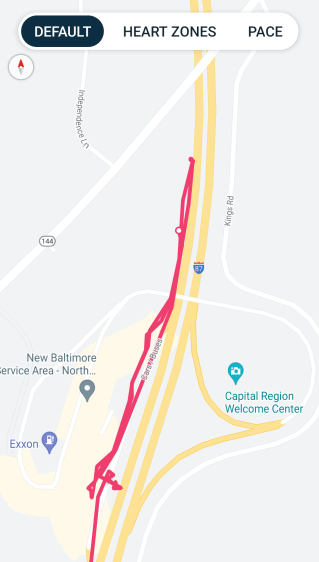
Refueling – GPS Track
For what are, I trust, understandable reasons, I started the tracker after I began hiking and forgot to turn it off before driving away.
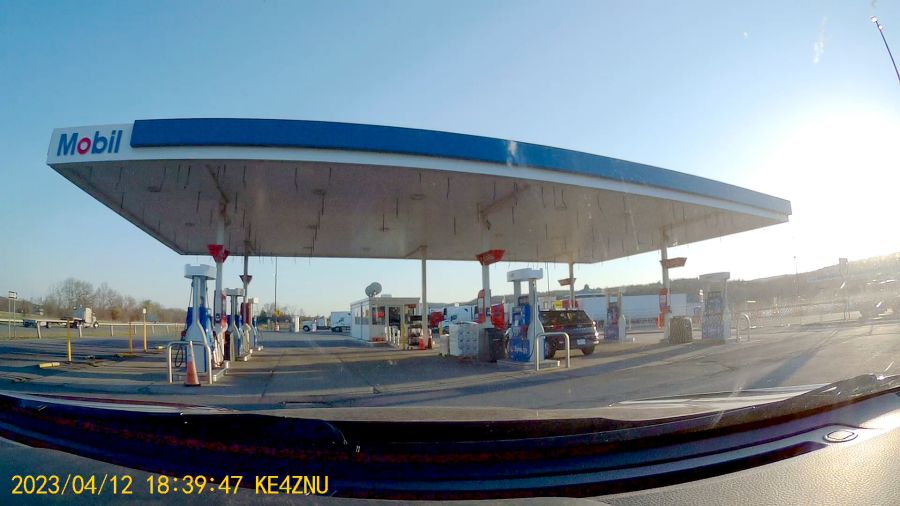
After figuring out the devilishly complex spring-loaded anti-spill spout on the gas can, we drove 1500 feet to the Service Area:
Out of Gas – Service Station
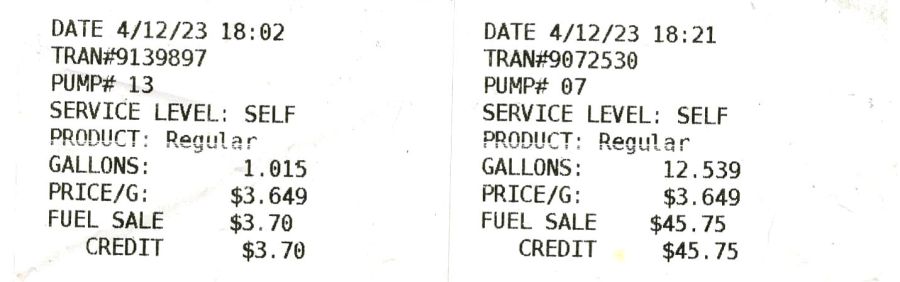
As usual, I filled the tank until the nozzle automatically shut off, for a total of 13.554 gallons in two transactions:
Pump Receipts
Now, it is possible the Forester fuel system has another 2.3 gallons tucked away somewhere, but if that reserve doesn’t make the wheels go around, it’s not doing me the least bit of good.
The fact that I’ve occasionally added just short of 14 gallons suggests the estimated remaining capacity depends strongly on the average mileage up to that point and I have come very very close to running out of gas on several occasions.
As far as I can tell, the usable fuel capacity is a scant 14 gallons and the Low Fuel Light goes on with, at most, a dozen more miles in the tank.
This is the second time in more than half a century of driving I’ve run out of gas.
My father was right and I shall henceforth mend my wayward behavior.
Spotted on a walk along the Mighty Wappingers Creek after a storm with plenty of gusty winds:
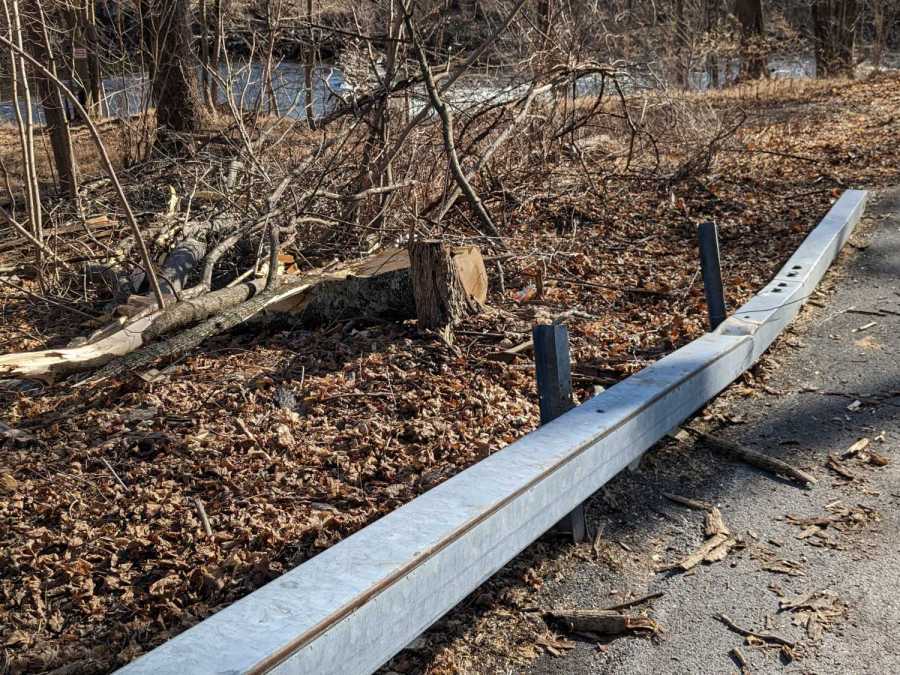
Tree-smashed guide rail
The tangle of branches and logs came from a tree that fell across the road from the far right side and put that crease into the guide rail. The vertical stump seems unrelated to that incident.
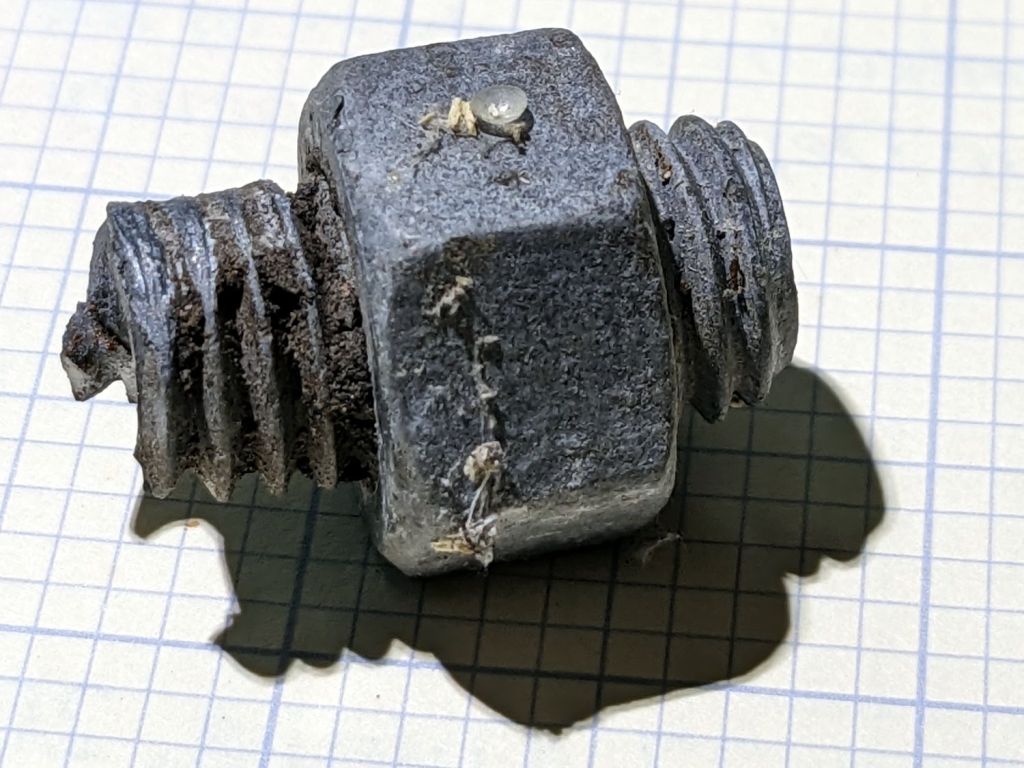
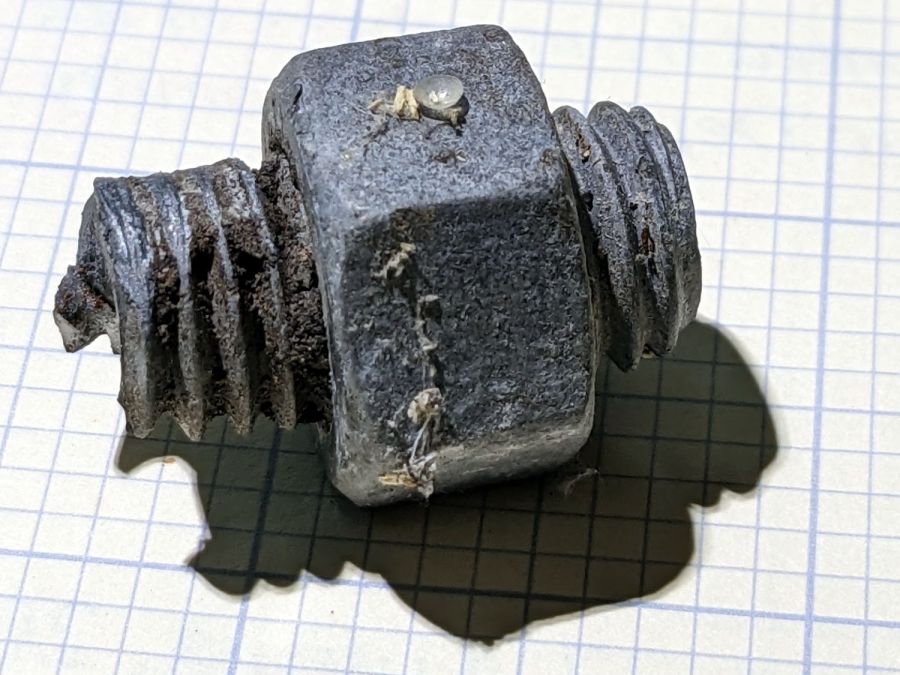
A bit of rummaging at the base of one post produced a victim:
Tree-smashed guide rail – sheared bolt – side
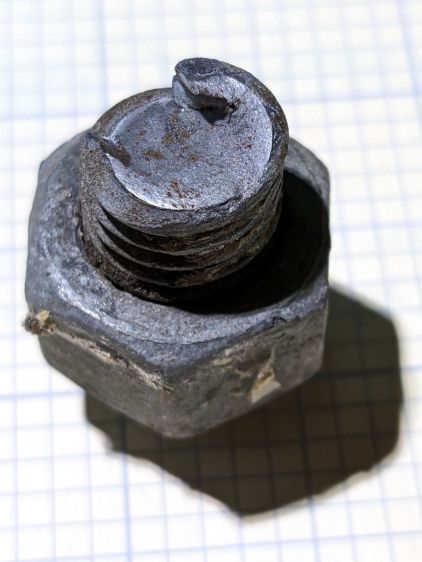
The impact produced enough force to turn the rail brackets into guillotine metal shears against the posts:
Tree-smashed guide rail – sheared bolt – end
It’s not a clean shear cut, which isn’t surprising under the circumstances.
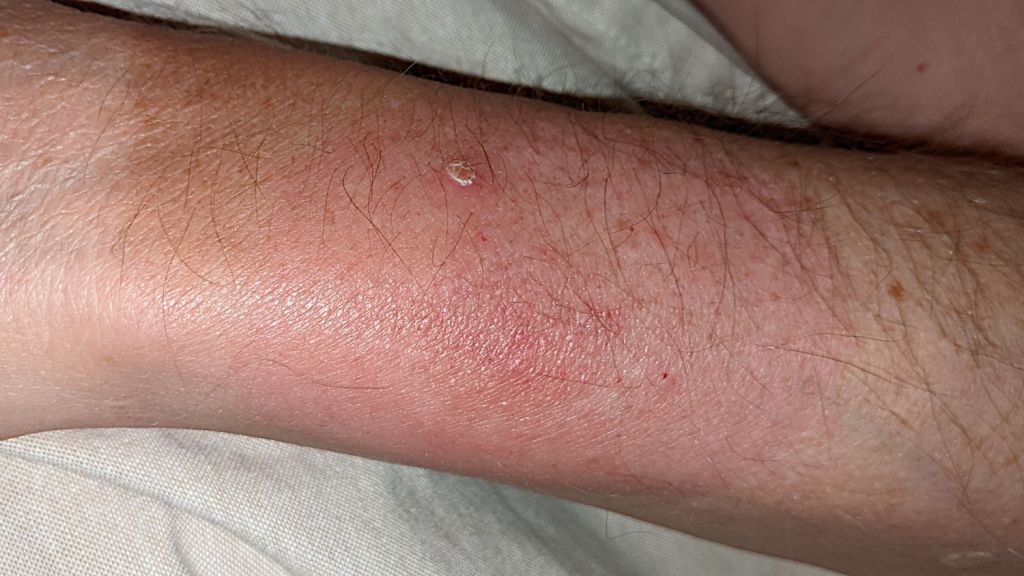
For reasons that made sense at the time, two weeks ago I ventured outside the house. A few days later, this appeared:
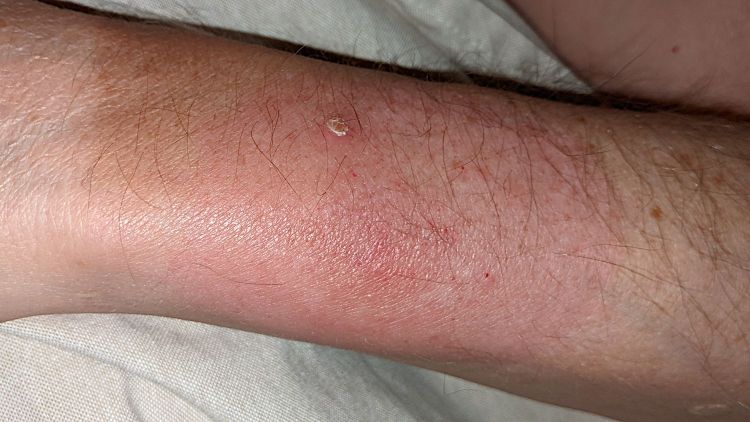
Lyme Disease – arm rash
The pallid skin over on the left comes from a bike glove. The central bump is one of those annoying sebaceous hyperplasias appearing after a Certain Age and not relevant here.
Having been around this particular block a few times, Mary recognized the diffuse red rash, sleeping 30 of 36 consecutive hours, and a day-long 103 °F fever as Lyme disease. I’m currently taking 100 mg of doxycycline twice a day and (after a week) feeling better, while sleeping a lot more than usual at random intervals during the day.
We’re both highly aware of Lyme disease: Mary routinely dresses in a complete overlayer of permethrin-sprayed clothing and I generally strip-and-shower immediately after any yard work in similarly sprayed, albeit less enclosing, attire. In this case, we think a tiny Deer Tick nymph affixed itself to the outboard side of my wrist, where I could neither see nor feel it, and (because I didn’t take a shower after being outside for only a few minutes) remained attached long enough to infect me.
Caught and treated early, Lyme disease generally does not progress into “post-treatment Lyme disease”, an ailment rife with what can charitably be described as serious woo, despite some evidence of actual disease.
Some of Mary’s Master Gardener cronies have endured co-infections of Babesia microti and we’ll be watching for those symptoms after doxycycline tamps down the obvious problem.
I’ll be puttering very carefully around heavy machinery and posting irregularly for a few weeks …
Memo to Self: the Basement Shop has a lot to recommend it!
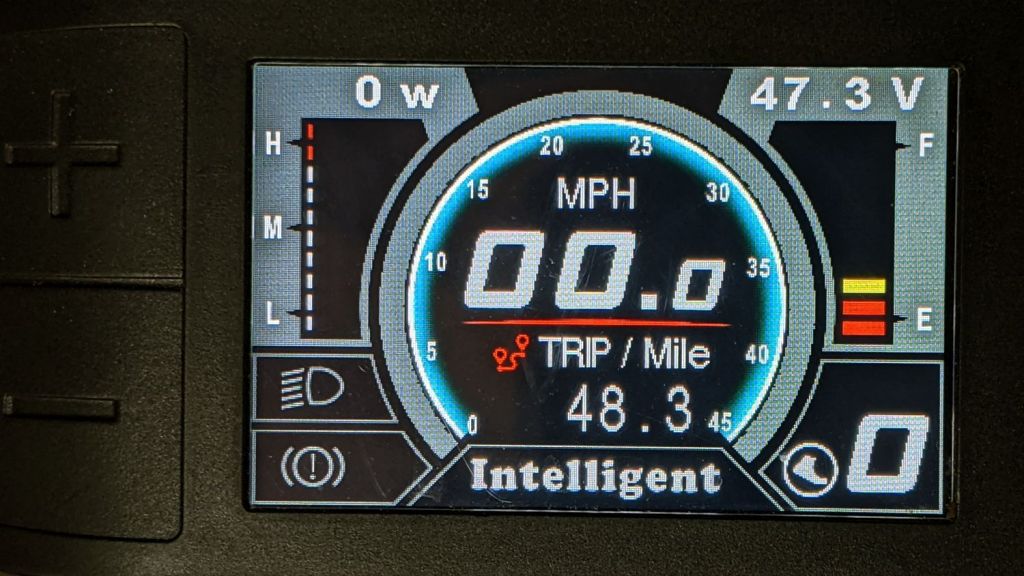
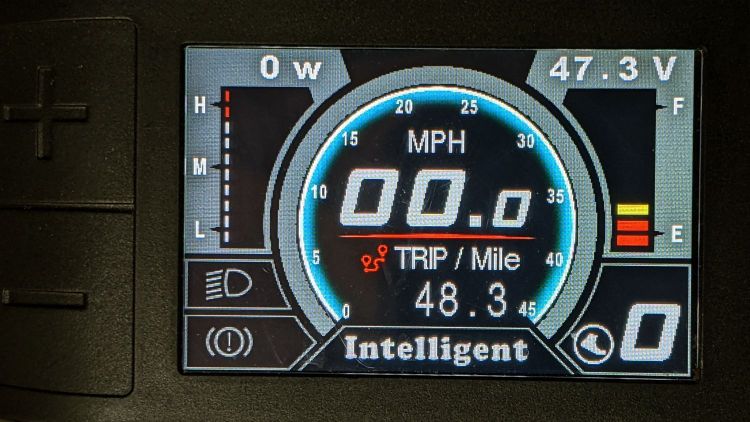
After a few days of riding, the Bafang 500C display on Mary’s bike gives the battery status:
Bafang 500C display – 48 mi 30 pct
The thermometer scale on the right shows 30% remaining battery capacity after 48.3 miles of riding, with the 11.6 A·h battery at 47.3 V.
For our type of riding, each 10% increment of battery charge delivers about 7 miles of range. Although we could probably get 70 miles between charges, recharging the battery at 20 to 30% makes more sense; the bike is in the garage, so why not?
Our typical 10 to 15 mile rides now average 12+ mph, with some level sections ticking along at 18 mph (giving me some serious exercise), which isn’t much by pro rider standards.
Computing the lithium battery charge state by measuring its voltage isn’t particularly accurate, but it’s about as good as you’re going to get.






 The Smell of Molten Projects in the Morning