The Smell of Molten Projects in the Morning

Ed Nisley's Blog: Shop notes, electronics, firmware, machinery, 3D printing, laser cuttery, and curiosities. Contents: 100% human thinking, 0% AI slop.

Tag: Arduino

All things Arduino

  • Vacuum Tube LEDs: 6H6GT Dual Diode

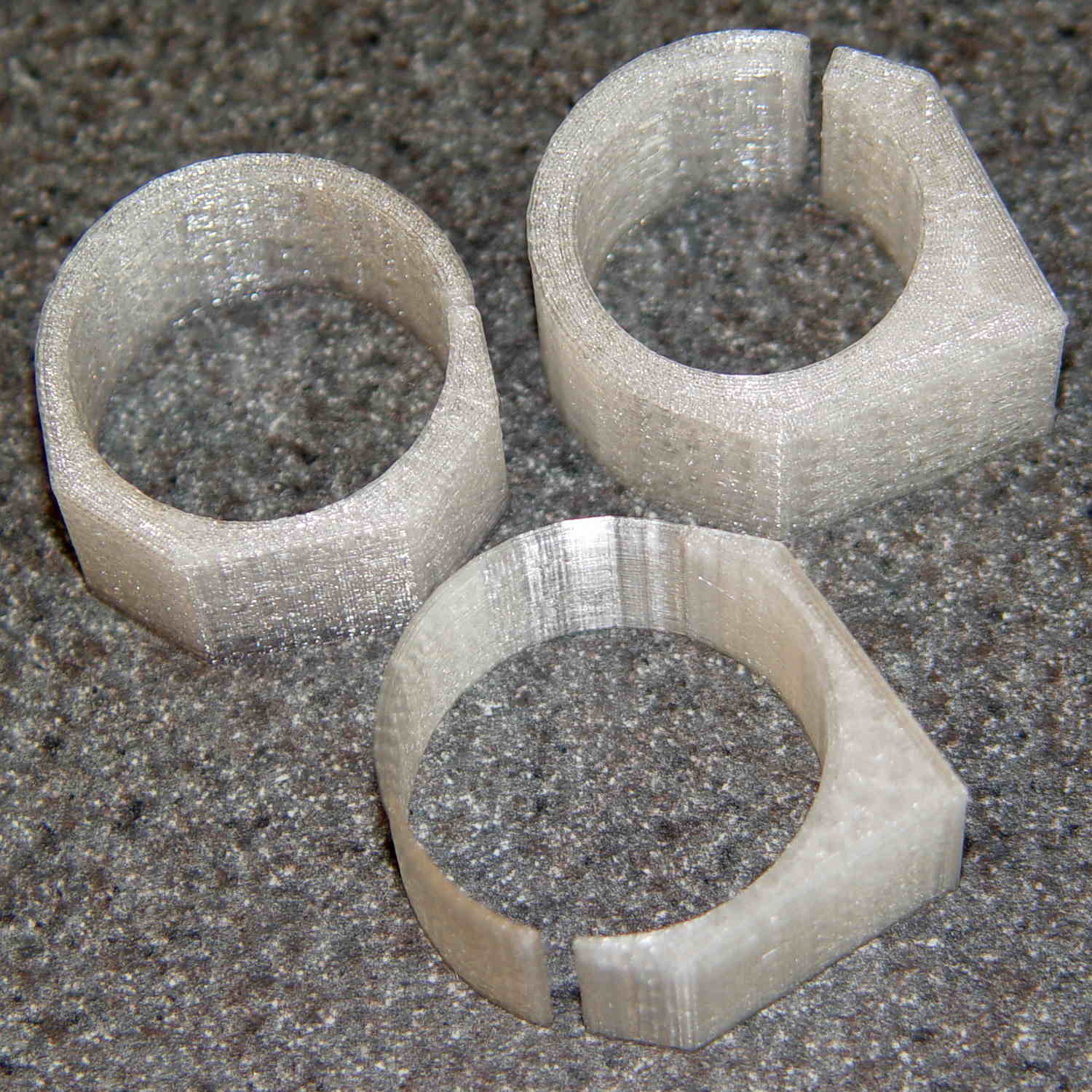
    Having accumulated a set of octal tube base clamps, it’s now a matter of selecting the proper clamp for each tube:

    Octal tube base V-block clamps
    Octal tube base V-block clamps

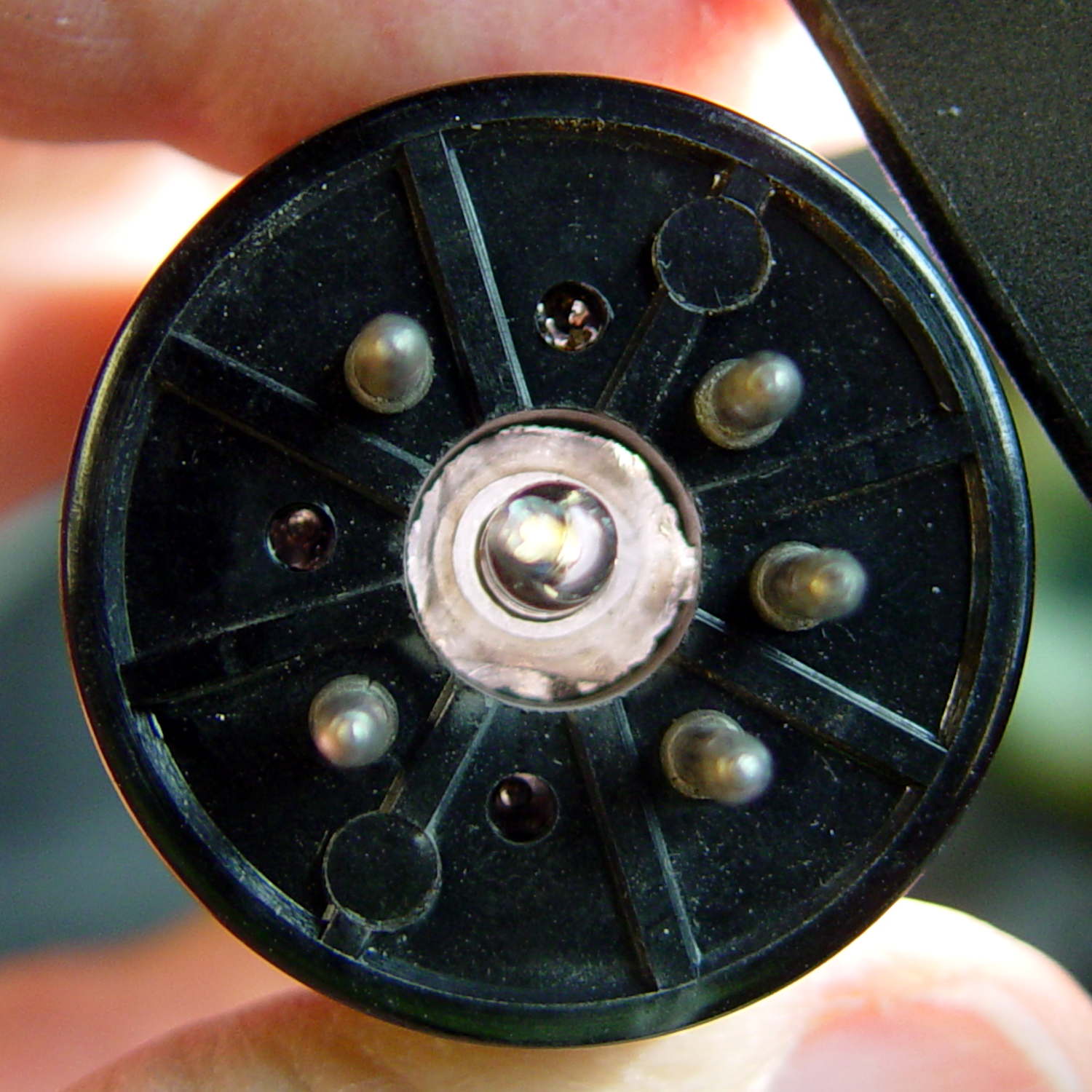
    The process of shell-drilling the tube base, drilling the hard drive platter, printing a tube socket and case, wiring up the Arduino and base LED, then assembling the whole thing requires a bit of manual labor, assisted by some moderately exotic shop machinery.

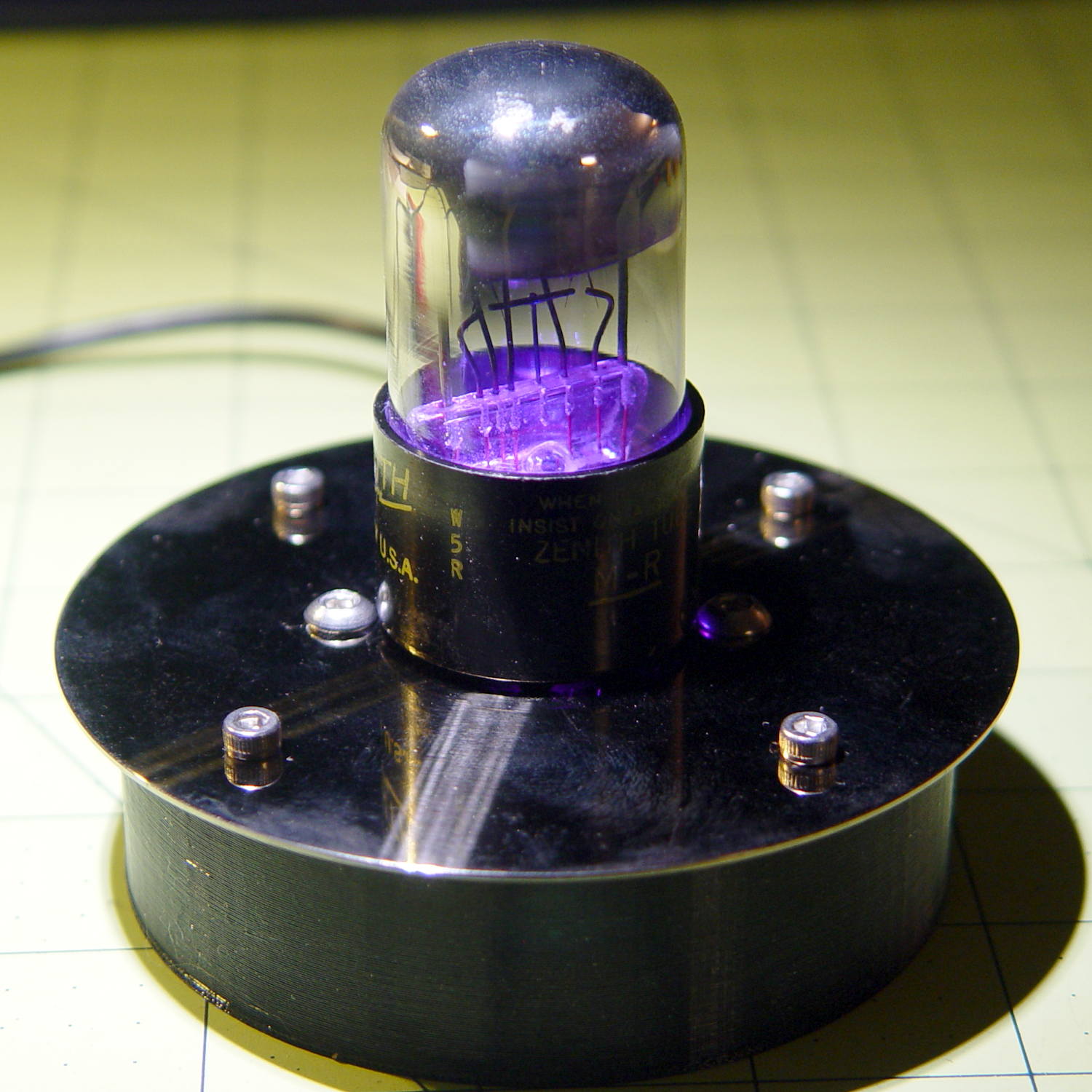
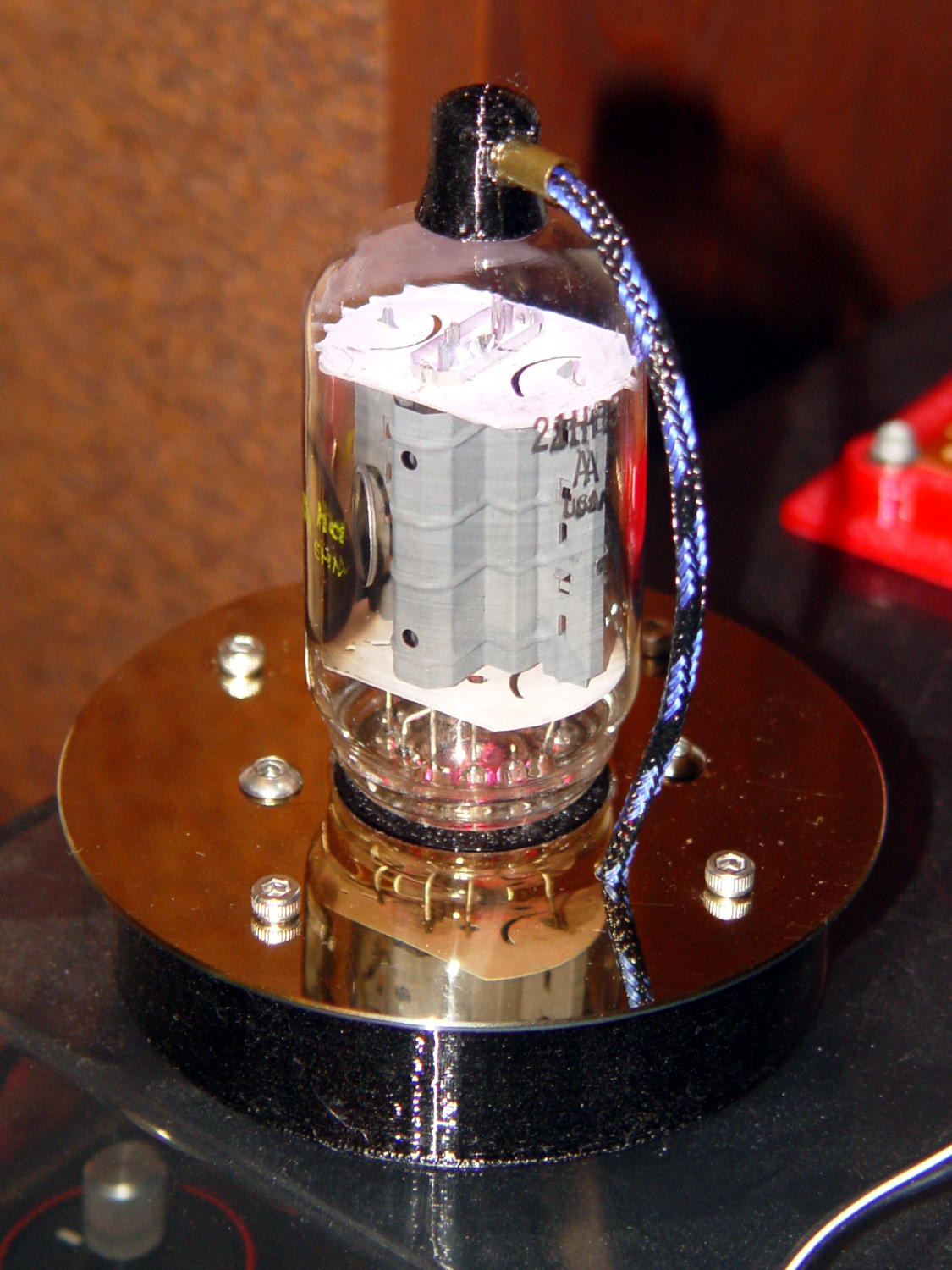
    The getter flash atop this small 6H6GT dual diode tube rules out a cap and there’s not enough space for a side light:

    6H6GT - on platter
    6H6GT – on platter

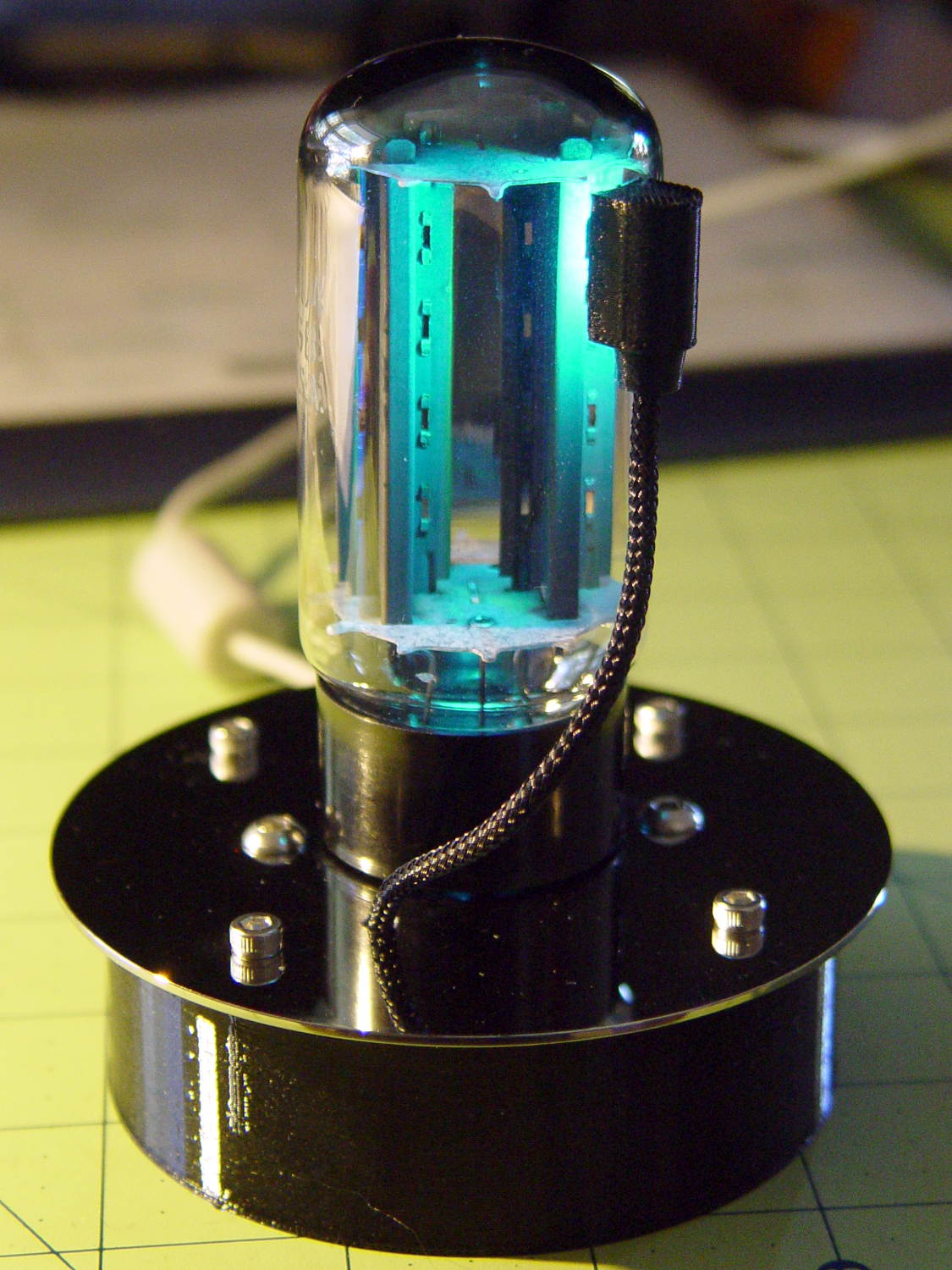
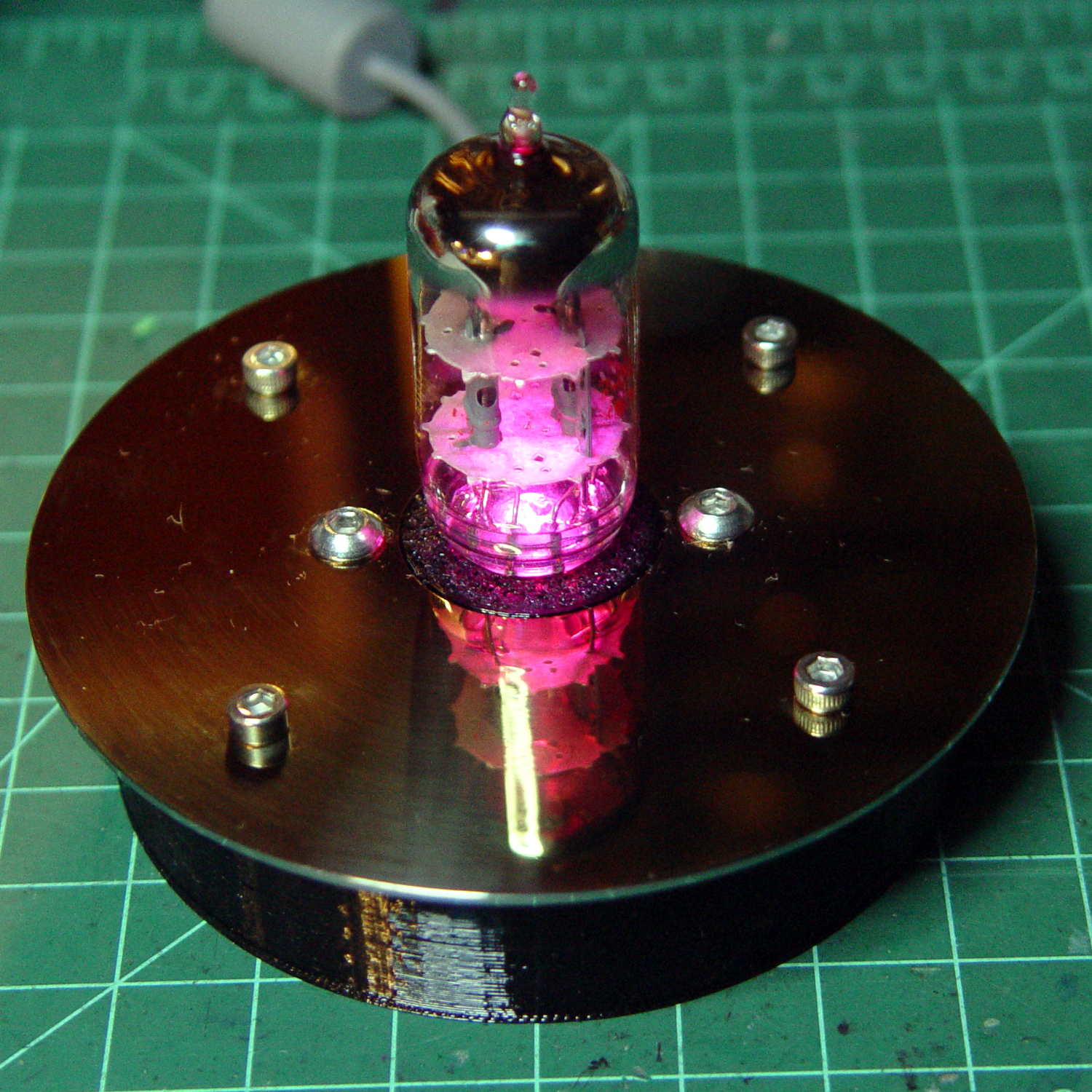
    Fortunately, the base LED completely lights the internal glass:

    6H6GT - purple phase
    6H6GT – purple phase

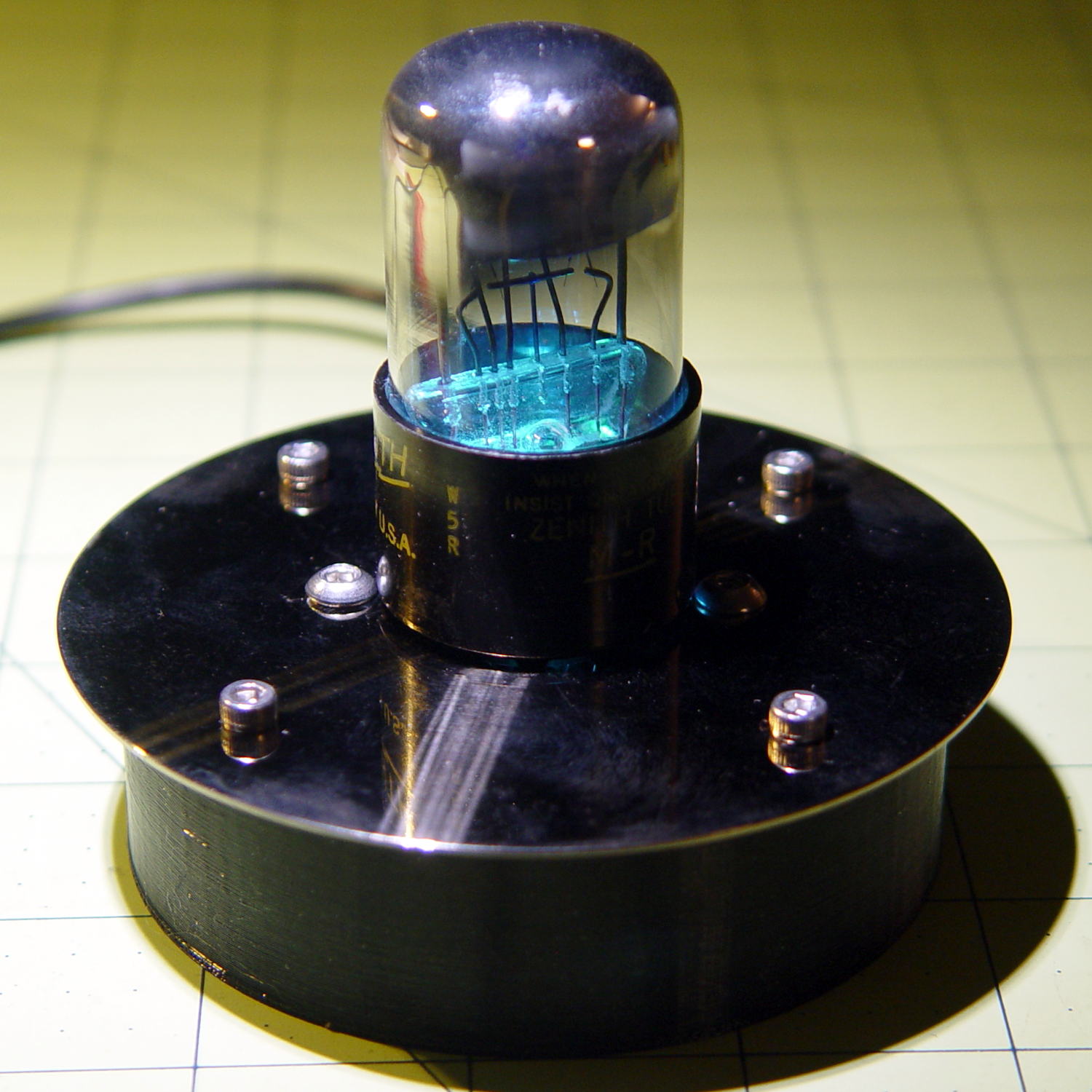
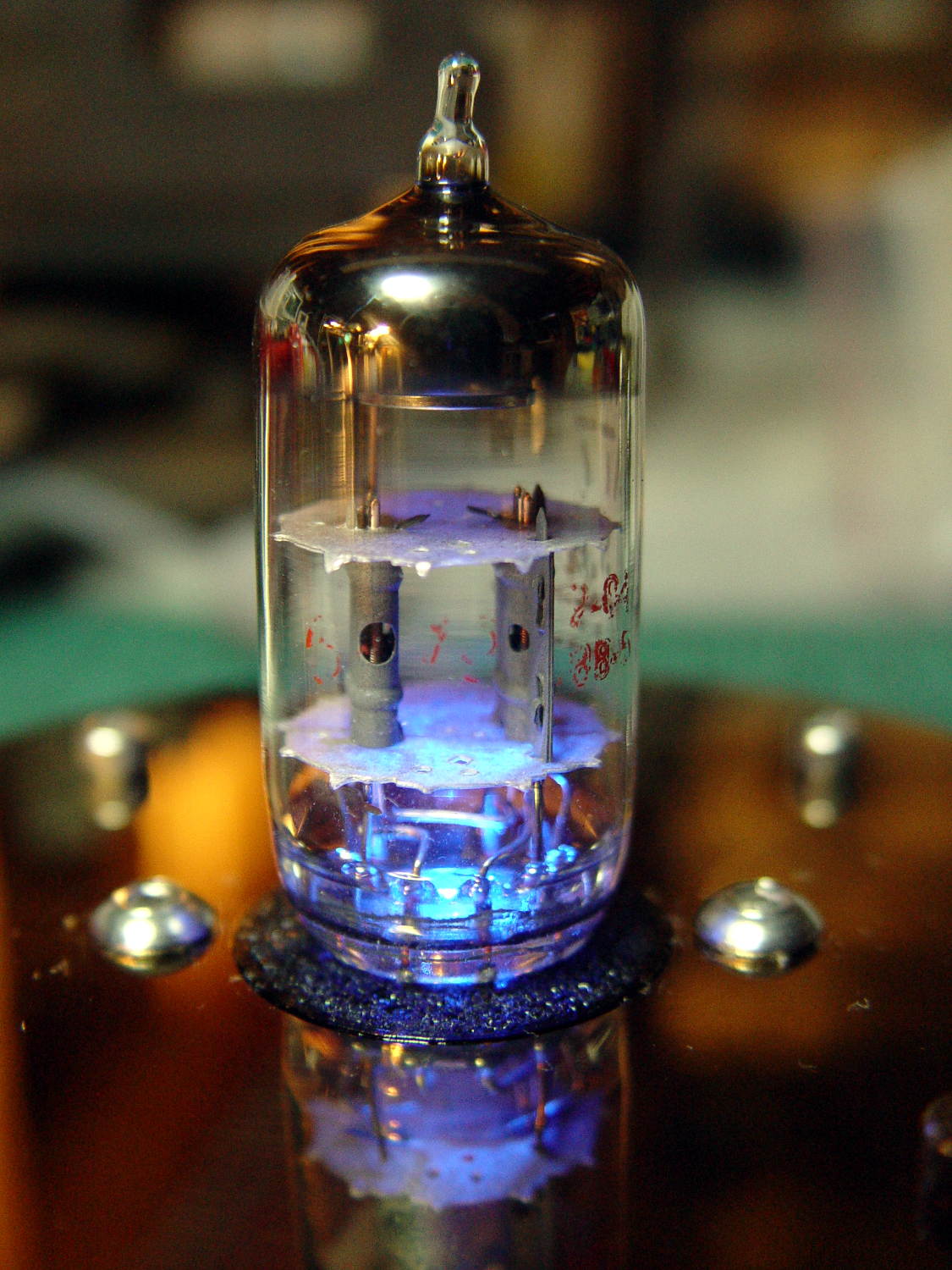
    The slowly changing color would make a fine night light:

    6H6GT - cyan phase
    6H6GT – cyan phase

    It must be Art!

  • Vacuum Tube LEDs: 5U4GB Vacuum Rectifier with Sidelight

    A larger version of the V-block clamp accommodates the 35 mm = 1-3/8 inch octal base of a 5U4GB Full-Wave Vacuum Rectifier tube:

    5U4GB - spigot milling
    5U4GB – spigot milling

    The evacuation tip nearly touched the inside end of the base spigot!

    I had to cut the shaft and half the body off the shell drill in order to fit it into the space above the tube base and below the chuck:

    5U4GB - base shell drilling
    5U4GB – base shell drilling

    A slightly larger shell drill would still fit within the pin circle, but the maximum possible hole diameter in the base really isn’t all that much larger:

    5U4GB - base opening
    5U4GB – base opening

    The getter flash covers the entire top of this tube, so I conjured a side light for a rectangular knockoff Neopixel:

    Vacuum Tube Lights - side light - solid model
    Vacuum Tube Lights – side light – solid model

    There’s no orientation that doesn’t require support:

    Vacuum Tube Lights - side light support - Slic3r preview
    Vacuum Tube Lights – side light support – Slic3r preview

    A little prying with a small screwdriver and some pulling with a needlenose pliers extracted those blobs. All the visible surfaces remained undamaged and I cleaned up the curved side with a big rat-tail file.

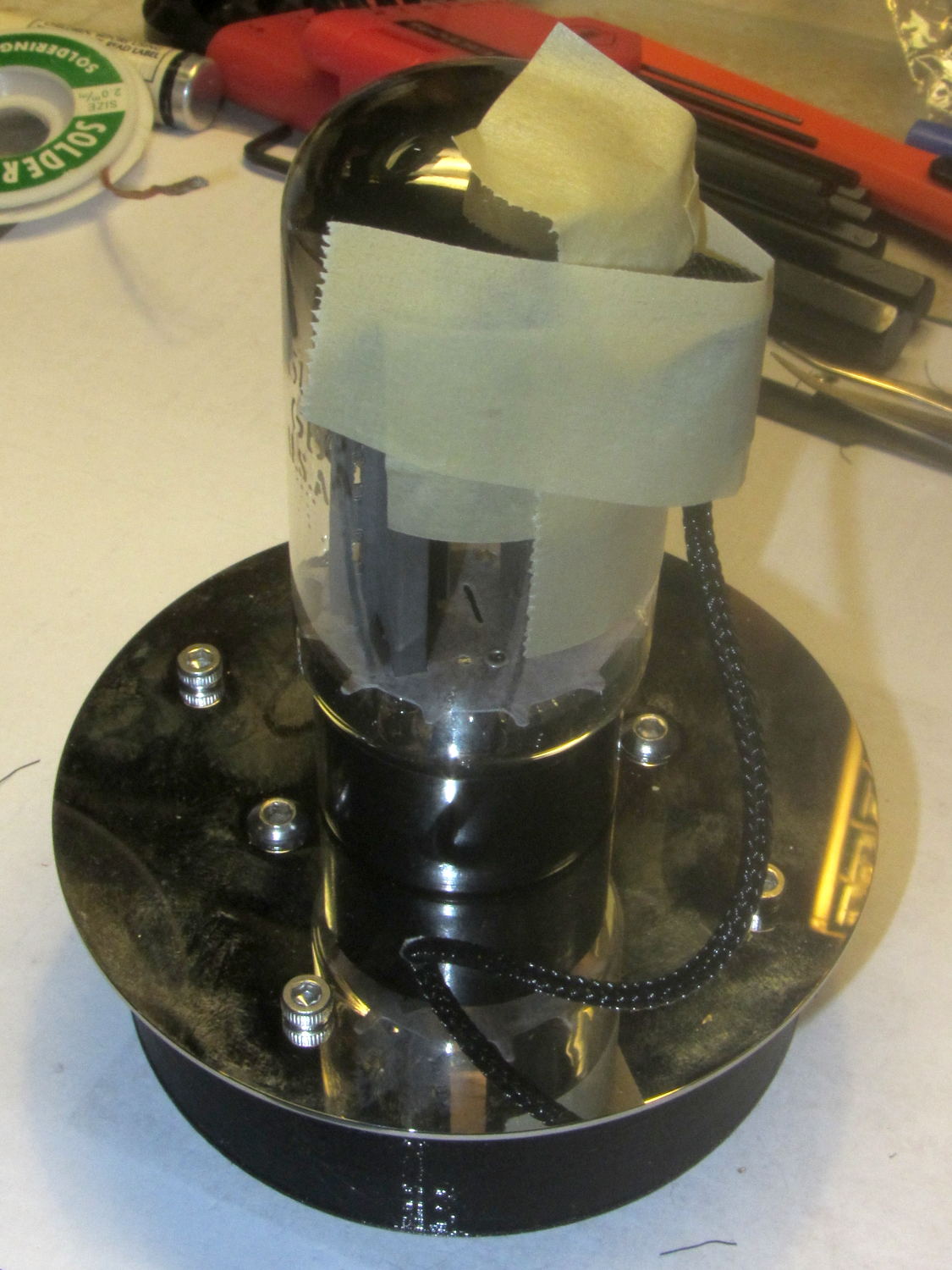
    I wired the Arduino and Neopixels, masked a spot on the side of the tube (to improve both alignment and provide protection from slobbered epoxy), applied epoxy, and taped it in place until it cured:

    5U4GB - sidelight epoxy curing
    5U4GB – sidelight epoxy curing

    The end result looks great:

    5U4GB Full-wave vacuum rectifier - side and base illumination
    5U4GB Full-wave vacuum rectifier – side and base illumination


    It currently sends Morse code through the base LED, but it’s much too stately for that.

  • Vacuum Tube LEDs: Now With Morse Code

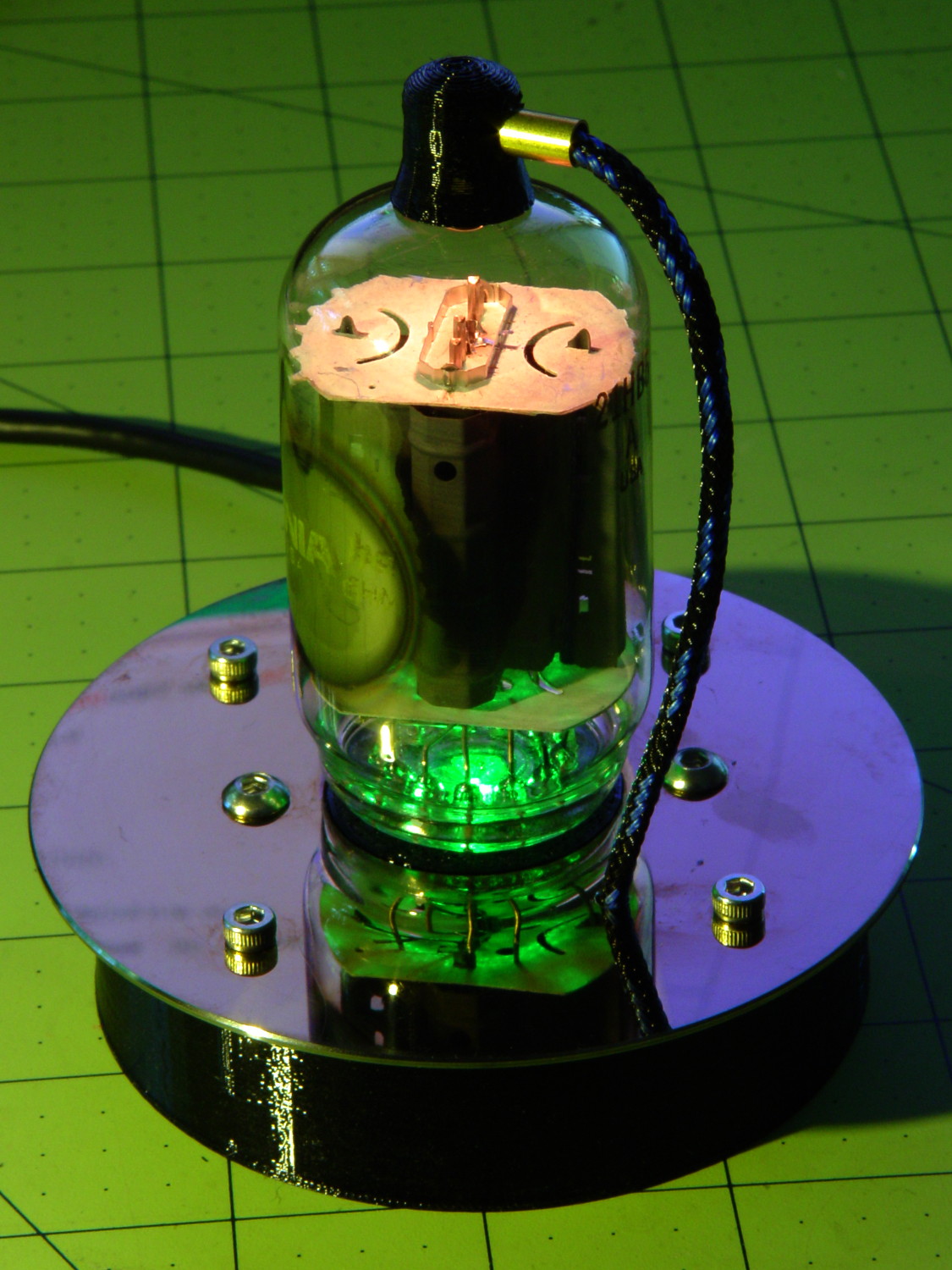
    Adding Mark Fickett’s non-blocking Morse Arduino library turns the tubes into transmitters:

    21HB5A on platter - orange green
    21HB5A on platter – orange green

    The plate cap LED blinks the message in orange, while both LEDs continue to slowly change color as before.

    You define a Morse sender object (C++, yo!) by specifying its output pin and code speed in words per minute, dump a string into it, then call a continuation function fast enough to let it twiddle the output bit for each pulse. Obviously, the rate at which the callback happens determines the timing granularity.

    However, setting a knockoff Neopixel to a given color requires more than just a binary signal on an output pin. The continuation function returns false when it’s done with the message, after which you can initialize and send another message. There’s no obvious (to me, anyhow) way to get timing information out of the code.

    The easiest solution: called the Morse continuation function at the top of the main loop, read its output pin to determine when a dit or dah is active, then set the plate cap color accordingly:

    LEDMorseSender Morse(PIN_MORSE, (float)MORSE_WPM);
    ...
    Morse.setup();
    Morse.setMessage(String("       cq cq cq de ke4znu       "));
    PrevMorse = ThisMorse = digitalRead(PIN_MORSE);
    ...
    if (!Morse.continueSending()) {
      Morse.startSending();
    }
    ThisMorse = digitalRead(PIN_MORSE);
    ...
    if (ThisMorse) {             // if Morse output high, overlay
        strip.setPixelColor(PIXEL_MORSE,MorseColor);
    }
    PrevMorse = ThisMorse;
    strip.show();               // send out precomputed colors
    ...
    <<compute colors for next iteration as usual>>
    

    I use the Entropy library to seed the PRNG, then pick three prime numbers for the sine wave periods (with an ugly hack to avoid matching periods):

    uint32_t rn = Entropy.random();
    ...
    randomSeed(rn);
    ...
    
    Pixels[RED].Prime = PrimeList[random(sizeof(PrimeList))];
    
    do {
      Pixels[GREEN].Prime = PrimeList[random(sizeof(PrimeList))];
    } while (Pixels[RED].Prime == Pixels[GREEN].Prime);
    
    do {
      Pixels[BLUE].Prime = PrimeList[random(sizeof(PrimeList))];
    } while (Pixels[BLUE].Prime == Pixels[RED].Prime ||
            Pixels[BLUE].Prime == Pixels[GREEN].Prime);
    
    printf("Primes: (%d,%d,%d)\r\n",Pixels[RED].Prime,Pixels[GREEN].Prime,Pixels[BLUE].Prime);
    

    In the spirit of “Video or it didn’t happen”: YouTube!

    The Arduino source code as a GitHub Gist:

    // Neopixel mood lighting for vacuum tubes
    // Ed Nisley – KE4ANU – June 2016
    // September 2016 – Add Morse library and blinkiness
    #include <Adafruit_NeoPixel.h>
    #include <morse.h>
    #include <Entropy.h>
    //———-
    // Pin assignments
    const byte PIN_NEO = A3; // DO – data out to first Neopixel
    const byte PIN_HEARTBEAT = 13; // DO – Arduino LED
    #define PIN_MORSE 12
    //———-
    // Constants
    #define PIXELS 2
    #define PIXEL_MORSE 1
    #define MORSE_WPM 10
    #define UPDATEINTERVAL 50ul
    const unsigned long UpdateMS = UPDATEINTERVAL – 1ul; // update LEDs only this many ms apart (minus loop() overhead)
    // number of steps per cycle, before applying prime factors
    #define RESOLUTION 250
    // want to randomize the startup a little?
    #define RANDOMIZE true
    //———-
    // Globals
    // instantiate the Neopixel buffer array
    Adafruit_NeoPixel strip = Adafruit_NeoPixel(PIXELS, PIN_NEO, NEO_GRB + NEO_KHZ800);
    uint32_t FullWhite = strip.Color(255,255,255);
    uint32_t FullOff = strip.Color(0,0,0);
    uint32_t MorseColor = strip.Color(255,191,0);
    struct pixcolor_t {
    byte Prime;
    unsigned int NumSteps;
    unsigned int Step;
    float StepSize;
    byte MaxPWM;
    };
    unsigned int PlatterSteps;
    byte PrimeList[] = {3,5,7,13,19,29};
    // colors in each LED
    enum pixcolors {RED, GREEN, BLUE, PIXELSIZE};
    struct pixcolor_t Pixels[PIXELSIZE]; // all the data for each pixel color intensity
    uint32_t UniColor;
    unsigned long MillisNow;
    unsigned long MillisThen;
    // Morse code
    LEDMorseSender Morse(PIN_MORSE, (float)MORSE_WPM);
    uint8_t PrevMorse, ThisMorse;
    //– Figure PWM based on current state
    byte StepColor(byte Color, float Phi) {
    byte Value;
    Value = (Pixels[Color].MaxPWM / 2.0) * (1.0 + sin(Pixels[Color].Step * Pixels[Color].StepSize + Phi));
    // Value = (Value) ? Value : Pixels[Color].MaxPWM; // flash at dimmest points
    return Value;
    }
    //– Helper routine for printf()
    int s_putc(char c, FILE *t) {
    Serial.write(c);
    }
    //——————
    // Set the mood
    void setup() {
    pinMode(PIN_HEARTBEAT,OUTPUT);
    digitalWrite(PIN_HEARTBEAT,LOW); // show we arrived
    Serial.begin(57600);
    fdevopen(&s_putc,0); // set up serial output for printf()
    printf("Vacuum Tube Mood Light\r\nEd Nisley – KE4ZNU – September 2016\r\n");
    Entropy.initialize(); // start up entropy collector
    // set up Neopixels
    strip.begin();
    strip.show();
    // lamp test: a brilliant white flash
    printf("Lamp test: flash white\r\n");
    for (byte i=0; i<3 ; i++) {
    for (int j=0; j < strip.numPixels(); j++) { // fill LEDs with white
    strip.setPixelColor(j,FullWhite);
    }
    strip.show();
    delay(500);
    for (int j=0; j < strip.numPixels(); j++) { // fill LEDs with black
    strip.setPixelColor(j,FullOff);
    }
    strip.show();
    delay(500);
    }
    // set up real random numbers
    uint32_t rn = Entropy.random();
    if (RANDOMIZE) {
    printf("Preloading LED array with seed: %08lx\r\n",rn);
    randomSeed(rn);
    }
    else {
    printf("Start not randomized\r\n");
    }
    printf("First random number: %ld\r\n",random(10));
    // set up the color generators
    Pixels[RED].Prime = PrimeList[random(sizeof(PrimeList))];
    do {
    Pixels[GREEN].Prime = PrimeList[random(sizeof(PrimeList))];
    } while (Pixels[RED].Prime == Pixels[GREEN].Prime);
    do {
    Pixels[BLUE].Prime = PrimeList[random(sizeof(PrimeList))];
    } while (Pixels[BLUE].Prime == Pixels[RED].Prime ||
    Pixels[BLUE].Prime == Pixels[GREEN].Prime);
    printf("Primes: (%d,%d,%d)\r\n",Pixels[RED].Prime,Pixels[GREEN].Prime,Pixels[BLUE].Prime);
    Pixels[RED].MaxPWM = 255;
    Pixels[GREEN].MaxPWM = 255;
    Pixels[BLUE].MaxPWM = 255;
    for (byte c=0; c < PIXELSIZE; c++) {
    Pixels[c].NumSteps = RESOLUTION * (unsigned int) Pixels[c].Prime;
    Pixels[c].Step = RANDOMIZE ? random(Pixels[c].NumSteps) : (3*Pixels[c].NumSteps)/4;
    Pixels[c].StepSize = TWO_PI / Pixels[c].NumSteps; // in radians per step
    printf("c: %d Steps: %d Init: %d",c,Pixels[c].NumSteps,Pixels[c].Step);
    printf(" PWM: %d\r\n",Pixels[c].MaxPWM);
    }
    // set up Morse generator
    printf("Morse %d wpm\n",MORSE_WPM);
    Morse.setup();
    Morse.setMessage(String(" cq cq cq de ke4znu "));
    PrevMorse = ThisMorse = digitalRead(PIN_MORSE);
    MillisNow = MillisThen = millis();
    }
    //——————
    // Run the mood
    void loop() {
    if (!Morse.continueSending()) {
    Morse.startSending();
    }
    ThisMorse = digitalRead(PIN_MORSE);
    MillisNow = millis();
    if (((MillisNow – MillisThen) > UpdateMS) || // time for color change?
    (PrevMorse != ThisMorse)) { // Morse output bit changed?
    digitalWrite(PIN_HEARTBEAT,HIGH);
    if (ThisMorse) { // if Morse output high, overlay
    strip.setPixelColor(PIXEL_MORSE,MorseColor);
    }
    PrevMorse = ThisMorse;
    strip.show(); // send out precomputed colors
    for (byte c=0; c < PIXELSIZE; c++) { // compute next increment for each color
    if (++Pixels[c].Step >= Pixels[c].NumSteps) {
    Pixels[c].Step = 0;
    printf("Cycle %d steps %d at %8ld delta %ld ms\r\n",c,Pixels[c].NumSteps,MillisNow,(MillisNow – MillisThen));
    }
    }
    byte Value[PIXELSIZE];
    for (byte c=0; c < PIXELSIZE; c++) { // … for each color
    Value[c] = StepColor(c,0.0); // figure new PWM value
    }
    UniColor = strip.Color(Value[RED],Value[GREEN],Value[BLUE]);
    for (int j=0; j < strip.numPixels(); j++) { // fill all LEDs with color
    strip.setPixelColor(j,UniColor);
    }
    MillisThen = MillisNow;
    digitalWrite(PIN_HEARTBEAT,LOW);
    }
    }
    view raw TubeMorse.ino hosted with ❤ by GitHub
  • Vacuum Tube LEDs: Fully Dressed 21HB5A

    Black PETG definitely looks better than cyan for this job:

    21HB5A - Black PETG base - flash
    21HB5A – Black PETG base – flash

    Holding the plate cap to the tube with a thin ring of opaque epoxy cuts down on the glare under its edge:

    21HB5A - Black PETG base - cyan phase
    21HB5A – Black PETG base – cyan phase

    Fire in the bottle!

    21HB5A - Black PETG fittings - punched drive platter - purple phase
    21HB5A – Black PETG fittings – punched drive platter – purple phase

    It’s still running basically the same Arduino code as before, but I have some ideas about that

  • Vacuum Tube LEDs: Hard Drive Platter Base

    Stainless steel socket head and button head screws add a certain techie charm to the hard drive platter mirroring the Noval tube:

    Noval - Black PETG base - magenta phase
    Noval – Black PETG base – magenta phase

    Black PETG, rather than cyan or natural filament, suppresses the socket’s glow and emphasizes the tube’s internal lighting:

    Noval tube on platter - button-head screws
    Noval tube on platter – button-head screws

    The base puts the USB-to-serial adapter on the floor and stands the Pro Mini against a flat on the far wall:

    Noval tube socket and base - interior layout
    Noval tube socket and base – interior layout

    A notch for the cable seems like a useful addition subtraction to the socket, because that cable tie just doesn’t look right. I used 4 mm threaded inserts, as those button head screws looked better.

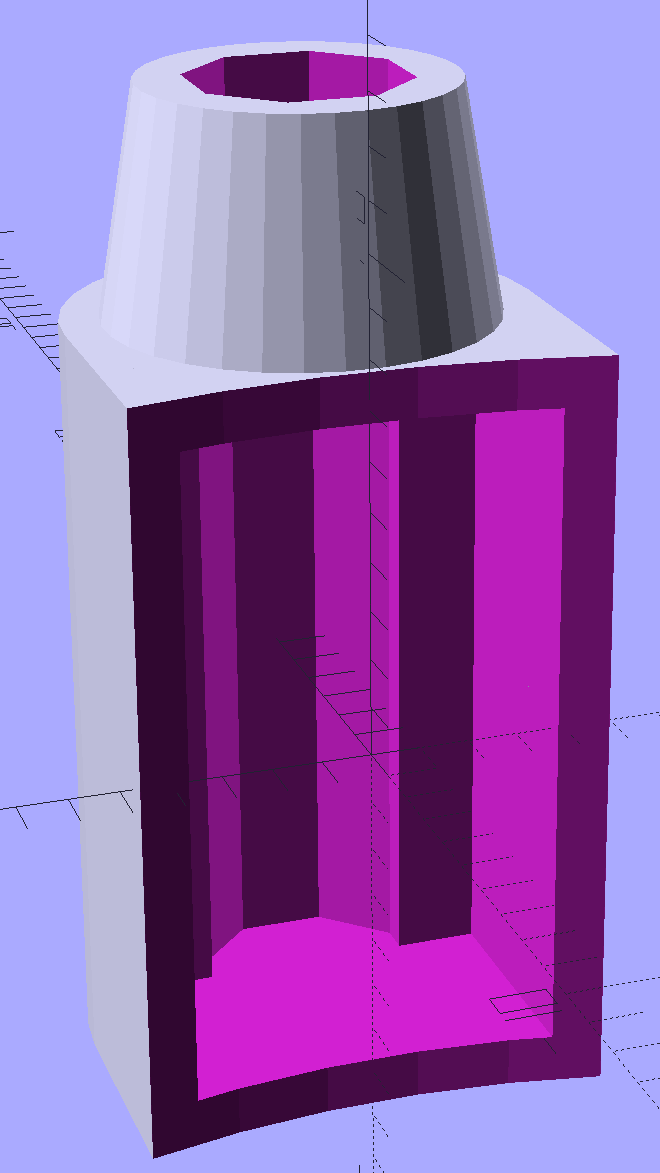
    The solid model looks like you’d expect:

    Vacuum Tube Lights - hard drive platter base - solid model
    Vacuum Tube Lights – hard drive platter base – solid model

    Those are 3 mm threaded inserts, again to get the right head size screw on the platter.

    The height of the base depends on the size of the socket, with the model maintaining a bit of clearance above the USB adapter. The OD depends on the platter OD, with a fixed overhang, and the insert BCD depends on the OD / insert OD / base wall thickness.

    Although I’m using an Arduino Pro Mini and a separate USB-to-serial adapter, a (knockoff) Arduino Nano would be better and cheaper, although the SMD parts on the Nano’s bottom surface make it a bit thicker and less suitable for foam-tape mounting.

    I drilled the platter using manual CNC:

    Hard drive platter - Noval base drilling
    Hard drive platter – Noval base drilling

    After centering the origin on the platter hole, the hole positions (for a 71 mm BCD) use LinuxCNC’s polar notation:

    g0 @[71/2]^45
    g0 @[71/2]^[45+90]
    g0 @[71/2]^[45+180]
    g0 @[71/2]^-45
    

    I used the Joggy Thing for manual drilling after each move; that’s easier than figuring out the appropriate g81 feed & speed.

    The 3D printed base still looks a bit chintzy compared with the platter, but it’s coming along.

    The OpenSCAD source code as a GitHub Gist:

    // Vacuum Tube LED Lights
    // Ed Nisley KE4ZNU February … September 2016
    Layout = "PlatterBase"; // Cap LampBase USBPort Bushings
    // Socket(s) (Build)FinCap Platter[Base|Fixture]
    DefaultSocket = "Noval";
    Section = false; // cross-section the object
    Support = true;
    //- Extrusion parameters must match reality!
    ThreadThick = 0.25;
    ThreadWidth = 0.40;
    HoleWindage = 0.2;
    Protrusion = 0.1; // make holes end cleanly
    inch = 25.4;
    function IntegerMultiple(Size,Unit) = Unit * ceil(Size / Unit);
    //———————-
    // Dimensions
    // https://en.wikipedia.org/wiki/Tube_socket#Summary_of_Base_Details
    // punch & screw OC modified for drive platter chassis plate
    // platter = 25 mm ID
    // CD = 15 mm ID with raised ring at 37 mm, needs screw head clearance
    T_NAME = 0; // common name
    T_NUMPINS = 1; // total, with no allowance for keying
    T_PINBCD = 2; // tube pin circle diameter
    T_PINOD = 3; // … diameter
    T_PINLEN = 4; // … length (must also clear evacuation tip / spigot)
    T_HOLEOD = 5; // nominal panel hole from various sources
    T_PUNCHOD = 6; // panel hole optimized for inch-size Greenlee punches
    T_TUBEOD = 7; // envelope or base diameter
    T_PIPEOD = 8; // light pipe from LED to tube base (clear evac tip / spigot)
    T_SCREWOC = 9; // mounting screw holes
    // Name pins BCD dia length hole punch tube pipe screw
    TubeData = [
    ["Mini7", 8, 9.53, 1.016, 7.0, 16.0, 25.0, 18.0, 5.0, 35.0], // punch 11/16, screw 22.5 OC
    ["Octal", 8, 17.45, 2.36, 10.0, 36.2, (8 + 1)/8 * inch, 32.0, 11.5, 47.0], // screw 39.0 OC
    ["Noval", 10, 11.89, 1.1016, 7.0, 22.0, 25.0 , 21.0, 7.5, 35.0], // punch 7/8, screw 28.0 OC
    ["Magnoval", 10, 17.45, 1.27, 9.0, 29.7, (4 + 1)/4 * inch, 46.0, 12.4, 38.2], // similar to Novar
    ["Duodecar", 13, 19.10, 1.05, 9.0, 32.0, (4 + 1)/4 * inch, 38.0, 12.5, 47.0], // screw 39.0 OC
    ];
    ID = 0;
    OD = 1;
    LENGTH = 2;
    Pixel = [7.0,10.0,3.0]; // ID = contact patch, OD = PCB dia, LENGTH = overall thickness
    SocketNut = // socket mounting: threaded insert or nut recess
    // [3.5,5.2,7.2] // 6-32 insert
    [4.0,6.0,5.9] // 4 mm short insert
    ;
    NutSides = 8;
    SocketShim = 2*ThreadThick; // between pin holes and pixel top
    SocketFlange = 1.5; // rim around socket below punchout
    PanelThick = 1.5; // socket extension through punchout
    FinCutterOD = 1/8 * inch;
    FinCapSize = [(Pixel[OD] + 2*FinCutterOD),30.0,(10.0 + 2*Pixel[LENGTH])];
    USBPCB =
    // [28,16,6.5] // small Sparkfun knockoff
    [36,18 + 1,5.8 + 0.4] // Deek-Robot fake FTDI with ISP header
    ;
    Platter = [25.0,95.0,1.26]; // hard drive platter dimensions
    //———————-
    // Useful routines
    module PolyCyl(Dia,Height,ForceSides=0) { // based on nophead's polyholes
    Sides = (ForceSides != 0) ? ForceSides : (ceil(Dia) + 2);
    FixDia = Dia / cos(180/Sides);
    cylinder(d=(FixDia + HoleWindage),h=Height,$fn=Sides);
    }
    //———————-
    // Tube cap
    CapTube = [4.0,3/16 * inch,10.0]; // brass tube for flying lead to cap LED
    CapSize = [Pixel[ID],(Pixel[OD] + 2.0),(CapTube[OD] + 2*Pixel[LENGTH])];
    CapSides = 8*4;
    module Cap() {
    difference() {
    union() {
    cylinder(d=CapSize[OD],h=(CapSize[LENGTH]),$fn=CapSides); // main cap body
    translate([0,0,CapSize[LENGTH]]) // rounded top
    scale([1.0,1.0,0.65])
    sphere(d=CapSize[OD]/cos(180/CapSides),$fn=CapSides); // cos() fixes slight undersize vs cylinder
    cylinder(d1=(CapSize[OD] + 2*3*ThreadWidth),d2=CapSize[OD],h=1.5*Pixel[LENGTH],$fn=CapSides); // skirt
    }
    translate([0,0,-Protrusion]) // bore for wiring to LED
    PolyCyl(CapSize[ID],(CapSize[LENGTH] + 3*ThreadThick + Protrusion),CapSides);
    translate([0,0,-Protrusion]) // PCB recess with clearance for tube dome
    PolyCyl(Pixel[OD],(1.5*Pixel[LENGTH] + Protrusion),CapSides);
    translate([0,0,(1.5*Pixel[LENGTH] – Protrusion)]) // small step + cone to retain PCB
    cylinder(d1=(Pixel[OD]/cos(180/CapSides) + HoleWindage),d2=Pixel[ID],h=(Pixel[LENGTH] + Protrusion),$fn=CapSides);
    translate([0,0,(CapSize[LENGTH] – CapTube[OD]/(2*cos(180/8)))]) // hole for brass tube holding wire loom
    rotate([90,0,0]) rotate(180/8)
    PolyCyl(CapTube[OD],CapSize[OD],8);
    }
    }
    //———————-
    // Heatsink tube cap
    module FinCap() {
    CableOD = 3.5; // cable + braid diameter
    BulbOD = 3.75 * inch; // bulb OD; use 10 inches for flat
    echo(str("Fin Cutter: ",FinCutterOD));
    FinSides = 2*4;
    BulbRadius = BulbOD / 2;
    BulbDepth = BulbRadius – sqrt(pow(BulbRadius,2) – pow(FinCapSize[OD],2)/4);
    echo(str("Bulb OD: ",BulbOD," recess: ",BulbDepth));
    NumFins = floor(PI*FinCapSize[ID] / (2*FinCutterOD));
    FinAngle = 360 / NumFins;
    echo(str("NumFins: ",NumFins," angle: ",FinAngle," deg"));
    difference() {
    union() {
    cylinder(d=FinCapSize[ID],h=FinCapSize[LENGTH],$fn=2*NumFins); // main body
    for (i = [0:NumFins – 1]) // fins
    rotate(i * FinAngle)
    hull() {
    translate([FinCapSize[ID]/2,0,0])
    rotate(180/FinSides)
    cylinder(d=FinCutterOD,h=FinCapSize[LENGTH],$fn=FinSides);
    translate([(FinCapSize[OD] – FinCutterOD)/2,0,0])
    rotate(180/FinSides)
    cylinder(d=FinCutterOD,h=FinCapSize[LENGTH],$fn=FinSides);
    }
    rotate(FinAngle/2) // cable entry boss
    translate([FinCapSize[ID]/2,0,FinCapSize[LENGTH]/2])
    cube([FinCapSize[OD]/4,FinCapSize[OD]/4,FinCapSize[LENGTH]],center=true);
    }
    for (i = [1:NumFins – 1]) // fin inner gullets, omit cable entry side
    rotate(i * FinAngle + FinAngle/2) // joint isn't quite perfect, but OK
    translate([FinCapSize[ID]/2,0,-Protrusion])
    rotate(0*180/FinSides)
    cylinder(d=FinCutterOD/cos(180/FinSides),h=(FinCapSize[LENGTH] + 2*Protrusion),$fn=FinSides);
    translate([0,0,-Protrusion]) // PCB recess
    PolyCyl(Pixel[OD],(1.5*Pixel[LENGTH] + Protrusion),FinSides);
    PolyCyl(Pixel[ID],(FinCapSize[LENGTH] – 3*ThreadThick),FinSides); // bore for LED wiring
    translate([0,0,(FinCapSize[LENGTH] – 3*ThreadThick – 2*CableOD/(2*cos(180/8)))]) // cable inlet
    rotate(FinAngle/2) rotate([0,90,0]) rotate(180/8)
    PolyCyl(CableOD,FinCapSize[OD],8);
    if (BulbOD <= 10.0 * inch) // curve for top of bulb
    translate([0,0,-(BulbRadius – BulbDepth + 2*ThreadThick)]) // … slightly flatten tips
    sphere(d=BulbOD,$fn=16*FinSides);
    }
    }
    //———————-
    // Aperture for USB-to-serial adapter snout
    // These are all magic numbers, of course
    module USBPort() {
    translate([0,USBPCB[0]])
    rotate([90,0,0])
    linear_extrude(height=USBPCB[0])
    polygon(points=[
    [0,0],
    [USBPCB[1]/2,0],
    [USBPCB[1]/2,0.5*USBPCB[2]],
    [USBPCB[1]/3,USBPCB[2]],
    [-USBPCB[1]/3,USBPCB[2]],
    [-USBPCB[1]/2,0.5*USBPCB[2]],
    [-USBPCB[1]/2,0],
    ]);
    }
    //———————-
    // Box for Leviton ceramic lamp base
    module LampBase() {
    Insert = [3.5,5.2,7.2]; // 6-32 brass insert to match standard electrical screws
    Bottom = 3.0;
    Base = [4.0*inch,4.5*inch,20.0 + Bottom];
    Sides = 12*4;
    Retainer = [3.5,11.0,1.0]; // flat fiber washer holding lamp base screws in place
    StudSides = 8;
    StudOC = 3.5 * inch;
    Stud = [Insert[OD], // insert for socket screws
    min(15.0,1.5*(Base[ID] – StudOC)/cos(180/StudSides)), // OD = big enough to merge with walls
    (Base[LENGTH] – Retainer[LENGTH])]; // leave room for retainer
    union() {
    difference() {
    rotate(180/Sides)
    cylinder(d=Base[OD],h=Base[LENGTH],$fn=Sides);
    rotate(180/Sides)
    translate([0,0,Bottom])
    cylinder(d=Base[ID],h=Base[LENGTH],$fn=Sides);
    translate([0,-Base[OD]/2,Bottom + 1.2]) // mount on double-sided foam tape
    rotate(0)
    USBPort();
    }
    for (i = [-1,1])
    translate([i*StudOC/2,0,0])
    rotate(180/StudSides)
    difference() {
    cylinder(d=Stud[OD],h=Stud[LENGTH],$fn=StudSides);
    translate([0,0,Bottom])
    PolyCyl(Stud[ID],(Stud[LENGTH] – (Bottom – Protrusion)),6);
    }
    }
    }
    //———————-
    // Base for hard drive platters
    module PlatterBase(TubeName = DefaultSocket) {
    PCB =
    [36,18,3] // Arduino Pro Mini
    ;
    Tube = search([TubeName],TubeData,1,0)[0];
    SocketHeight = Pixel[LENGTH] + SocketShim + TubeData[Tube][T_PINLEN] – PanelThick;
    echo(str("Base for ",TubeData[Tube][0]," socket"));
    Overhang = 5.5; // platter overhangs base by this much
    Bottom = 4*ThreadThick;
    Base = [(Platter[OD] – 3*Overhang), // smaller than 3.5 inch Sch 40 PVC pipe…
    (Platter[OD] – 2*Overhang),
    2.0 + max(PCB[1],(2.0 + SocketHeight + USBPCB[2])) + Bottom];
    Sides = 24*4;
    echo(str(" Height: ",Base[2]," mm"));
    Insert = // platter mounting: threaded insert or nut recess
    // [3.5,5.2,7.2] // 6-32 insert
    [3.9,5.0,8.0] // 3 mm – long insert
    ;
    NumStuds = 4;
    StudSides = 8;
    Stud = [Insert[OD], // insert for socket screws
    2*Insert[OD], // OD = big enough to merge with walls
    Base[LENGTH]]; // leave room for retainer
    StudBCD = floor(Base[ID] – Stud[OD] + (Stud[OD] – Stud[ID])/2);
    echo(str("Platter screw BCD: ",StudBCD," mm"));
    PCBInset = Base[ID]/2 – sqrt(pow(Base[ID]/2,2) – pow(PCB[0],2)/4);
    union() {
    difference() {
    rotate(180/Sides)
    cylinder(d=Base[OD],h=Base[LENGTH],$fn=Sides);
    rotate(180/Sides)
    translate([0,0,Bottom])
    cylinder(d=Base[ID],h=Base[LENGTH],$fn=Sides);
    translate([0,-Base[OD]/2,Bottom + 1.2]) // mount PCB on foam tape
    rotate(0)
    USBPort();
    }
    for (a = [0:(NumStuds – 1)]) // platter mounting studs
    rotate(180/NumStuds + a*360/(NumStuds))
    translate([StudBCD/2,0,0])
    rotate(180/StudSides)
    difference() {
    cylinder(d=Stud[OD],h=Stud[LENGTH],$fn=2*StudSides);
    translate([0,0,Bottom])
    PolyCyl(Stud[ID],(Stud[LENGTH] – (Bottom – Protrusion)),StudSides);
    }
    intersection() { // microcontroller PCB mounting plate
    rotate(180/Sides)
    cylinder(d=Base[OD],h=Base[LENGTH],$fn=Sides);
    translate([-PCB[0]/2,(Base[ID]/2 – PCBInset),0])
    cube([PCB[0],Base[OD]/2,Base[LENGTH]],center=false);
    }
    difference() {
    intersection() { // totally ad-hoc bridge around USB opening
    rotate(180/Sides)
    cylinder(d=Base[OD],h=Base[LENGTH],$fn=Sides);
    translate([-1.25*USBPCB[1]/2,-(Base[ID]/2),0])
    cube([1.25*USBPCB[1],2.0,Base[LENGTH]],center=false);
    }
    translate([0,-Base[OD]/2,Bottom + 1.2]) // mount PCB on foam tape
    rotate(0)
    USBPort();
    }
    }
    }
    //———————-
    // Drilling fixture for disk platters
    module PlatterFixture() {
    StudOC = [1.16*inch,1.16*inch]; // Sherline tooling plate screw spacing
    StudClear = 5.0;
    BasePlate = [(20 + StudOC[0]*ceil(Platter[OD] / StudOC[0])),(Platter[OD] + 10),7.0];
    PlateRound = 10.0; // corner radius
    difference() {
    hull() // basic block
    for (i=[-1,1], j=[-1,1])
    translate([i*(BasePlate[0]/2 – PlateRound),j*(BasePlate[1]/2 – PlateRound),0])
    cylinder(r=PlateRound,h=BasePlate[2],$fn=4*4);
    for (i=[-1:1], j=[-1:1]) // index marks
    translate([i*100/2,j*100/2,BasePlate[2] – 2*ThreadThick])
    cylinder(d=1.5,h=1,$fn=6);
    for (i=[-1,1], j=[-1,0,1]) // holes for tooling plate studs
    translate([i*StudOC[0]*ceil(Platter[OD] / StudOC[0])/2,j*StudOC[0],-Protrusion])
    PolyCyl(StudClear,BasePlate[2] + 2*Protrusion,6);
    translate([0,0,-Protrusion]) // center clamp hole
    PolyCyl(StudClear,BasePlate[2] + 2*Protrusion,6);
    translate([0,0,BasePlate[2] – Platter[LENGTH]]) // disk locating recess
    linear_extrude(height=(Platter[LENGTH] + Protrusion),convexity=2)
    difference() {
    circle(d=(Platter[OD] + 1),$fn=8*4);
    circle(d=Platter[ID],$fn=8*4);
    }
    translate([0,0,BasePlate[2] – 4.0]) // drilling recess
    linear_extrude(height=(4.0 + Protrusion),convexity=2)
    difference() {
    circle(d=(Platter[OD] – 10),$fn=8*4);
    circle(d=(Platter[ID] + 10),$fn=8*4);
    }
    }
    }
    //———————-
    // Tube Socket
    module Socket(Name = DefaultSocket) {
    NumSides = 6*4;
    Tube = search([Name],TubeData,1,0)[0];
    echo(str("Building ",TubeData[Tube][0]," socket"));
    echo(str(" Punch: ",TubeData[Tube][T_PUNCHOD]," mm = ",TubeData[Tube][T_PUNCHOD]/inch," inch"));
    echo(str(" Screws: ",TubeData[Tube][T_SCREWOC]," mm =",TubeData[Tube][T_SCREWOC]/inch," inch OC"));
    OAH = Pixel[LENGTH] + SocketShim + TubeData[Tube][T_PINLEN];
    BaseHeight = OAH – PanelThick;
    difference() {
    union() {
    linear_extrude(height=BaseHeight) // base outline
    hull() {
    circle(d=(TubeData[Tube][T_PUNCHOD] + 2*SocketFlange),$fn=NumSides);
    for (i=[-1,1])
    translate([i*TubeData[Tube][T_SCREWOC]/2,0])
    circle(d=2.0*SocketNut[OD],$fn=NumSides);
    }
    cylinder(d=TubeData[Tube][T_PUNCHOD],h=OAH,$fn=NumSides); // boss in chassis punch hole
    }
    for (i=[0:(TubeData[Tube][T_NUMPINS] – 1)]) // tube pins
    rotate(i*360/TubeData[Tube][T_NUMPINS])
    translate([TubeData[Tube][T_PINBCD]/2,0,(OAH – TubeData[Tube][T_PINLEN])])
    rotate(180/4)
    PolyCyl(TubeData[Tube][T_PINOD],(TubeData[Tube][T_PINLEN] + Protrusion),4);
    for (i=[-1,1]) // mounting screw holes & nut traps / threaded inserts
    translate([i*TubeData[Tube][T_SCREWOC]/2,0,-Protrusion]) {
    PolyCyl(SocketNut[OD],(SocketNut[LENGTH] + Protrusion),NutSides);
    PolyCyl(SocketNut[ID],(OAH + 2*Protrusion),NutSides);
    }
    translate([0,0,-Protrusion]) { // LED recess
    PolyCyl(Pixel[OD],(Pixel[LENGTH] + Protrusion),8);
    }
    translate([0,0,(Pixel[LENGTH] – Protrusion)]) { // light pipe
    rotate(180/TubeData[Tube][T_NUMPINS])
    PolyCyl(TubeData[Tube][T_PIPEOD],(OAH + 2*Protrusion),TubeData[Tube][T_NUMPINS]);
    }
    }
    // Totally ad-hoc support structures …
    if (Support) {
    color("Yellow") {
    for (i=[-1,1]) // nut traps
    translate([i*TubeData[Tube][T_SCREWOC]/2,0,(SocketNut[LENGTH] – ThreadThick)/2])
    for (a=[0:5])
    rotate(a*30 + 15)
    cube([2*ThreadWidth,0.9*SocketNut[OD],(SocketNut[LENGTH] – ThreadThick)],center=true);
    if (Pixel[OD] > TubeData[Tube][T_PIPEOD]) // support pipe only if needed
    translate([0,0,(Pixel[LENGTH] – ThreadThick)/2])
    for (a=[0:7])
    rotate(a*22.5)
    cube([2*ThreadWidth,0.9*Pixel[OD],(Pixel[LENGTH] – ThreadThick)],center=true);
    }
    }
    }
    //———————-
    // Greenlee punch bushings
    module PunchBushing(Name = DefaultSocket) {
    PunchScrew = 9.5;
    BushingThick = 3.0;
    Tube = search([Name],TubeData,1,0)[0];
    echo(str("Building ",TubeData[Tube][0]," bushing"));
    NumSides = 6*4;
    difference() {
    union() {
    cylinder(d=Platter[ID],h=BushingThick,$fn=NumSides);
    cylinder(d=TubeData[Tube][T_PUNCHOD],h=(BushingThick – Platter[LENGTH]),$fn=NumSides);
    }
    translate([0,0,-Protrusion])
    PolyCyl(PunchScrew,5.0,8);
    }
    }
    //———————-
    // Build it
    if (Layout == "Cap") {
    if (Section)
    difference() {
    Cap();
    translate([-CapSize[OD],0,CapSize[LENGTH]])
    cube([2*CapSize[OD],2*CapSize[OD],3*CapSize[LENGTH]],center=true);
    }
    else
    Cap();
    }
    if (Layout == "FinCap") {
    if (Section) render(convexity=5)
    difference() {
    FinCap();
    // translate([0,-FinCapSize[OD],FinCapSize[LENGTH]])
    // cube([2*FinCapSize[OD],2*FinCapSize[OD],3*FinCapSize[LENGTH]],center=true);
    translate([-FinCapSize[OD],0,FinCapSize[LENGTH]])
    cube([2*FinCapSize[OD],2*FinCapSize[OD],3*FinCapSize[LENGTH]],center=true);
    }
    else
    FinCap();
    }
    if (Layout == "BuildFinCap")
    translate([0,0,FinCapSize[LENGTH]])
    rotate([180,0,0])
    FinCap();
    if (Layout == "LampBase")
    LampBase();
    if (Layout == "PlatterBase")
    PlatterBase();
    if (Layout == "PlatterFixture")
    PlatterFixture();
    if (Layout == "USBPort")
    USBPort();
    if (Layout == "Bushings")
    PunchBushing();
    if (Layout == "Socket")
    if (Section) {
    difference() {
    Socket();
    translate([-100/2,0,-Protrusion])
    cube([100,50,50],center=false);
    }
    }
    else
    Socket();
    if (Layout == "Sockets") {
    translate([0,50,0])
    Socket("Mini7");
    translate([0,20,0])
    Socket("Octal");
    translate([0,-15,0])
    Socket("Duodecar");
    translate([0,-50,0])
    Socket("Noval");
    translate([0,-85,0])
    Socket("Magnoval");}
  • Counterfeit FTDI USB-Serial Adapter Roundup

    As part of the vacuum tube lighting project, I picked up a bunch of USB-Serial adapters, with the intent of simply building them into the lamp base along with a knockoff Arduino Pro Mini, then plugging in a cheap USB wall wart for power. An Arduino Nano might make more sense, but this lets me use the Pro Minis for other projects where power comes from elsewhere.

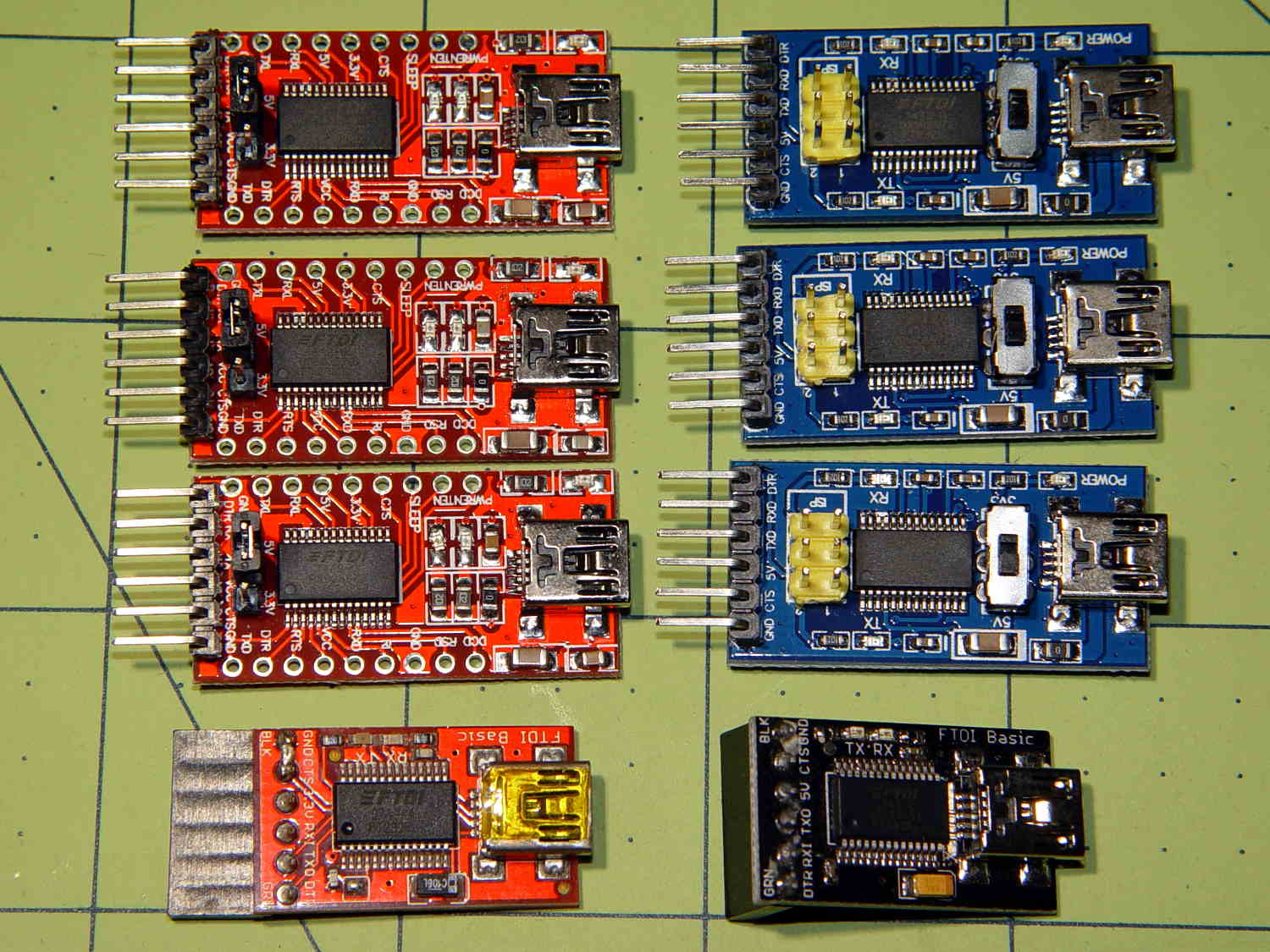
    Anyhow, I deliberately paid a few bucks extra for “genuine” FTDI chips, knowing full well what was about to happen:

    Assorted FT232 Converters
    Assorted FT232 Converters

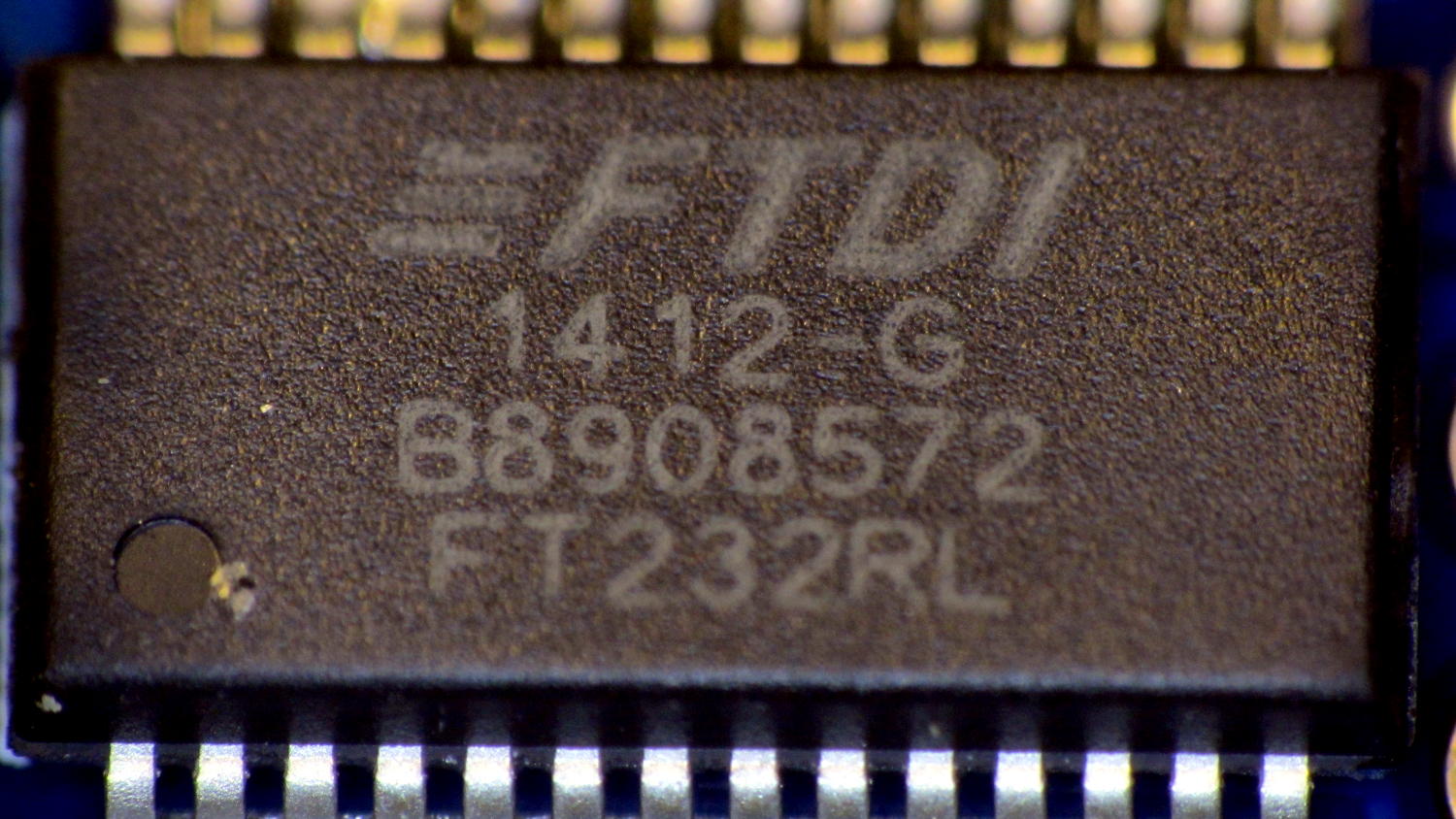
    The two boards on the bottom have been in my collection forever and seem to be genuine FTDI; the one on the left came from Sparkfun:

    FT232RL - genuine
    FT232RL – genuine

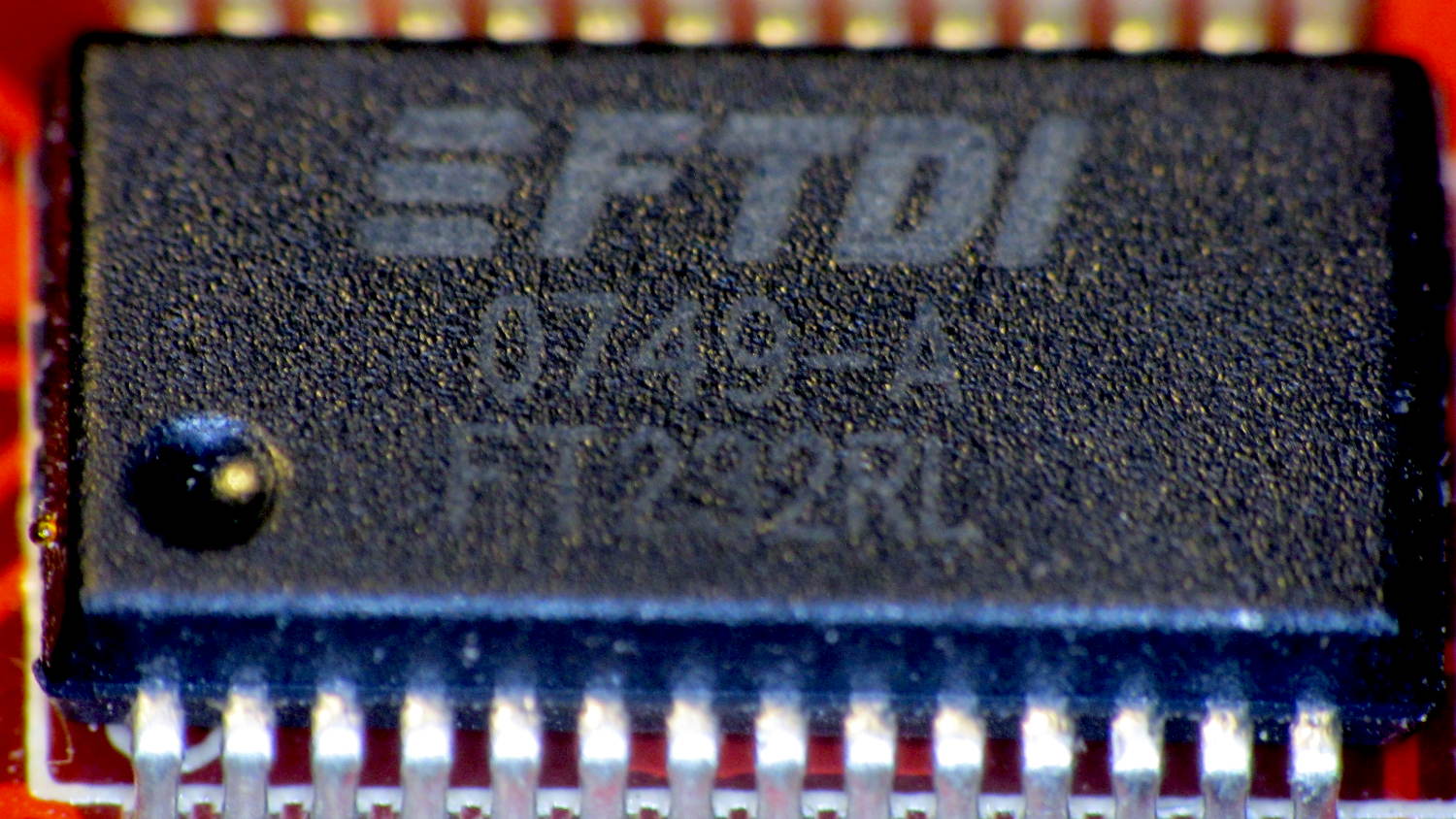
    The top six have counterfeit chips, although you’d be hard-pressed to tell from the laser etching:

    FT232RL - fake
    FT232RL – fake

    In addition to the boards, I picked up the blue square-ish cable adapters for the HP 7475A plotter project and, again, paid extra for “genuine” FTDI chips. The other adapters, based on Prolific PL2303 chips, I’ve had basically forever:

    Assorted FT232 Converters - Cabled
    Assorted FT232 Converters – Cabled

    Those two have chips with different serial numbers: genuine FTDI chips get different serial numbers programmed during production. The counterfeits, well, they’re all pretty much the same.

    Display the serial numbers thusly:

    lsusb
    Bus 002 Device 024: ID 0403:6001 Future Technology Devices International, Ltd FT232 Serial (UART) IC
    ... snippage ...
    udevadm info --query=all --attribute-walk  --name=/dev/bus/usb/002/024 | grep ser
        ATTR{serial}=="A6005qSB"
    

    All the counterfeit FTDI chips report the same serial number: A50285BI. The PL2303 chips don’t report serial numbers.

    For my simple needs, they all work fine, but apparently fancier new microcontrollers expect more from their adapters and the counterfeits just can’t live up to their promises.

    For a while, FTDI released Windows drivers that bricked counterfeit chips; the Linux drivers were unaffected.

  • ITead Studio Quasi-Colorduino RGB LED Matrix Shield: Redesign Doodles

    Some notes on a recent acquisition that ought to allow random dots with individual brightness control (unlike my simple resistor-limited hack job):

    Color Shield - DM163 M54565 - demo
    Color Shield – DM163 M54565 – demo

    A Colorduino is a dedicated board that combines an Arduino-class microcontroller with hardware drivers for an 8×8 RGB LED matrix, with daisy-chaining I/O to build bigger displays. The Colors Shield you see above omits the Arduino circuitry and daisy-chaining hardware: it plugs atop an ordinary Arduino UNO-class board as a dedicated 8×8 tile driver.

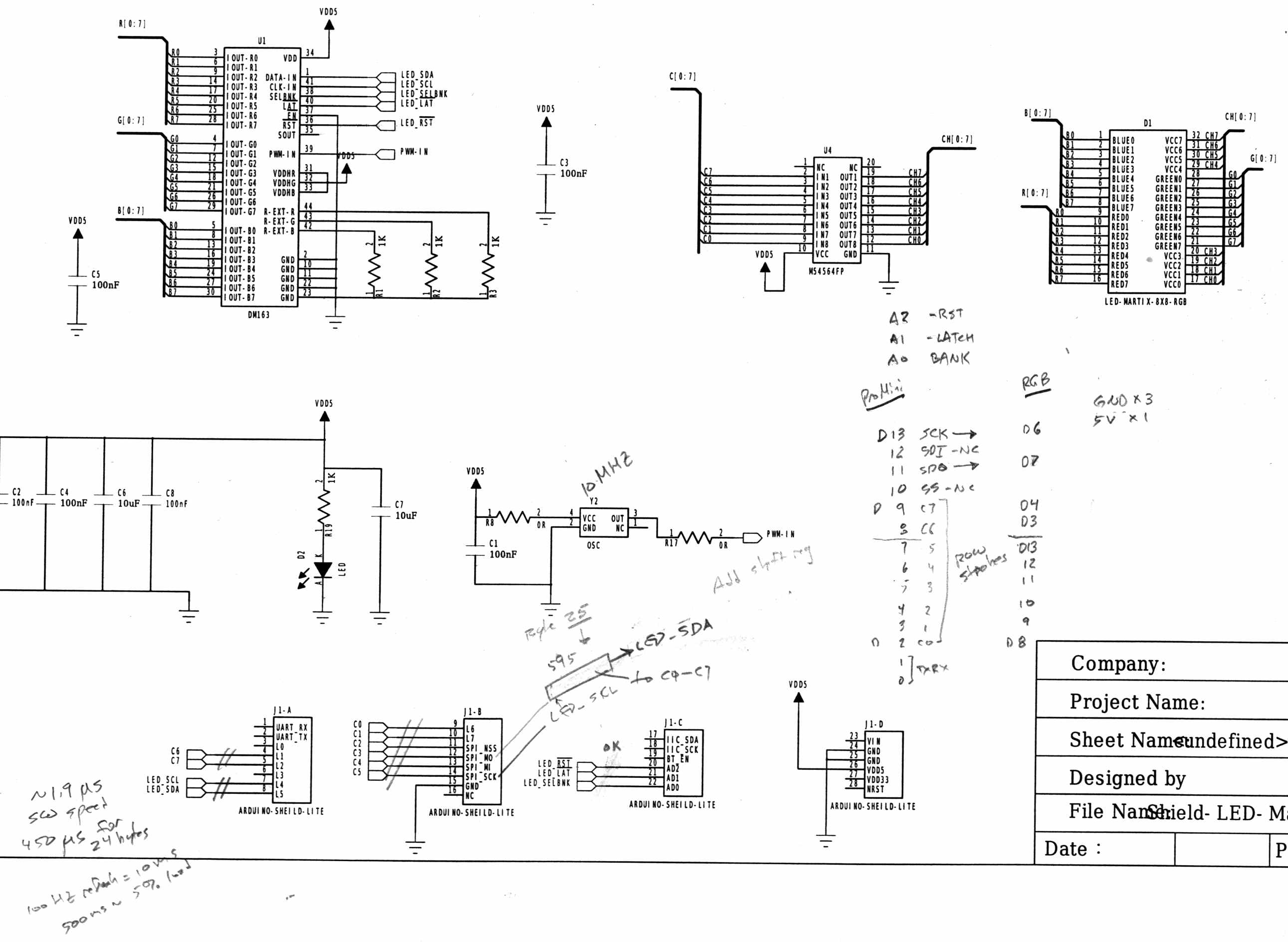
    I do not profess to understand the ancestry & family tree of those designs and their various incarnations. This schematic doesn’t match the knockoff hardware in hand, which isn’t surprising after half a dozen years of relentless product cheapnification:

    ITeadStudio - RGB LED shield - DM163 M54564 - SPI notes
    ITeadStudio – RGB LED shield – DM163 M54564 – SPI notes

    It comes close enough for a big-picture overview…

    The DM163 has 8×3 constant current sink PWM pins that connect to the column cathodes of the RGB matrix. It provides either 8 or 6 bits of PWM control for each output, with either 6 or 8 bits of gamma correction to make the grayscale shades work out properly (those are separate shift registers and the PWM generators use both, so the chip doesn’t care how you divvy up the 14 bits).

    The three 1 kΩ resistors set the current to 60 mA per output pin. The LED matrix might support anywhere from  70 to 120 mA peak current per LED, but I doubt the supplied matrix matches any of the available datasheets. The total current depends on the number of LEDs lit on each row, so large dark areas are a Good Thing.

    The serial protocol looks enough like SPI to get by, with controls for Reset, Latch, and Bank Select.

    The board has no power supply other than the single Arduino VCC pin, so you’re looking at a peak of 24 x 60 mA = 1.44 A through that pin. The Arduino regulator must supply that load pretty much full-time, which is obviously a Bad Thing; plan on plenty of dark areas.

    The DM163 SPI connections don’t use the Arduino’s hardware SPI, so it’s full-frontal bit-banging all the way. Three DM163 control bits use a trio of analog inputs as digital outputs. No harm in that, works fine with the knockoff Neopixels.

    The M54564 is a PNP high-side driver converting logic-level inputs to the current required for the row anodes of the matrix. The eight input bits are non-contiguous across the Arduino’s digital outputs. You could turn on all the M54564 outputs at once, which would be a Bad Thing.

    You shift 24 bytes of RGB data into the DM163 and latch the data, then raise one of the M54564 inputs to enable a given row of LEDs, which light up with the corresponding colors.

    The bit-banged SPI runs at 1.9 µs/bit and sending all 24 bits to the DM163 requires 450 µs. With a 100 Hz refresh, that’s a mere 5% overhead, but the fact that the board soaks up essentially all the I/O pins means the Arduino isn’t not doing much else in the way of real-world interaction.

    The Arduino driver, of dubious provenance, sets Timer 0 for 100-ish Hz interrupts. Each interrupt shifts another batch of bytes into the DM163 and selects the appropriate row. The driver uses a double-buffered array that soaks up 2x8x8x3 = 384 bytes of precious RAM, in addition to a bunch of working storage.

    If I were (re)designing this board…

    A separate power input jack for the DM163 that might optionally feed the Arduino’s VIN raw power pin.

    Use the Arduino SPI hardware, dammit.

    Put an HC595 shift register behind the M54564, so you’d shift 24 + 8 = 32 bits into the board, then strobe the latches. That eliminates eight digital pins used as a parallel port.

    You’d surely want to disable the row driver while switching the column drivers to avoid ghosting, so figure on a separate output enable for the HC595. That tri-states the 595’s outputs; although the M54564 has internal pulldowns, it might need more.

    It’s entirely usable as-is, but sheesh it’d be so easy to do a better job. That wouldn’t be software compatible with all the Arduino Love for the existing boards out there; there’s no point.