-
Tour Easy Coolback Seat Restringing
The Kevlar cord on Mary’s bike survived the crash without breaking, but it was badly scuffed and holding on by only a few strands. Unlike in years gone by, Kevlar cord is now cheap & readily available, so I decided to restring the thing:

Tour Easy – seat cord – restrung The cord path isn’t at all obvious, even given the smudges on the seat struts:
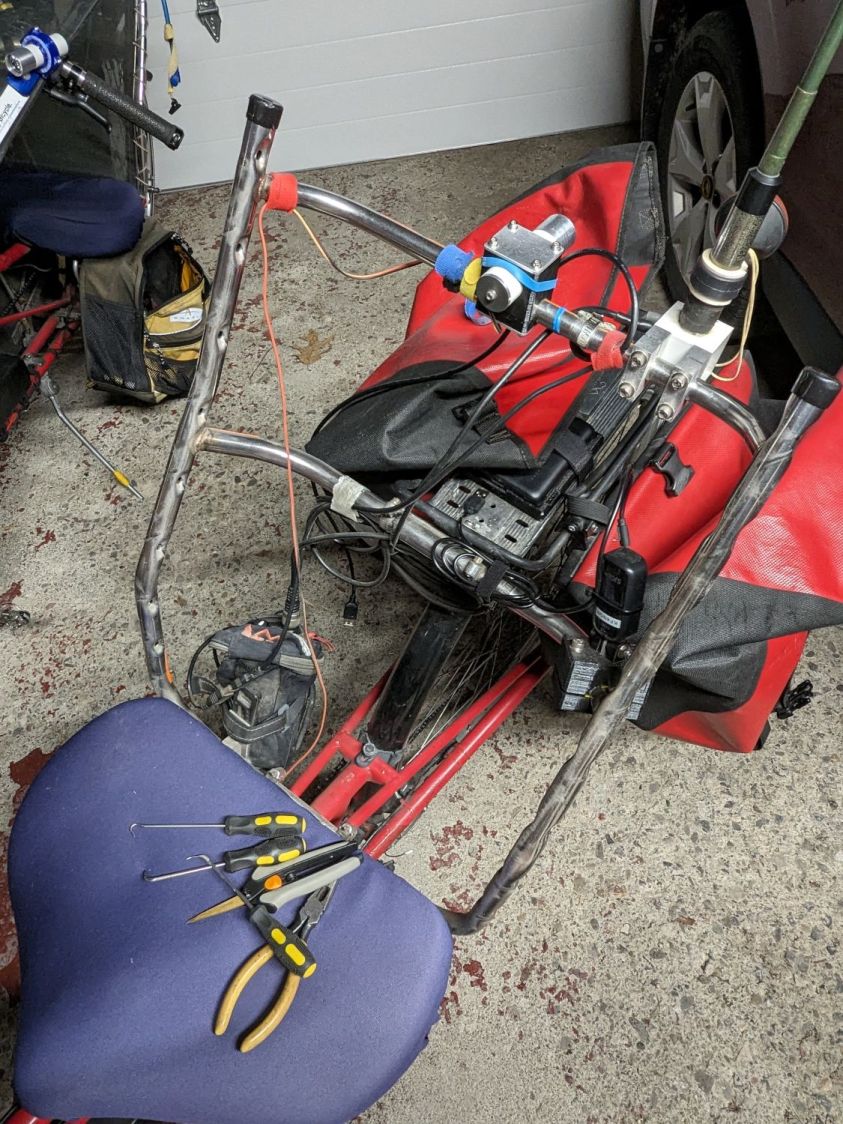
Tour Easy – seat mesh removed Pictures of the original cord as installed at the Easy Racers “factory” served as guidance:

Tour Easy – seat cord – front view 
Tour Easy – seat cord – side view 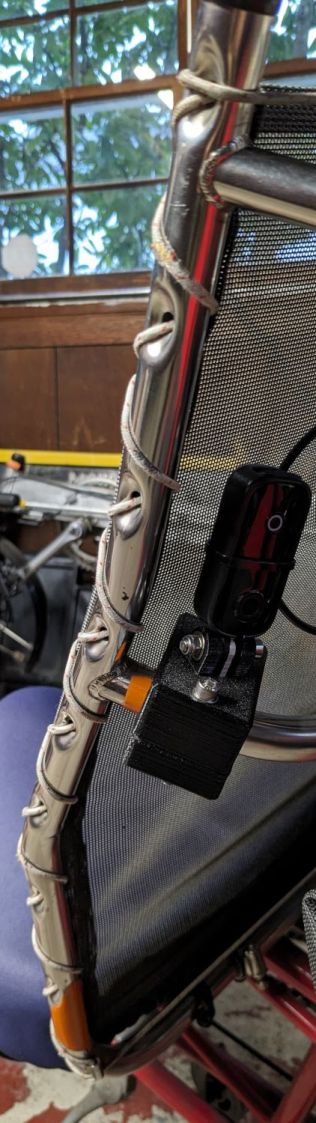
Tour Easy – seat cord – rear view 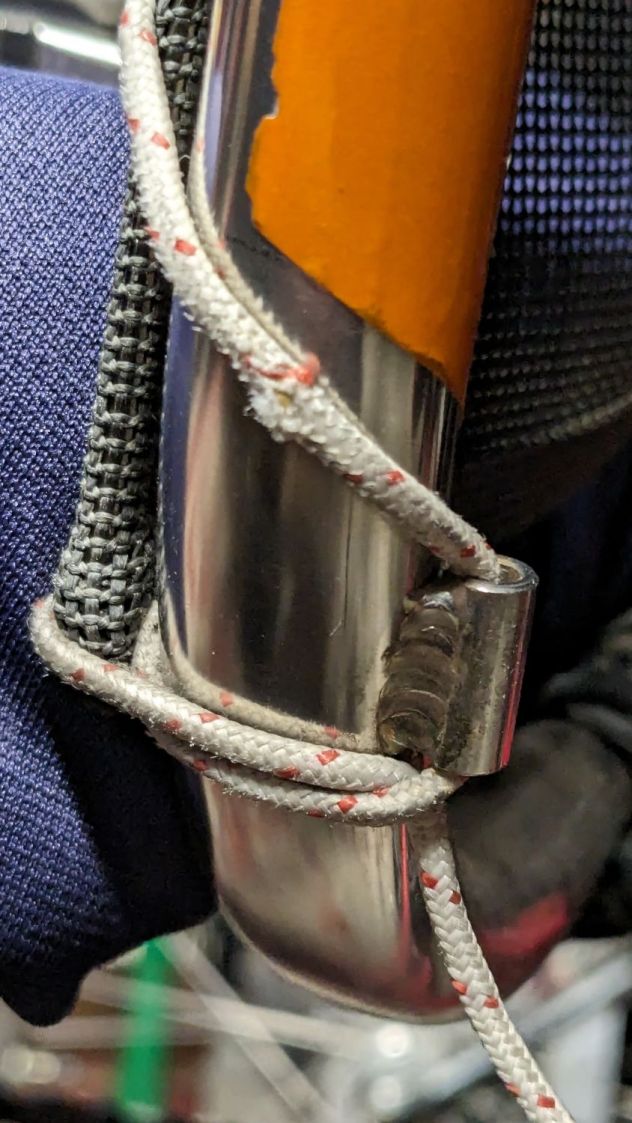
Tour Easy – seat cord – bottom detail The knots joining the cord at the top, taken juuust before I pulled the right knot apart:

Tour Easy – seat cord – knots Those are in addition to my Tour Easy a few feet away, but you can never have enough pictures.
A 3.5 meter cord will be plenty long enough and marking the midpoint simplifies equalizing the two sides. The cord crosses the seat frame at the bottom from the lower guides, although I’m reasonably sure it wouldn’t matter if you ran separate lengths up the two sides with a knot in the lower guide.
The new cord claims to be 1000 pound test (200 pound working), but the vital dimension is its 2.6 mm diameter to match the OEM cord. It does not claim to be UV stabilized, which may turn out to be a problem over the course of a few years.
Tightening the cord proceeded as before and a test ride indicated the installation was all good.
-
Subscribe
Subscribed
Already have a WordPress.com account? Log in now.
 The Smell of Molten Projects in the Morning