-
LF Crystal Tester: Grounded CX Case
The usual model for a quartz resonator apportions half the measured both-leads-to-case capacitance to each lead:
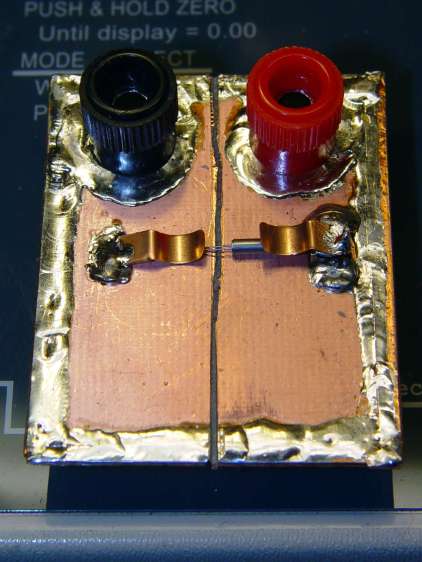
AT26 crystal capacitance fixture – Cpar detail These AT26 / TF26 cases run around 0.6 pF, so each parasitic capacitor is 300 fF:
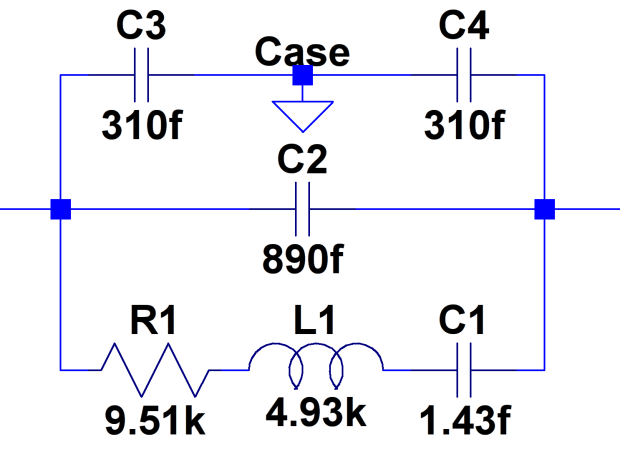
60 kHz Quartz Resonator – model For ordinary quartz crystals, you solder the case to the ground plane to get rid of the sneak path around the central capacitor (normally C0, but labeling it properly in LTSpice just isn’t happening), but those little aluminum cans aren’t solderable. One could blob some Wire Glue over them, but …
So I just wrapped a wire around the case and soldered it to a convenient ground point under the board:
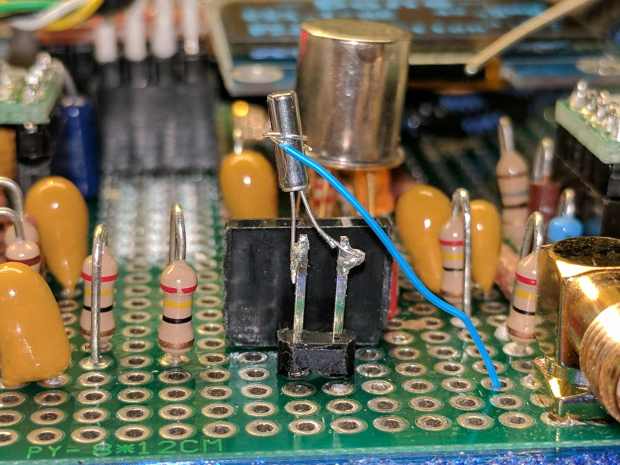
LF Crystal Tester – grounded TF26 case Aaaand ran the obvious measurements:
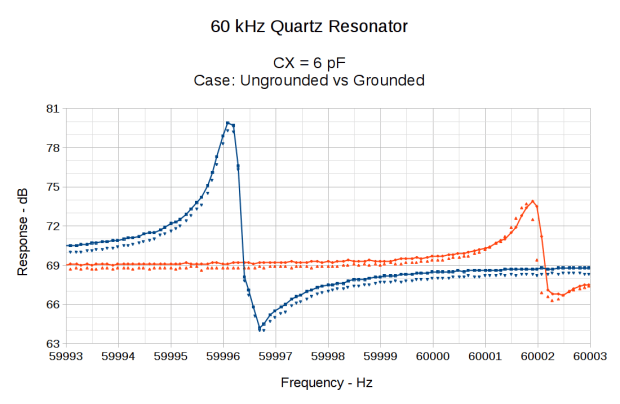
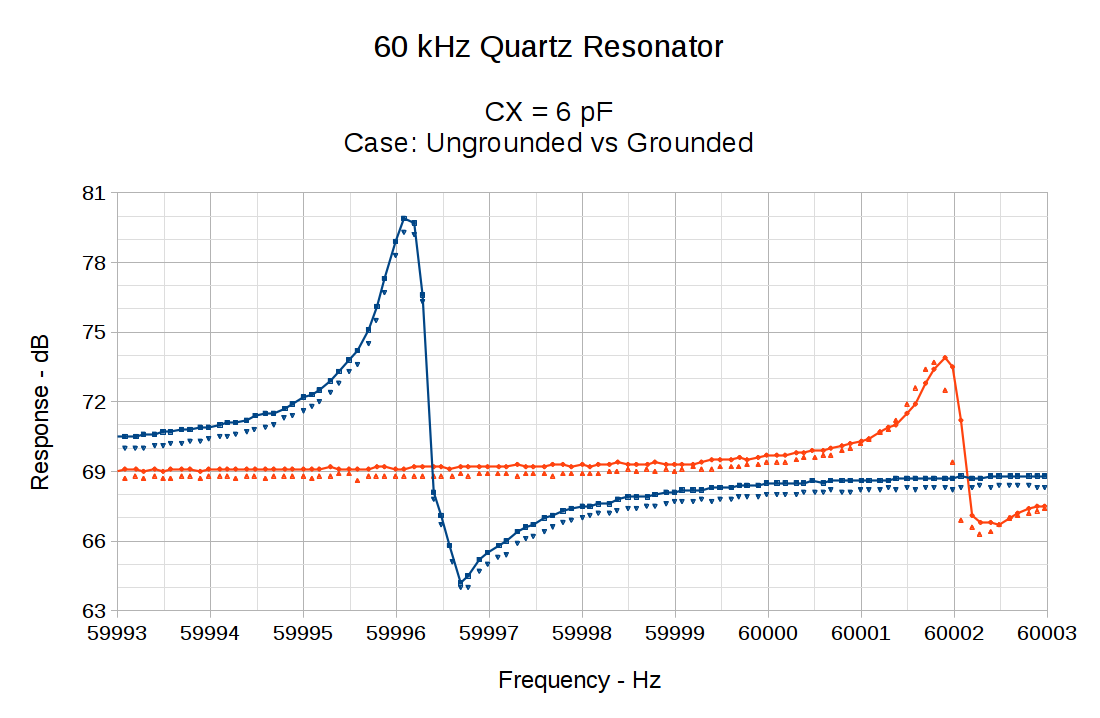
60 kHz Quartz Resonator 0 – CX 6 pF – grounded vs float Solid lines = case ungrounded. Dotties = case grounded.
Grounding the case knocks the off-peak response down by less than 1 dB. The on-peak response remains about the same, so eliminating the series capacitance does reduce the blowthrough.
With the case grounded and CX = 6 pF in the circuit, the peaks over on the right seem ever so slightly lower in frequency, which suggests a slightly higher motional capacitance. There’s not much to write home about, though, so I’d say there’s very little effect, even on this scale.


-
Subscribe
Subscribed
Have a WordPress.com account? Log in now.

