-
MPCNC: Makerbot-style Endstop Switch Spring Constant
Using a lever-arm switch as a tool length probe works surprisingly well:

MPCNC Tool Length Probe – Plotter Pen However, probing a pen mounted in a compliant holder means the actual trip point depends on the relative spring constants. Having measured the pen holder’s 100 g/mm spring constant by poking a scale with the pen, I did much the same thing with the endstop Z-axis Autolevel probe:
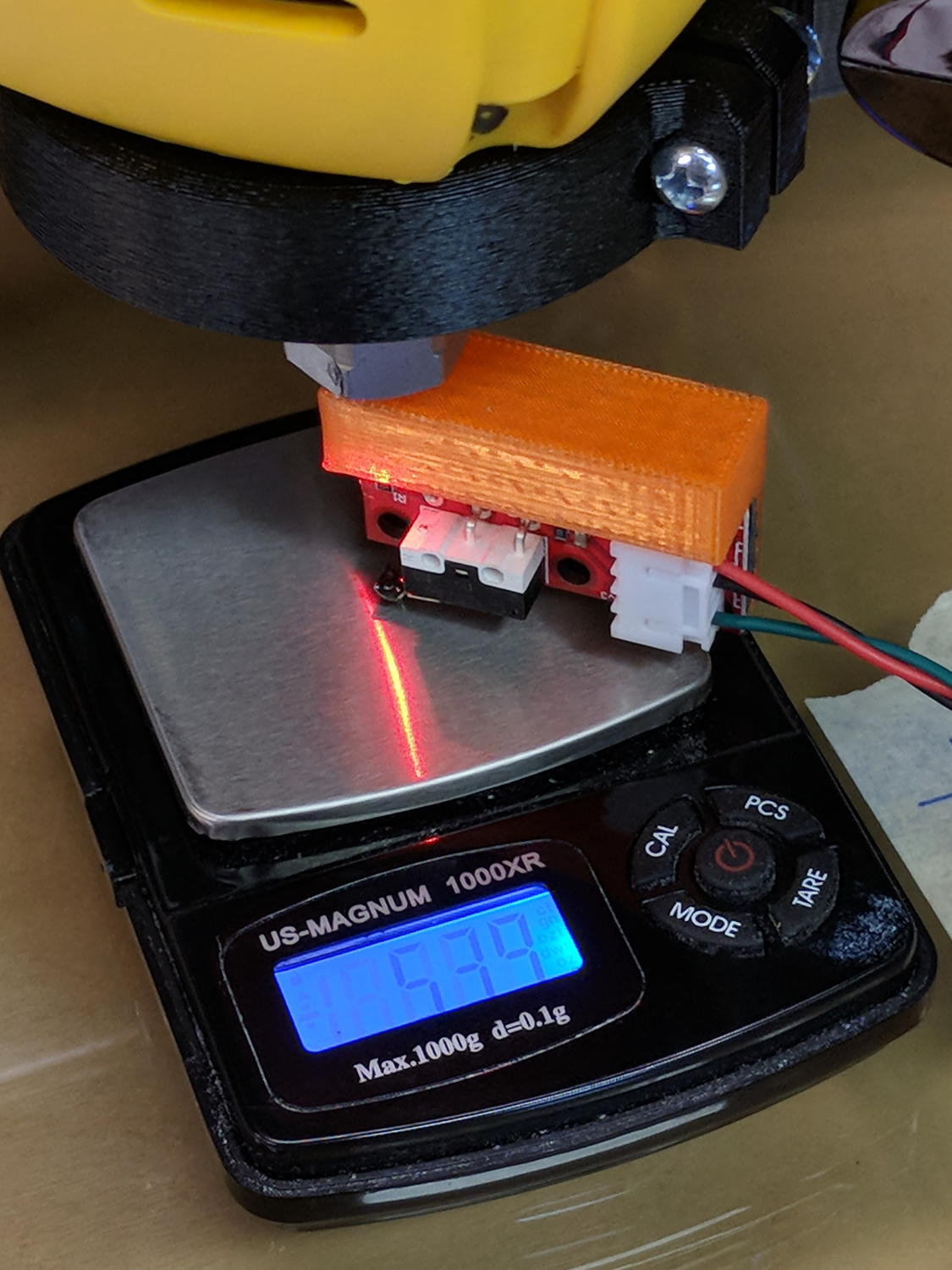
Which produced a similar graph:
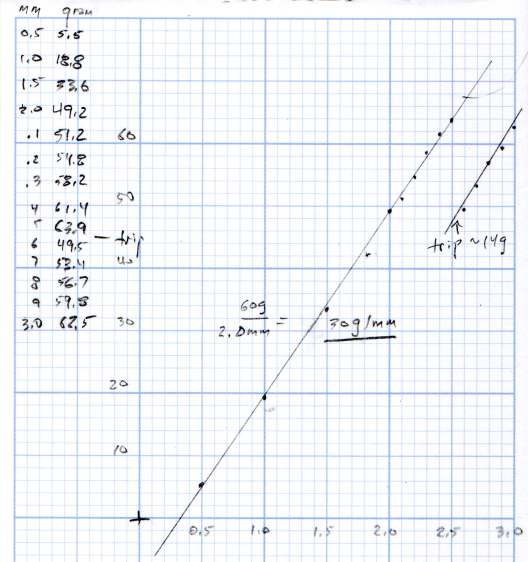
MB Endstop Switch – spring constant The force increases linearly at 30 g/mm up to the trip point, drops by maybe 16 grams, then increases linearly again.
Obviously, the “constant” applies only to switches on MBI-style endstops in the lot I happen to have, but given the ubiquity of parts from the usual eBay sellers, any identical lever switches may have the same “constant”:
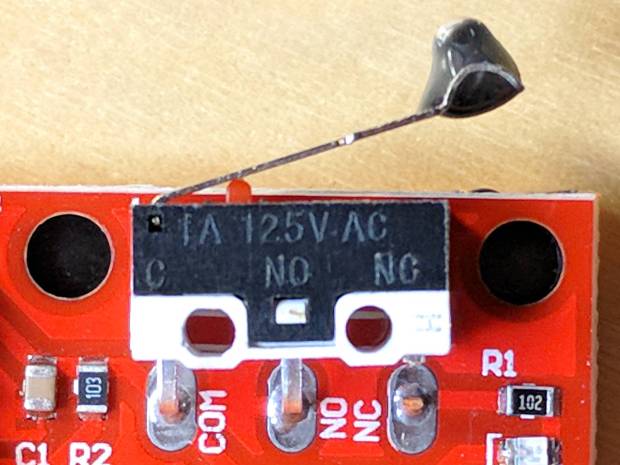
Endstop lever switch – detail Your mileage will vary, fer shure.
Poking a pen into a similar switch used as a tool setter means the Z-axis coordinate of the trip point will depend on the opposing springs. That’s unlike the situation with a cutter mounted in the DW660 spindle, which (by definition) shouldn’t move in response to the pressure from a little bitty switch.
Eyeballing the graph, the switch travels 2.2 mm to the trip point, where it exerts 64 g of force. The pen holder opposes that force and therefore deflects (64 g) / (100 g/mm) = 0.64 mm just before the switch trips: the trip point will be the same as with a rigid tool, but the tool’s Z axis coordinate will be 0.64 mm lower.
I’d been touching off pens in the springy holder, with enough pressure to draw a decent line. Setting Z=0 with the holder deflected upward by 0.3 mm means the pen first touches the height probe at Z=+0.3 and the switch trips at Z=-0.3 mm (-ish), making the force on the paper 60 g, rather than the 30 g I expected.
I think the pen plots worked out pretty well, despite not getting the numbers and, thus, pen positions, quite right.


-
Subscribe
Subscribed
Have a WordPress.com account? Log in now.

