-
Kitchen Blender Base Spacer
We don’t use the blender much, so the most recent bearing replacement continues to work. I never got around to re-making the overly long shaft spacer from the first bearing replacement, which I compensated for with a spacer kludge cut from a random chunk of bendy plastic sheet.
Which we put up with For. Eleven. Years.
The blender recently emerged from hiding and, with my solid modeling-fu cranked up to a dangerous chattering whine, I conjured a real spacer:
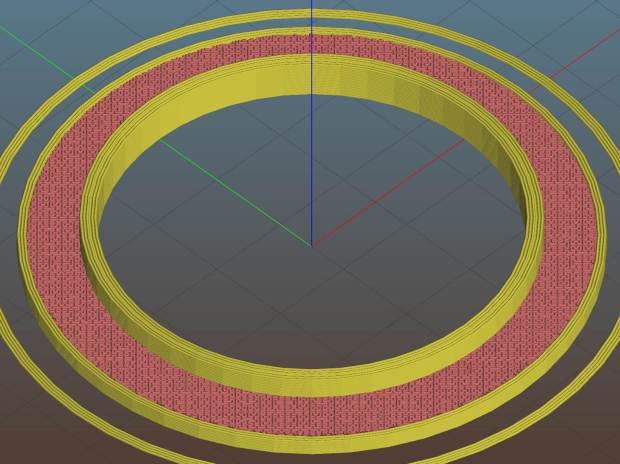
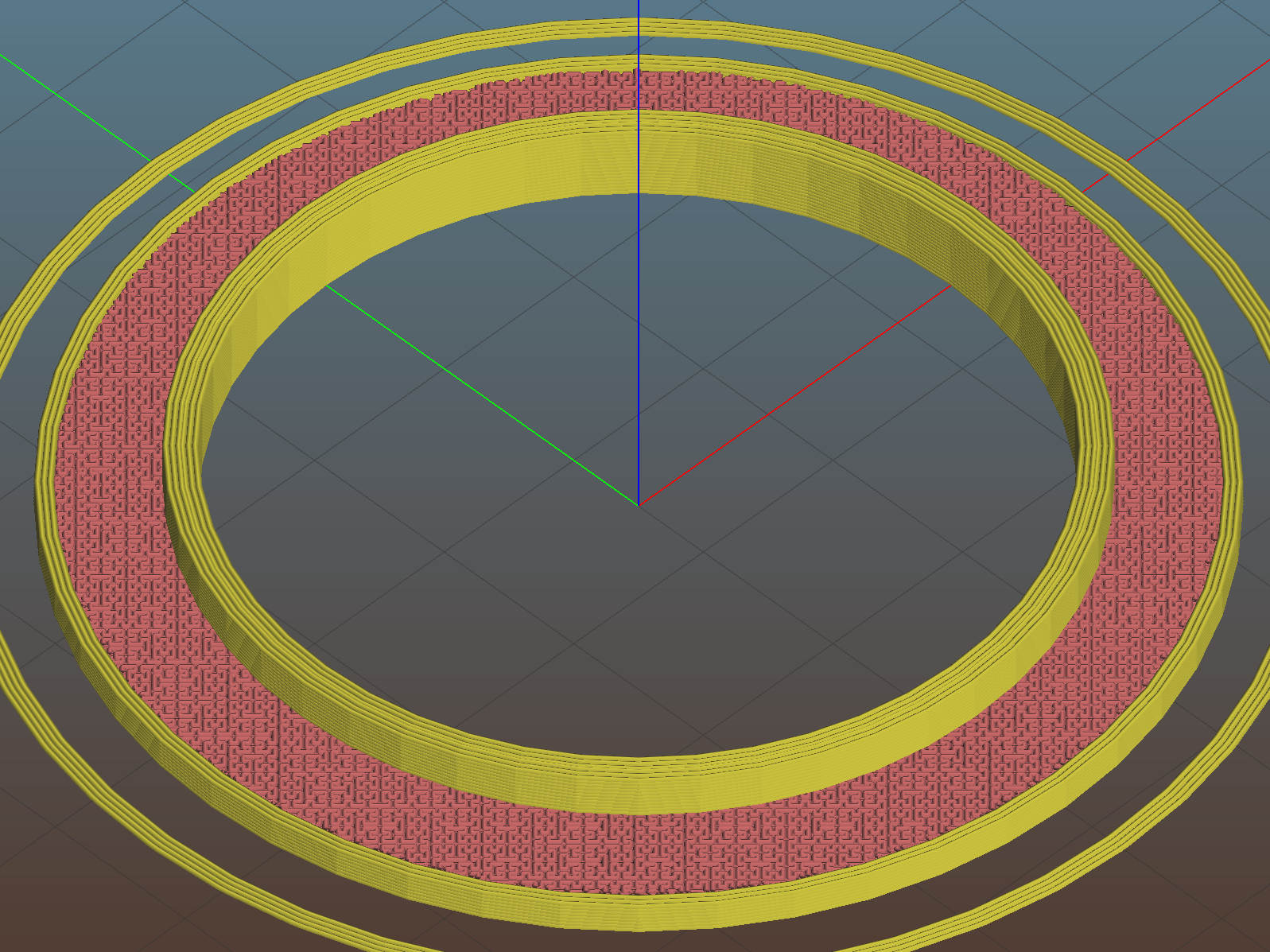
Blender base spacer – Slic3r preview It pretty much disappears into the blender base, which is the whole point of the operation:
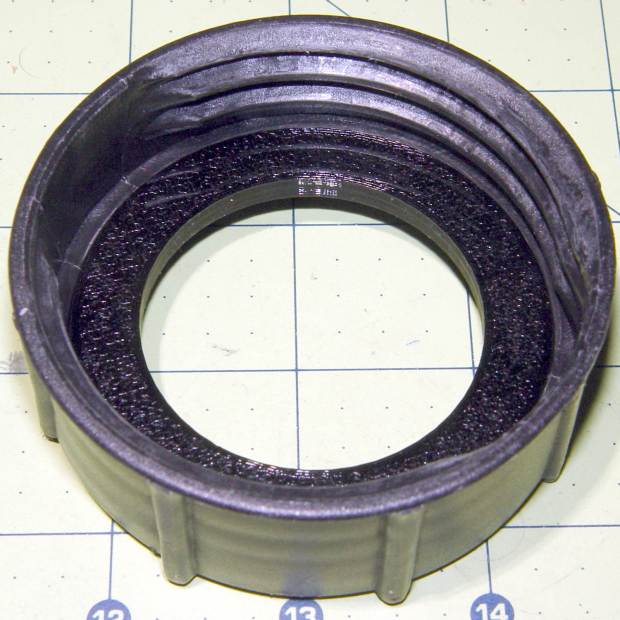
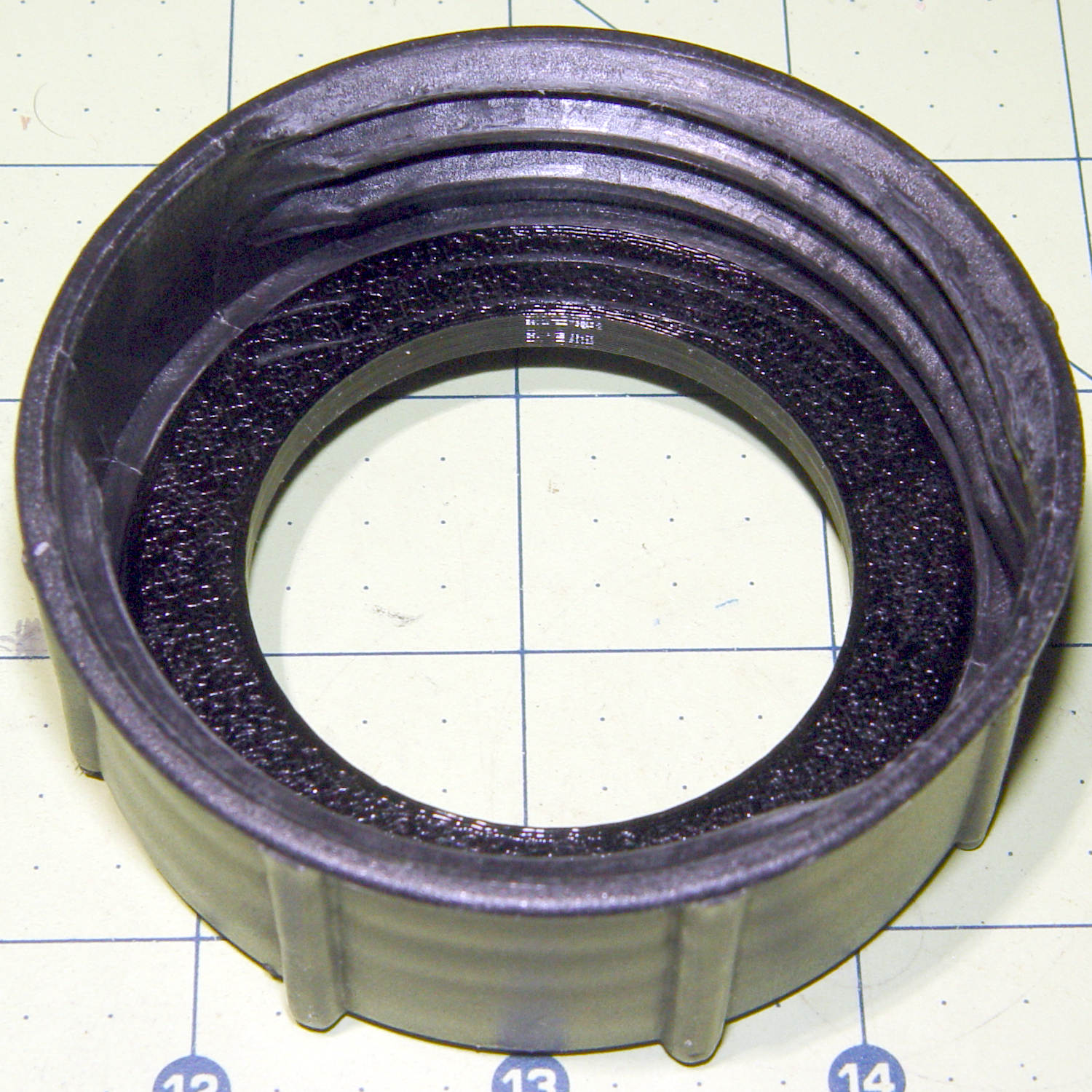
Blender base spacer – installed When the bearings fail again, I promise to make a proper shaft spacer and toss this bodge.
The OpenSCAD code as a GitHub Gist:
This file contains hidden or bidirectional Unicode text that may be interpreted or compiled differently than what appears below. To review, open the file in an editor that reveals hidden Unicode characters. Learn more about bidirectional Unicode characters// Kitchen blender base adapter // Ed Nisley KE4ZNU June 2019 //- Extrusion parameters must match reality! /* [Hidden] */ ThreadThick = 0.25; ThreadWidth = 0.40; HoleWindage = 0.2; Protrusion = 0.1; // make holes end cleanly inch = 25.4; function IntegerMultiple(Size,Unit) = Unit * ceil(Size / Unit); ID = 0; OD = 1; LENGTH = 2; //———- // Just build it Spacer = [48.0,66.0,1.8]; // LENGTH raises blade holder Aligner = [Spacer[ID],52.0,Spacer[LENGTH] + 3.0]; // LENGTH locks into base ring NumSides = 4*3*4; //———- // Just build it difference() { union() { cylinder(d=Spacer[OD],h=IntegerMultiple(Spacer[LENGTH],ThreadThick),$fn=NumSides); cylinder(d=Aligner[OD],h=Aligner[LENGTH],$fn=NumSides); } translate([0,0,-Protrusion]) cylinder(d=Spacer[ID],h=10*Aligner[LENGTH],$fn=NumSides); } Not that it really deserves so much attention …
-
Subscribe
Subscribed
Have a WordPress.com account? Log in now.

