-
Step2 Garden Seat: Replacement Seat
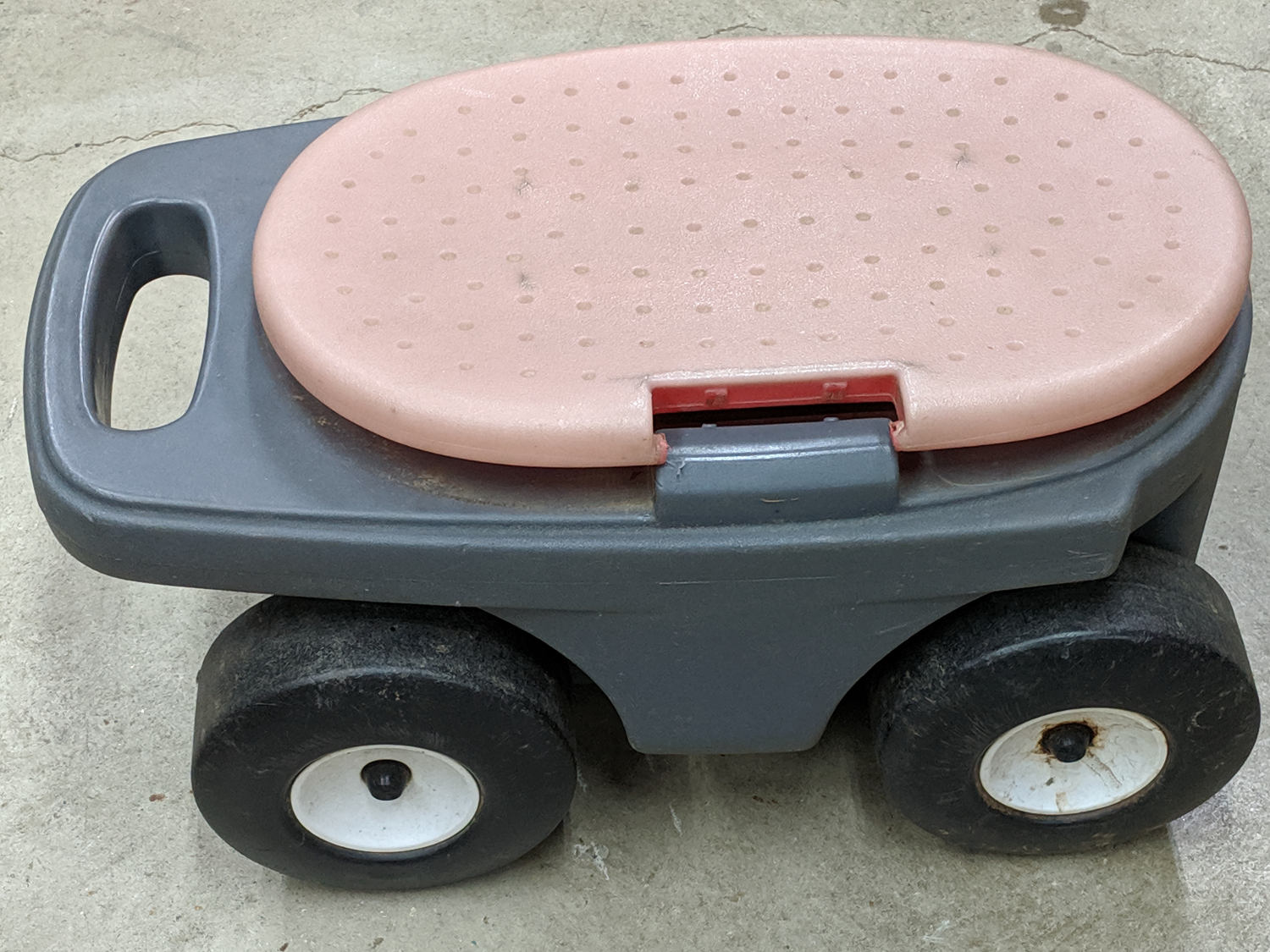
A pair of Step2 rolling garden seats (they have a new version) served in Mary’s gardens long enough to give their seat panels precarious cracks:
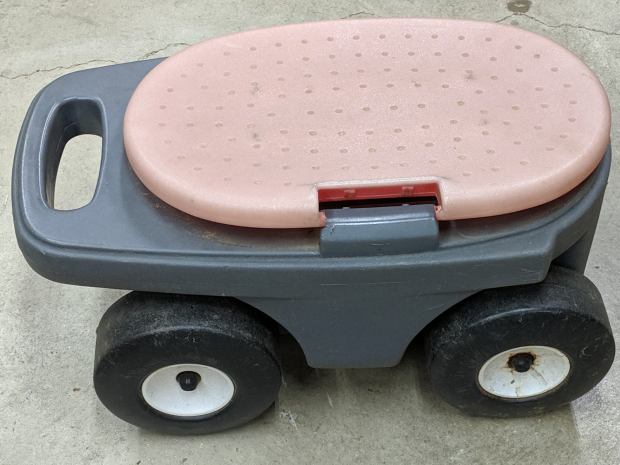
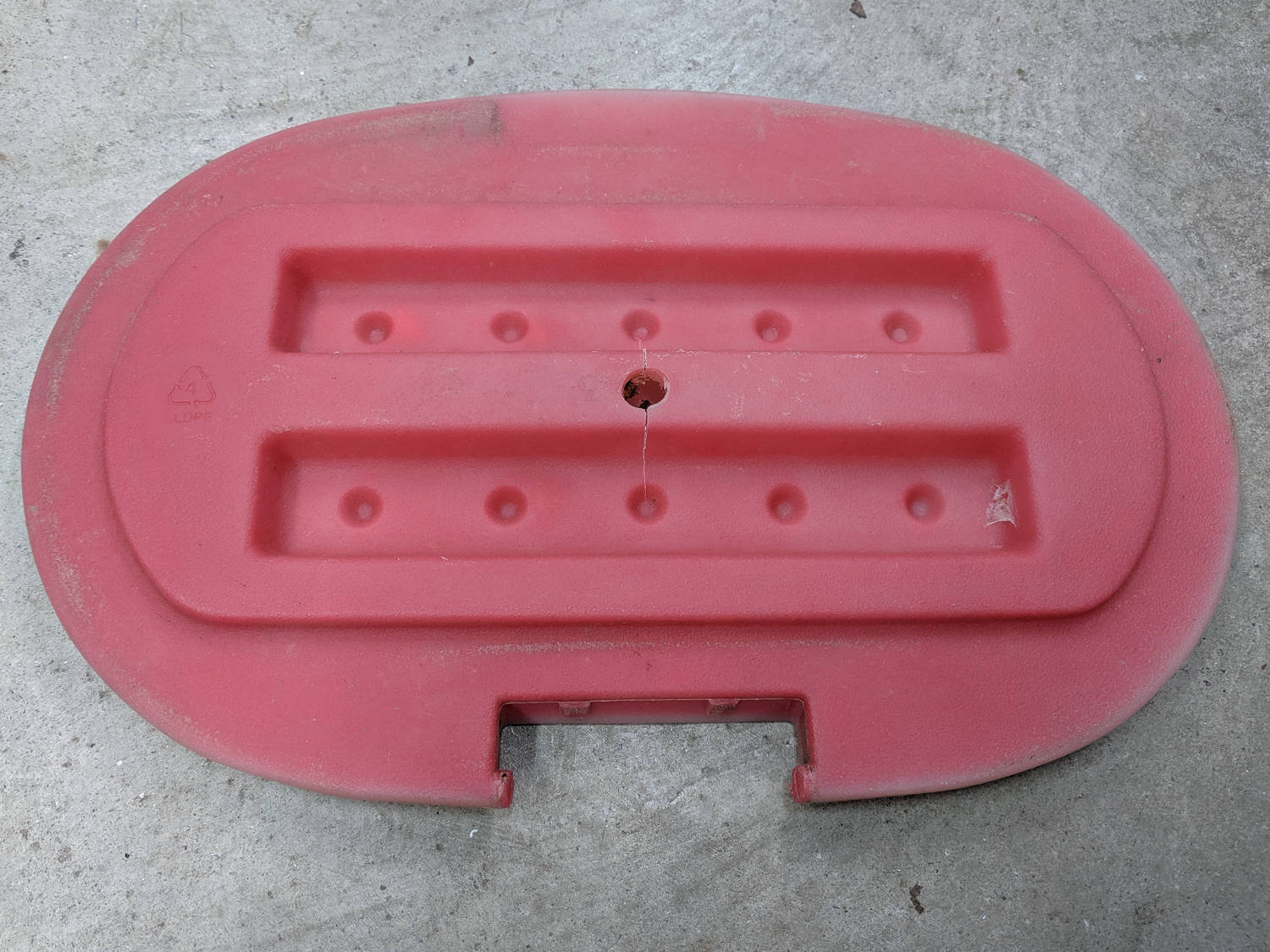
Step2 Seat – OEM seat The underside was giving way, too:
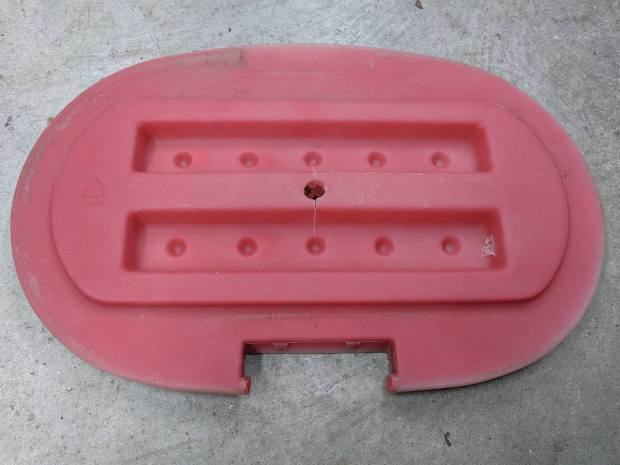
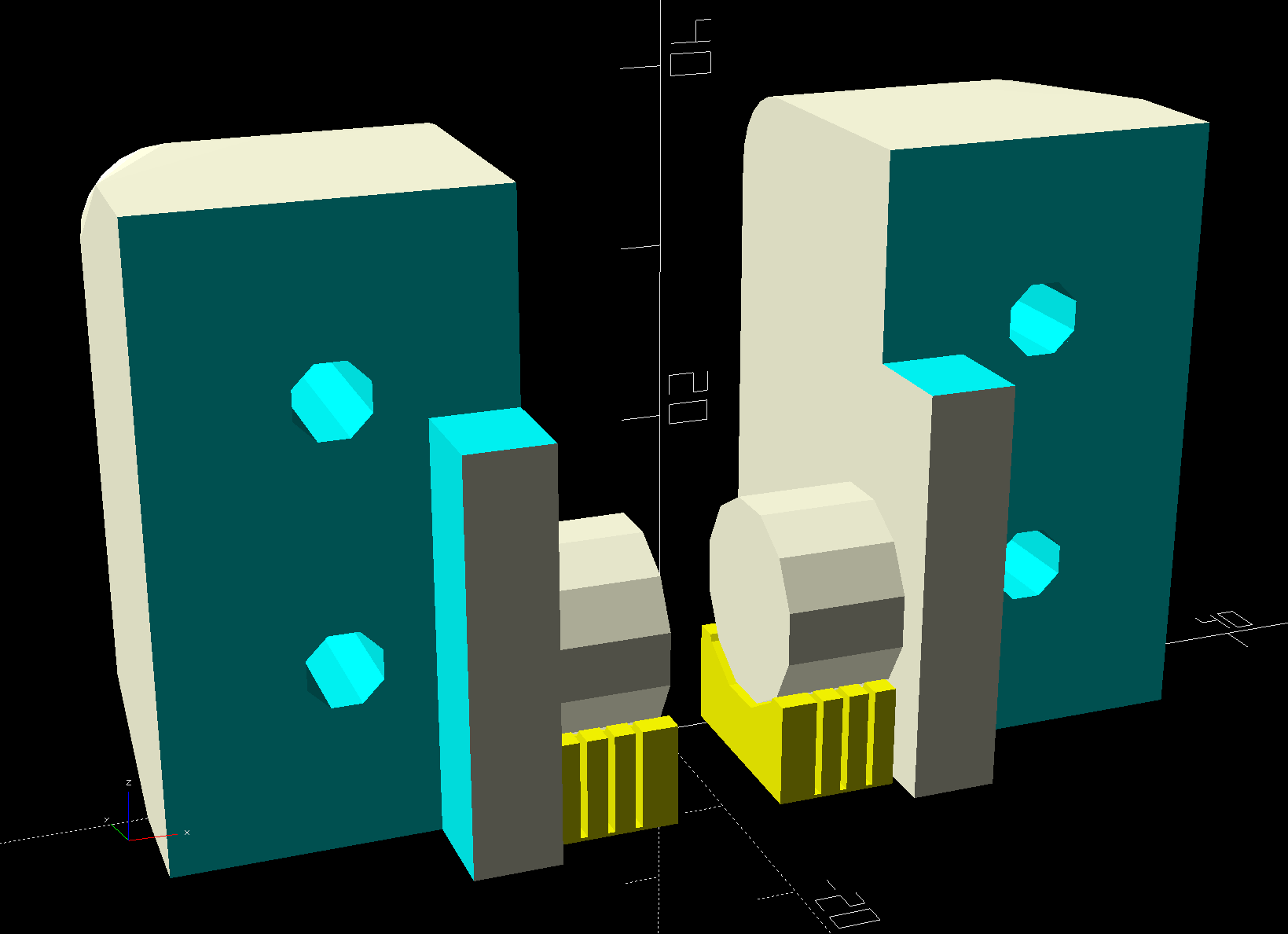
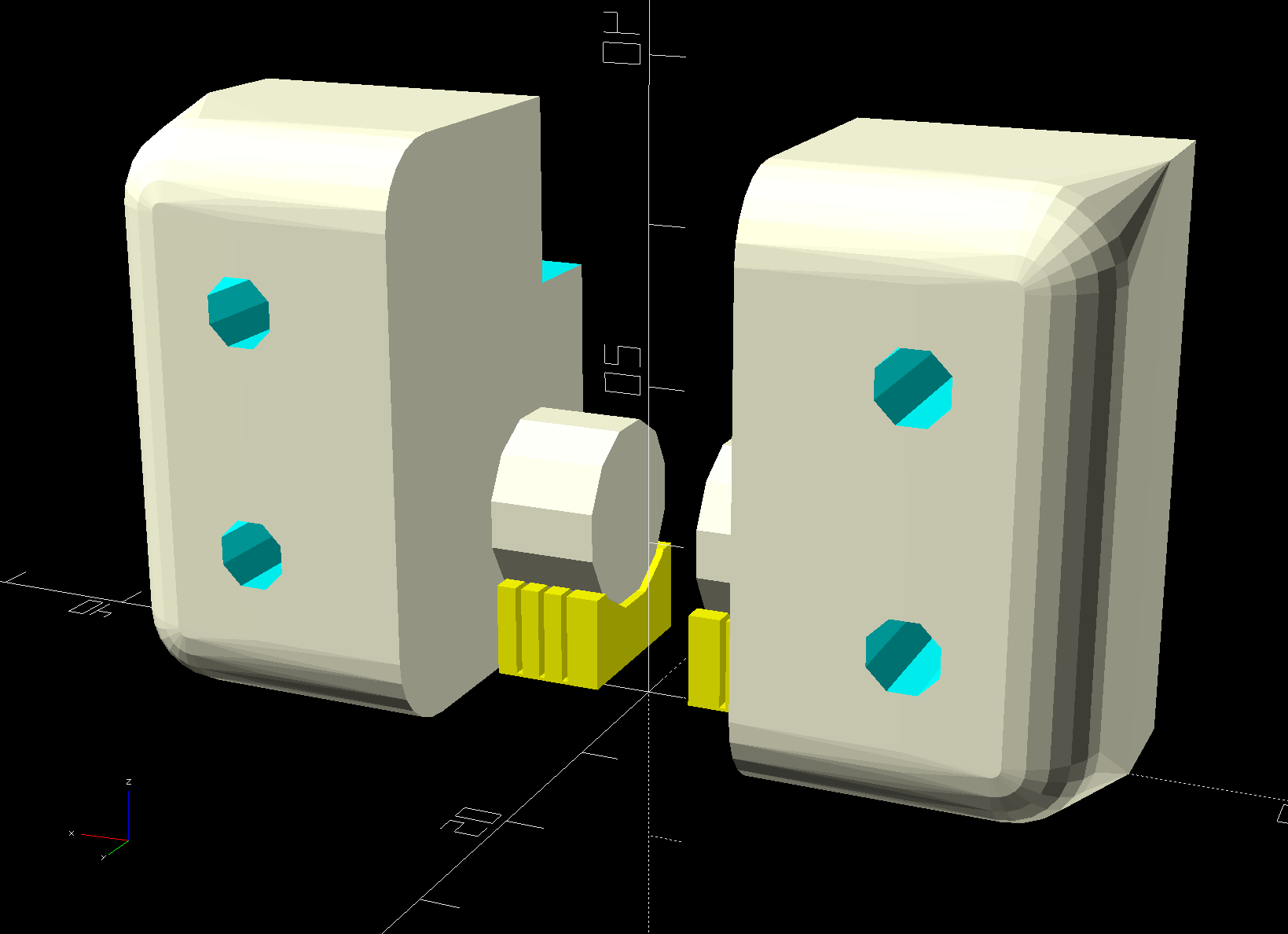
Step2 Seat – cracks We agreed the new seat could be much simpler, although it must still hinge upward, so I conjured a pair of hinges from the vasty digital deep:
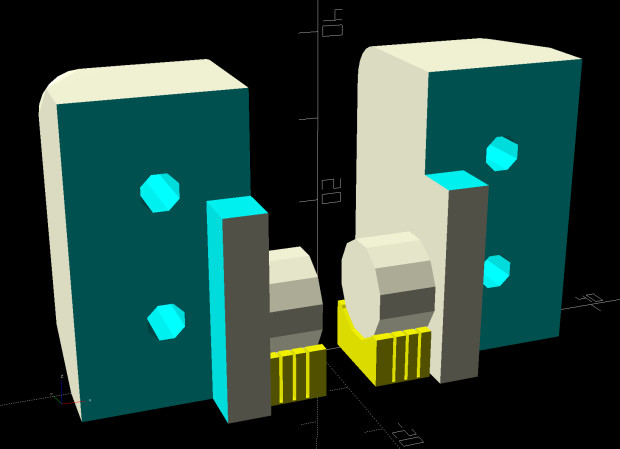
Rolling Cart Hinges – solid model – bottom The woodpile disgorged a slab of 1/4 inch = 6 mm plywood (used in a defunct project) of just about the right size and we agreed a few holes wouldn’t be a problem for its projected ahem use case:
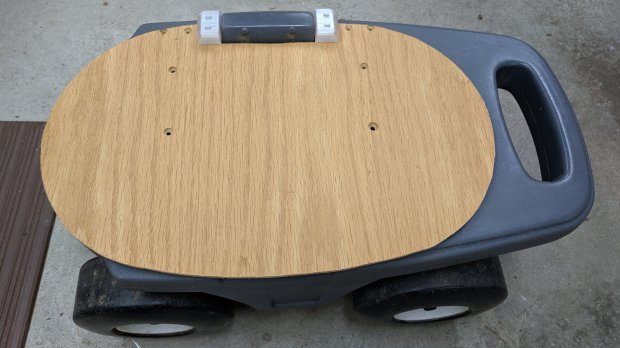
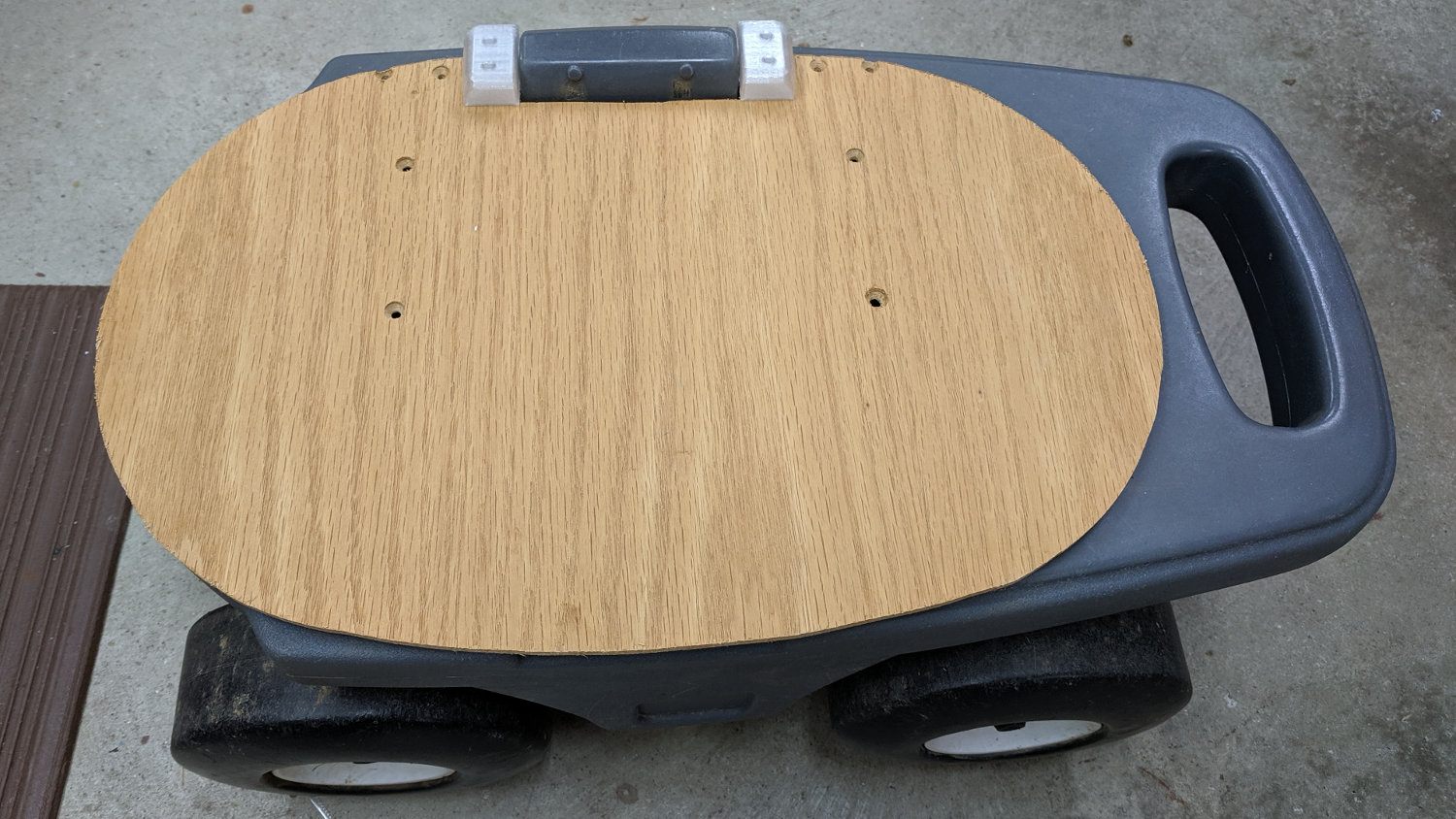
Step2 Seat – assembled The screw holes on the hinge tops will let me run machine screws all the way through, should that be necessary. So far, a quartet of self-tapping sheet metal (!) screws are holding firm.
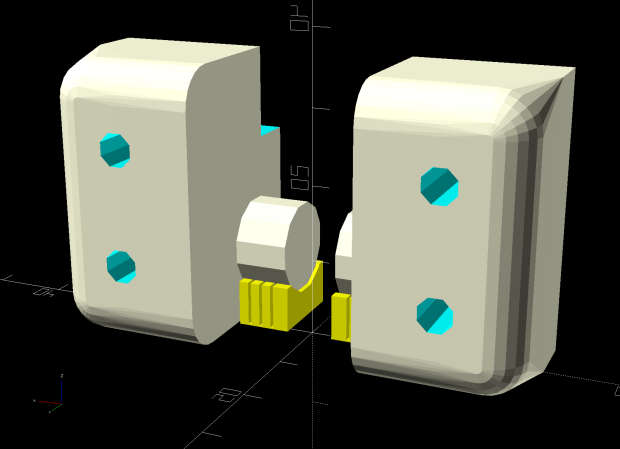
Rolling Cart Hinges – solid model – top A closer look at the hinges in real life:
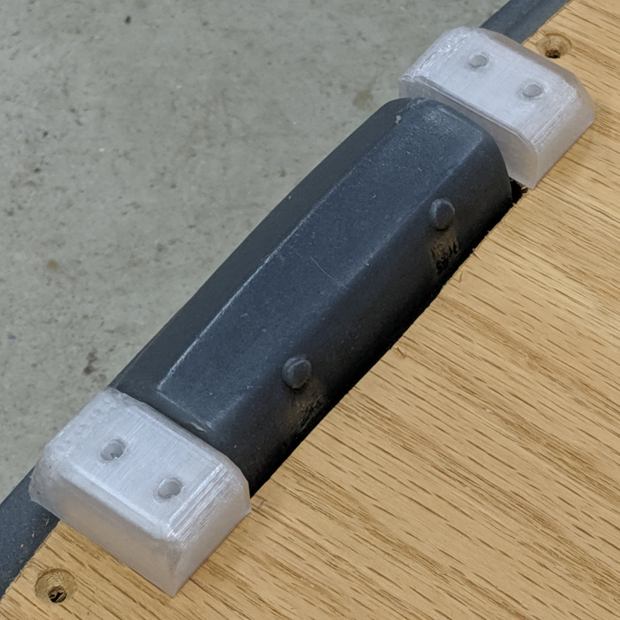
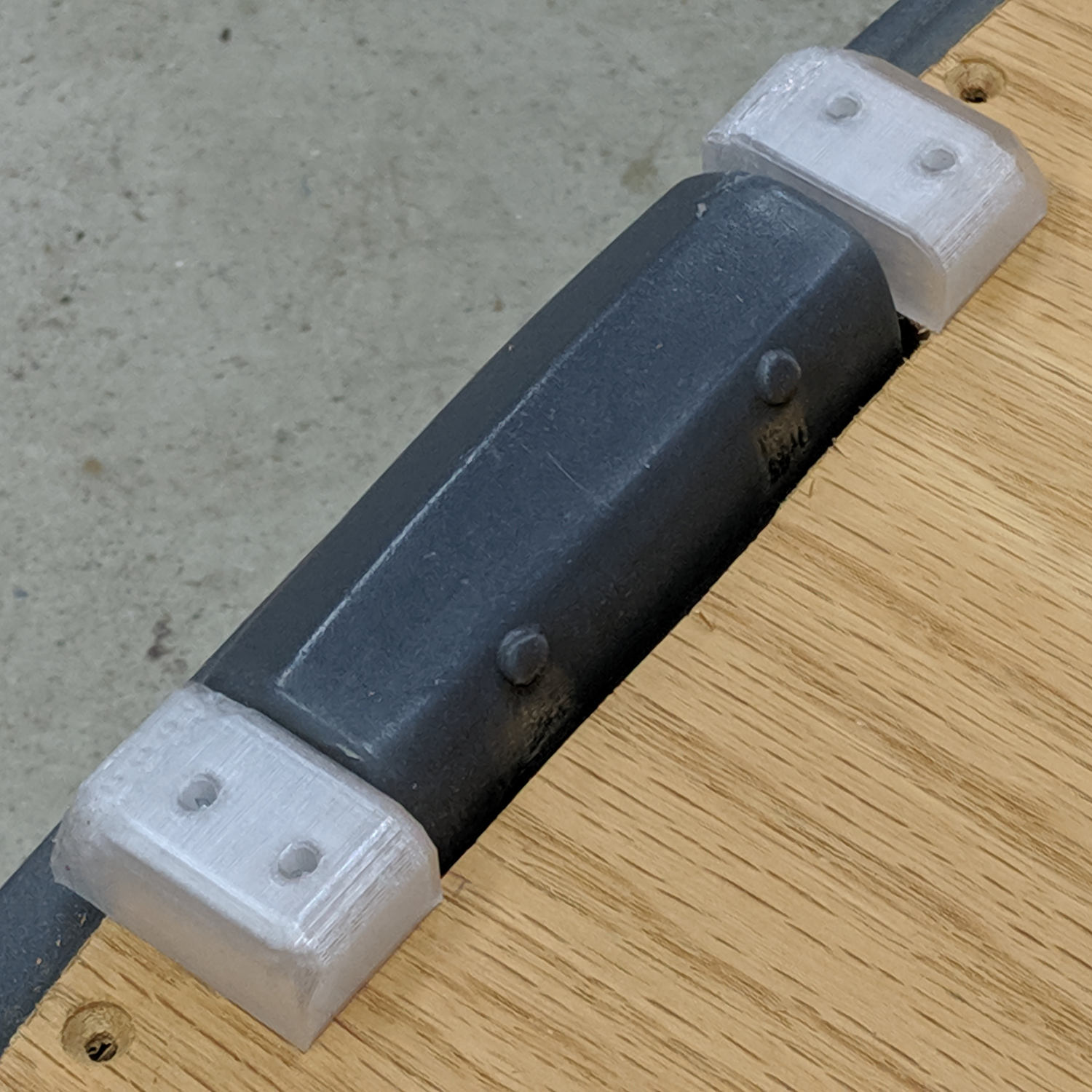
Step2 Seat – top view The solid model now caps the holes; I can drill them out should the need arise.
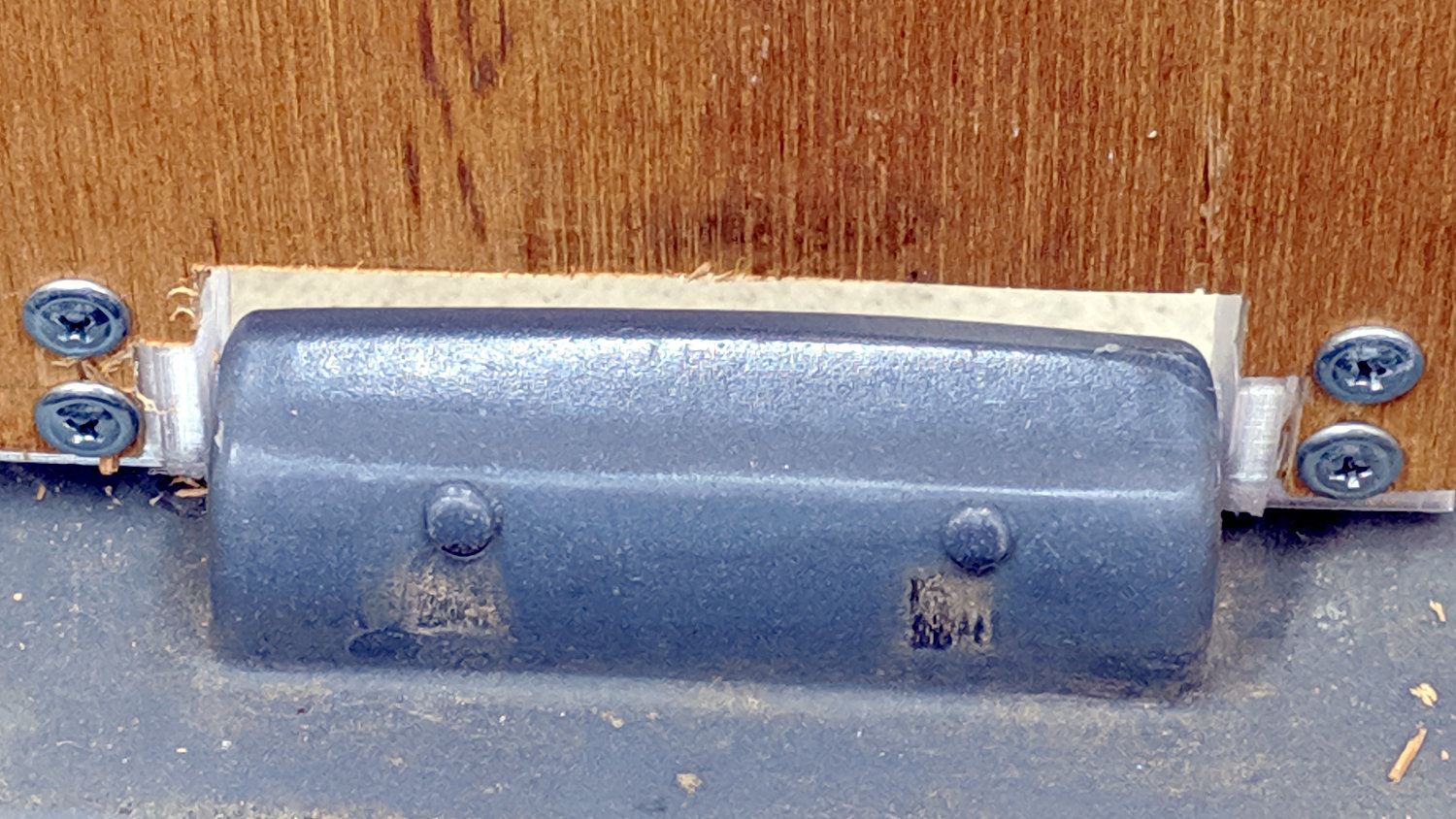
From the bottom:
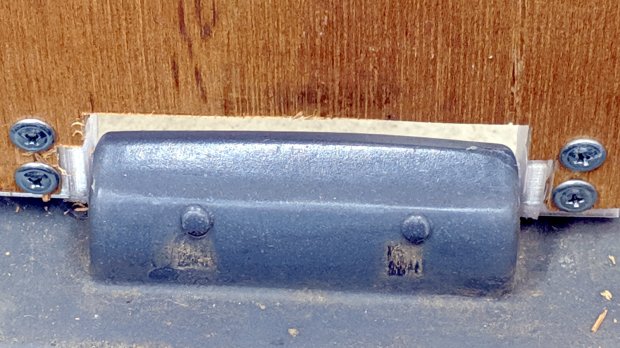
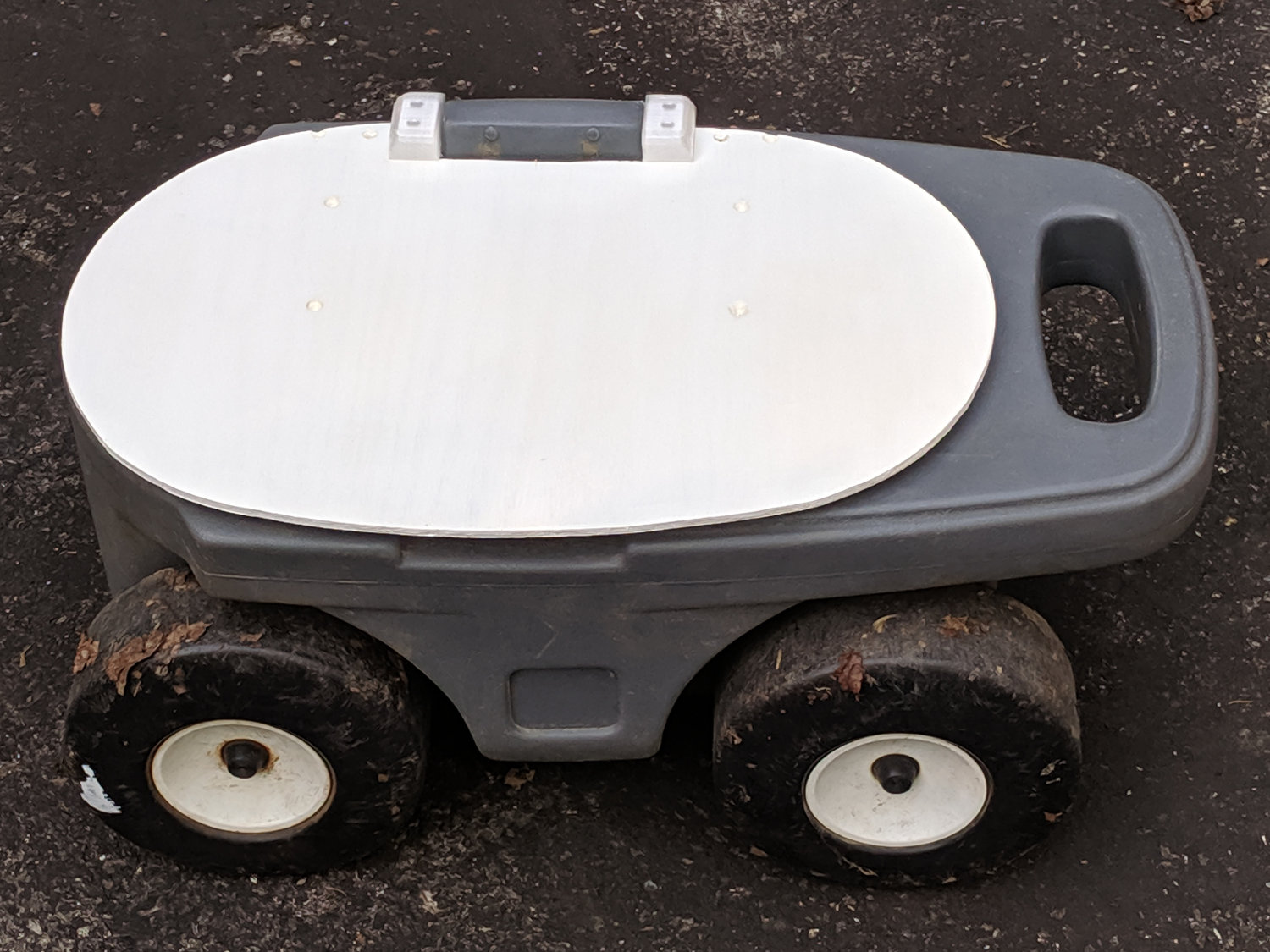
Step2 Seat – bottom view Three coats of white exterior paint make it blindingly bright in the sun, although we expect a week or two in the garden will knock the shine right off:
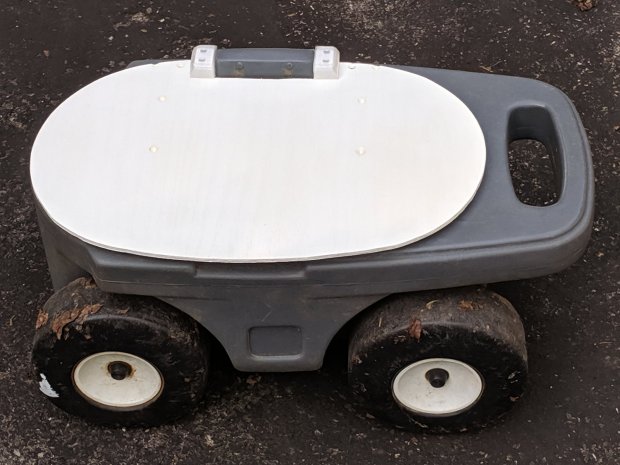
Step2 Seat – painted After the first coat, I conjured a drying rack from a bamboo skewer, a cardboard flap, and some hot-melt glue:
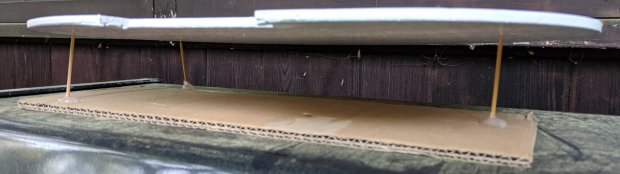
Step2 Seat – drying fixture Three small scars on the seat bottom were deemed acceptable.
The OpenSCAD source code as a GitHub Gist:
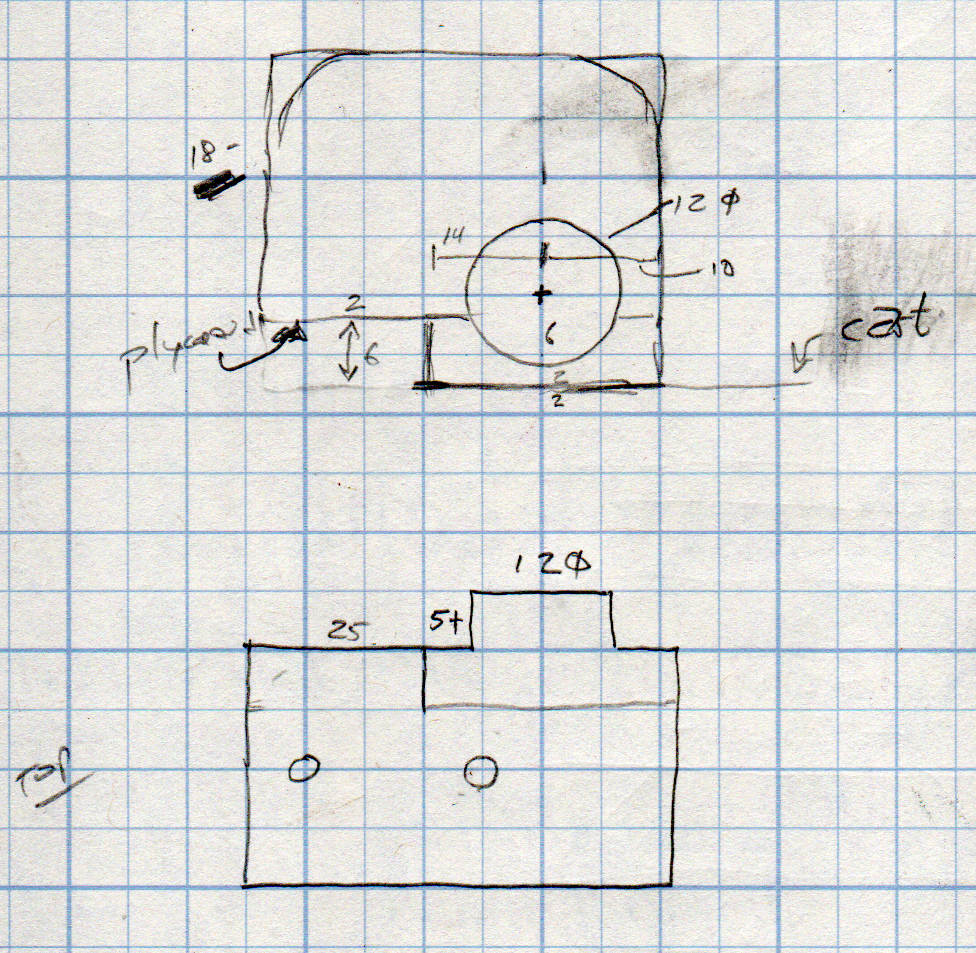
This file contains hidden or bidirectional Unicode text that may be interpreted or compiled differently than what appears below. To review, open the file in an editor that reveals hidden Unicode characters. Learn more about bidirectional Unicode characters// Hinge brackets for rolling garden stool // Ed Nisley – KE4ZNU – 2019-06 Layout = "Build"; // [Block,Build,Show] Support = true; /* [Hidden] */ ThreadThick = 0.20; ThreadWidth = 0.40; HoleWindage = 0.2; Protrusion = 0.1; // make holes end cleanly ID = 0; OD = 1; LENGTH = 2; //———————- // Dimensions SeatThick = 6.0; // seat panel above cart body HingePin = [11.5,12.0,7.0]; // ID = tip OD = base HingeOffset = 8.0; // hinge axis above cart body (larger than radius!) HingeBolster = [5.0,24.0,SeatThick]; // backing block below hinge Block = [25.0,HingeOffset + 30.0,23.0]; // Z = above cart body Screw = [3.8,11.0,2.5]; // self-tapping #8 OD=head LENGTH=head thickness ScrewOC = 15.0; // spacing > greater than head OD ScrewOffset = Block.y/2 – (ScrewOC/2 + Screw[OD]/2 + HingeOffset); // space for head behind hinge BlockRadius = 7.0; // corner rounding //———————- // Useful routines module PolyCyl(Dia,Height,ForceSides=0) { // based on nophead's polyholes Sides = (ForceSides != 0) ? ForceSides : (ceil(Dia) + 2); FixDia = Dia / cos(180/Sides); cylinder(r=(FixDia + HoleWindage)/2, h=Height, $fn=Sides); } // Basic block shape // X axis collinear with hinge axes, hinge base at X=0 module HingeBlock() { PinSides = 3*4; PinSupport = [HingePin[LENGTH] – 2*ThreadWidth,0.6*HingeOffset,HingePin[OD]]; // pre-rotated union() { translate([Protrusion,Block.y/2 – HingeOffset,HingeOffset]) rotate([0,-90,0]) rotate(180/PinSides) cylinder(d=HingePin[OD],h=HingePin[LENGTH] + Protrusion,$fn=PinSides); difference() { hull() { translate([Block.x – BlockRadius,-(Block.y/2 – BlockRadius),Block.z – BlockRadius]) rotate(180/PinSides) sphere(r=BlockRadius/cos(180/PinSides),$fn=PinSides); translate([0,-(Block.y/2 – BlockRadius),Block.z – BlockRadius]) rotate([0,90,0]) rotate(180/PinSides) cylinder(r=BlockRadius/cos(180/PinSides),h=Block.x/2,$fn=PinSides); translate([Block.x – BlockRadius,(Block.y/2 – BlockRadius),Block.z – BlockRadius]) sphere(r=BlockRadius/cos(180/PinSides),$fn=PinSides); translate([0,(Block.y/2 – BlockRadius),Block.z – BlockRadius]) rotate([0,90,0]) rotate(180/PinSides) cylinder(r=BlockRadius/cos(180/PinSides),h=Block.x/2,$fn=PinSides); translate([0,-Block.y/2,0]) cube([Block.x,Block.y – HingeOffset,Block.z/2],center=false); translate([0,Block.y/2 – HingeOffset,HingeOffset]) rotate([0,90,0]) rotate(180/PinSides) cylinder(r=HingeOffset/cos(180/PinSides),h=Block.x,$fn=PinSides); } translate([Block.x/2 + HingeBolster.x,0,(SeatThick – Protrusion)/2]) cube([Block.x,2*Block.y,SeatThick + Protrusion],center=true); translate([0,-HingeBolster.y,(SeatThick – Protrusion)/2]) cube([3*Block.x,Block.y,SeatThick + Protrusion],center=true); for (j=[-1,1]) translate([Block.x/2,j*ScrewOC/2 + ScrewOffset,-4*ThreadThick]) rotate(180/8) PolyCyl(Screw[ID],Block.z,8); } } if (Support) { // totally ad-hoc color("Yellow") render(convexity=4) difference() { translate([-(PinSupport.x/2 + 2*ThreadWidth),Block.y/2 – PinSupport.y/2,HingeOffset]) cube(PinSupport,center=true); translate([Protrusion,Block.y/2 – HingeOffset,HingeOffset]) rotate([0,-90,0]) rotate(180/PinSides) cylinder(d=HingePin[OD] + 2*ThreadThick,h=2*HingePin[LENGTH],$fn=PinSides); for (i=[-1:1]) translate([i*4*ThreadWidth – HingePin[LENGTH]/2, Block.y/2 – (PinSupport.y + 1*ThreadThick), HingeOffset]) cube([2*ThreadWidth,2*PinSupport.y,2*PinSupport.z],center=true); } } } module Blocks(Hand = "Left") { if (Hand == "Left") HingeBlock(); else mirror([1,0,0]) HingeBlock(); } //- Build it if (Layout == "Block") HingeBlock(); if (Layout == "Show") { translate([1.5*HingePin[LENGTH],0,0]) Blocks("Left"); translate([-1.5*HingePin[LENGTH],0,0]) Blocks("Right"); } if (Layout == "Build") { translate([0,-Block.z/2,Block.y/2]) rotate([-90,0,0]) { translate([1.5*HingePin[LENGTH],0,0]) Blocks("Left"); translate([-1.5*HingePin[LENGTH],0,0]) Blocks("Right"); } } This original doodle gives the key dimensions, apart from the rounded rear edge required so the seat can pivot vertically upward:
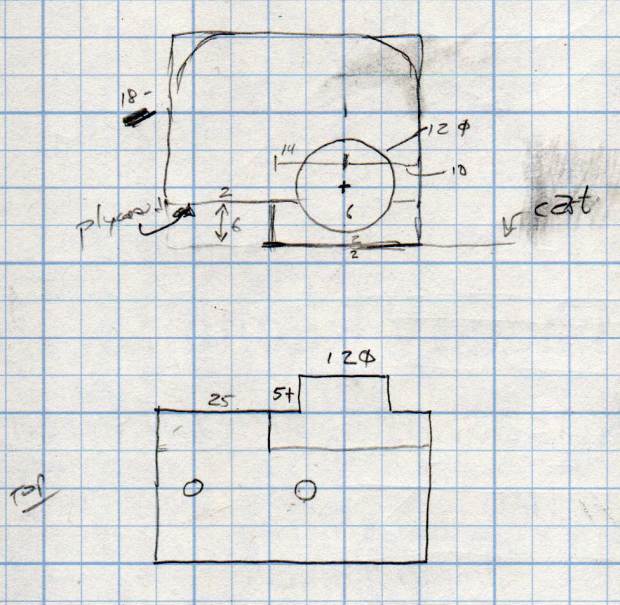
Cart Hinge – dimension doodle The second seat looks just like this one, so life is good …
-
Subscribe
Subscribed
Have a WordPress.com account? Log in now.

