Ed Nisley's Blog: Shop notes, electronics, firmware, machinery, 3D printing, laser cuttery, and curiosities. Contents: 100% human thinking, 0% AI slop.
Watching the tree frogs crawl up the tent from inside let us see how they move: hand-over-hand up the fabric. A dozen of them crawling along was spooky…
I took a movie with my pocket camera that turned into an 8 MB AVI, which I can’t upload here. Most of it isn’t all that interesting, anyway, an observation which hasn’t stopped YouTube dead in its tracks yet, but we can do better than that.
A pair of Free Software programs extracts the interesting part and produces a (somewhat) smaller animated GIF that works with WordPress.
A bit of browsing showed that I wanted frames 227 through 265 and that the frog was pretty much in the upper-middle of the image. So, crop a 320×240 image around the frog from those 640×480 frames:
cd frames
mkdir stills
for f in `seq 227 265` ; do convert frame-$f.jpg -crop 320x240+160+60 stills/still-$f.jpg ; done
Then convert them into an animated GIF with a 500-ms frame rate (the -delay ticker is 10 ms):
cd stills
convert -delay 50 still-2* frogwalk.gif
It’s a 1.6 MB wad, but gets the message across: frogs keep three paws stuck to the floor.
Remember, that little guy is moving at glacial speed in the GIF: those 40 frames of video last just over a second in real time.
Memo to self: MPEG-1 and MPEG-2 only support video-style frame rates around 30 fps.
Update: Regular reader Przemek Klosowski showed me how to generate those numeric sequences on the fly, without using a for loop:
There's this neat Bash construct {1..10} that you can use directly after ffmpeg:
convert -delay 50 still-{227..430}* result.gif

You can even skip every nth frame:
convert -delay 50 still-{227..430..5}* result.gif
We bicycled along the Pine Creek Gorge rail-trail in north-central Pennsylvania on a Rails-to-Trails Conservancy group ride, camping at schools and campgrounds along the trail. Quick summary: for four days we rode in the sun and slept in the rain.
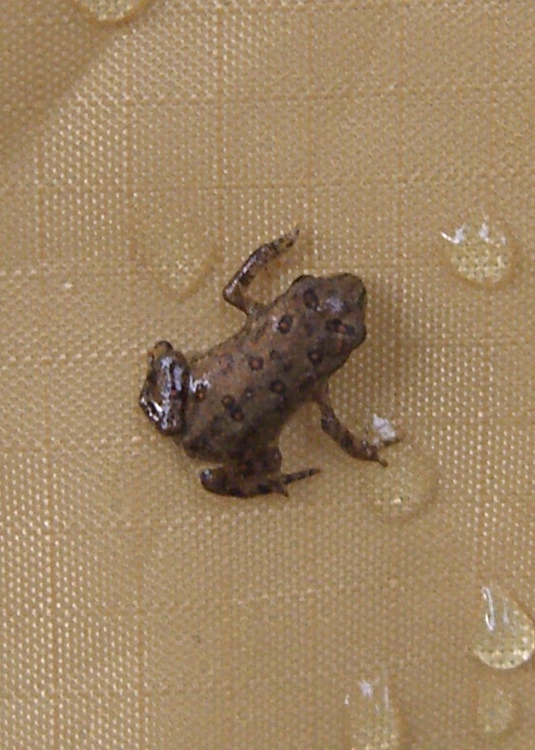
Tree Frog – Natural Light
As we set up camp at Pettecote Junction, the wet ground was hopping with tiny tree frogs. It was impossible to avoid stepping on the critters. When we got the tent set up, they swarmed up the sides between the tent and the rain fly; perhaps they had an imperative to get above the flood?
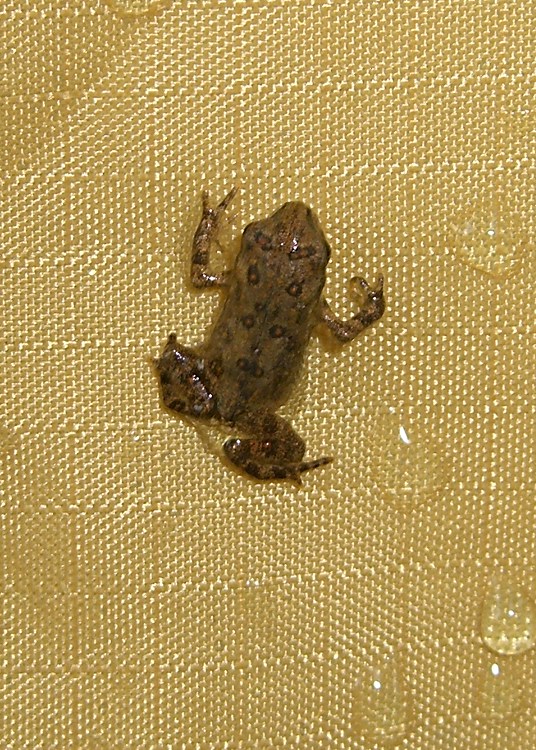
The lines in the tent fabric are about 3.7 mm apart, so the frogs are perhaps 10 mm from snout to butt. That size rules out everything in our RTP Eastern Reptiles & Amphibians book except the Little Grass Frog, which used to live only south of Virginia. The spot pattern doesn’t match, either, although they’re said to be highly variable. Who knows what’s going on in these degenerate days?
Tree Frog – Flash Illumination
They didn’t like the mesh vent screens, favored the rougher tent fabric over the smoother seam binding, and didn’t seem to mind falling off the tent.
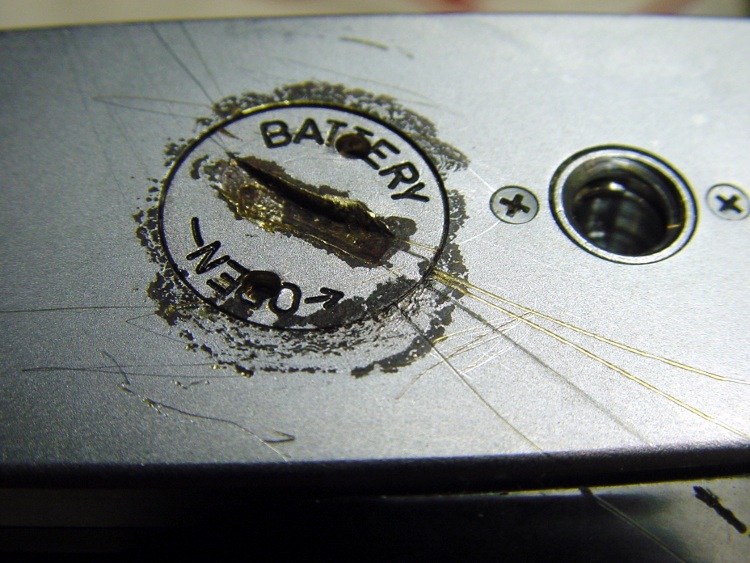
Some years ago a friend brought a favorite old camera that he’d just rediscovered. As you might expect, the exposure meter battery had long since died and its lid was rust-welded in place. Alas, he’d tried and failed to remove the lid by applying, mmmm, inappropriate tools to the coin slot.
I proposed building a quick-and-dirty pin wrench from an aluminum knob, which requires a matching pair of holes in the lid. Given that the lid was already pretty well pooched, he had no objection.
IIRC, I laid a strip of masking tape over the lid, laid out the holes perpendicular to the slot, then drilled them out by eyeball. The trick is to avoid drilling into the battery; it’s likely all dried out by now, but there’s no reason to release any more of that glop than absolutely necessary.
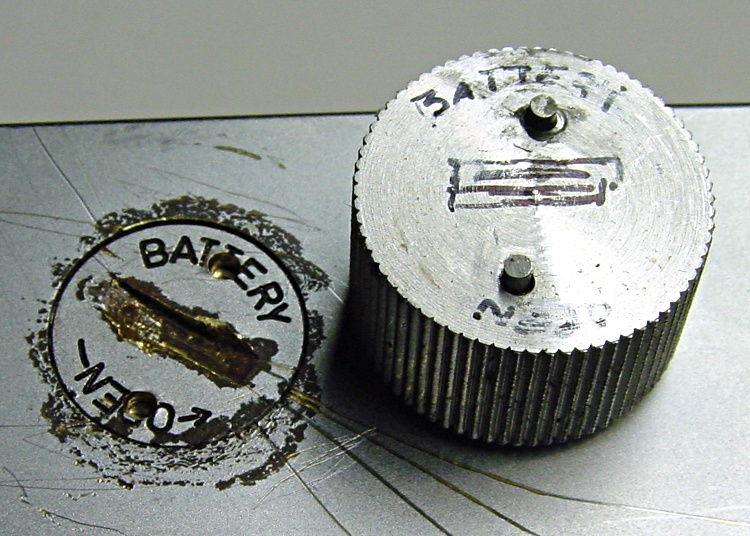
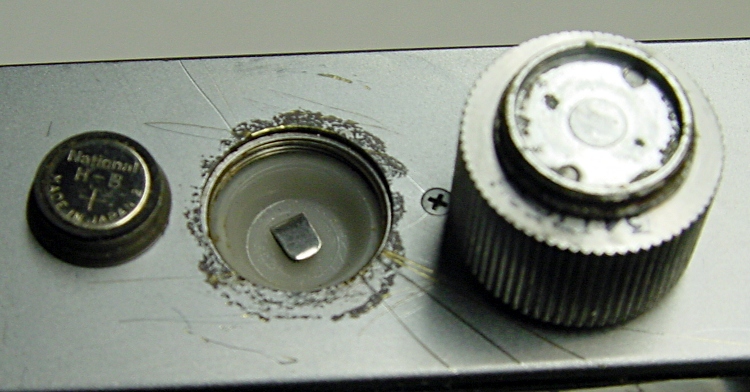
Battery cover wrench
Then I turned the threaded boss off the bottom of the knob and drilled two slightly larger holes separated by the same distance. This would be ideal for manual CNC, but I didn’t have the Sherline at the time, difficult though that may be to imagine.
When you can’t do precision work, epoxy is your friend.
Lay new tape over the battery lid
Cut two lengths of music wire with a diameter to match the holes in the battery lid using a Dremel abrasive cutoff wheel
Stuff the wire stubs into the holes, wipe off excess epoxy
Jam the pins through the tape into the holes in the battery lid
Wait for a few minutes…
You can see the top pin is slightly offset in its hole, but the epoxy ensures that the pins are an exact fit to the lid. The tape prevents the wrench from becoming one with the battery lid. Not drilling into the battery means the pins bottom out on the battery. Music wire means the pins won’t bend; copper wire doesn’t work in this application.
If you’re good with the Dremel, the pins will be not only the same length, but the proper length. IIRC, I made them a bit long and then trimmed them to fit.
Battery lid removed
When the epoxy cures:
Remove the wrench
Remove the tape
Install the wrench
Twist the lid right off.
Works like a champ!
Much to our surprise, the inside of the battery compartment wasn’t a mass of corrosion and the threads were actually in pretty good shape, all things considered. It’s not clear why the lid was so corroded, but there you have it.
He went home happy… taking the wrench along, although we hope it’ll never be used again.
(I found these pix while I was looking for something else. My close-up technique has improved over the years: a tripod, bright lights, and the smallest possible aperture are my friends.)
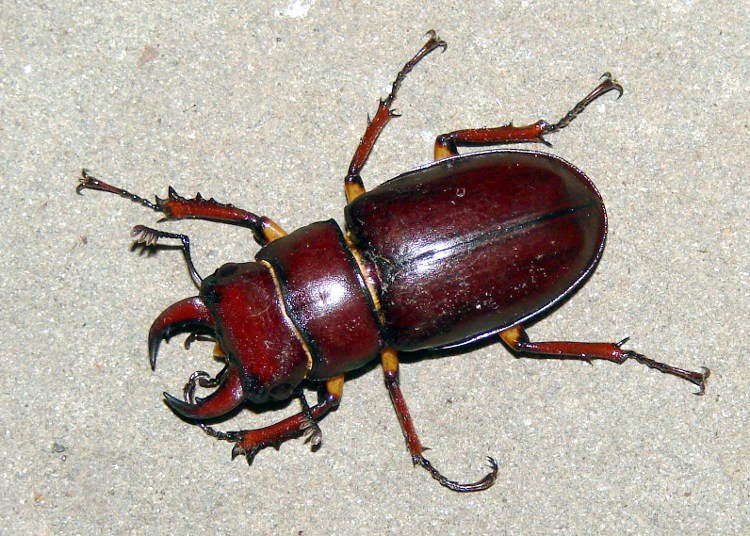
This scary-but-innocuous fellow landed on our doorstep last night.
Staghorn Beetle
He’s a staghorn beetle and, as nearly as we can tell, uses the mandibles to demonstrate his superiority over the rest of the staghorn beetles in the neighborhood.
EXT. UPSTATE NY APARTMENT COMPLEX — EARLY AFTERNOON
Clouds
A STRANGER emerges from an apartment and walks through the adjacent parking lot to the complex’s central roadway. A late-middle-age white male, he is dressed casually in black trousers, red t-shirt with STAFF in large white letters on the back, well-worn blue-and-white pinstriped locomotive driver (“engineer”) cap, and dark sunglasses. His graying beard is trimmed short, but he is obviously overdue for his quarterly haircut. He carries a bulky black prosumer digital camera.
The bright blue sky is filled with large clouds from an approaching storm front and, opposite the sun, a cumulonimbus bank looms over the far horizon above a row of apartment buildings.
The Stranger studies the clouds, moves to various vantage points, examines the rest of the sky. He braces the camera against a road sign pole and fiddles extensively with the knobs & buttons while taking several pictures.
WOMAN #1 emerges from a building, enters a car, and drives along the central roadway. She slows, stops next to the Stranger, and rolls down her window.
WOMAN #1
What are you taking pictures of?
STRANGER
Those great clouds over there! Looks like we’re in for a real storm later today!
WOMAN #1
Oh. Have a nice day. (She rolls up the window and drives off)
The Stranger is joined an elderly COUPLE, WOMAN #2 who is probably his wife, and a teenage GIRL who vaguely resembles all of them. The Girl is wrapped in a large towel. They walk slowly through the apartment complex to the pool, appear baffled by the childproof latch on the gate, and are finally admitted by WOMAN #3 who shows them how to operate it.
INT. IN-GROUND POOL PATIO
They sit around a table in the corner, jockeying the uncomfortable plastic chairs for position in the shade cast by the table’s umbrella, while the Girl removes a towel to reveal a red swimsuit, enters the pool, and begins swimming laps.
Coming up for air
Various other PEOPLE occupy the area near the pool, including older couples, males of various ages, several curvaceous mid-twenty-ish females clad in revealing swim / sunbathing attire, and a group of middle-age couples.
The Stranger takes several pictures of the Girl in the pool.
Time passes.
The Stranger, realizing that he’s about to spend the next three hours sitting on his well-flattened butt in the van while driving home, stands up, stretches, and walks to the gate. He intently studies the labels on the childproof latch, which is misinterpreted as being baffled, and leaves the pool area.
EXT. APARTMENT COMPLEX ROADS
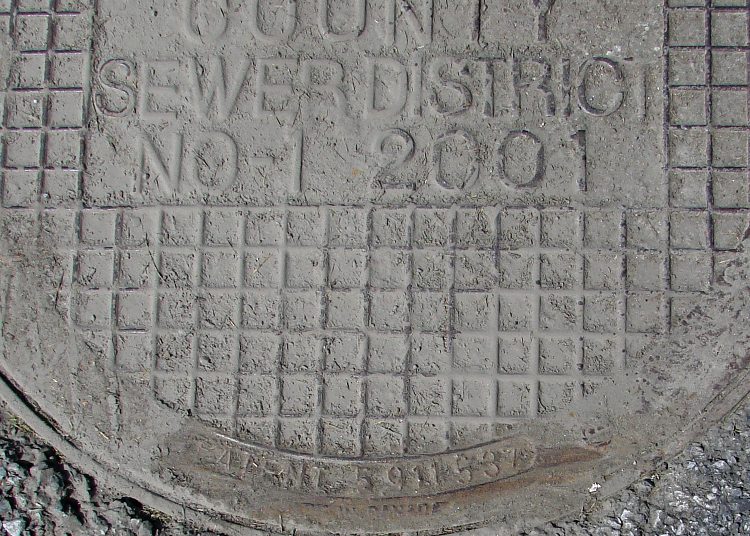
Manhole cover
The Stranger strolls around the apartment complex to the side entrance road, and returns along a different route. He seems to take a particular interest in drain grates, manhole covers, garage doors, and infrastructure in general. He scuffs the dirt from one manhole cover and takes a picture of it. He continues walking around the complex and returns to the pool.
His companions gather themselves together and emerge from the pool gate.
EXT. POOL AREA
A New York State Police car drives slowly into the complex through the side entrance. The TROOPER scans the area, spots the Stranger, and pulls up beside him.
TROOPER
Good day. How are you doing?
STRANGER
(Smiling) So far, so good.
TROOPER
What brings you here today?
STRANGER
We’re visiting my wife’s parents. (Gestures to indicate the Couple among his companions)
TROOPER
(Eyes the group) We’ve had a report of someone in the area taking pictures of buildings and possibly people.
STRANGER
Well, I’ve been taking pictures of clouds, a manhole cover, and my daughter. (Smiles) I think it’s still permitted for me to take her picture.
TROOPER
(Getting down to business) Your name?
STRANGER
(gives name, helpfully spells last name)
TROOPER
What’s your birth date?
STRANGER
(Gives a date long in the past)
TROOPER
(Typing on laptop PC) And your address?
STRANGER
(Gives city and state)
TROOPER
(With emphasis) Your street address.
STRANGER
(Gives street address)
TROOPER
Phone number?
STRANGER
(Gives phone number, repeats when trooper misses last four digits)
TROOPER
(Types, pauses, types, reads screen) Enjoy your stay.
Trooper drives off, leaving apartment complex through main entrance.
STRANGER
(To his companions) Well, I now have a police record tagged “suspicious behavior”.
The group walks back to the apartment while discussing recent events and their plans for the remainder of the Independence Day weekend.
EXT. APARTMENT COMPLEX
P.O.V. pulls back and ascends in Google-Earth fashion to show entire Adirondacks region. The Stranger assumes the role of voice-over INTERLOCUTOR. Fade to black during narration.
INTERLOCUTOR
Despite my pique, the Trooper performed his job properly and with decorum. While the opinions of my companions differ, I contend that once a 911 call has been received, the police must follow established procedures to resolve the complaint. The response depends on the initial report and what the Trooper finds during his approach.
The fault, if any is to be found, thus resides with people who have been recently trained to suspect once-normal behavior: anything they wouldn’t do is considered threatening, if not hostile, when done by someone they don’t recognize.
Photography, in particular, is now treated as reconnaissance for an assault. Unless it’s done by surveillance cameras, in which case it’s perfectly benign.
–THE END–
Perhaps you can tell a similar story.
Extra Credit
Explore these 27 parametric variations on the theme of Stranger:
Double Bonus
Consider the behaviour variation where a [white + casual + friendly] Stranger politely but firmly refuses to cooperate with the Trooper’s inquiries. Explore the range of perfectly legal and extremely unpleasant outcomes. Possible working title: “How to ruin the rest of your holiday weekend in five minutes flat”.
Update: Many internal links on Schneier’s blog are broken. As nearly as I can tell, all inter-word hyphens should now be underscores: the-war-on-the.html becomes the_war_on_the.html. Perhaps they switched the back-end database?
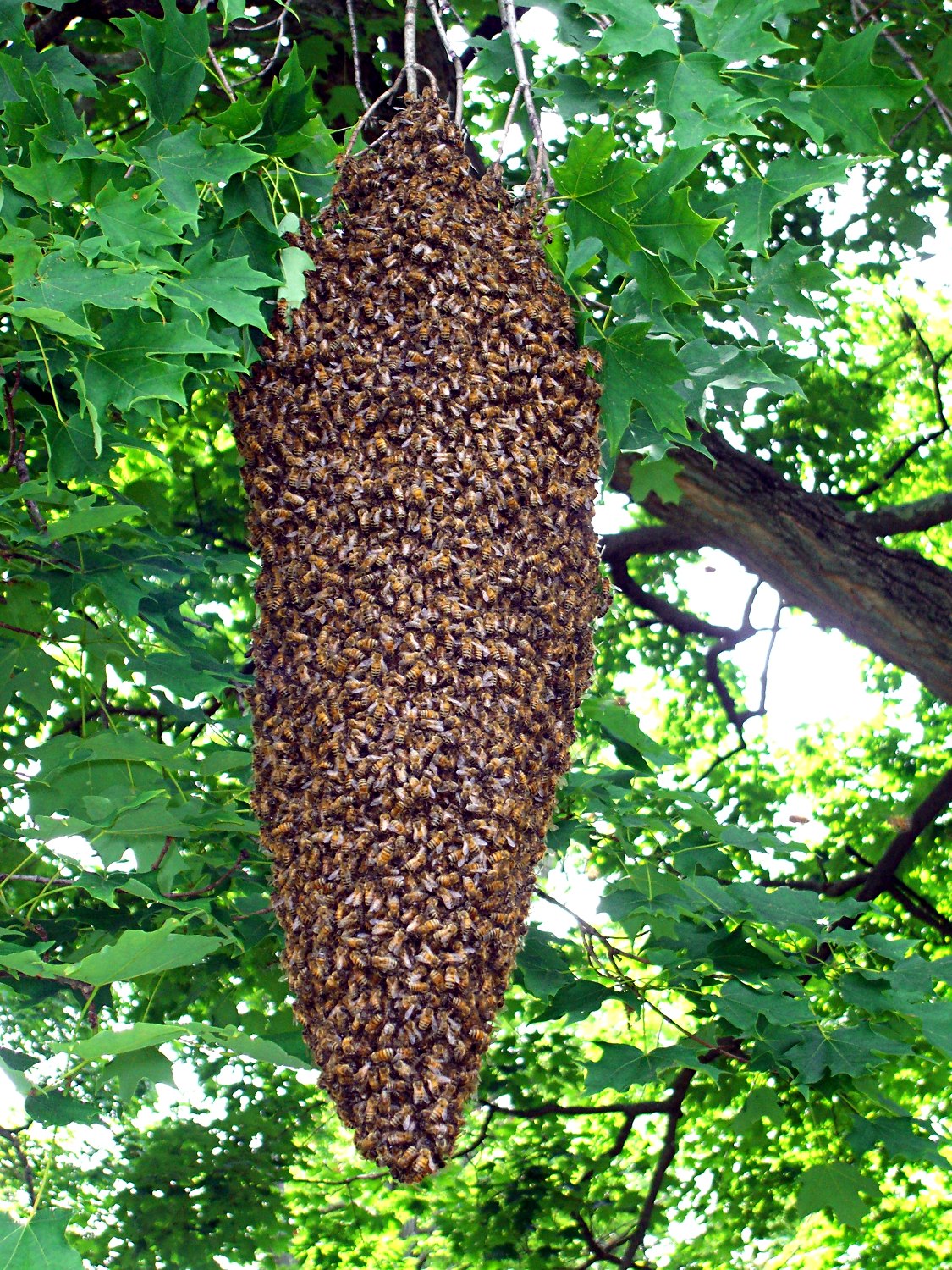
They’re doing well in their new home, building out comb on the foundation. The queen is in good shape, laying eggs as soon as the workers finish the cells. The workers seem to be feeding pollen directly to the larvae rather than storing it, which makes perfect sense. They’re taking two quarts of 1:1 sugar water every day!
Either you already know what this is all about or you really don’t want to know.