Ed Nisley's Blog: Shop notes, electronics, firmware, machinery, 3D printing, laser cuttery, and curiosities. Contents: 100% human thinking, 0% AI slop.
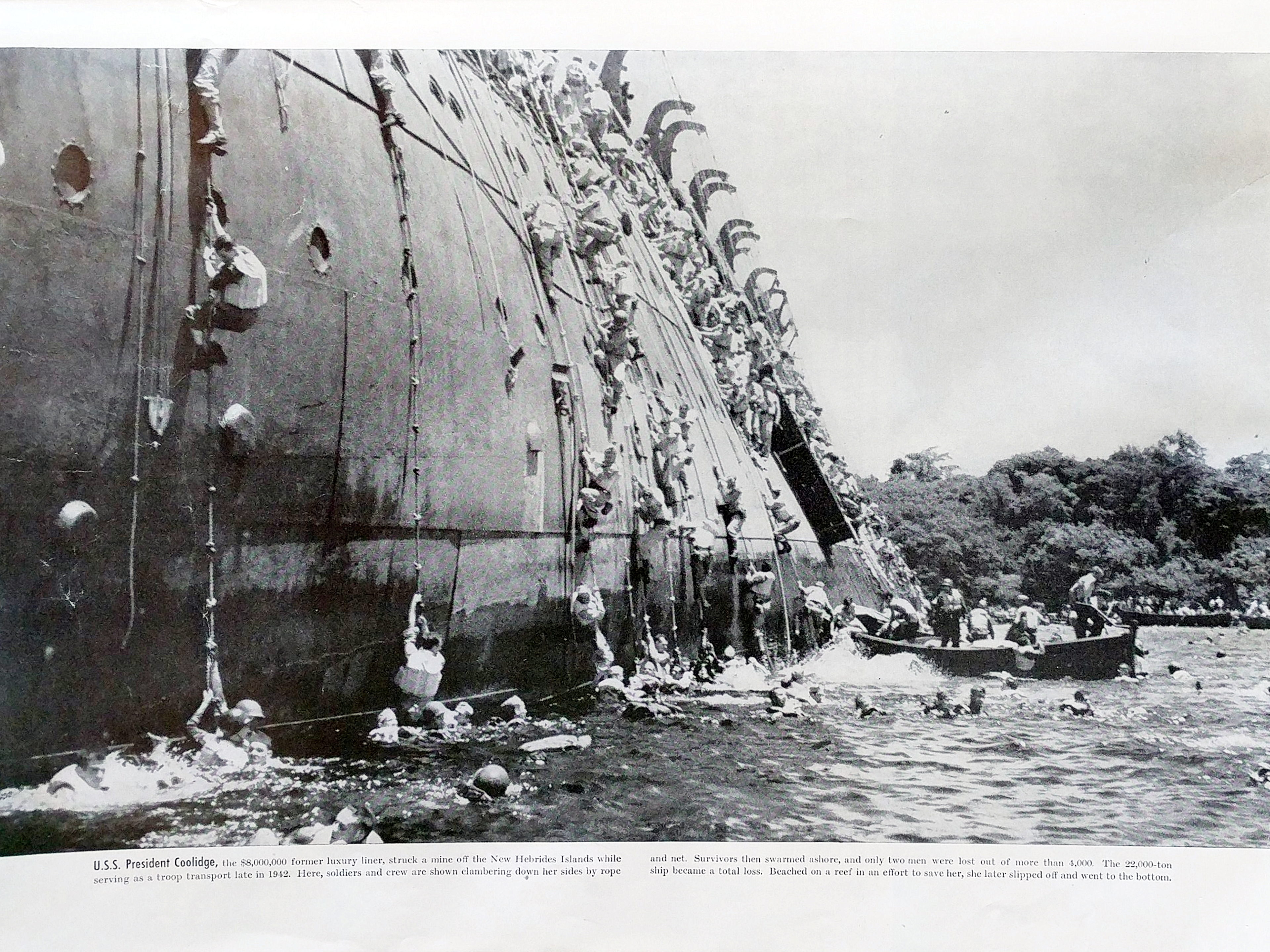
USS President Coolidge – Abandon Ship – Colliers Photographic History of World War II
None of those guys look like Dad.
Many of the events in World War II made little sense until the declassification of the Enigma decryptions and the ensuing Ultra / Magic programs showed the value of weaponized math …
A loud crack during a windy thunderstorm announced this mess:
Driveway branch – as fallen
Some deft bow saw work cut it down to size:
Driveway branch – trimmed
Whereupon our neighbor arrived home and we dragged the carcass off the driveway.
Fortunately, it missed everything important, as have several recent branch falls in our yard. The same cannot be said for the many downed trees around the immediate area from recent storms; some folks are hurtin’ bad.
One of my Tektronix AM503 Hall Effect Current Probe Amplifiers (B075593, for future reference) lost its DC Level zero-ing capability:
Tek AM503 front panel
The front-panel knob produced only positive output voltages from maybe 50 mV to the amp’s upper limit around 200 mV (into a 50 Ω termination, Tek not being one to fool around with signal quality & bandwidth). Other than that, the amp seemed to work fine, but you definitely want a 0 V baseline corresponding to no current through the Hall probe.
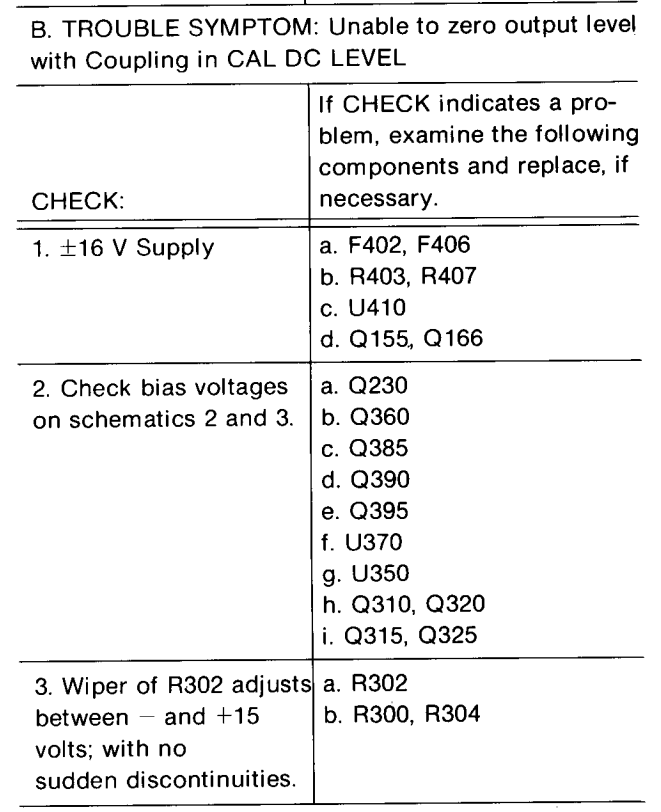
The manual includes troubleshooting recommendations:
Tek AM503 Amplifier – troubleshooting zero set problems
Because I didn’t understand the circuitry, I check the supply voltages, then started at U350, the differential amp rubbing the DC level knob against the input signal, and worked outward in both directions (clicky for more dots):
Tek AM503 Current Probe Amplifier – p 61 – Output Amplifier schematic
The PCB looks like this:
Tek AM503 – Q230 PCB detail
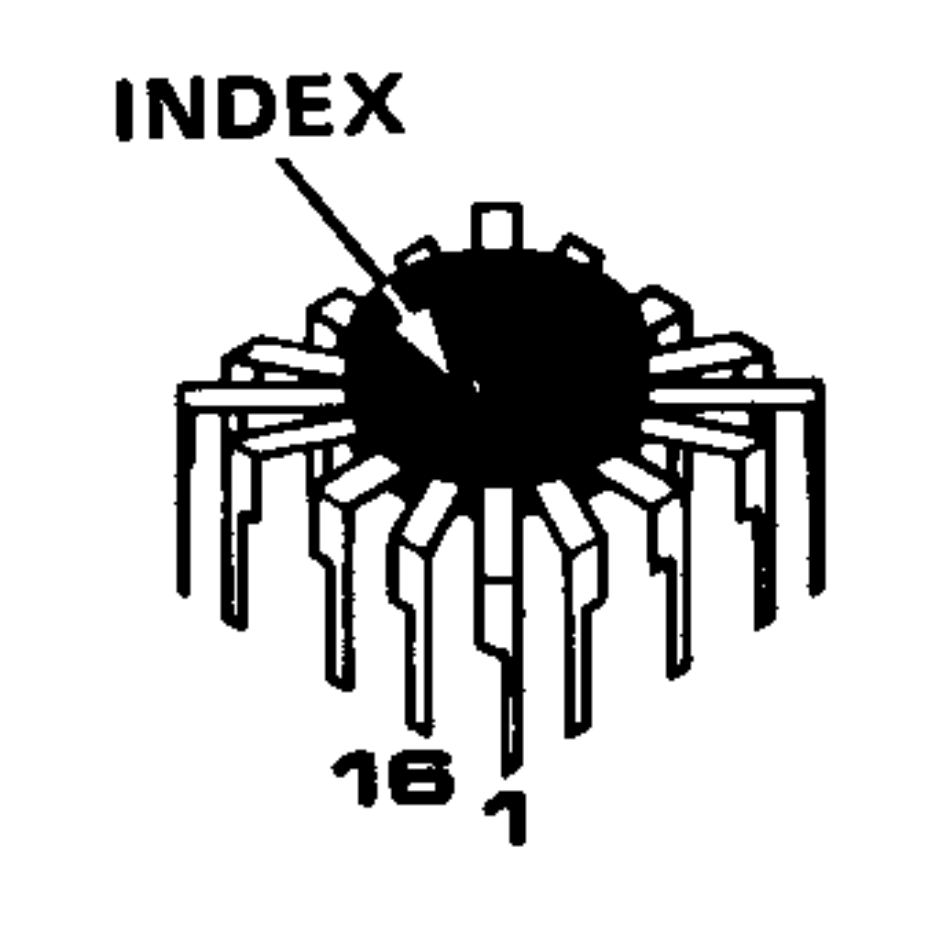
U350 is the round epoxy package in the the square spider-leg array over on the far left. Contrary to what you (well, I) might think, the index mark denotes pin 16, not pin 1:
Tek AM503 Amplifier – Tek-unique IC pinout reference
Which puts pin 1 at the upper right corner of the package on the PCB. The part listing in the manual says MICROCKT,LINEAR:VERTICAL AMPLIFIER / SELECTED, which makes perfect sense given Tek’s oscilloscope business; if you needed a high-speed differential amplifier, that’s what Tek’s internal catalog would surely suggest. Newer AM503 revisions use somewhat less unobtainable op amps, although they replace the DC Level knob with one of those newfangled microcontroller thingies for some sweet auto-leveling action.
Nothing seemed out of order. The unable-to-zero condition pushed the bias voltages off the expected values, but nothing seemed completely out of whack / stuck at the rails / broken.
The problem turned out to be in Q230, the first item on Tek’s checklist after the power supplies, even though its bias voltages looked OK. It produces the “Attenuated AC Signal” seen above and lives on another page of the schematics:
Tek AM503 Amplifier – Q230 detail
Q230 is clad in the natty red heatsink in the PCB picture above. CR226 is the metal TO-18-ish can partially hidden by the orange-red-brown ribbon cable from the DC Level pot.
For future reference, C234 and C244 aren’t installed in this PCB; they’d fit in the conspicuously vacant spots to the right and in front of Q230.
What may not be obvious at a first glance: Q230’s pins sit in teeny individual sockets installed in the PCB. One might remove and reinstall Q230, should one be so inclined and, given that it’s the first active device after the input attenuator, one might imagine such an action being necessary after a catastrophic oopsie.
At this late date, finding a suitable dual JFET would be … difficult, even were one were willing to compromise on the hermetic metal TO-78A package.
Seeing as how Q230 has been sitting quietly in its socket for the last three decades, I proceeded cautiously:
Turned the power off
Waited for the supply voltages to drop
Pulled Q230 slightly upward
Wiggled-and-jiggled it around
Shoved it back down
Turned the power on
I heroically refrained from pulling it completely out of its socket to dab DeoxIT on the pins; JFETs being notorious for susceptibility to static damage and, likely, lube would make no difference anyway.
Fired that devil up and the DC Level knob resumed doing exactly what it should:
Tek AM503 – Q230 reseated
The output now has the usual ±200 mV range centered at 0 V. The waveform shows a 100 mA signal at 50 mA/div, produced by a bench supply into a 100 Ω power resistor switched by a DC-DC SSR.
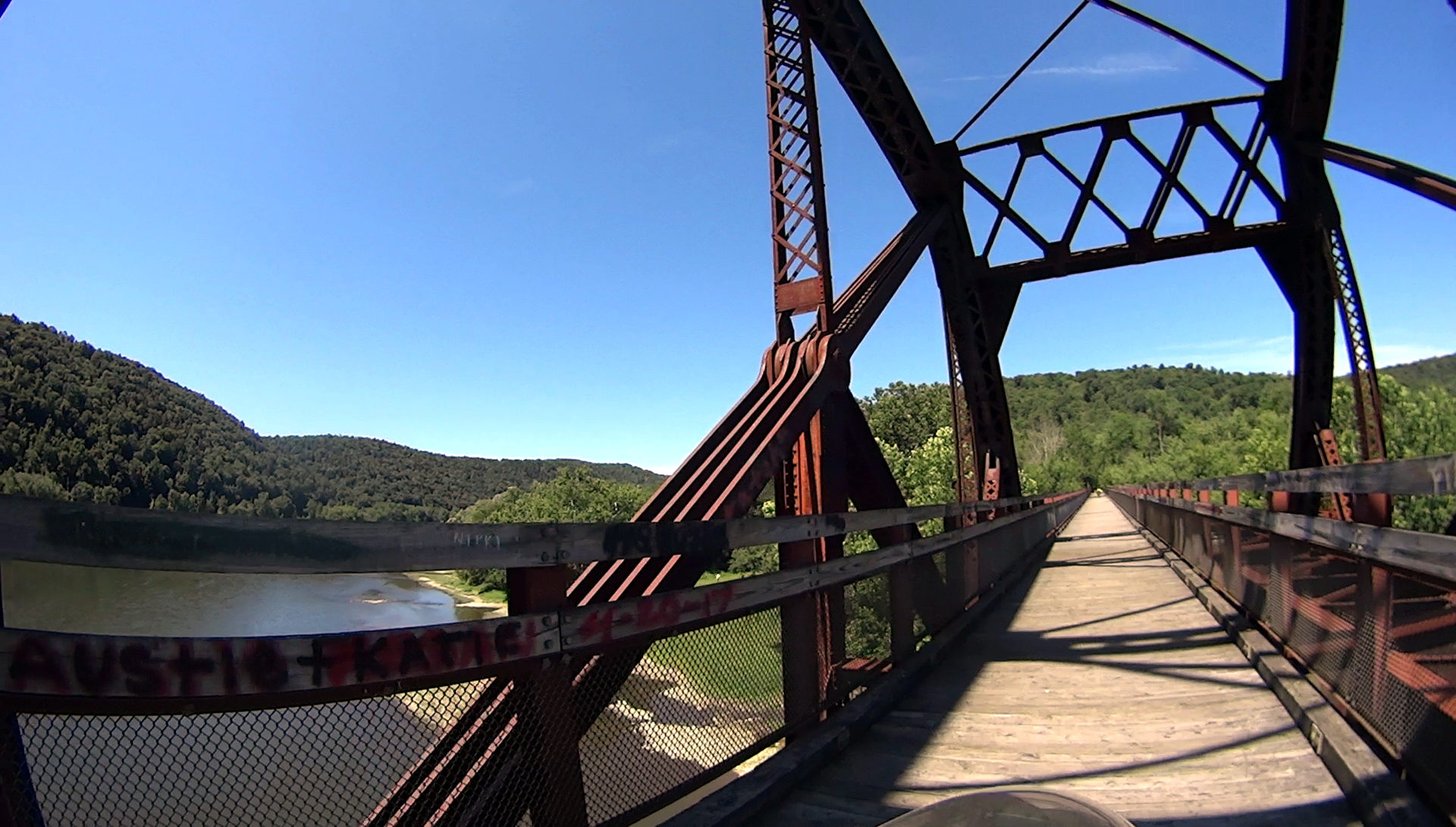
The gap in the rivets along the main truss show where someone pried off the bronze plaque surely commemorating the bridge. The scarred surface suggests a bronze-steel battery was in effect for quite some time.
It’s a look at engineering done in the days of slide rules and limited data, when overengineering wasn’t nearly as bad as ensuring the thing never, ever fell down.
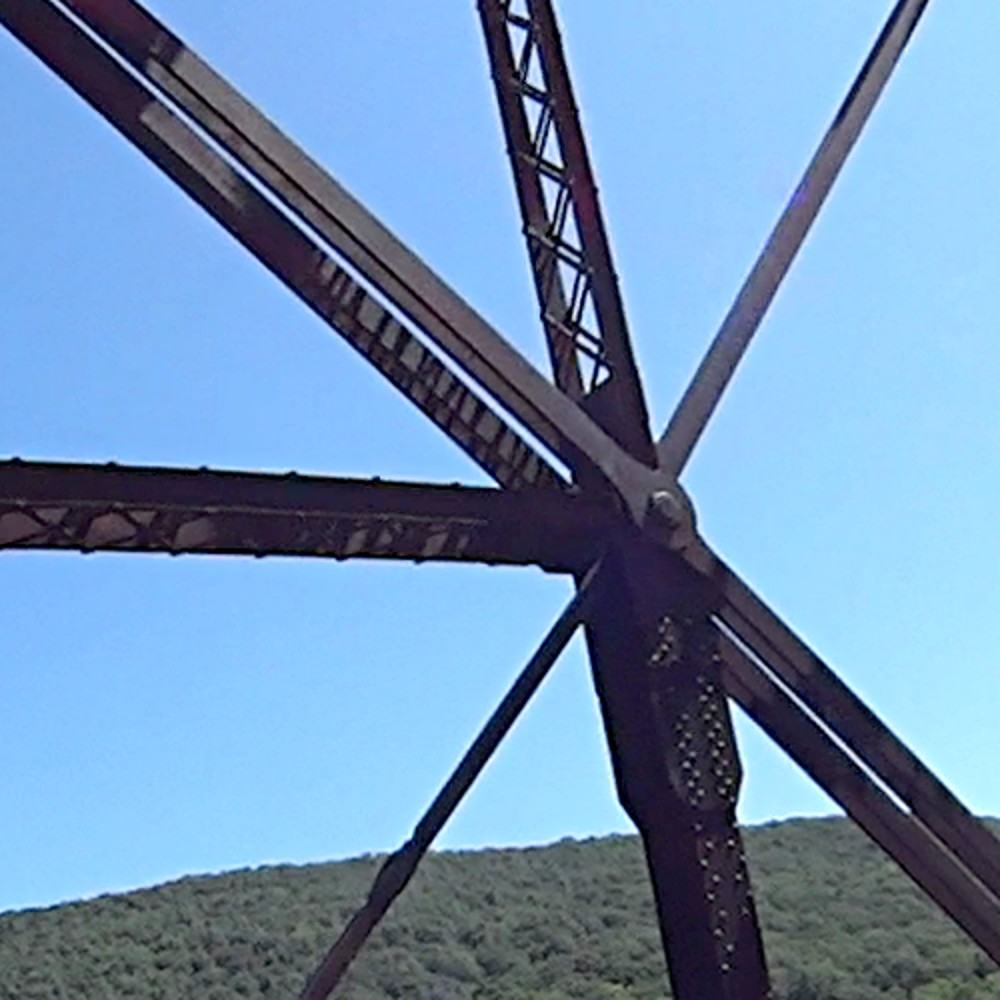
The bolts holding the beams and struts together show considerable confidence:
Back in the day, being 30 km away from a kiloton or ten of nuclear blast was deemed Far Enough, although nobody actually pulled the string to find out. Apparently, sections of surplus barrels make hella-good bunker buster bombs, at least when you’re in a hurry.
Obsolete, of course, explaining why it’s parked behind the York Agricultural and Industrial Museum, seen from the wonderfulHeritage Rail Trail. We rode south from York almost to the the Maryland line, then back again; a good time was had by all.













 The Smell of Molten Projects in the Morning