Even half an inch of masking tape forms an impenetrable barrier for small creatures; you could splurge on 2-inch tape to get more surface area if you’re squeamish. I did see a spider stepping daintily along a barrier, but, for the most part, all these specimens became mired within a few millimeters of an edge. That made it easy to decide which direction they were traveling: incoming insects stuck near the floor and a (very few) outbound insects stuck at the top, just after leaving the non-sticky surface.
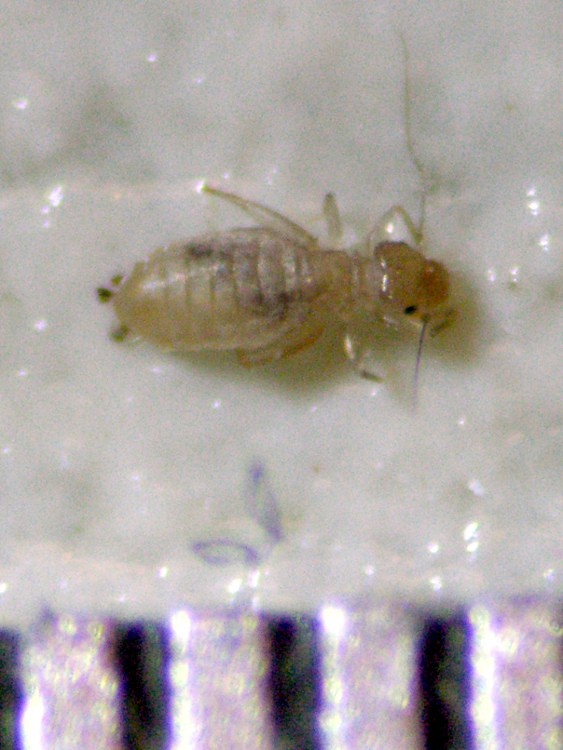
This is, we think, a well-fed first- or second-instar bed bug caught on a tape barrier; it’s not quite the right shape for the book louse seen below. A powder trap caught the only other bed bug in our collection.

In addition to that sole bed bug, the tape barriers captured a steady stream of critters that were not bed bugs. The trick is sorting through all the false positives…
Given the number of books in the house, we caught many book lice. These have a disturbing resemblance to bed bugs, but are basically harmless to humans. You don’t really need books to have book lice, although we captured most of them adjacent to our bookshelves.
This scary critter is a carpet beetle larva. They survive on any fabric surface and can infest upholstery as well as carpets.

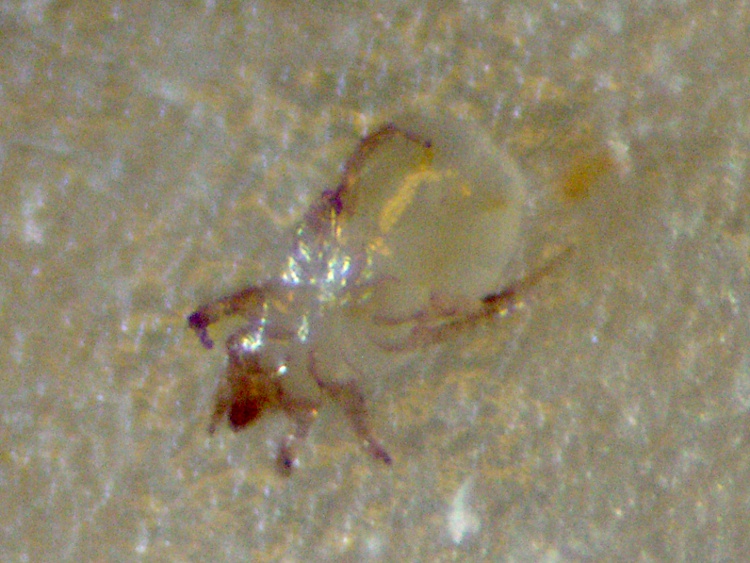
Dust mites, at least for their first few instars, are transparent little bags of bug stuff. The first instar may have six legs, just like a first instar bed bug, but successive instars have eight.

Here’s a close up view, showing it has eight legs:
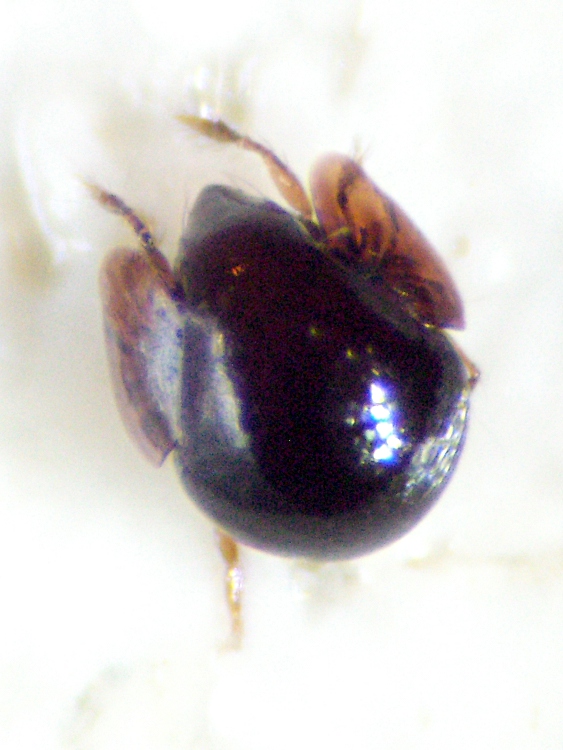
We have no idea what this cute little thing might be. It’s about 0.5 mm in diameter and, to the naked eye, looks like nothing so much as bed bug crap. But it’s alive!
This terrifying apparition sprinted across the (non-isolated) kitchen table, whereupon I mashed it with a magazine. It’s most likely not a bed bug; we’re guessing a spider of some sort. That stylet in its proboscis doesn’t look spider-ish, though.

It might be related to this eight-legged critter; the lancet on the front end is similarly scary. The legs aren’t the same, though.

All in all, we found a bewildering variety of insects, bugs, and spiders wandering around in our house. None of them are particularly harmful, although I now have a (most likely pyschosomatic) allergy to dust mites.
We’re not entomologists: if you know what the mystery critters are, I’d like to hear from you!
Up next: a Hot Box that might forestall all this excitement.