The Smell of Molten Projects in the Morning

Ed Nisley's Blog: Shop notes, electronics, firmware, machinery, 3D printing, laser cuttery, and curiosities. Contents: 100% human thinking, 0% AI slop.

Category: Machine Shop

Mechanical widgetry

  • Fluorescent Shop Lights, Early Failures Thereof

    A decade ago I installed a few dozen two-tube fluorescent fixtures (a.k.a. “shop lights”) throughout the basement. Visitors always say something like “Wow, I can actually see what I’m doing!” That was the whole point, of course.

    Being that sort of bear, I write the date on one end of a fluorescent tube when I replace it. Tubes seem to last 3-5 years, which is short compared to the 20k power-on hours touted on the carton: 5 years * 300 days/yr * 6 hr/day = 9 k hours. That’s an overestimate, as I don’t spend all my time crouched in my basement laboratory, honest.

    It turns out that there’s also a spec for the number of lamp turn-ons (“starts”) hidden deep in the lamp datasheets. For example, if you manage to browse the current Lamp and Ballast catalog at http://www.sylvania.com/ProductCatalogs/, you’ll find that a 20k hour rated life comes at “3 hr/start”, which works out to a mere 6.7k starts over the expected life.

    More starts = shorter life.

    I tend to turn the lights off if I think I’ll be upstairs for a few hours, which happens a lot during the winter.  My back of the envelope says that the tubes fail right around the expected value: 5 years * 300 days/yr * 4 starts/day = 6 k starts.

    Lately I’ve had a rash of early lamp failures and it seems the fixtures are failing after a decade; nothing lasts any more. I’m now installing electronic-ballast fixtures that fire right up in the winter and don’t have that annoying subliminal flicker. At a cost of $20 each, I’m not replacing all of them at once, I assure you.

    The only real problem with fluorescent lamps is that they make white people look dead. I managed to buy a contractor pack of warm-white tubes at the local Lowe’s, but they’re hard to find around here. Go for the lowest color temperature bulbs you can find.
  • Sunglass Repair

    Making the fixture
    Making the fixture

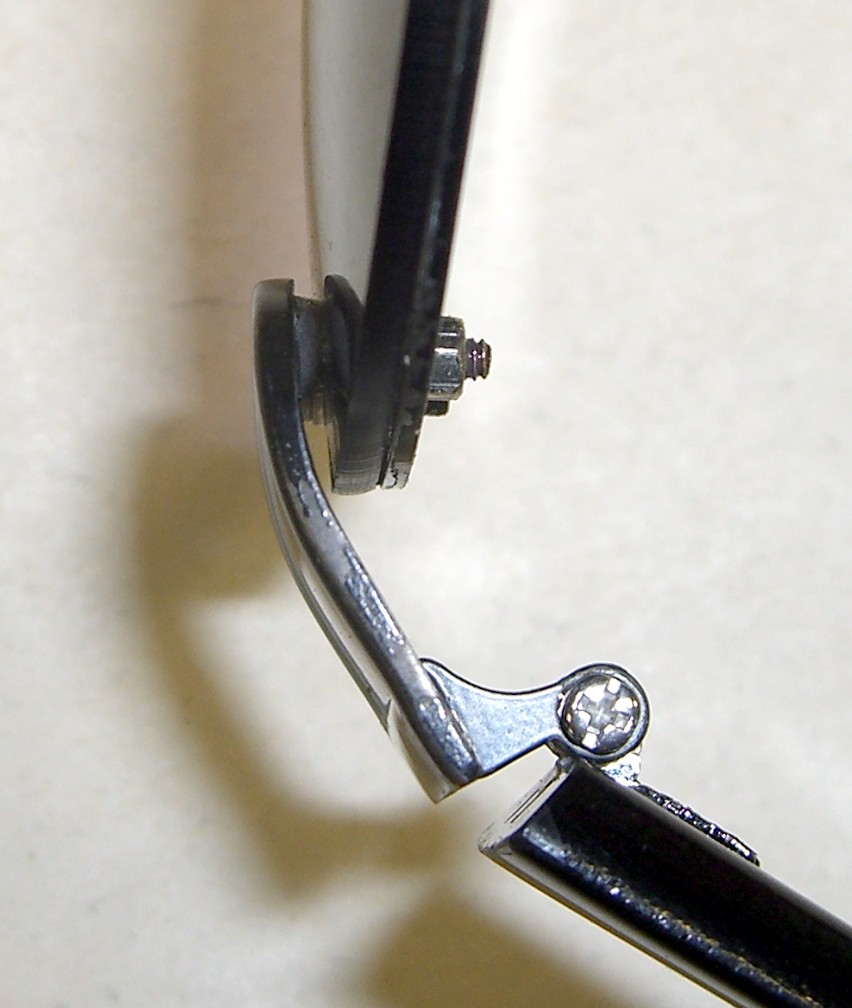
    One of the screws on Mary’s sunglasses came apart. Wonder of wonders, the nut fell off in the kitchen, made a click when it hit the floor, and we managed to collect all the pieces.

    The temples attach to the lens frame with two tiny screws apiece. The screw heads are slightly embedded in the temples, but you can see why this didn’t work nearly as well in practice as it did in the design studio.

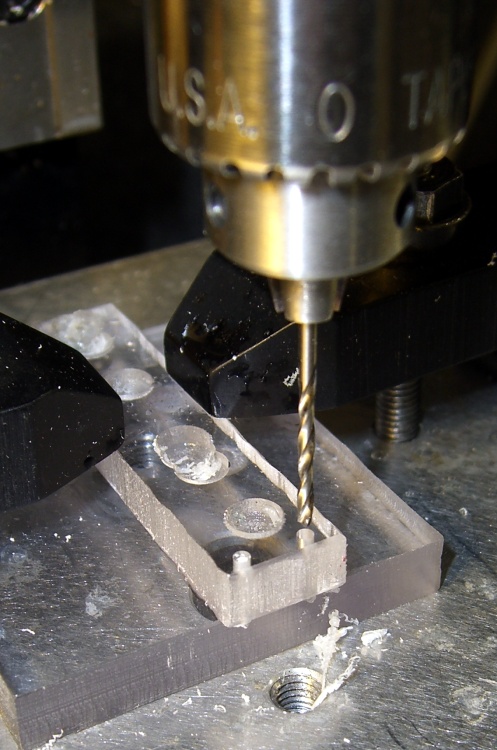
    The trick is to align the screw properly so it fits through the lens and frame after the adhesive sets up. The holes are 6 mm on center and more-or-less 55 mils in diameter (obviously, they’re metric screws, but this is the US and we do the best we can with antique units).

    Clamping and curing
    Clamping and curing

    That’s what CNC is all about: making it trivial to poke holes exactly 6 mm apart on center. I drilled two holes in some scrap acrylic sheet using Manual mode on my Sherline / EMC2 mill:

    g83 z-7 r1 q0.5 f100
    g0 x6
    g83 z-7 r1 q0.5 f100
    g0 z100

    I have it set to start up in metric units, which still seems to be legal here.

    cimg2858-sunglass-repair-success
    Success!

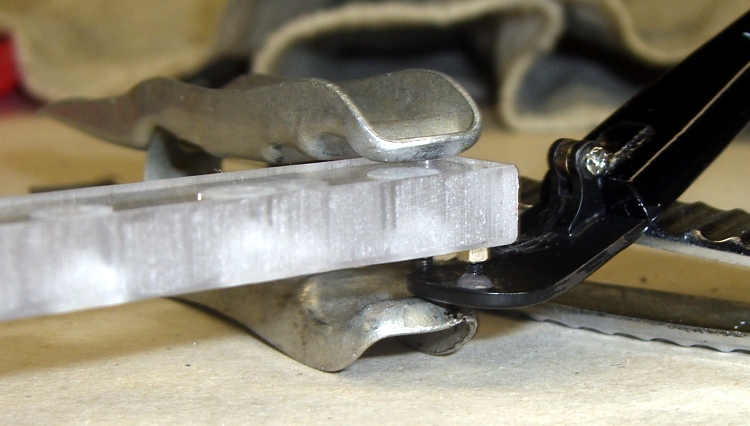
    Add a teeny dab of JB Weld, hold everything together overnight with a clothespin, and it’s all good in the morning.

    The trick is to check the leftover epoxy first to see if it’s fully cured before you move the actual piece.

    Memo to self: epoxy takes forever to cure at 55 F.

    Update: Pretty much as expected, that little dot of epoxy didn’t hold nearly as well as the original brazing. I tried a somewhat larger dot, but Mary was unhappy with the glasses anyway and we finally tossed ’em out.

    Of course I salvaged the screws & nuts & suchlike: you gotta have stuff!

  • Geek Scratch Paper

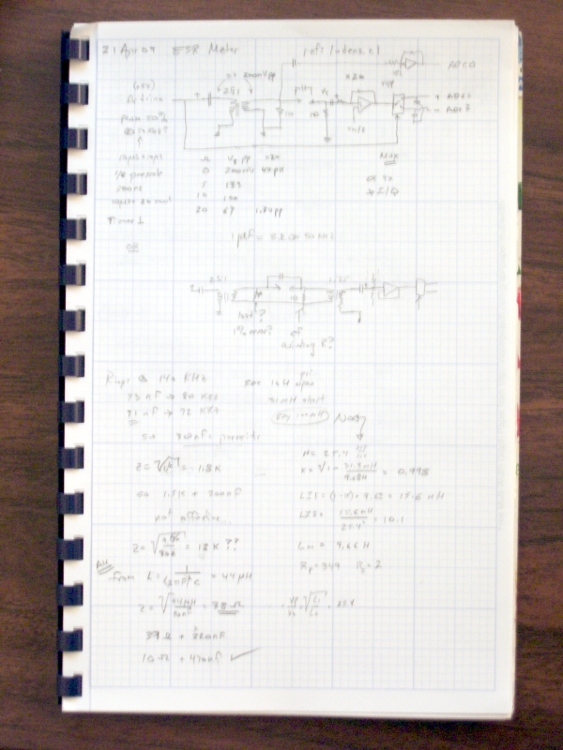
    Grid scratch paper pad
    Grid scratch paper pad

    Everybody needs doodle paper, but geeks need graph paper. What to do?

    Go to http://incompetech.com/graphpaper/ and set up a half-page grid with 5×8 1-inch divisions, 0.5-inch mid divisions, and 0.1-inch minor divisions (I think 1 / 0.6 / 0.3 pt line widths look nice). The obvious metric divisions are a bit too fine for my taste, but 2 cm – 1 cm – 2 mm might work.

    Fetch the PDF, load it into The GIMP at 300 dpi, expand the canvas to a full-page sheet (8.5×11 inches), duplicate the grid so you have two on one sheet, save it as a PNG for later use.

    If you don’t have a full-bleed printer, pick a full-page size that’ll print within whatever margins your printer enforces. You really want those one-inch grids to remain one inch, right?

    Print a few dozen copies, whack ’em in half, and bind ’em on the long edge. Add a thin cardboard backing sheet (Mr Breakfast Cereal Box, meet Mr Paper Cutter) so the bottom sheet stays neat.

    I have an old IBICO (since absorbed by GBC) plastic comb binding machine, but it’s easy enough to line the sheets up and coat the edge with white paper glue, rubber cement, or, for the true geek, liquid electrical tape.

    Pre-position pads wherever you’re ordinarily at a loss for scratch paper: neat doodles!

    PS: Put some money in his tip jar when you use his graph paper. It’s a nice gesture.

    [Update: Inexplicably, I didn’t have a picture of a pad. Here you go… low res, but you get the general idea. Great for off-the-cuff graphing, too.]

  • Small Sherline Clamps

    Made six hold-down clamps for the Sherline mill, inspired by this much fancier project:

    http://www.sherline.com/tip5.htm

    Adapted Bookshelf Extrusion and Screws
    Adapted Bookshelf Extrusion and Screws

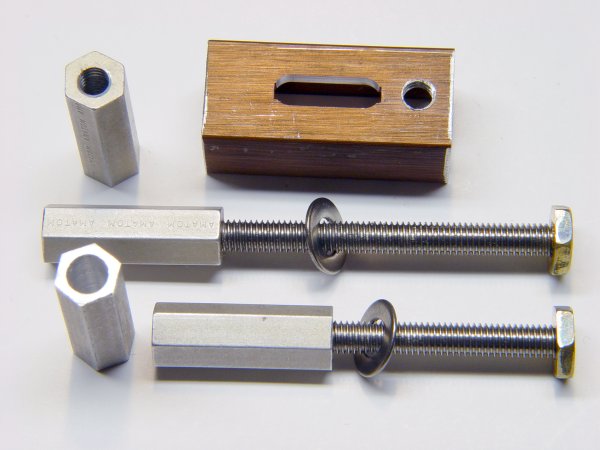
    He used steel clamps, brazed on little brass snippets, and used brass hex rod for the nuts. I hate machining steel, particularly in teeny pieces, and didn’t have any brass hex stock that small: improvisation was in order!

    So I sawed up an old aluminum bookshelf rail, CNC-ed the slot (more practice writing G-code), sawed the heads off some stainless 10-32 screws, and produced something that might work just as well.

    My stash has a lifetime supply of 10-24 brass nuts, so I jammed them on the end of the 10-32 screws in the back to act as pads against the mill table top. No finesse there…

    The T-slots aren’t quite deep enough for the nuts, though, so I milled 15 thou off each side of another six nuts and discovered, once again, that you can’t take an arbitrarily thin cut unless you have an arbitrarily sharp cutter… which, of course, I don’t. Made a plastic spacer to hold the nuts just high enough to nibble off the excess and just low enough to grip ’em in the mill vise. Did the whole thing without leaving embarrassing scars on the vise or ruining the cutter, much to my delight.

    Tapped the slenderized nuts 10-32 (how crude!) and applied green Loctite to the three goobered threads to lock the screws in place. The flats just clear the T-slots and the thickness is just barely OK, so I declared success.

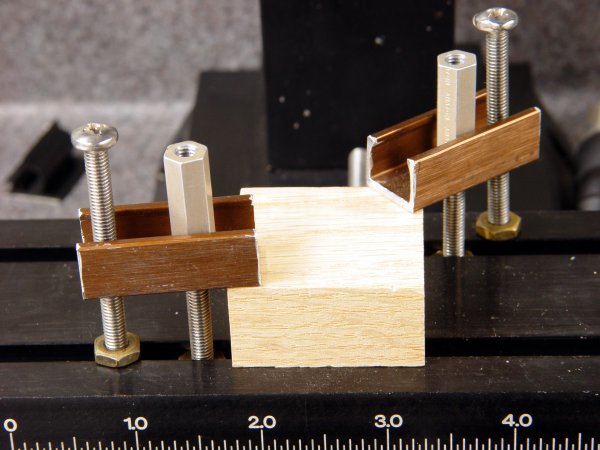
    Clamps In Action
    Clamps In Action

    The Good Idea in the original project lies in the long hex nuts. They’re drilled out about 3/4 of their length to clear the 10-32 screws, so you can just drop them on and spin a few times rather than tediously twisting them all the way down. My stash yielded some 2-inch aluminum standoffs tapped for 4-40 screws on each end; cut ’em in half, drilled out the raw end, drilled-and-tapped the existing holes to 10-32, and there they were.

    And, best of all, my fingers will smell like tapping lube for the rest of the month… ah, shop time!

    Update: You can cut a nice taper on the nose if you don’t like the relentless square aspect of those things or need a bit more clearance. They’re peeking into the sides of the bottom picture there, holding the sacrificial plate in place.

  • Park MTB-7 Rescue Tool Repair

    Too-short Stud
    Too-short Stud
    Goobered Screw Threads
    Goobered Screw Threads

    Once upon a time I deployed the 6 mm hex wrench on my trusty Park MTB-7 Rescue Tool, applied some torque to a handebar stem bolt, and crunch something broke inside the tool.

    [Update: Fixed a dead link; Park evidently reshuffled their website.]

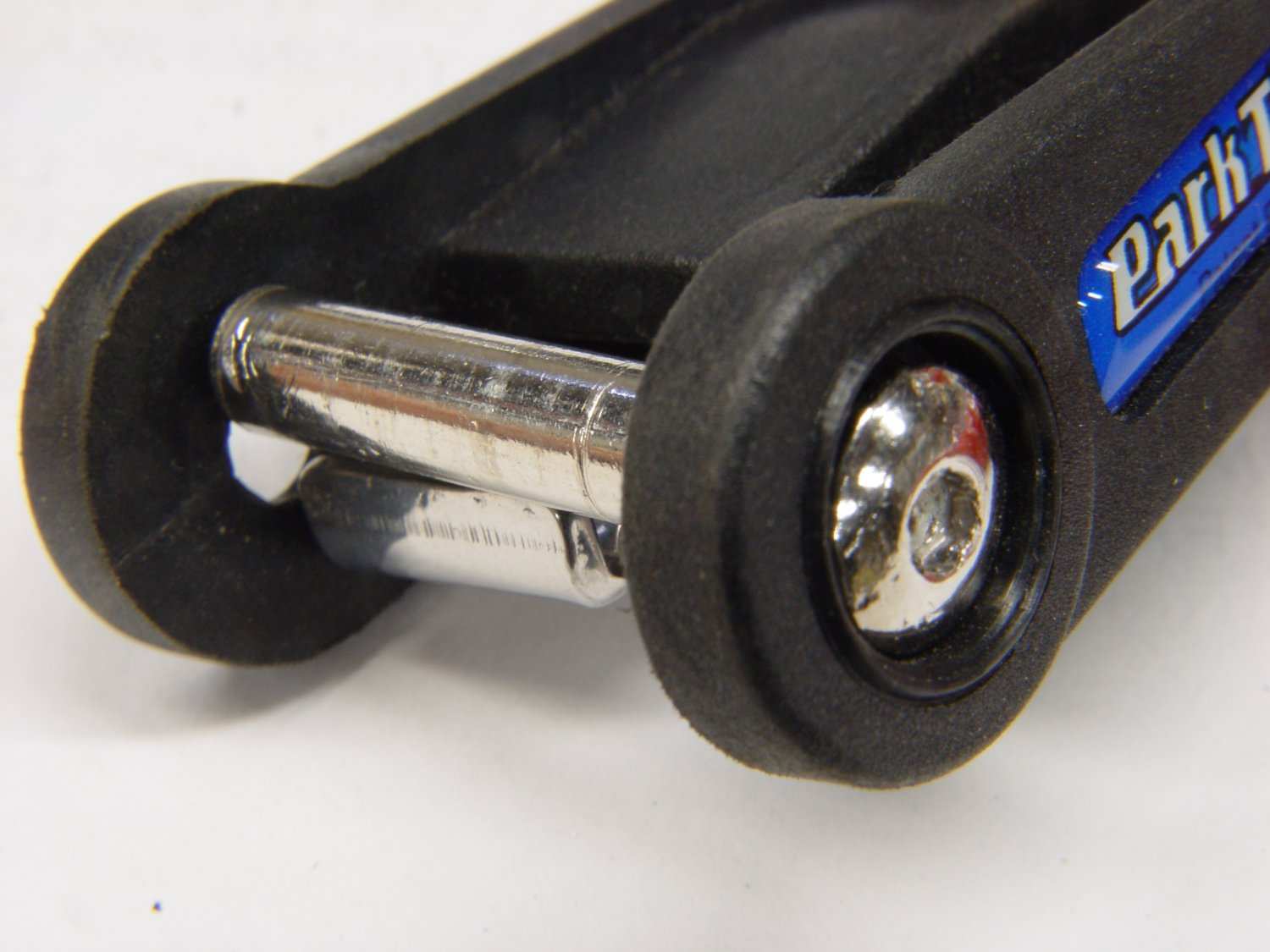
    The essential problem is that the studs holding the tools in place are too short: they don’t seat fully into the plastic housing at the far end, because they’re 2 mm too short. The photo showing the stud at an angle gives an idea of the situation I saw when I took the tool apart.

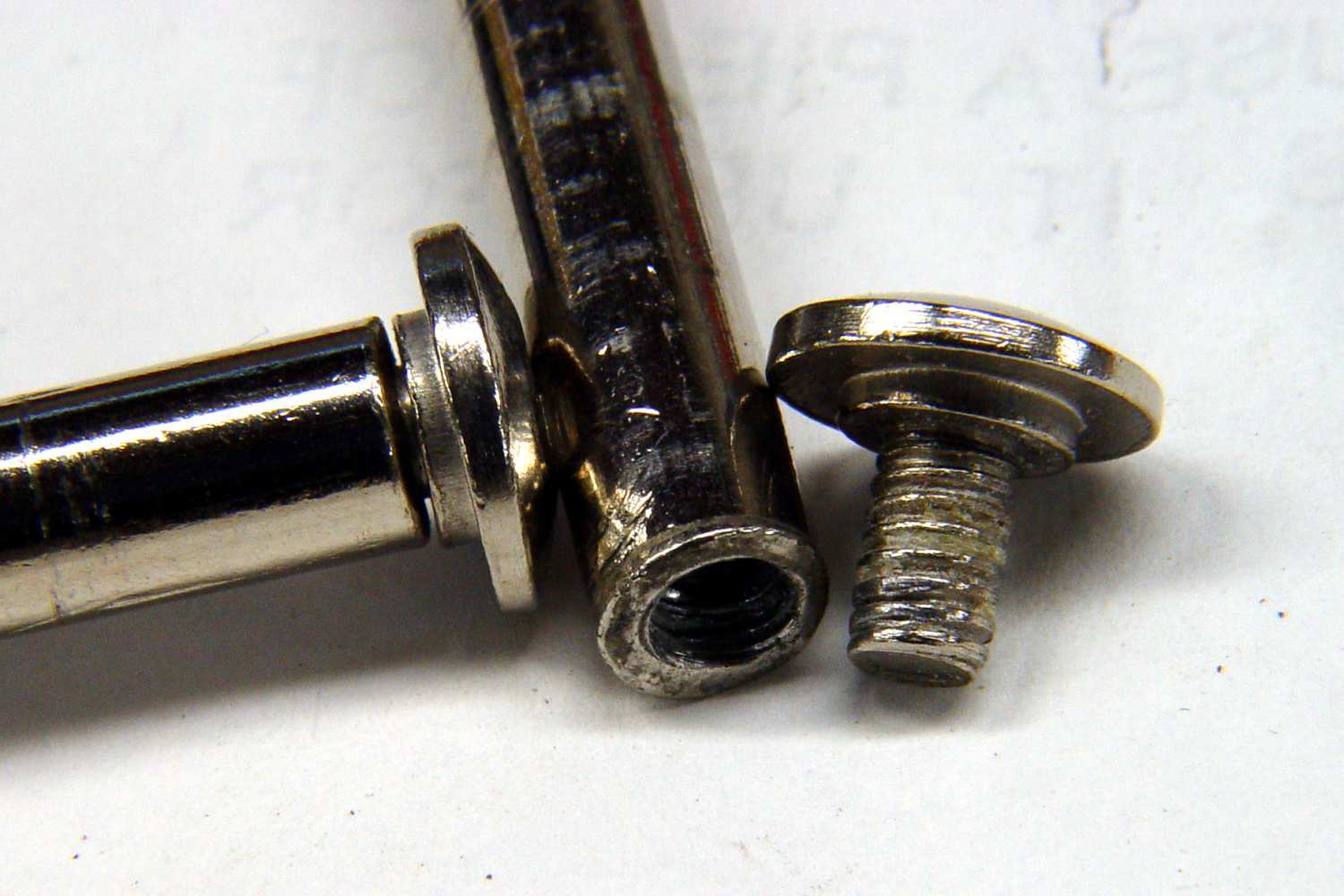
    The crunching sound I heard was the screw tearing out as the stud shifted in the housing. The studs seem to be swaged into shape in one operation, but without quite enough material: the threaded end isn’t flat and the internal threads are crap. The photo showing the studs and screws can’t really show how off-center and feeble the internal threads really are, but you can see the junk lodged in the external screw’s threads where it tore out. Note the poor fit between the other stud’s end and its screw: it’s firmly seated against the stud, so that’s how far off square the end is!

    Better Screw and Sleeve
    Better Screw and Sleeve

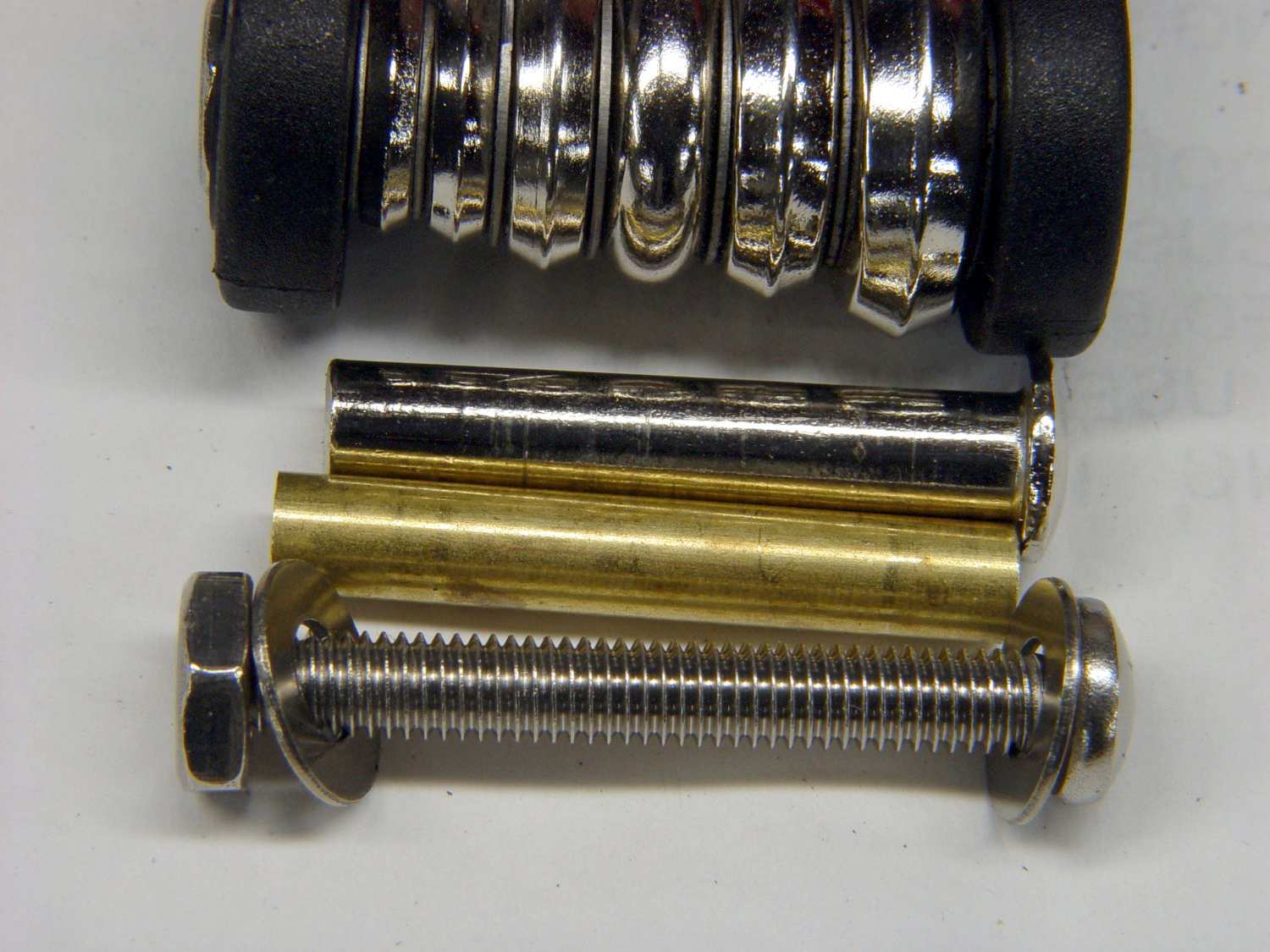
    The fix was easy enough. I cut some brass tubing to the proper length, trimmed stainless-steel 10-32 screws to fit, and put everything together with red Loctite. The photo showing the all the parts indicates how much longer my sleeves are than the original studs: basically, that’s the thickness of the plastic housing on one side.

    But, sheesh, you’d expect a Park tool to be better than that. I sent ’em a note with pictures and maybe they’ll smack the factor who shorted ’em on the Quality bullet item upside the head.

    I got to spend some time playing with my toys, so it wasn’t a dead loss.

  • Spoke Wrenching

    I recently rebuilt the back wheel on my bike, which had been breaking the odd spoke and getting more & more out of true.

    Spoke wrenches are so tedious when one’s fingers don’t fit in between the spokes like they should. I figured, hey, if the pros can use power drivers, so can I…

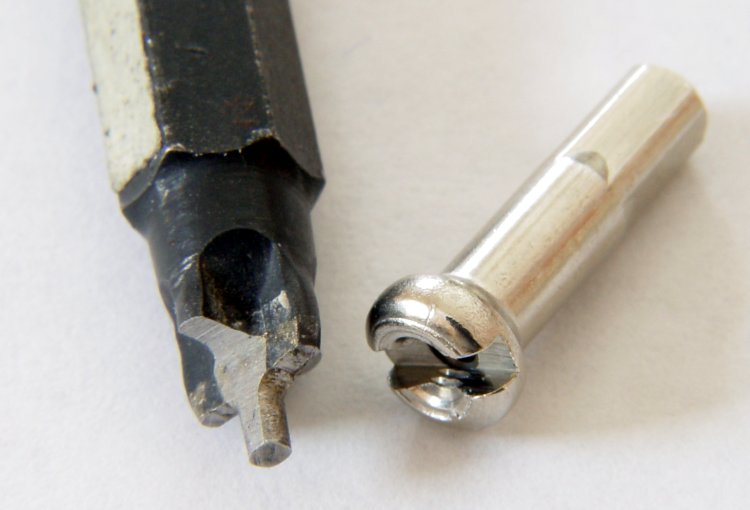
    Dug a goobered #2 Philips bit out of the ziplock baggie labeled “NFG Bits” and applied it to the bench grinder. The strip of tape on one flat makes turn-counting easy enough that I can actually get it right. It’s not hardened, so it probably won’t last for more than a few wheels, but this is the first scratch-built wheel I’ve done in decades and that baggie is nowhere near empty.

    Homebrew Spoke Wrench Bit
    Homebrew Spoke Wrench Bit

    I read through Jobst Brandt’s The Bicycle Wheel to get prepped for the job, removed the old spokes, laced up the new ones, lubed the threads & rim washers, and the wheel trued up almost perfectly just by counting turns.

    Did the spoke aligning & stress-relieving tricks, applied some final tweaking, and it’s perfect!

  • Database Troubles

    So I bought a batch of small carbide bits at Lowe’s: some Dremel burrs and a neat pointed RotoZip engraving bit. Got to the checkout and everything went swimmingly except the RotoZip, which triggered a management override.

    This caused the dreaded price check on Register 6, the only register open at the time. People are four deep behind me and the line is growing.

    Manager shows up, scans his magic power card, types in a small bit of life history, scans the package again. It calls for another management override.

    He re-scans his card, types in a (presumably different) slice of life history, re-scans the package, and the price pops up in bright green for all to see:

    89991 Point Cutting $10,000.00

    “This just isn’t going to happen” sez I. In round numbers, I think it costs 15 bux. Maybe 10, maybe 20.

    The line now extends to the paint counter. I turn to the woman behind me and observe that I don’t think I’ve ever charged a $10,000 item before and that I sure hope it comes with a free yacht.

    The manager laughs, re-scans his card, types in still more life history, re-scans the package, types in yet more life history, and a new price pops up:

    89991 Point Cutting $1.00

    I say “Thank you very much!” He sez “Have a nice day!” The cashier sez “Wow, great deal!” I say “I’m outta here!”

    Hopped on my bike and rode off into the haze.

    I strongly support the “If it doesn’t scan, it’s free” method of price determination, but this is just the second time it’s happened. The first was a clerk who made an on-the-spot decision. This one had management approval!

    I think the price in their database is $10k because of a data entry error, which triggered the first management override.

    Fairly obviously, the database didn’t get fixed today.

    But a good time was had by all!