Ed Nisley's Blog: Shop notes, electronics, firmware, machinery, 3D printing, laser cuttery, and curiosities. Contents: 100% human thinking, 0% AI slop.
U2, the MAX4544 data/voice mux, runs from the shunt-regulated +5 V, not the TT3+ regulator
Miscellaneous doc cleanup
I’m mulling over a capacitor between the TT3+ data output and the earbud, so as to monitor transmissions, but I’m not convinced that’s worthwhile.
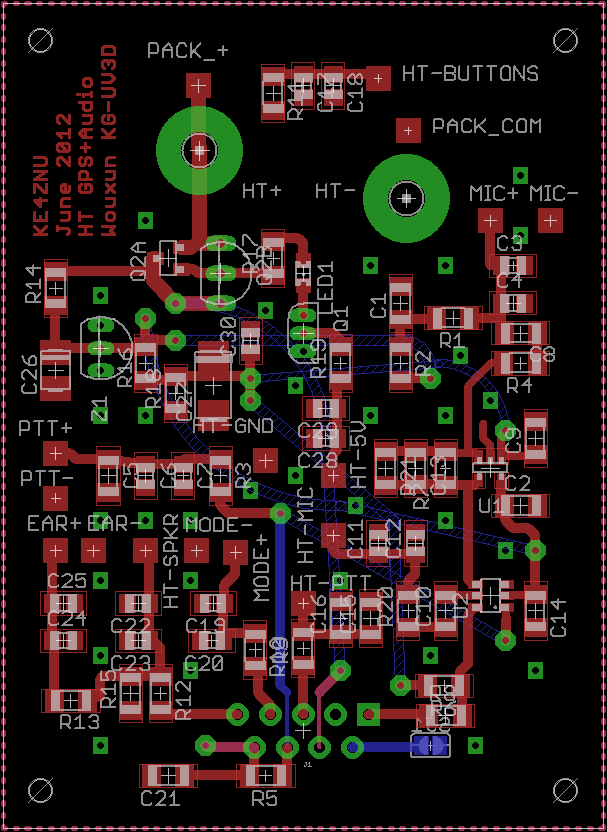
The PCB layout, with wire jumpers on the two inner layers:
Wouxun KG-UV3D GPS+Voice PCB
The previous version doesn’t look much different from what this one will become:
GPS-HT Wouxun interface – brassboard
This will replace the ICOM Z-1A radio and GPS interface on Mary’s bike, which has been working fine for quite a while. That can’t last, so I’m trying to get ahead of the failure curve…
There ought to be a survey marker pin at the front corner of the lot where it’d come in handy for locating the edge of the yet-to-be-contracted driveway paving, but if it’s there it’s been pushed below ground level. So I mooched a homebrew metal detector based on the Elenco K-26 PCB…
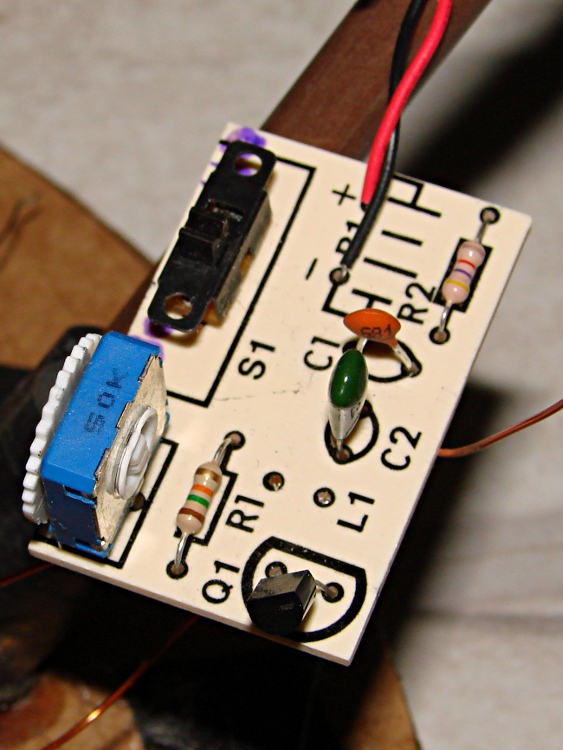
K-26 Metal Detector PCB
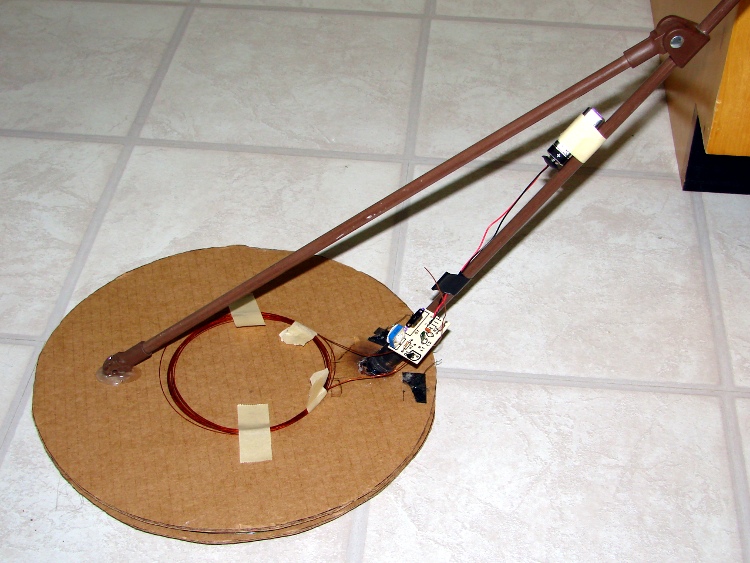
The kit included 45 feet of 22 AWG enamel wire that should have become a 5 inch diameter coil with 30 turns, but the as-built detector had a coil wrapped around a 1 foot diameter cardboard form. The coil inductance sets the oscillation frequency, which turned out to be around 300 kHz: far below the nominal 1000 kHz. So I wound 40 turns of 22 AWG magnet wire around an old CD-ROM spindle case (which is, quite coincidentally, just over 5 inches in diameter), and taped it atop the cardboard form.
The datasheet recommends a nonmetallic handle, so I swapped in a plastic umbrella support for the original metal mop (?) handle.
Rewound homebrew metal detector
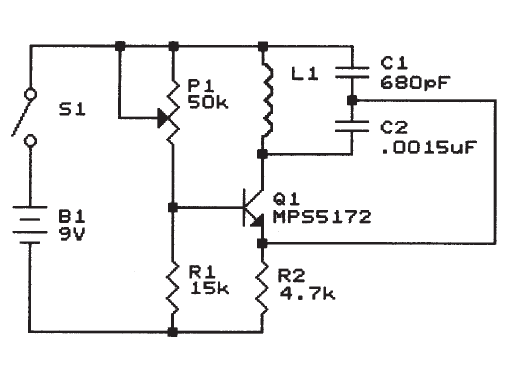
The K-26 schematic looks like a common-base Colpitts oscillator, with only the most utterly absolutely vital essential components:
K-26 Schematic
In round numbers, the oscillation frequency varies inversely with the number of turns:
F = 1/(2π√(LC)) (for a simple tank)
L = stuff × N2 (stuff = various constants & sizes)
F = stuff / N
The rewound coil oscillated at 350 kHz, so I spilled off a few turns at a time to produce these results and a tangle of wire on the floor:
L – µH
Freq – kHz
330
350
186
535
107
711
65
840
42
1140
For the record, the coil in the photo corresponds to the last line and has 12 turns.
Contrary to what the instructions imply, trimpot P1 does not adjust the oscillation frequency. It tweaks the transistor bias for best oscillation, so it’s more of an amplitude control than anything else. I adjusted P1 while watching an oscilloscope connected across the negative battery terminal and the emitter of Q1, but you could probably use a small sniffer loop to good effect.
It draws about 2 mA, so the battery should last quite a while; labeling the switch positions should help a lot.
The oscillator produces an unmodulated carrier, so I tuned a Kenwood TH-F6A HT in LSB mode for maximum squeal. Any variation in L changes the carrier frequency and thus the pitch of the demodulated audio; an earbud just barely in one ear makes this almost tolerable.
As you should expect from the picture, that metal detector lashup is mightily microphonic, to the extent that touching a blade of grass wobbles the audio pitch and bumping the cardboard plate against an object can detune the whole affair. A bit more attention to rigid coil mounting would certainly help, but this isn’t the most stable of designs to begin with and I doubt anything will help very much at all.
The coil can detect a chunk of rebar sticking out of the ground at a range of maybe half a foot, but it’s not clear how well it will cope with buried treasures (like, oh, let’s say a survey marker pin). In any event, I must mow the grass down there before going prospecting.
A bit over two years ago, those six 9 V 5.4 A·h lithium packs delivered around 4.5 A·h. They’ve been charged and discharged, run down until their undervoltage lockout tripped, severely jounced and bounced, and they still deliver about 4 A·h at 500 mA!
External Li-Ion packs – 2012-05
That’s a Good Thing, because I haven’t seen anything like those packs since then…
Never did get around to installing a cutoff switch, as we ride often enough that the penalty for not pulling the plug gets lost in normal use. The Wouxun KG-UV3D seems perfectly happy with 9 V delivered to its battery terminals, providing little motivation to hack into the battery case for a direct tap to the 7.4 V from the cells.
Here’s a great example of painting yourself into a corner…
Back in the day, I made a voice-only interface that adapted a helmet-mounted electret mic and earbud to an ICOM IC-Z1A HT. A pair of those let us talk companionably as we rode along.
Along comes our daughter, with her shiny-new Technician amateur radio license. I took an early version of the Z1A interface board, force-fitted it into an early version of the machined case that lacked a top, acquired an ICOM W32A HT and another TT3+, did some tweakage, and defined the result as Good Enough. Time passes, she’s promoted to Larval Engineer, goes off to college, and leaves the bike behind (a faired Tour Easy is ill-suited to being left out in the rain and is not a dorm-room-friendly bike).
Knowing that the Z1A on my bike is failing, I get a Wouxun KG-UV3D HT and modify the Z1A interface to match. Then I build an interface PCB for the KG-UV3D, conjure up a nice case (which is why I bought a 3D printer), chop the TT3+ out of the W32A lashup, put everything together, and it’s all good.
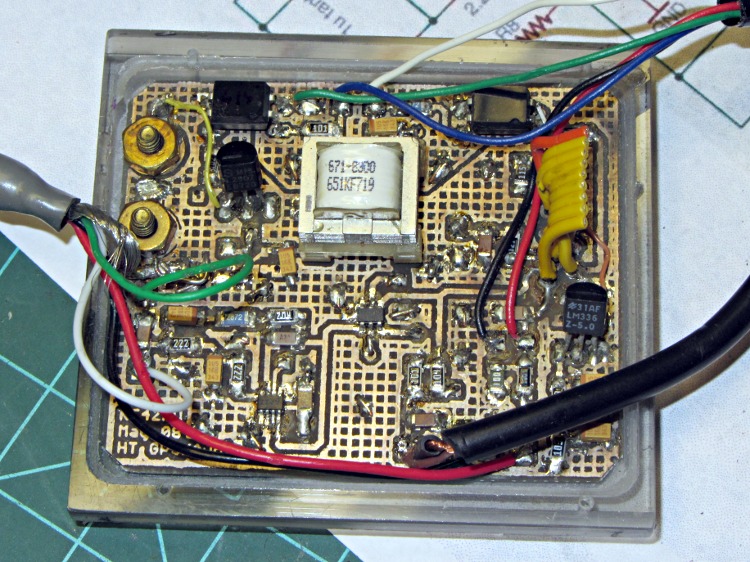
Here’s the carcass of the W32A interface in its half-case:
W32A PCB in case
Whereupon our Larval Engineer returns from college and once again needs a radio for her bike. At that point:
The W32A interface now lacks its TT3+.
The W32A PCB doesn’t fit in the Z1A case
The Z1A interface that would fit the W32A radio has the KG-UV3D modifications.
The Z1A radio has failed completely; it no longer even turns on.
Some alternatives:
Get another KG-UV3D, build another interface PCB + case, make it work
Transplant the TT3+ back to the W32A interface
Undo the KG-UV3D mods from the Z1A interface, put it on the W32A
Given that she’s going to vanish in another three months, tops, Choice 1 is out. Although the transplant in Choice 2 seems straightforward, it requires tedious soldering and produces an interface in a partial case.
So Choice 3 it is…
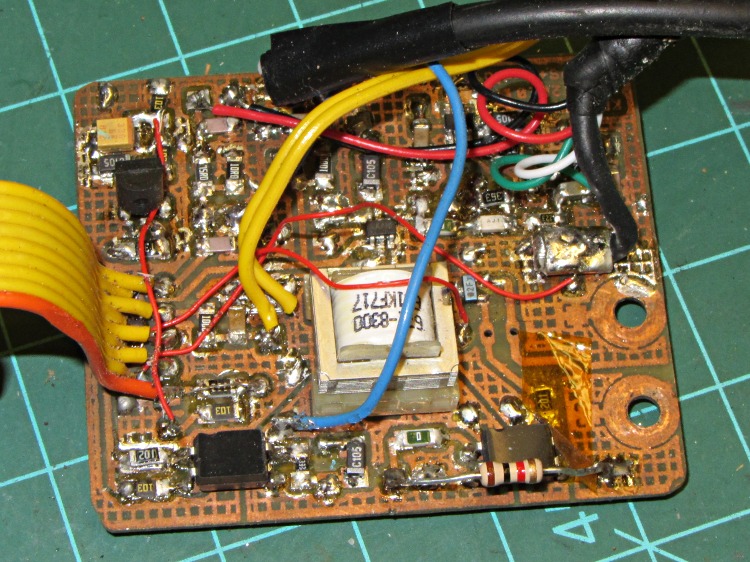
The Z1A board with the KG-UV3D modifications started out like this:
Z1A PCB modified for Wouxun KG-UV3D
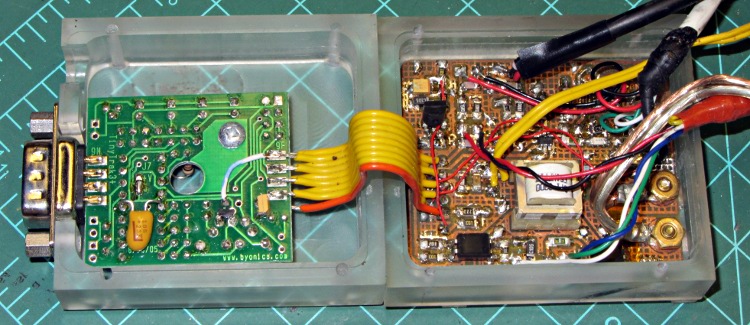
Un-modified again and back in its machined case:
Z1A board minus mods – milled case
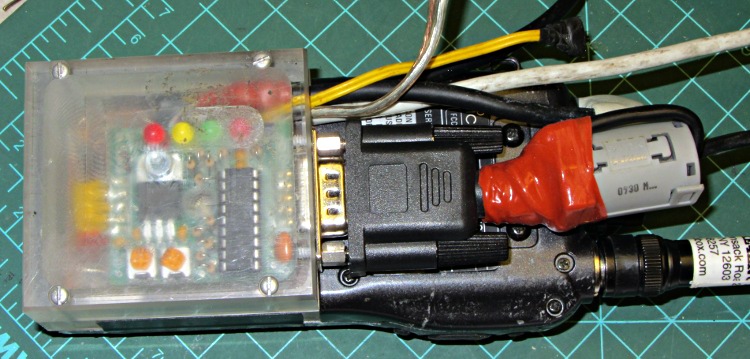
Buttoned up and ready to roll:
Z1A board on W32A – ferrite core
I put a clamp-on ferrite tumor around the GPS receiver cable to keep RF out of the TT3+, which seems quite sensitive to RFI; the poor thing locked up quite dependably on the bench with 5 W into a long rubber duck antenna, but not into a dummy load. The mobile antenna sits relatively far from the radio on the bike, but I think the TT3+ had problems in the early KG-UV3D lashup.
The TT3 audio level will probably require adjustment, as I’d cranked it up for the KG-UV3D, but that will require some on-the-air testing. Ditto for mic level.
When I get a KG-UV3D for Mary’s bike, I’ll buy two radios and build two interfaces, so as to finally have a working radio + interface on the shelf.
I’m mildly tempted by the new Yaesu VX-8GR, but that’s over $350 for a radio that also requires a new interface board design, a new case design, a new set of adapters, and other odds&ends. Not to mention that the radio’s built-in GPS antenna would live at the bottom of the seat frame beside the wheel and below my shoulder. I suppose I could conjure up an entirely new radio mount, but … the deterrents seem overwhelming.
Various versions of the schematics & PCB layouts for all those boards, plus solid models for the 3D printed case, are scattered here & there on other posts.
Back in the old days, the Hudson was clogged with sailing ships; now only a few carefully tended reproductions remain:
Sailing ship under Walkway Over the Hudson
That’s the Sloop Clearwater as seen from the middle of the Poughkeepsie Bridge on an overcast day that brings out the vignetting in the long telephoto image.
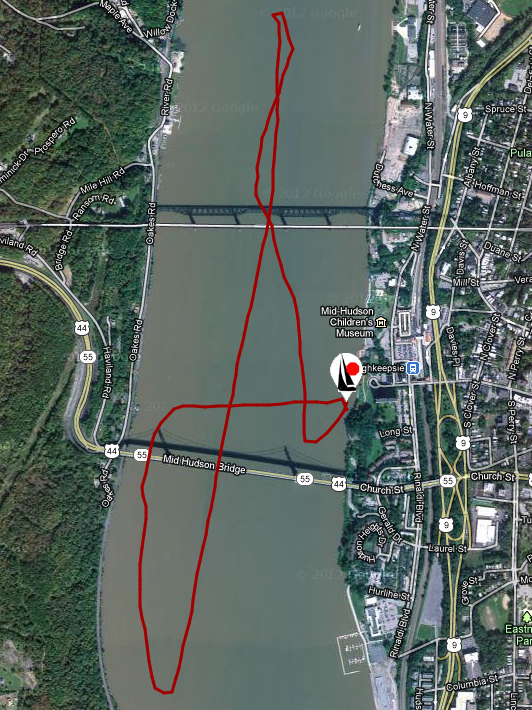
A bit earlier I was westbound on the Walkway Over the Hudson while the Clearwater was headed northbound:
Sloop Clearwater
Turns out they carry a GPS tracker (accessible from a link on their site):
So I picked up a $8 quarter-turn ball valve faucet with a 1/2 inch copper pipe sweat fitting, plus a 1/2 inch male NPT adapter. I have plenty of 1/2 inch copper pipe on the rack and, as it turned out, a few of the adapters. One key advantage: I could cut the pipe to make the length come out right.
Unfortunately, the frostproof valve emerges on the interior wall above the top shelf of a built-in rack in a far corner of the Basement Laboratory Storage Wing, an arm’s length away where you (well, I) can’t get any leverage. The absolute last thing I wanted was to crack a solder joint, tear the pipe loose, or wreck the 1/2 inch female NPT fitting on the pipe: I had no idea how firmly the valve was stuck in the fitting.
Based on the new valves I’d seen, I assumed there were no fins or doodads that would prevent the whole valve body from rotating in the as-yet-undisturbed cement holding it in place.
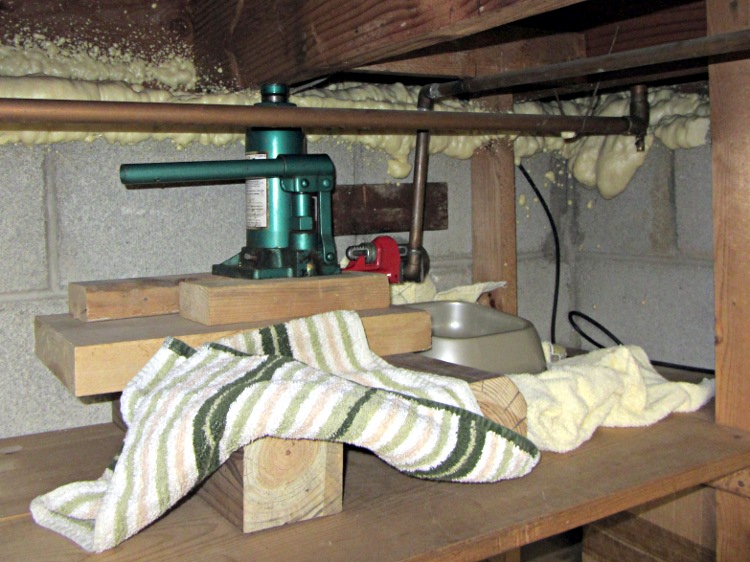
So I attached the medium pipe wrench to the fitting, laid in some cribbing atop the shelf to support a bottle jack over the wrench handle, and pumped the jack just enough to take up the slack. The jack transfers torque from the wrench to the floor joist overhead, the cement in the foundation wall constrains the valve body from moving laterally, and I was going to be really careful to not shove the valve while turning it.
Positioning a dog dish (yes, one of those) to catch most of the water, plus an assortment of scrap towels to catch the rest, produced this arrangement:
Frostproof faucet – inlet wrench bracing
Retiring to the garage with the large pipe wrench, I was delighted to find all that preparation let me simply turn the valve body with no drama. Mary monitored the process from inside to make sure nothing surprising happened, the valve broke free from the fitting without too much effort, and after two turns I could spin it loose by hand… whew!
Incidentally, a pair of amateur radio HTs simplified communication through the foundation wall. We were about four feet apart, but unaided voice communication didn’t work at all. I’m not much for just talking on the radio, but ham radio makes a great adjunct to other activities.
With the valve body loose, I chiseled the mortar out of both ends and found the central body hadn’t been cemented in place: the whole thing pulled straight out into the garage.
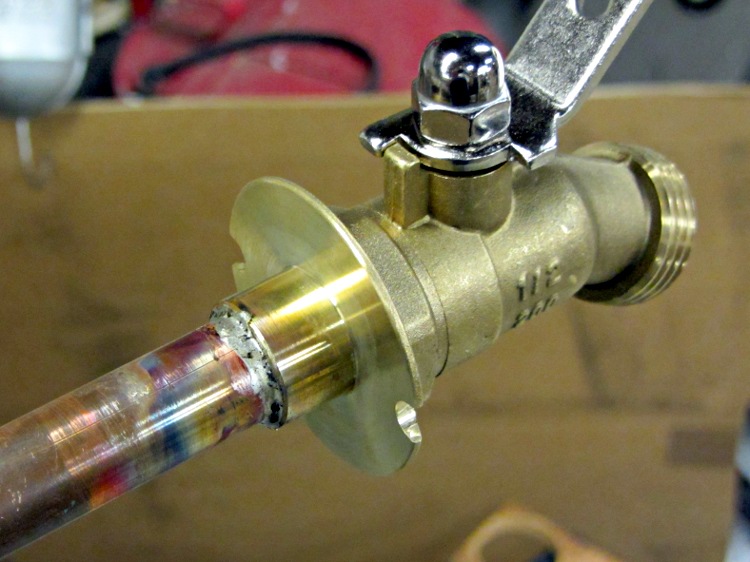
Screw the adapter into the interior pipe, stick the pipe into the adapter from the garage, measure to the outside wall surface, add 1/4 inch, clamp the pipe in the bench vise, and solder the ball valve to the pipe:
Garden faucet – sweat-soldered fitting
Then solder the NPT adapter on the other end:
Garden faucet – sweat-soldered adapter
I love the smell of molten projects, even late in the day… and it’s much easier to sweat good solder joints on the bench than working left-handed, tucked away in a far corner, up under the floor joists, standing on a short ladder, leaning far off to one side.
Wait for it to cool, stick the assembly through the garage wall with some masking tape to keep grit out of the threads and pipe, wrap a few layers of PTFE tape around the male adapter, ease them together, tighten until the valve handle is directly on top, turn the water back on, verify no leaks: that’s enough for one day.
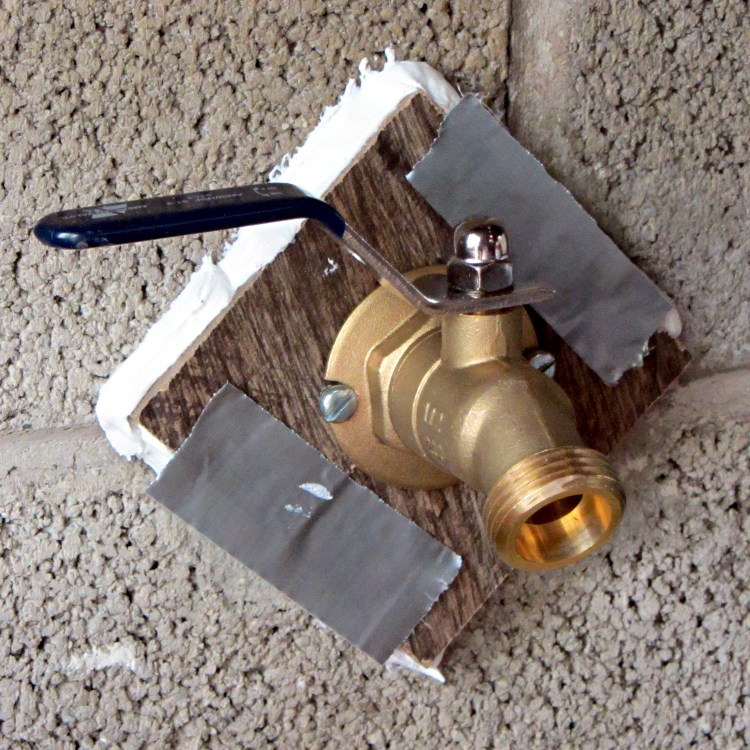
The next day I drilled / sawed backer boards from some random paneling that came with the house and stuck them in place with generous beads of acrylic caulk. Looks a bit odd (the tape holds the sides in alignment and came off a day later), but it should hold the pipe in a fixed position and keep the critters out of the basement just as well as the cement:
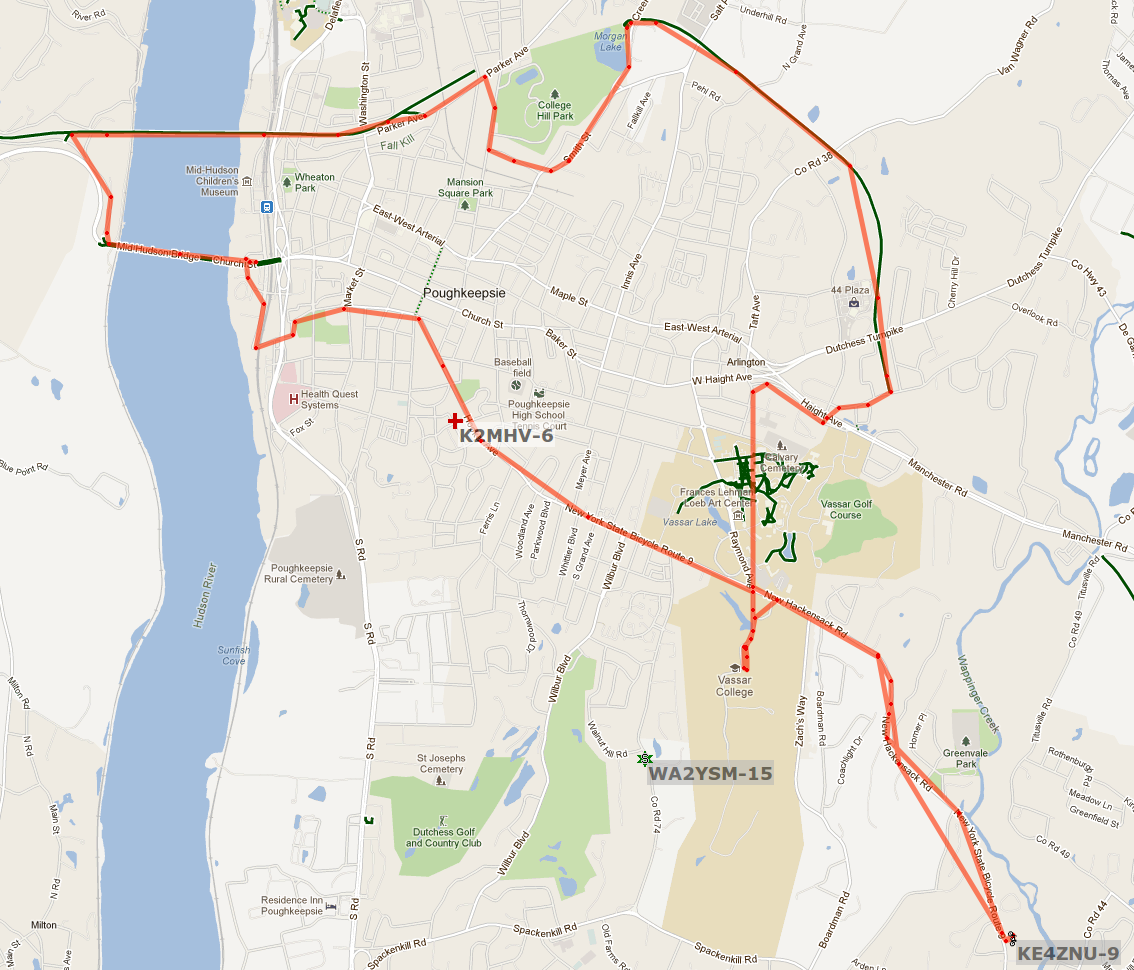
That circuit works pretty well for APRS tracking, I’d say, based on a 23 mile out-and-back ride over the Walkway:
KE4ZNU – Wouxun KG-UV3D – first ride
Had I gone further westward along Rt 299, however, the track would end: the bluffs on the east side of the Wallkill River Valley block much of the RF and Illinois Mountain (just to the west of Poughkeepsie) finishes the job. Evidently, nobody runs an APRS iGate or digipeater anywhere within sight of New Paltz…
FWIW, the Walkway’s hand-scrawled notice boards now entreat “Bicyclists: ride SLOW and YIELD to pedestrians.” OK, fair enough, but how about equal time: “WALKERS: keep RIGHT, remove earbuds, and PAY ATTENTION”. It’s amazing how four people can block nearly the entire width of a 25 foot path, then look startled after not hearing a bicycle bell that’s been dinging steadily for 15 seconds…







 The Smell of Molten Projects in the Morning