The Smell of Molten Projects in the Morning

Ed Nisley's Blog: Shop notes, electronics, firmware, machinery, 3D printing, laser cuttery, and curiosities. Contents: 100% human thinking, 0% AI slop.

Author: Ed

  • Blender Bearing Repair: Round Two

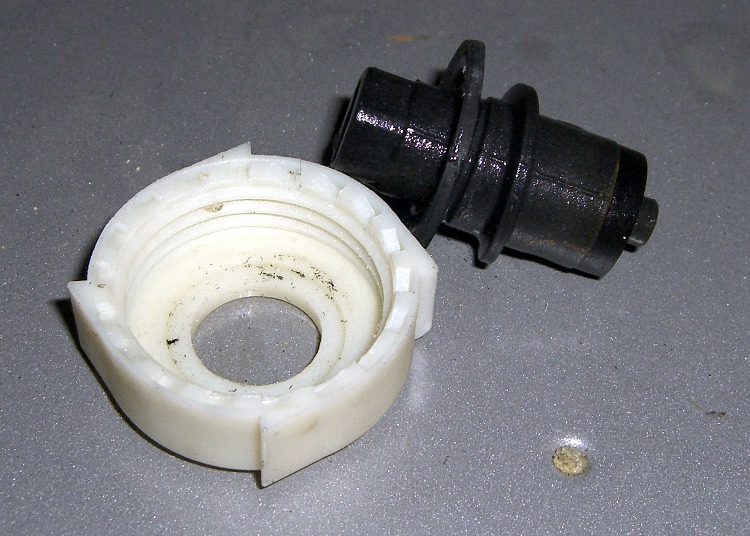
    Blender impeller and bearings
    Blender impeller and bearings

    It seems the bearings in our cheap blender last about a year, even if we don’t put the impeller in the dishwasher.

    The top bearing, the one nearest the impeller (on the left in the pic), developed detents, which says at least one of the balls has failed.

    Both bearing housings are rusty; water has no trouble getting past the flexible seals at each end. As they’re not immersion-proof, I assume the water has little trouble getting past the shield rings on either side of the balls.

    I replaced both of them, squeezed some silicone stopcock grease above the top bearing in the vain hope of excluding liquids, and we’ll see what transpires.

  • Sears Kenmore Dishwasher Sound Deadening Sheet: On the Move!

    Sound deadening sheet jammed in door spring
    Sound deadening sheet jammed in door spring

    Our dishwasher door started making an odd gronking noise when it was opened or closed. It had done this before, so I knew what was going on: one of the sound deadening sheets inside was creeping down around the enclosure and jamming itself into the spring.

    It turns out that a layer of adhesive holds the sheets in position and, in hot weather, the weight of the sheet pulls it right over the edge. They’re made of asphalt or something equally black and sticky and heavy, just what you want to dampen vibrations on those big unsupported enclosure sides.

    Oddly, this is the only sheet that’s on the move. The others are pretty much stuck where they started. I don’t know if it’s hotter on this side or what’s going on.

    Sound deadening sheet creepage
    Sound deadening sheet creepage

    The situation was much worse the last time; I had to hack off a huge chunk of the sheet that had buckled around the right side of the dishwasher under the fiberglass insulating blanket. The spring was pretty much encased in shredded asphalt. Not a pretty sight.

    This time the sheet traveled only a few inches, just enough to hit the spring with the door about half-open. I broke off the offending part, crudely flattened the rest, and moved the entire sheet back up to the top of the enclosure.

    A few strips of duct tape should hold the sheet in place until the heat relaxes the bent areas and improves its contact with the enclosure. I hope that, with most of the remaining sheet on top, rather than hanging off the side, it’ll stay in place until the dishwasher goes casters-up for the last time.

  • Wine: Adding Runtime Libraries

    While trying to persuade a Windows program to run under Wine, I stumbled across this useful script: winetricks.

    Basically, it downloads & installs the myriad runtime libraries / DLLs / programs that Windows programs generally assume are installed. Those are the things you don’t know are missing and generally can’t figure out how to install on your own.

    It didn’t actually help get the program in question running. As nearly as I can tell, if at first you can’t get a program installed & running under Wine, just give up…

  • More Vital Firefox Privacy Add-ons

    If you’re still using IE, stop that.

    Start using Firefox. Then…

    Install some of those add-ons, then come back here.

    Did you remember to kill Flash cookies?

    Install TACO to magically opt-out from all of the advertisers who claim to honor opt-out requests. Won’t have much effect, but it’s worth trying.

    Install Ghostery to see which sites are tracking what.

    Now it’s time to delete your cookies again. You must then log into all your favorite websites again, but you’ll be accumulating less clutter.

    This should not be necessary…

  • Recumbent Bicycle Amateur Radio Antenna Self-disassembly

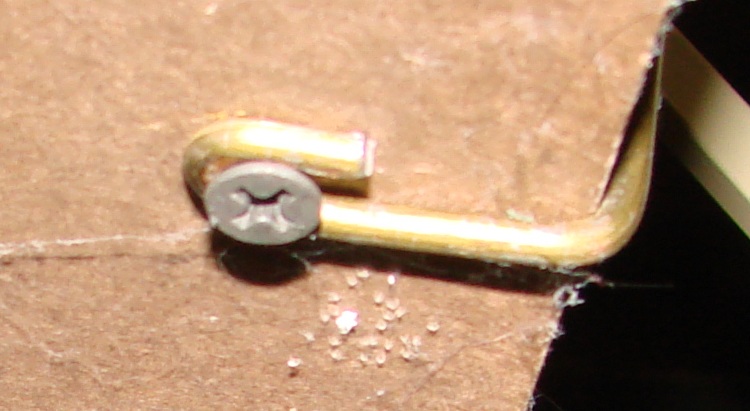
    Auto-unscrewed Antenna Mast
    Auto-unscrewed Antenna Mast

    Vibration is a real killer for bike-mounted hardware. The antenna mast on my bike has been unscrewing itself, despite my repeated attempts to tighten it. Fortunately, I’ve managed to notice the rattle before the mast falls off into traffic.

    We’ll see if a dab of medium strength (blue) Loctite will do the job.

    One thing to worry about: this is an electrical as well as a mechanical joint. I hope there’s still enough metal-to-metal contact to get RF energy to the radiating part of the whip!

    [Update: Yup, works just like you’d expect. Problem solved.]

    The antennas on the other two bikes have remained tight, so maybe it’s just that my riding style generates more vibration? Hard to imagine; it’s not like I venture off-road.

    More details on the homebrew mount are there and how commercial mounts fail are there.

    The unsightly masking tape wrap is where I attached a reflector for a (rare) after-dark ride a while ago. Making a set of bushings for the reflector clamps is a low-priority job in the queue right now.

    [Update: Done!]

  • Hobo Data Logger Current

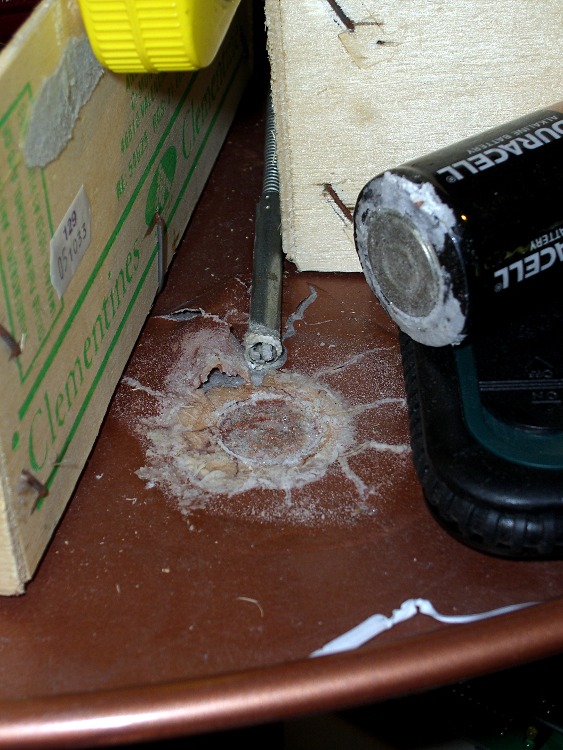
    Hobo battery current tap
    Hobo battery current tap

    A comment to my note on hacking AA alkalines on the back of a Hobo data logger (from someone at Onset!) suggested checking the logger’s current.

    After dumping last month’s data, I conjured up a piece of double-sided circuit board and soldered a turret terminal to each side. It’s thin enough to fit between the cell’s positive cap and the holder’s contact without distorting things too much.

    The lowest range on most of my digital meters is 200 mA, which is far too high. I tried an ancient analog meter with a 50 µA range, but the meter’s resistance was too high to keep the Hobo’s PC program happy: it claimed there was no logger out there. Finally I found a digital meter with a 4 mA range and 1 µA resolution, which was just right.

    Turns out that the logger draws 8 or 9 µA between readings, which is pretty much what it should be. At that rate, a CR2032 lithium coin cell with a capacity of 230 mA should have a lifetime of 23 k hours: call it three years. Obviously, it’ll be less than that, what with periodic loggings and dumpings and suchlike.

    The current’s the same with the external temperature probe plugged in and doesn’t change when I poke the capacitors. So the logger seems to be working perfectly.

    Which means I got a bad batch of Renata CR2032s two years ago. I just pulled one from another logger that I installed 5 Feb 09: all of six months ago. If I installed a series of really feeble cells in this logger, well, that would explain what I experienced.

    I’m currently using Energizers in the other loggers, so we’ll see what happens a year from now.

    But I’ll keep the alkalines on the back of this logger, as they should last basically forever at this rate.

  • Phone Headset Pinouts

    I picked up a Plantronics phone headset that’s nominally compatible with Kyocera phones, but of course not with the Virgin Mobile K127 Marbl I have. More on why I have that phone there. There are, as nearly as I can tell, no third-party headsets available for this phone.

    The Plantronics headset has the pinout shown to the upper right in the note below. It’s straightforward:

    • shell — common
    • ring 1 — left audio
    • ring 2 — right audio
    • tip — mic + button

    Plugging the headset in causes the phone to throw a hissy fit.

    Jamming an open-circuit plug into the phone’s jack has no effect; the phone thinks there’s nothing going on and still routes the audio to the internal speaker.

    Evidently, the phone expects a different combination on the plug.

    Some Webbish rummaging produced a list of headset pinouts, which goes to show that there’s nothing like having enough standards that everybody can have one…

    Headset Pinouts
    Headset Pinouts

    More tinkering is in order, but I found this list while I was clearing away the rubble from some completed projects and figured I should put it somewhere obvious.