The Smell of Molten Projects in the Morning

Ed Nisley's Blog: Shop notes, electronics, firmware, machinery, 3D printing, laser cuttery, and curiosities. Contents: 100% human thinking, 0% AI slop.

Author: Ed

  • Kitchen Sink O-ring Seat Polishers

    Kitchen Sink O-ring Seat Polishers

    My long-running battle with the American Standard kitchen sink O-rings continues, but this time I tried polishing the seats with a strip of 3M 2000 grit sandpaper:

    Sink O-ring seat polisher - overview
    Sink O-ring seat polisher – overview

    Although it’s technically sandpaper, the effect is more like lapping than sanding and the O-rings now ride on a very smooth surface.

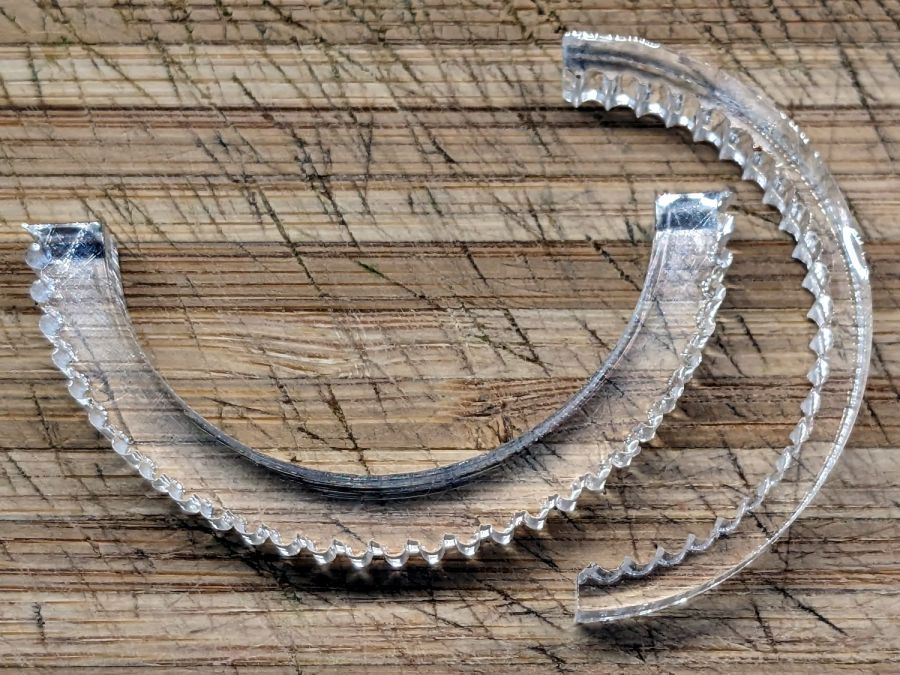
    The knurled half-ring is ¼-inch = 6.3 mm acrylic with an ID precisely fitting the pillar + sandpaper:
    Sink O-ring seat polishers
    Sink O-ring seat polishers

    The one on the right has an OD matching the surface inside the spout, but it turned out to be easier using fingertips, even if that isn’t quite how one should do lapping.

    The LightBurn layout shows the “knurls” are half-circles either added or subtracted from the arcs, as LightBurn’s Circular Array tool is my copilot:

    O-ring Polishers - LB layout
    O-ring Polishers – LB layout

    You’ll want to measure the ID and OD of your sink faucet, as well as the thickness of your sandpaper, before making make your own.

    Imagining / laying out / building those took less time than writing this up; I loves me some quick laser cutter action.
  • Hiatus

    Hiatus

    The sellers have accepted our offer on their house, so over the course of the next couple of months we’ll be moving, then selling this place. Having begun dismantling and packing the contents of the Basement Shop, Laboratory, and Warehouse, my blog-worthy activities will grind to a temporary halt.

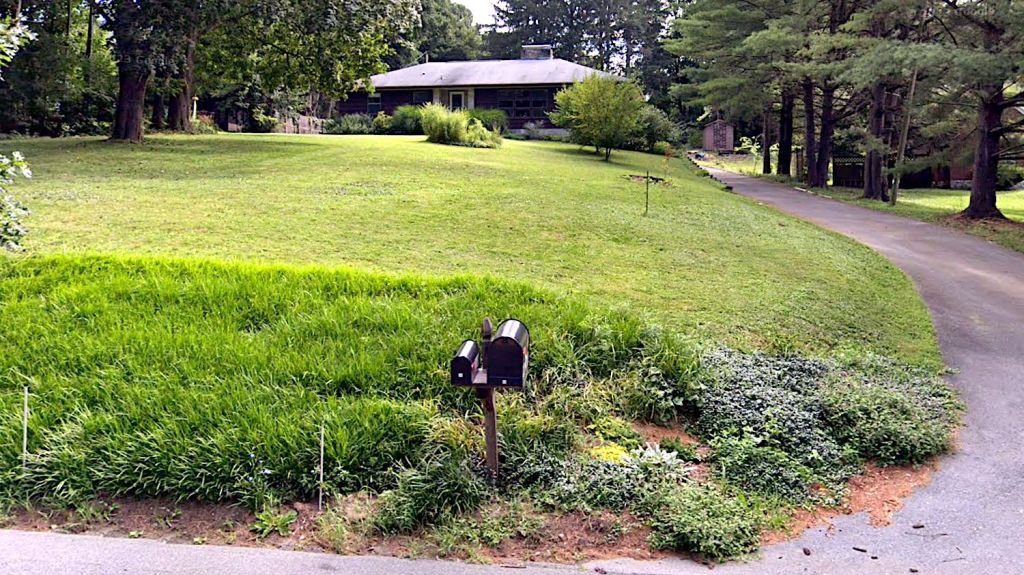
    Should you or anyone you know be interested in moving to the trendy Hudson Valley region, we have a conveniently located property with a shop-ready basement:

    2108-2110 New Hackensack Rd - Streetview 2023-08
    2108-2110 New Hackensack Rd – Streetview 2023-08

    Maybe we can make a deal …

  • CD / DVD Coasters: Foam vs. Cork Backing

    CD / DVD Coasters: Foam vs. Cork Backing

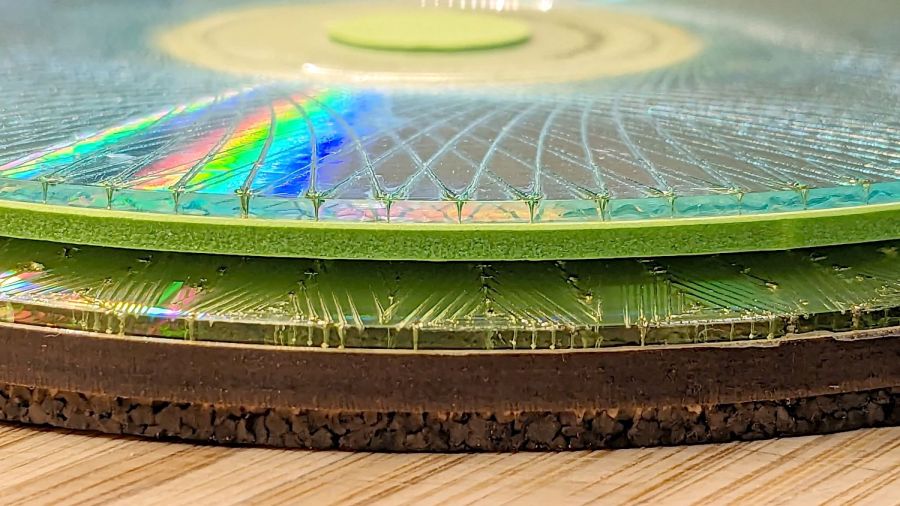
    Up to this point, I’d been making coasters with a layer of cork on the bottom, held in place with wood glue (for MDF or plywood tops) or an adhesive sheet (for acrylic or glass). Doing that with a CD produced the bottom coaster:

    Laser cut CDs - Foam vs MDF-cork backing - detail
    Laser cut CDs – Foam vs MDF-cork backing – detail

    Although the Mariner’s Compass pattern looks like it extends over the edge, you’re looking through the transparent polycarbonate at the deep pits burned nearly through the entire disc at the corners of the triangles where the laser head slows.

    Although the MDF layer makes the coaster exceedingly stiff, it also makes it entirely too thick and much too fiddly to assemble.

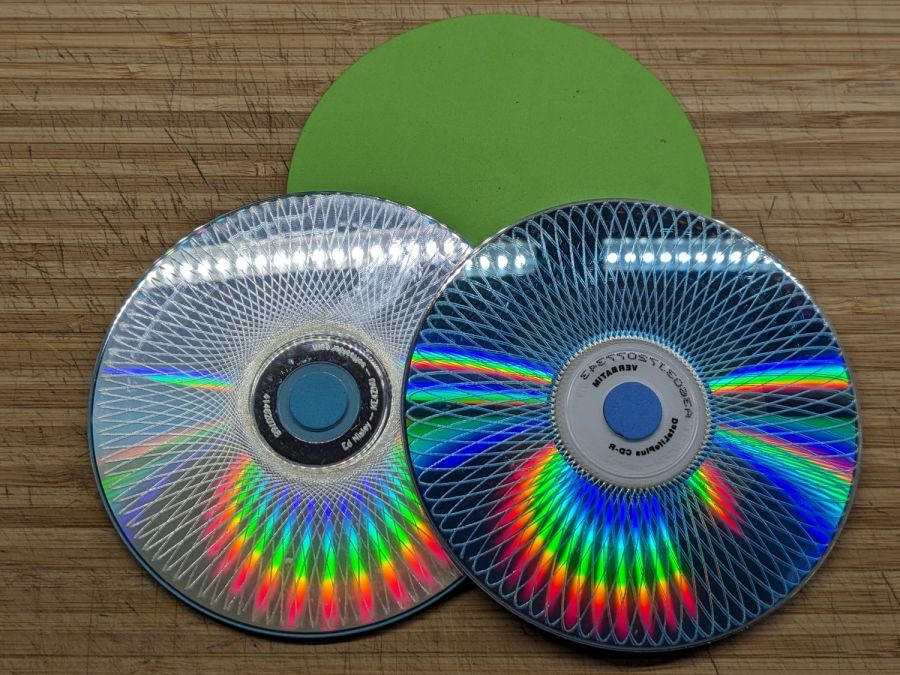
    The top coaster is a Guilloche-patterned CD stuck to an EVA foam disk with an adhesive sheet. A small foam disk fills the hub hole and, not incidentally, covers the adhesive that would otherwise be exposed:

    Laser cut CDs - Foam coaster backing
    Laser cut CDs – Foam coaster backing

    It’s stiffer than I expected and works well unless the mug / glass / cup has a wet bottom. Alas, the small channels cut into the CD’s surface fill up with the liquid sealing the coaster to the mug, so it sticks firmly and follows the mug upward off the table.

    But they’re kinda pretty, inexpensive, and easy to assemble, which counts for something.

  • CD / DVD Data Destruction: Fixturing

    CD / DVD Data Destruction: Fixturing

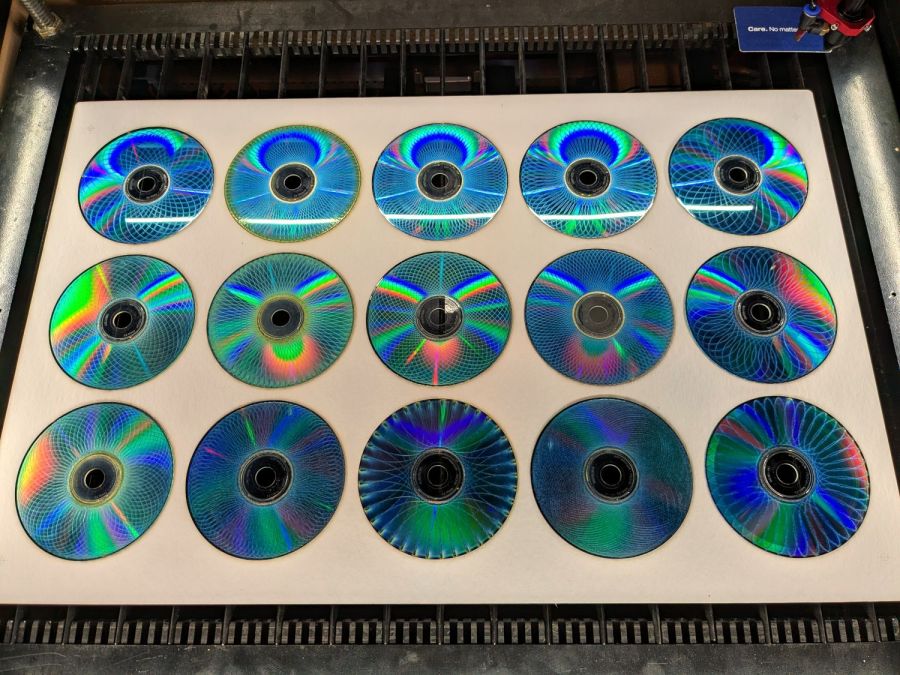
    Cutting an array of 120 mm holes in chipboard produces a fixture for wrecking CDs:

    Laser-engraved CD fixture - loaded
    Laser-engraved CD fixture – loaded

    In addition to the obvious cutouts, the fixture has four corner targets:

    CD 5×3 Fixture
    CD 5×3 Fixture

    Which you use with LightBurn’s Print-and-Cut alignment:

    Laser-engraved CD fixture - alignment
    Laser-engraved CD fixture – alignment

    With fifteen Guilloche swirly patterns imported and snapped into the template and the template aligned to the fixture, Fire The Laser:

    Laser-engraved CD fixture - legend
    Laser-engraved CD fixture – legend

    The whole process takes a bit under 25 minutes:

    Laser-engraved CD fixture - complete
    Laser-engraved CD fixture – complete

    Which produces a stack of glittery proto-coasters:

    Laser-engraved CD fixture - results
    Laser-engraved CD fixture – results

    Although they’re all pretty-like, turning them into Real Coasters requires a cork base, MDF in the middle, wood glue, and adhesive sheets, all of which seems entirely too much like work.

    There ought to be an easier way …

  • Guilloche Generator: Now With Layers & Colors

    Guilloche Generator: Now With Layers & Colors

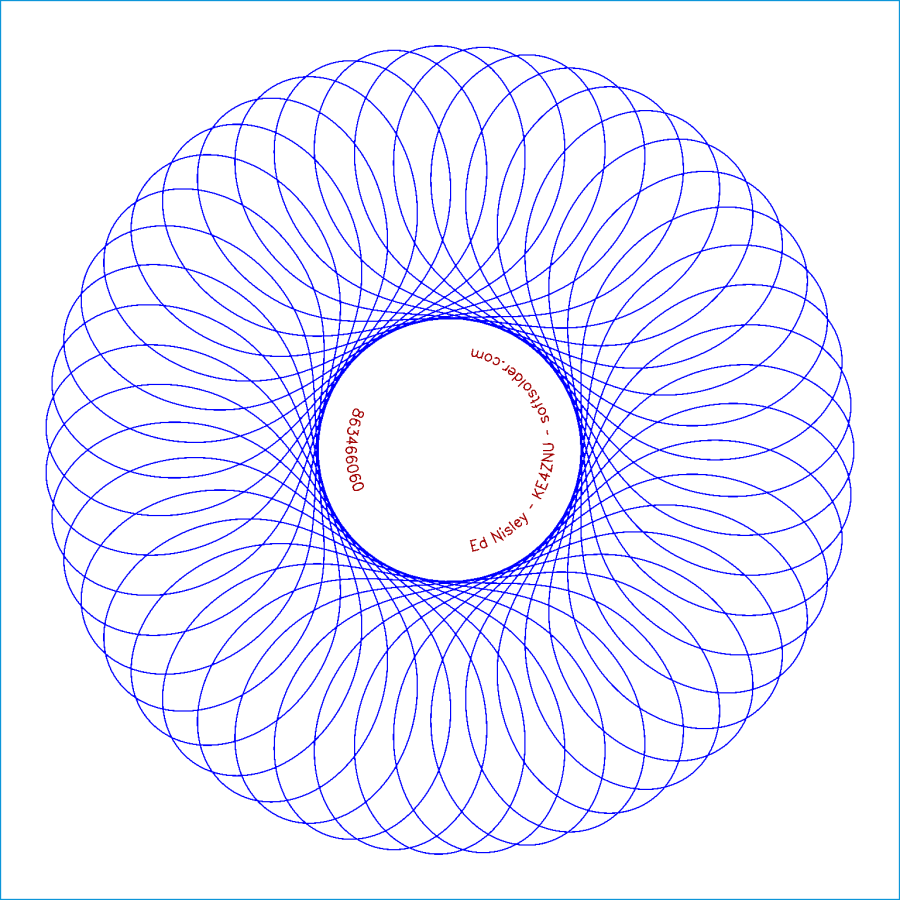
    Tweaking the GCMC Guilloche generator to define colors for the SVG layers produces a pattern ready for LightBurn:

    Guilloche - SVG layer colors
    Guilloche – SVG layer colors

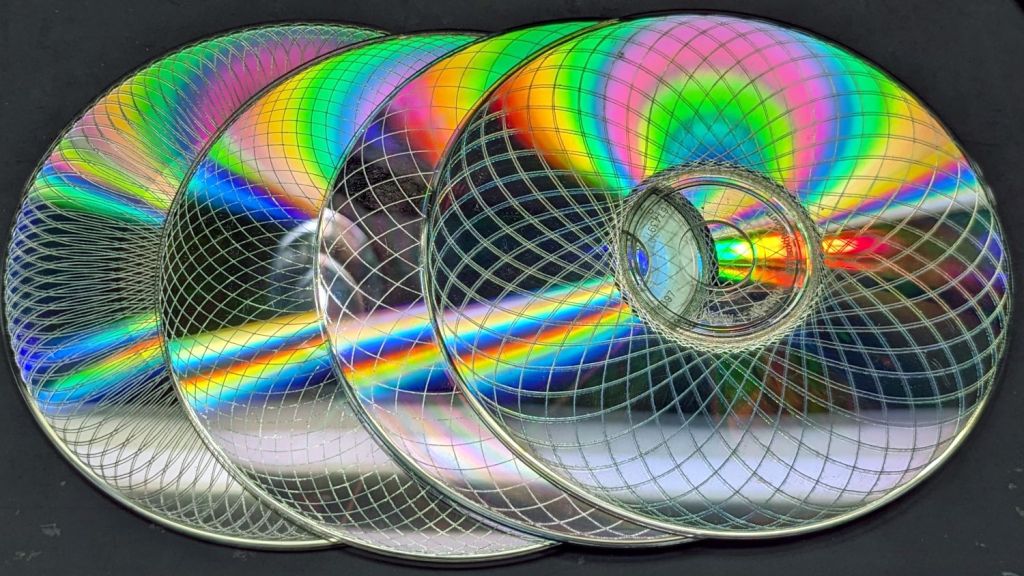
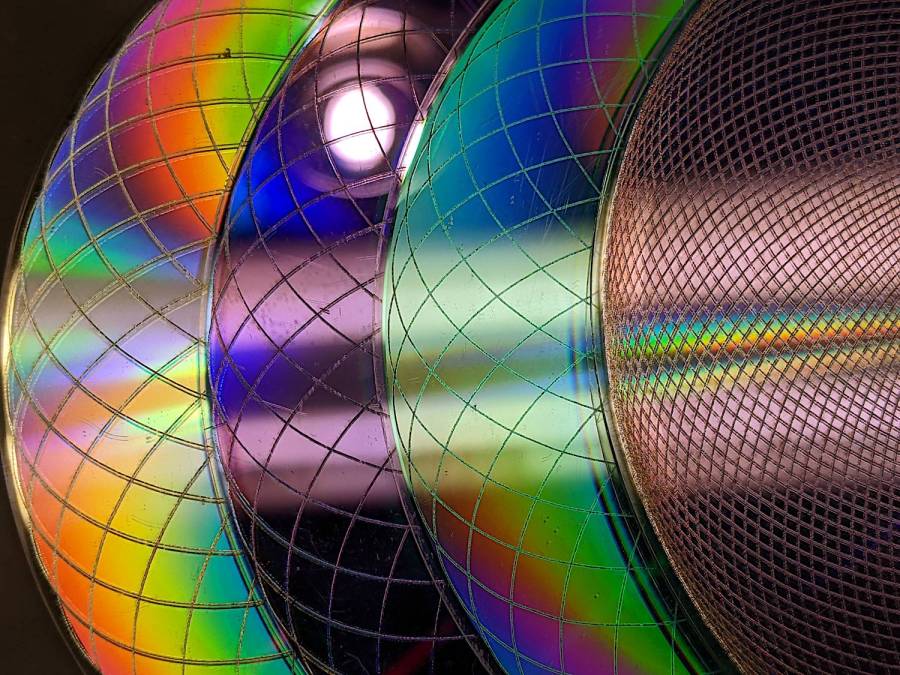
    The blue layer runs at 300 mm/s at 10% PWM to carve trenches all over the CD / DVD surface, which should render it unreadable:

    Laser cut CDs - Guilloche patterns
    Laser cut CDs – Guilloche patterns

    The laser runs much faster than a drag knife or a diamond engraving tool!

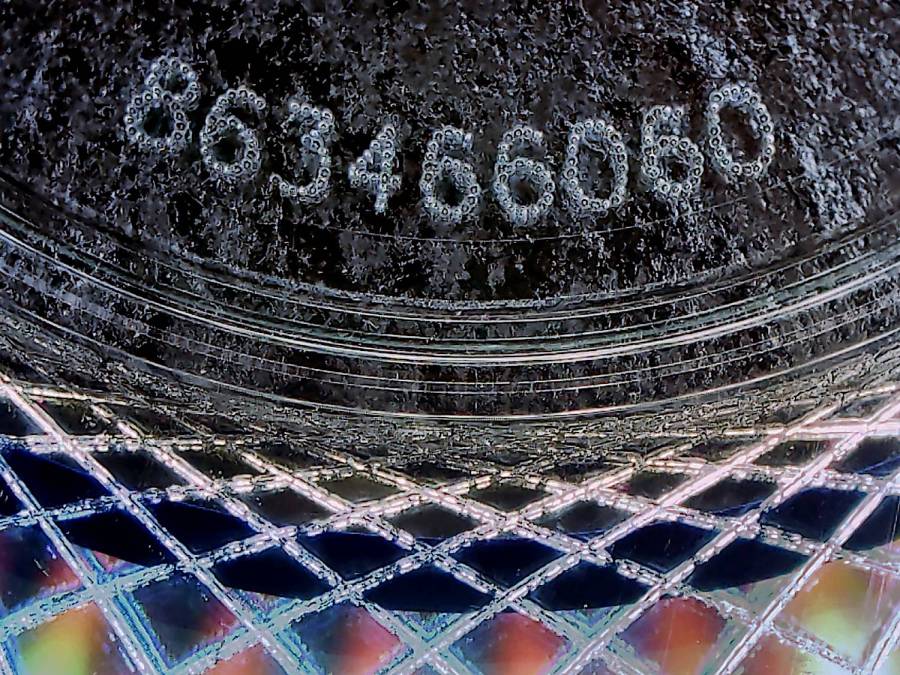
    The reddish layer uses Dot mode to draw the legend around the hub:

    Laser-engraved CD - legend detail
    Laser-engraved CD – legend detail

    The characters are 1.5 mm top-to-bottom, with dots just under 0.2 mm diameter on 0.2 mm centers.

    Stipulated: there’s no real point to annotating a CD that you’re wrecking, but the code was already there, so why not?

    So the overall workflow involves generating an SVG image, importing it into LightBurn with those layers set up with the appropriate cut parameters, using the Three-Point Circle Center Finder tool to align the pattern with the CD, then Fire The Laser. Alignment stops on the laser platform eliminate the need to realign every pattern, so it boils down to running the generator script enough times, importing a batch of patterns, then snapping each one into place and cutting it.

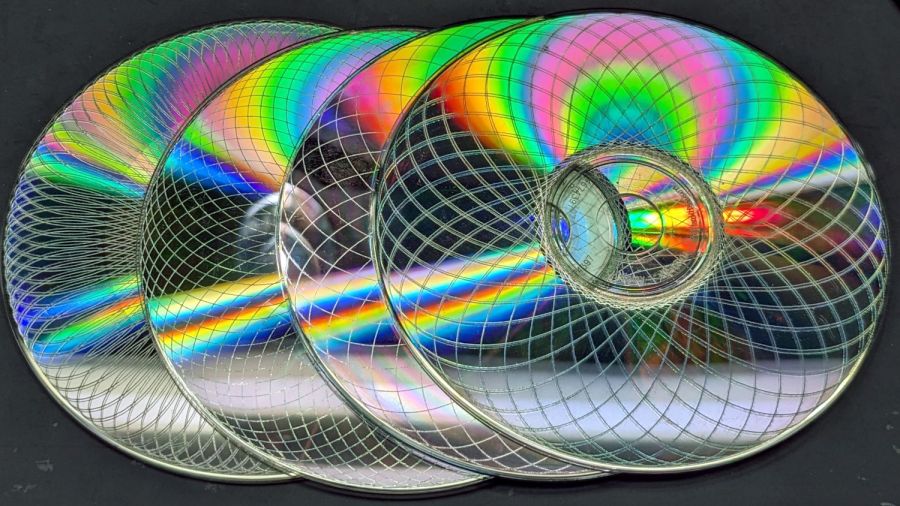
    They’re kinda pretty, in the usual techie way:

    Laser cut CDs - Guilloche patterns
    Laser cut CDs – Guilloche patterns

    I have a lot of scrap discs, some ideas of optimizing the process, and a general notion what to do with the prettier results.

    The GCMC source code and Bash driver script as a GitHub Gist:

  • Leaf Shredding Supervisors

    Leaf Shredding Supervisors

    While I was turning this year’s leaves into mulch for next year’s vegetables, a supervisor landed on my glove:

    Pale Green Assassin Bug - front
    Pale Green Assassin Bug – front

    I thought it was a very small stick insect covered with leaf chaff, but it turned out to be a Pale Green Assassin Bug nymph with built-in armor and spines:

    Pale Green Assassin Bug - rear
    Pale Green Assassin Bug – rear

    Something like that, anyway.

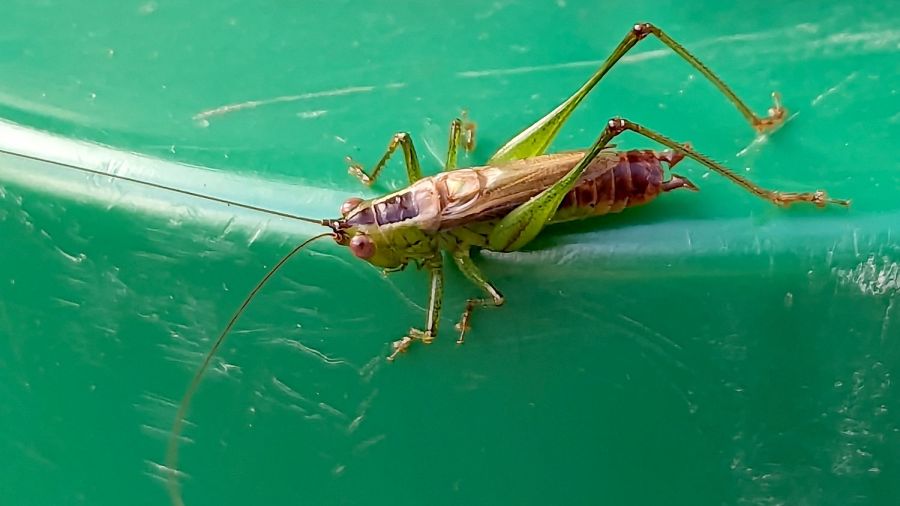
    This katydid supervised while I put the tools away:

    Short-winged Meadow Katydid
    Short-winged Meadow Katydid

    Those scary stern claspers must come in handy for something, but I’d rather not be on the receiving end.

    It was a fine day to be outdoors, although I vastly prefer my shop.

  • Laser Cutter: High Power Vectors vs. CD-Rs

    Laser Cutter: High Power Vectors vs. CD-Rs

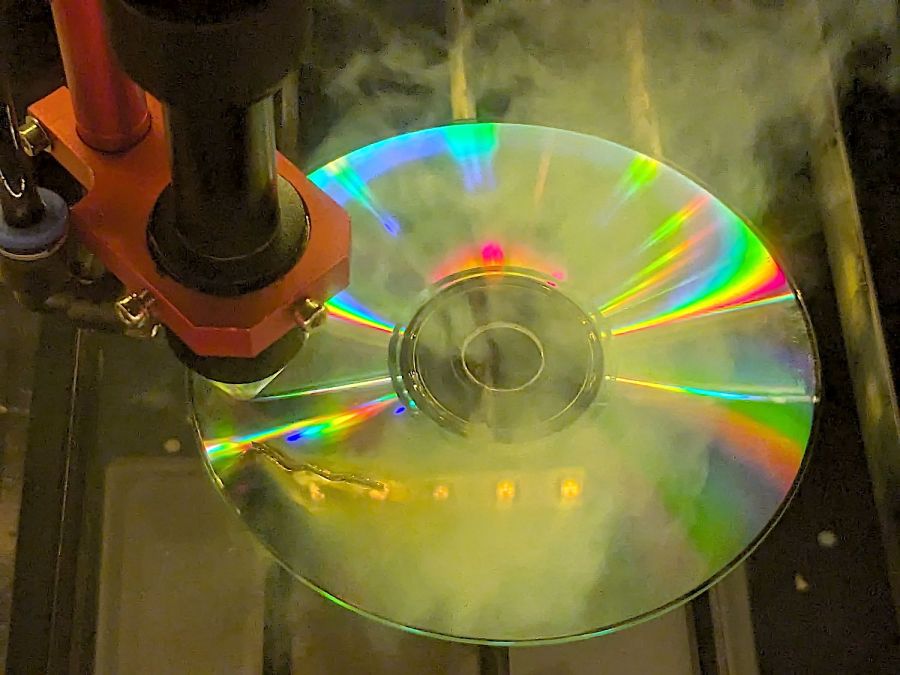
    Just to see what happens, I tried cutting a shape from a scrap CD-R:

    Laser cut CD - in progress
    Laser cut CD – in progress

    Cutting polycarbonate is a terrible idea, because that cloud consists primarily of The Big Stink™. AFAICT, the cutting fumes are not much more toxic than what burns off acrylic / wood / whatever, but they definitely smell much worse.

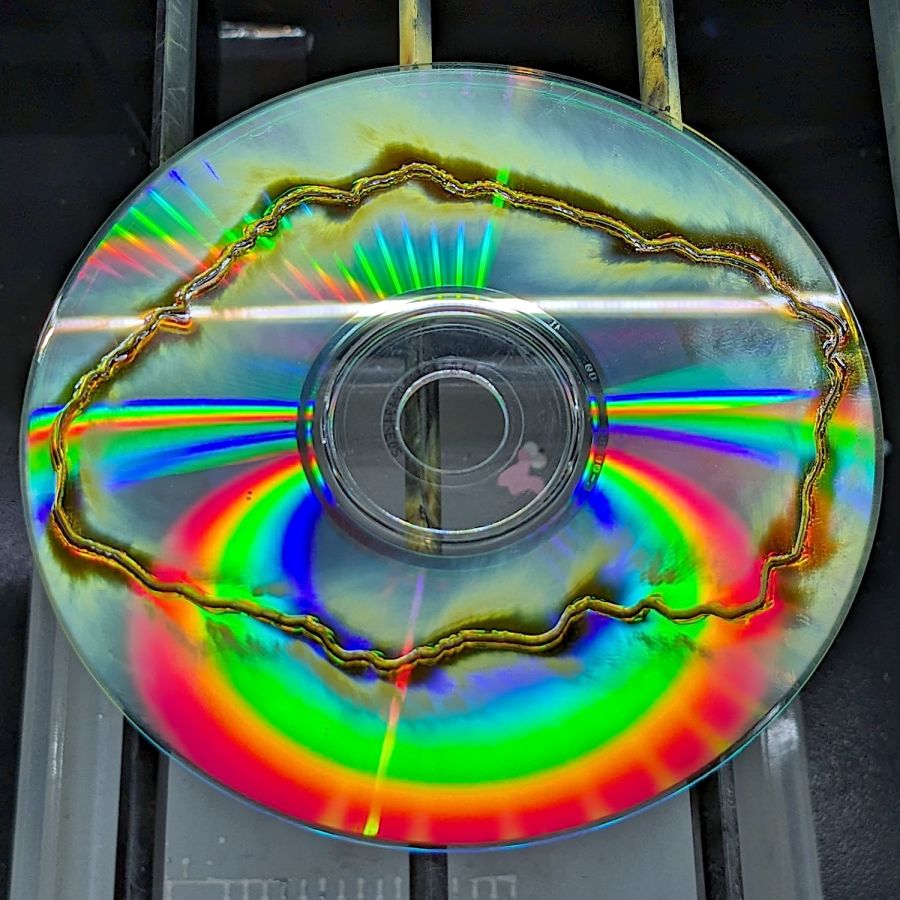
    In any event, the laser produces a clean cut:

    Laser cut CD - on platform
    Laser cut CD – on platform

    Modulo the charred edges and discoloration:

    Laser cut CD - finished
    Laser cut CD – finished

    Some of that buffs right out, but overall it’s not worth the effort unless you really need tiny diffraction gratings.