Sean reports that the first field test of the Tux Cookie Cutter went well:
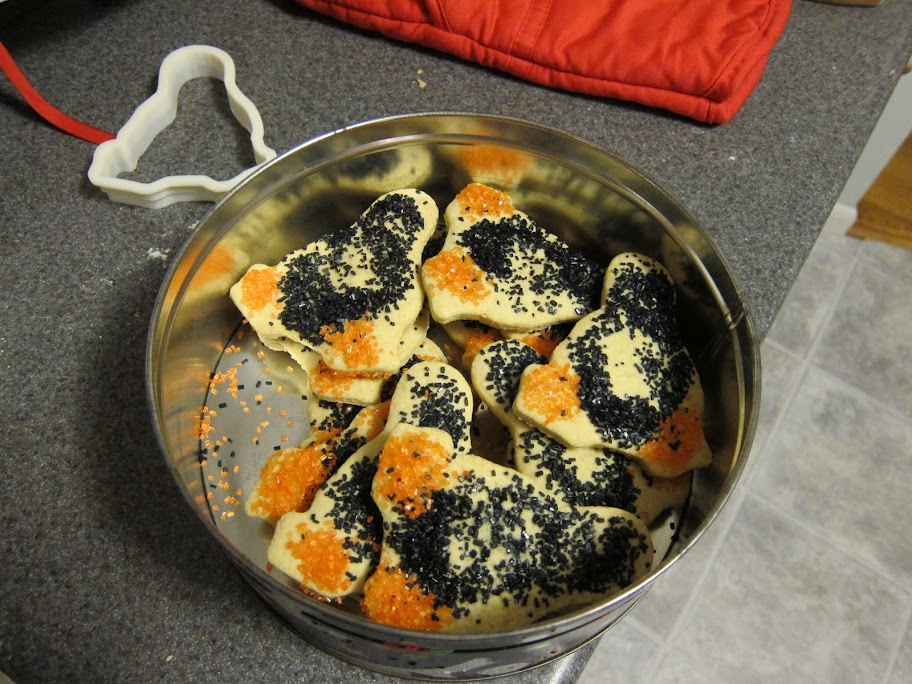
I obviously need a few samples for QC purposes…
The Smell of Molten Projects in the Morning
Ed Nisley's Blog: Shop notes, electronics, firmware, machinery, 3D printing, laser cuttery, and curiosities. Contents: 100% human thinking, 0% AI slop.
Sean reports that the first field test of the Tux Cookie Cutter went well:
I obviously need a few samples for QC purposes…
Paralleling a 510 Ω resistor with each of the 180 Ω resistors on the LED ring light around the macro lens holder boosted the LED string current from 15 to 20 mA:
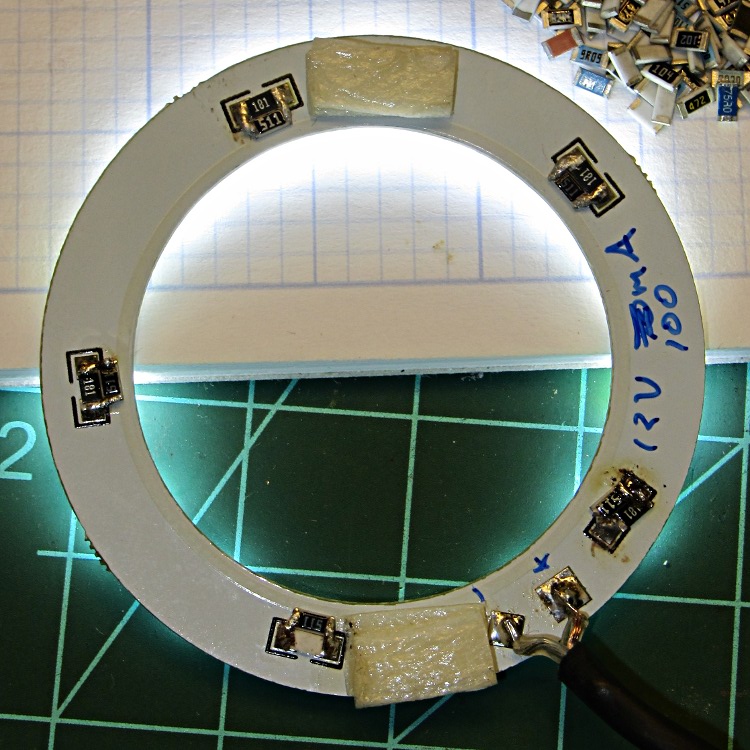
The complete botch job in the lower right is what you get when you don’t wipe the soldering iron tip first.
LED brightness being pretty nearly linearly proportional to current, the exposure gets another 0.4 EV that probably doesn’t matter in the least.
A hand-held picture of the pile of SMD resistors (which willingly produced four of the five resistors and required enhanced interrogation to extract the last one):
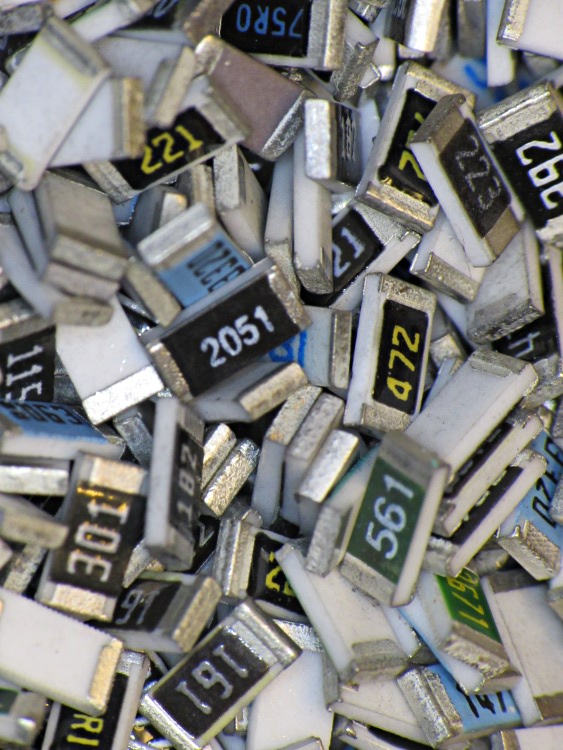
That’s pretty much overhead at f/8, so the depth of field is as good as it gets.
At some point we brought home a fruit fly starter kit that produced a zillion fruit flies in the worm compost bin; every time we opened the cover, half a zillion flies would emerge. After a bit of fiddling with the usual Internet recipes, I managed to produce something useful:

The trick involves making the liquid enticing enough to get the flies through the hole in the coffee filter top:

I used about a cup of water, an ice cube of apple juice for sweetness (they are, after all, fruit flies), a tablespoon of vinegar for that delicious rotten aroma (they prefer damaged, easy to eat fruit), and a few drops of dishwashing detergent so when they hit the liquid they’re sunk.
The container must be tall enough to let them rise past the entrance opening on their way toward the light; I settled on the 2 pound ricotta cheese containers we have in abundance:

That’s the catch after maybe a month at the end of the season, but it represents a week of activity back when we were breaking the infestation. I deployed four of those traps atop the compost bin to catch the half-zillion escaped flies and fired up the vacuum cleaner to extract the half-zillion remaining inside every time we opened the lid. After a few weeks of that, we’d managed to get ahead of their breeding cycle and the problem pretty much Went Away.
Picked up a Harbor Freight thickness gauge to measure Thing-O-Matic filaments and suchlike; it has a plastic piston and anvil, so it’s not well-suited to measure anything other than plastic parts. In fact, it’s all plastic and the various sliding surfaces produced a remarkable amount of friction.
Fortunately, the back cover pops off without too much of a struggle:
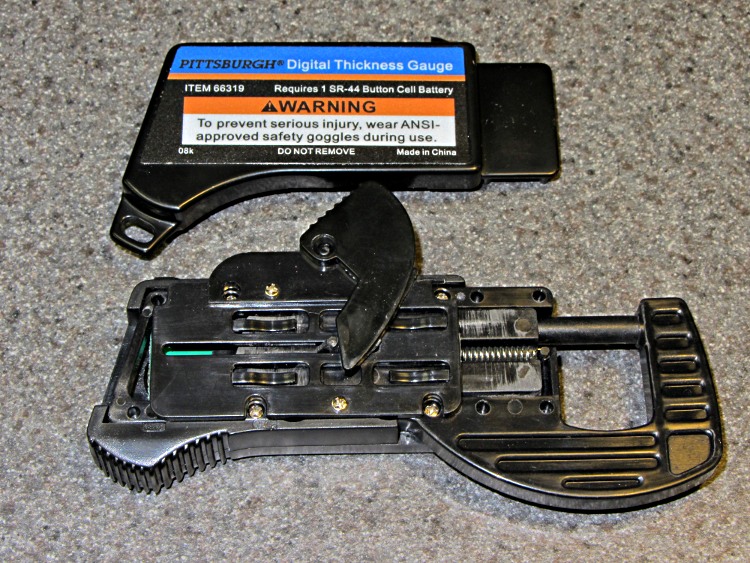
Dabs of silicone lube at all the contact points considerably improved its disposition.
The display offers 0.01 mm resolution, but I don’t believe that rightmost digit for an instant. The stated accuracy is ±0.1 mm, which is probably closer to the truth, and it agrees reasonably well with my considerably better quality digital caliper.
As part of making that PCB, the sanding disk on the side of Mr Belt Sander made a lot more noise than usual; it’s hard to tell, because I wear 30+ dB ear muffs. Turns out that the setscrew had worked loose enough to let the disk walk outward, chewing up the plastic dust collector cover and the aluminum table:
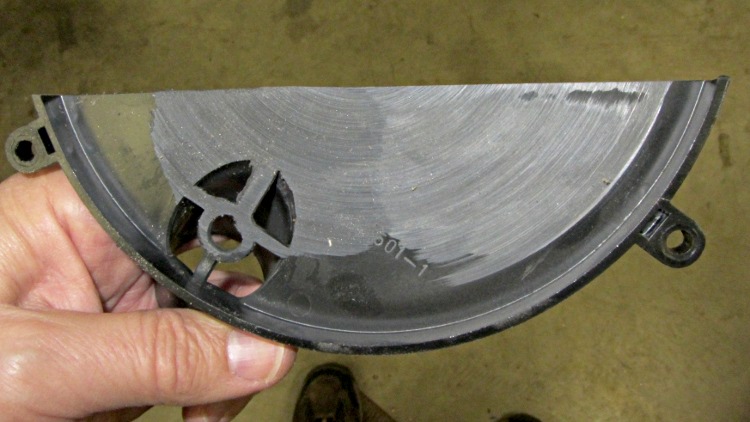
The setscrew gouged the shaft enough to prevent the disk from sliding off the shaft, which was probably a Good Thing, but that also meant I had to jam a big flat-blade screwdriver inside the guts of the dust guard and twist to pry the disk off:

A touch of the file on the shaft, a bit of cleanup inside the disk hole, a dab of Loctite, and it’s all good again.
It always feels good when the parts fit together, even if they don’t actually do anything yet…
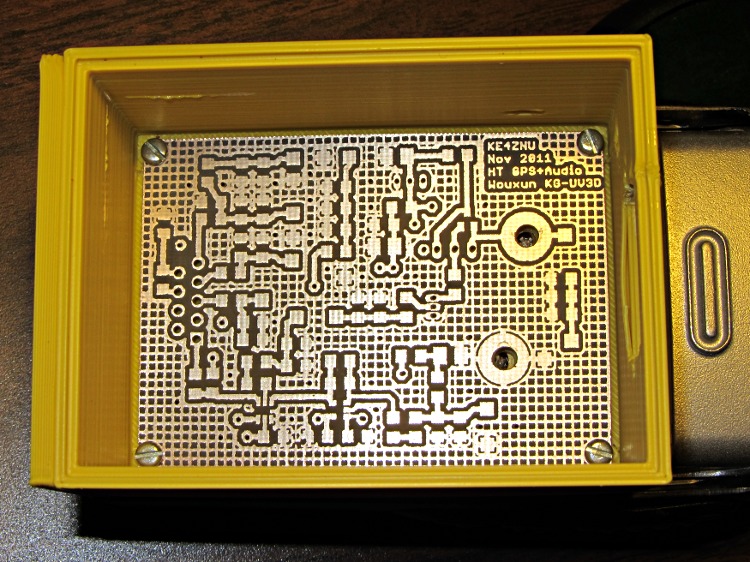
That’s the bare PCB in the first-pass 3D-printed battery case adapter, both of which need quite a bit more work. In particular, the case desperately needs some sort of latch to hold the yet-to-be-built contacts against the HT’s battery terminals.
Amazingly, all the holes lined up spot on, although I think the lower battery contact could move half a millimeter closer to the base of the radio. The battery case contacts are large enough to work as-is and, for what it’s worth, the Wouxun battery cases seem to differ slightly among themselves, too.
The PCB itself came out about as well as any homebrew PCB I’ve ever made, after getting the Logitech Joggy Thing working again to line the Sherline up for hole drilling:
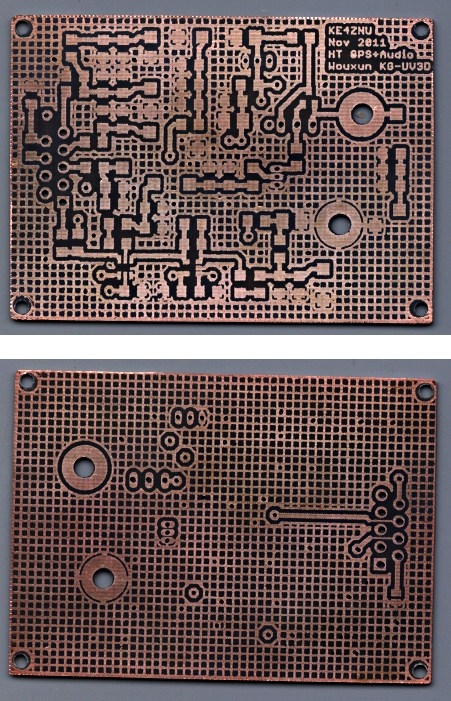
The circuit has provision for pairs of SMD caps on all the inputs, with which I hope to squash RFI from both the VHF and UHF amateur bands by choosing their self-resonant frequencies appropriately.
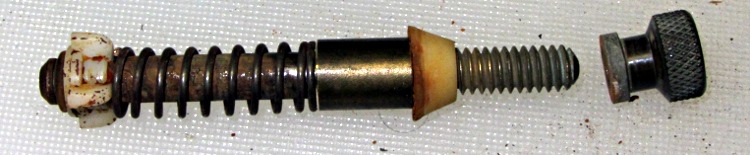
A garden sprayer awaiting repair emerged from the benchtop clutter. It’s an old one, with a metal shell and actual screws, so I could dismantle it to reveal the problem:
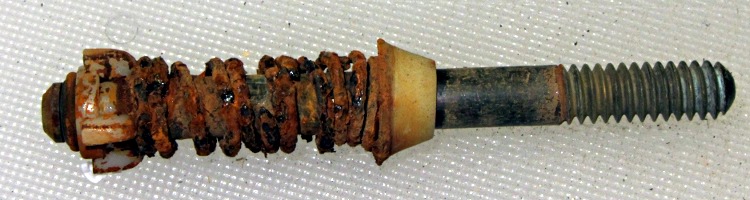
It’s evidently impossible to make a good, cheap, corrosion-resistant spring (pick any two, I suppose):

Some rummaging in the Big Box o’ Medium Springs produced a slightly smaller spring that should last for a while; it’s good, free, and rust-able, if a bit too short.
Much to my astonishment, I found a length of 3/8 inch Marine Bronze rod in the stockpile and made a bushing to take up the remainder of the space:
It won’t get a good test until gardening season opens next year, but it seems to seal well enough.
 The Smell of Molten Projects in the Morning