One of the myriad cheap LED flashlights around the house & shop stopped working. This one consists of an aluminum shell with a pushbutton switch in the screw-on rear cap; somewhat to my surprise, the switch worked fine.
Poking around the PCB in the front revealed the problem: only friction held it in place against the springs contacting the three AA cell battery container. Pushing a bit harder shoved the lens and the LED / reflector / PCB assembly out:
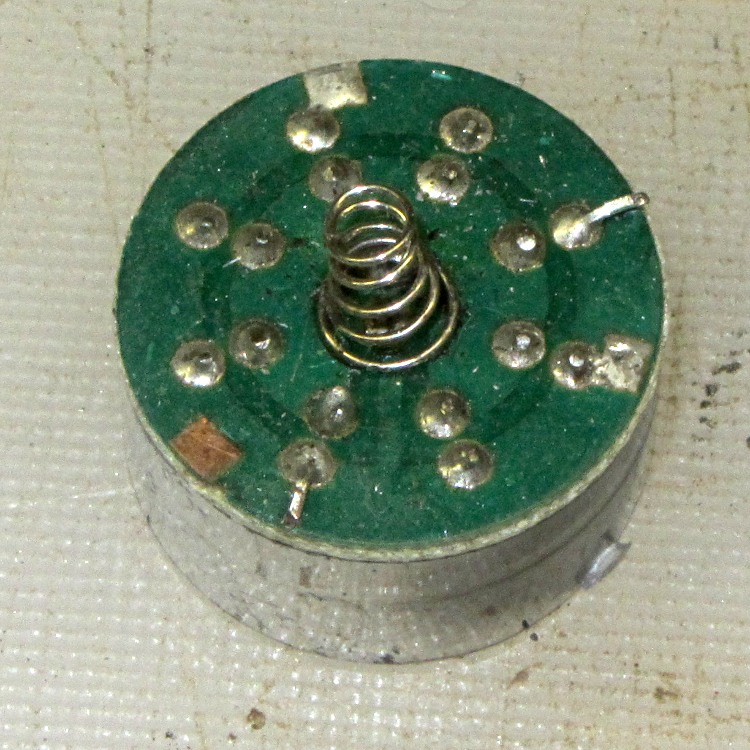
The spring in the middle contacts the positive battery terminal. Those three square pads pressing against a locating shoulder inside the shell, but two of the pads have a solder layer and one is bare. I don’t know if the long lead on the LED at about two o’clock is a deliberate attempt to form an additional contact.
Peering inside the shell reveals three teeny nubs on the locating shoulder that could, presumably, dig into the solder pads:
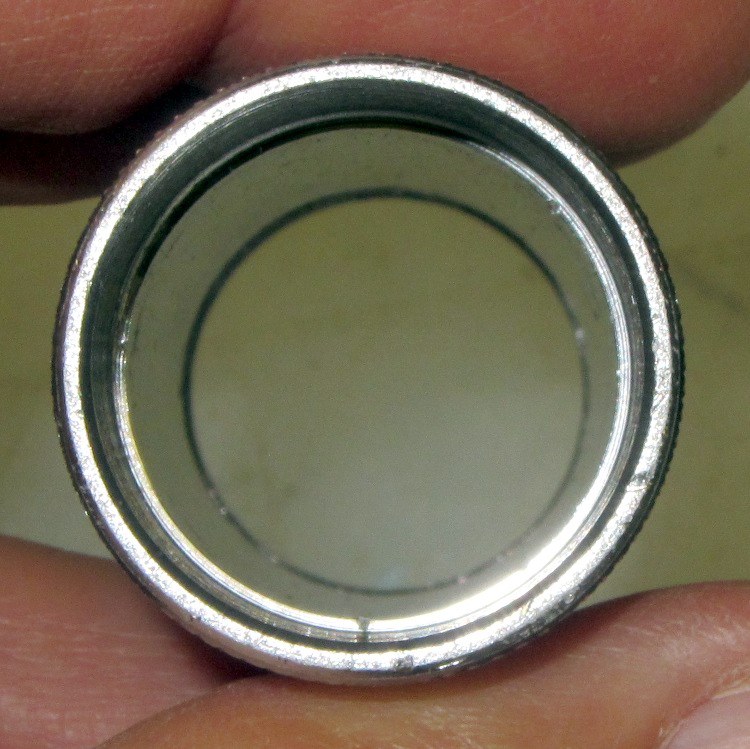
If you’re having trouble spotting them, so did I. Running a fingernail around the shoulder helps: one is at the bottom, another about 10 o’clock, and the third at about 1 o’clock. They’re not evenly spaced at 120° to match up with the pads.
With only friction holding the PCB in place, I understand why the flashlight didn’t work; given enough of an impact, the battery would push the PCB just far enough forward to make the connection at least intermittent.
I aligned the two solder-coated pads with two nubs, shoved everything together, pressed the lens firmly in place, and we’ll see how long that lasts…
 The Smell of Molten Projects in the Morning
Comments
2 responses to “LED Flashlight PCB Contacts”
If you make three tungsten copper L shaped contact springs and solder them to the three ground pads on the PCB and then insert it in the tube then the contact will be permanent. Alternatively a bit of copper foil around the circumference should work.
That PCB was as perfect a fit as you could imagine: even a shimstock sliver didn’t fit around the edge!
The next time one of those flashlights stops working, I’ll combine your technique with mine. I think a springy L-shaped contact around the edge of the PCB, with just enough filed off the board to produce a solid press fit. That way the PCB will apply pressure in the correct direction and it won’t come loose.
Thanks for the tip…