Ed Nisley's Blog: Shop notes, electronics, firmware, machinery, 3D printing, laser cuttery, and curiosities. Contents: 100% human thinking, 0% AI slop.
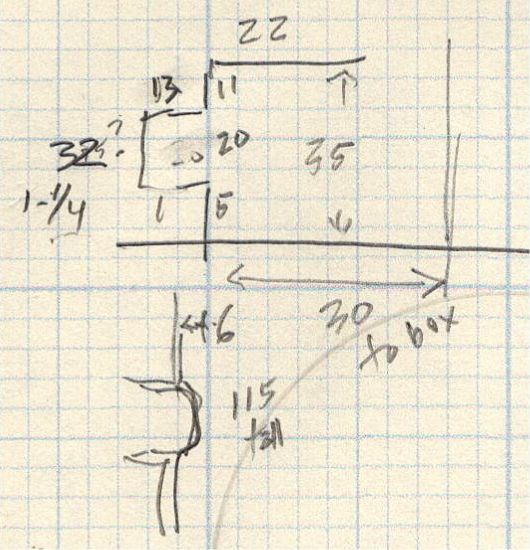
The trap boxes come in 7 quart and 3.5 quart sizes, although we expect either will comfortably accommodate a single vole.
They’re made of polypropylene plastic eminently suited for laser cuttery, so I borrowed the holes from the cardboard box setup:
Vole Box – hole cutting
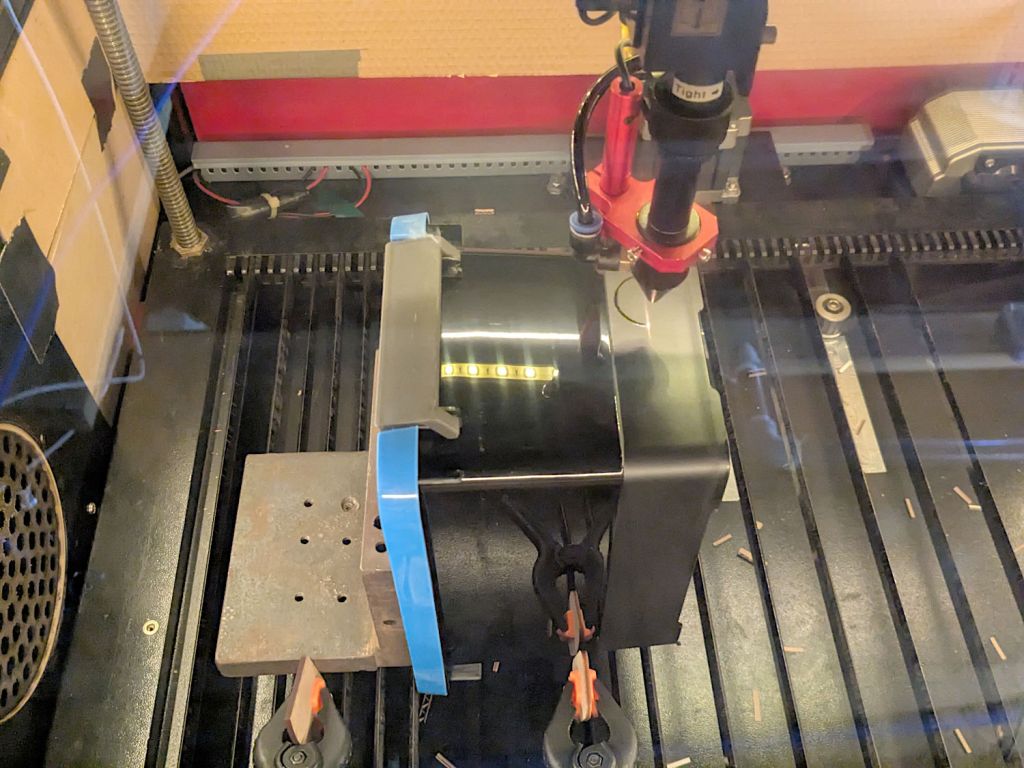
The clamps on the knife bars held the angle block and boxes in pretty much the same position, so I didn’t realign anything after figuring out a pair of magnets would hold the lid to the angle:
Vole Box – lid fixture magnets
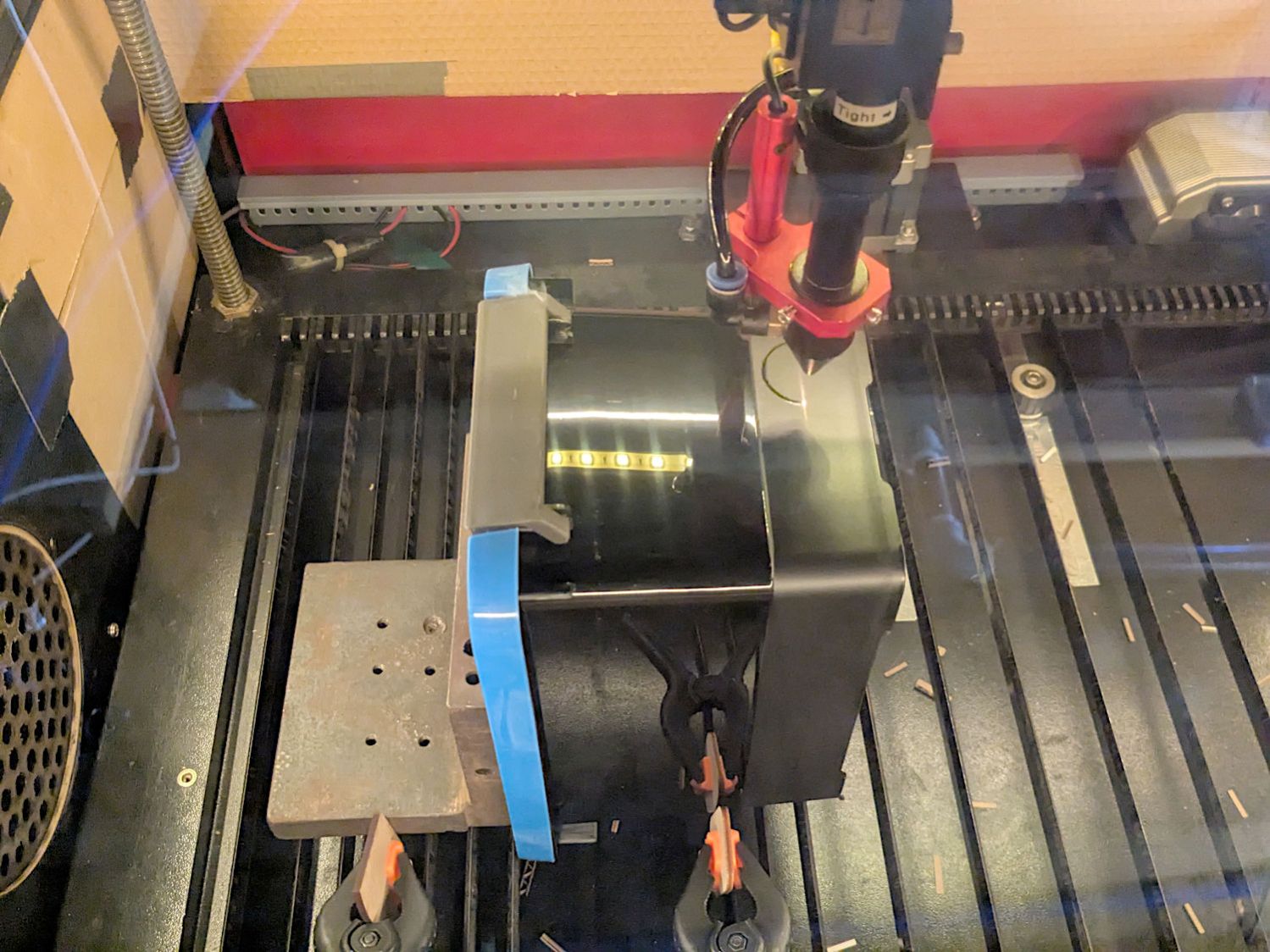
The box side is slightly sloped, so I probably should have angled the block to tilt the lid, but this isn’t a precision job:
Vole Box – lid fixture
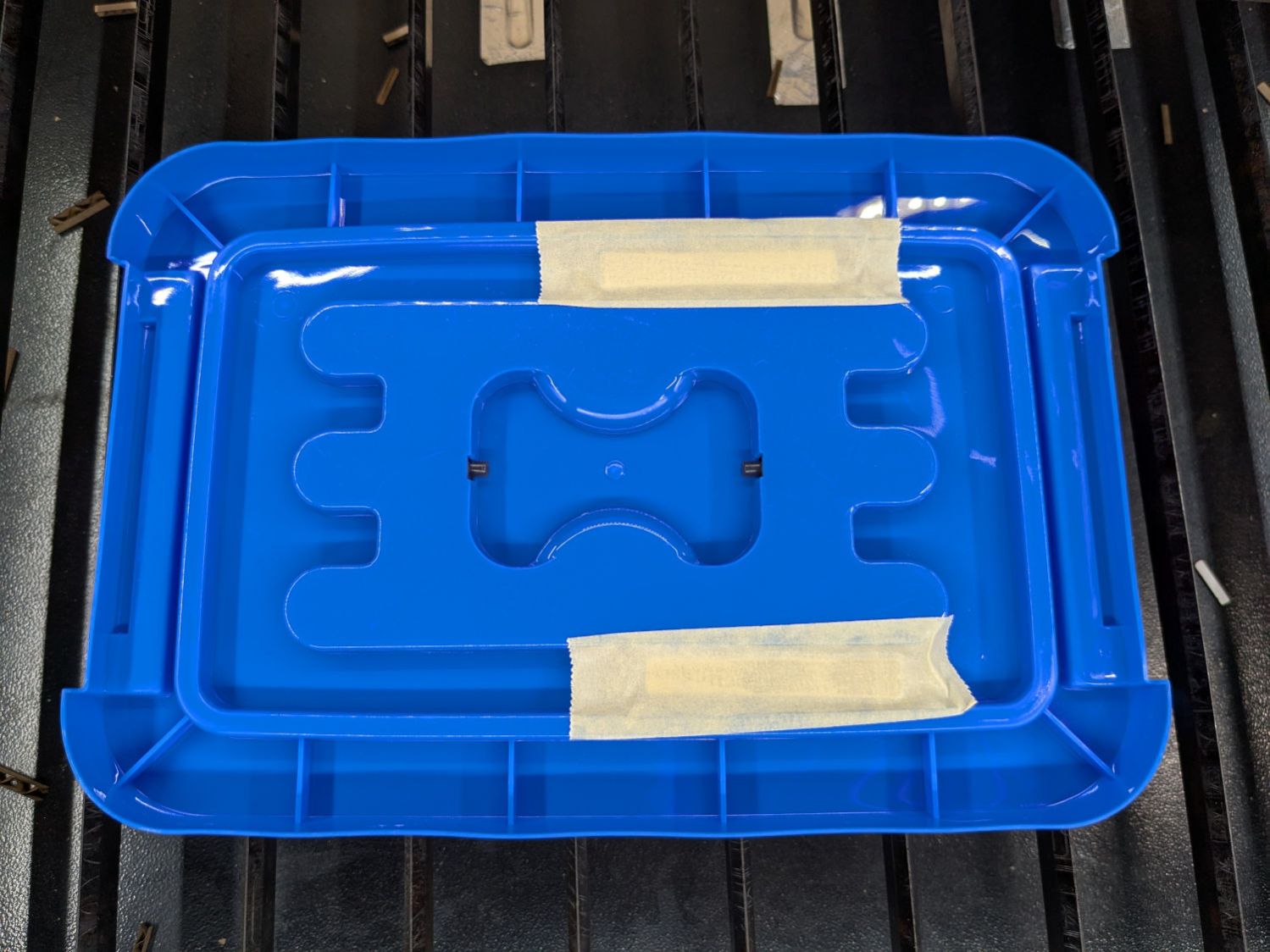
The white smudges on the lid come from vaporized polypropylene:
Vole Box – fume deposits
The body count thus far is just one field mouse, but the season is yet young.
As the poster says, “Until you spread your wings, you’ll have no idea how far you can walk”:
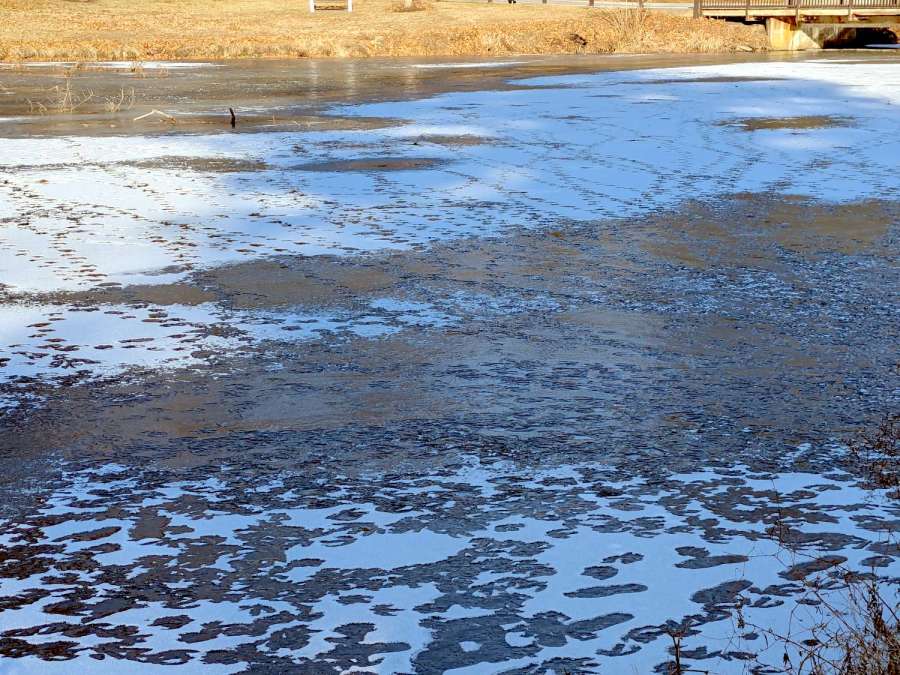
Goose Tracks – Vassar Sunset Lake – A
My feet get chilly just looking:
Goose Tracks – Vassar Sunset Lake – B
We think the flock has a Rules Compliance Officer who gave one miscreant goose an all-around inspection:
Goose Tracks – circling
Just another day at the office …
The WordPress AI generated an excerpt for this post:
The poster emphasizes potential discovery through exploration, while the goose flock exhibits curiosity, hinting at humorous governance among them at Vassar Sunset Lake.
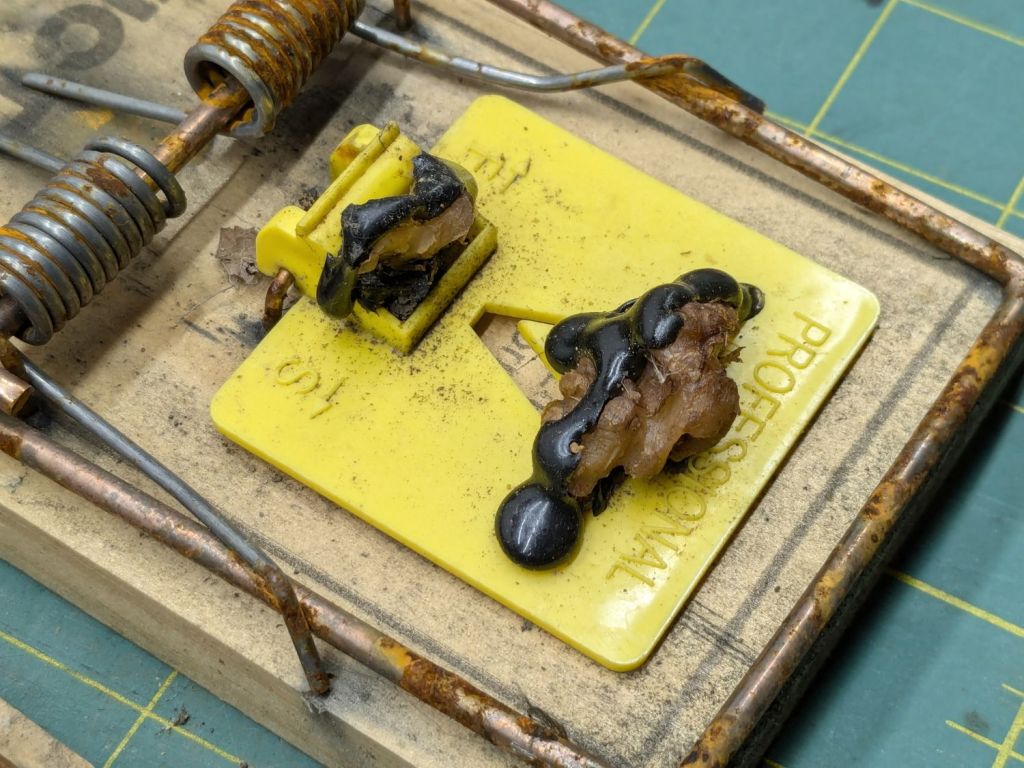
A highly effective way to bait a rat trap for garden voles:
Rat trap – still baited
The trap is a Victor M205 (in a 12-pack as M326) with a big yellow plastic bait pedal. The bait is pieces of walnut, secured to the pedal with generous strands of hot melt glue. The trick involves mechanically capturing the walnut by slobbering glue over & around it, forcing the vole to pull & tug while gnawing the last bit of goodness.
Which generally ends badly:
Rat trap – gnawed bait
I do not begrudge the critters a fancy last meal; it’s gotta be better than their usual diet of carrots / radishes / turnips.
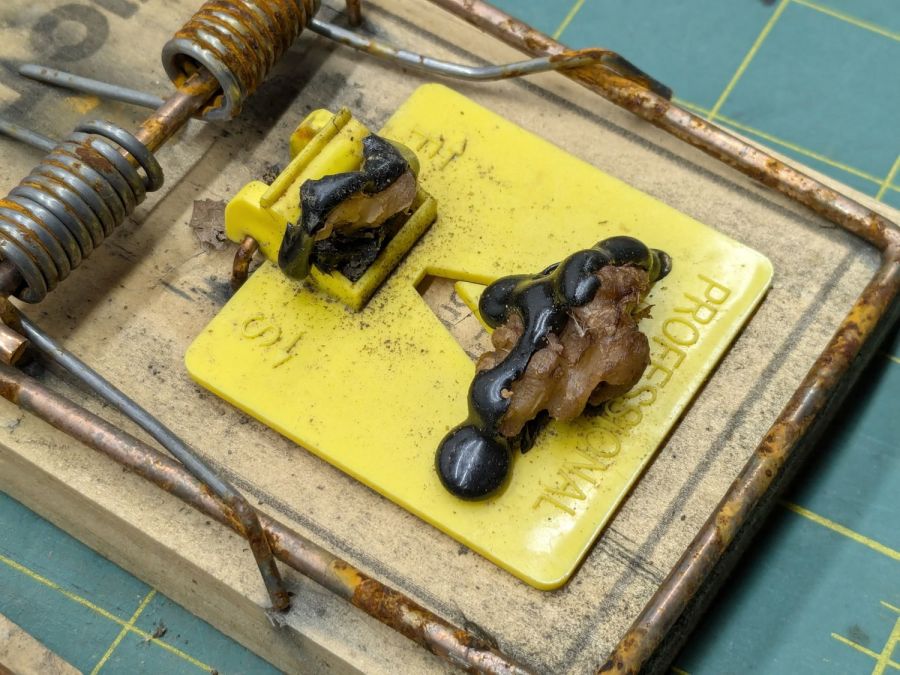
Voles have no qualms about eating the bait from a sprung trap with a dead compadre a few millimeters away:
Rat trap – empty bait
They will sometimes eat the walnuts and their dead compadre.
The plastic pedals work much better than the old-style metal pedals at holding the steel arm wire. The wire slides freely on the plastic, in contrast to the previous high-friction metal-on-metal latch.
Some of the traps were entirely too sensitive and required slightly bending the tip of the arm wire upward to increase the friction on the plastic plate. Always always always handle armed traps by the wooden edges beside the kill bar, so when it accidentally snaps your fingers are nowhere near the business end.
After I figured out how to properly bait the traps and we set out half a dozen traps in the most attractive crops, Mary’s garden produced 54 dead voles over the course of 90 days, sometimes in groups of three or four at a time. While this did not prevent all the crop damage, it definitely reduced the problem.
Next year we’ll start early and probably reach triple digits by midsummer.
The same technique with Victor M035 mouse traps (in 12-packs as M035-12) is brutally effective on house mice.
Although the drilled sunflower seeds worked reasonably well, various critters gnawed through the threads and escaped unharmed with the seeds. We tried gluing seeds to the trigger with good old Elmer’s Non-Toxic School Glue, only to find garden ants absolutely love the stuff.
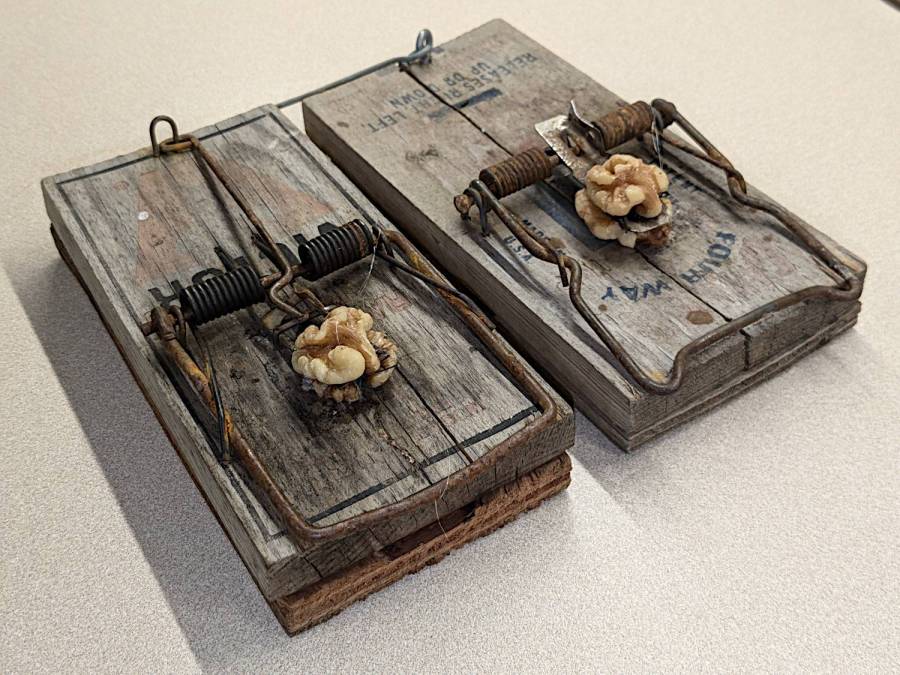
Well, if voles like seeds, they’ll surely like nuts:
Rat traps – walnut halves
Those are rat traps (much bigger than mouse traps) with walnut halves secured to the top and bottom of the trigger with hot melt glue.
Yes, the plywood plates under the traps hold them together. There’s no reason to put fancy new traps outdoors where they succumb to weather in short order; these are veterans from previous episodes.
Having taken out two voles with sunflower seeds over the course of a week, the walnuts accounted for two more voles in three days. Mary thinks a neighbor vole needs a day to notice its buddy has gone missing, so the average pace may be a vole every other day.
Bonus: Gnawing on the nuts or trying to pull them away triggers the trap, so those walnuts are still out there.
The community gardens have enough voles to attract Red Tailed Hawks, which have started perching on fence posts and stooping on voles foolish enough to run along the paths or into grassy areas. Some gardeners seem disconcerted by the presence of such large birds in close proximity, but Mary assures them they’re helpers.
Starting from an SVG file set up for 3 mm material, apply the usual optimizations & tweaks to get a usable LightBurn file, then go nuts:
Spider Collection
The big one is two cross-laid layers of corrugated cardboard using up the better part of three Home Depot Large moving boxes:
Spider – LightBurn layout – 2x cardboard
That little bitty grid is the 700×500 mm laser cutter platform, so I just slap a sheet of cardboard in place, update the workspace from the camera, select the next layout, drag it over the cardboard, and Fire The Laser.
The smaller cardboard spider over on the left is built with a single cardboard layer and succumbed to the square-cube law: the legs are entirely too bendy for the weight of the body. Although it’s not obvious from the pictures, both cardboard spiders have a keel plate I added under the body to support most of their weight.
The brightly colored little spiders got a coat of rattlecan paint without any underlying primer and definitely look like that happened:
Spider Collection – detail 2
The edge-lit fluorescent green spider is sized around 2.9 mm material, the clear spider uses 2.3 mm acrylic, and the chipboard one in the background is at 1.8 mm:
Spider Collection – detail 1
The eyes are fluorescent red or green acrylic with concentric circles engraved to catch the light. They’re more effective than I expected, although they won’t look like much after dark.
We now live in a neighborhood with youngsters and Halloween this year will be so much fun …
The WordPress AI image generator caught the general idea of “cardboard spiders”:
Everything is held together by ordinary wood glue, squeezed together for a few moments until the two parts no longer slide around.
One layer of 3.9 mm corrugated cardboard:
Beetle – 1x cardboard
The fancy gold & hologram decorations come from what’s surely non-laser-safe PSA vinyl sheets, cut by offsetting the top layer shapes inward a reasonable amount. The eyes come from random colored paper or painted chipboard.
Two layers of cardboard add up to 8 mm:
Beetle – 2x cardboard
That’s purple paper left over from the layered paper quilt blocks and, obviously, my glue stick hand is weak.
Three layers of cardboard makes each part half an inch thick:
Earlier this year, a pair of House Finches chose the a pine cone wreath hanging outside our front door for their nest.
One day a Starling attacked:
Starling Attack – IM_00052
Starling Attack – IM_00053
Starling Attack – IM_00054
There’s a Youtube video of the action following those pictures:
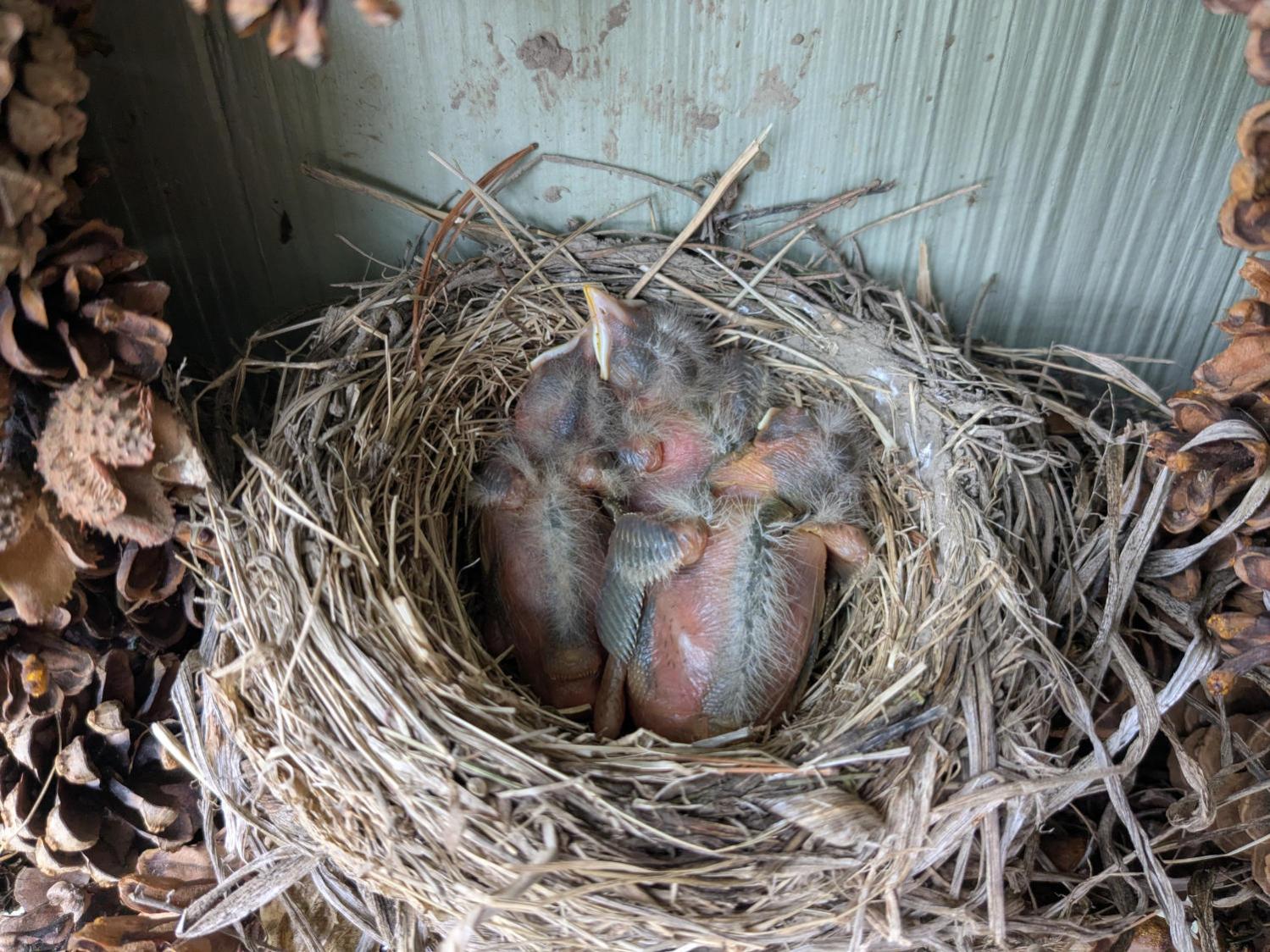
Ms. Finch suffered a peck to the head raising a few feathers into a small topknot, but seemed otherwise undamaged. The eggs survived unscathed and a month later they fledged a quartet of new finches:
House Finch chicks – pre-fledging – 2024-05-18
Yes, they’re surrounded by a ring of bird crap: finch chicks can aim and fire overboard, but they don’t have much range.
The same finch pair abandoned their second nest after a Brown-headed Cowbird added an egg and punctured both Finch eggs:
House Finch nest – Cowbird egg vs punctures
Their third attempt failed after four eggs when a Cowbird added a fifth:
House Finch nest – Cowbird egg with 4 finch eggs
A few days after that picture, something tore that nest apart and destroyed all the eggs:
House Finch nest – destruction with feathers
The scattered feathers suggest a major battle with severe injuries.
Three nesting attempts produced only four fledglings: a bad year for those two finches.