The Smell of Molten Projects in the Morning

Ed Nisley's Blog: Shop notes, electronics, firmware, machinery, 3D printing, laser cuttery, and curiosities. Contents: 100% human thinking, 0% AI slop.

Tag: Wildlife

Other creatures in our world

  • Which Sign Is Not Like The Other Signs?

    Which Sign Is Not Like The Other Signs?

    Spotted on a recent trip past the Capital Region Welcome Center, one of the banners seemed quite unlike the others:

    NY Promotion Banners - Capital Region I-87 Welcome
    NY Promotion Banners – Capital Region I-87 Welcome

    Maybe if we were dog people, it’d be less offputting.

    Puts me in mind of being So Poughkeepsie.

  • Chestnut Parasites

    Chestnut Parasites

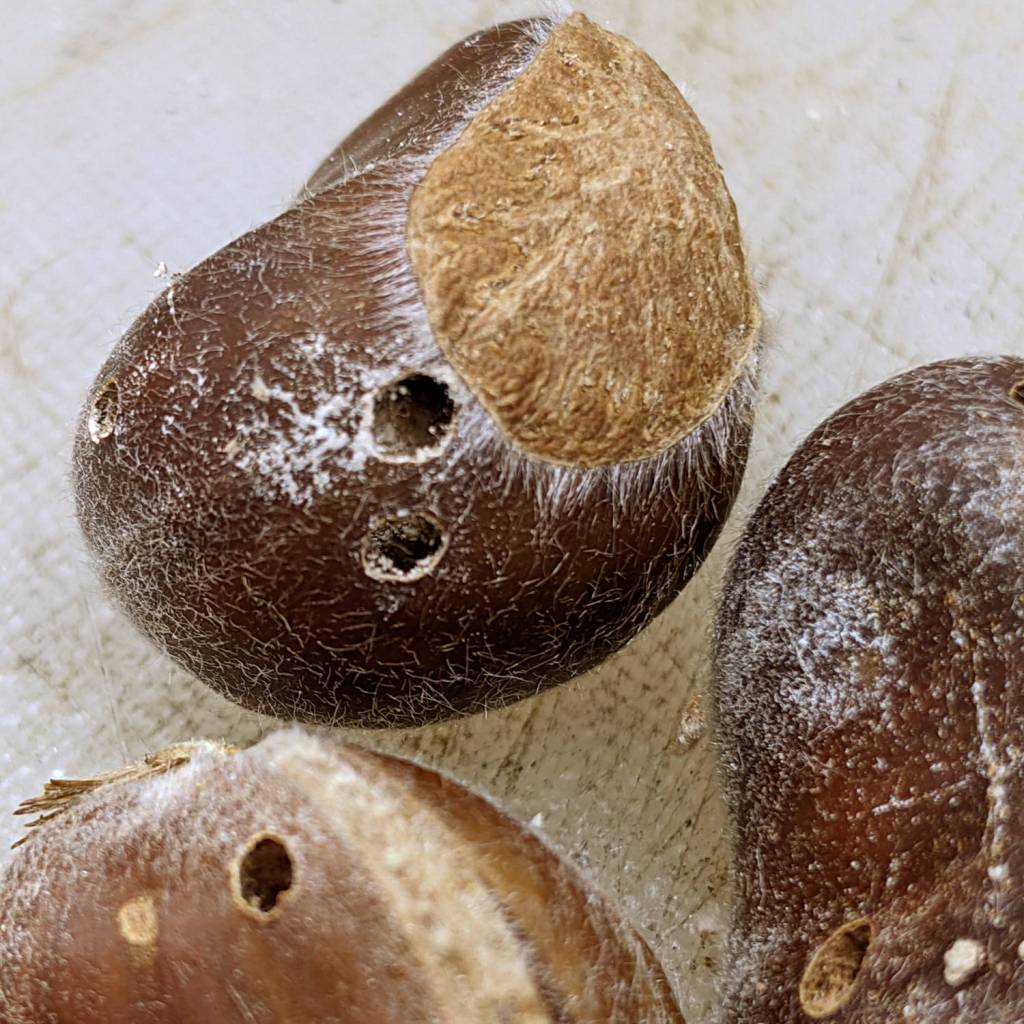
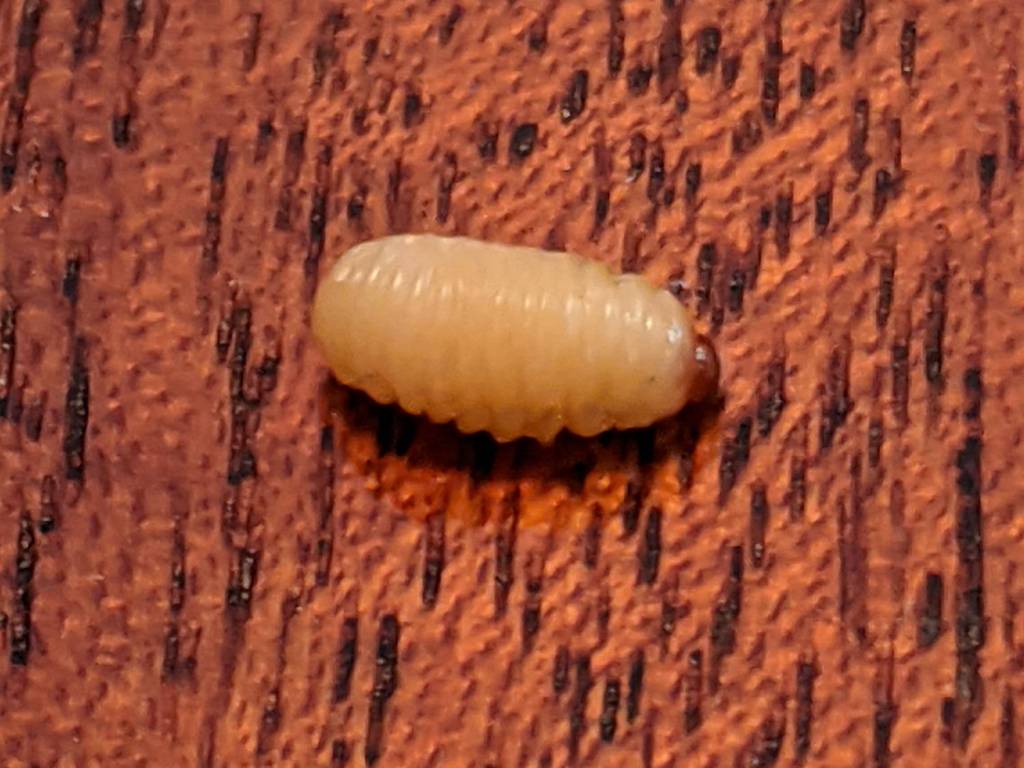
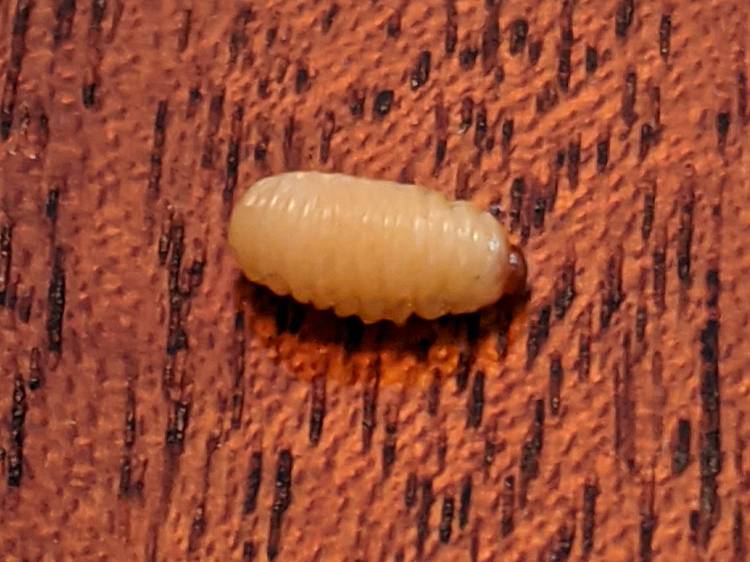
    I spotted this little gadget chugging steadily across a table in the living room:

    Chestnut parasite larva - detail
    Chestnut parasite larva – detail

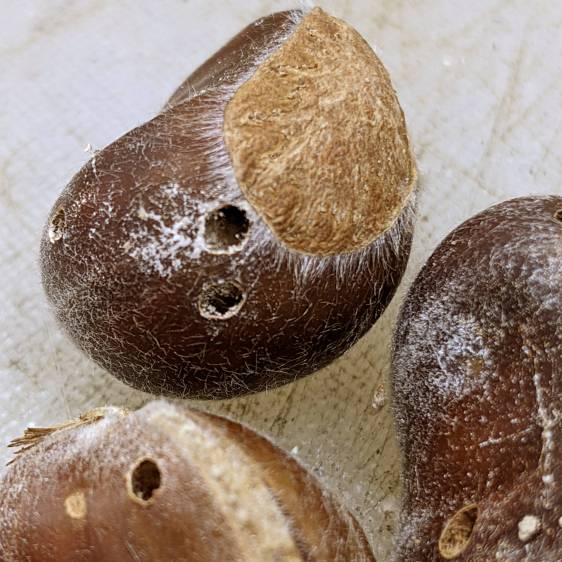
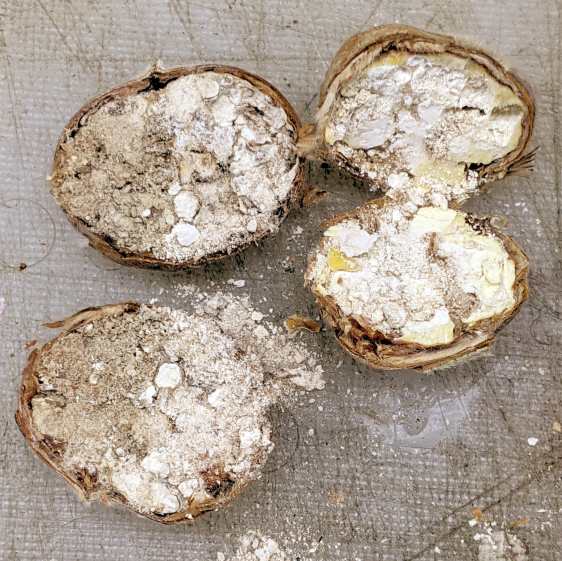
    Nearby, two of its friends / siblings / clones remained near their landing craft:

    Chestnut parasite larvae - overview
    Chestnut parasite larvae – overview

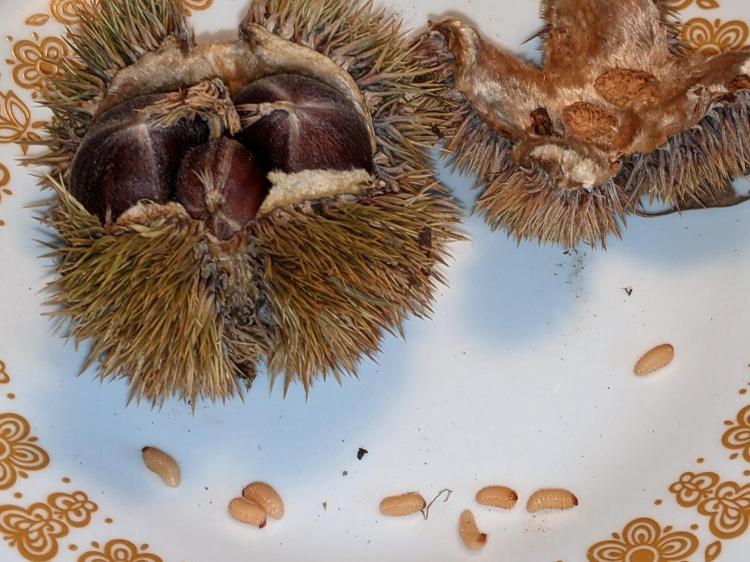
    They’re about 5 mm long and, although there are no larva-size holes visible in the chestnuts tucked inside the burr, that’s definitely where they started their journey.

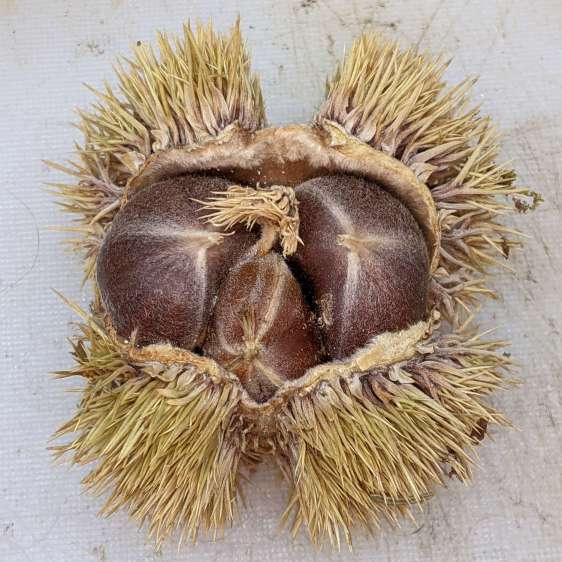
    A few hours later, the rest of the crew bailed out:

    Chestnut parasite larvae - irruption
    Chestnut parasite larvae – irruption

    The exit hole must be on a nut under the curve of the husk, but they’re sufficiently squishy to wriggle their way out. The little brown dot over on the left belongs to the top larva of a pair queued in the exit corridor:

    Chestnut parasite larvae - exiting husk
    Chestnut parasite larvae – exiting husk

    I lost count at 18. There’s surely more where they came from, so I replaced the plate with a bowl to reduce the quantum tunneling probability.

    In an ideal world, they’d grow up to be chestnut weevils, but I put them out near the suet feeder and, a few hours later, my offering was accepted.

  • Praying Mantis: Ootheca Construction

    Praying Mantis: Ootheca Construction

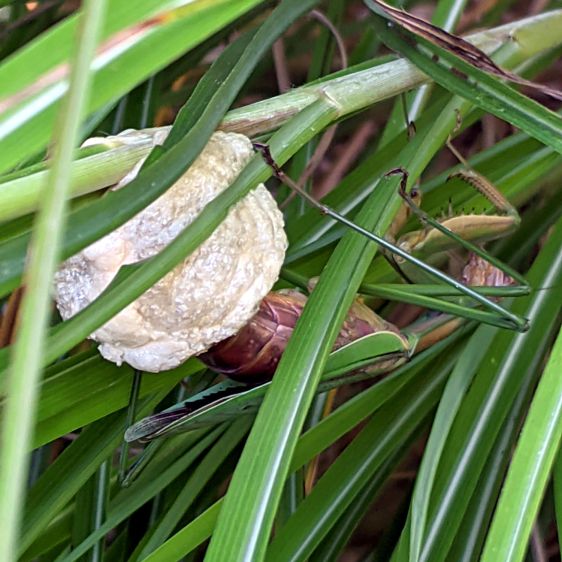
    After not seeing any Praying Mantis activity in the Butterfly Bush for a few days, I discovered our armored hunter in the nearby decorative grass:

    Praying Mantis - building ootheca
    Praying Mantis – building ootheca

    The appendages at the tip of her abdomen were spread to the sides and her whole body moved in small circles, although I couldn’t get a good view of the proceedings. Building an ootheca apparently requires concerted effort, as she was still hard at work when dusk fell.

  • Funnel Web Spiders

    Funnel Web Spiders

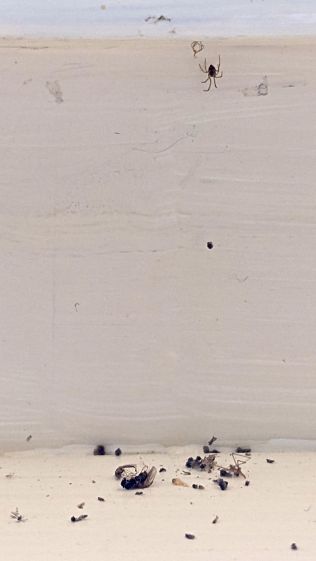
    This critter took up residence in our kitchen window:

    Funnel web spider in window
    Funnel web spider in window

    She’s between the outer storm window and the inner sash, having secured her funnel web to both panes across the entire width of the window. We’d opened the storm window to clear an air conditioner vent and spiders know a good location when they see it.

    We know she’s female, because a (smaller) male appeared and conducted negotiations for the better part of an afternoon. After she accepted his offer of a small, somewhat battered, moth, the two hooked up for the rest of the day; we feared for his life, but he hung around until the next afternoon, then departed.

    She normally stays tucked inside the channel running along the edge of the window frame, with only the tips of those two front legs visible, and retreats at the slightest vibration, so we’ll leave her in peace until we must close the storm window.

  • Monthly Image: Mantis Mating

    Monthly Image: Mantis Mating

    The Praying Mantis in the Butterfly Bush is definitely female:

    Praying Mantis Mating - front
    Praying Mantis Mating – front

    I’d noticed her distended abdomen a day or two earlier, when it was highlighted in the sun and pulsing slowly. The indentations under the male’s legs shows the surface is definitely softer than the hard chitin of most insect armor:

    Praying Mantis Mating - rear
    Praying Mantis Mating – rear

    The tip of the male’s abdomen twisted around to make contact, but I have no idea what all the little doodads common to both of them back there were doing.

    The whole process started in mid-afternoon, they were still locked together six hours later, and the male was gone in the morning. The stories about female mantises eating the males seem greatly exaggerated, but she did manage to catch and eat a moth while otherwise engaged.

    We’ll keep watch for ootheca on the tall grasses again, although we’ll never know the rest of their story.

  • Cicada Time

    Cicada Time

    Even though cicadas are completely harmless, Mary was quite startled to discover one crawling up the back of her garden pants:

    Cicada - left front
    Cicada – left front

    It seems the cicada mistook her for a tree.

    They’re handsome creatures:

    Cicada - left dorsal
    Cicada – left dorsal

    They’re very conspicuous on fabric:

    Cicada - right dorsal
    Cicada – right dorsal

    I teleported it to a maple tree, where it was better camouflaged:

    Cicada - on tree - right
    Cicada – on tree – right

    When last seen, it was headed upward at a pretty good pace. We wished it well on its adventures …

  • Striped Hairstreak Caterpillar

    Striped Hairstreak Caterpillar

    Mary found this gadget gnawing holes in a bean:

    Striped Hairstreak Butterfly - caterpillar
    Striped Hairstreak Butterfly – caterpillar

    The lump on the right is frass, not a mini-me tagging along behind.

    We had no clue what it might be when it grew up, but Google Lens suggested a Striped Hairstreak Butterfly caterpillar and, later that day (and for the first time ever!), we saw an adult Hairstreak fluttering on a goldenrod in the corner of the garden.

    As with all caterpillars, you’d never imagine the adult butterfly. It seems they move their hind wings to make predators aim at the south end of a northbound butterfly …