Ed Nisley's Blog: Shop notes, electronics, firmware, machinery, 3D printing, laser cuttery, and curiosities. Contents: 100% human thinking, 0% AI slop.
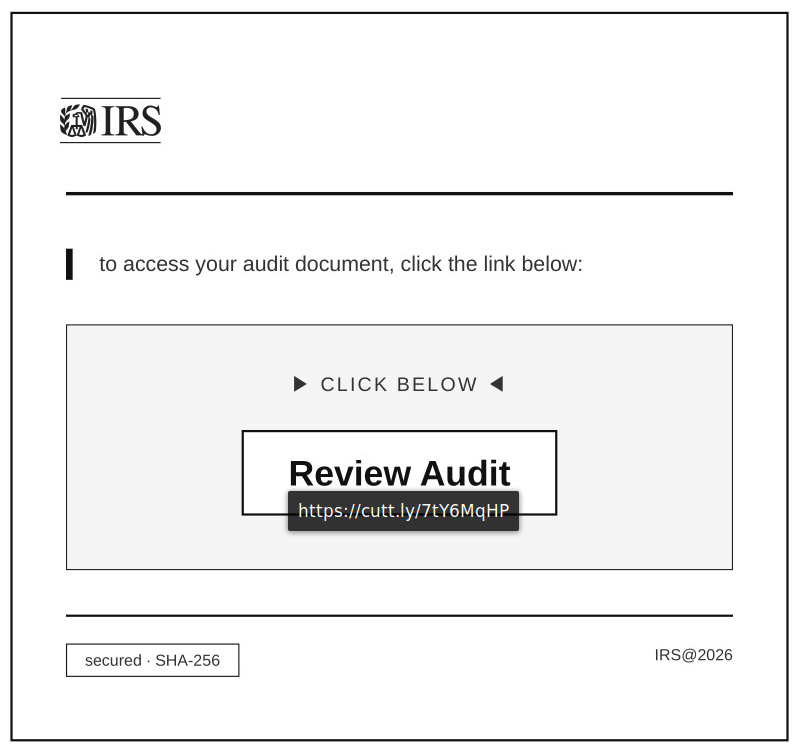
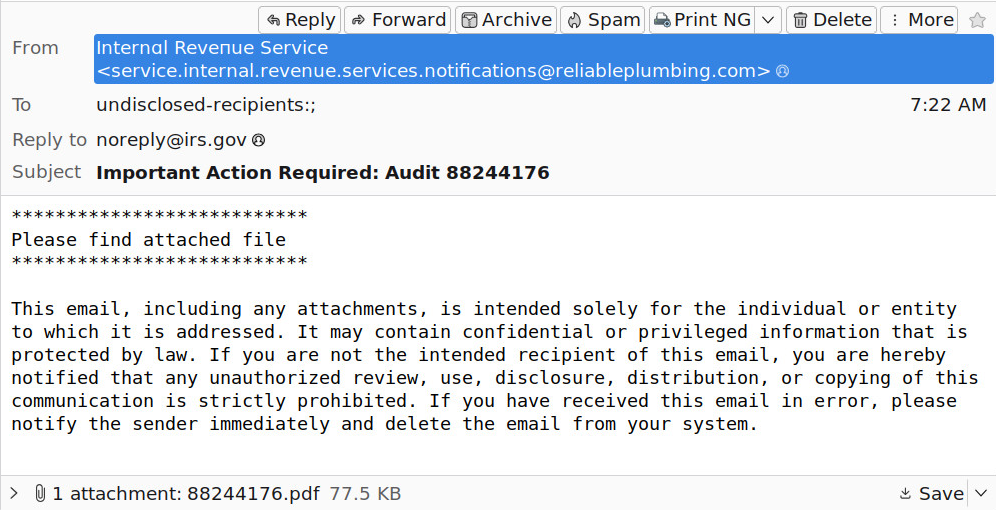
Having recently filed our income taxes, this email came as a mild surprise:
IRS Audit email
The From field seemed a bit sketchy, but, hey, maybe the IRS subcontracted their email vendor after having lost much of their staff in the name of efficiency.
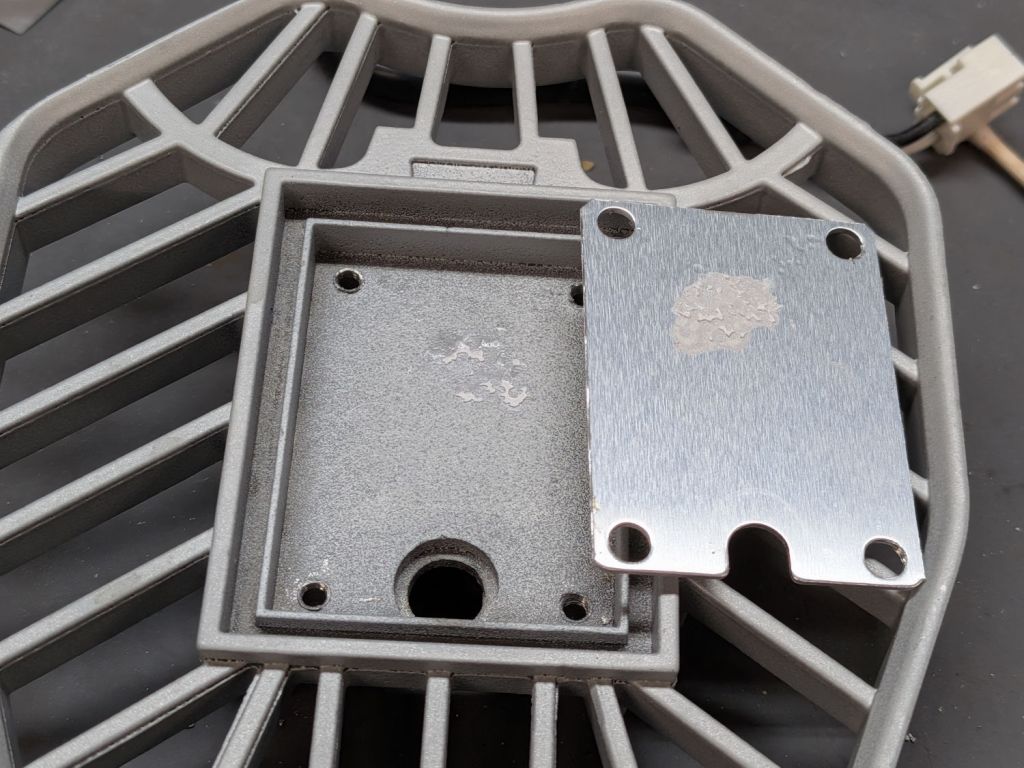
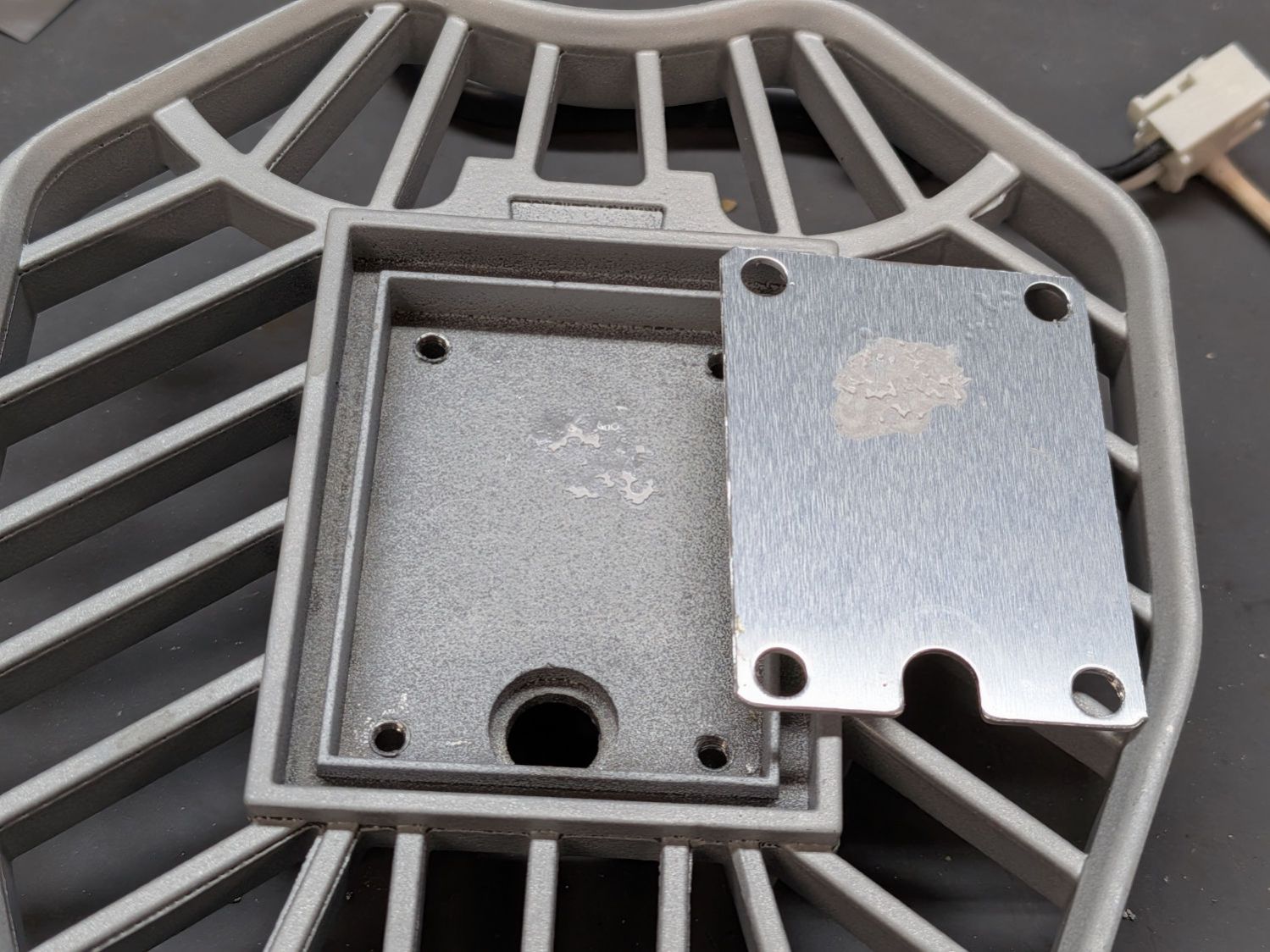
The hidden part of all three LED arrays in the dead garage light looked like this:
LED Garage Light – inadequate heatsink compound
Although the compound was still gooey, there wasn’t nearly enough of it. The few tendrils on the heatsink suggest the LED array had bowed upward, pulled away from the cast aluminum, and eliminated any direct conduction.
A bit of probing showed each LED array had 16 series groups of 4 parallel LEDS, with one group in each array failed open. That group was toward the end away from the inadequate heatsink compound: the LEDs died from heatstroke brought on by neglect.
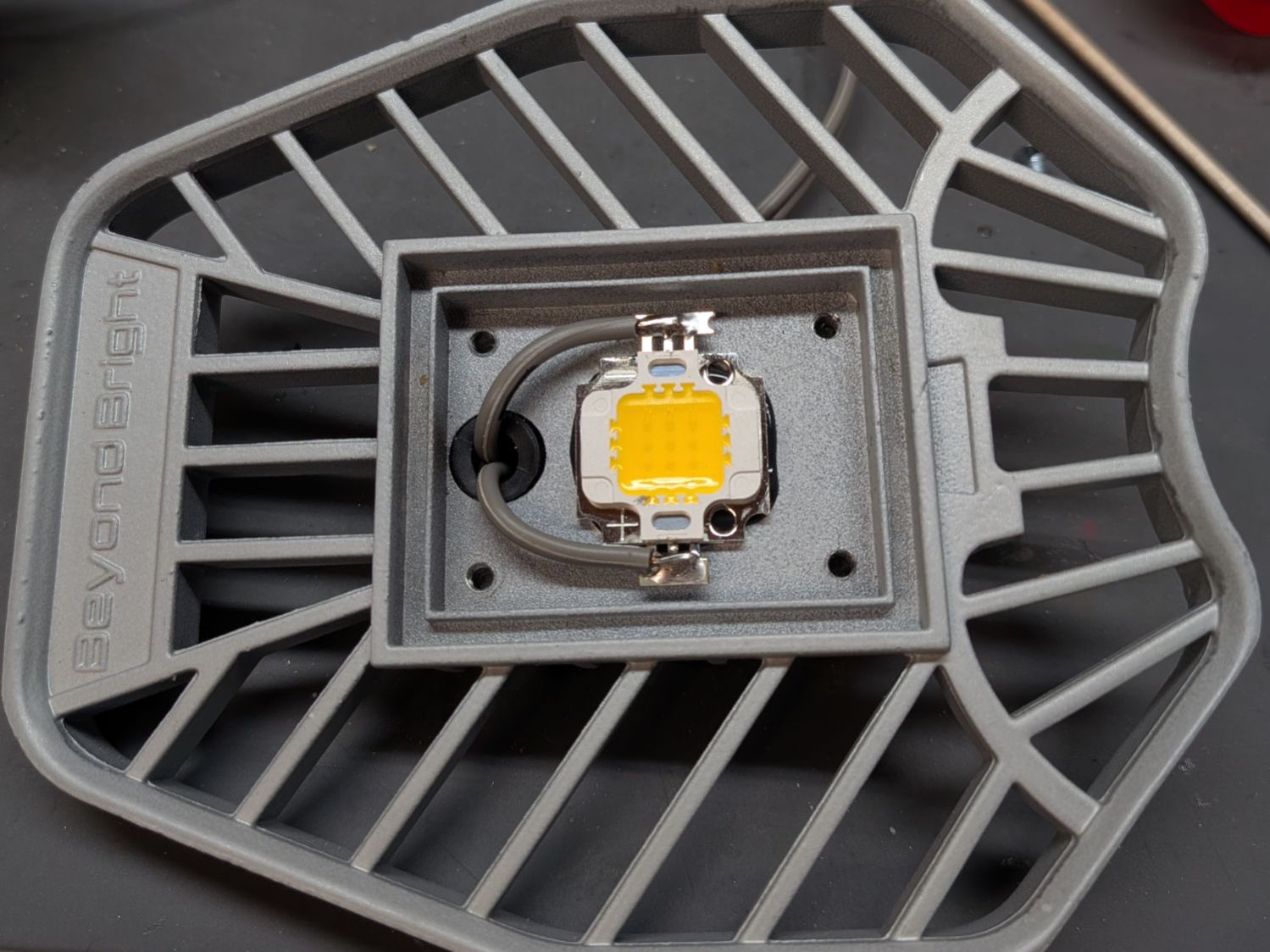
The Drawer o’ LED Arrays disgorged a bag of surplus LEDs labeled “10 W 9-12 V 750 mA”:
LED Garage Light – epoxy replacement
It’s sitting on a generous blob of steel-filled JB Kwik epoxy that should do a great job of conducting heat. A bag of cheap constant-current supplies is on order.
Amazon has similar “10 W 9-12 V 350-450 mA” arrays.
Try as I might, I can’t get 10 W from those numbers, but I’ve never understood advertising math.
A three-wing garage light Came With The House in the basement, where it served to light up the foot of the stairs. One of the 48 LEDs in one of the three LED panels began flickering brightly and, over the course of a few days, that panel went dark. The next time I turned on the basement lights, all three panels were dark.
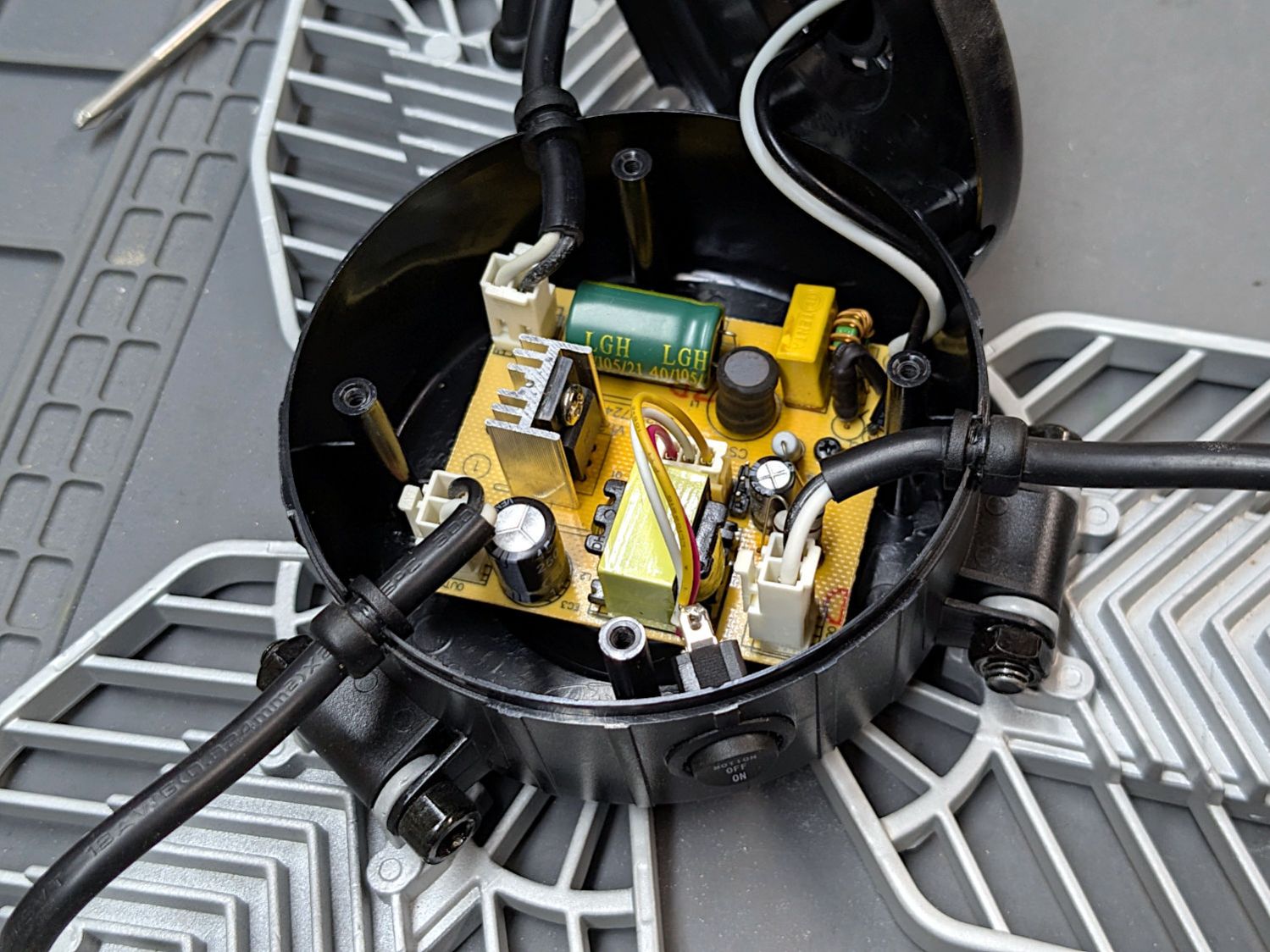
Removing the screw-in lamp base:
LED Garage Light – overview
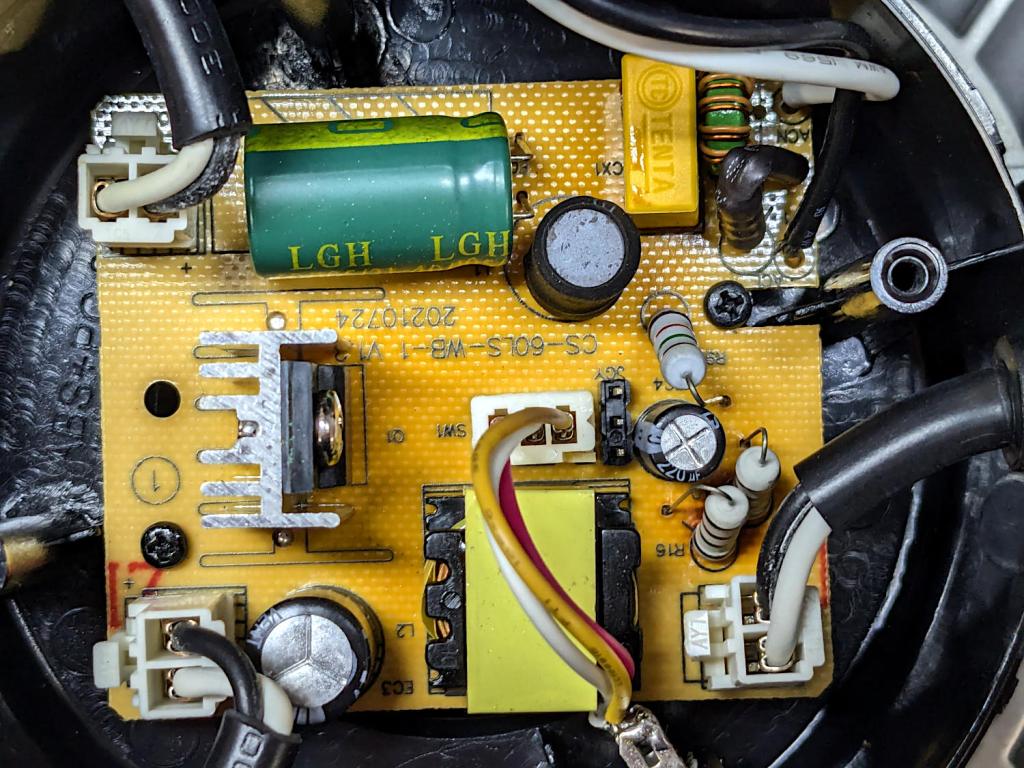
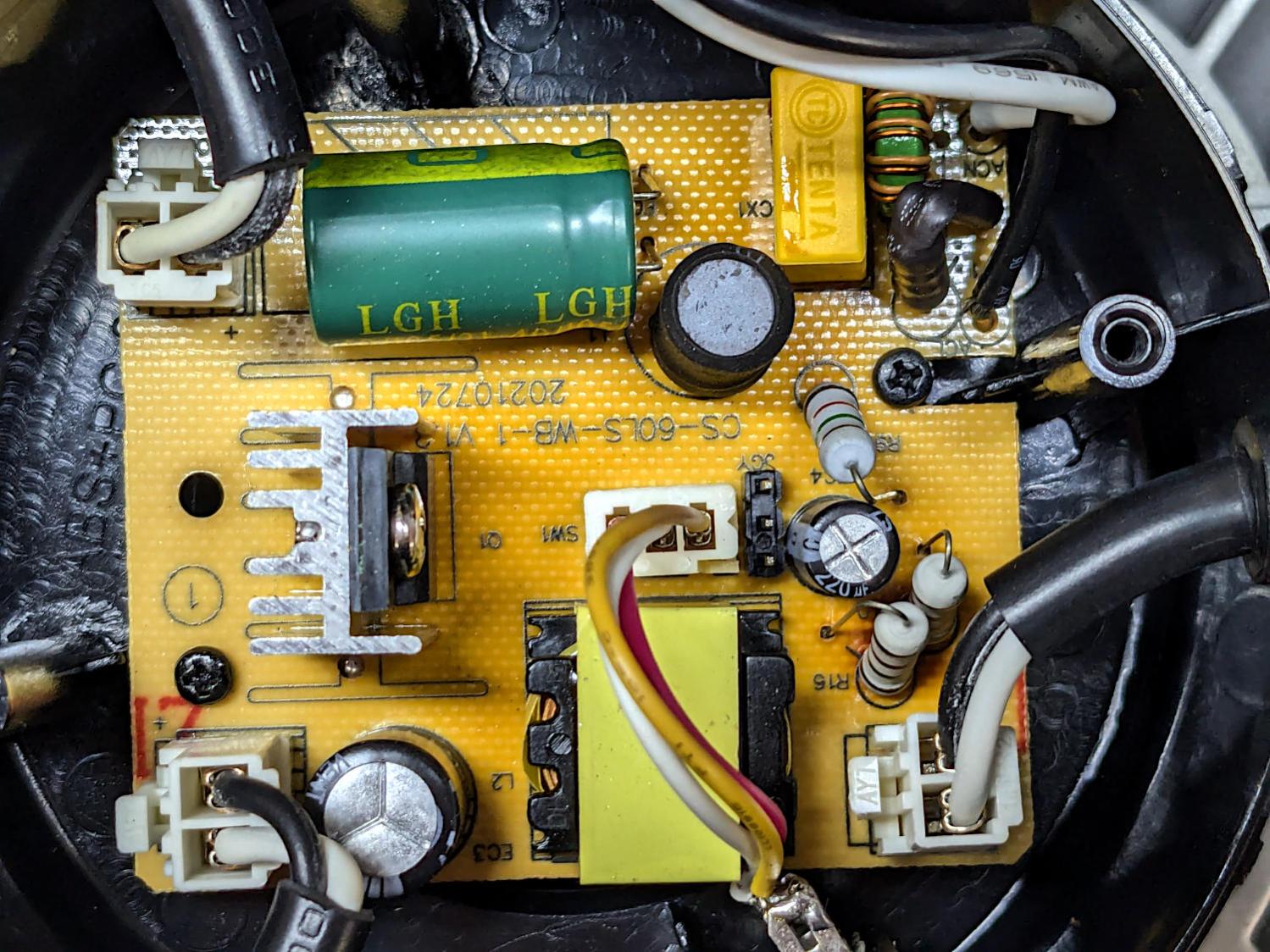
A closer look inside:
LED Garage Light – detail
The middle of the PCB is darker than the perimeter, with the darkest area around the black inductor standing up near the green filter cap. A blackened lump on the solder side that may have once been an SMD resistor evidently served as a fuse.
All three panels are in wired parallel, so the failed panel reduced the load on the supply, thus increasing the voltage on the remaining two panels enough to kill them off, too.
Worth noting: the black wire goes to the positive side of the LED panel. You can just see the + mark near the two connectors on the left side.
I wired each panel to a lashed-up bridge rectifier with a widowmaker extension cord from a variable transformer controlling the voltage, but none of them responded to the 150 VDC peaks: they’ve suffered Real Death.
The electronics landed in the recycling box and the three heatsinks are now in the Big Box o’ Heatsinkery, where they will surely come in handy for something.
The surprisingly readable 09/21 date code on the case says it’s just over four years old. Similar garage lights now run around ten bucks each and I wouldn’t expect them to last more than a couple of years.
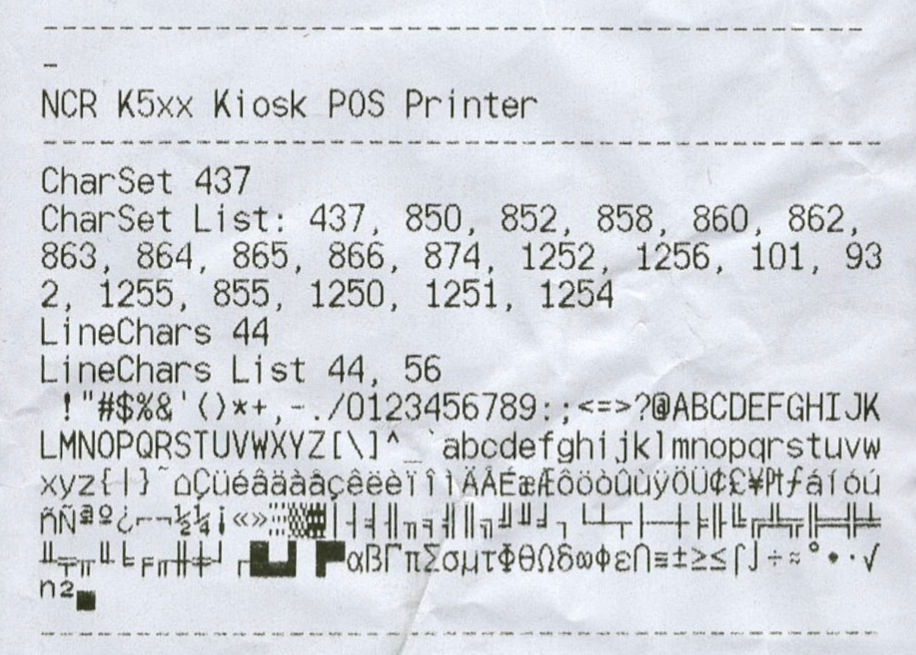
Apparently we were the first people through a self-checkout lane one morning, because a present emerged before our receipt:
Grocery NCR K5xx printer – boot report
I don’t know whether a K5xx printer runs a descendant of PC-DOS or NCR’s firmware just uses the DOS code page numbers, but it’s been a long time since I had to know any of them.
As Sun Tzu said, “If you wait by the river long enough, the bodies of your enemies will float by.”
Our Google Pixel 6a phones qualify for their “Battery Performance Program”, which involves severely limiting the battery charge and discharge levels to avoid “potential battery overheating”. After the mandatory capacity limit kicked in, I must now let the phone suck a socket by the middle of the afternoon so that it will survive until bedtime; if I had a more active lifestyle, it’d be flat dead by noon.
My options under the Program are thus:
Have the battery replaced by the local iFixit shop, without a warranty covering “Whoops, broke your phone. Too bad, so sad.”
Get a $100 check
Get $150 off a new phone at The Google Store
Even though I do not have a deep emotional attachment to the 6a, the first option is obviously a bad deal. Somewhat against my better judgement, I opted to take the $150 discount on a shiny new Pixel 10a.
Redeeming the $150 from the Battery Program involves (their words + my bullets & emphasis):
visit store.google.com,
add the desired item(s) to the cart,
then enter discount code during checkout for an instant $150 discount on your purchase.
Promotional code is for one-time use only with no residual balance;
can be combined with other offers
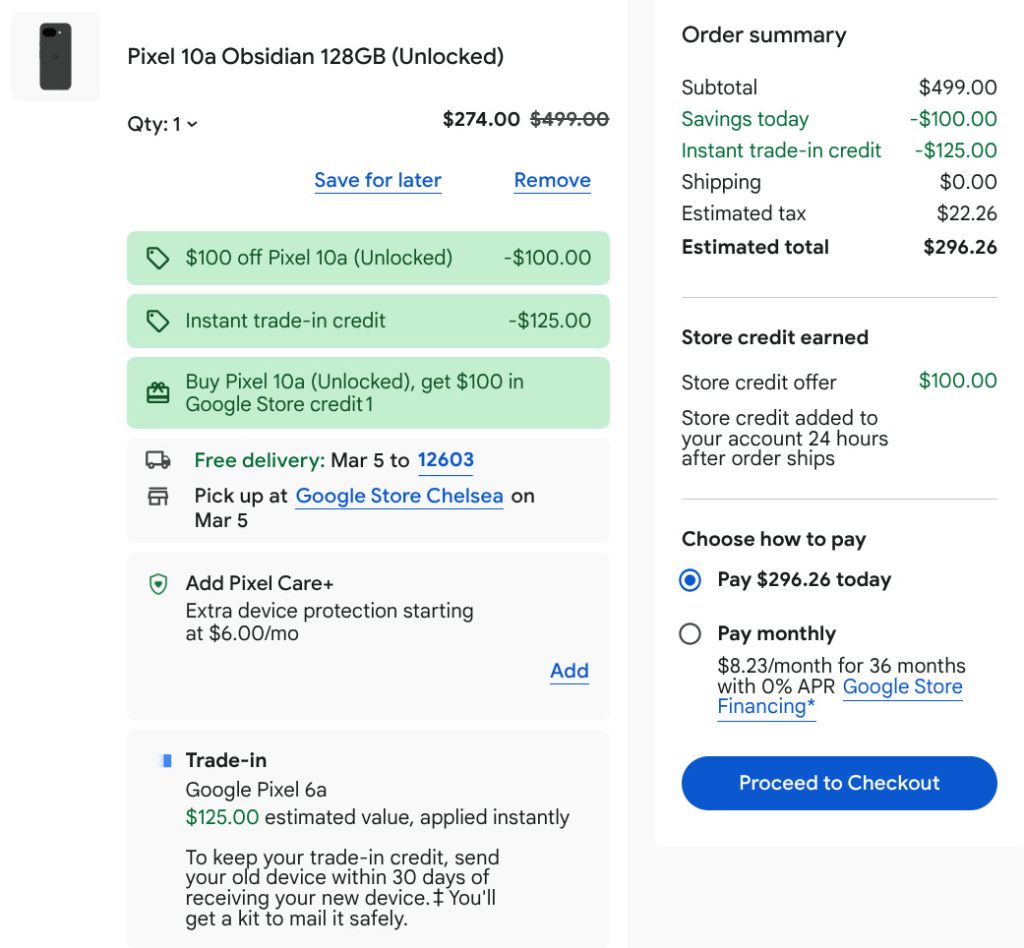
So I set up an order with the cart looking like this:
Pixel 10a order form
The alert reader will note the inability to enter the “discount code” associated with the Battery Program.
Two hours of chat-typing with Google Customer Support over the course of two days established the hard fact that “can be combined with other offers” does not apply in this case, because the $100 discount precludes any additional offers.
6:16:15 PM Ed Nisley: There is no way to add a second discount code.
6:16:59 PM Ed Nisley: So I cannot add the $150 battery code to the order
6:19:38 PM Ed Nisley: But quoting the email with the battery code: "can be combined with other offers"
6:20:01 PM Ed Nisley: How do I include the battery code in this order?
6:21:17 PM Stella:  Got it  , let me check with my resources.
6:22:47 PM Stella: I have checked the details with my team, and unfortunately, you cannot apply two promo codes at the same time. You may use only one code per order. I apologize for any inconvenience this may cause.
6:24:57 PM Ed Nisley: So Google saying the battery code can be combined with the other offers is a lie?
6:26:46 PM Stella: I apologize for the inconvenience this has caused.
6:27:08 PM Ed Nisley: It's not an inconvenience, it's $150 I'm not getting.
6:27:28 PM Ed Nisley: Despite having it be Google's fault in the first place for the bad batteries.
6:28:14 PM Stella: I understand your point. While the Pixel 6a promo code can be combined with ongoing store promotions, it cannot be used in conjunction with another promo code. Per our policy, two promo codes cannot be combined for a single order. I hope you understand.
6:28:47 PM Ed Nisley: This is contradictory: "can be combined with ongoing store promotions, it cannot be used in conjunction with another promo code"
6:29:09 PM Ed Nisley: If it can't be combined with another promo code, how can it be combined with ongoing store promotions?
6:29:47 PM Stella: I understand your point here.
6:29:53 PM Stella: I do understand that the provided resolution doesn't meet your expectations. But, please understand that I cannot go beyond the system restrictions.
Thus whittling the $150 battery discount down to $50, because I can have either $100 or $150, but not both.
There is obviously no recourse. I will definitely take the cash-in-hand $100 when we do this dance with Mary’s phone.
Google doesn’t care, because they’re bigger than the phone company ever was and they know it.
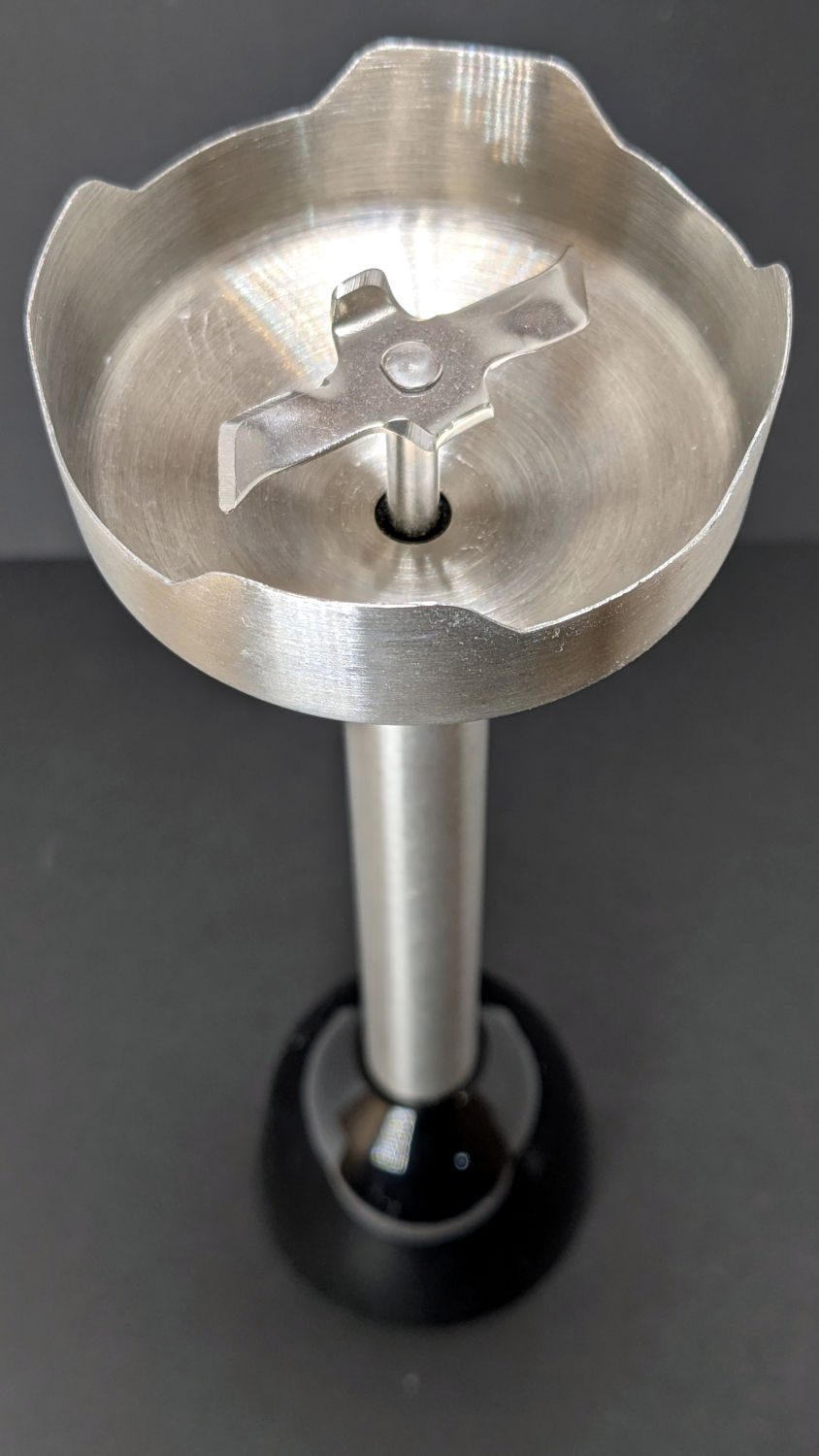
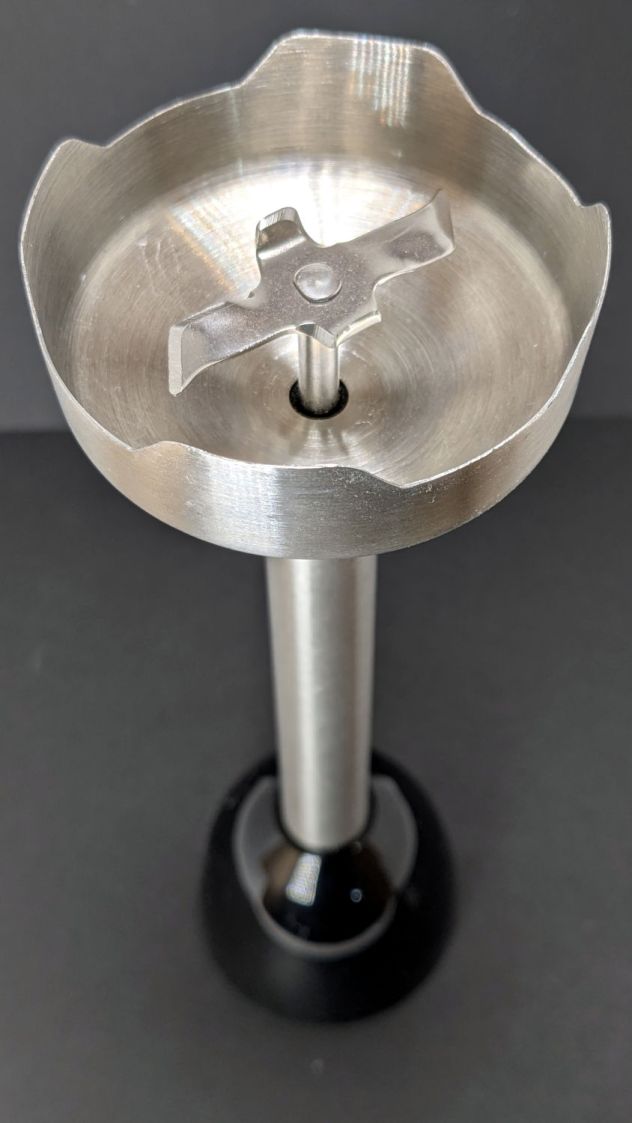
The business end of a cheap stick blender we bought a year ago to replace the previous stick blender (*):
Fresko stick blender
This one failed just slightly beyond the duration of its one-year warranty, apparently with one of the shaft bearings seized to the extent of making the blade un-turnable even by (carefully protected) finger force.
With nothing to lose (and a new blender inbound), it stood in the Basement Shop in that orientation for a week while I dripped penetrating oil around the shaft and wiggled the blade slightly back-and-forth. The bearing eventually broke free and the blade turned reluctantly.
Still having nothing to lose, I gave the shaft a few shots with a drift punch, moving it a few millimeters in each direction. This apparently disturbed the seized bearing just enough to let it turn less reluctantly, with more penetrating oil improving the situation.
Mixing a jar of water went well, even on high speed, but I doubt the bearing is in good health. We decided a blender with penetrating oil tucked up inside should be disqualified for food processing.
When it first locked up, I bought a significantly more expensive stick blender, knowing full well more money does not imply better design / better materials / more QC. This one is now designated as a Cold Backup blender for garden & shop use.
(*) For the record, my 3D printed shaft adapter failed while converting garden tomatoes into thick & zesty pizza sauce. I’m unsurprised PETG-CF wasn’t up to the task.
Mary plugged a new ClimateLine heated hose into her Resmed Airsense 11 CPAP machine, spent the night feeling a bit chilly, and got an error message in the morning that boiled down to “Bad Hose”.
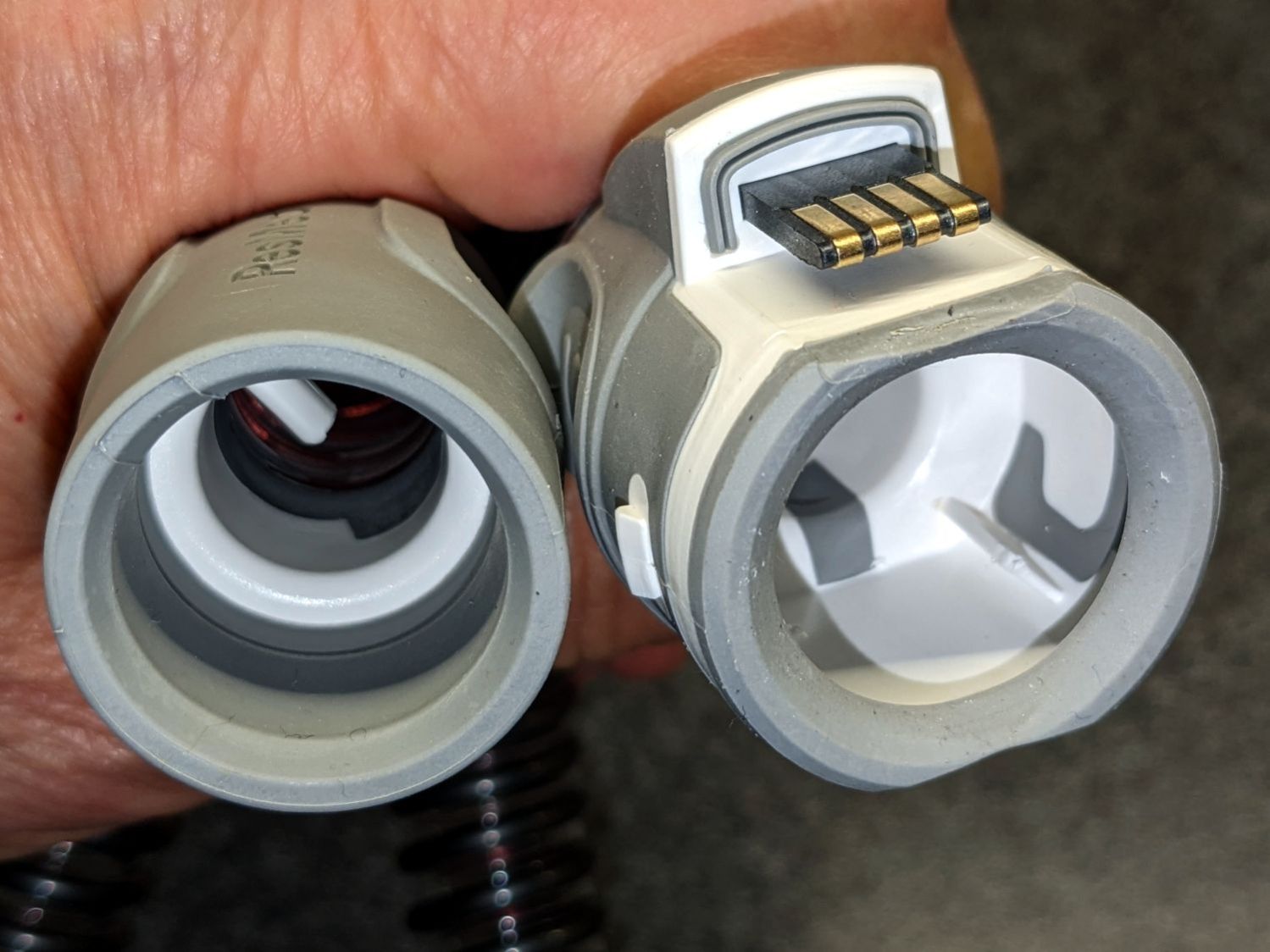
Unsurprisingly, the new hose looks just like the previous ones and the old picture remains relevant:
ResMed ClimateLine heated hose ends
The new hose has the same 12 kΩ resistance between the two outer contacts: the thermistor is fine.
The two inner contacts are an open circuit, not the expected 10 Ω: the heater element or (more likely) a connector joint failed. We don’t know if it was DOA or failed during the first use, but it does not respond to the usual wiggling and poking.
Her experience with Lincare’s Customer Disservice has been so terrible she refuses to start a warranty claim. She’ll continue using the old hose until it’s time for the next replacement and we’ll hope for the best.
As I understand the arrangement, she must get all the consumables (masks, hoses, filters, tanks) from Lincare for five years from the date of the original prescription. After that, she can order supplies from elsewhere, although that seller must have a new prescription.
Basically, Lincare gets five years of guaranteed business and, like the phone company of old, they don’t care about you because they don’t have to.

 The Smell of Molten Projects in the Morning