-
CO₂ Laser Tube Current: Less Meaningless RMS Pulse Measurements
Having established that the RMS value of the huge current spikes at low PWM settings doesn’t amount to anything meaningful, I cranked the AM502 current amp gain to 10 mV/div, re-ran the tests for PWM values from 10% through 99%, and recorded the RMS value of a single line through a square of the same pattern:
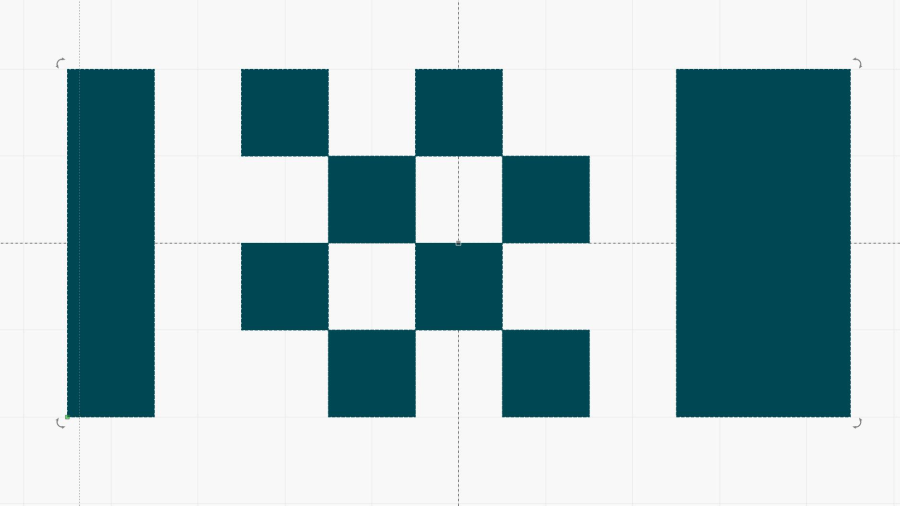
Pulse Timing Pattern – 1 mm blocks Each square is 1 mm on a side and the pattern runs at 250 mm/s, so the laser will be enabled for 4 ms. For example, the test setup shows the result of a pass at 50% PWM:
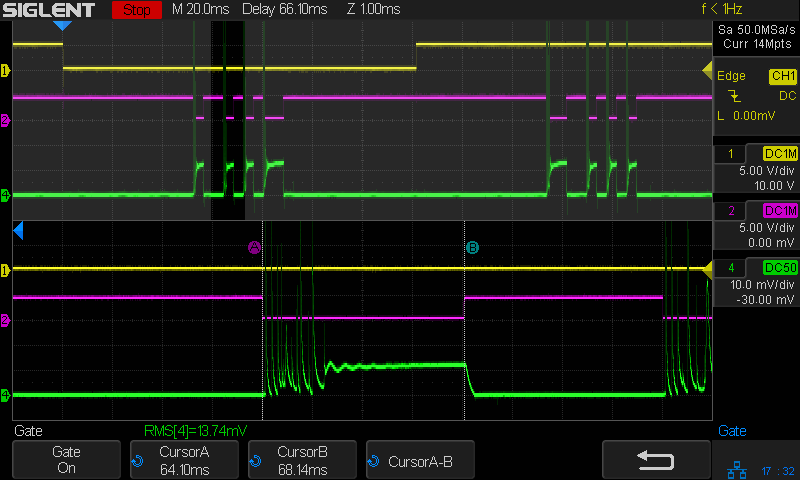
Tube Current – 50pct – RMS pulse – 250mm-s – 10ma-div The two cursors mark the duration of one block, with the laser current in the bottom trace starting off with the usual off-screen spikes, then settling down to a constant-ish 13-ish mA for the rest of the block. The 13.74 mARMS value (the AM502’s 10 mA/div matches the scope’s 10 mV/div, so you can read mV as mA) includes some part of those spikes (the higher gain clips the tips), but most of it comes from the stable-ish portion.
The whole measurement set as a slide show for your amusement:
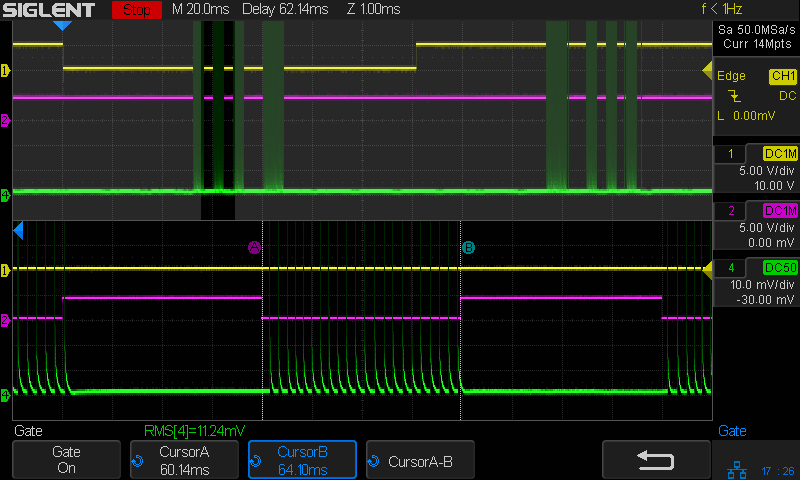
Tube Current – 10pct – RMS pulse – 250mm-s – 10ma-div 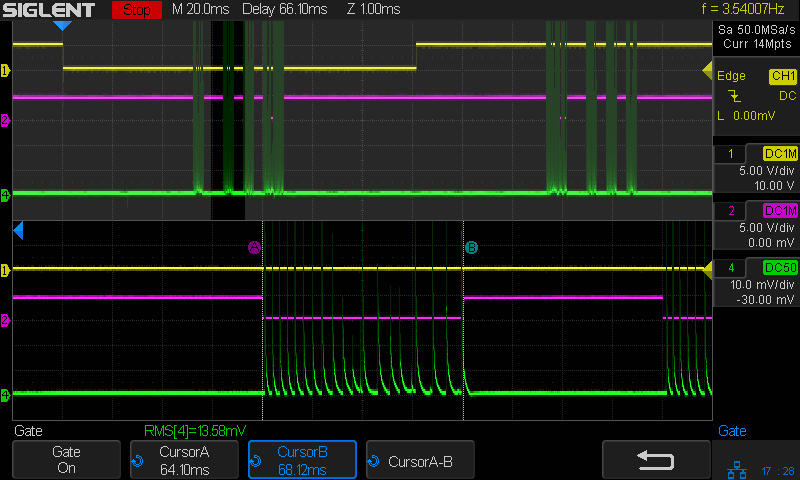
Tube Current – 20pct – RMS pulse – 250mm-s – 10ma-div 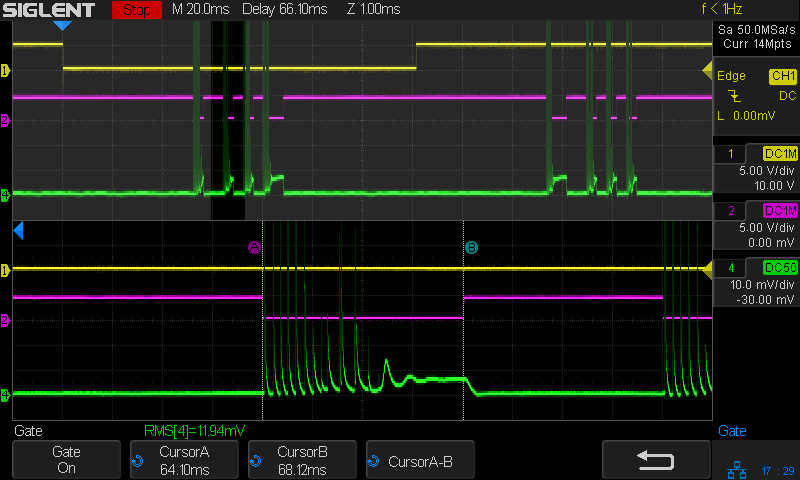
Tube Current – 30pct – RMS pulse – 250mm-s – 10ma-div 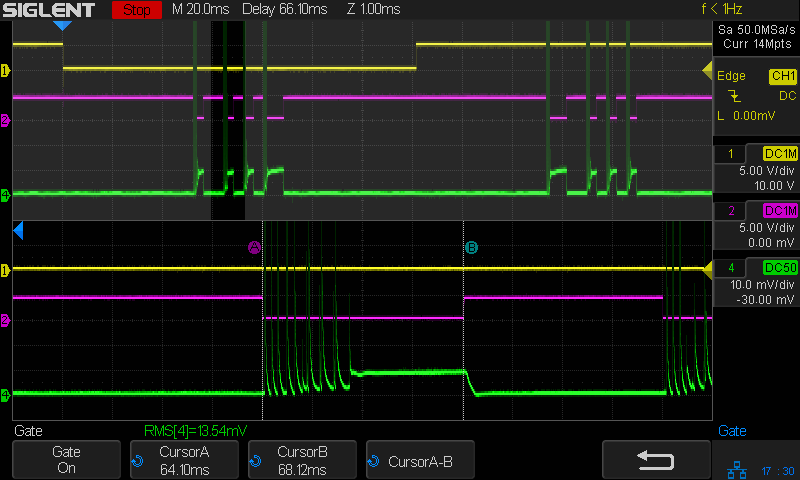
Tube Current – 40pct – RMS pulse – 250mm-s – 10ma-div Tube Current – 50pct – RMS pulse – 250mm-s – 10ma-div 
Tube Current – 60pct – RMS pulse – 250mm-s – 10ma-div 
Tube Current – 70pct – RMS pulse – 250mm-s – 10ma-div 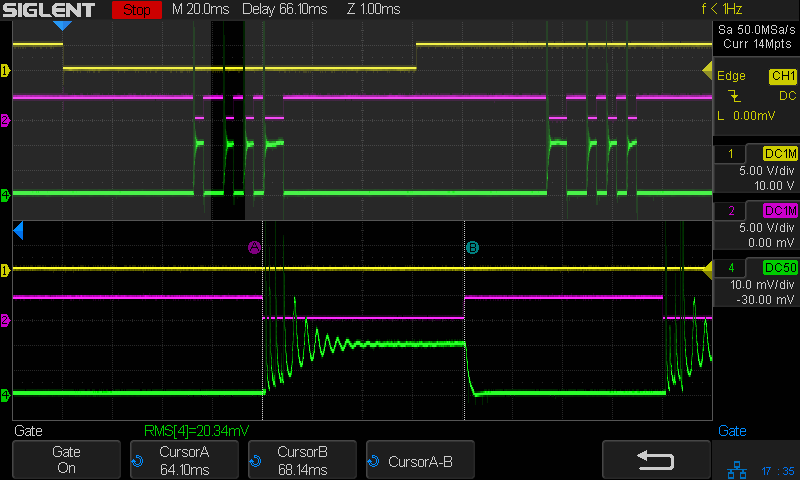
Tube Current – 80pct – RMS pulse – 250mm-s – 10ma-div 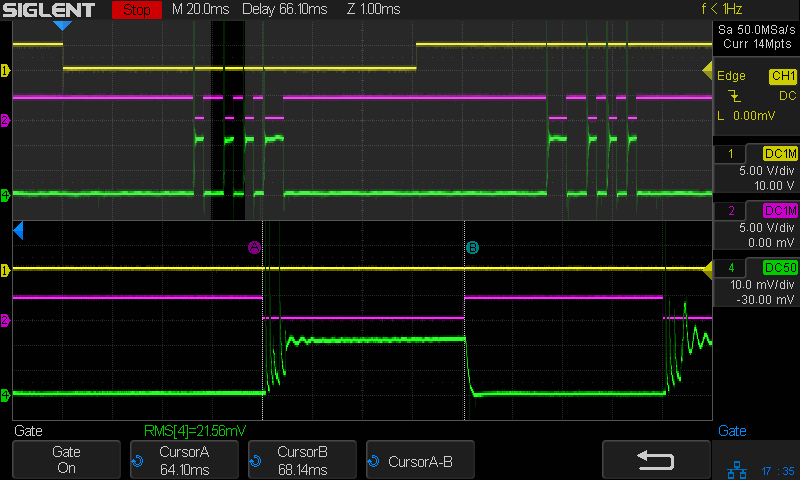
Tube Current – 90pct – RMS pulse – 250mm-s – 10ma-div 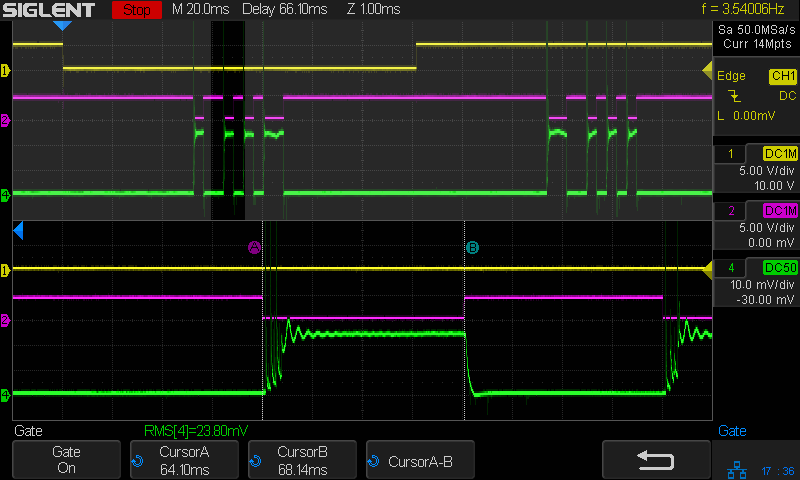
Tube Current – 99pct – RMS pulse – 250mm-s – 10ma-div
When confronted with data points, plot them:

Tube current – RMS vs PWM graph Huh.
I expected the line to pass through the origin, which it most certainly does not. One could make up a story about how the 30% and 40% PWM points are Close Enough to the line to sorta pull the bottom end over to the left a little, but even that doesn’t explain the known-to-be-weird results below 30% PWM.
A better story might be that 30-ish% PWM produces the minimum current required to fire the laser tube. Operating below that current works, in the sense that the laser produces a beam, but it’s out of spec. Running above that current eventually lets the power supply reach an agreement with the tube as to the operating point.
As before, those measurements do not account for the reasonably consistent results of scorching some cardboard:

Pulse Timing Pattern – cardboard – 10 20 30 pct Cardboard is not the best test medium and I now agree RMS isn’t the best measurement.
More study is indicated …
-
Subscribe
Subscribed
Already have a WordPress.com account? Log in now.
 The Smell of Molten Projects in the Morning