-
Colpitts Oscillator at 32.768 kHz
After some fumbling, a Colpitts oscillator sorta-kinda works at 32 kHz:
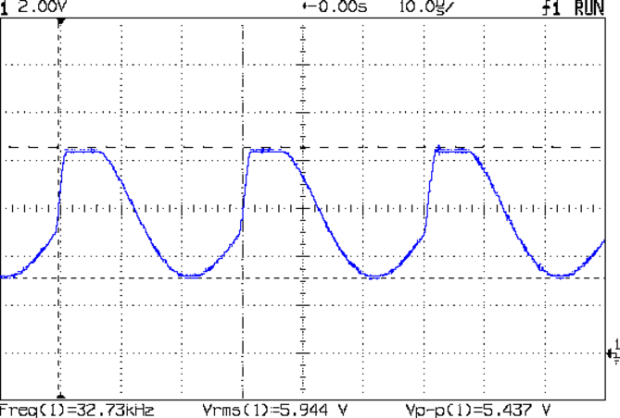
Colpitts 32.768 kHz – 47p 470p waveform Even though the Darlington provides enough DC gain for megohm-scale bias resistors, I think they still loaded the
crystaltuning fork a bit too much: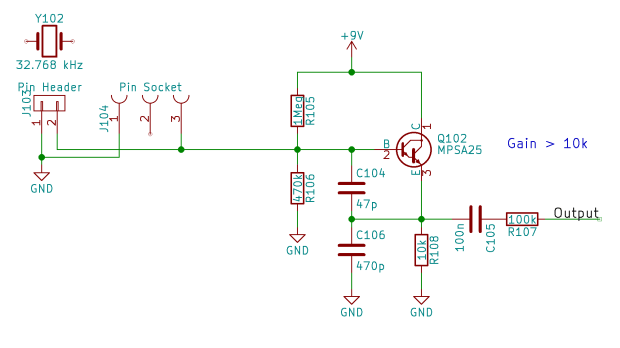
Quartz resonator – Colpitts oscillator – schematic It didn’t start reliably and a JFET would probably produce better results. As it turns out, my transistor assortment currently lacks JFETs, a situation shortly to be resolved by an ePacket from halfway around the planet.
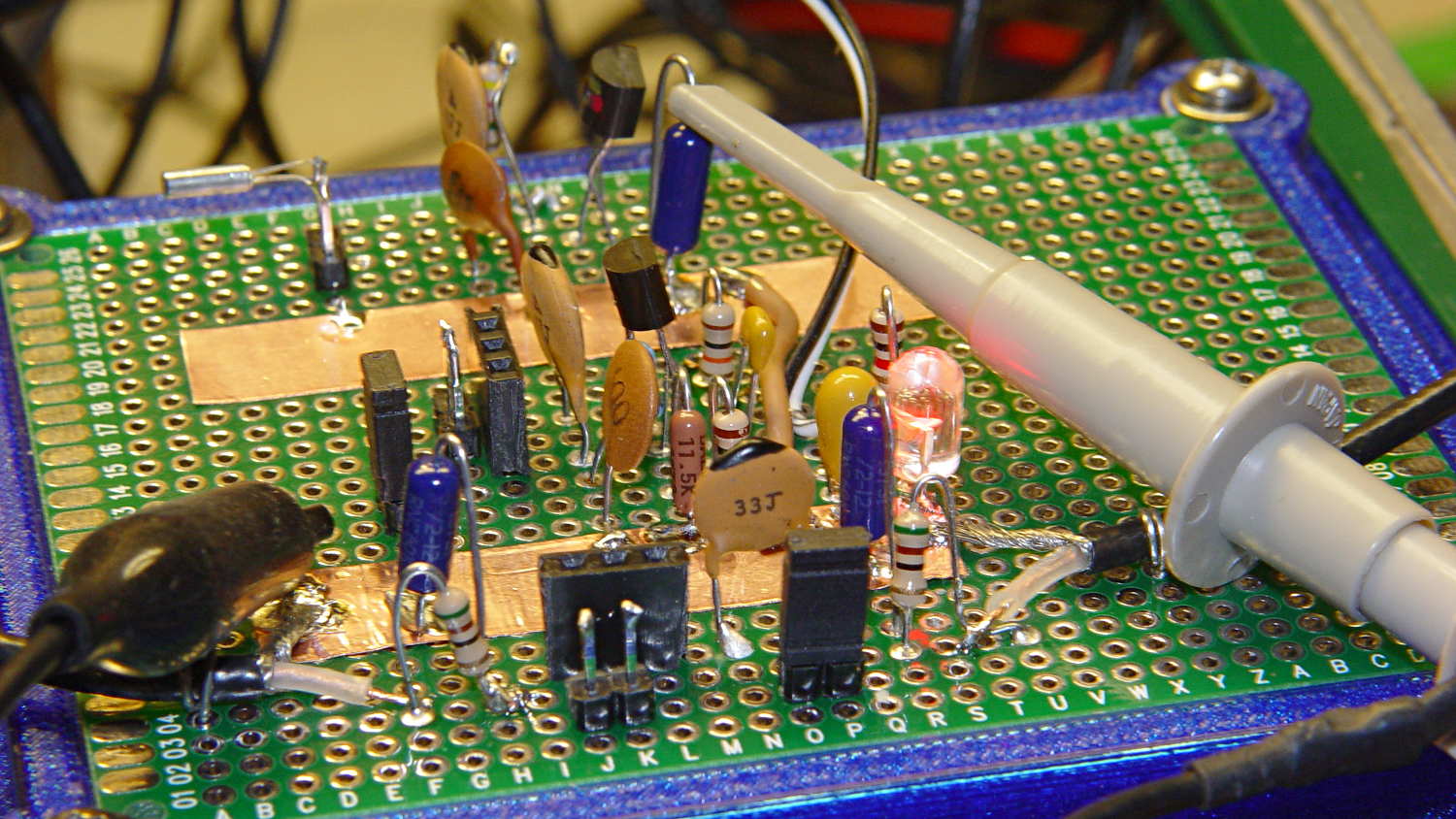
The proto board has two oscillator circuits behind the crystal test fixture, with the 32 kHz resonator hanging from the header pins on the lashup toward the rear:
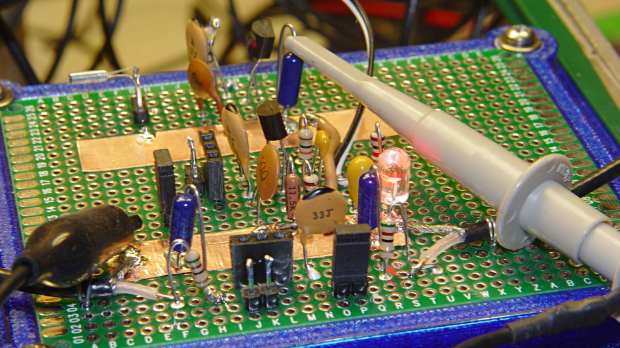
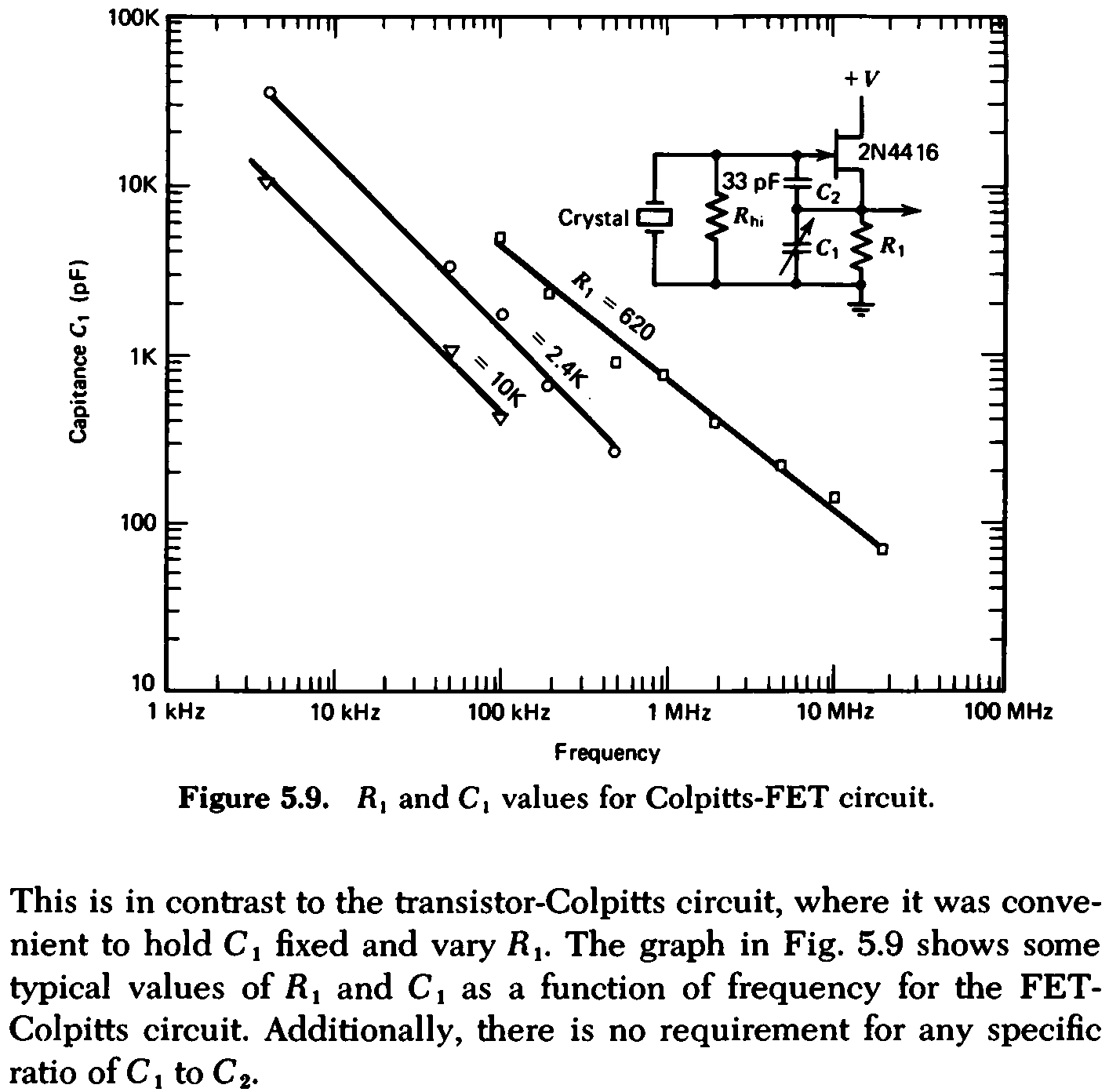
Quartz resonators – Colpitts oscillator test fixtures My copy of Crystal Oscillator Circuits (Mattys, 1983) suggests useful component values:
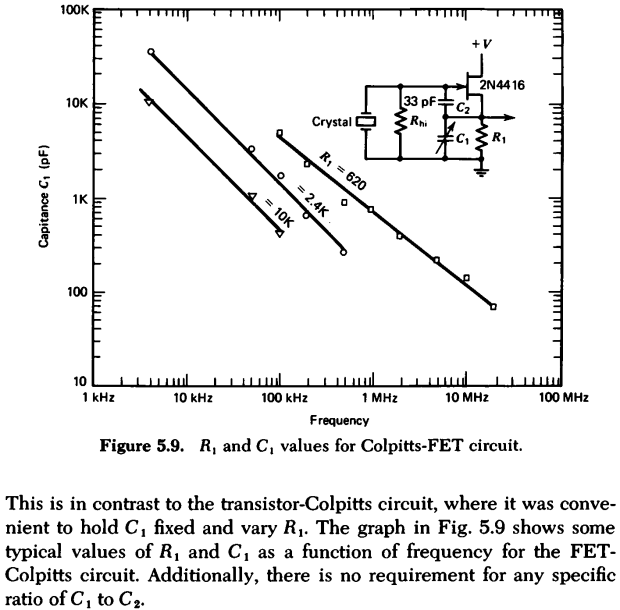
Colpitts JFET RC Values The value of of the recommended shunt resistor Rhi shows why I figured the Darlington and its bias resistors wouldn’t work:
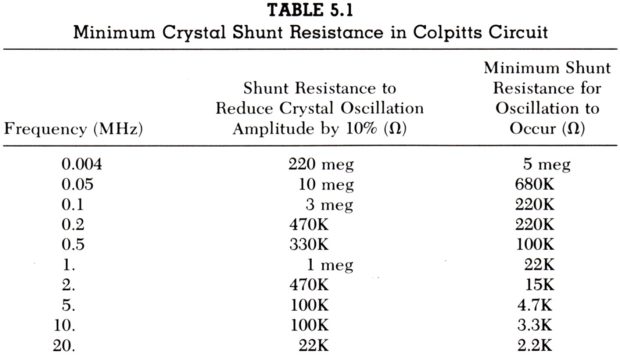
Colpitts Crystal Shunt Resistance Values The other Colpitts circuit worked just fine for a 3.58 MHz crystal and reasonably well for a 60 kHz tuning fork, so some fine tuning should improve the results.



-
Subscribe
Subscribed
Have a WordPress.com account? Log in now.

