-
QRPme Pocket Pal II: RF Waveforms and Meter Test
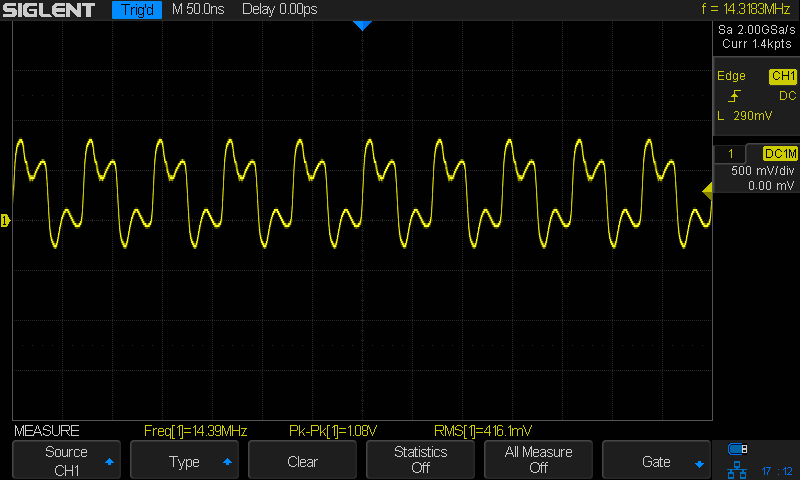
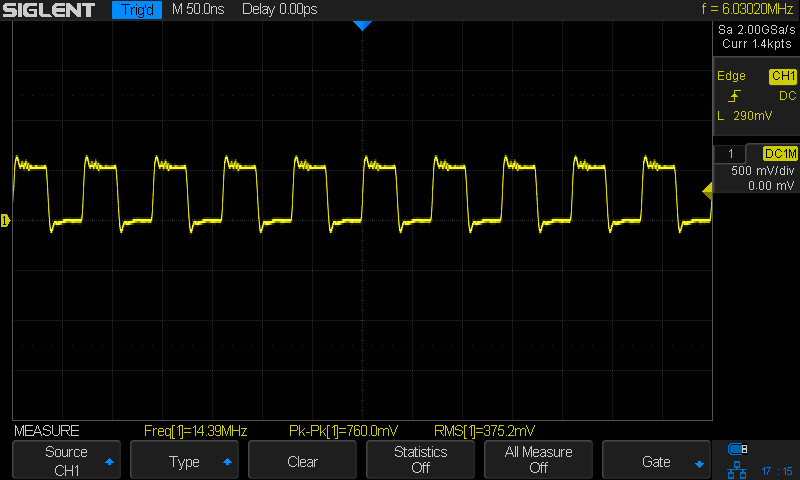
The QRPme Pocket Pal II produces RF test signals in the 20 meter and 40 meter bands, both square-ish waves derived from its 14.31818 MHz oscillator-in-a-can:
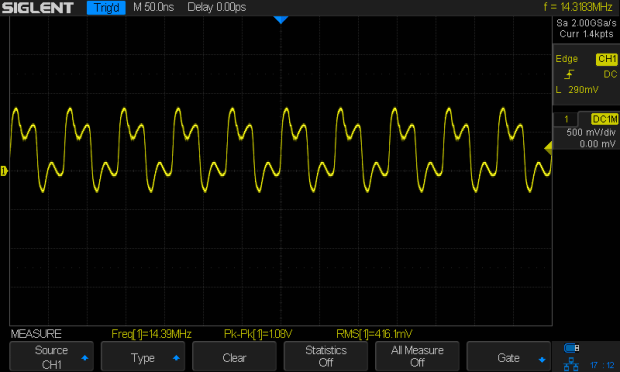
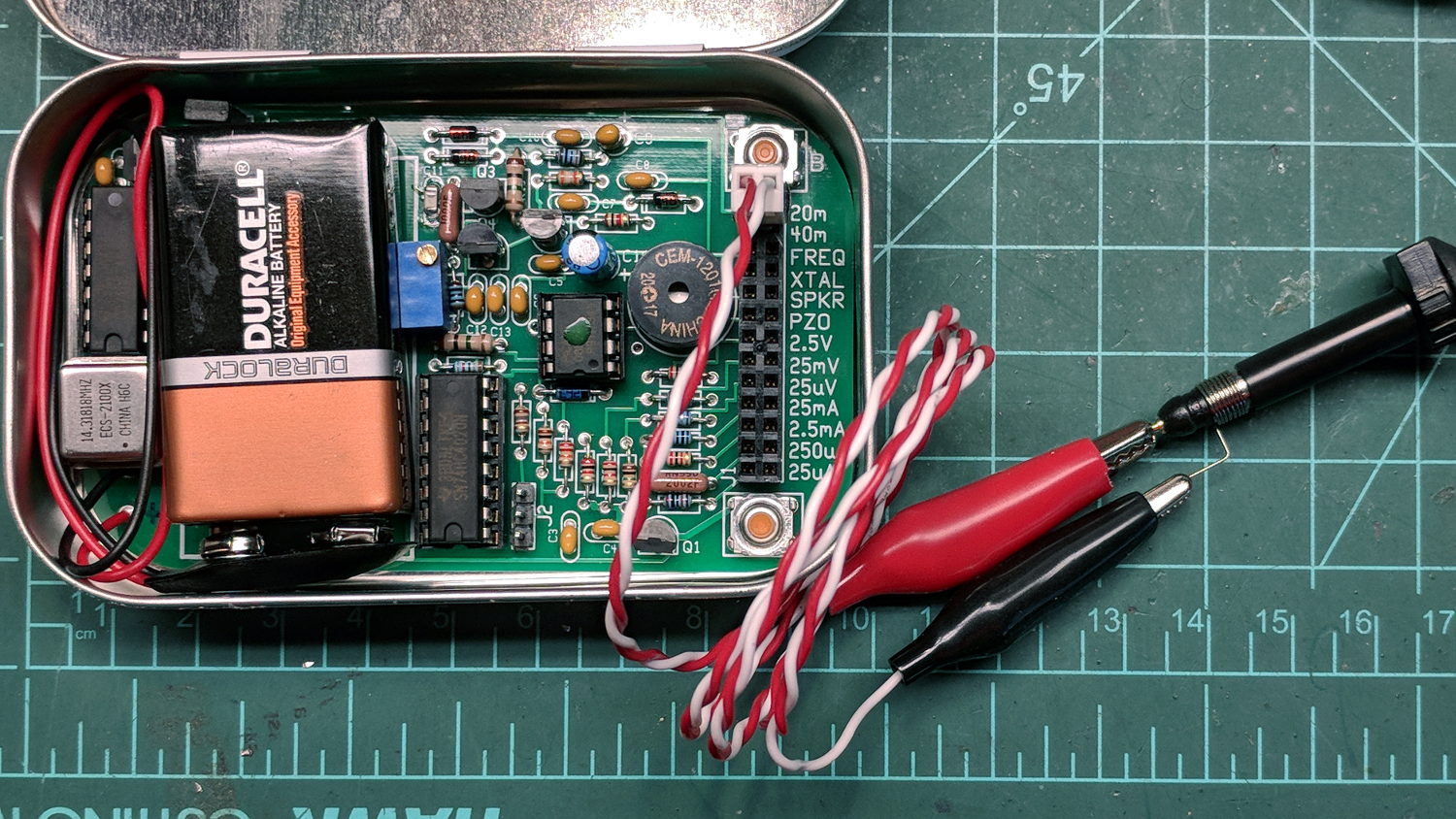
QRPme 20 meter – clip leads That’s the 20 meter signal, seen through the twisted pair test lead with alligator clips clamped on the scope probe, thusly:
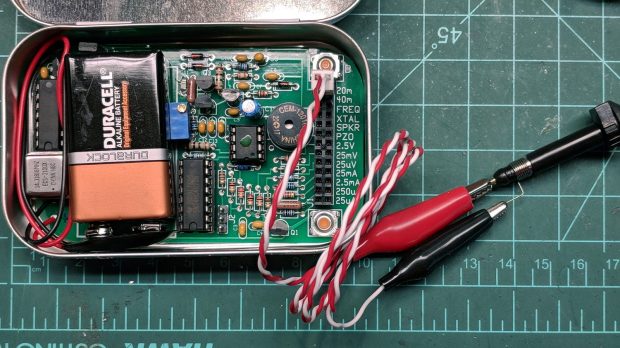
QRPme Pocket Pal II – clip leads to probe tip When you’re working with RF signals, the “ground” part of the probe circuit matters:
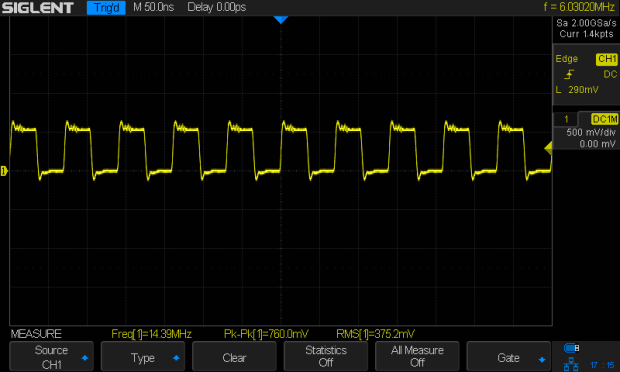
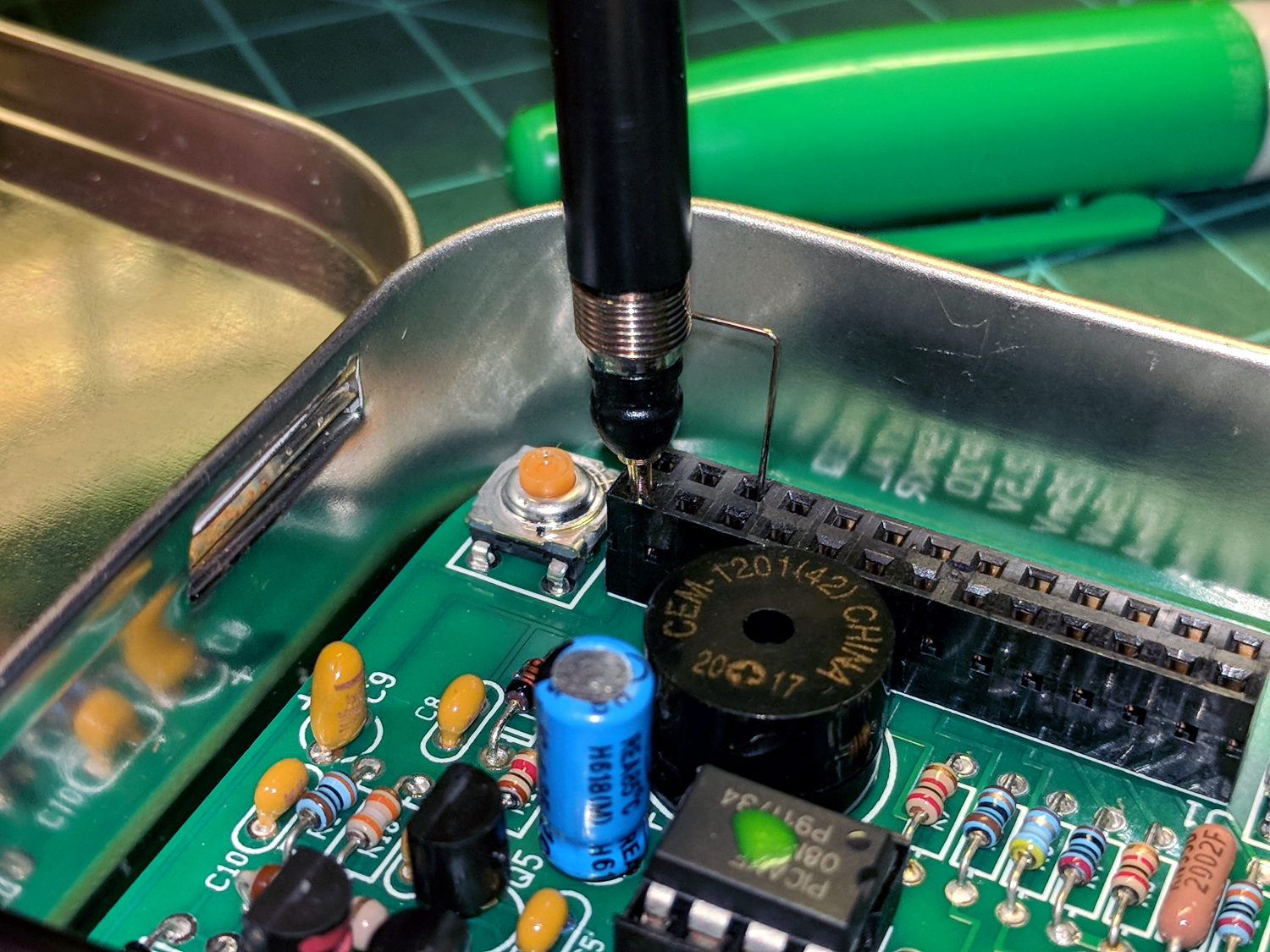
QRPme 20 meter – probe tip gnd That’s with the probe and its short spring ground jammed directly into the header:
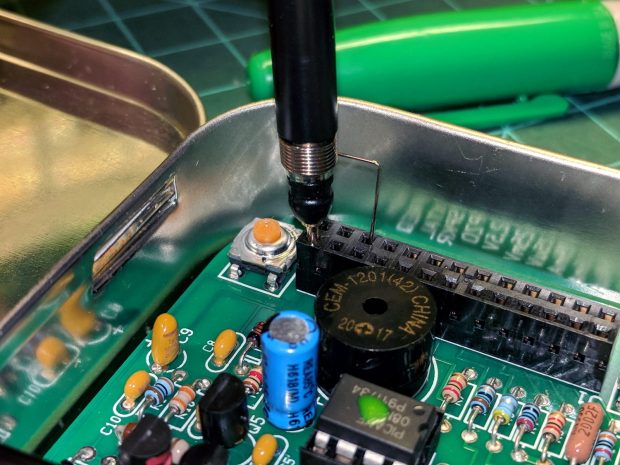
QRPme Pocket Pal II – probe tip gnd Well, in this case, signal quality doesn’t matter very much, as you’re using the Pocket Pal II at a hamfest (or your bench) to determine if an HF radio is completely dead.
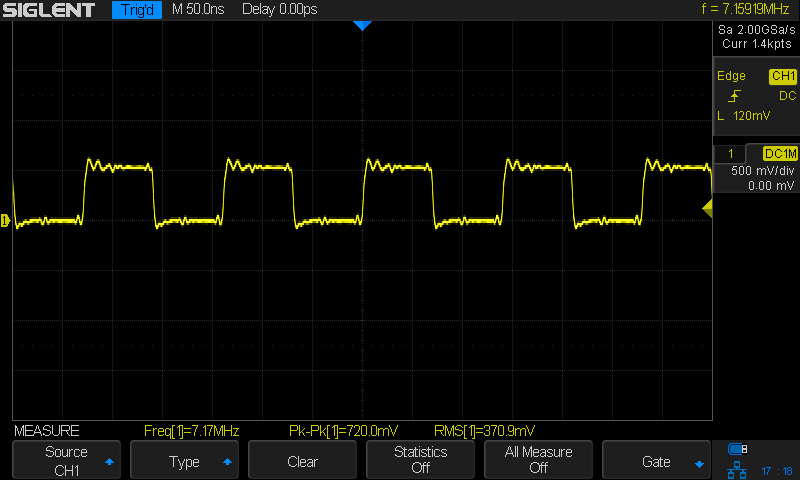
Here’s the 40 meter output, with the J3 jumper in place and the probe jammed into the header:
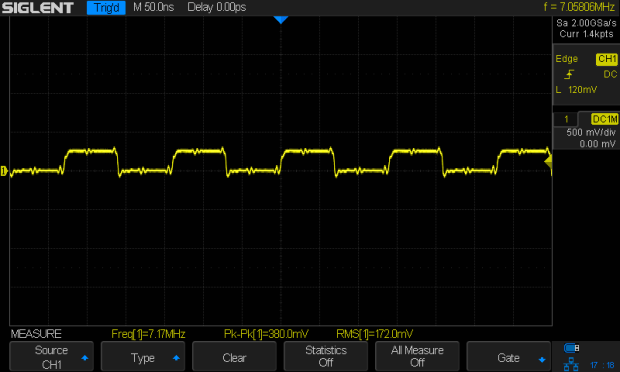
QRPme 40 meter – J3 on – probe tip gnd Pulling the J3 jumper off doubles the test signal amplitude:
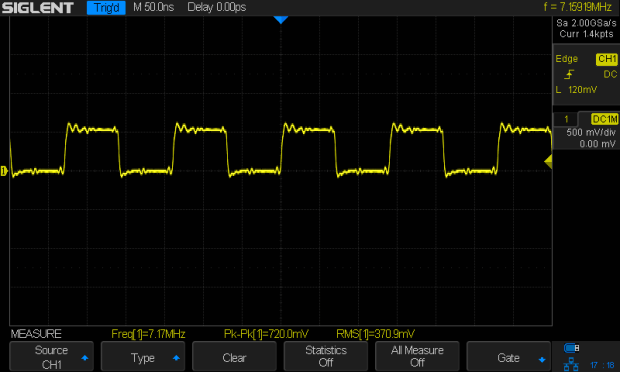
QRPme 40 meter – J3 off – probe tip gnd Nothing wrong with those signals! In a pinch, those edges probably produce harmonics up in the UHF bands.
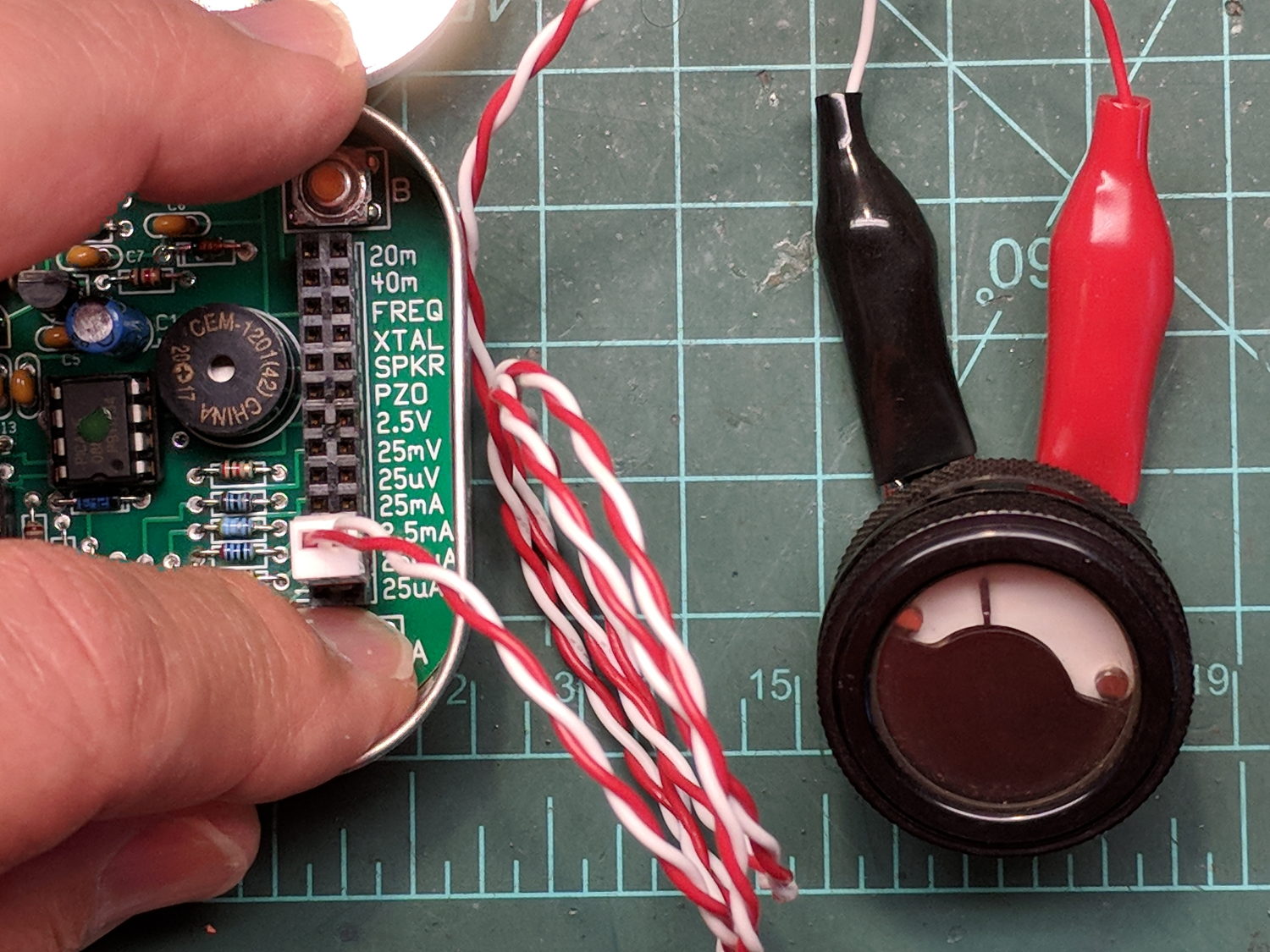
For completeness, here’s the 250 μA DC output driving a contestant chosen from the Box o’ Meters:
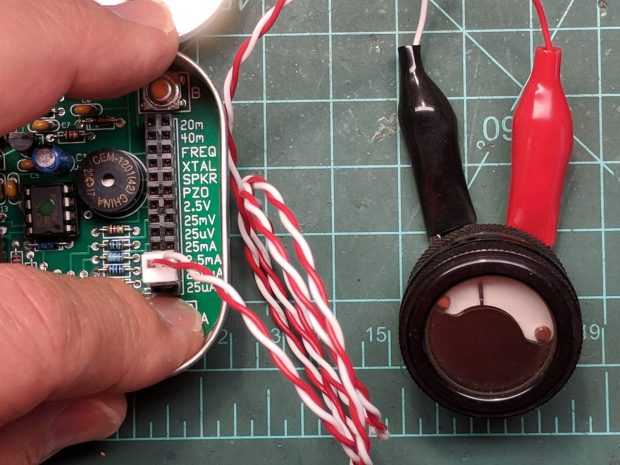
QRPme Pocket Pal II – 250 uA meter test Eyeballometrically, the meter wants to see 1 mA for full-scale deflection, which is the whole point of the tester.
Recommended, with some early notes.

-
Subscribe
Subscribed
Have a WordPress.com account? Log in now.

