-
Makergear M2: New Nozzle
A second clog in the M2’s hot end prompted me to dismantle the hot end:
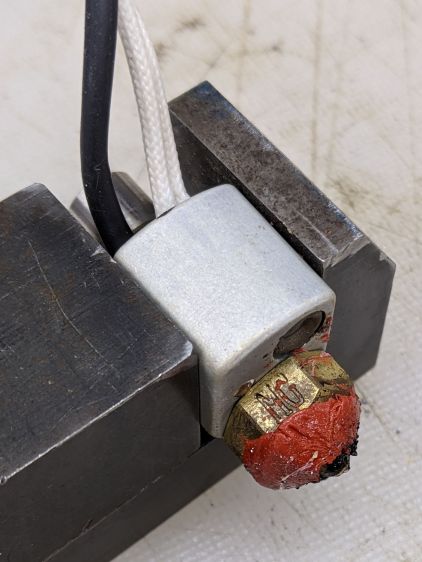
Makergear M2 V4 hot end – eroded silicone coat That’s what half a year of use does to a nice, shiny coat of high-temperature silicone rubber.
This being the first time I’ve dismantled the hot end, here’s what lies inside:
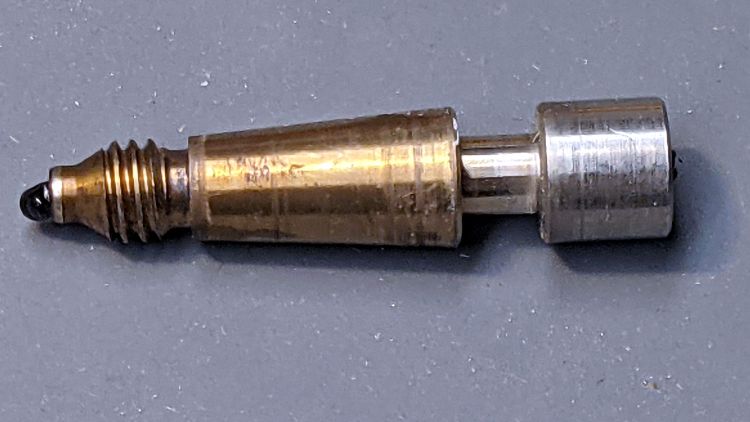
Makergear M2 V4 hot end – tapered inner guide The tighter you make the nozzle, the closer the fit inside the hot end, and the more heat gets transferred to the plastic. The bright ring just to the right of the plastic drool shows where it fits into the brass nozzle.
Peeling the remaining silicone off the nozzle, scraping off the black PETG around the tip, and scraping the gunk out left the inside a bit scuffed:
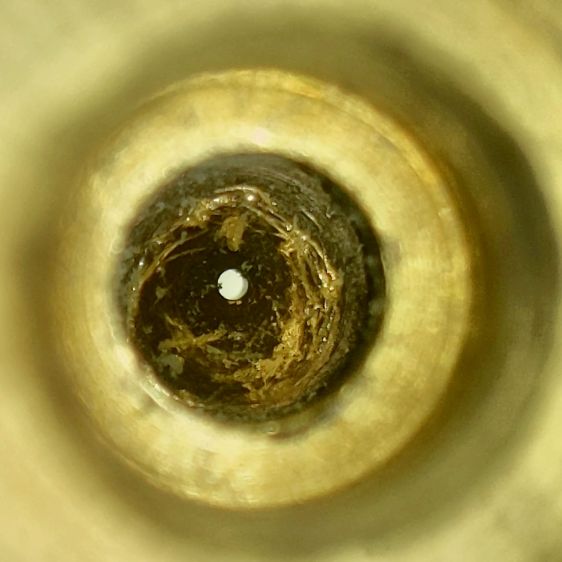
Makergear 0.35 mm nozzle – interior The orifice still looks good and is still as close to 0.35 mm as I can measure eyeballometrically:
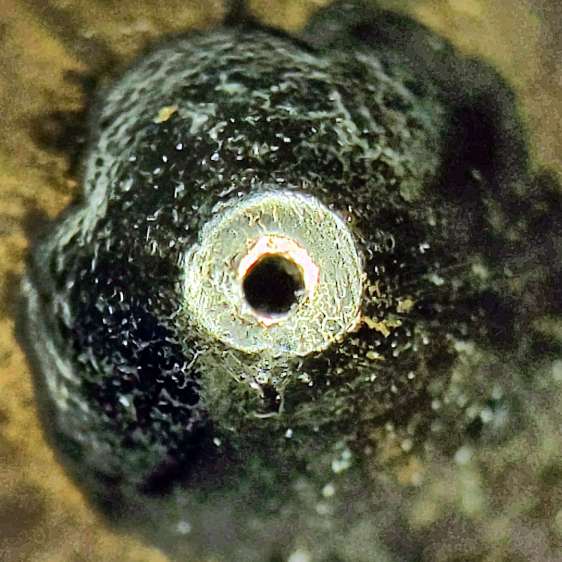
Makergear 0.35 mm nozzle – exterior Despite what it looks like, that’s actually a very thin PETG layer.
Having a spare nozzle on the shelf, I decided to install it and leave the old nozzle as a backup. I’ve probably wrecked the snug seal required to keep the plastic out of the hot end.
A fresh coat of silicone, reset the position with the platform at Z=0, and it’s back in action:

Makergear M2 V4 hot end – Z zero set The PETG remnants show I didn’t get the nozzle quite tight enough on the first attempt, but it’s all good now. The rubbery fiberglass insulator will conceal the mess.
Protip: Always remove the hot end from the printer and clamp it securely before unscrewing the nozzle, because the very thin heat break (over on the right in the second picture) will snap under less torque than you need to break the nozzle free.
You should unscrew the nozzle with the hot end warm enough to soften whatever plastic you’re using, lest it have glued everything inside into a solid lump.
-
Subscribe
Subscribed
Have a WordPress.com account? Log in now.

