-
Auvon TENS/EMS: Modulation Waveforms
These scope screen shots use the same test setup as the pulse measurements:
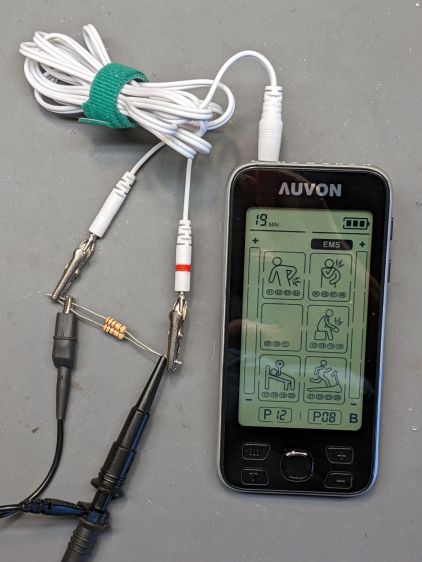
Auvon AS8016 – test setup The sweep speeds run much slower to capture the complete envelope, which can be up to a minute long, with enough left over to show the end of the previous sequence and the start of the next. The Moire patterns come from the scope sampling rate, the display resolution, or changes in the pulse repetition frequency. Blame Siglent for not making the scope’s digital data accessible through the network; screen shots are the best I can do.
The descriptive headings for each screen shot come from The Auvon AS8016 Fine Manual, a PDF version of which you can get from Auvon’s support staff by asking nicely. I identify the modes as Mxx, rather than their Pxx, for reasons that made sense at the time.
Patterns 1 through 16 correspond to the TENS (Transcutaneous Electrical Nerve Stimulation) label and are intended for pain relief / suppression; they should not make your muscles twitch.
P1 – Continuous comfortable tingling.
Continuous 200 µs pulse at 87 Hz

Auvon M01 Pulse P2 – Comfortable tingling and pulsing sensation.
Continuous 100 µs pulse at 48 Hz
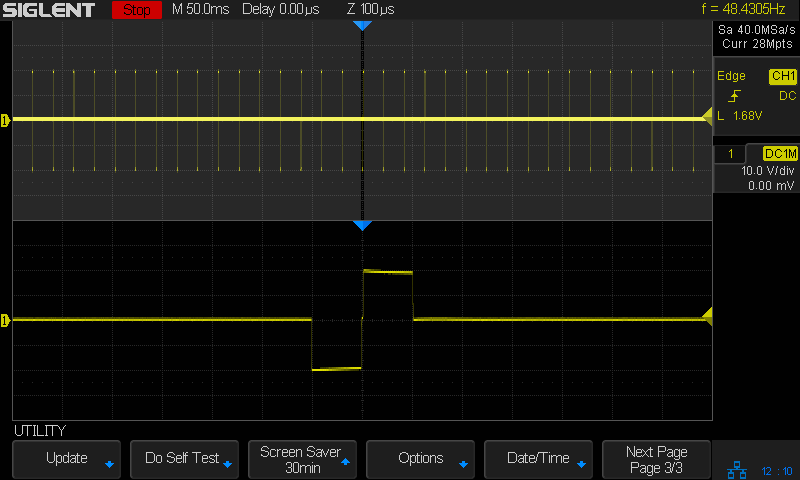
Auvon M02 Mod P3 – Comfortable rhythmic tingling.
Blocks of 300 ms on/200 ms off, with 150 µs pulse at 48 Hz
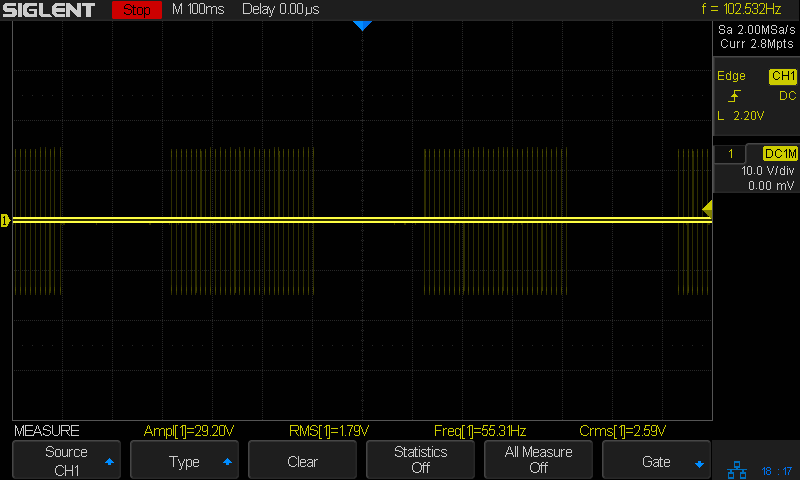
Auvon M03 Mod P4 – Continuous comfortable tingling.
Continuous 100 µs pulse at 48 Hz
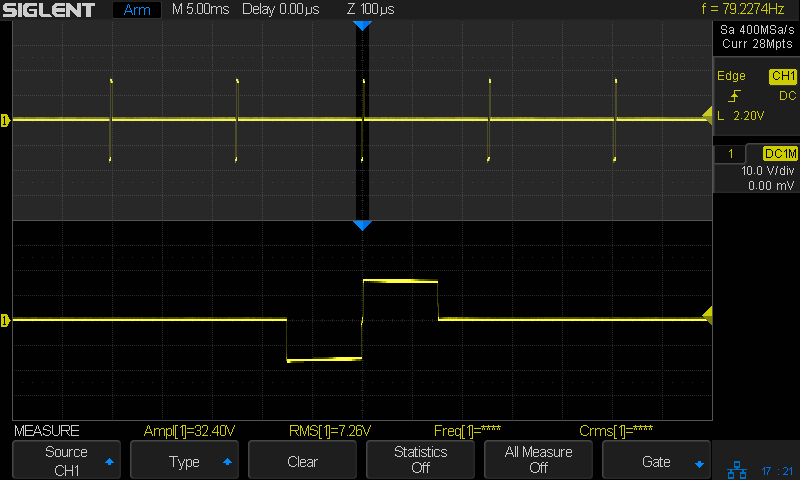
Auvon M04 Pulse P5 – Comfortable and slow tingling firstly, then the frequency is significantly increased, and it becomes a noticeable tingling sensation.
Continuous 250 µs pulses, stepping from 10 to 102 Hz and back down
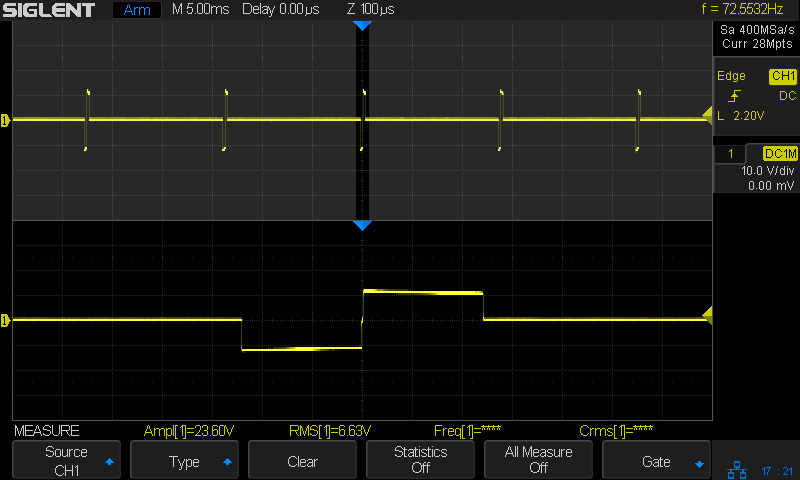
Auvon M05 Pulse P6 – Low frequency beating with a slight tingling sensation.
Continuous 250 µs pulses at 2 Hz
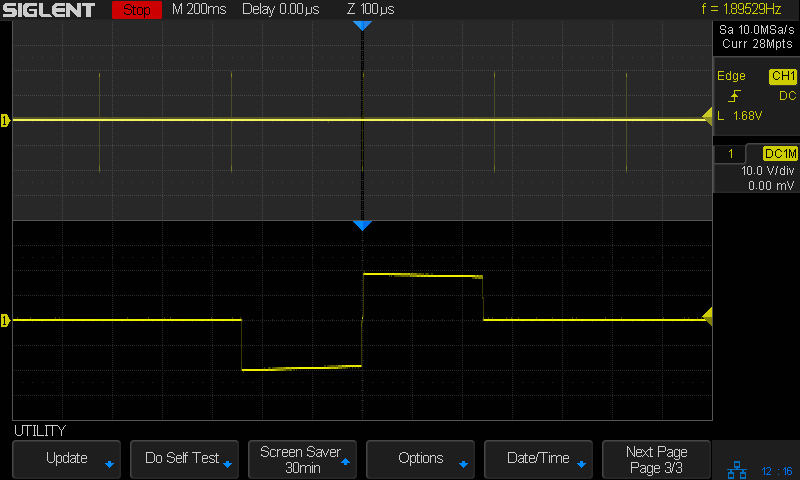
Auvon M06 Mod P7 – Low frequency slight beating firstly and then continuous comfortable tingling.
Bursts of 150 µs pulses for 3 s separated by isolated 200 µs pulses
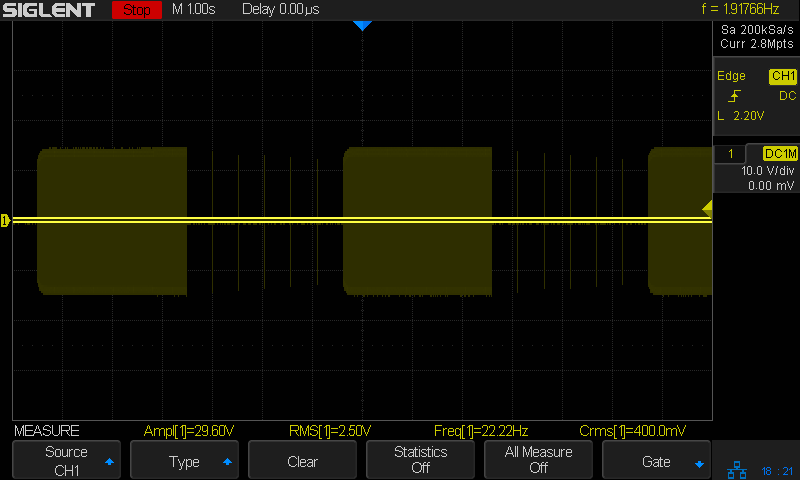
Auvon M07 Mod P8 – Low frequency slight beating firstly and then comfortable pulsing sensation.
Bursts of 150 µs pulses for 3 s separated by isolated 200 µs pulses. Seems identical to P7, although the bursts may be slightly different.
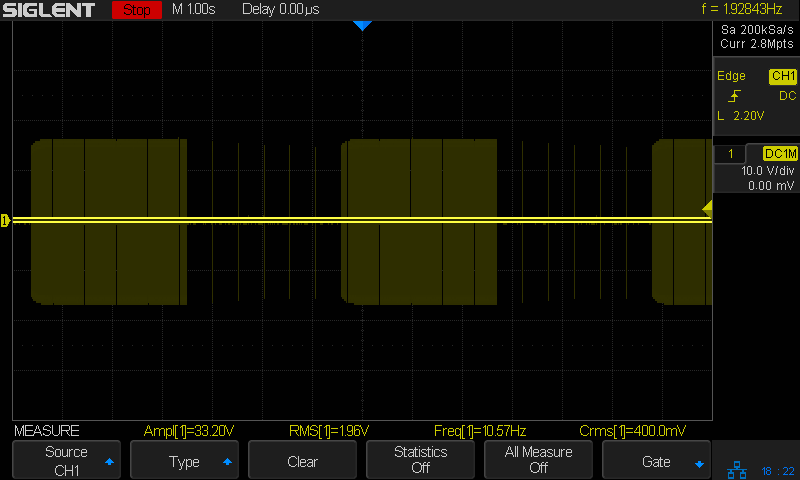
Auvon M08 Mod P9 – Comfortable tingling from shallow to deep with 3-4 seconds pause.
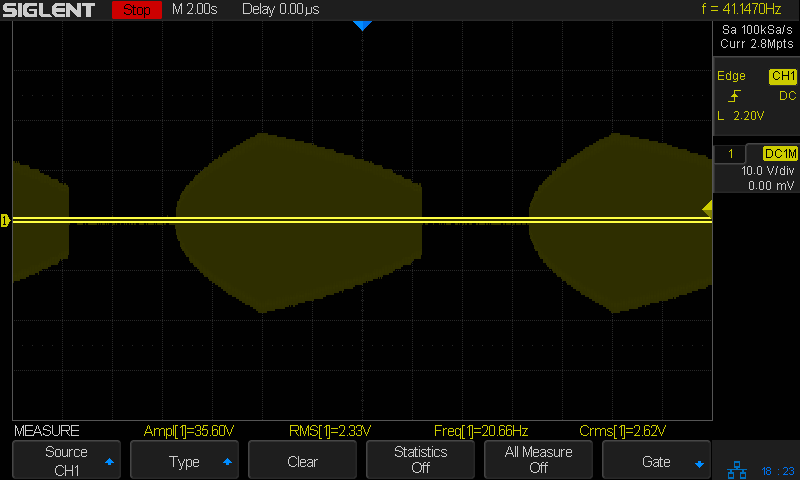
Auvon M09 Mod P10 – Comfortable pulsing sensation from shallow to deep with 3-4 seconds pause.
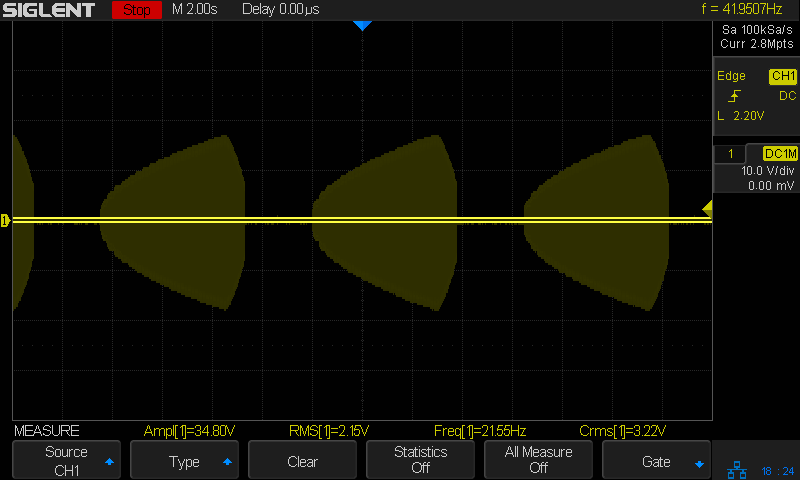
Auvon M10 Mod P11 – Variable comfortable tingling, slight beating and scrapeing [sic] sensation.

Auvon M11 Mod P12 – Comfortable slight tingling from shallow to deep with 3-4 seconds pause.
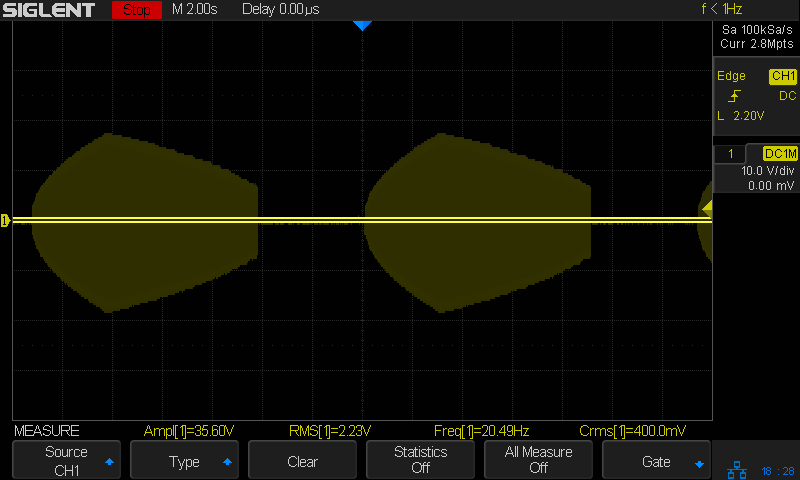
Auvon M12 Mod P13 – Comfortable tingling and pulsing sensation from shallow to more deep with 3-4 seconds pause.
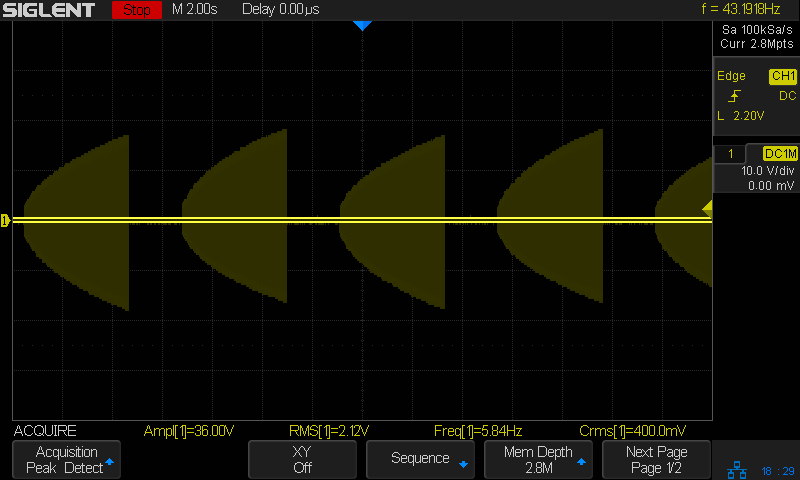
Auvon M13 Mod P14 – Rhythmic continuous beating.
Much higher voltage pulses!
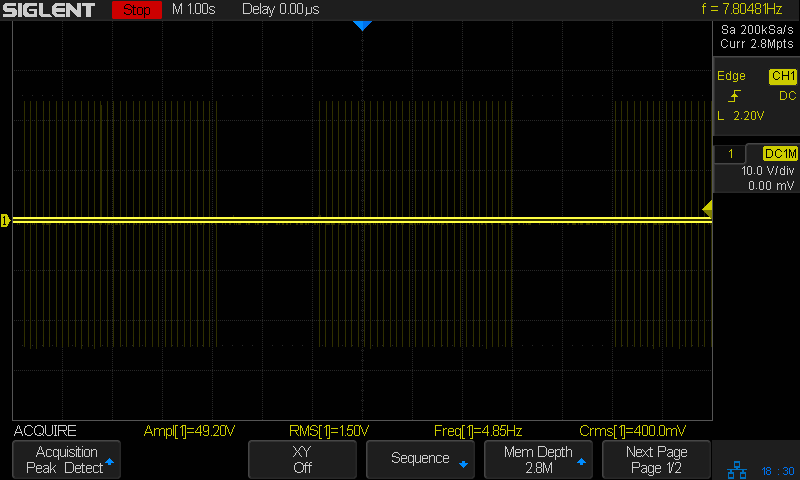
Auvon M14 Mod P15 – Rhythmic scrapeing [sic] sensation.
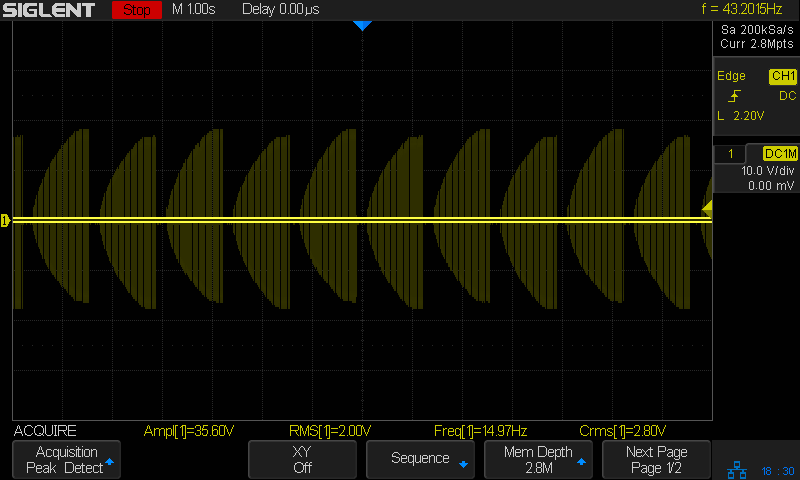
Auvon M15 Mod P16 – Quick slight beating first, then comfortable tingling.
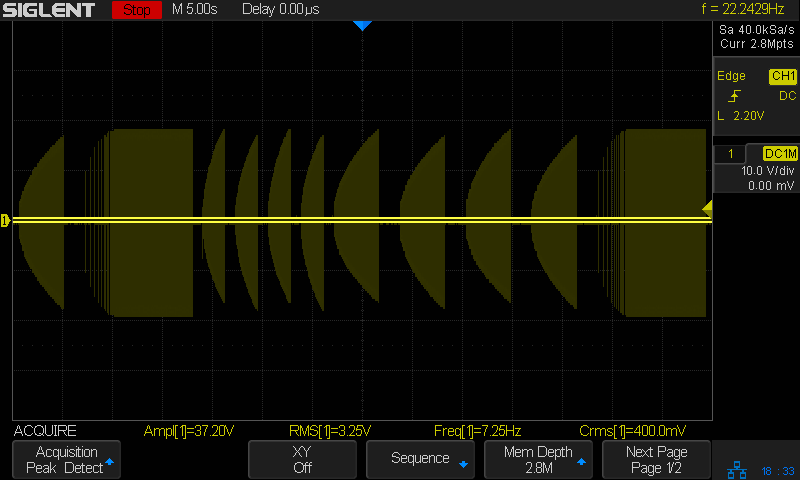
Auvon M16 Mod Patterns 17 through 24 sport the EMS (Electrical Muscle Stimulation) label and should make your muscles twitch in various ways.
P17 – Low frequency slight beating.
Continuous 250 µs pulse with idle time at 4.8 Hz.

Auvon M17 Pulse P18 – Low frequency beating.
Continuous 250 µs pulse at 6.8 Hz.
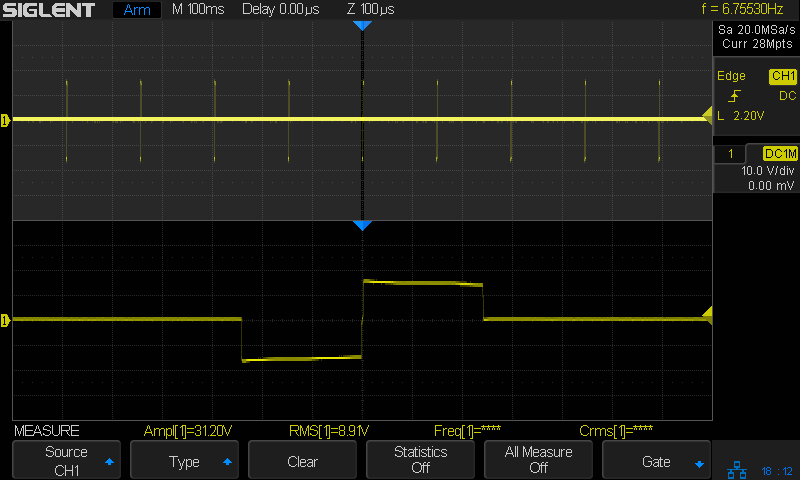
Auvon M18 Pulse P19 – Beating from low frequency to a little high frequency.
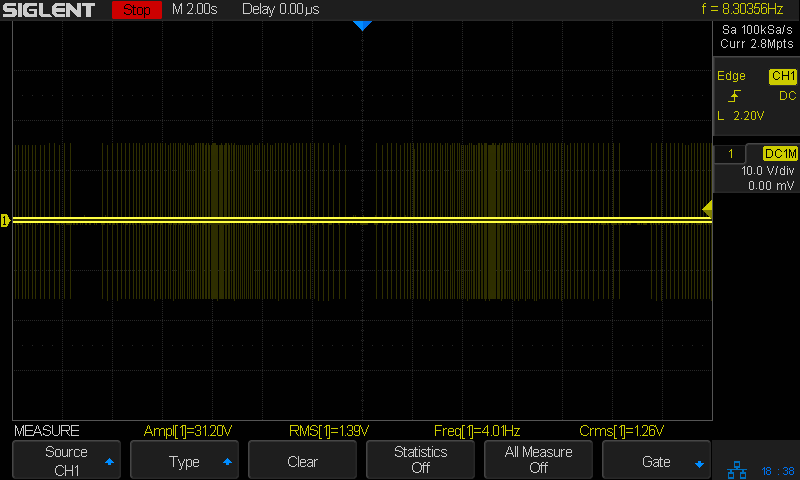
Auvon M19 Mod P20 – Muscle twitches at a very low frequency. It feels like a tapping massage.
Continuous 250 µs pulse at 13.5 Hz.
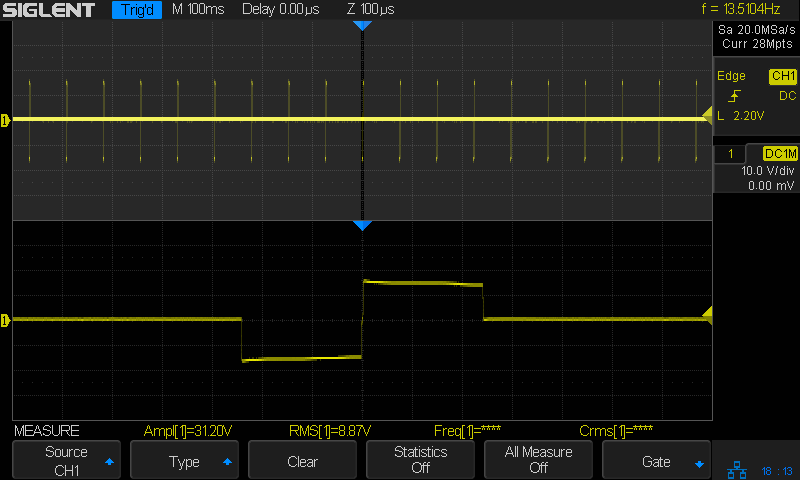
Auvon M20 Pulse P21 – This program activates the muscle in a short tingling cycle. It is smoother than P1/P2.

Auvon M21 Mod P22 – This program gently warms up the muscles prior to exercise; it feels like a rhythmic massage. Increase intensity until you get a strong but comfortable muscle movement.
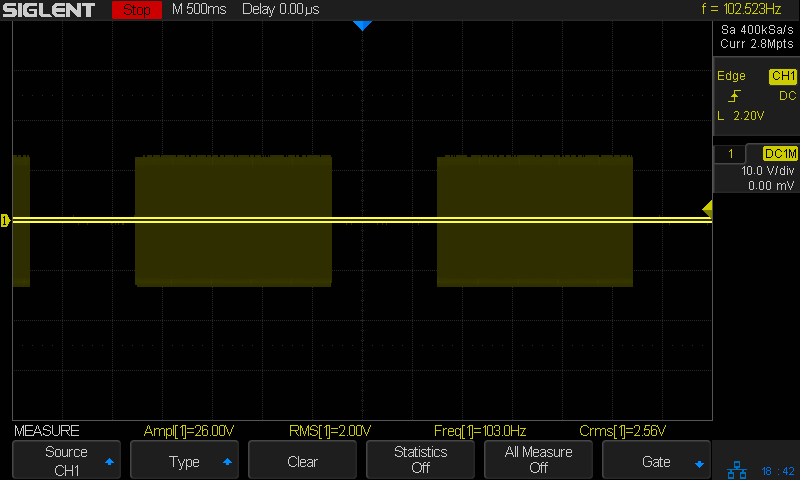
Auvon M22 Mod P23 – This program uses a pulse frequency appropriate to fast twitching muscle fibers. It improves their anaerobic capacity and is used for improving maximum muscle strength.
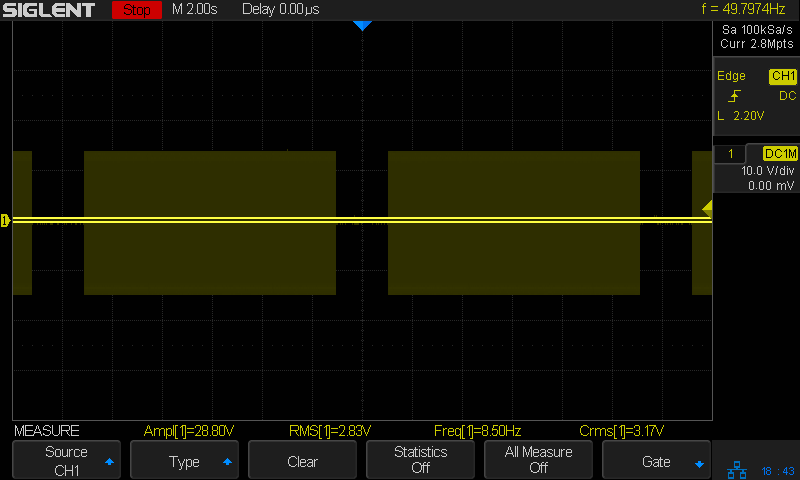
Auvon M23 Mod P24 – This program gently warms up the muscles prior to exercise; it feels like a rhythmic beating and comfortable tingling. Increase intensity until you get a strong but comfortable muscle movement.
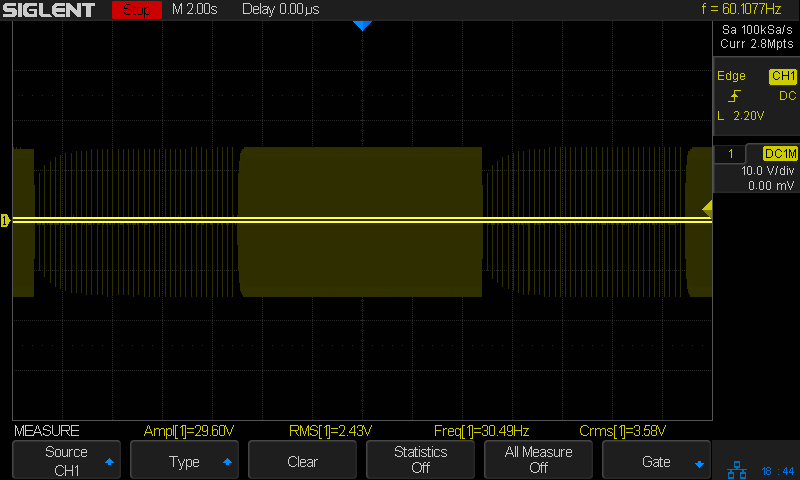
Auvon M24 Mod Despite the icons on the unit’s display, the manual suggests you can apply pretty nearly any pattern to any muscle, but now we all know what’s coming out of those jacks …
-
Subscribe
Subscribed
Already have a WordPress.com account? Log in now.
 The Smell of Molten Projects in the Morning