The Smell of Molten Projects in the Morning

Ed Nisley's Blog: Shop notes, electronics, firmware, machinery, 3D printing, laser cuttery, and curiosities. Contents: 100% human thinking, 0% AI slop.

Author: Ed

  • KG-UV3D GPS+Voice Interface: Battery Case Latch

    The Wouxun KG-UV3D radio has two lugs inside the battery compartment:

    Wouxun KG-UV3D - battery lugs
    Wouxun KG-UV3D – battery lugs

    The battery packs and DC adapters all have clever spring-steel latches that engage those lugs, with a pair of sliding buttons that depress the ends of the spring to release the pack:

    Wouxun KG-UV3D - battery pack latch
    Wouxun KG-UV3D – battery pack latch

    That mechanism may be cheap, straightforward, and easy to build in mass production, but I can’t figure out how to duplicate it for a case to house the GPS+Voice interface circuitry. That box had the dual disadvantages of being plug-ugly and not locking to the radio, but it did help establish some key dimensions, which is not to be sniffed at.

    A bit of heads-down effort produced this not-so-hideous printable case:
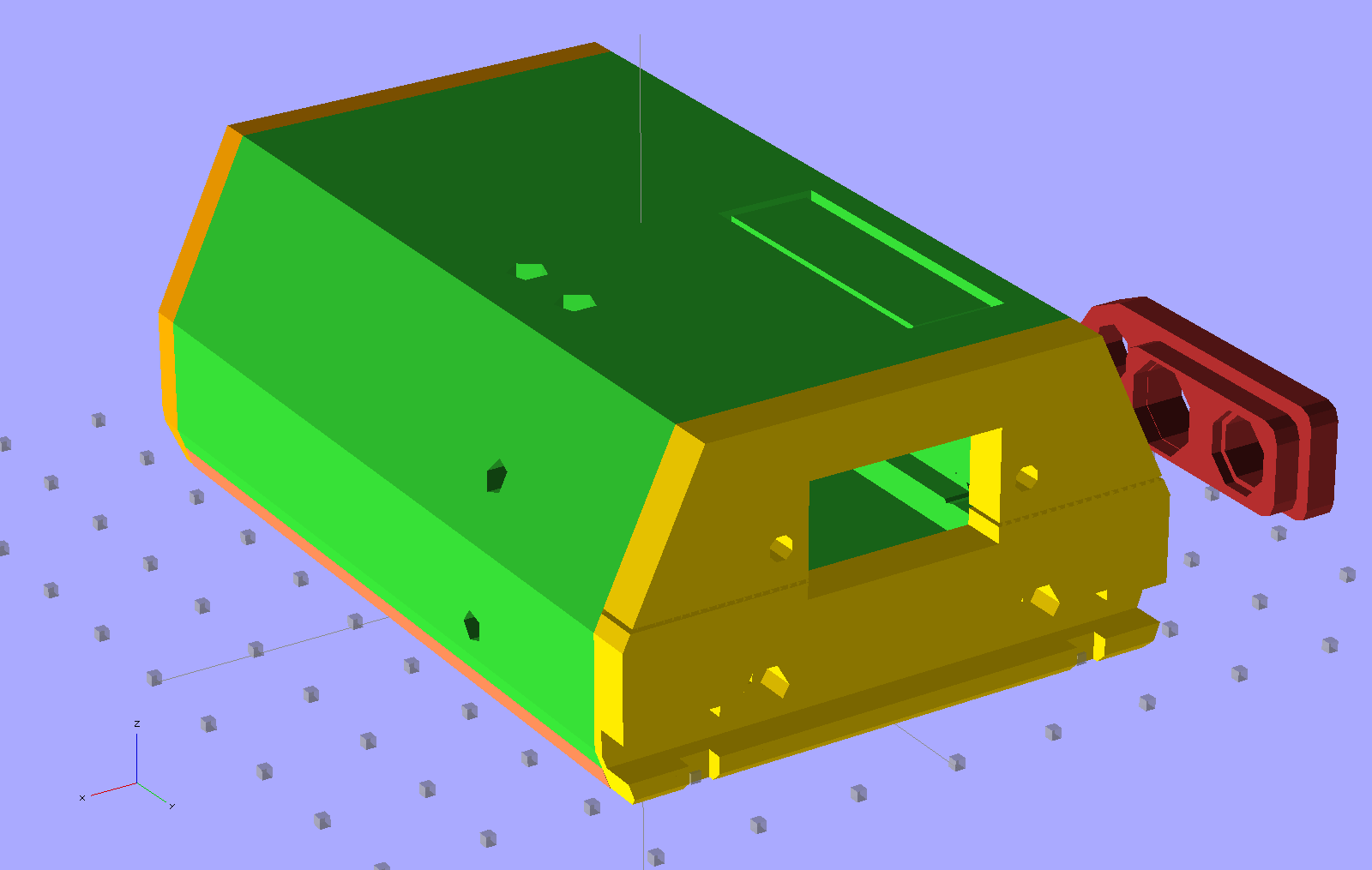
    HT-GPS Adapter Case - Overview
    HT-GPS Adapter Case – Overview

    The rectangle on the top is a built-in support structure for what will be a window over the four LEDs on the Byonics TinyTrak3+ board. The two holes on the top allow screwdriver access to the TT3 trimpots, although they might not be necessary. The four holes (two visible) along the sides fit 4-40 setscrews that lock the PCBs into slots along the inside of the main case body. The red doodad off to the far side is that plug alignment block for the radio.

    The yellow latch plate on the end engages the lugs with a bar sliding in a slot, which looks like this when it’s locked:
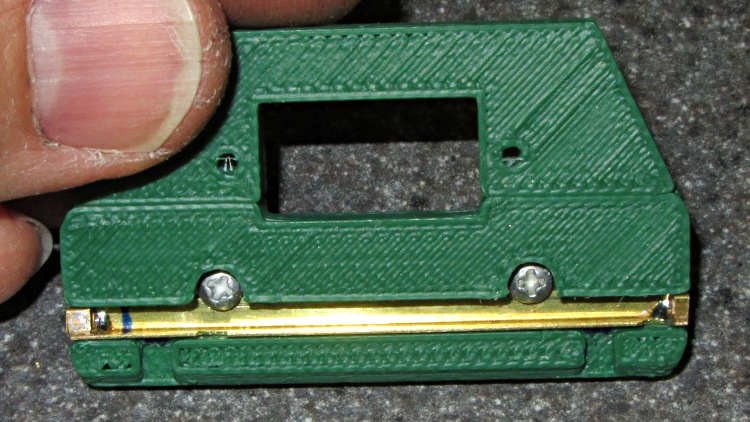
    HT-GPS Case Latch - locked
    HT-GPS Case Latch – locked

    A view from the top side shows the notches that release the lugs:

    HT-GPS Case Latch - detail
    HT-GPS Case Latch – detail

    In the unlocked position the notches and lug slots line up:
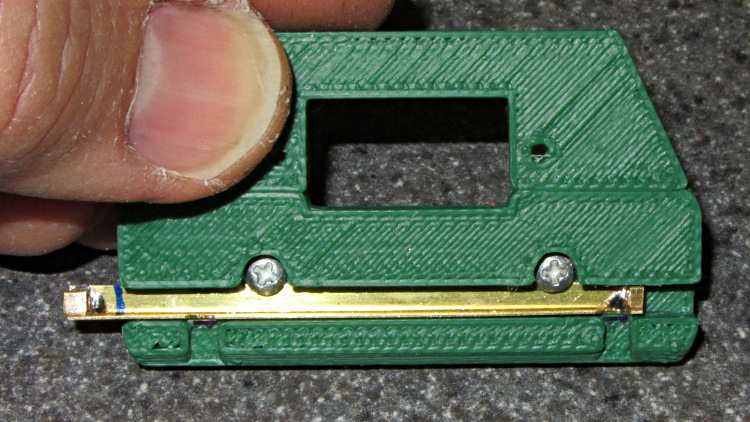
    HT-GPS Case Latch - open
    HT-GPS Case Latch – open

    The solid model shows the plastic structure, which is slightly improved from the pictures:
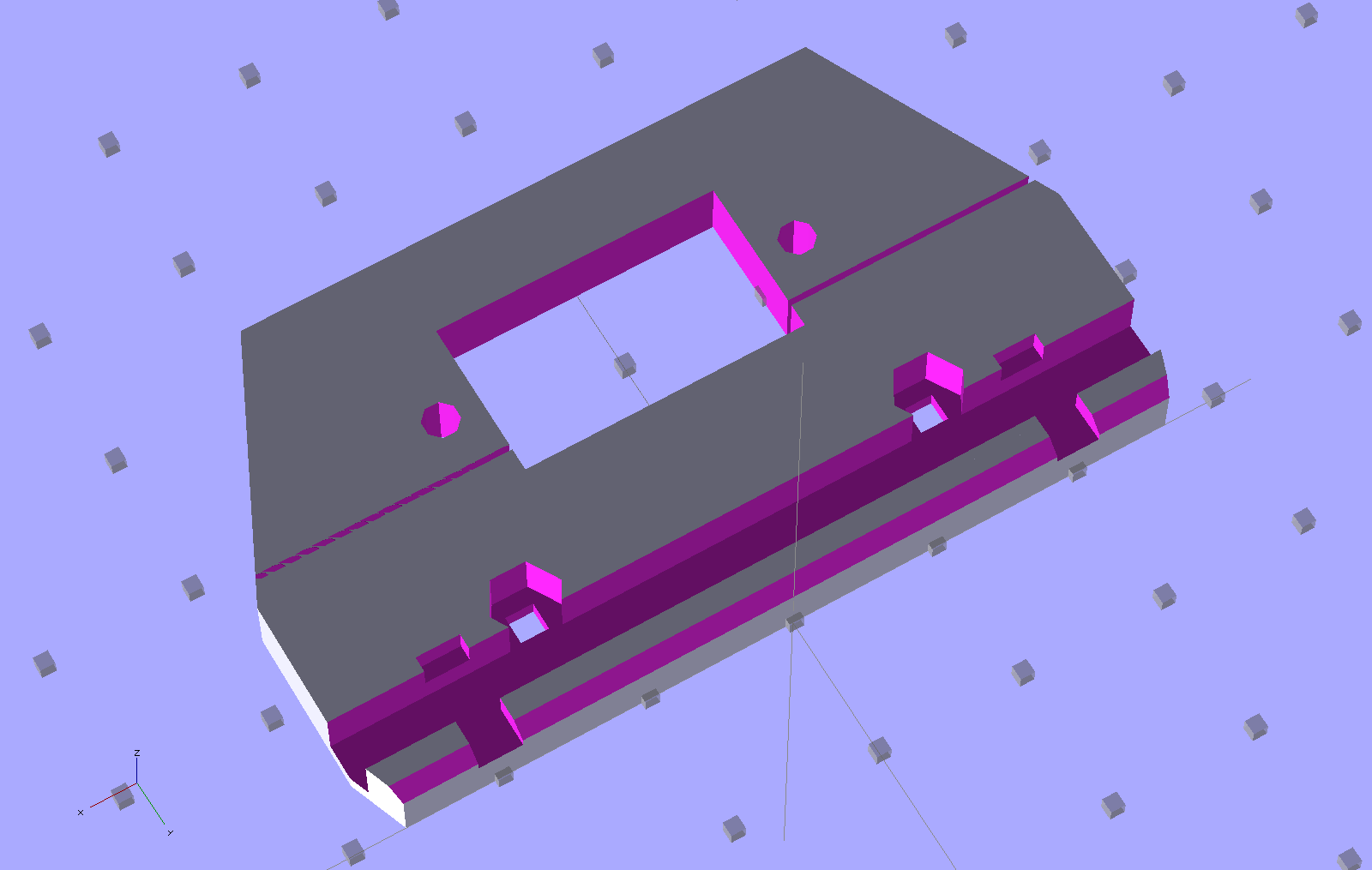
    HT-GPS Case - latch and connector plate
    HT-GPS Case – latch and connector plate

    The big hole fits around the TinyTrak3+ serial connector to the GPS receiver. The slot across the hole splits the plate so it can fit around the already-soldered connector.

    The latch bar consists of a L-shaped brass angle (from the Big Bag o’ Cutoffs) with two snippets of square brass tube soldered to the ends:

    HT-GPS Case Latch - bar detail
    HT-GPS Case Latch – bar detail

    I cut the angle to length with a Dremel abrasive wheel, soldered two brass tubes, sliced them off with a Dremel cutoff saw, roughed out the slots with the abrasive wheel, and applied some tool-and-die maker’s (aka needle) files to smooth things out. Yup, had to clamp each soldered joint in a toolmaker’s vise to keep from melting it during the nastier parts of that process. A pair of 2-56 screws, with nuts behind the plate, hold the bar in place and provide some friction.

    Moving the latch bar requires poking the end with a sharp object (captured by the brass tubing), because I couldn’t figure out how to put finger-friendly buttons on it. This would be completely unusable for an actual battery, but should work OK for a permanently mounted GPS interface.

    Conspicuous by their absence:

    • Holes in the case for the cables (may need more surface area on the ends)
    • Any way to fasten the latch plate to the main case (I may just drill holes for small pins)
    • Provision for the TT3 mode switch
    • A cover for the exposed radio chassis above the latch lugs (may be a separate shell glued to the latch plate)

    The whole thing needs a full-up test to verify the serial connector clears the back of the case…

  • Why I Don’t Like Hotel Networks

    Perhaps this indicates most folks can’t configure network encryption with known parameters, but advising everybody to just turn that pesky WEP stuff off seems, well, misguided:

    Disable WEP
    Disable WEP

    Sniffing a guest’s private bits from an unencrypted link doesn’t pose any challenge at all and, given the hotel’s location in Hartford’s hot urban core, I’d expect absolutely no security-by-obscurity whatsoever.

    On the other paw, Dragorn of Kismet points out the triviality of a man-in-the-middle WiFi attack no matter what encryption you might (think you) have in effect. So maybe it doesn’t make much difference.

    And if you think the wired network is inherently more secure, that should change your mind.

  • Failed Gyro Cube

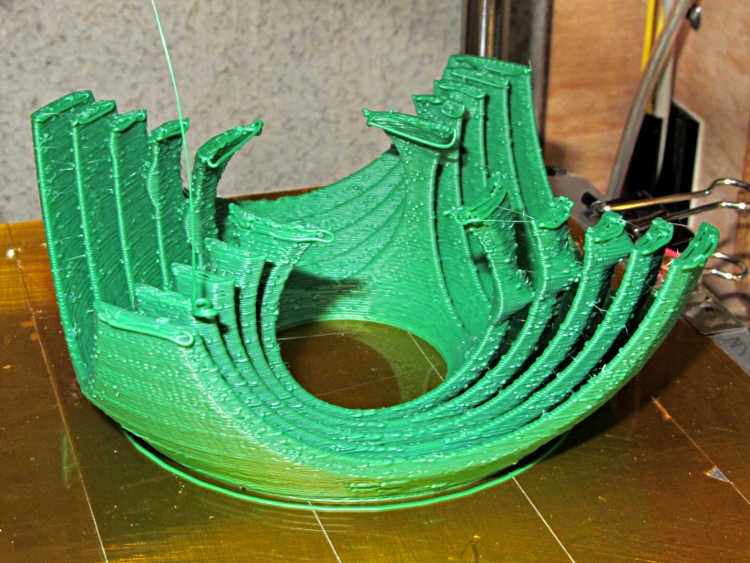
    This slightly shrunken whosawhatsis Parametric Gyro Cube didn’t end well at all:

    Failed Gyro Cube
    Failed Gyro Cube

    The print failed when the nozzle snagged one of the tines, which instantly jammed up against the bottom of the heater block and stalled the platform motion with a horrible crunch. Surprisingly, the motors didn’t lose all that many steps, but you can see extruded thread drooling off the top layers.

    The 0.25 mm layer thickness contributes to the problem: any distortion while the plastic cools produces blobs on the top or poor adhesion, depending on whether the just-printed layer moves up or down.

    This was with infill = 60 mm/s, perimeter = 20 mm/s, and moves = 250 mm/s.

    That speed difference produces crap quality objects, because the high speed infill produces ragged edges that a single perimeter thread can’t convert into a smooth surface. Two perimeter threads work fine, but the top surface looks ragged from the mechanical wobbles induced at every direction reversal.

    The root cause: my heavily modified Thing-O-Matic  has too much moving mass and not enough rigidity, of course. Time to back off the speed for better results…

  • Schwalbe Marathon vs. Brown Glass: Flat Tire

    Having suffered flat tires due to the tire liner chafing the tube, I’ve been running the Tour Easy without a rear tire liner since last year. Worked fine, up until the steering went mushy on a recent ride:

    Brown glass chip - in tire
    Brown glass chip – in tire

    Ever notice how a rear flat means you can’t steer and a front flat means you can’t pedal? Works that way on our recumbents, too. Weird.

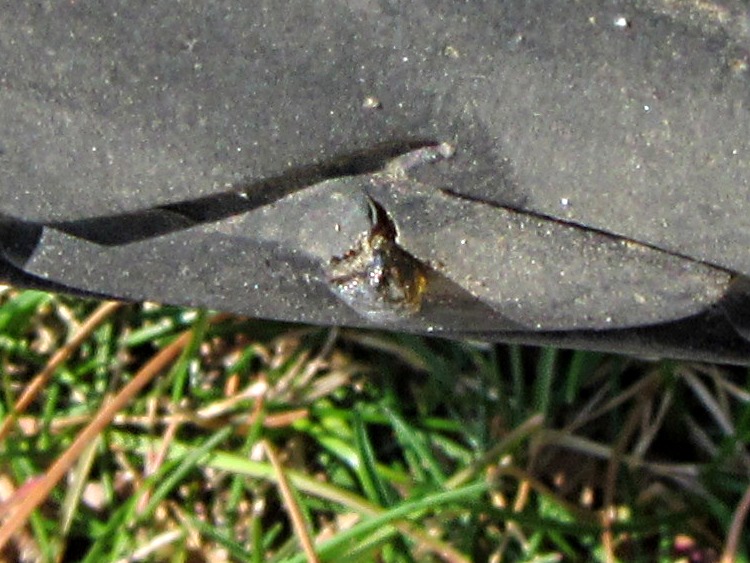
    The chip probably came from a beer bottle tossed out a car window, those being the canonical source of brown glass on the road. That razor edge punched right through the Kevlar belt in the Schwalbe Marathon tire and just barely penetrated the tube:

    Brown glass chip - detail
    Brown glass chip – detail

    Fortunately, I discovered all that in a nice grassy area, patched the tube, fired a pair of CO2 capsules into the thing, and rode another 20 miles around the block on a lovely day. Unfortunately, I managed to pinch the tube while installing it, producing a very slow leak that flatted the tire by the next morning.

    While repairing that flat in the comfort & convenience of the Basement Laboratory Repair Wing, I installed a tire liner with two strips of silicone tape over the ends to see if that reduces the abrasion:

    Silicone tape on tire liner
    Silicone tape on tire liner

    Silicone tape doesn’t adhere to anything other than itself, so I added two duct tape snippets to hold them in position while I buttoned up the tire. And, yes, I left the transparent plastic cover tape in place, in the hope that it can’t do any harm.

    Perhaps the inevitable slow leak will produce a flat in the garage, not on the road…

  • Monthly Subconscious: Chandelier Spider

    An odd critter control technique:

    Curious chandelier spider
    Curious chandelier spider

    We generally capture and deport spiders, figuring that they’ll do much better outside than in. Judging from the collection of insect hulls under some of the webs, though, that may not be entirely correct.

    For what it’s worth, we don’t even have a chandelier…

    In text:

    I wish damage on the curious chandelier spider.


  • Panic Button Variations

    Those panic buttons in the high school cafeteria still beg the question: who thought panic buttons would be a Good Idea? I recently served as a judge for the Science Fair qualification show and found some variations on the theme.

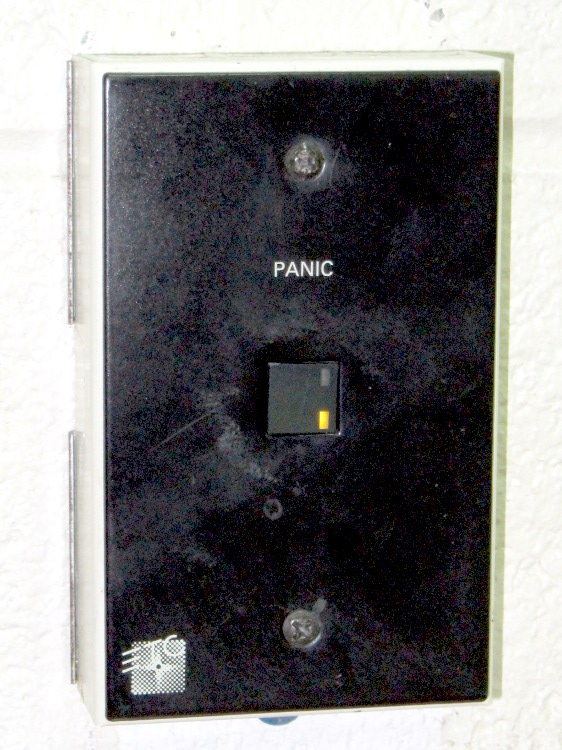
    One seems in good shape, although I don’t know if it’s been repaired:

    Intact panic button
    Intact panic button

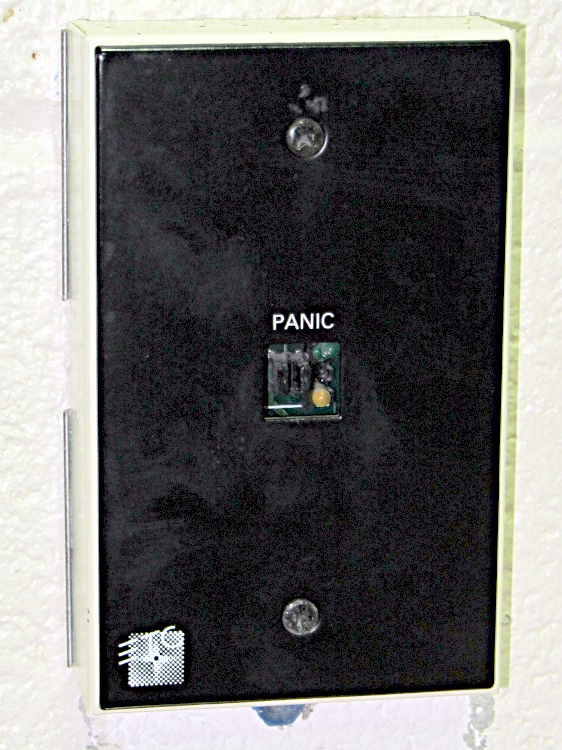
    Several have missing buttons, but the innards seem intact:

    Buttonless panic button
    Buttonless panic button

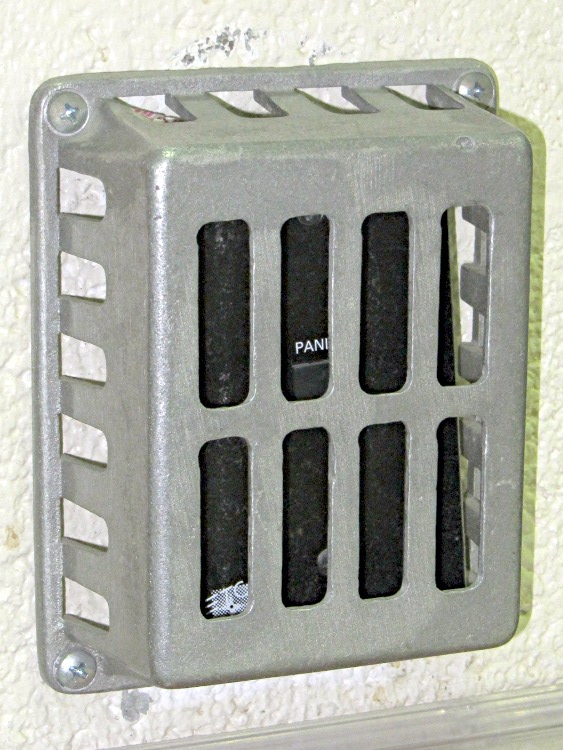
    In the event of an actual panic, I suppose you simply yank the cage off the wall:

    Up-armored panic button
    Up-armored panic button

    I cannot imagine what logic justified protecting one button and leaving the others to the tender mercies of the student population.

    Our tax dollars at work, for sure…

  • Tea Ball Revivial: Redux

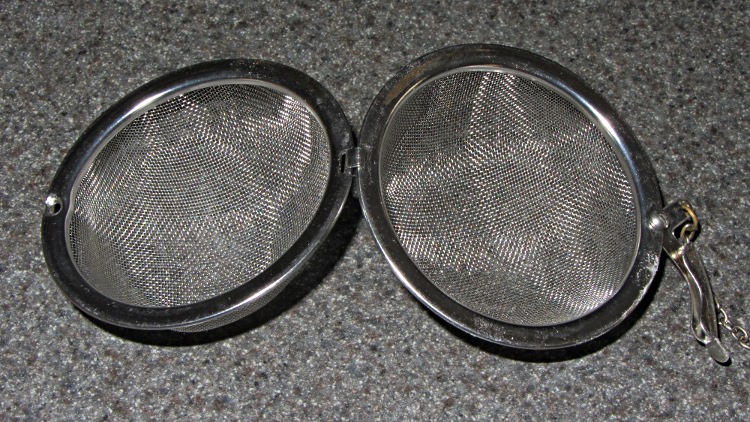
    That tea ball (OK, infuser) hasn’t killed me yet, but it was looking rather grody despite a more-or-less monthly run through the dishwasher. So when Mary made up a bleach solution to sterilize her plant starting pots, I tossed it into the bottom of the pan for half an hour:

    Bleached tea ball
    Bleached tea ball

    Zowie! All the organic schmutz vanished, leaving it as good-looking as new.

    No before picture, alas, but maybe next time…

    Memo to Self: Do that more often.