Ed Nisley's Blog: Shop notes, electronics, firmware, machinery, 3D printing, laser cuttery, and curiosities. Contents: 100% human thinking, 0% AI slop.
These might be aftermarket hood stripes on a not-very-old Mini (or Mini Hatch):
Must be heartbreaking to watch that happen through the windshield.
On the other paw, given the Mini’s reliability record, they might be OEM stripes:
In 2015, Consumer Reports awarded the 2006–2012 Mini Cooper S the title ‘Worst Used Car’, saying that while it was “cute and delightfully entertaining”, the repair frequency was “heartbreaking” because the magazine’s surveyed owners reported problems in the areas of “engine major, engine minor, engine cooling, fuel system, body integrity, and body hardware have issues at an alarming rate”.
One hopes that puppy had fewer internal problems …
After five years and one cleaning, the PTT button on Mary’s Tour Easy became increasingly intermittent, both failing to activate solidly and sticking closed (there being nothing quite like a hot mic during a good hill climb), so it’s time for an autopsy:
Failed PTT Switch – as extracted
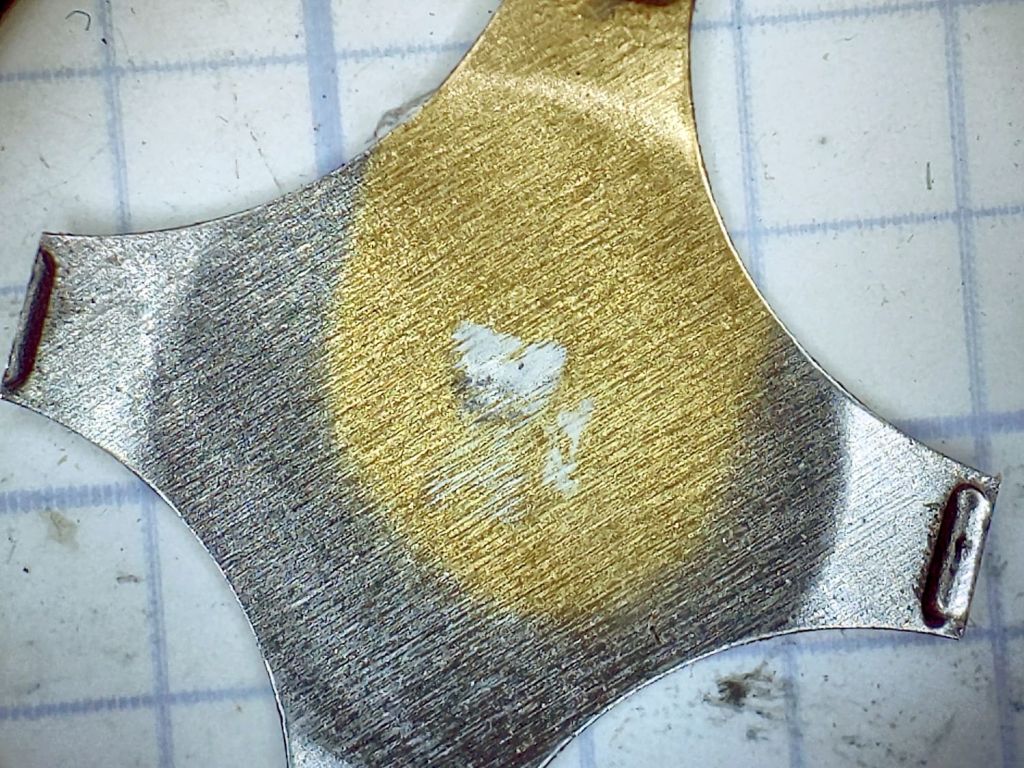
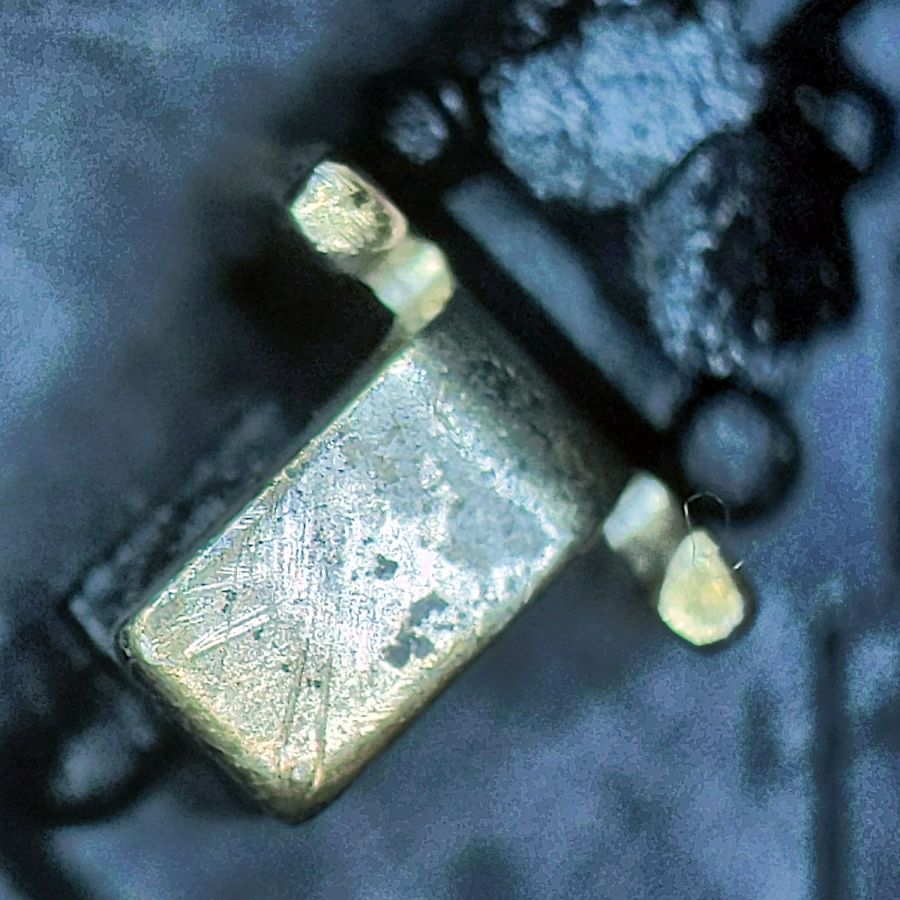
The snap dome is much more scarred at the central contact:
Failed PTT Switch – snap plate
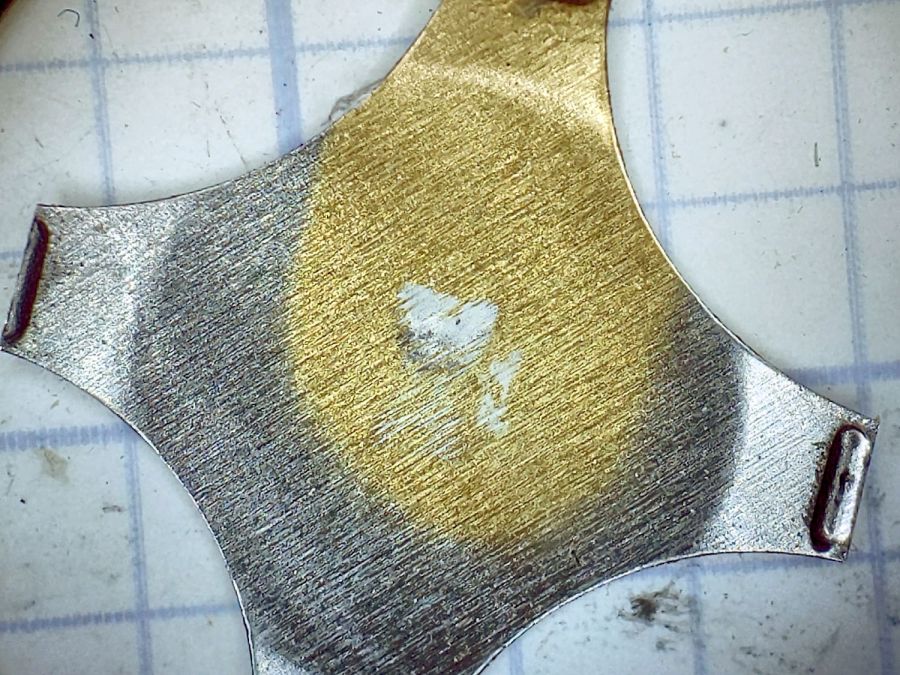
That might be a gold flash coating, but it’s pretty well worn away where it hits the central contact:
Failed PTT Switch – center contact
Those scratches surely happened during the previous cleaning pass, as I don’t see any way for the dome to create them.
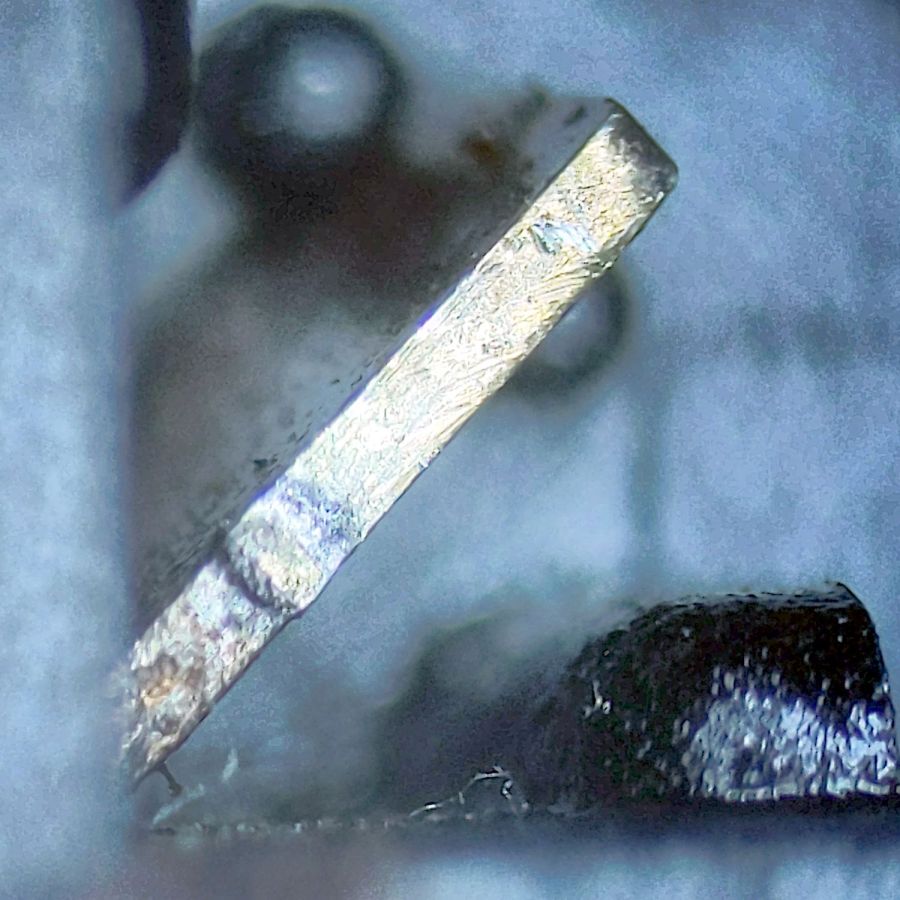
The corner contact also shows some scuffs, along with a scar where the dome corner pivots:
Failed PTT Switch – edge contact
All in all, though, it worked quite well.
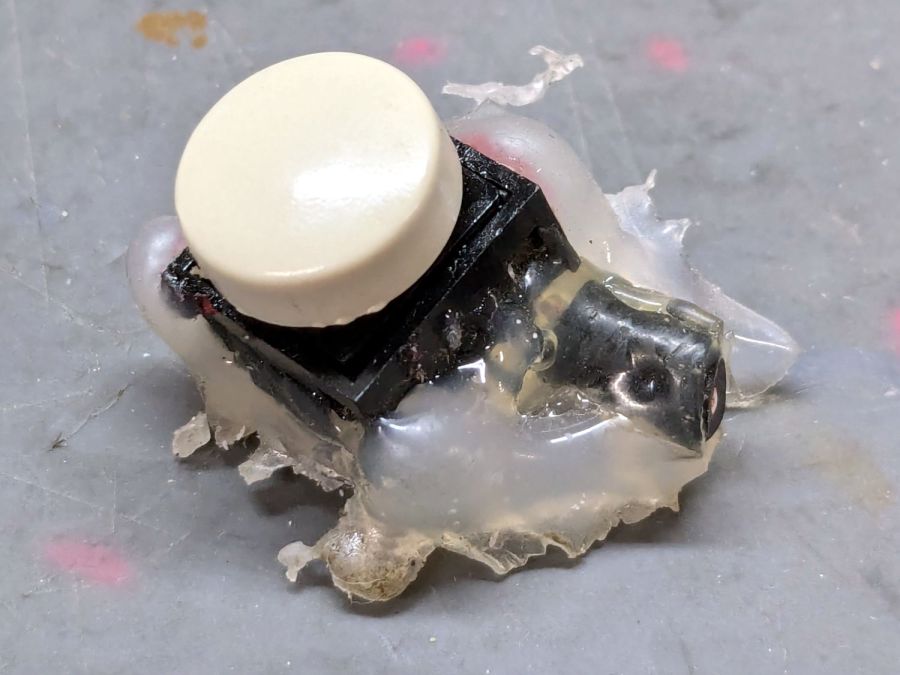
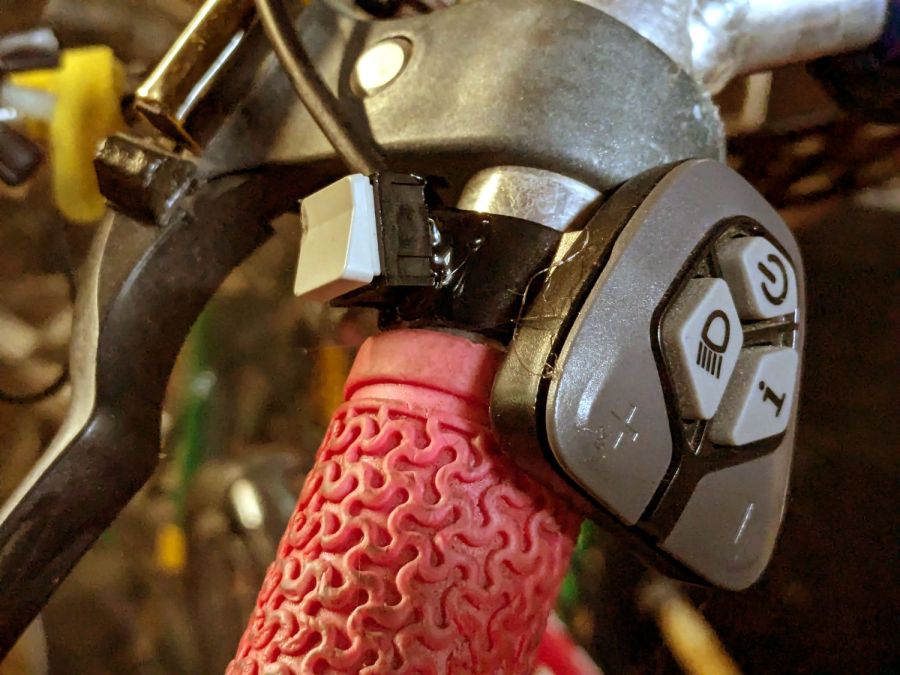
The replacement switch, also intended for indoor use on a keypad or some such device, pivots around the front edge and may be easier for her fingertip to activate:
New PTT Switch – installed
Hot melt glue seems vastly underrated for how wonderful a structural material it is.
If this one lasts five years, I’ll be perfectly happy.
Having an aversion to getting slapped in the face by Blackthorn branches overhanging the Dutchess Rail Trail, I generally give up waiting for anybody else to do the job:
The upper one has a coating of clear rattlecan paint and looks much the better for it. The lower one is bare, but also suffered greatly from being folded and tucked through itself, so it started in worse condition.
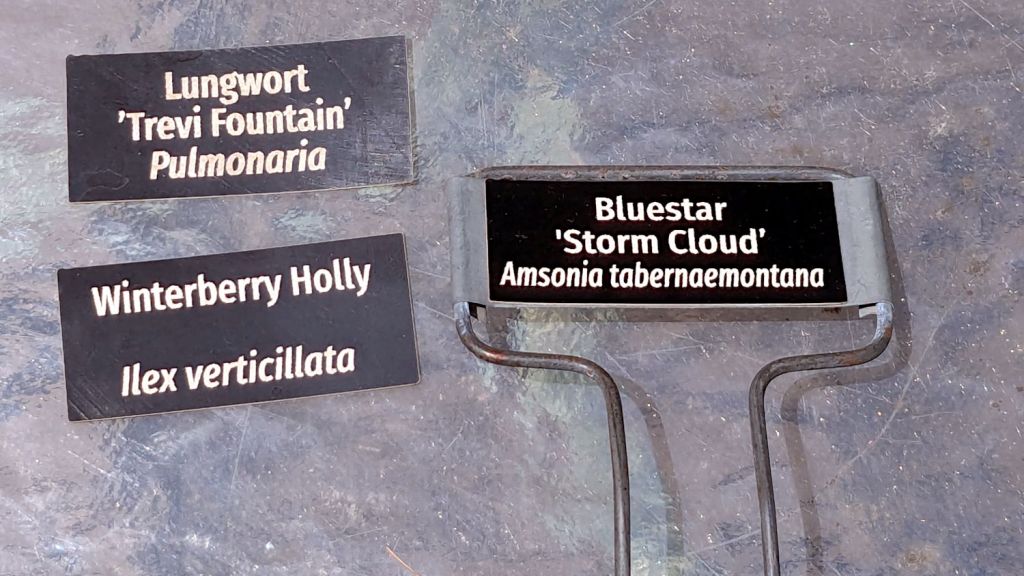
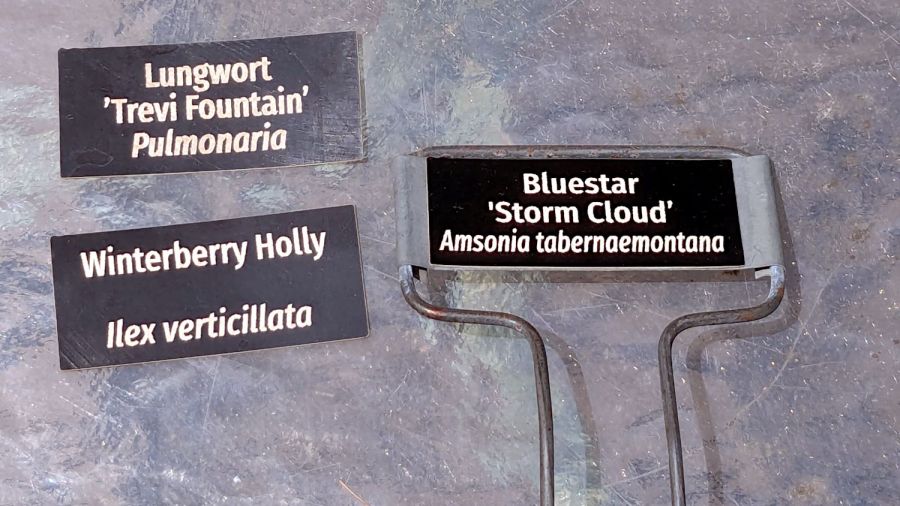
Perhaps the paper will work better when stuck to metal plant label stakes, although I suspect the adhesive sheet will fail first:
Laser test paper – small plant labels
Those are random names; Mary tells me the proper label format has the Latin nomenclature on the first line.
They’re now out on the patio for observation.
For whatever it’s worth, my fascination with this paper boils down to “it’s cheaper than Trolase” for applications not requiring archival quality and duration. If it lasts Long Enough, that’ll be Good Enough.
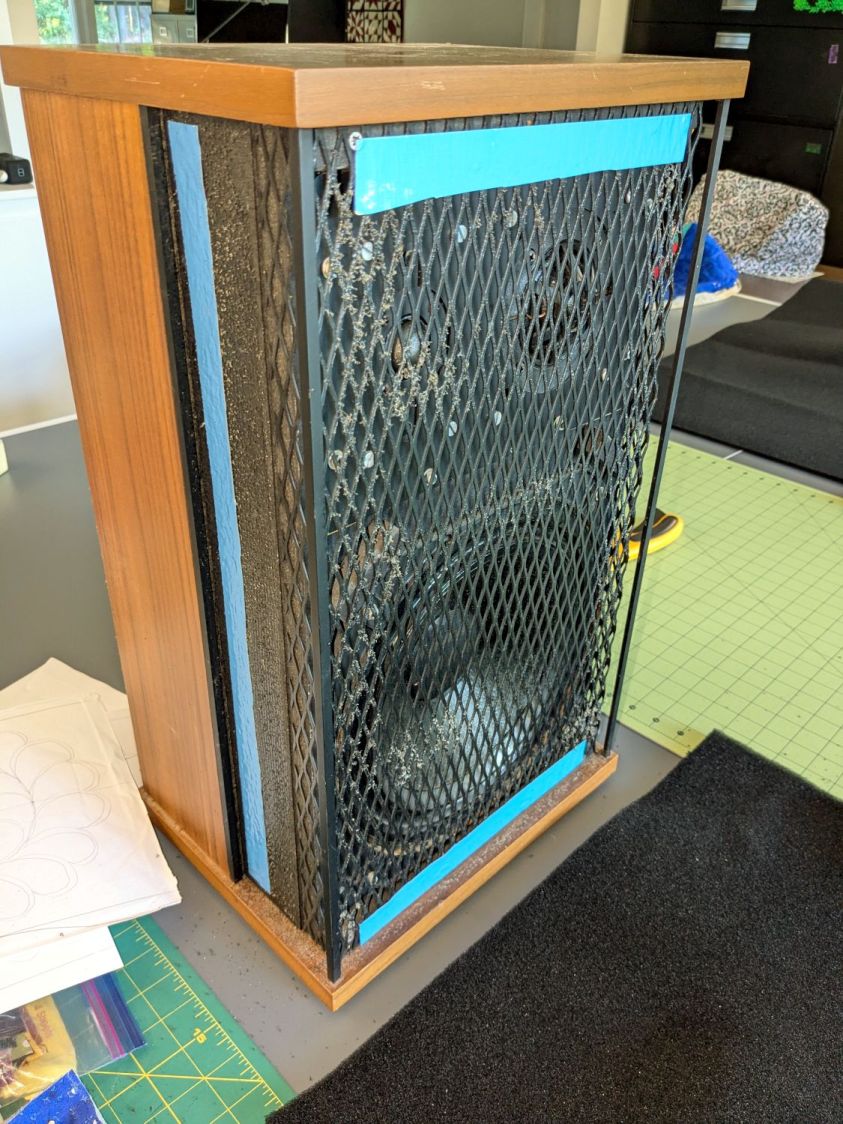
Having recently promoted a pair of Radford Tri-Star 90 speakers to the Sewing Room, it was time to make them presentable:
Radford Tri-Star 90 speakers – taped grill
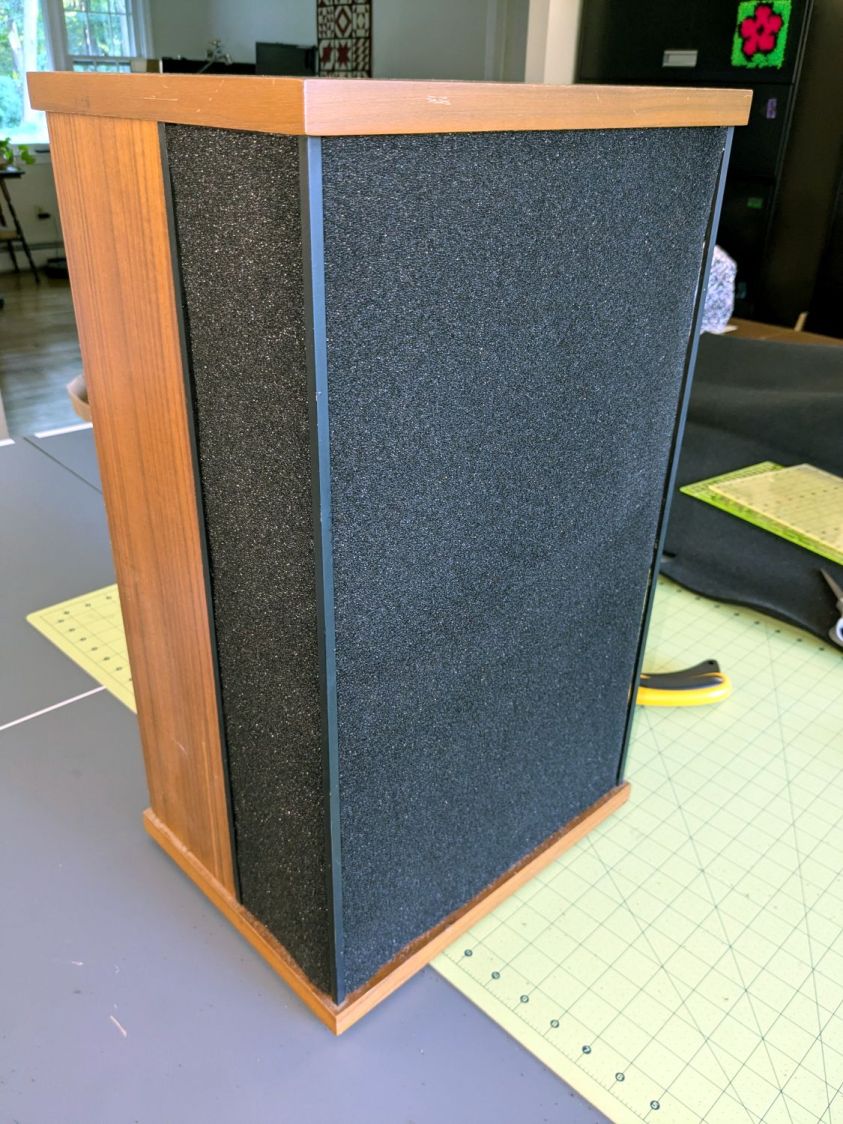
The original foam grill covering had disintegrated and left fossilized adhesive over the metal gridwork. Being not much for historic accuracy, I used double-sided duct tape (the blue barrier film peels off) and stuck some allegedly acoustic foam in place:
Radford Tri-Star 90 speakers – re-covered
The foam is a single sheet wrapped around three sides and, after some whittling, measured 19.5 inches tall and 19.25 inches wide. The width surely depends on how snugly it’s stretched, so allow a bit more and trim to fit.
Duct tape probably isn’t the right adhesive for the job, but we’ll see how long it lasts. I really did not want to use spray glue and doubted my ability to slobber liquid stickum without oopsing the cones.
The speakers sounded great back in the day and they definitely sound much better than my deflicted ears can hear now. Mary thinks they’re OK and that’s all that matters.











 The Smell of Molten Projects in the Morning