Ed Nisley's Blog: Shop notes, electronics, firmware, machinery, 3D printing, laser cuttery, and curiosities. Contents: 100% human thinking, 0% AI slop.
A discussion of random numbers at Squidwrench brought those gamma ray detectors to the top of the heap, with the observation I probably needed a few more Darlington transistors:
Darlington transistor – hFE sorting
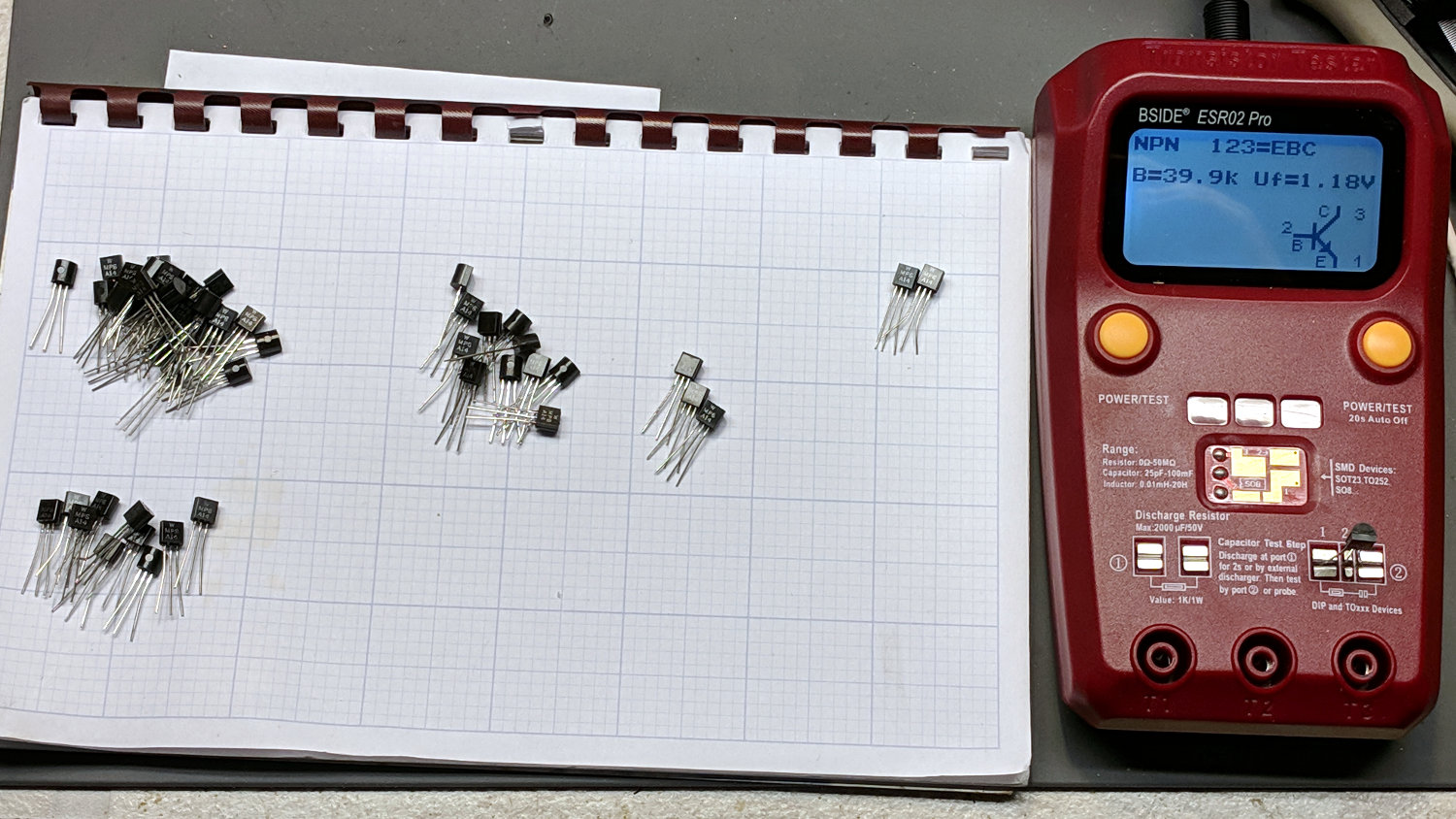
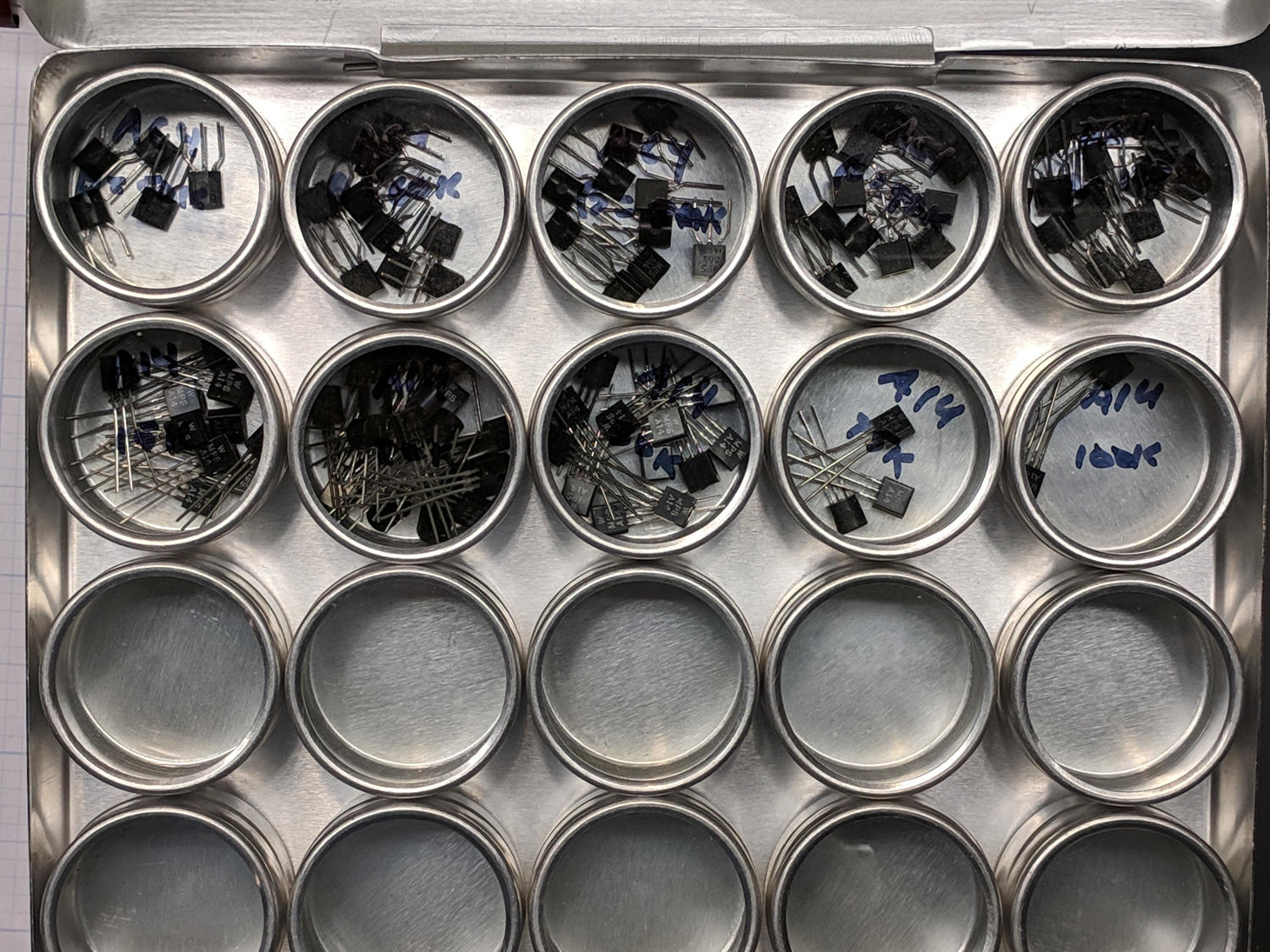
Sorting two lots of 50 transistors by gain kept me out of trouble for a while:
Darlington transistors – sorted
Those are MPSA14 NPN and MPSA64 PNP transistors, with DC gains ranging from around the spec’s minimum 10 k spec all the way up to well over 100 k.
The yellow trace shows the booster output voltage is 9 VDC, as set by the twiddlepot, and doesn’t vary much under load. It has 200 mV ripple at 220 kHz, the booster’s switching frequency, which doesn’t induce any meaningful noise on the scope’s display, because it’s well outside the display bandwidth and well inside the voltage spec.
The current traces are 100 mA/div from Tek Hall effect probes. The green trace is battery current to the booster, varying from 200 to 300 mA, averaging 250 mA. The cyan trace is DSO150 current from the booster, 75 mA min, 200 mA max, averaging 100 mA.
The battery current is 2.5 × the scope current, the battery voltage is 1/2.5 × the scope voltage, and all is right with the world.
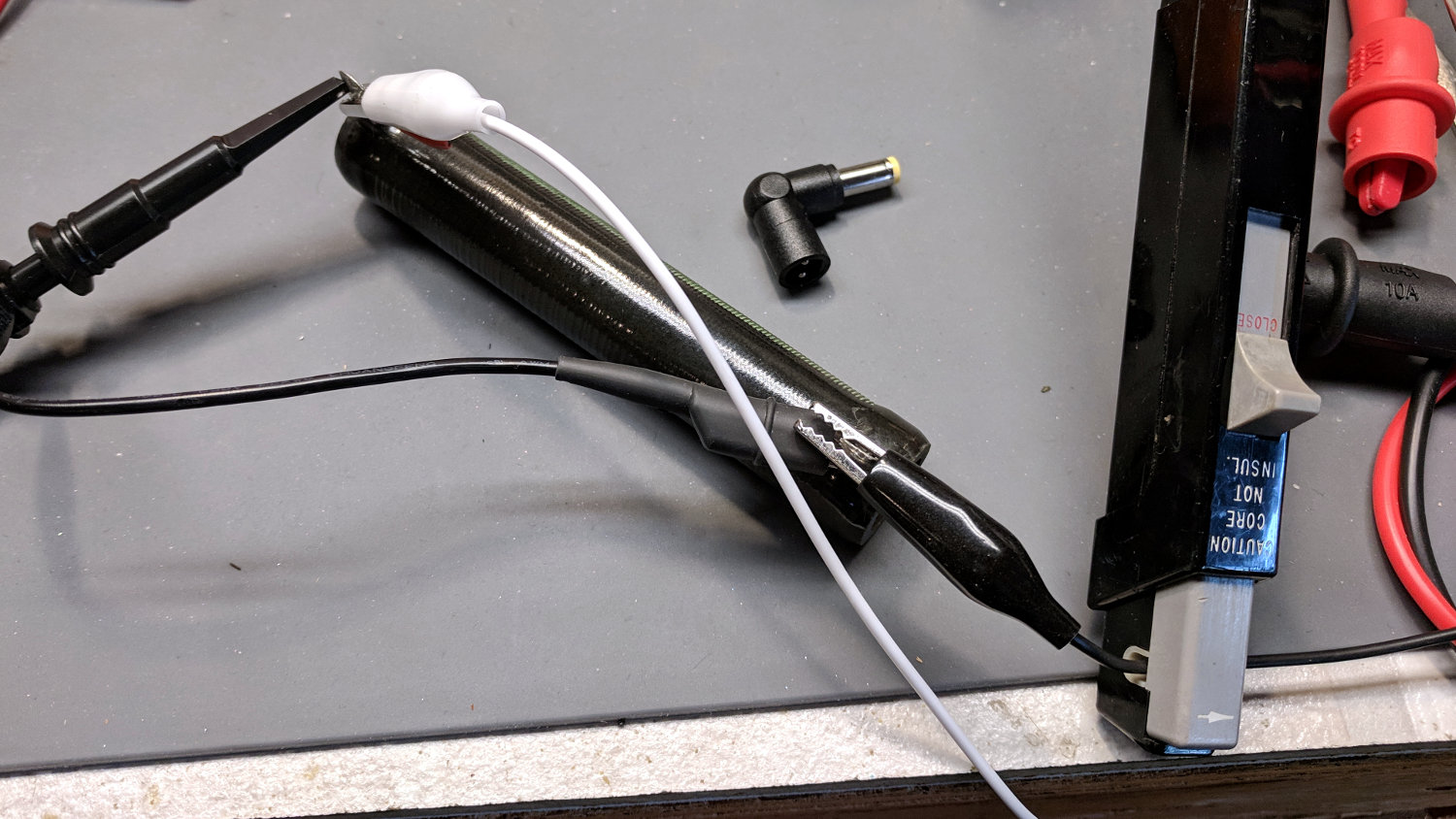
Two multi-output wall warts (Powseed and Leapara, for whatever that’s worth) with a bag of right-angle tips just arrived and I gimmicked up a connection directly to the output:
Powseed multi-voltage supply – hack-job test connection
Which went to a 100 Ω dummy load drawing about the same current as the DSO150:
Power supply load test – 100 ohm resistor
Both seem to work OK, albeit with plenty of spiky noise:
PowSeed Multi-Voltage Wart – 9 V 100 mA-div
Much to my surprise, there’s no visible noise on the DSO150 display, surely because the scope’s bandwidth is nowhere near wide enough to grow that kind of grass.
A power supply like that would convert the DSO150 into a bench instrument suitable for low frequency circuitry.
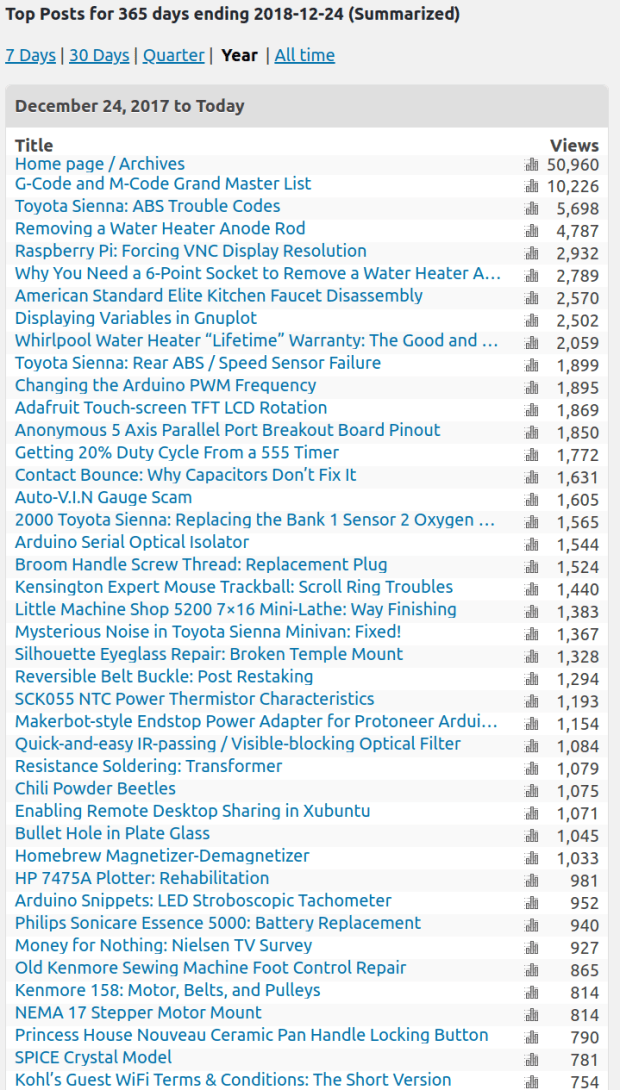
At this late date, the RepRap site has a much better G-Code reference, at least for the weird and wonderful assortment of 3D printer commands.
Given that I’m at best a secondary reference for Toyota Sienna ABS trouble codes, things must be getting grim out there in the minivan crowd.
And, as always, houses (and especially plumbing) are trouble!
As for everything else, well, it’s just me and my shop notes …
WordPress reports 101 k ad impressions per month for 24.6 k “page views”, suggesting most folks see four ads per page. If you’re not using an ad blocker, start now!
Those seem to be the most aggressive (and thus highly desirable to advertisers) video ads, because WordPress pays me a whopping 8¢ per kilo-impression; a few percent of the Youtube rate. The numbers are dropping, though, suggesting ads will never push me into the ranks of the thousandaires.



 The Smell of Molten Projects in the Morning