The Description sounds enticing, in the usual eBay manner:
100% Brand new and high quality.
Product Shape: Same as the picture show
1. Product Name: High Voltage Alligator Clip Test Leads
2. Cable Type: Double-Ended Wire
3. Conductor Material& Size: 1mm²Copper Wires
4. Housing Material: Silicone
5. Max. Current: 15A
6. Withstanding Voltage: 2KV
7. Operating Temperature: -20℃~120℃
8. Making Way: Injection Molding
9. Interface Type: AC/DC
10. Color: Black, Yellow, Red, Green, BlueSuit For:
1. Injection molding to complete, good looking, moisture proof, durable and tough!
2. Electrical test leads suitable for use with multimeters, power supplies and other electronic equipment
They’re three bucks each, which should buy you some copper and decent construction.
The insulation over the clips is certainly chunky enough, even if one might quibble about the standoff distance required for a 2 kV rating:
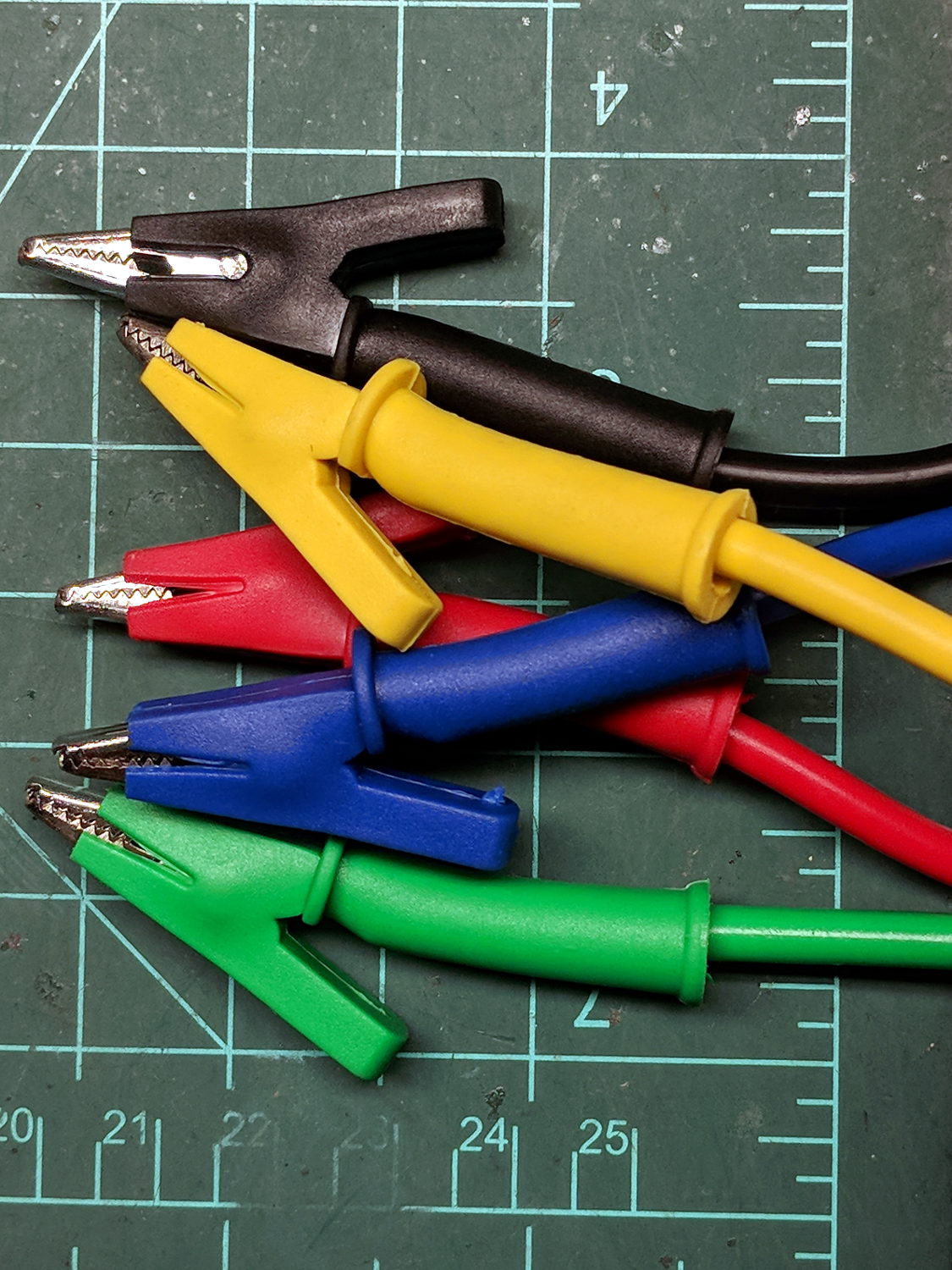
The wires have good silicone insulation and consist of fine copper strands, but I definitely won’t trust them to handle 2 kV:

No solder, of course, just copper conductors bent back around the insulation and crimped into the alligator clip. Definitely not a gas-tight metal-to-metal joint, but good enough for simple needs.
Update: A better look at the crimp on a different clip:

IMO, the clip’s low-strength metal can’t possibly make and hold a gas-tight joint, no matter how hard you squeeze.
There’s enough contact area for low resistance, on the order of a few tens of milliohms. We’ll see how long this lasts …
 The Smell of Molten Projects in the Morning
Comments
9 responses to “eBay High Voltage Alligator Clip Test Leads”
are you going to solder them?
I’m going to wait for the crimp to lose its mojo before pulling them apart and rebuilding the entire connection. With a bit more luck than I deserve, that’ll take forever …
Methinks that crimp could benefit from more of a crush.
No matter what, it’s still a spongy silicone spring holding the wires in place against the alligator clip, so it’s not a “solid connection”.
Silicone is surely better than PVC, though. [sigh]
I meant the metal (wire) to metal (clip) contact area. That looks a little loose for my taste.
I added a better view of the crimp to the post. Obviously, the front section was a bystander during the crimping operation.
But, under the (possibly unreasonable) assumption there’s more than a few millimeters of wire bent back under the insulation, then it’s probably Good Enough.
I was (self) tought that you shouldn’t solder crimped connections, because it induces a stress point and supposedly solder can flow over time and weaken the crimp?!?
First I’m pretty sure is true but obviously not gonna matter with that much stress relief. Any truth to the second reason?
I’ve screwed up other joints by not providing enough strain relief, but those insulating boots certainly put most of the stress far enough from the end of the clip that a solder joint should work OK.
I think a firmly crimped connection should have a solid copper-to-copper structure, so the solder ought to just fill in the holes. Sounds plausible, which makes it a dangerous assumption …
Notionally that’s why there are two crimped sections. The larger one should capture the insulated part of the wire and form some strain relief and the second smaller part should be crimped tight with only metal to metal contact. It would do no harm to solder this portion but, crimped properly, soldering should be unnecessary.